NihontoWatch MonNihontoWatch
Market
Encyclopedia
Kantei
NihontoWatch MonNihontoWatch
Market
Encyclopedia
Kantei

Description

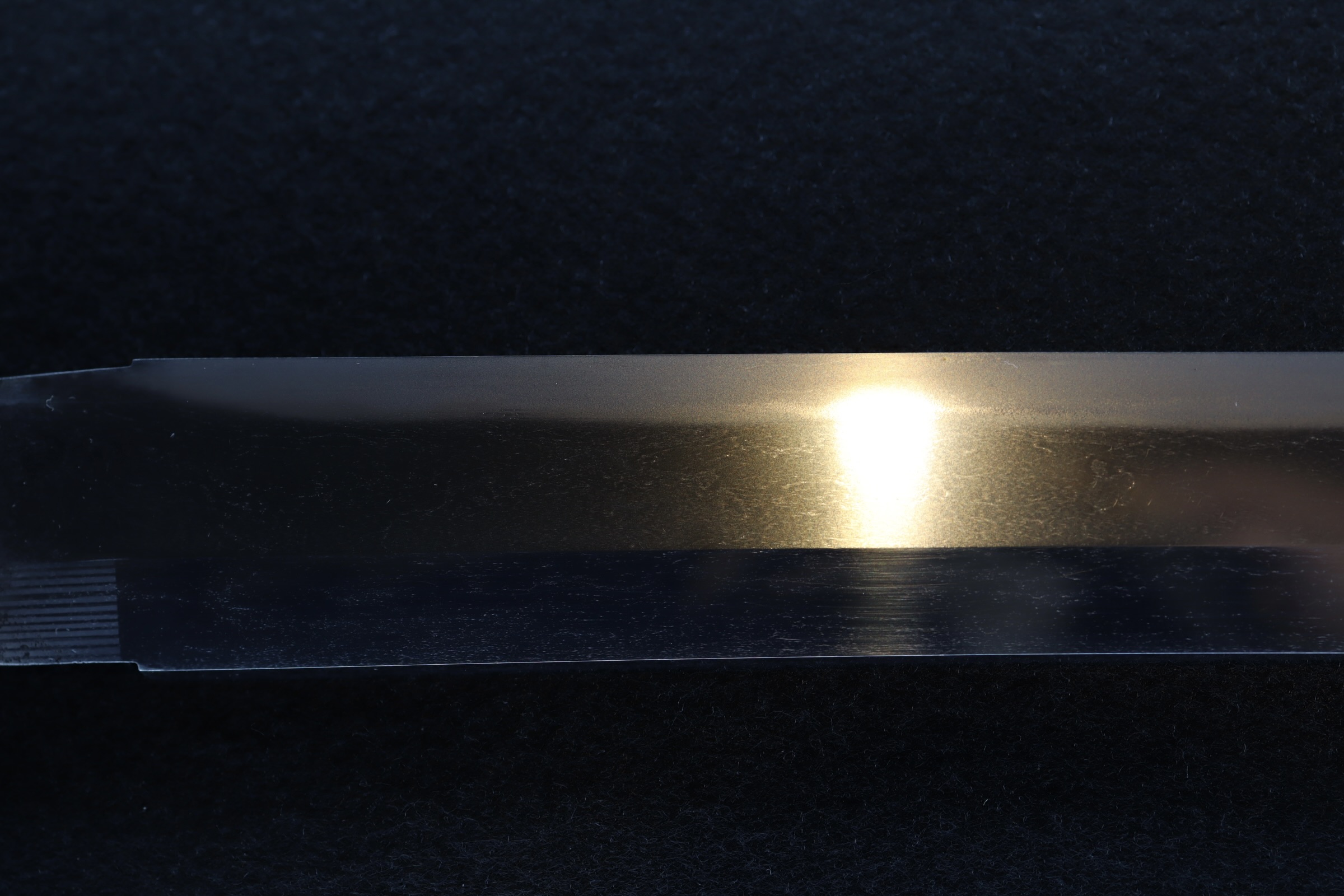
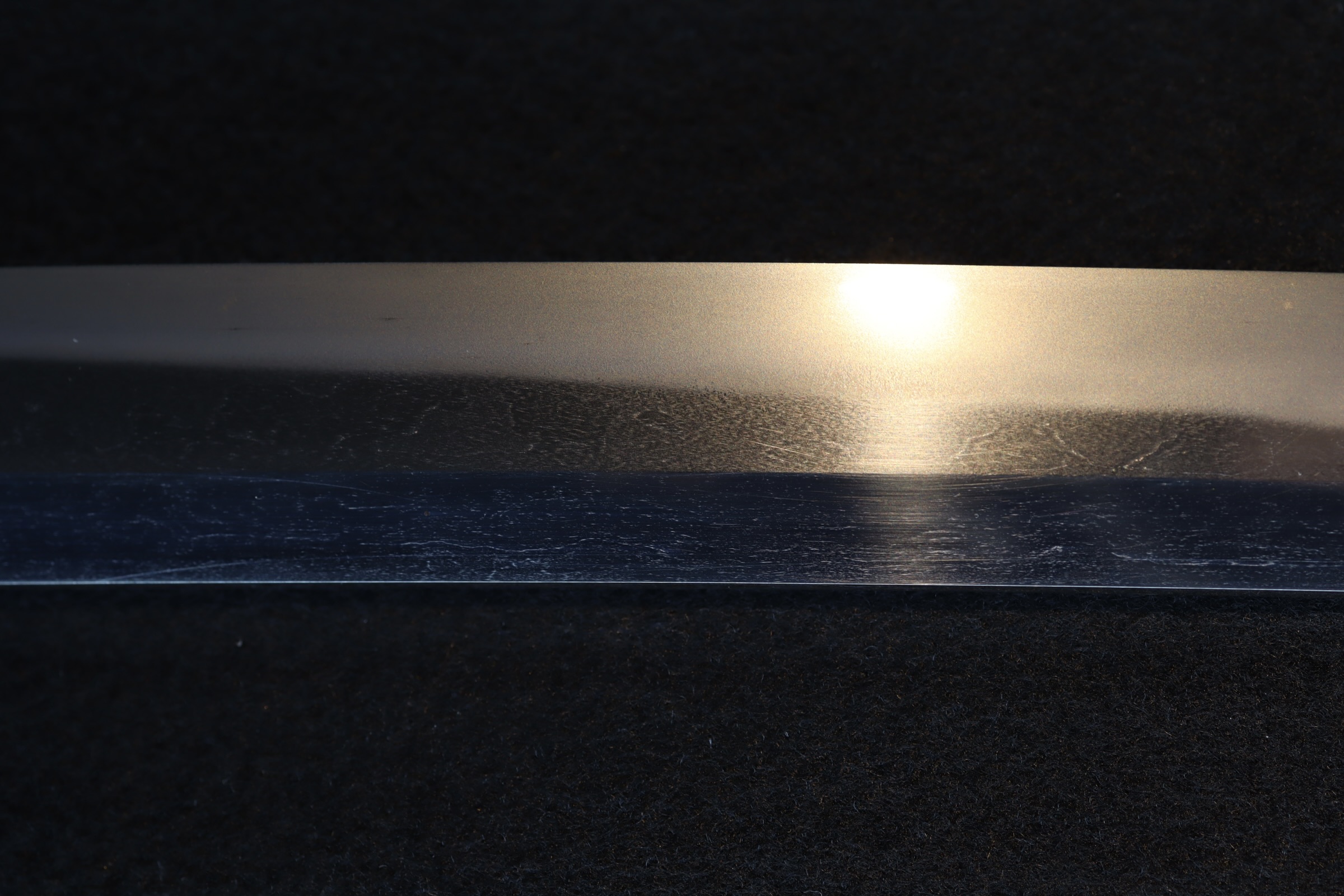
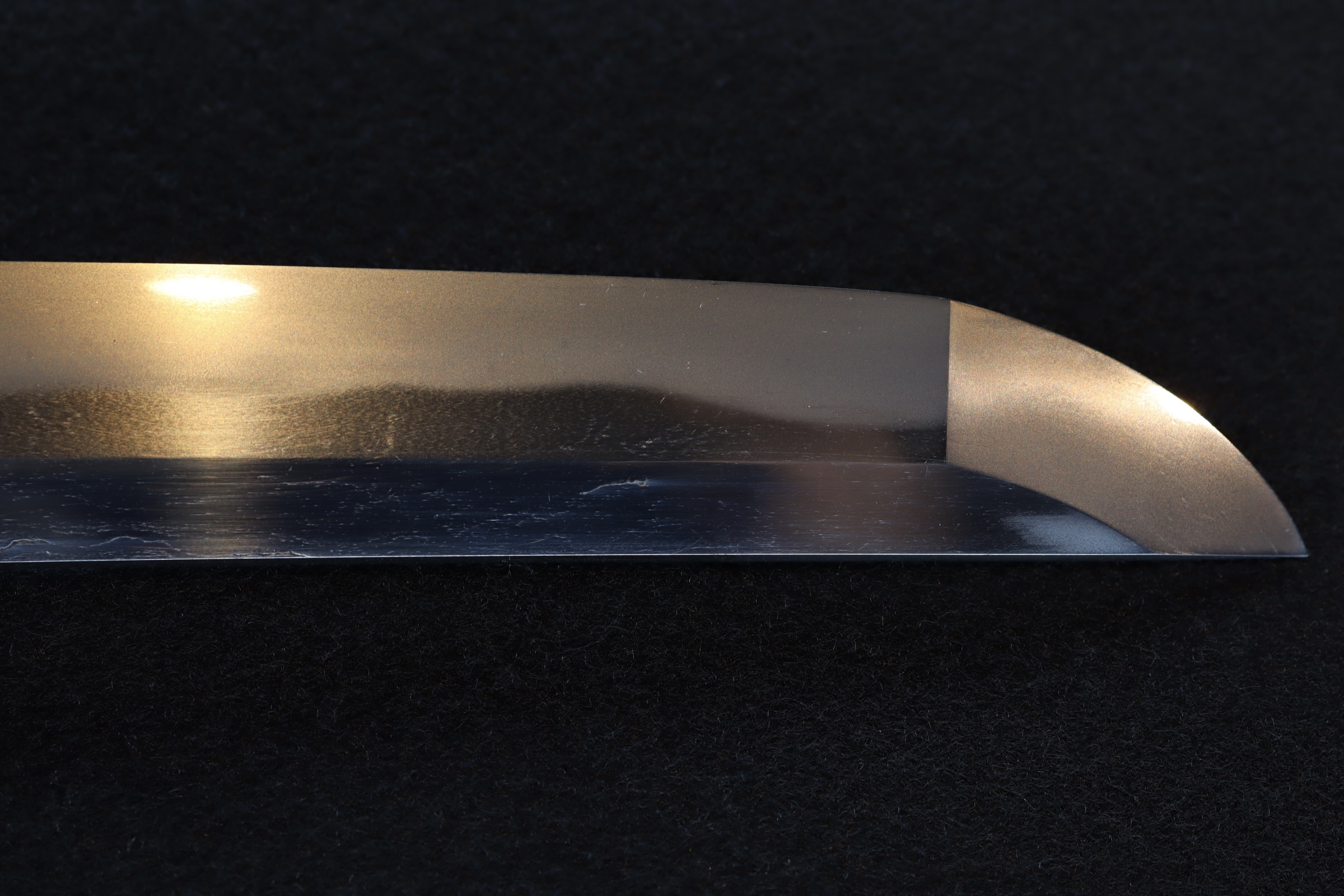
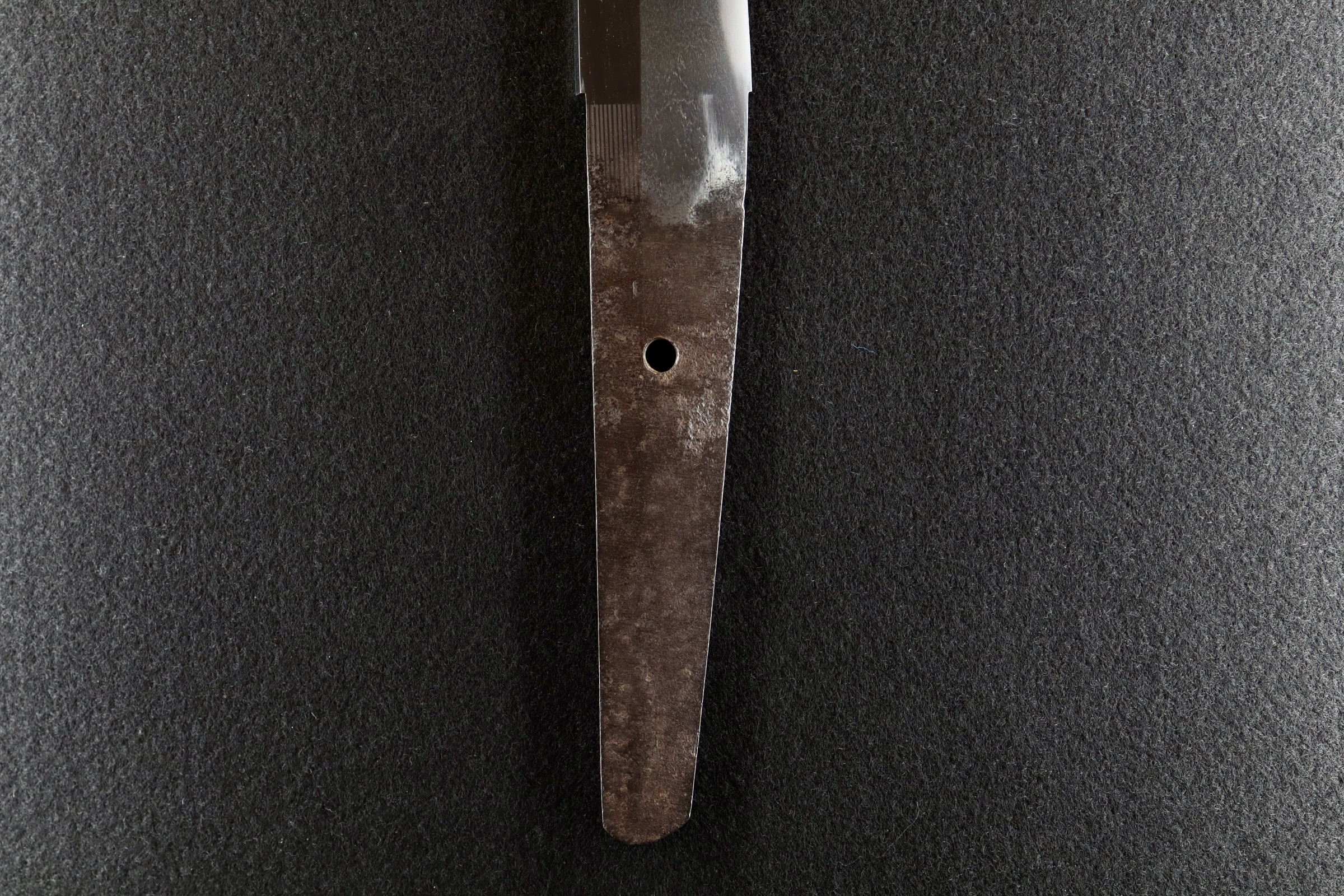
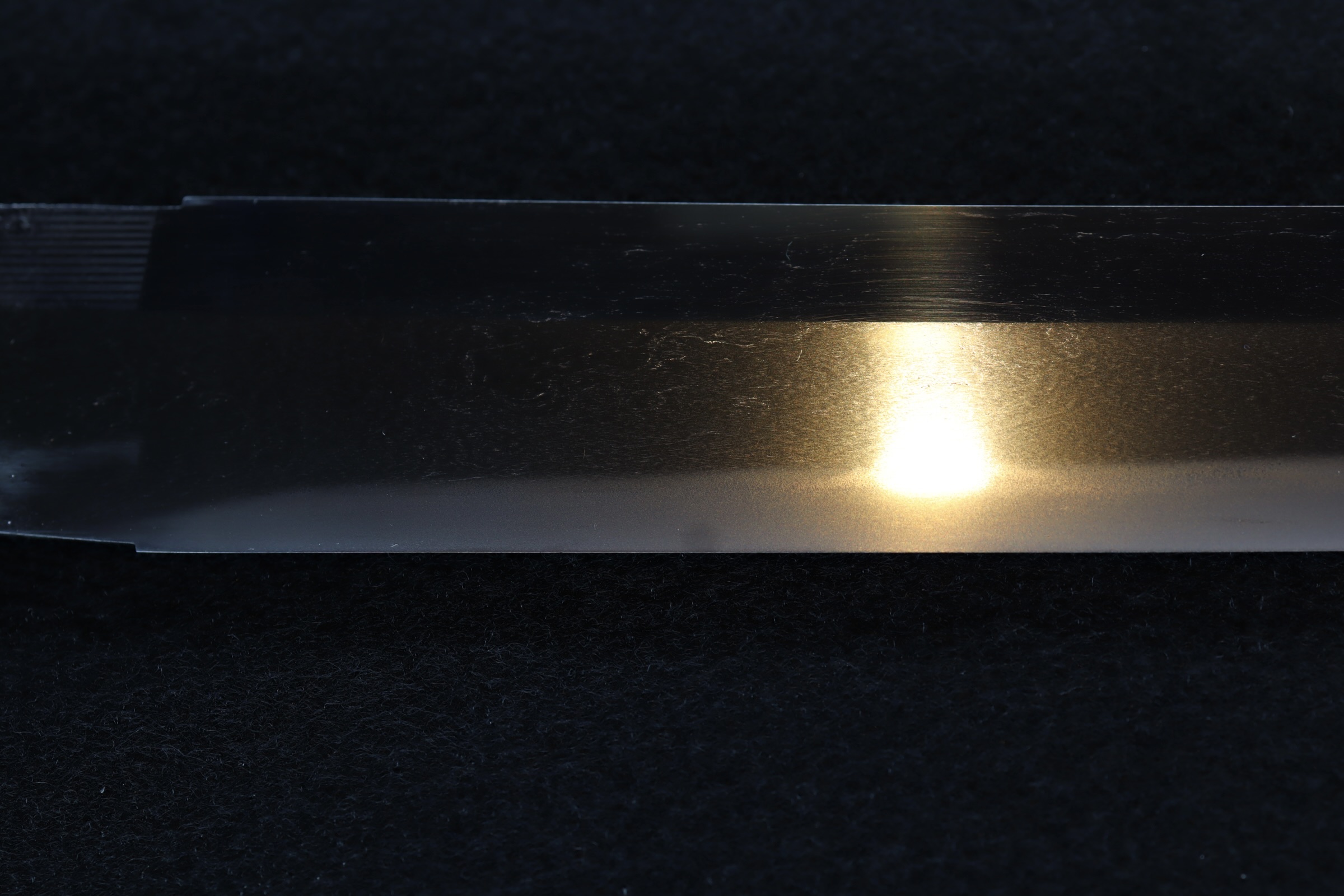
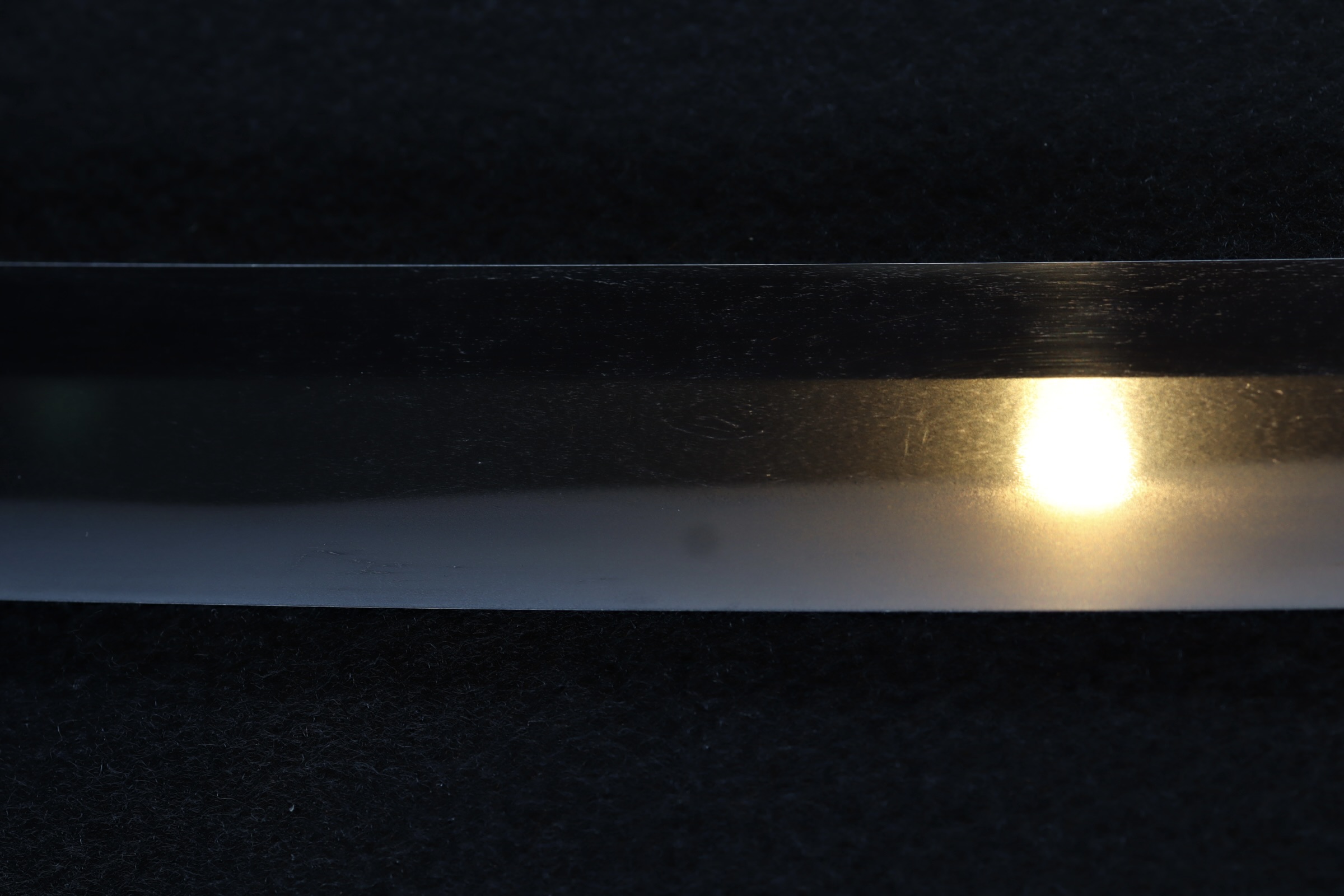
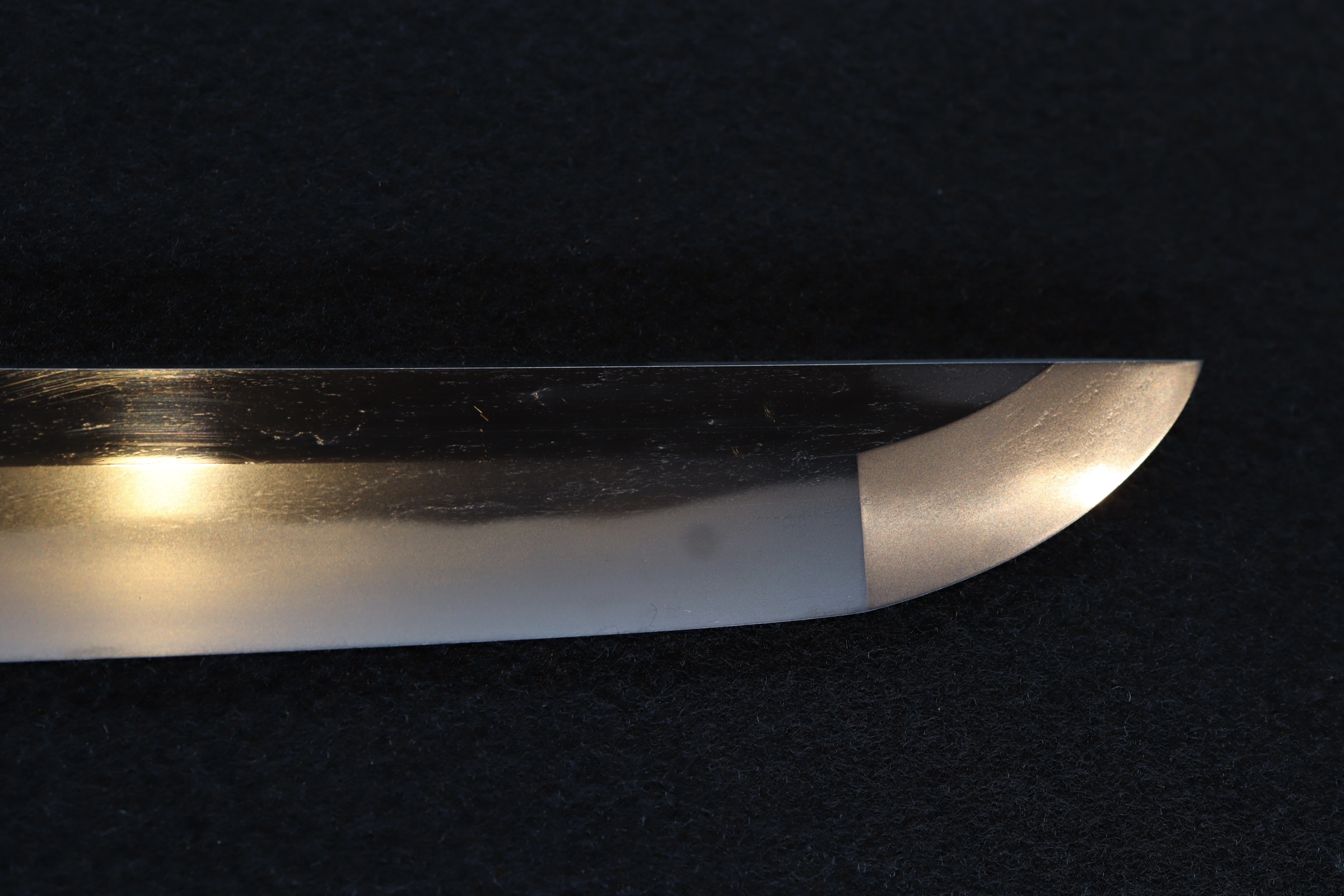
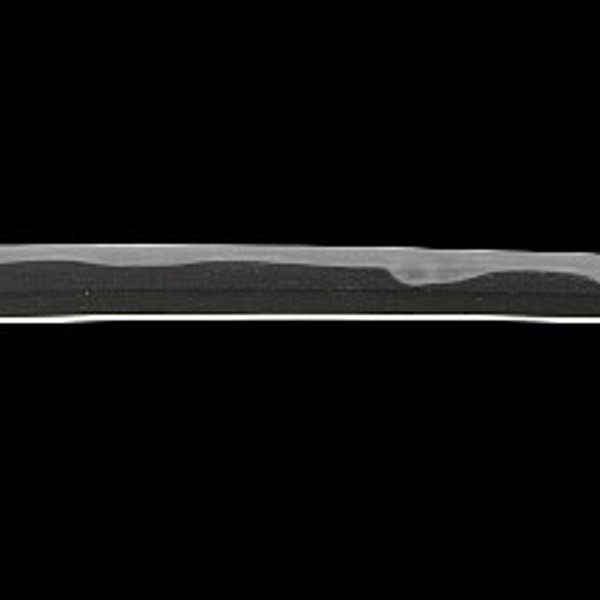
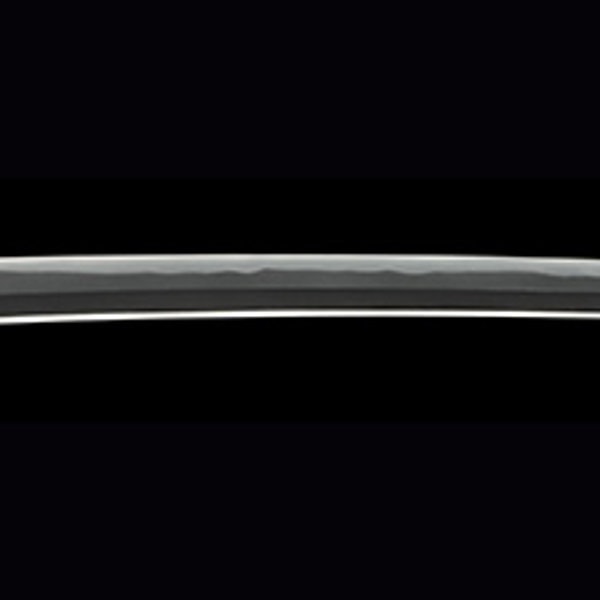
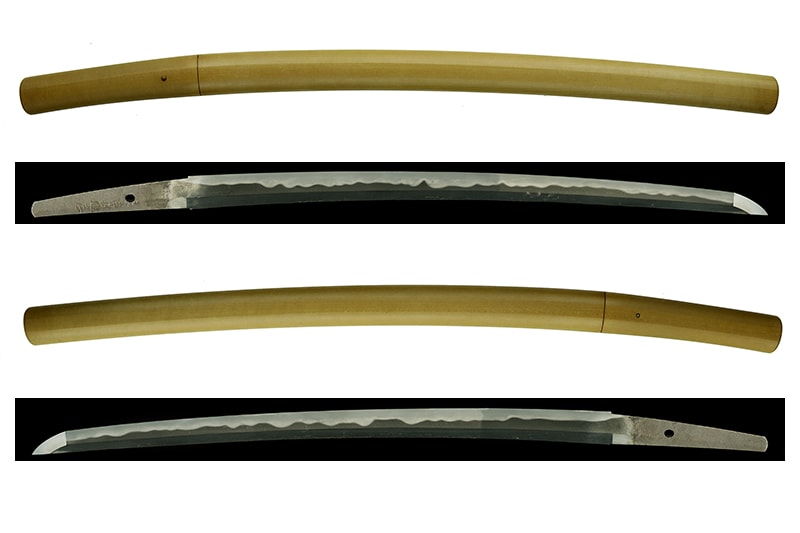
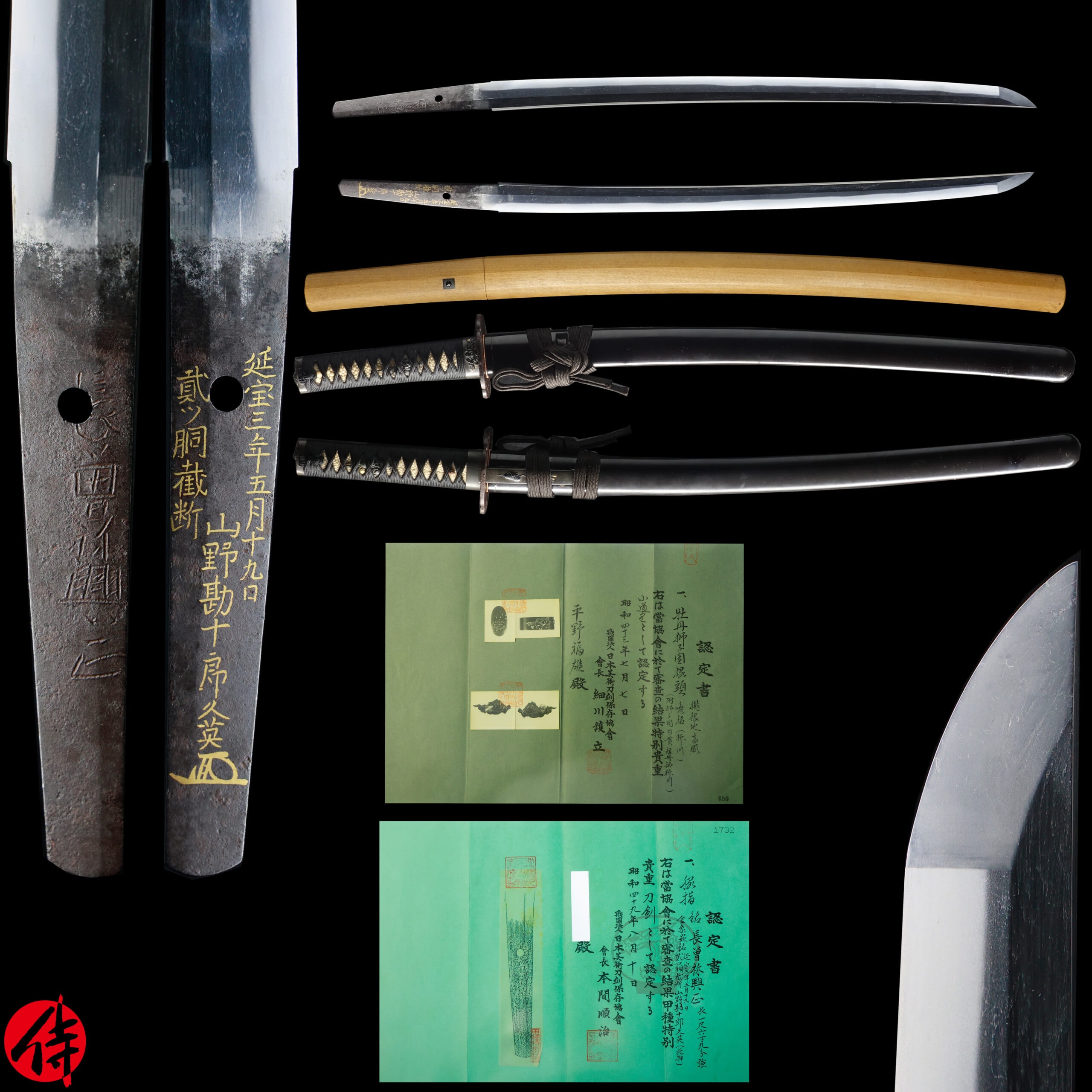
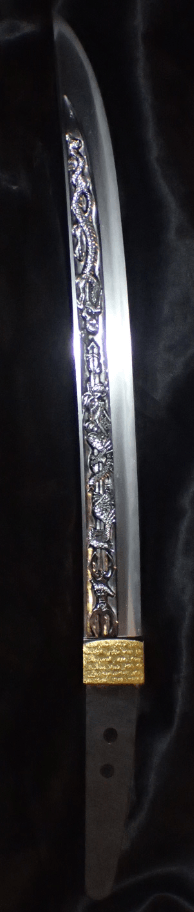
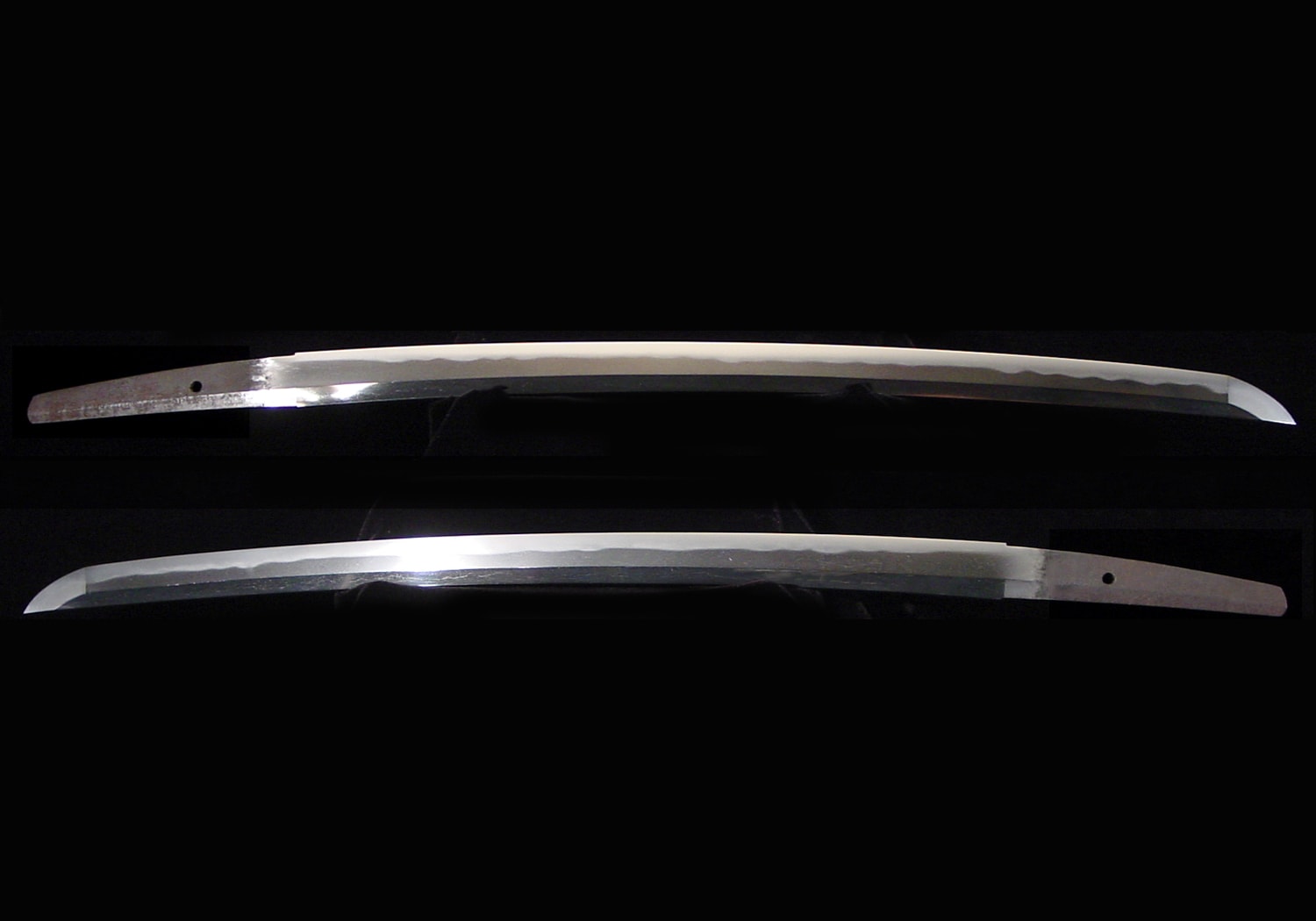
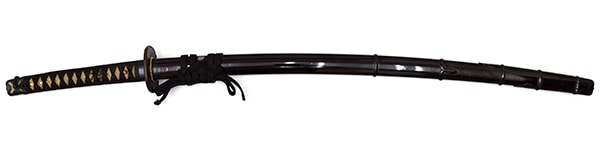
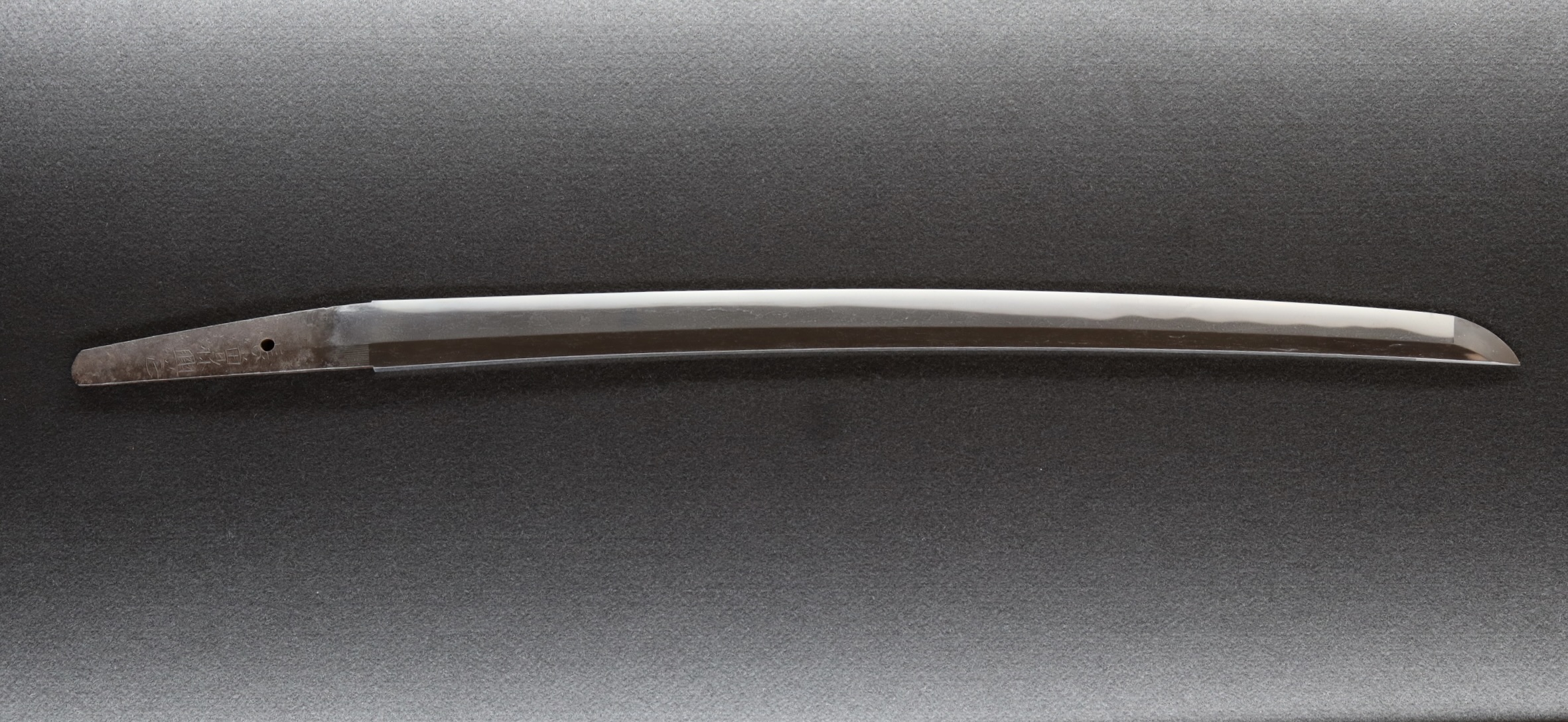
This is a wakizashi made by Chosone Okimasa in Musashi province during the Edo period. Okimasa was a student and adopted son of 1st Gen. Kotetsu. The blade features a shallow notare hamon with small gunome and a "Kotetsu" style boshi.

NihontoWatch MonNihontoWatch
MarketEncyclopediaKantei
Swords›Kotetsu›Okimasa›Wakizashi: Chosone Okimasa
wakizashiTokubetsu Hozon
Kotetsu Okimasa

Wakizashi: Chosone Okimasa

mei · Edo · nagasa 53.7cm · sori 0.8cm

SOLD
Kotetsu Okimasa (興正) · EdoView artist page →
Wakizashi
Could you name the smith from the blade alone? Today’s kantei →
Kotetsu Okimasa — 1 of 9
Kotetsu Okimasa — 2 of 9
Kotetsu Okimasa — 3 of 9
Kotetsu Okimasa — 4 of 9
Kotetsu Okimasa — 5 of 9
Kotetsu Okimasa — 6 of 9
Kotetsu Okimasa — 7 of 9
Kotetsu Okimasa — 8 of 9
Kotetsu Okimasa — 9 of 9
1 / 9
1 / 9
Kotetsu Okimasa — 1 of 9Kotetsu Okimasa — 2 of 9Kotetsu Okimasa — 3 of 9Kotetsu Okimasa — 4 of 9Kotetsu Okimasa — 5 of 9Kotetsu Okimasa — 6 of 9Kotetsu Okimasa — 7 of 9Kotetsu Okimasa — 8 of 9Kotetsu Okimasa — 9 of 9
Kotetsu Okimasa (興正) · EdoView artist page →
Wakizashi
Could you name the smith from the blade alone? Today’s kantei →
Measurements & details
Smith
Kotetsu Okimasa
Type
Wakizashi
School
Kotetsu
Period
Around 1661–1690(Kanbun)
Province
Musashi
Signature
Signed(100% of this smith's designated works are signed)
Measurements
Nagasa 53.7cmSori 0.8cmMotohaba 2.8cmSakihaba 2.3cmKasane 0.6cm
Description

This is a wakizashi made by Chosone Okimasa in Musashi province during the Edo period. Okimasa was a student and adopted son of 1st Gen. Kotetsu. The blade features a shallow notare hamon with small gunome and a "Kotetsu" style boshi.

About the maker

Okimasa

興正

Nagasone Kotetsu school (Edo, Shinto) · Musashi · around 1661-1690

Fujishiro Jo-jo saku · Tōken Taikan top 14%

›

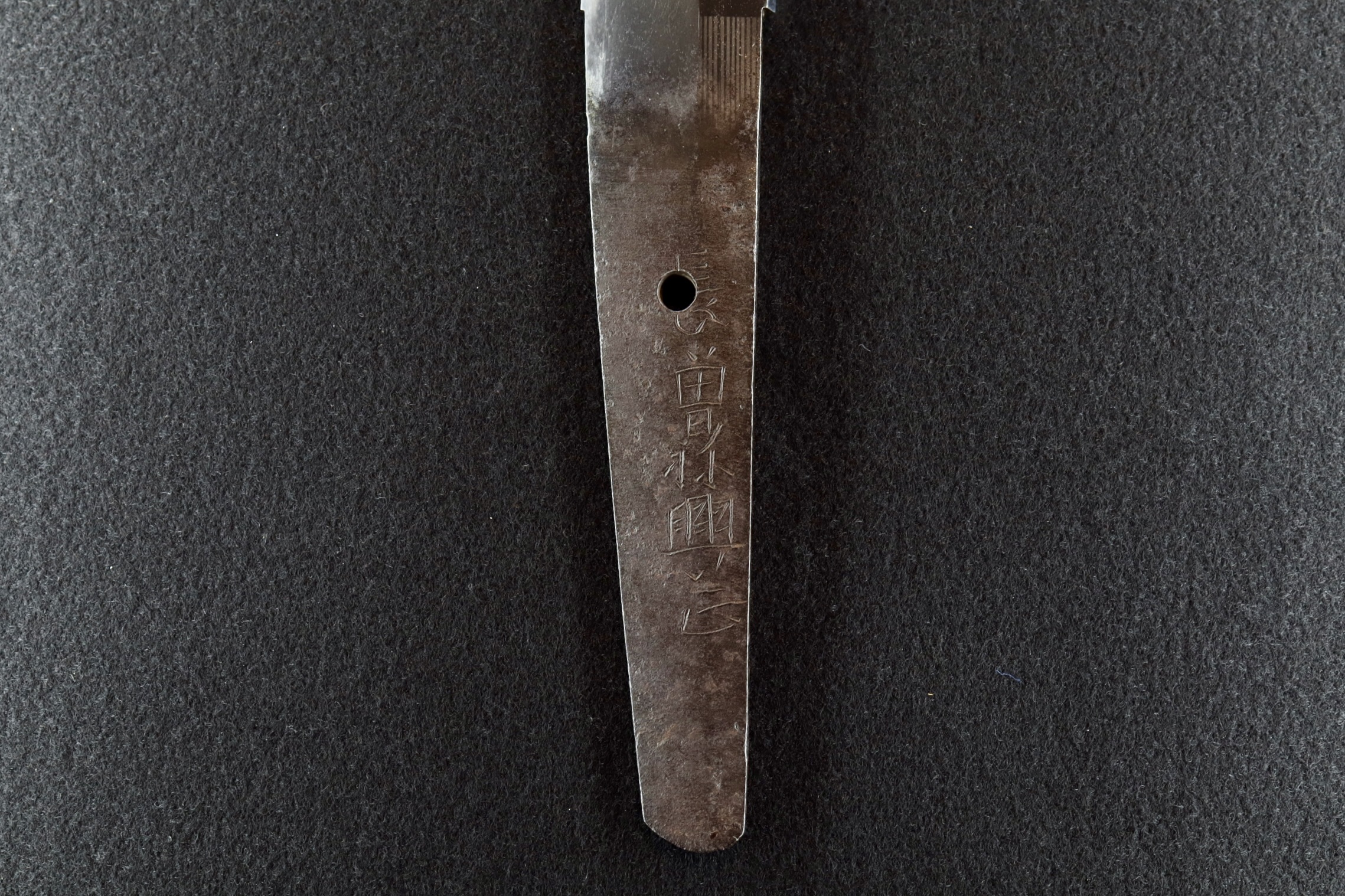
Among the works of Nagasone Okimasa that Honma examined, one Genroku katana is judged to be the foremost, and the published commentary holds that it approaches the fine work of Kotetsu himself[[c:1]]. Okimasa is the heir of the Kotetsu school. The published sources record that he studied under Nagasone Kotetsu Okisato, was later adopted, and succeeded as the second-generation Kotetsu, his technical ability standing second only to his master[[c:2]]. They go further: among blades signed Kotetsu there are probably pieces made as Okimasa's daisaku, substitute workmanship for the master, so that the two hands are not always separable. The dated work that can be verified runs from Kanbun 13 (1673) to Genroku 3 (1690), the silhouette throughout the wide-bodied, shallow-curved, chu-kissaki shape of the Kanbun-Shinto era. He worked in Edo, in the years when the late master's name had become the most sought in the city.

His representative hand is the juzu-ba inherited from Kotetsu, a chain of round-headed gunome linked along the edge like a string of prayer beads. The published sources call this manner his forte and read it as the hand received from his master. Two things make it his own rather than a copy, and the commentary names both. The first is a habatori in which the gunome run together in paired units, futatsu-zure, surfacing repeatedly through the temper. The second is the quality of the nie: it runs somewhat coarser than Kotetsu's and breaks into basake, a patchy unevenness in the hardened edge. The judges treat this not as a defect but as a point of interest, the very feature by which Okimasa is recognized. On one wakizashi the published record reads, "in points such as the nie set somewhat coarse and the sunagashi applied vigorously, Okimasa's characteristics are well displayed[[c:3]]."

The jigane over which this temper sits is a well-packed ko-itame, often mixed with mokume and at times standing into open itame, with fine ji-nie laid thickly in a dust-like mijin and chikei entering throughout, so that the steel reads bright and clear. Over it the hamon opens with a suguha-toned yakidashi at the base, the Edo convention, then rises into the juzu-ba on a notare foundation. Thick ashi and yo enter, the nioi is deep, ko-nie adheres, kinsuji and long sunagashi run through, and the nioiguchi stays bright. The boshi runs straight into a ko-maru with hakikake toward the point. Several blades bear bo-hi carved through the body, and a number carry gold-inlaid cutting-test inscriptions on the reverse, recording the blade's proven cutting power.

The published sources are candid that Okimasa is hard to date. His signatures take many forms, dated examples are few, and the kaisho form of the character masa is noted to appear only on Enpo 4 pieces. Within his oeuvre the commentary draws two manners. One is the juzu-ba prime described above, brought on his best blades to what the judges call a fully satisfying result, spirited and forceful. The other stands a little apart: the yakihaba widens into a shallow large notare, the nie running strong and uneven with yubashiri-like patches and tobiyaki mixed in, on a robust wide body with thick kasane and deep curvature. Of one such katana the sources speak of a manner overflowing with rustic vigor[[c:4]], heroic in its grandeur, while noting that the bright nioiguchi and the paired gunome that still surface betray the same hand. One vein of this bolder work the commentary reads as touching the style of Izumi-no-kami Kaneshige, a connection between Kaneshige and the Nagasone group.

What sets Okimasa apart is measured against his master and within his own house. The judges read his blades as truly in the Kotetsu manner, yet repeatedly point to the wider yakihaba, the paired gunome, and the coarser, basake-prone nie as the places where he diverges from Kotetsu's calmer, cleaner edge. He is the open, public face of the line: as second-generation Kotetsu he signed and stood at the front, while one gassaku katana, returned from the United States, preserves an inscription showing the smiths Okihisa and Okinao supporting him behind the scenes. Signatures reading Kotetsu Okimasa make the succession explicit on the tang itself, and one such long-signed katana the commentary singles out as a work in which he pursued his own individuality while inheriting the master's style.

For the collector he is a leading Shinto name whose best signed katana, the sources say, approach Kotetsu's own. Fujishiro grades him Jo-jo saku. He has no National Treasures and no Important Cultural Properties; his record runs instead through the Juyo rank, twenty-five blades in that tier, together with one katana certified Juyo Bijutsuhin in 1942, the piece Honma called the foremost of the maker's works he had seen[[c:5]]. Provenance is recorded only thinly: an Ito family katana and a blade once held by Wada Torao, with no museum holder on record. A signed Okimasa, then, is held more often than it is traded, and a katana in his juzu-ba manner, sound in body and bright in the edge, comes to a private collector only from time to time, a document of the Kotetsu line at the moment its second generation took it up.

Historical importance

Where Okimasa stands among comparable artisans: across all of nihontō, and within tradition, era, and period. The tiers (Foremost · Leading · Major · Notable) weigh official designations from the NBTHK and Japan's Agency for Cultural Affairs, together with historical honors of lasting repute such as the Sansaku and Meibutsu-chō.

随一
Foremost
屈指
Leading
有数
Major
著名
Notable

Select a lens to see how it's measured.

Designation record
26 designated works
Jūyō Bijutsuhin
1
Jūyō
25
Okimasa — full profileNagasone Kotetsu school (Edo, Shinto) school

Dated Works

Years he was demonstrably active, proven by signed-and-dated blades

Active period
1673–1681Editorial estimate: 1661–1690
3 of 24 designated works carry a date
1670
1680
1690

Study this maker →

About the school

Kotetsu

虎徹

Shinto · Musashi

4 pieces on the market now

›

Nagasone Okisato, who took the smithing name Kotetsu (虎徹), began his career not at the forge of the swordsmith but at that of the armorer, working as a katchūshi in Echizen Province. Around Meireki 2 (1656), when he was about fifty years of age, he relocated to Edo and changed his profession to swordsmithing, settling in the area of Tōeizan and Shinobugaoka. The setsumei record that his common name was Sannojō; he first signed Okisato, and after taking Buddhist vows styled himself Kotetsu Nyūdō. The written form of the name itself moved through stages, beginning with the characters 古鉄 ("old iron"), shifting to 虎徹, and from the eighth month of Kanbun 4 (1664) onward to the variant forms 乕徹 and 馬徹. His dated blades run from Meireki 2 to Enpō 5 (1677), the latter being the last year for which work survives. His pupil and adopted son Nagasone Okimasa (興正) succeeded him as the second generation, working from Kanbun 13 (1673) to Genroku 3 (1690); the registers note that certain blades signed by the master were in fact Okimasa's daisaku, or substitute work. The setsumei describe a shared vocabulary that holds across the line. The foundation is a strong jigane, forged as a tightly packed ko-itame in which ji-nie adheres thickly, fine chikei enter, and the steel reads bright and clear; a mottled inclusion the catalogues call teko-tetsu or tekkotsu appears as a recognized trait. The sugata is the robust Kanbun-shinto silhouette, with shallow sori, marked taper from base to tip, and a chū-kissaki. Most blades open with a short straight yakidashi.

The hamon falls into two recorded phases: the earlier hyōtan-ba, a gourd pattern in which large and small gunome connect with pronounced rises and falls, and the later juzu-ba, the rosary-bead temper of round-headed gunome linked along an even line, often worked over a shallow notare. Thick ashi enter, the nioi runs deep, ko-nie lies thickly, and kinsuji and sunagashi play within the nioiguchi, which is consistently bright. " Several blades carry horimono cut by the smith's own hand, from Fūjin and Raijin to Kurikara and Sanskrit seed-syllables, and the cutting reputation is documented through gold-inlaid kinzōgan test inscriptions on the tang. For the collector, recognition turns on these named points: the juzu-ba of the mature work, the bright order of ji and ha, the teko-tetsu in the ground, and the long signature in fine chisel-work centered on the shinogi-suji, with the first character cut so as to overlap the mekugi-ana. The catalogues distinguish the earlier hane-tora manner of writing the tora character from the later hako-tora phase, which they treat as a dating tool. The cutting-test inscriptions give Kotetsu a place among the swords valued for performance as well as form, and the rarity of certain shapes adds weight: tantō by his hand number perhaps fewer than ten, and in those the Sōshū-den feeling is described as especially strong. Named works carry provenance through the front rank of collecting, among them a katana transmitted in the Nabeshima family of Hizen and known as "Nabeshima Tetsu," confirmed by a sayagaki of Satō Kanzan, and blades formerly held by figures such as Inukai Bokudō. Okimasa stands a step behind his master in the registers, his deeper nioi and thicker nie read as a personal voice within the inherited juzu-ba. The line occupies a central position in the study of Edo shinto, its work measured by the strength of its steel and the discipline of its bright temper. Learn more →

5 recorded smiths162 designated works
Leading smiths
SmithEraDesignated
Kotetsu虎徹1644-1677128
Okimasa興正1661-169026
Nagasone Kotetsu長曽祢興里c.1597-16784
Okihisa興久1673-16812
Toranyudo虎入道1661-16732
Explore the Kotetsu school →

Historical context

Edo: the shogun’s market

›

Edo held Japan’s largest sword-wearing population, gathered by the alternate attendance system. The shogunal smith Yasutsugu was granted the Aoi crest for his tangs; many of Kotetsu’s blades carry gold-inlaid cutting attestations. Proof mattered here.

Edo: the shogun’s market →

NBTHK Certificate
Tokubetsu Hozon Tōken特別保存刀剣
Sword Especially Worthy of Preservation
›

A Hozon-certified blade judged to show notably superior workmanship and a better state of preservation. The bar is higher: re-tempered blades and most unsigned Muromachi/Edo works are excluded.

About the NBTHK›

The NBTHK (Nihon Bijutsu Tōken Hozon Kyōkai, the Society for the Preservation of Japanese Art Swords) is a public-interest incorporated foundation founded in 1948 and supervised by Japan’s Agency for Cultural Affairs (Bunkachō); it is based at the Japanese Sword Museum in Tokyo. Its expert panels physically examine each submitted work (shinsa) and issue a certificate (kanteishō) ranking it by artistic and historical merit. NBTHK papers are the most widely recognized standard of authentication for Japanese swords and fittings.

NBTHK official site→
Seller
K
Kanda Toukodo
🇯🇵Ships from Japan
›
✓Verified dealerkandatoukodo.com
✓Ships worldwide✓English supportWire transferPayPal
Return policy

No cooling-off / return system for customers outside Japan. Order canceled if payment not confirmed within 7 days.

View all of Kanda Toukodo’s listings→View this item on the dealer’s site→

Previously sold by Kotetsu Okimasa

View all →
Choshuya
Katana - by Kotetsu Okimasa - Japanese Sword for Sale | Ginza Choshuya | Signed Nagasone Okimasa (Saijo O Wazamono), 222Katana - by Kotetsu Okimasa - Japanese Sword for Sale | Ginza Choshuya | Signed Nagasone Okimasa (Saijo O Wazamono), 222
Sold

Katana

ByKotetsu Okimasa
SOLD
Choshuya
Katana - by Kotetsu Okimasa - Nagasone Okimasa (Saijo O Wazamono)Katana - by Kotetsu Okimasa - Nagasone Okimasa (Saijo O Wazamono)
Sold

Katana

ByKotetsu Okimasa
SOLD
Katanahanbai
Jūyō
Katana - Jūyō - by Kotetsu Okimasa - Juyo Token: Saijo Saku, Saijo O Wazamono Katana by Nagasone OkimasaKatana - Jūyō - by Kotetsu Okimasa - Juyo Token: Saijo Saku, Saijo O Wazamono Katana by Nagasone Okimasa
Sold

Katana

ByKotetsu Okimasa
SOLD
Giheiya
Tokuho
Wakizashi - Tokuho - by Kotetsu Okimasa - Tokubetsu Hozon Token: Nagasone Kose - 1 Shaku 7 Sun 2.5 Bu, with ShirasayaWakizashi - Tokuho - by Kotetsu Okimasa - Tokubetsu Hozon Token: Nagasone Kose - 1 Shaku 7 Sun 2.5 Bu, with Shirasaya
Sold

Wakizashi

ByKotetsu Okimasa
SOLD
World Seiyudo
Tokuho
Wakizashi - Tokuho - by Kotetsu Okimasa - Nagasone OkimasaWakizashi - Tokuho - by Kotetsu Okimasa - Nagasone Okimasa
Sold

Wakizashi

ByKotetsu Okimasa
SOLD
Samurai Museum
Tokubetsu Kichō
Wakizashi - Tokubetsu Kichō - by Kotetsu Okimasa - Antique Japanese Sword Wakizashi Signed by Nagasone Okimasa NBTHK Koshu Tokubetsu Kicho CertificateWakizashi - Tokubetsu Kichō - by Kotetsu Okimasa - Antique Japanese Sword Wakizashi Signed by Nagasone Okimasa NBTHK Koshu Tokubetsu Kicho Certificate
Sold

Wakizashi

ByKotetsu Okimasa
SOLD
World Seiyudo
Jūyō
Wakizashi - Jūyō - by Kotetsu Okimasa - Nagasone Okimasa (Kotetsu) - NBTHK Juyo TokenWakizashi - Jūyō - by Kotetsu Okimasa - Nagasone Okimasa (Kotetsu) - NBTHK Juyo Token
Sold

Wakizashi

ByKotetsu Okimasa
SOLD
Nihonto US
Wakizashi - by Kotetsu Okimasa - Nagasone OkimasaWakizashi - by Kotetsu Okimasa - Nagasone Okimasa
Sold

Wakizashi

ByKotetsu Okimasa
SOLD

More from the Kotetsu school

View all →
Aoi Art
Jūyō
Katana - Jūyō - by Kotetsu - Nagasone Okisato Nyudo Kotetsu with Saidan-meiKatana - Jūyō - by Kotetsu - Nagasone Okisato Nyudo Kotetsu with Saidan-mei

Katana

ByKotetsu
¥60,000,000
Nihonto Australia
Tanto - by Kotetsu - Kotetsu with Koshirae by Miyata NobukiyoTanto - by Kotetsu - Kotetsu with Koshirae by Miyata Nobukiyo

Tantō

ByKotetsu
Ask
Nihonto.com
Jūyō
Wakizashi - Jūyō - by Kotetsu - Wakizashi by Nagasone KotetsuWakizashi - Jūyō - by Kotetsu - Wakizashi by Nagasone Kotetsu

Wakizashi

ByKotetsu
Ask
Toushin
Hozon
Katana - Hozon - by Kotetsu School - Nagasone OkimasaKatana - Hozon - by Kotetsu School - Nagasone Okimasa

Katana

ByKotetsu School
¥699,600

Swords

  • Katana
  • Wakizashi
  • Tantō
  • Tachi
  • Naginata
  • Yari
  • Japanese Swords
  • Samurai Swords

Fittings

  • Tsuba
  • Fuchi-Kashira
  • Kozuka
  • Menuki
  • Sword Guards (Tsuba)

Armor

  • Kabuto
  • Samurai Armor
  • All Samurai Armor

By Certification

  • Tokujū
  • Jūyō
  • Tokuho
  • Hozon

Resources

  • Dealer Directory
  • Artist Directory
  • The Daily Kantei
  • Glossary
  • Browse All
Nihontowatch© 2026
TermsPrivacyCookiesAbout
Sold

Description

This is a wakizashi made by Chosone Okimasa in Musashi province during the Edo period. Okimasa was a student and adopted son of 1st Gen. Kotetsu. The blade features a shallow notare hamon with small gunome and a "Kotetsu" style boshi.

NihontoWatch MonNihontoWatch
MarketEncyclopediaKantei
Swords›Kotetsu›Okimasa›Wakizashi: Chosone Okimasa
wakizashiTokubetsu Hozon
Kotetsu Okimasa

Wakizashi: Chosone Okimasa

mei · Edo · nagasa 53.7cm · sori 0.8cm

SOLD
Kotetsu Okimasa (興正) · EdoView artist page →
Wakizashi
Could you name the smith from the blade alone? Today’s kantei →
Kotetsu Okimasa — 1 of 9
Kotetsu Okimasa — 2 of 9
Kotetsu Okimasa — 3 of 9
Kotetsu Okimasa — 4 of 9
Kotetsu Okimasa — 5 of 9
Kotetsu Okimasa — 6 of 9
Kotetsu Okimasa — 7 of 9
Kotetsu Okimasa — 8 of 9
Kotetsu Okimasa — 9 of 9
1 / 9
1 / 9
Kotetsu Okimasa — 1 of 9Kotetsu Okimasa — 2 of 9Kotetsu Okimasa — 3 of 9Kotetsu Okimasa — 4 of 9Kotetsu Okimasa — 5 of 9Kotetsu Okimasa — 6 of 9Kotetsu Okimasa — 7 of 9Kotetsu Okimasa — 8 of 9Kotetsu Okimasa — 9 of 9
Kotetsu Okimasa (興正) · EdoView artist page →
Wakizashi
Could you name the smith from the blade alone? Today’s kantei →
Measurements & details
Smith
Kotetsu Okimasa
Type
Wakizashi
School
Kotetsu
Period
Around 1661–1690(Kanbun)
Province
Musashi
Signature
Signed(100% of this smith's designated works are signed)
Measurements
Nagasa 53.7cmSori 0.8cmMotohaba 2.8cmSakihaba 2.3cmKasane 0.6cm
Description

This is a wakizashi made by Chosone Okimasa in Musashi province during the Edo period. Okimasa was a student and adopted son of 1st Gen. Kotetsu. The blade features a shallow notare hamon with small gunome and a "Kotetsu" style boshi.

About the maker

Okimasa

興正

Nagasone Kotetsu school (Edo, Shinto) · Musashi · around 1661-1690

Fujishiro Jo-jo saku · Tōken Taikan top 14%

›

Among the works of Nagasone Okimasa that Honma examined, one Genroku katana is judged to be the foremost, and the published commentary holds that it approaches the fine work of Kotetsu himself[[c:1]]. Okimasa is the heir of the Kotetsu school. The published sources record that he studied under Nagasone Kotetsu Okisato, was later adopted, and succeeded as the second-generation Kotetsu, his technical ability standing second only to his master[[c:2]]. They go further: among blades signed Kotetsu there are probably pieces made as Okimasa's daisaku, substitute workmanship for the master, so that the two hands are not always separable. The dated work that can be verified runs from Kanbun 13 (1673) to Genroku 3 (1690), the silhouette throughout the wide-bodied, shallow-curved, chu-kissaki shape of the Kanbun-Shinto era. He worked in Edo, in the years when the late master's name had become the most sought in the city.

His representative hand is the juzu-ba inherited from Kotetsu, a chain of round-headed gunome linked along the edge like a string of prayer beads. The published sources call this manner his forte and read it as the hand received from his master. Two things make it his own rather than a copy, and the commentary names both. The first is a habatori in which the gunome run together in paired units, futatsu-zure, surfacing repeatedly through the temper. The second is the quality of the nie: it runs somewhat coarser than Kotetsu's and breaks into basake, a patchy unevenness in the hardened edge. The judges treat this not as a defect but as a point of interest, the very feature by which Okimasa is recognized. On one wakizashi the published record reads, "in points such as the nie set somewhat coarse and the sunagashi applied vigorously, Okimasa's characteristics are well displayed[[c:3]]."

The jigane over which this temper sits is a well-packed ko-itame, often mixed with mokume and at times standing into open itame, with fine ji-nie laid thickly in a dust-like mijin and chikei entering throughout, so that the steel reads bright and clear. Over it the hamon opens with a suguha-toned yakidashi at the base, the Edo convention, then rises into the juzu-ba on a notare foundation. Thick ashi and yo enter, the nioi is deep, ko-nie adheres, kinsuji and long sunagashi run through, and the nioiguchi stays bright. The boshi runs straight into a ko-maru with hakikake toward the point. Several blades bear bo-hi carved through the body, and a number carry gold-inlaid cutting-test inscriptions on the reverse, recording the blade's proven cutting power.

The published sources are candid that Okimasa is hard to date. His signatures take many forms, dated examples are few, and the kaisho form of the character masa is noted to appear only on Enpo 4 pieces. Within his oeuvre the commentary draws two manners. One is the juzu-ba prime described above, brought on his best blades to what the judges call a fully satisfying result, spirited and forceful. The other stands a little apart: the yakihaba widens into a shallow large notare, the nie running strong and uneven with yubashiri-like patches and tobiyaki mixed in, on a robust wide body with thick kasane and deep curvature. Of one such katana the sources speak of a manner overflowing with rustic vigor[[c:4]], heroic in its grandeur, while noting that the bright nioiguchi and the paired gunome that still surface betray the same hand. One vein of this bolder work the commentary reads as touching the style of Izumi-no-kami Kaneshige, a connection between Kaneshige and the Nagasone group.

What sets Okimasa apart is measured against his master and within his own house. The judges read his blades as truly in the Kotetsu manner, yet repeatedly point to the wider yakihaba, the paired gunome, and the coarser, basake-prone nie as the places where he diverges from Kotetsu's calmer, cleaner edge. He is the open, public face of the line: as second-generation Kotetsu he signed and stood at the front, while one gassaku katana, returned from the United States, preserves an inscription showing the smiths Okihisa and Okinao supporting him behind the scenes. Signatures reading Kotetsu Okimasa make the succession explicit on the tang itself, and one such long-signed katana the commentary singles out as a work in which he pursued his own individuality while inheriting the master's style.

For the collector he is a leading Shinto name whose best signed katana, the sources say, approach Kotetsu's own. Fujishiro grades him Jo-jo saku. He has no National Treasures and no Important Cultural Properties; his record runs instead through the Juyo rank, twenty-five blades in that tier, together with one katana certified Juyo Bijutsuhin in 1942, the piece Honma called the foremost of the maker's works he had seen[[c:5]]. Provenance is recorded only thinly: an Ito family katana and a blade once held by Wada Torao, with no museum holder on record. A signed Okimasa, then, is held more often than it is traded, and a katana in his juzu-ba manner, sound in body and bright in the edge, comes to a private collector only from time to time, a document of the Kotetsu line at the moment its second generation took it up.
Historical importance

Where Okimasa stands among comparable artisans: across all of nihontō, and within tradition, era, and period. The tiers (Foremost · Leading · Major · Notable) weigh official designations from the NBTHK and Japan's Agency for Cultural Affairs, together with historical honors of lasting repute such as the Sansaku and Meibutsu-chō.

随一
Foremost
屈指
Leading
有数
Major
著名
Notable

Select a lens to see how it's measured.

Designation record
26 designated works
Jūyō Bijutsuhin
1
Jūyō
25
Okimasa — full profileNagasone Kotetsu school (Edo, Shinto) school

Dated Works

Years he was demonstrably active, proven by signed-and-dated blades

Active period
1673–1681Editorial estimate: 1661–1690
3 of 24 designated works carry a date
1670
1680
1690

Study this maker →

About the school

Kotetsu

虎徹

Shinto · Musashi

4 pieces on the market now

›

Nagasone Okisato, who took the smithing name Kotetsu (虎徹), began his career not at the forge of the swordsmith but at that of the armorer, working as a katchūshi in Echizen Province. Around Meireki 2 (1656), when he was about fifty years of age, he relocated to Edo and changed his profession to swordsmithing, settling in the area of Tōeizan and Shinobugaoka. The setsumei record that his common name was Sannojō; he first signed Okisato, and after taking Buddhist vows styled himself Kotetsu Nyūdō. The written form of the name itself moved through stages, beginning with the characters 古鉄 ("old iron"), shifting to 虎徹, and from the eighth month of Kanbun 4 (1664) onward to the variant forms 乕徹 and 馬徹. His dated blades run from Meireki 2 to Enpō 5 (1677), the latter being the last year for which work survives. His pupil and adopted son Nagasone Okimasa (興正) succeeded him as the second generation, working from Kanbun 13 (1673) to Genroku 3 (1690); the registers note that certain blades signed by the master were in fact Okimasa's daisaku, or substitute work. The setsumei describe a shared vocabulary that holds across the line. The foundation is a strong jigane, forged as a tightly packed ko-itame in which ji-nie adheres thickly, fine chikei enter, and the steel reads bright and clear; a mottled inclusion the catalogues call teko-tetsu or tekkotsu appears as a recognized trait. The sugata is the robust Kanbun-shinto silhouette, with shallow sori, marked taper from base to tip, and a chū-kissaki. Most blades open with a short straight yakidashi.

The hamon falls into two recorded phases: the earlier hyōtan-ba, a gourd pattern in which large and small gunome connect with pronounced rises and falls, and the later juzu-ba, the rosary-bead temper of round-headed gunome linked along an even line, often worked over a shallow notare. Thick ashi enter, the nioi runs deep, ko-nie lies thickly, and kinsuji and sunagashi play within the nioiguchi, which is consistently bright. " Several blades carry horimono cut by the smith's own hand, from Fūjin and Raijin to Kurikara and Sanskrit seed-syllables, and the cutting reputation is documented through gold-inlaid kinzōgan test inscriptions on the tang. For the collector, recognition turns on these named points: the juzu-ba of the mature work, the bright order of ji and ha, the teko-tetsu in the ground, and the long signature in fine chisel-work centered on the shinogi-suji, with the first character cut so as to overlap the mekugi-ana. The catalogues distinguish the earlier hane-tora manner of writing the tora character from the later hako-tora phase, which they treat as a dating tool. The cutting-test inscriptions give Kotetsu a place among the swords valued for performance as well as form, and the rarity of certain shapes adds weight: tantō by his hand number perhaps fewer than ten, and in those the Sōshū-den feeling is described as especially strong. Named works carry provenance through the front rank of collecting, among them a katana transmitted in the Nabeshima family of Hizen and known as "Nabeshima Tetsu," confirmed by a sayagaki of Satō Kanzan, and blades formerly held by figures such as Inukai Bokudō. Okimasa stands a step behind his master in the registers, his deeper nioi and thicker nie read as a personal voice within the inherited juzu-ba. The line occupies a central position in the study of Edo shinto, its work measured by the strength of its steel and the discipline of its bright temper. Learn more →

5 recorded smiths162 designated works
Leading smiths
SmithEraDesignated
Kotetsu虎徹1644-1677128
Okimasa興正1661-169026
Nagasone Kotetsu長曽祢興里c.1597-16784
Okihisa興久1673-16812
Toranyudo虎入道1661-16732
Explore the Kotetsu school →

Historical context

Edo: the shogun’s market

›

Edo held Japan’s largest sword-wearing population, gathered by the alternate attendance system. The shogunal smith Yasutsugu was granted the Aoi crest for his tangs; many of Kotetsu’s blades carry gold-inlaid cutting attestations. Proof mattered here.

Edo: the shogun’s market →

NBTHK Certificate
Tokubetsu Hozon Tōken特別保存刀剣
Sword Especially Worthy of Preservation
›

A Hozon-certified blade judged to show notably superior workmanship and a better state of preservation. The bar is higher: re-tempered blades and most unsigned Muromachi/Edo works are excluded.

About the NBTHK›

The NBTHK (Nihon Bijutsu Tōken Hozon Kyōkai, the Society for the Preservation of Japanese Art Swords) is a public-interest incorporated foundation founded in 1948 and supervised by Japan’s Agency for Cultural Affairs (Bunkachō); it is based at the Japanese Sword Museum in Tokyo. Its expert panels physically examine each submitted work (shinsa) and issue a certificate (kanteishō) ranking it by artistic and historical merit. NBTHK papers are the most widely recognized standard of authentication for Japanese swords and fittings.

NBTHK official site→
Seller
K
Kanda Toukodo
🇯🇵Ships from Japan
›
✓Verified dealerkandatoukodo.com
✓Ships worldwide✓English supportWire transferPayPal
Return policy

No cooling-off / return system for customers outside Japan. Order canceled if payment not confirmed within 7 days.

View all of Kanda Toukodo’s listings→View this item on the dealer’s site→

Previously sold by Kotetsu Okimasa

View all →
Choshuya
Katana - by Kotetsu Okimasa - Japanese Sword for Sale | Ginza Choshuya | Signed Nagasone Okimasa (Saijo O Wazamono), 222Katana - by Kotetsu Okimasa - Japanese Sword for Sale | Ginza Choshuya | Signed Nagasone Okimasa (Saijo O Wazamono), 222
Sold

Katana

ByKotetsu Okimasa
SOLD
Choshuya
Katana - by Kotetsu Okimasa - Nagasone Okimasa (Saijo O Wazamono)Katana - by Kotetsu Okimasa - Nagasone Okimasa (Saijo O Wazamono)
Sold

Katana

ByKotetsu Okimasa
SOLD
Katanahanbai
Jūyō
Katana - Jūyō - by Kotetsu Okimasa - Juyo Token: Saijo Saku, Saijo O Wazamono Katana by Nagasone OkimasaKatana - Jūyō - by Kotetsu Okimasa - Juyo Token: Saijo Saku, Saijo O Wazamono Katana by Nagasone Okimasa
Sold

Katana

ByKotetsu Okimasa
SOLD
Giheiya
Tokuho
Wakizashi - Tokuho - by Kotetsu Okimasa - Tokubetsu Hozon Token: Nagasone Kose - 1 Shaku 7 Sun 2.5 Bu, with ShirasayaWakizashi - Tokuho - by Kotetsu Okimasa - Tokubetsu Hozon Token: Nagasone Kose - 1 Shaku 7 Sun 2.5 Bu, with Shirasaya
Sold

Wakizashi

ByKotetsu Okimasa
SOLD
World Seiyudo
Tokuho
Wakizashi - Tokuho - by Kotetsu Okimasa - Nagasone OkimasaWakizashi - Tokuho - by Kotetsu Okimasa - Nagasone Okimasa
Sold

Wakizashi

ByKotetsu Okimasa
SOLD
Samurai Museum
Tokubetsu Kichō
Wakizashi - Tokubetsu Kichō - by Kotetsu Okimasa - Antique Japanese Sword Wakizashi Signed by Nagasone Okimasa NBTHK Koshu Tokubetsu Kicho CertificateWakizashi - Tokubetsu Kichō - by Kotetsu Okimasa - Antique Japanese Sword Wakizashi Signed by Nagasone Okimasa NBTHK Koshu Tokubetsu Kicho Certificate
Sold

Wakizashi

ByKotetsu Okimasa
SOLD
World Seiyudo
Jūyō
Wakizashi - Jūyō - by Kotetsu Okimasa - Nagasone Okimasa (Kotetsu) - NBTHK Juyo TokenWakizashi - Jūyō - by Kotetsu Okimasa - Nagasone Okimasa (Kotetsu) - NBTHK Juyo Token
Sold

Wakizashi

ByKotetsu Okimasa
SOLD
Nihonto US
Wakizashi - by Kotetsu Okimasa - Nagasone OkimasaWakizashi - by Kotetsu Okimasa - Nagasone Okimasa
Sold

Wakizashi

ByKotetsu Okimasa
SOLD

More from the Kotetsu school

View all →
Aoi Art
Jūyō
Katana - Jūyō - by Kotetsu - Nagasone Okisato Nyudo Kotetsu with Saidan-meiKatana - Jūyō - by Kotetsu - Nagasone Okisato Nyudo Kotetsu with Saidan-mei

Katana

ByKotetsu
¥60,000,000
Nihonto Australia
Tanto - by Kotetsu - Kotetsu with Koshirae by Miyata NobukiyoTanto - by Kotetsu - Kotetsu with Koshirae by Miyata Nobukiyo

Tantō

ByKotetsu
Ask
Nihonto.com
Jūyō
Wakizashi - Jūyō - by Kotetsu - Wakizashi by Nagasone KotetsuWakizashi - Jūyō - by Kotetsu - Wakizashi by Nagasone Kotetsu

Wakizashi

ByKotetsu
Ask
Toushin
Hozon
Katana - Hozon - by Kotetsu School - Nagasone OkimasaKatana - Hozon - by Kotetsu School - Nagasone Okimasa

Katana

ByKotetsu School
¥699,600

Swords

  • Katana
  • Wakizashi
  • Tantō
  • Tachi
  • Naginata
  • Yari
  • Japanese Swords
  • Samurai Swords

Fittings

  • Tsuba
  • Fuchi-Kashira
  • Kozuka
  • Menuki
  • Sword Guards (Tsuba)

Armor

  • Kabuto
  • Samurai Armor
  • All Samurai Armor

By Certification

  • Tokujū
  • Jūyō
  • Tokuho
  • Hozon

Resources

  • Dealer Directory
  • Artist Directory
  • The Daily Kantei
  • Glossary
  • Browse All
Nihontowatch© 2026
TermsPrivacyCookiesAbout
Sold
NihontoWatch MonNihontoWatch
Market
Encyclopedia
Kantei
NihontoWatch MonNihontoWatch
Market
Encyclopedia
Kantei