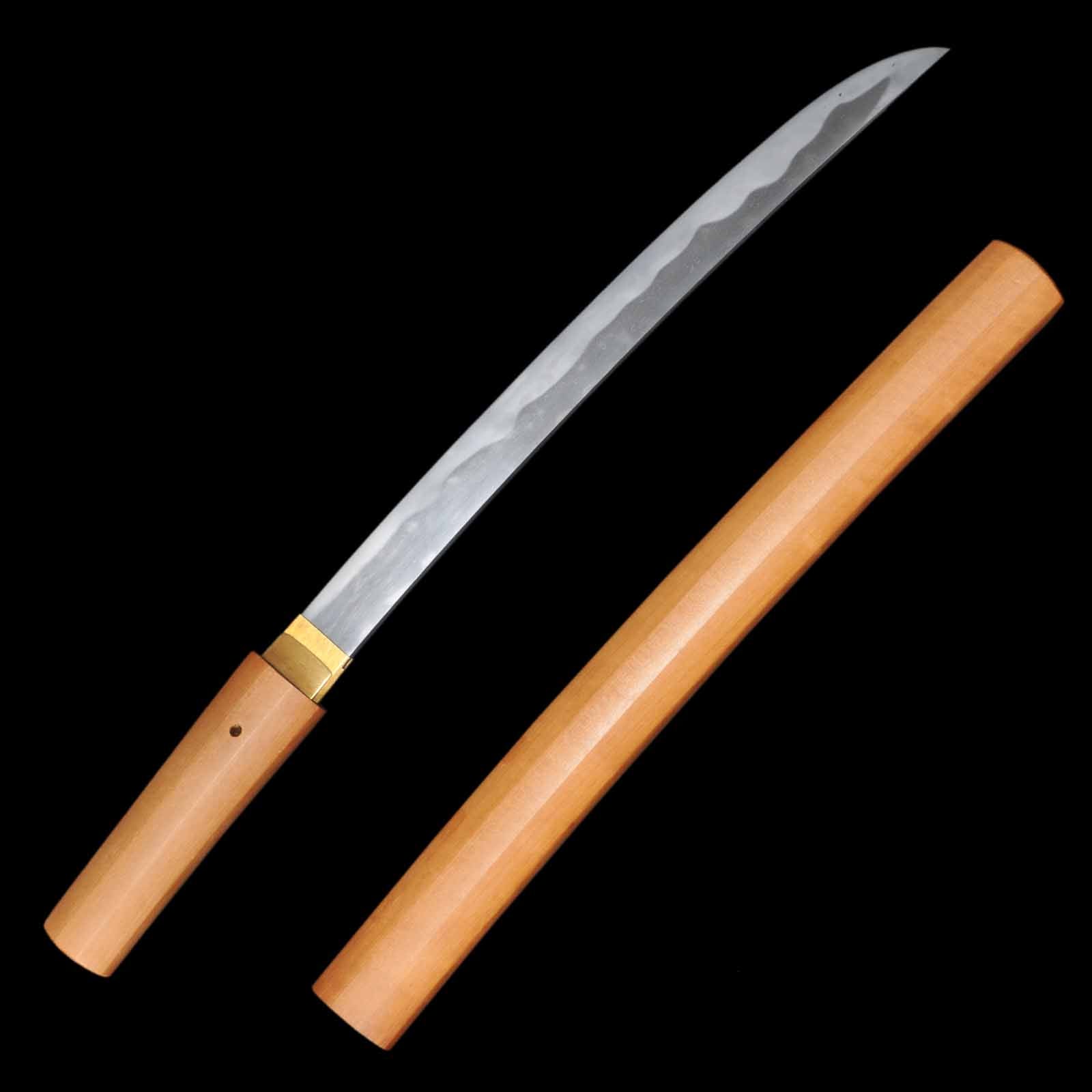
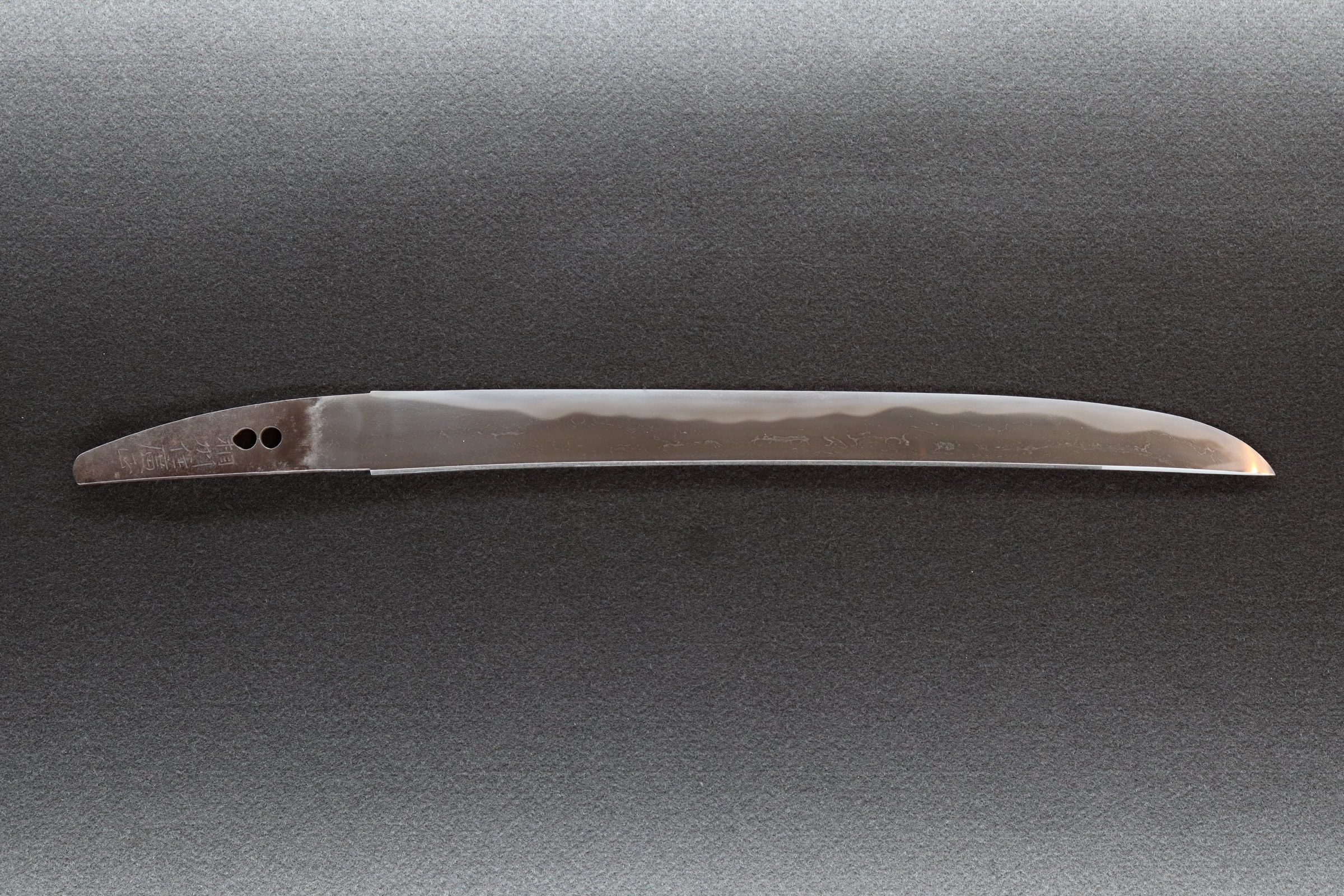
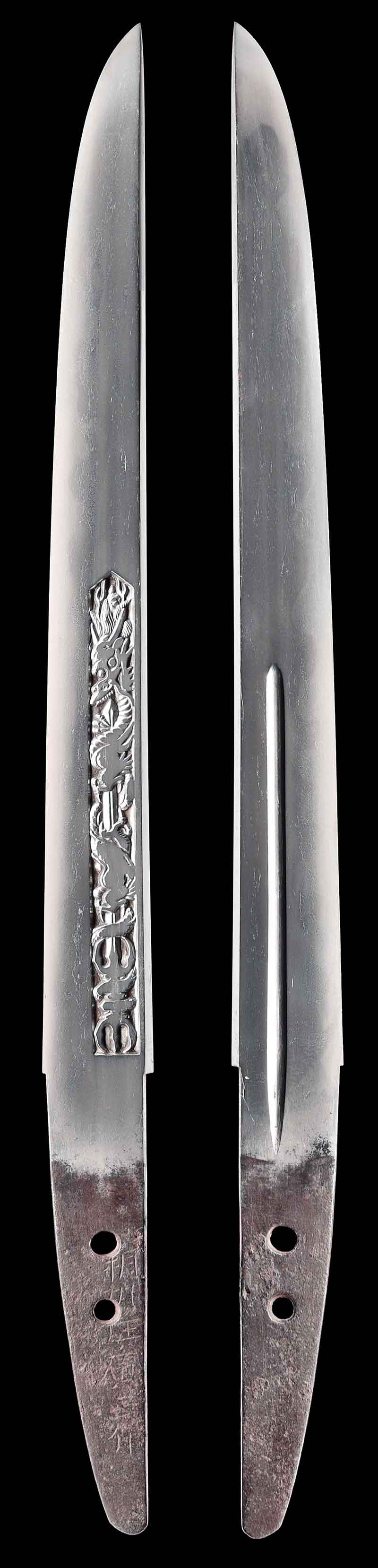
Ise Daijo Tsunahiro Wakizashi
SOLD
Tracked across 76 dealers worldwide · price history · sold archive
Specifications
51.51 cm
2.75 cm
1.97 cm
About the school
Sue-Soshu School末相州派
Within the province of Sagami, where Masamune and his successors had set the *Soshu-den* on its course, a late body of smiths carried that workmanship forward through the Muromachi period after the classic Nanbokucho masters had passed. These are the Sue-Soshu (末相州), the late Sagami line that took up the manner of Hiromitsu and Akihiro and worked it into the sixteenth century under the patronage of the Later Hojo of Odawara. The published sources draw a division within the group: one body of smiths remained at Kamakura while a separate circle lived at Odawara under the Hojo, the latter collectively called the Odawara-Soshu. The Tsunahiro line anchors the whole, its *shodai* transmitted as a descendant of Hiromasa who first signed Masahiro, summoned by Hojo Ujitsuna to Odawara and granted the character *tsuna*; the name then passed as a workshop title through several generations into the Edo period. Around it stand Tsunaie, a retained smith of the Hojo regarded among the more skilled of the late line; Fusamune, the Odawara smith whose carving carries a long reputation; the mid-Muromachi Hiromasa, transmitted as the third generation of his name; Masahiro, a Sagami lineage of four or five generations said to descend from a younger son of Masamune; and Hirotsugu of Kamakura, who also bears Tenbun-era inscriptions tying him to Suruga. The shared vocabulary of the school is read off temper, steel, and carving together. The *jigane* is an *itame* mixed with *mokume* and *nagare-hada* that tends to stand and open rather than gather tightly, *ji-nie* adhering across it with *chikei* entering, the Odawara hands (Fusamune above all) tightening this toward a packed *ko-itame*. Over that ground the smiths temper a *gunome-midare* into which *choji*, *togariba*, the arrow-notch *yahazu* tooth, and *ko-notare* enter, the *ha* widening as it rises; *nie* attaches with *sunagashi* and *kinsuji*, and *tobiyaki* with *muneyaki* are then carried across the *ji* until the whole becomes *hitatsura*, the full-temper manner the sources name as the inheritance from Hiromitsu and Akihiro. The Odawara face leans angular and compound, *gunome* heads breaking into doubled and *koshi-biraki* structures over a tight, *nioi*-dominant *nioiguchi*, while the Kamakura face of Tsunahiro keeps the broader, *yahazu*-laced *midare*. Devotional carving recurs throughout, true and grass *kurikara*, *bonji* on a lotus *rendai*, *sanko-ken* and *gomabashi* in raised relief, and incised invocations such as Hachiman Daibosatsu. Set against the classic *Soshu-den* apex, the divergence is one of register rather than kind: where the Kamakura and Nanbokucho masters reached great depth of *nie* and clarity of steel, the late line works a flatter, more demonstrative *hitatsura* over a standing grain, the steel less deep and the *nie* less profound, the flamboyance of full temper standing in for the restrained command of the founders. For *kantei*, the Sue-Soshu blade announces itself by the Muromachi *sugata* (compact *hira-zukuri* *tanto* with *uchizori*, or *sun-nobi wakizashi* of wide *mihaba* with *sakizori*) carrying full *hitatsura* over an open, standing *itame*, with the dense devotional *horimono* the sources treat as a defining mark of Sagami work of the era; the absence of the deep, lucid *nie* and the *midare-utsuri*-free clarity of the Kamakura masters separates it from classic Soshu. The Odawara hand is told from the Kamakura hand by its tighter steel, its angular and *koshi-biraki* *gunome*, and Fusamune's exceptionally refined relief carving. Among the members, Tsunahiro is the first name of the group, the smith who closes the tradition, the published sources naming him well known and highly skilled within the group, with Tsunaie and Fusamune as the next most accomplished; Hiromasa and Masahiro furnish the dated, *ubu*-signed documents on which the divided generations are anchored. Provenance, where it survives, is real and distinguished: a Tsunahiro *wakizashi* bears the ownership inscription of the Hojo retainer Sakurai Daigaku and later passed to Okubo Ichio, while one of his blades descends into the Imperial collection; most members, however, carry no recorded *daimyo* or temple history, their standing resting on the rarity of a signed late-Sagami blade and the carving and steel the sources praise on each. A signed Sue-Soshu work, seldom met yet not locked away as national patrimony, offers the student the Muromachi register of the *Soshu-den* read whole.
![相州住綱広 保存刀剣鑑定書 Wakizashi Sousyu-sumi Tsunahiro [ NBTHK : Hozon ]](/_next/image?url=https%3A%2F%2Fitbhfhyptogxcjbjfzwx.supabase.co%2Fstorage%2Fv1%2Fobject%2Fpublic%2Flisting-images%2Ftoyuukai%2FL398830%2F00.jpg&w=2560&q=90)