The twentieth century nearly killed the craft twice: wartime distortion, then the occupation ban. The NBTHK’s founding in 1948 and licensed forging from 1953 rebuilt the sword as an art, crowned by Living National Treasures and the mukansa rank.
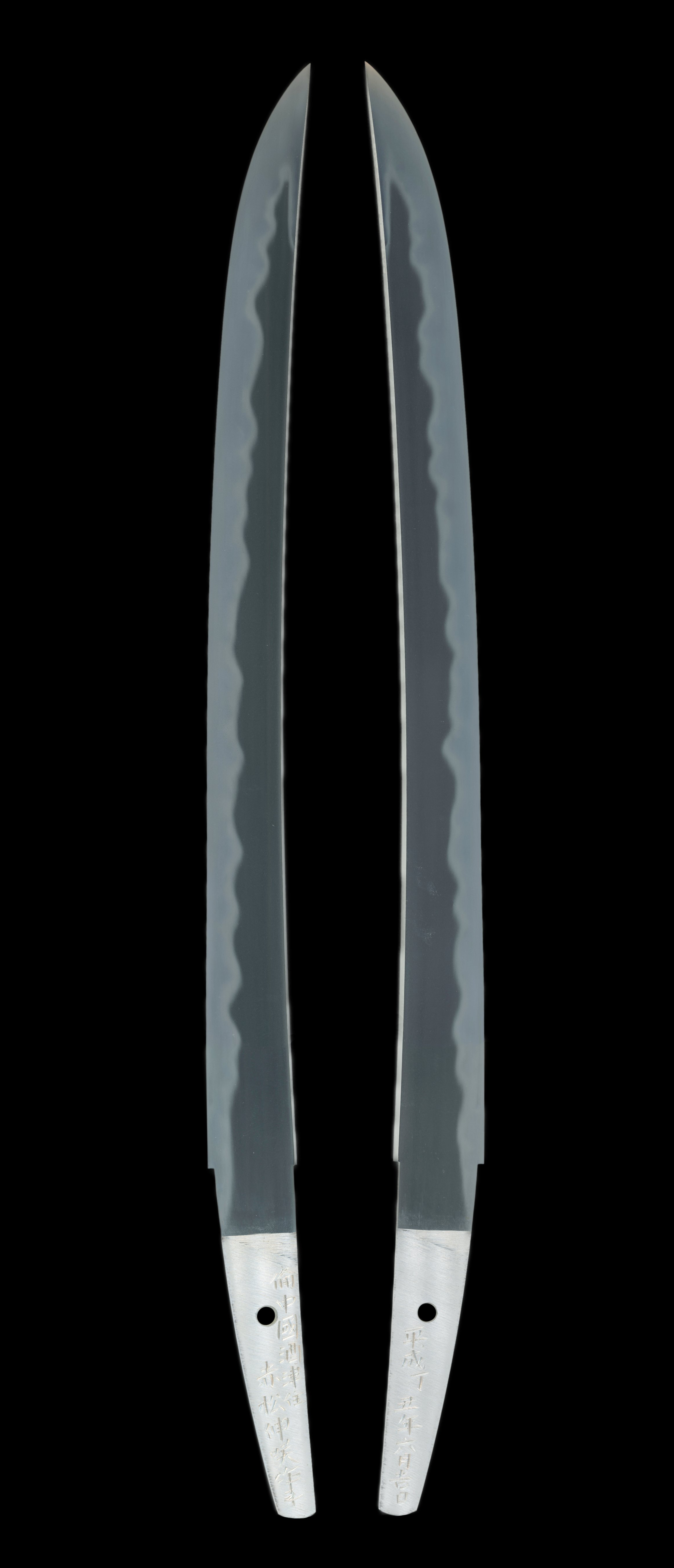
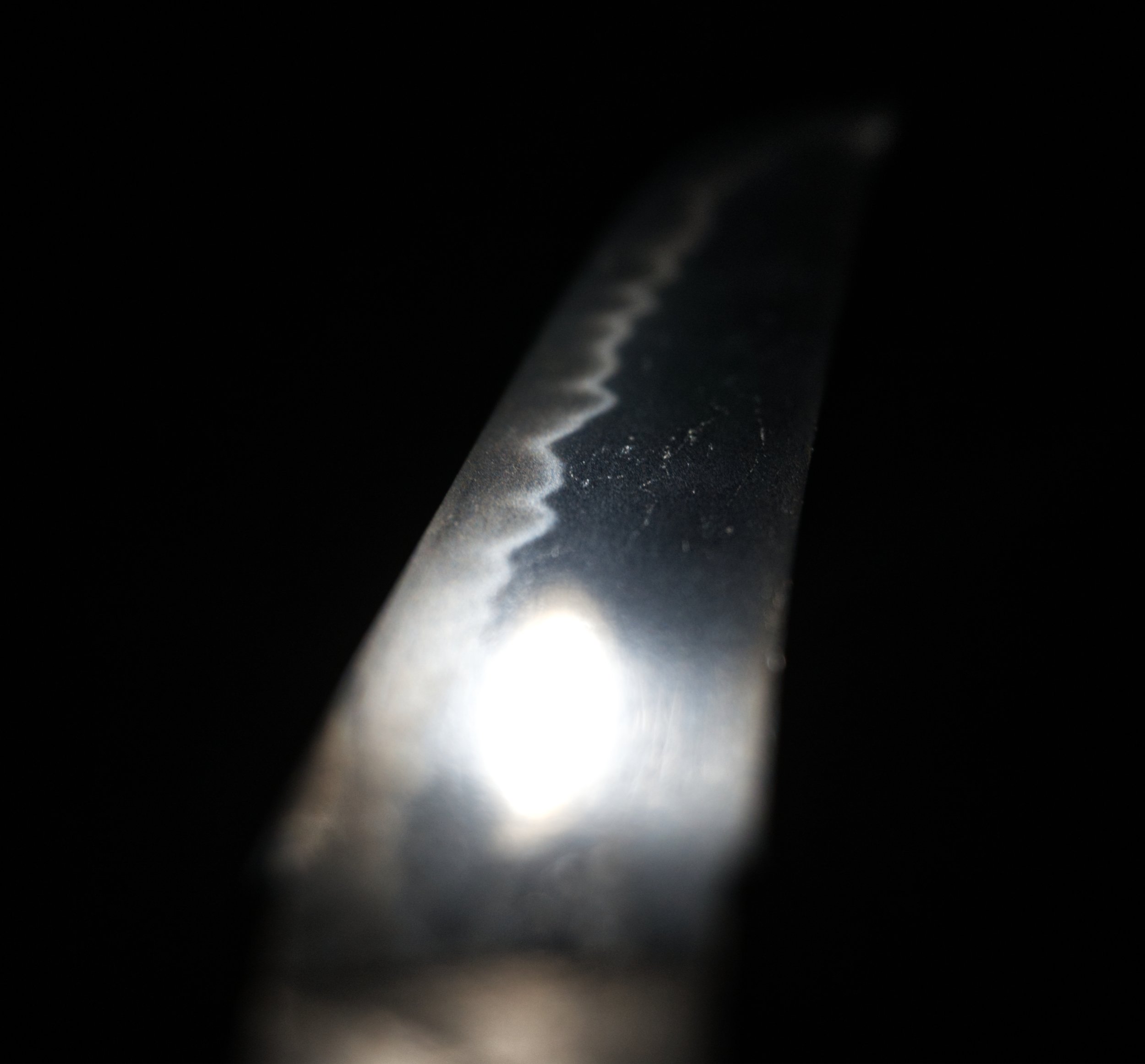
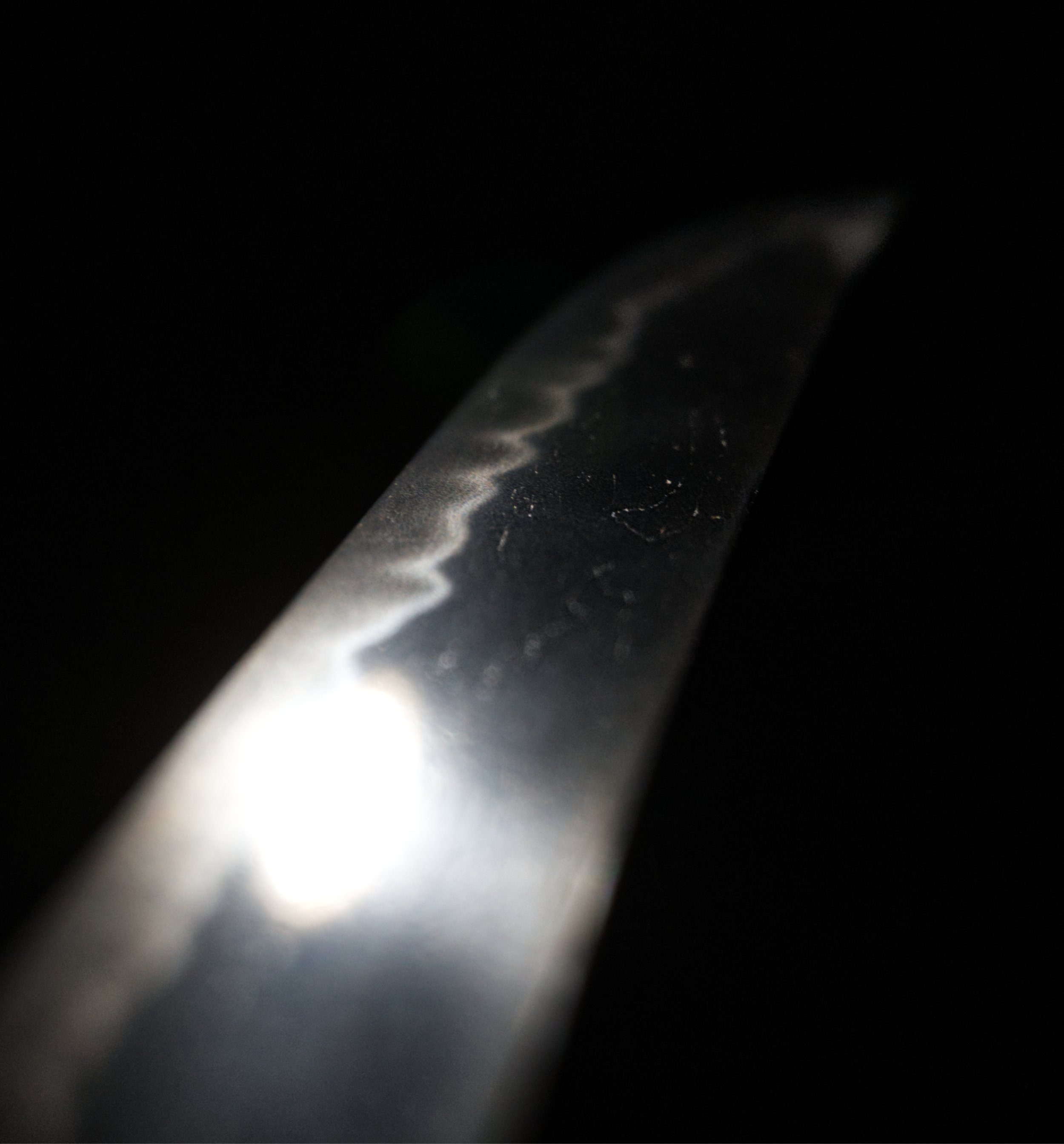
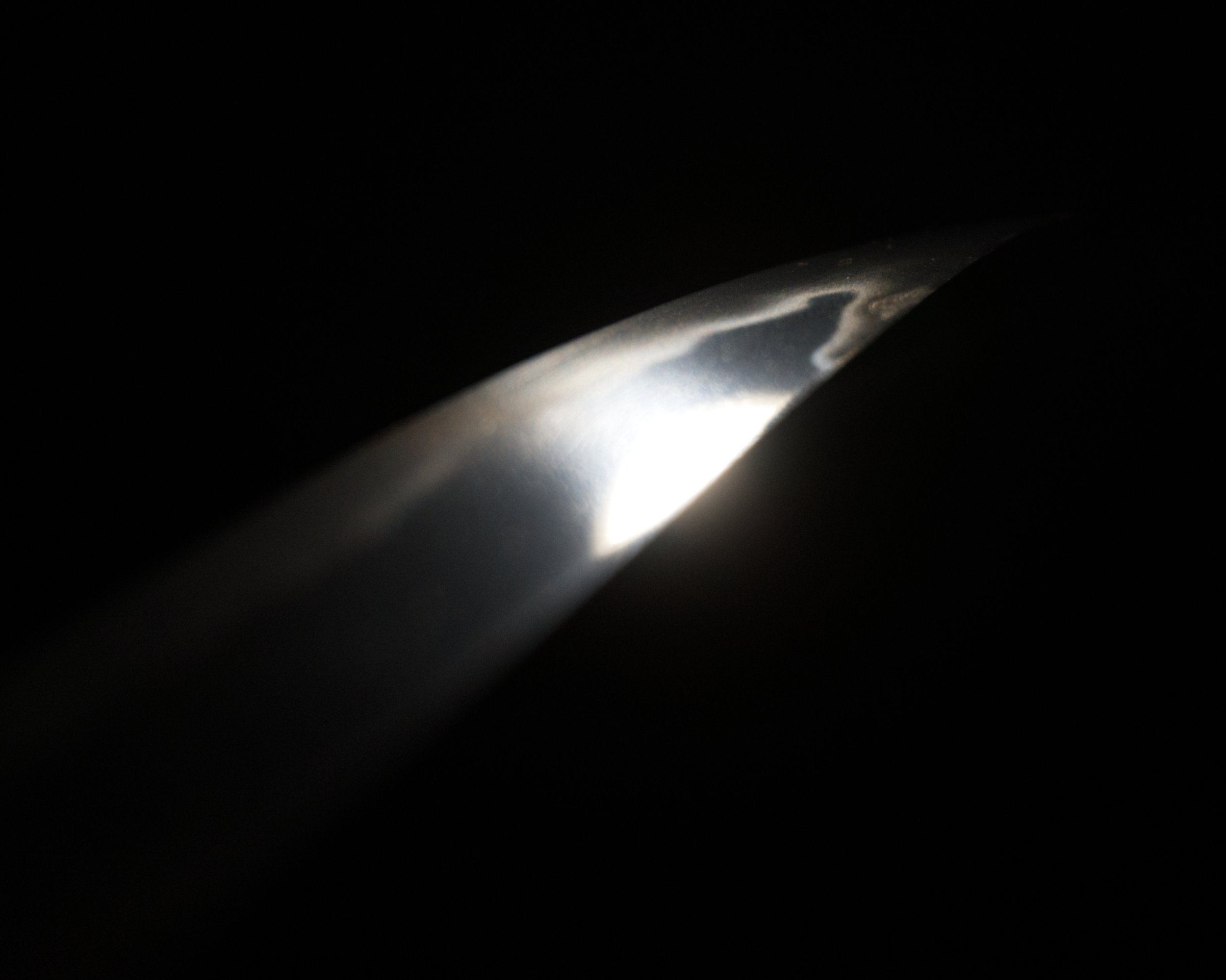
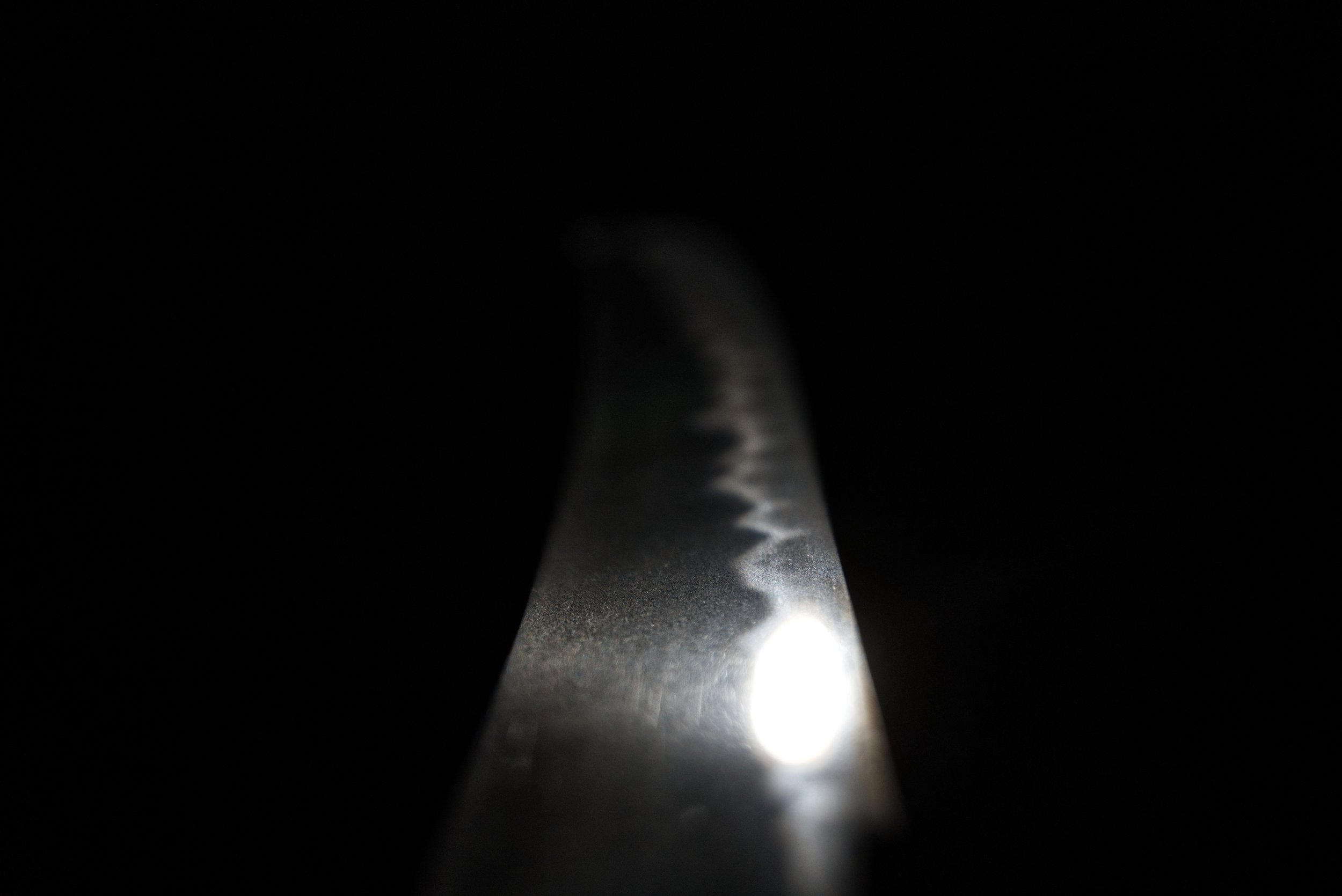
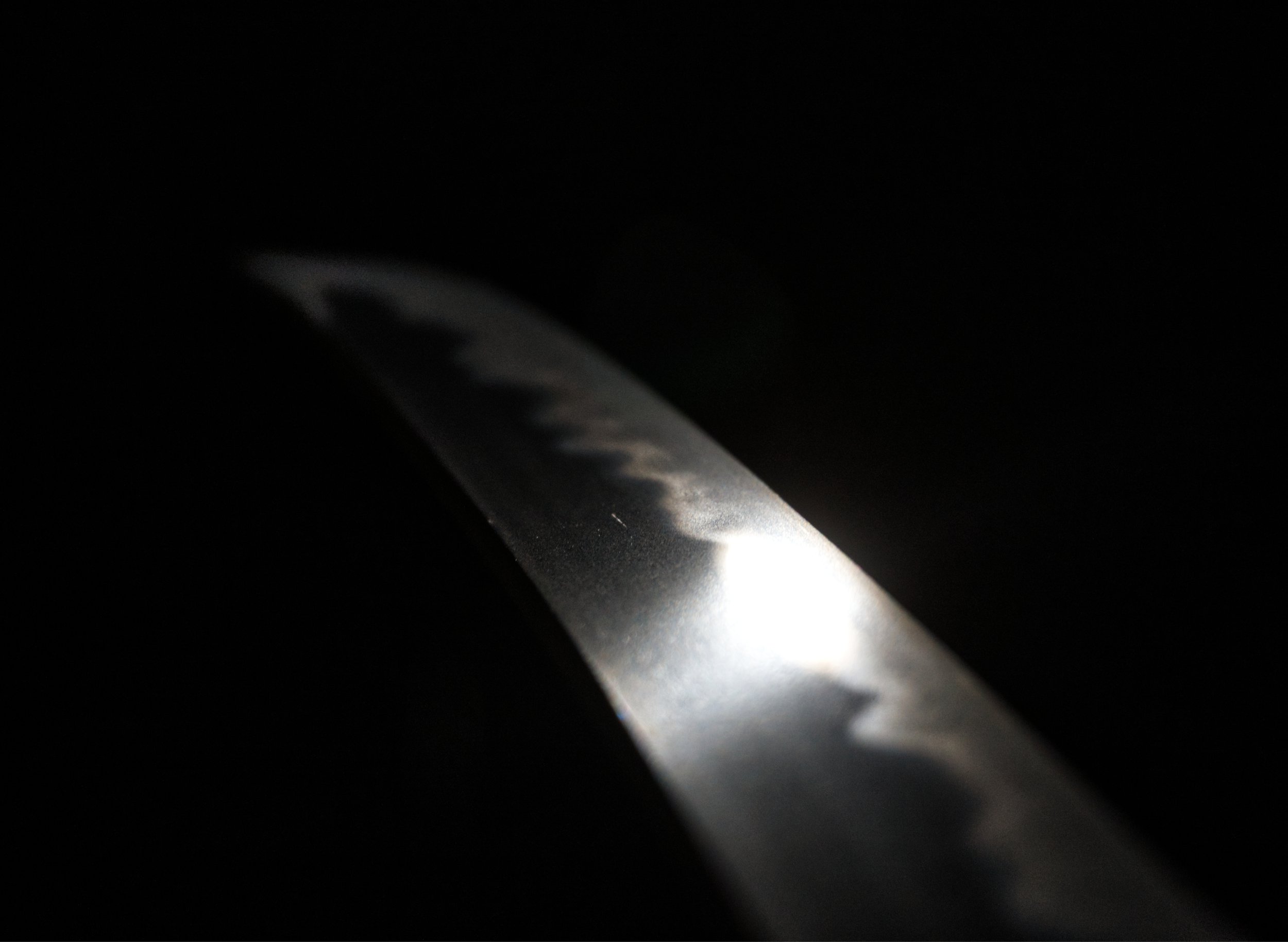
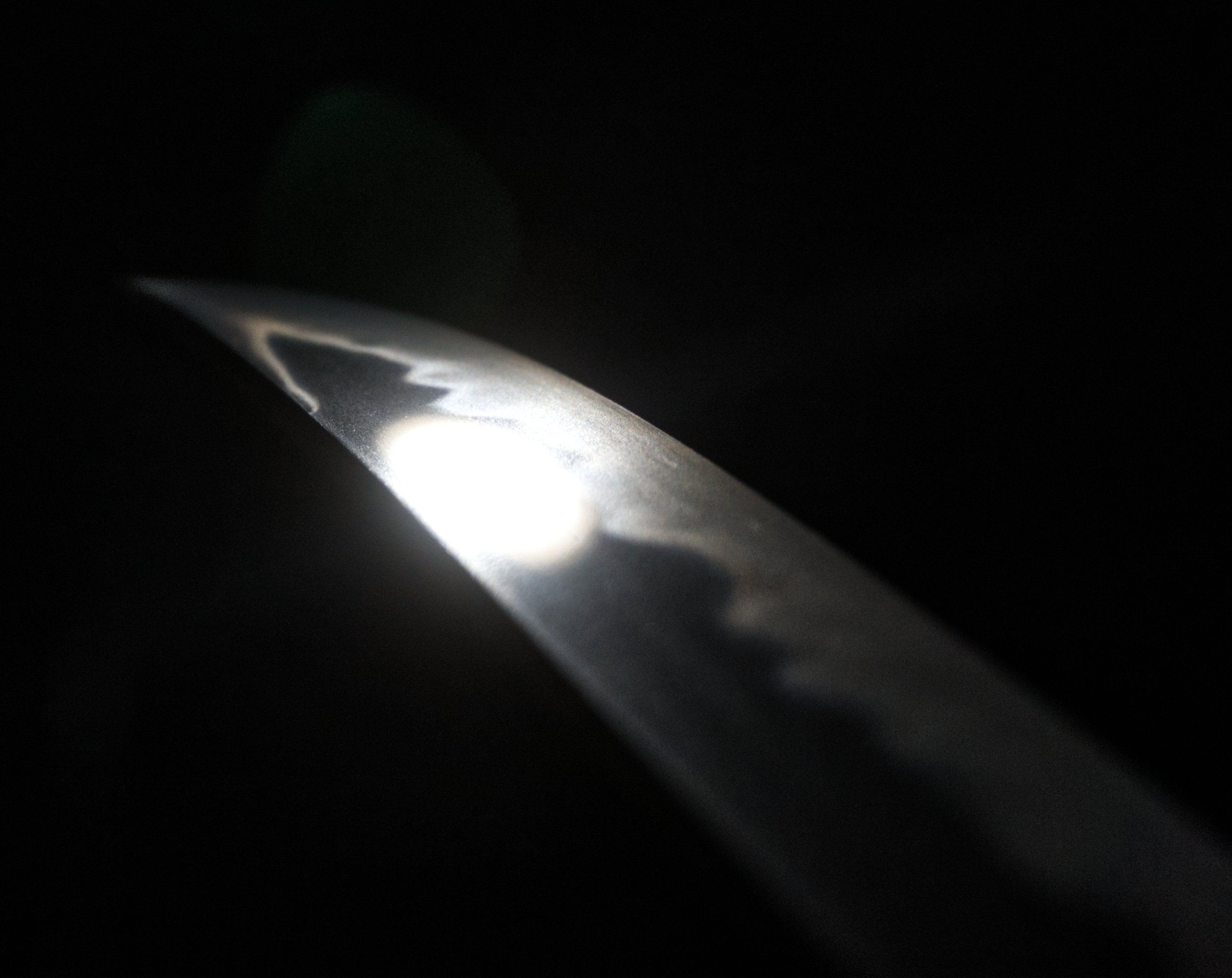
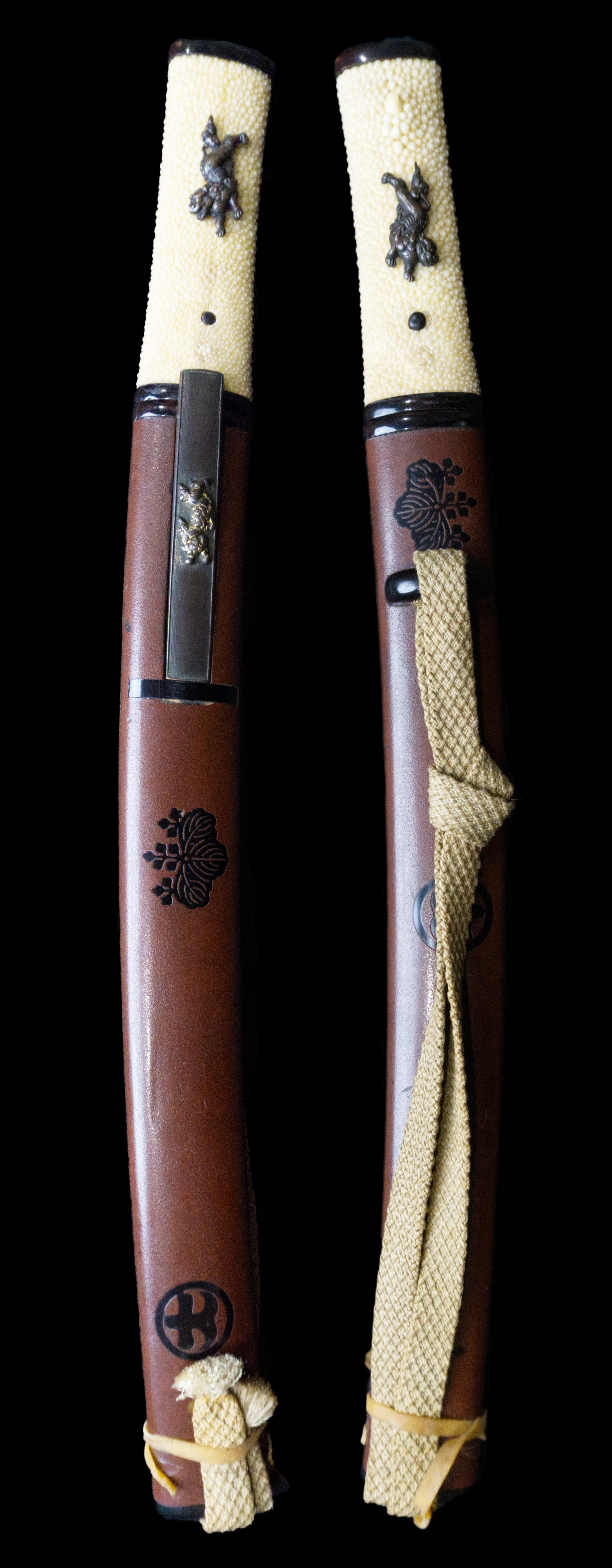
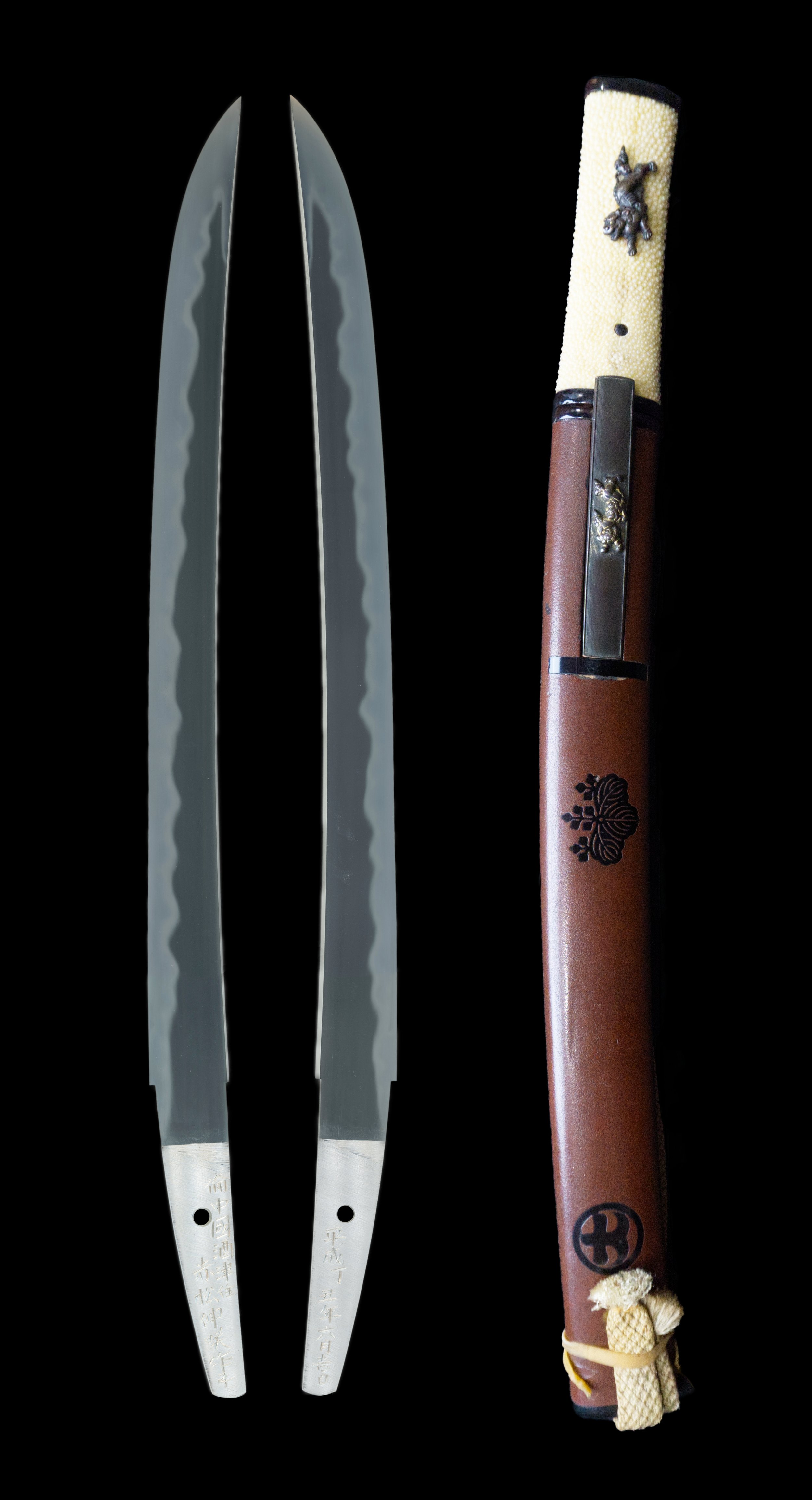
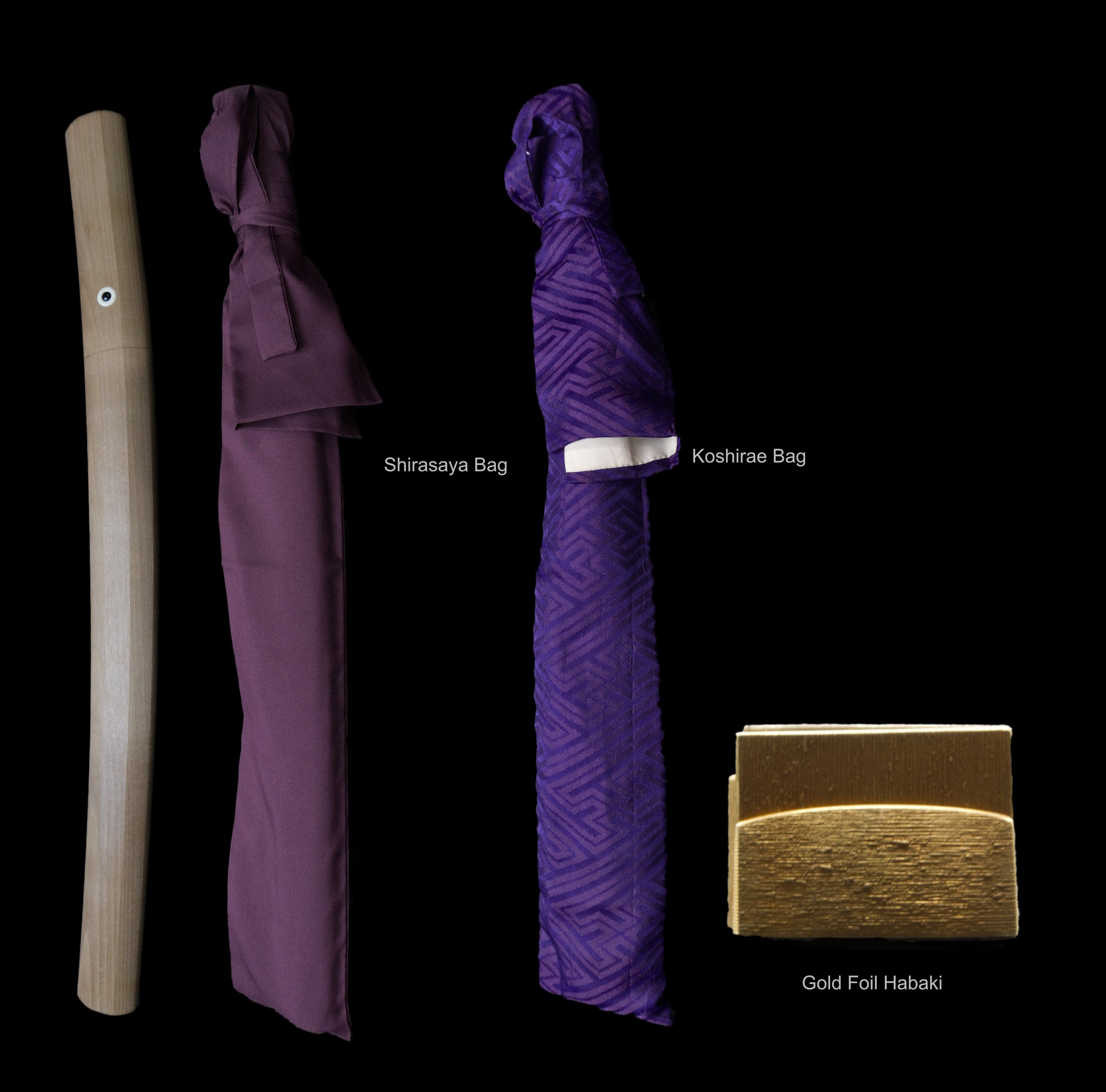
Akamatsu Shinsaku (赤松伸咲) is a contemporary Japanese swordsmith born in 1959 in Okayama Prefecture. Based in Kurashiki, in the former province of Bitchū, he is particularly recognised for his dedication to reviving the classical workmanship of the Bitchū Aoe school. Formerly a curator at the Bizen Osafune Sword Museum, he began his apprenticeship in 1985 under Sumitani Masamine (隅谷正峯), a designated Living National Treasure. He received his swordmaking licence in 1990 and subsequently earned numerous awards. Akamatsu is especially noted for his interpretations of Nanbokuchō-period Aoe workmanship, particularly that of Aoe Tsugunao. The blade is constructed in hira-zukuri with an iori-mune, displaying an elegant and well-balanced profile. The jigane is finely and tightly forged, presenting a remarkably uniform and refined surface. The hamon is a beautifully executed gunome-midare, featuring a continuous succession of rounded, undulating formations with subtle variations in height and shape. The nioiguchi is exceptionally bright and clearly defined, creating a striking contrast against the darker steel of the ji. Throughout the hamon, abundant ashi extend towards the cutting edge, producing a rich display of hataraki that further enhances the lively tempering pattern. Towards the kissaki, the hamon transitions into an expressive midare-komi bōshi, completing this elegant and beautifully crafted wakizashi. The wakizashi is accompanied by an attractive koshirae featuring a rich reddish-brown lacquered saya, decorated with black family crests (mon) that provide an elegant contrast against the warm lacquer finish. The tsuka is covered in white samegawa (rayskin), adorned with dark metal menuki depicting intricate figural motifs. The dark fittings complement the overall colour scheme, while a matching light-coloured sageo completes the mounting. The understated combination of reddish-brown lacquer, contrasting black crests, and white rayskin creates a refined and harmonious appearance, reflecting a traditional Japanese aesthetic. Akamatsu Shinsaku Wakizashi with Koshirae – Student of Living National Treasure Sumitani Masamine
Offered by Toukentakarado


As written by the shop
Shōwa to the present: destruction and revival
The twentieth century nearly killed the craft twice: wartime distortion, then the occupation ban. The NBTHK’s founding in 1948 and licensed forging from 1953 rebuilt the sword as an art, crowned by Living National Treasures and the mukansa rank.
We could not find an authenticity certificate on the seller’s listing. Japanese swords and fittings are normally papered by the NBTHK (or the NTHK). Without one, the attribution is the seller’s own assessment and has not been independently verified — treat it with caution and ask the dealer about certification before buying.
We offer a three-day inspection period. To initiate a return, you must notify us within three days of the package being delivered. Once we confirm your request, you have seven days to ship the item back to us. The item must be returned in its original condition, including all accompanying documents, certificates, and packaging materials. The buyer is responsible for covering the shipping costs and insurance for the return shipment.
¥430,000