 NihontoWatchNihontoWatch
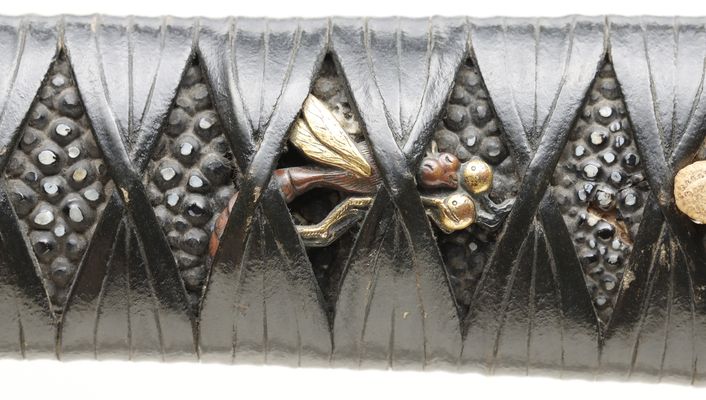
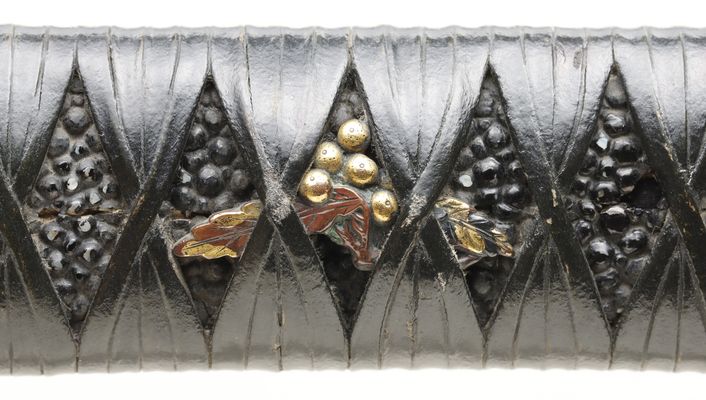
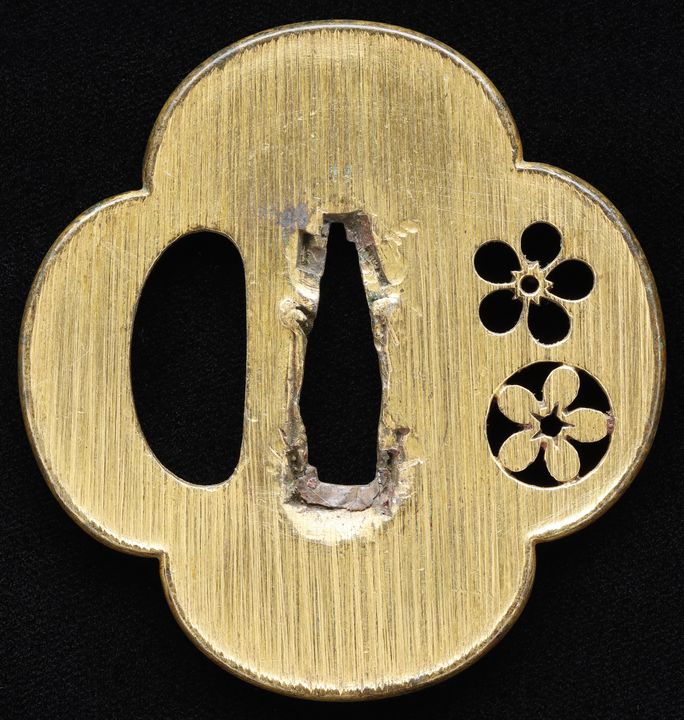
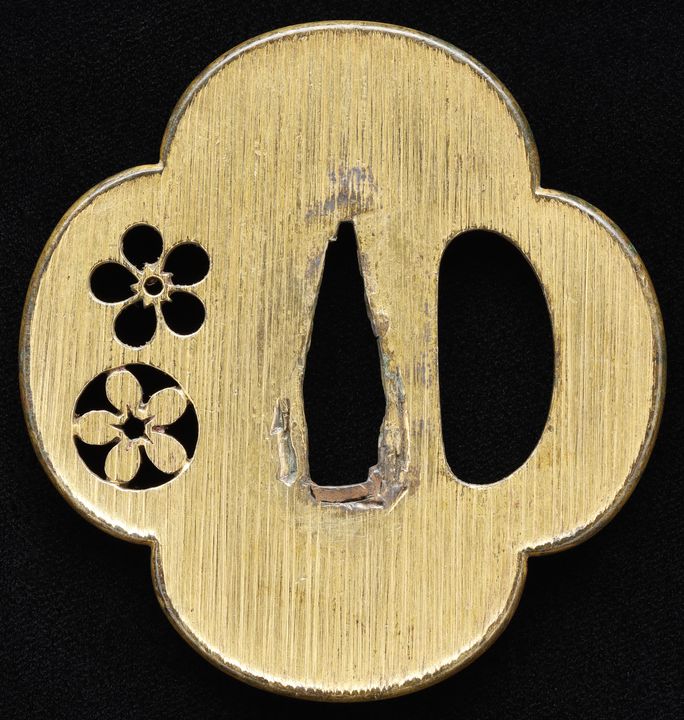
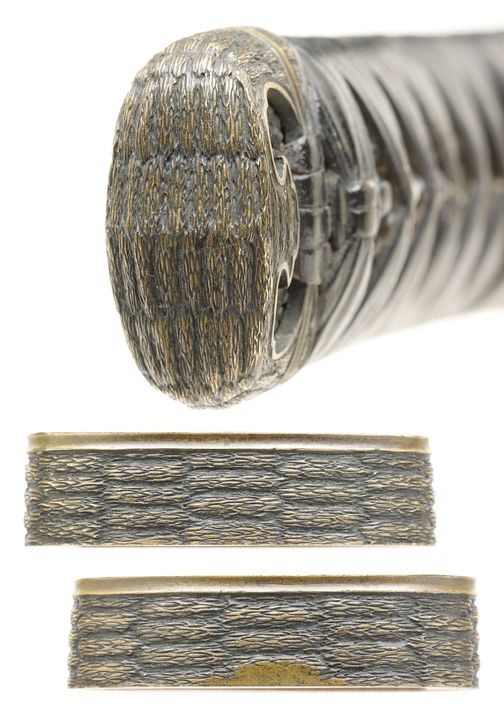
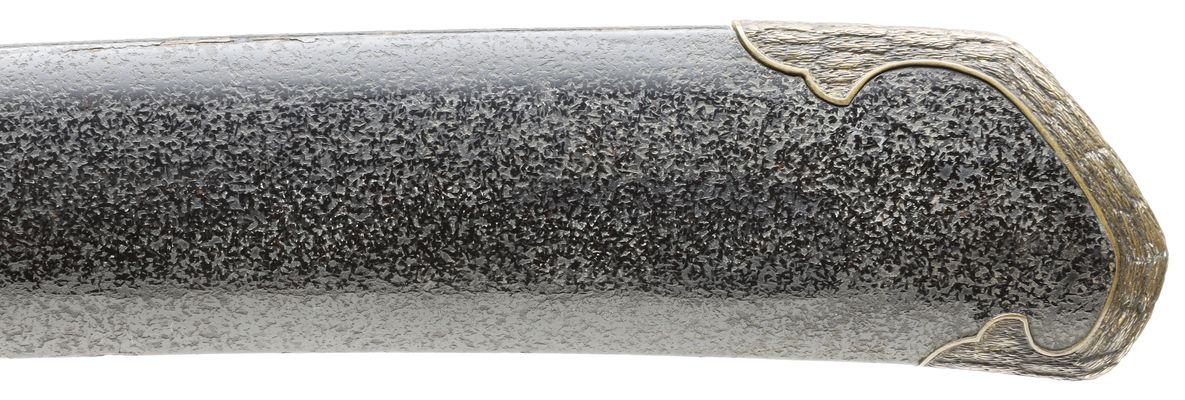
<audio controls preload="auto"> <source src="clocktowerbell.mp3" type="audio/mpeg" /> </audio> Kuro ishime-ji nuri saya, wakizashi omeshi koshirae Moto-haba (Width at Ha-machi) : Approx. 2.73 cm An omeshi koshirae characterized by a strongly flared sayajiri. The prototype for this style is found among the diverse group of koshirae with eccentric decorations from the Momoyama period, which gained refinement over time and saw a peak in popularity during the late Edo period. In the featured koshirae, the fuchi-kashira, kuchigane, kurigata, kawaragane, and kojiri are a matching issaku set, featuring fittings with an attractive, sober coloration finished with a straw-bale pattern on a shinchu-ji. The tsuba is a mokko-gata shibuichi-ji piece with tate-shinogi-yasuri-ji and a small umebachi-mon sukashi, finished with kin-iroe over the entire surface, also in a flamboyant Momoyama-style tailoring. It is equipped with a tetsu-ji takabori kozuka with kin-gin nunome-zogan of a kuyo-mon design, and features kuro-urushi samegawa-gise with biwa ni hachi-zu menuki tightly wrapped in kuro-urushi-nuri-kawa. (Item number 1787)
NihontoWatchOffered by Choshuya
We couldn’t find current papers for this piece. Ask the dealer whether it has been, or can be, submitted to shinsa. — Hoshi




Edo
Machine translation from the shop's Japanese · may contain errors ·
We could not find an authenticity certificate on the seller’s listing. Japanese swords and fittings are normally papered by the NBTHK (or the NTHK). Without one, the attribution is the seller’s own assessment and has not been independently verified — treat it with caution and ask the dealer about certification before buying.
If, due to our fault, the item differs significantly from its proper condition, the item may be returned. Cooling-off is within one week of the item's arrival.
¥180,000