 NihontoWatchNihontoWatch
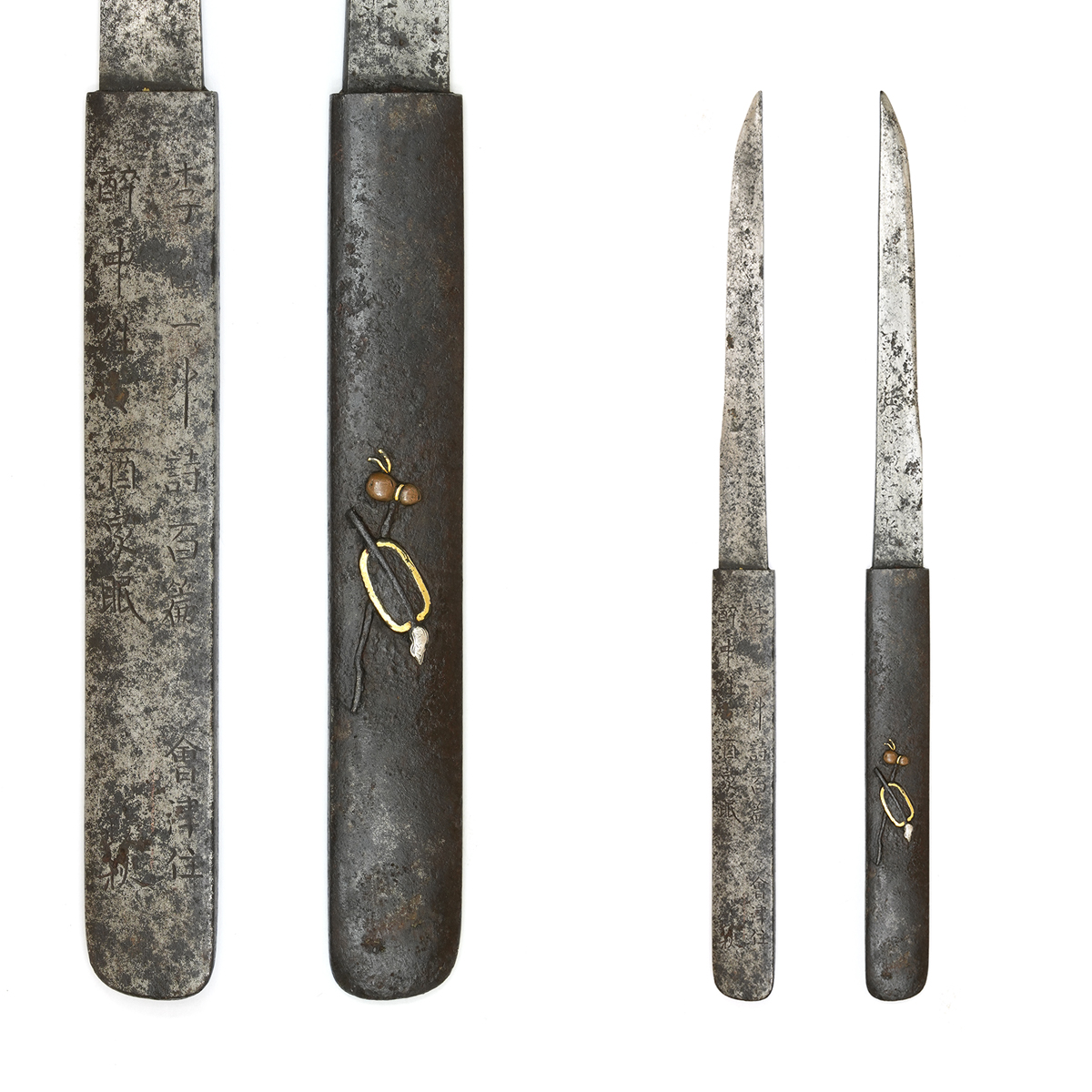
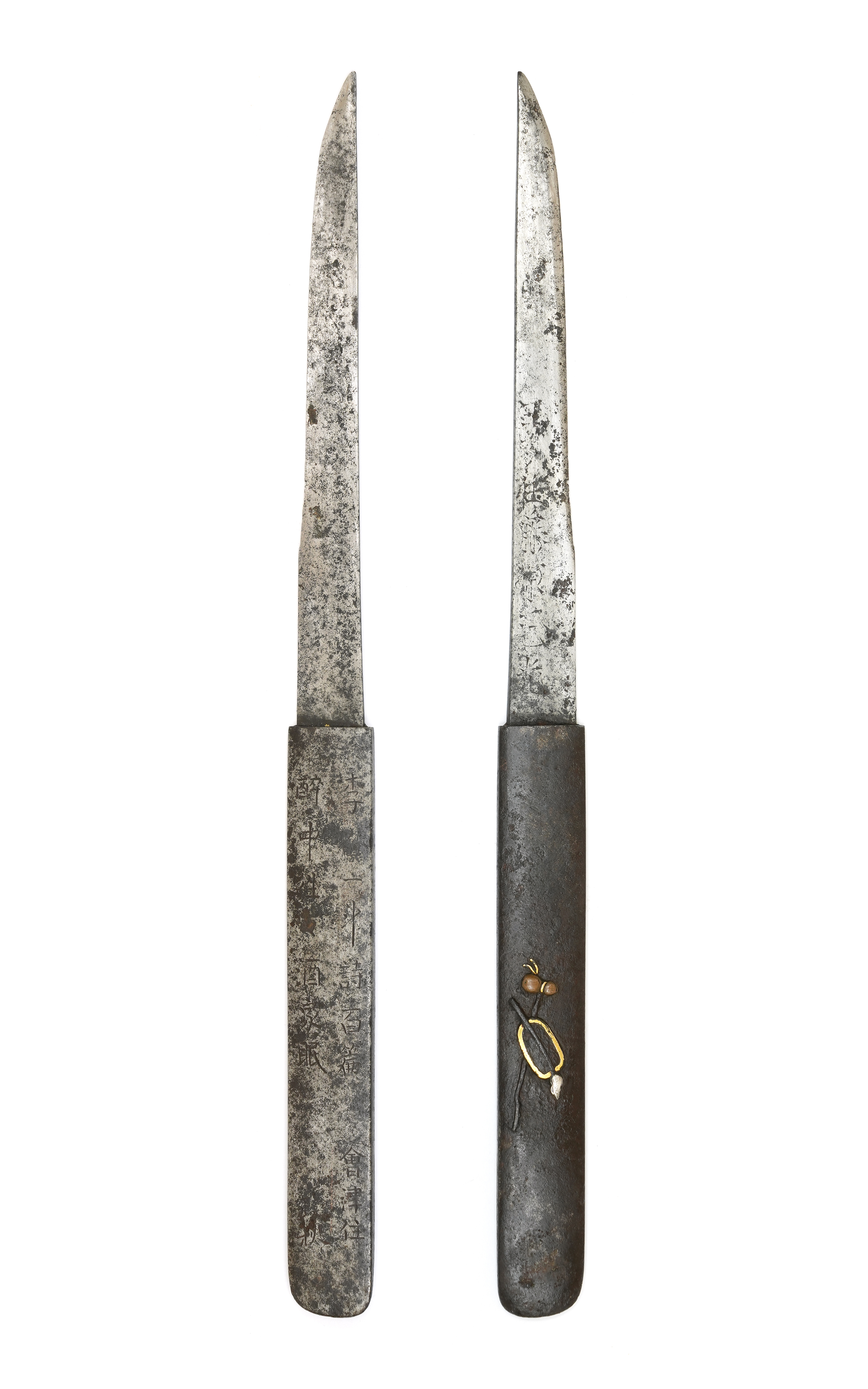
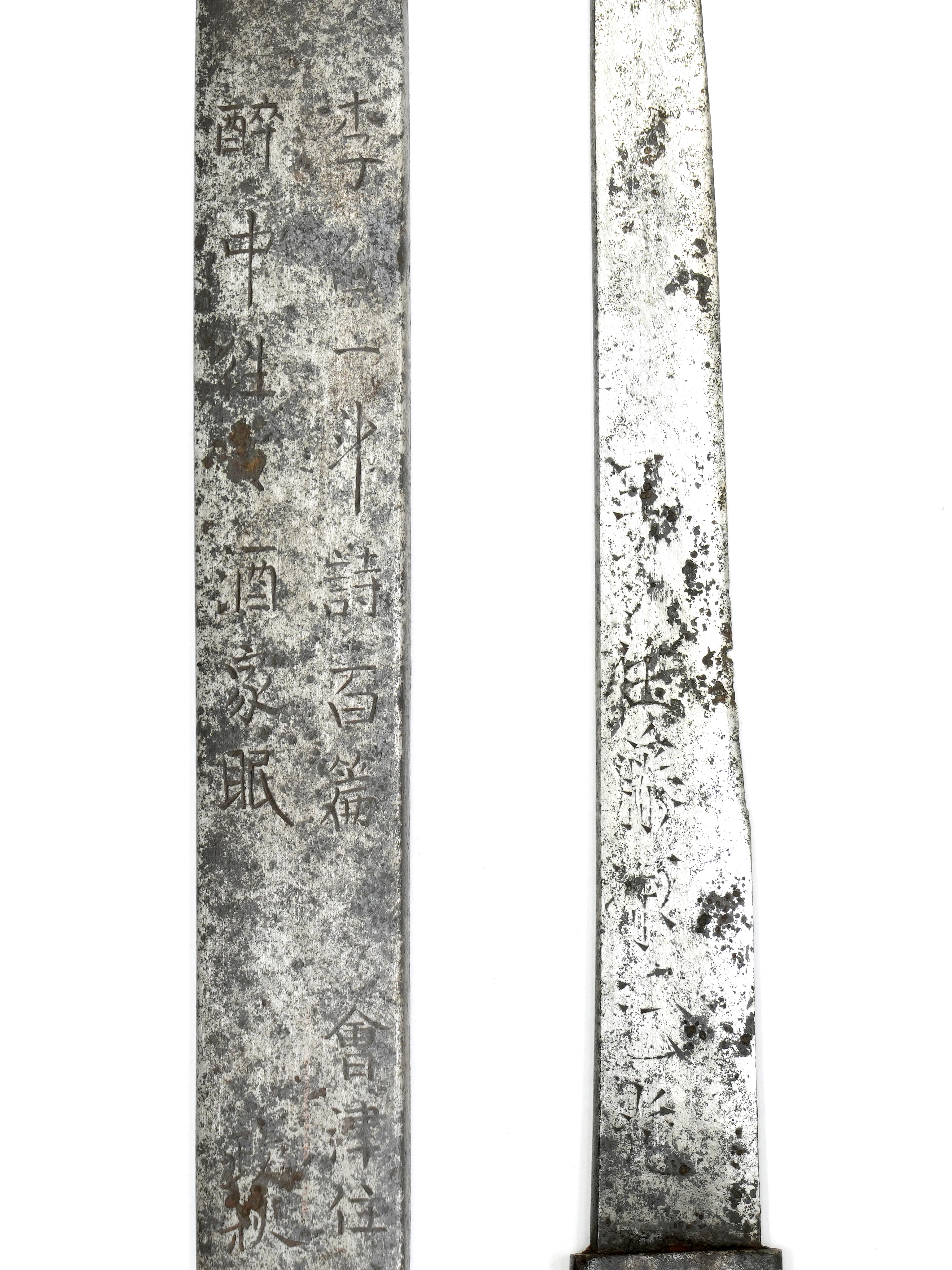
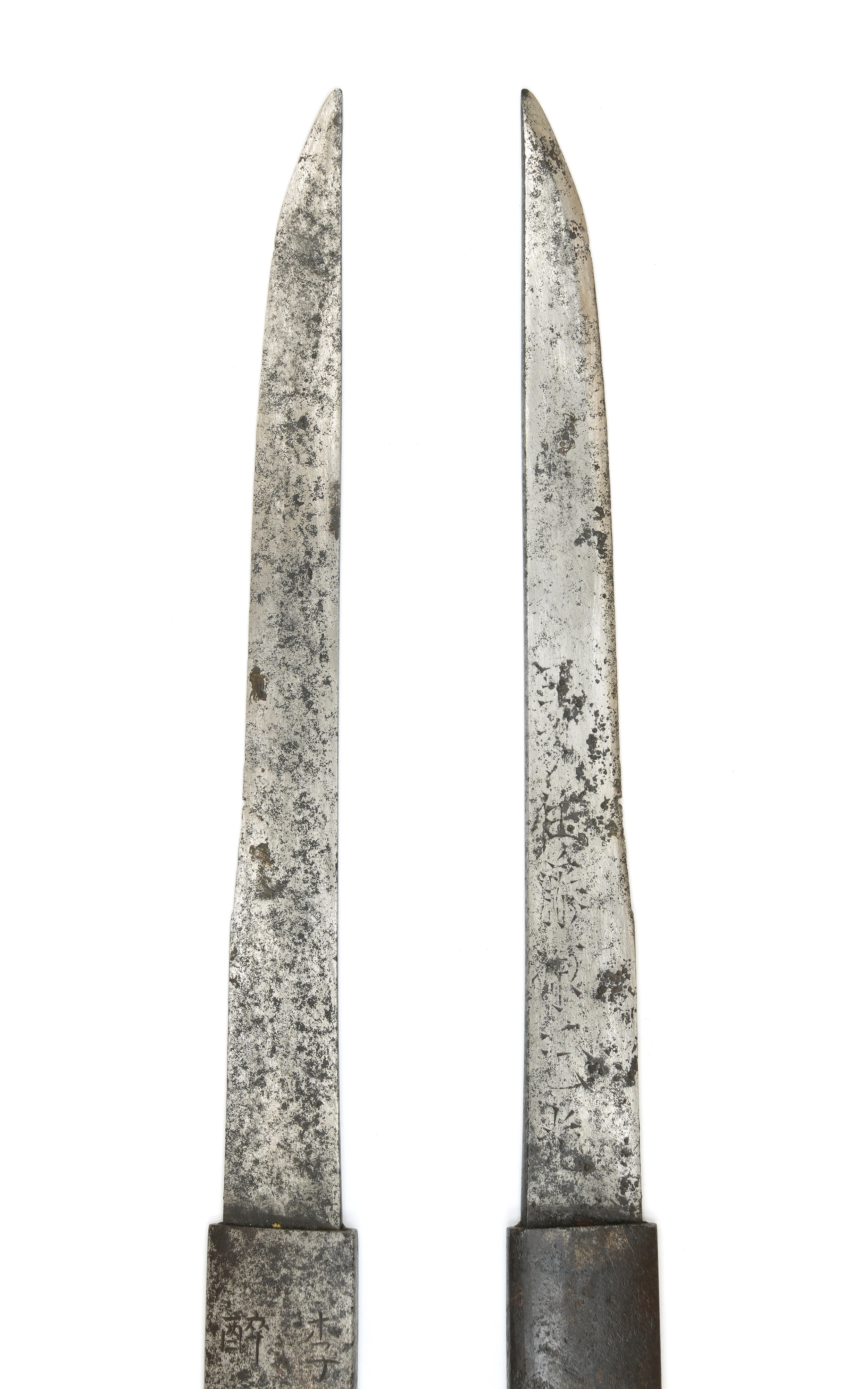
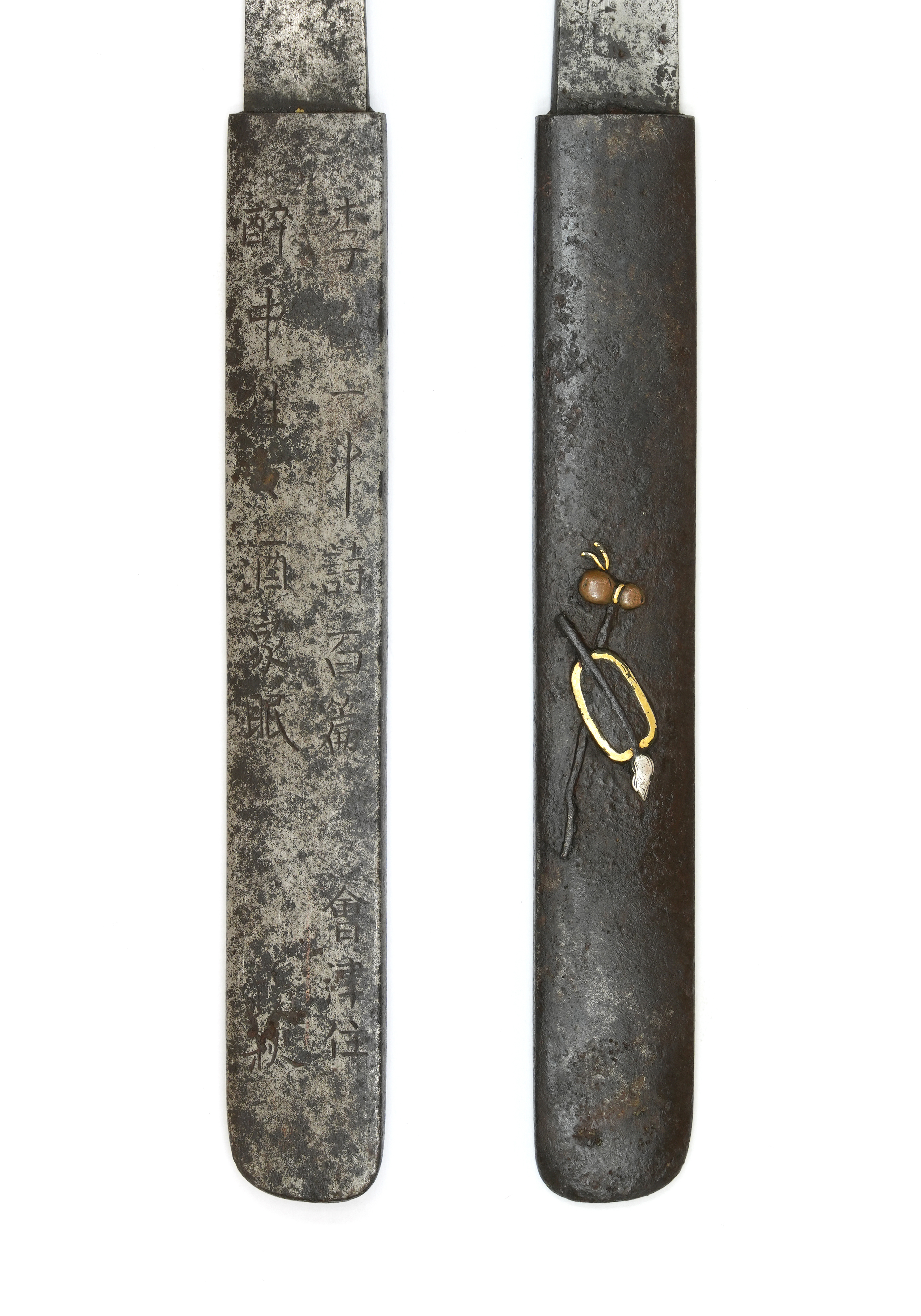
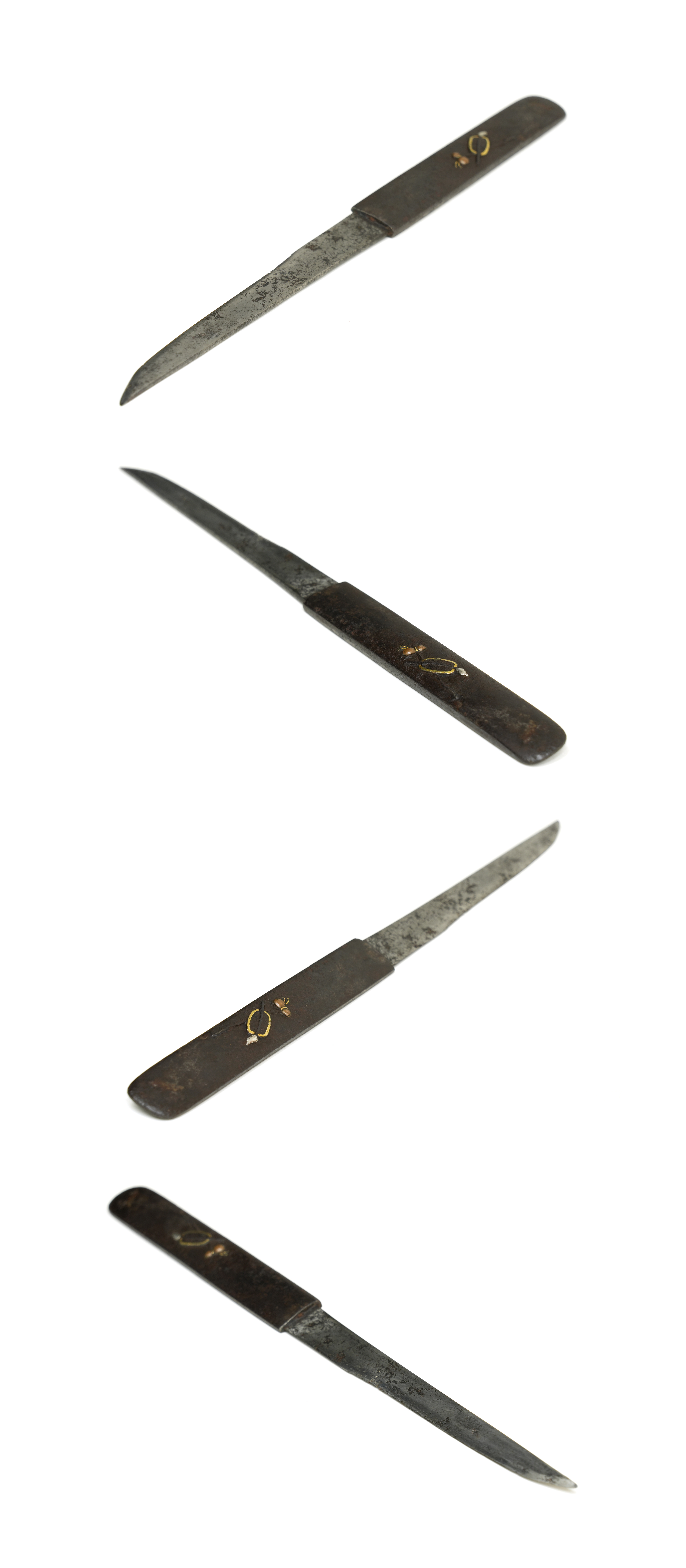
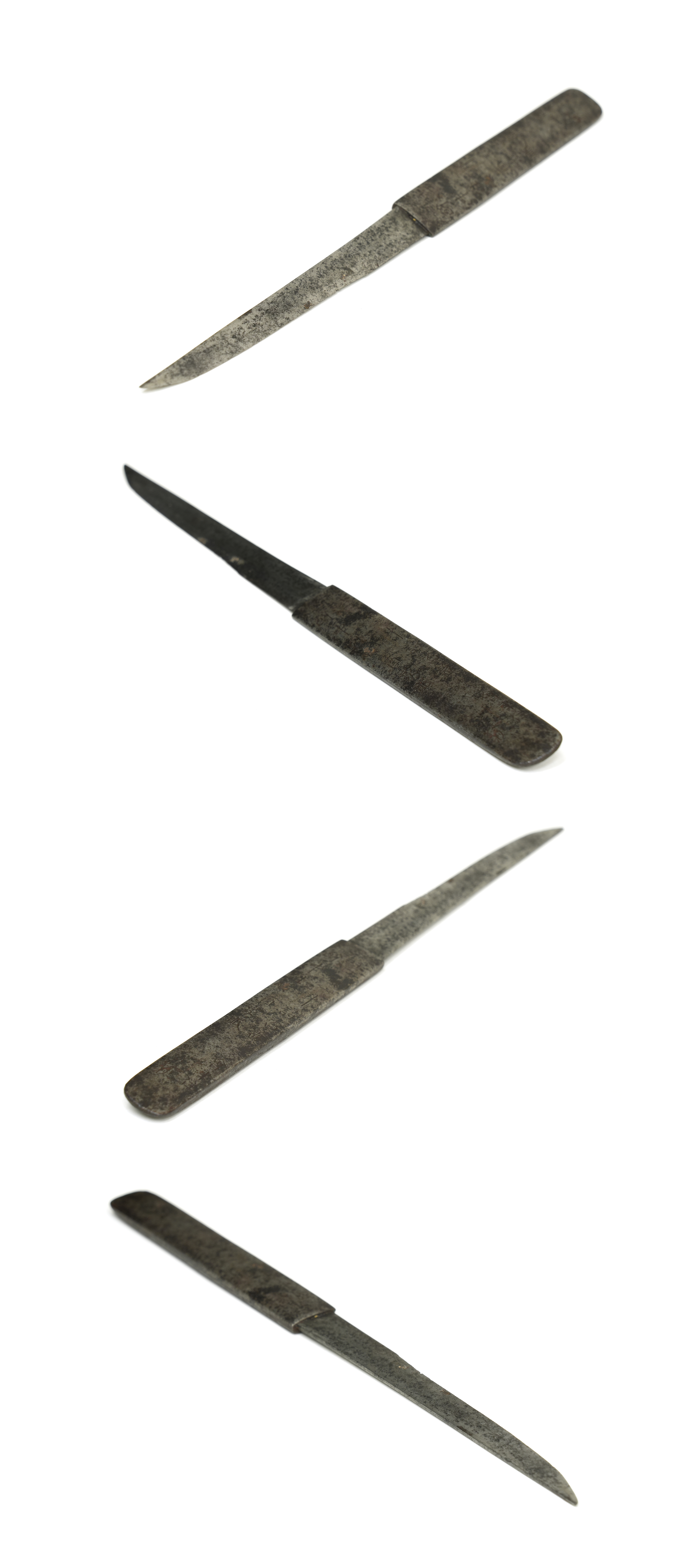
Masaaki is a tosogu kinko who signed "Aizu-ju Masaaki" and is believed to have been active in Aizu around the late Edo period. While his detailed common name, lineage, and birth and death dates are not widely known, this work bears a clearly carved mei including his place of residence, conveying Masaaki's area of activity and style to the present day. In Aizu, tosogu kinko were actively working throughout the Edo period, producing a wide range of tosogu from sukashi, carving, and zogan utilizing the tetsu-ji to works using gold, silver, and irogane. In this work as well, gold and silver are effectively placed upon the stage of the sober tetsu skin, displaying the solid technique and rich taste characteristic of Aizu kinko that connects objects with kanshi. The gourd, Chinese fan, and staff are jimotsu that evoke the immortals of Taoism, and on the omote side, each is arranged concisely within a wide yohaku. By adding gold, silver, and suaka-type irogane to the calm skin of the tetsu-ji, the composition clearly brings out the roundness of the gourd, the outline of the Chinese fan, and the slender staff; without leaning toward the flamboyant, it conveys a refined taste truly favored by the literati. Masaaki's sense of design can be seen in the use of yohaku, which, while placing small objects modestly, allows one to imagine the tales of the immortal realm behind them. On the ura side, a text is carved based on four famous lines praising Li Bai from the "Inchu Hassenka" (Song of the Eight Immortals of the Winecup), in which the Tang dynasty poet Du Fu wrote of eight eminent figures who loved sake. The original poem is: Li Bai itto shi hyaku-pen Nagayasu shijo shuka min Tenshi yorai fujo sen Jisho shin ze shuchu sen This passage praises Li Bai's extraordinary poetic talent and his bold, unconstrained personality that was not bound by authority, stating: "With one to of sake, Li Bai produces a hundred poems, and sleeps in the taverns of Nagayasu. Even when summoned by the Emperor, he does not board the boat, calling himself the Immortal of Wine." On this work, "Li Bai itto shi hyaku-pen Suichu oko shuka min" is carved. While the opening "Li Bai itto shi hyaku-pen" and the closing "shuka min" follow the original poem, "Nagayasu shijo" is replaced with "Suichu oko," a witty adaptation that expresses the figure of Li Bai often sleeping in taverns while intoxicated through more direct and familiar words. One can feel the education and playfulness typical of Edo kinko that brings a smile to the face of those who know the original poem. By placing objects symbolizing Taoist immortals on the omote and Li Bai of the "Inchu Hassen" who loved poetry and sake on the ura, two different "Hassen" are skillfully harmonized between the front and back. The greatest highlight of this work is that it provides not only the enjoyment of viewing the decoration but also the pleasure of deciphering the kanshi and the wit. The accompanying kozuka blade has a mei of "Geishu-ju Fujiwara Masamitsu," and there is a sense of completeness in the set of the kozuka and kozuka blade. With three elements for appreciation—the omote scattered with symbols of immortals, the ura condensing literati taste and wit, and the kozuka blade with a mei—all gathered in one piece, new meanings emerge each time it is turned over in the hand. This is a highly charming work that tickles the heart of a collector, allowing one to enjoy the tetsu-aji, irogane, kanshi, and wordplay all at once, fully savoring the education and playfulness possessed by kinko of the late Edo period.
Offered by Toushin

We couldn’t find current papers for this piece. Ask the dealer whether it has been, or can be, submitted to shinsa. — Hoshi

Masaaki
Edo
Aizu
Signed
Machine translation of the shop's Japanese ·
Machine translation from the shop's Japanese · may contain errors ·
We could not find an authenticity certificate on the seller’s listing. Japanese swords and fittings are normally papered by the NBTHK (or the NTHK). Without one, the attribution is the seller’s own assessment and has not been independently verified — treat it with caution and ask the dealer about certification before buying.
As a rule we do not accept returns, except when we have sent a different item from the one ordered or when there is a significant discrepancy between the description and the item. If you wish to return an item, please contact us within 3 days of its arrival and then send it back.
¥143,000