徳川の泰平のもと、大小は法度の定める身分の制服となり、需要は城下町、とりわけ江戸に集まった。工芸は二つに分かれる。目利きのための華やかな鑑賞の作と、截断の結果を金象嵌に刻む実証の刀である。
 NihontoWatchNihontoWatch
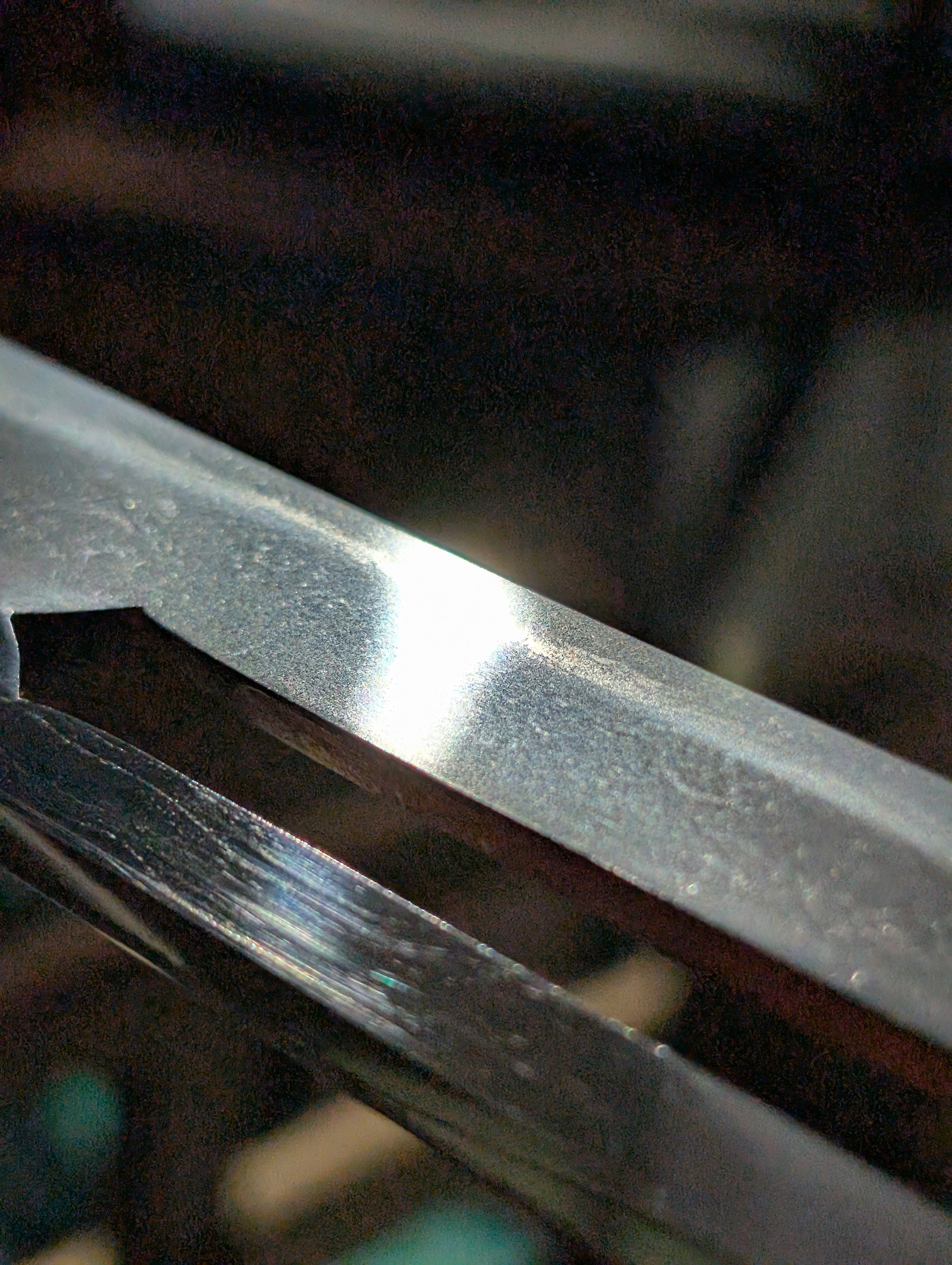
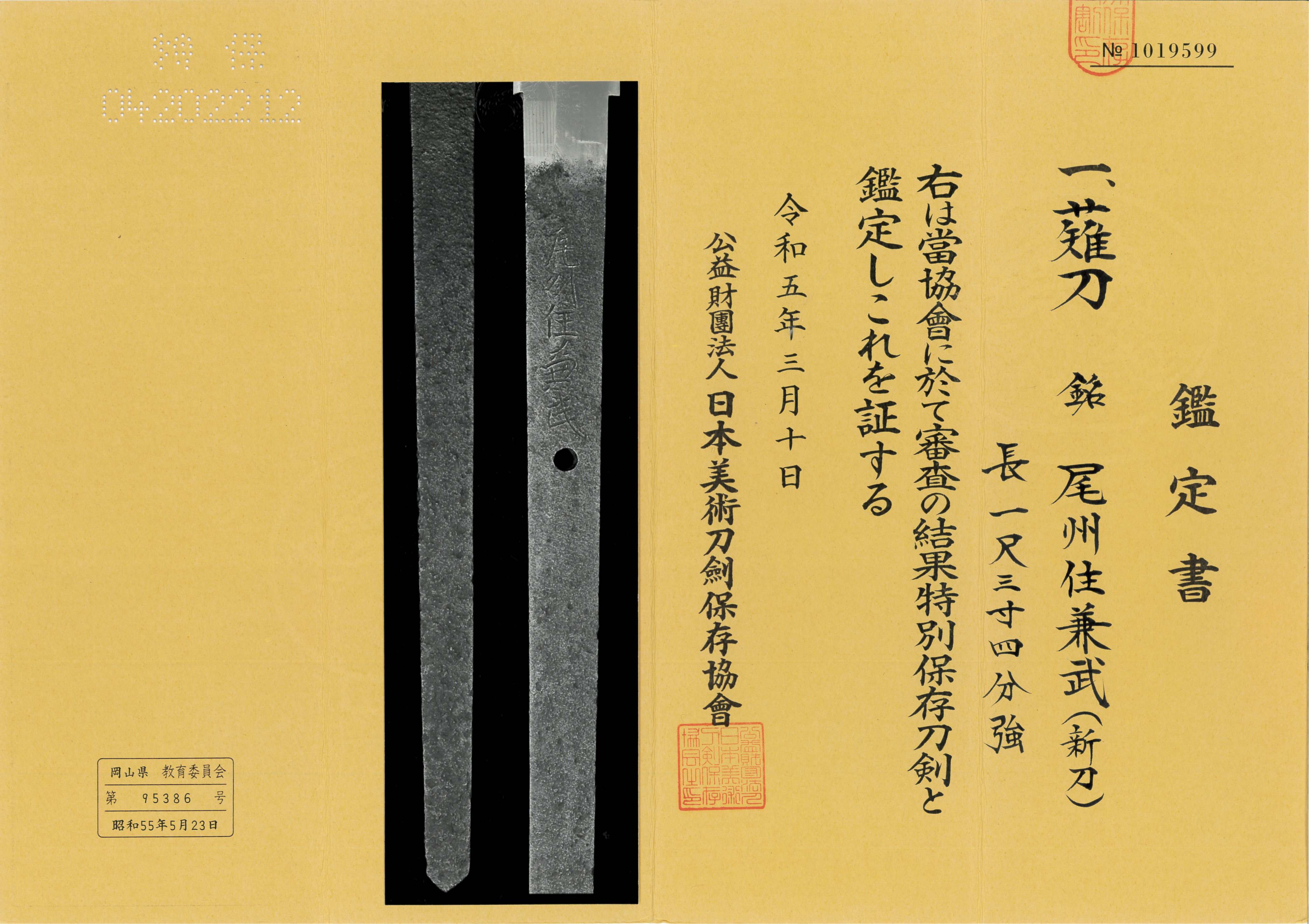
As the Tokugawa Shogunate’s influence spread throughout Japan, starting from their time as retainers to the Oda Clan in the 1500s CE up into their power grab in the year 1596 CE, changing swordsmithing trends resulted in new diasporas and the rebirth of artisanal swordsmithing, culminating in a new breed of swordsmiths who appealed to more modern sensibilities. Such an example will be analyzed through a rare naginata by the swordsmith Bishu ju Kanetake of the Inuyama School. The blade itself has a grand shape, expressing the luxury and glamour that came with an end to civil war, with a broad, leaf-shaped tip and a thinner, more refined base. Moving to the blade’s workmanship, clear elements of the Mino Tradition survive, with the jigane being comprised of a broad itame-hada with running o-hada alluding to earlier works. Ji-nie is present, although the steel takes on a darker color through an abundance of chikei along the glaive’s length. Moving to the cutting edge, the hamon is composed of a gently undulating notare-midare in nie-deki. Occasionally, togari-ba gunome are interspersed, especially approaching the tip. Hataraki are present in great number, with thick kinsuji and sunagashi running parallel to the nioi guchi, alongside yo within the hamon itself. Saka-ashi are also noted near the boshi, creating a gorgeous appearance imitating earlier works. As the hamon comes into the tip, it ends in a simple “Jizo” boshi, turning back gently to end the temper. With aesthetic descriptions accounted for, relevant measurements are listed below. Measurements: Nagasa: 40.6 cm (Understandably short, as polearms are mounted on longer shafts) Sori: 1.6 cm Motohaba: 2.91 cm (Rather fine for an early Edo Period naginata) Sakihaba: 3.2 cm (Wider than the base, as is standard with glaives of all varieties) Motokasane: 7.0 mm (Particularly thick, as is expected for grandiose polearms of mostly ceremonial use) Sakikasane: 5.0 mm The nakago of the glaive is ubu with a kengyo-jiri tip. On the naginata-omote, the goji-mei signature “Kanetake, Resident of Bishu” (尾州住兼武) is carefully inscribed. The shaft is long, with a single mekugi-ana punched into the tang, indicating a completely unaltered naginata. This is particularly rare, as most polearms have been shortened into wakizashi, and later, unaltered examples were rarely produced due to their expense and battlefield obsolescence. The blade’s shape is in shobu-zukuri, with an iori-mune. Although seen on swords, this style of geometry is most commonly seen on naginata, such as this particular example. Early examples of such work can be found in the late Heian Period, with the most famous example being a naginata allegedly owned by Musashi-Bou Benkei, held at Oyamazumi Shrine. As battlefield combat ended with the coming of the peaceful Azuchi-Momoyama and Edo Periods, such a work is particularly rare, only being elevated through the inclusion of a rare sukashi-bori (openwork) carving of a Buddhist vajra sword. The blade
Certificate reading — 銘 尾州住兼武
NihontoWatch
尾張 · 1658-1661頃
現在1点販売中
江戸時代
徳川の泰平のもと、大小は法度の定める身分の制服となり、需要は城下町、とりわけ江戸に集まった。工芸は二つに分かれる。目利きのための華やかな鑑賞の作と、截断の結果を金象嵌に刻む実証の刀である。
保存刀剣のうち、出来が一層優れ、保存状態も良好と認められたものです。再刃や、室町・江戸期の多くの無銘作は対象外となり、保存刀剣より高い基準が課されます。
日本美術刀剣保存協会(NBTHK)は、1948年に設立され、文化庁の監督を受ける公益財団法人で、東京・刀剣博物館に本部を置きます。専門の審査員が出品作を直接審査し、美術的・歴史的価値に応じた鑑定書を発行します。NBTHKの鑑定書は、日本刀および刀装具の真正性を示す最も広く認知された基準です。
NBTHK公式サイト海外からの返品は原則としてお受けしておりません。デポジットをお支払いいただいた時点で、商品を最長3か月間お取り置きします。頭金は返金不可です。