説明
Title: Umetada
-style, Genji Guruma Sukashi
Description
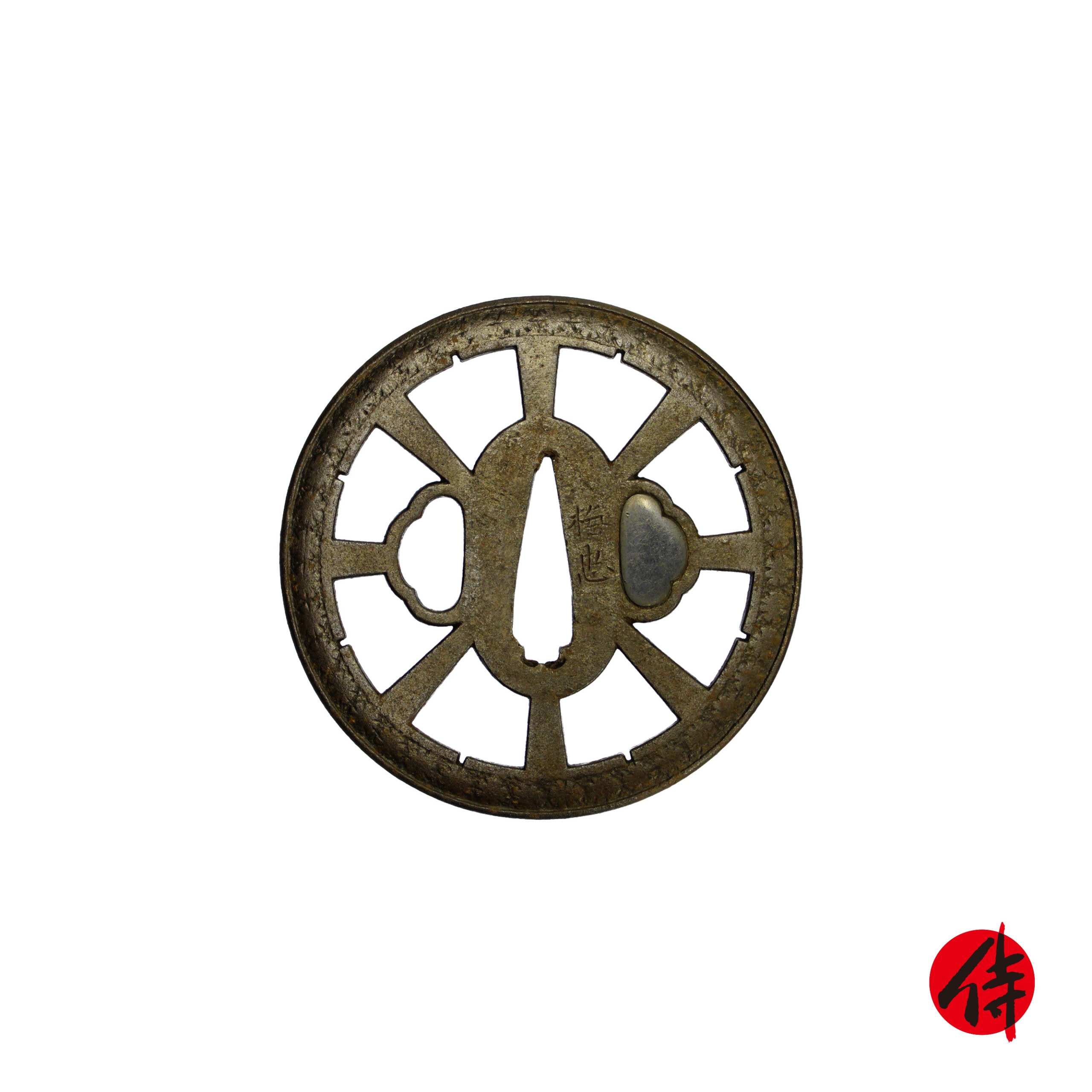
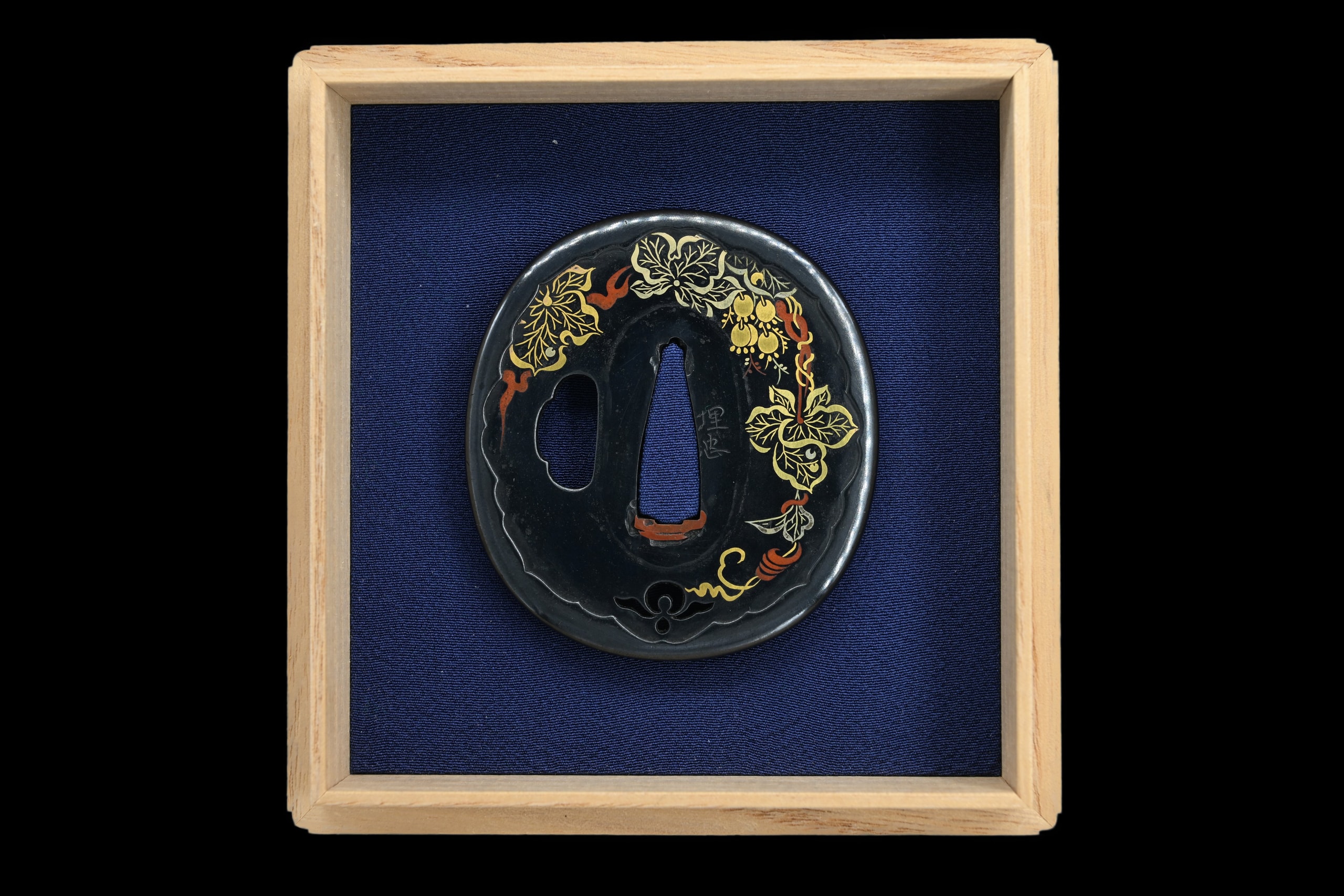
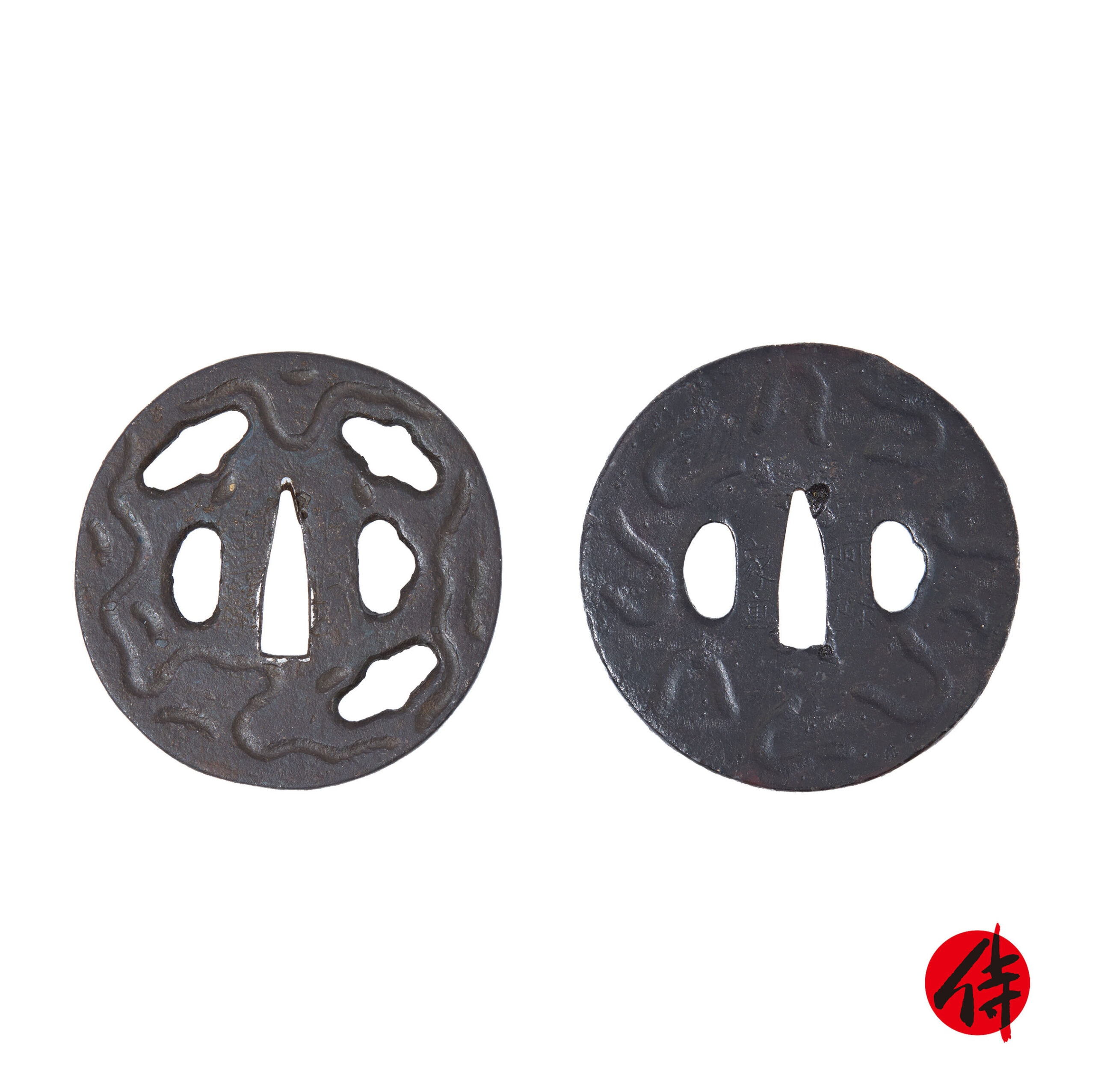
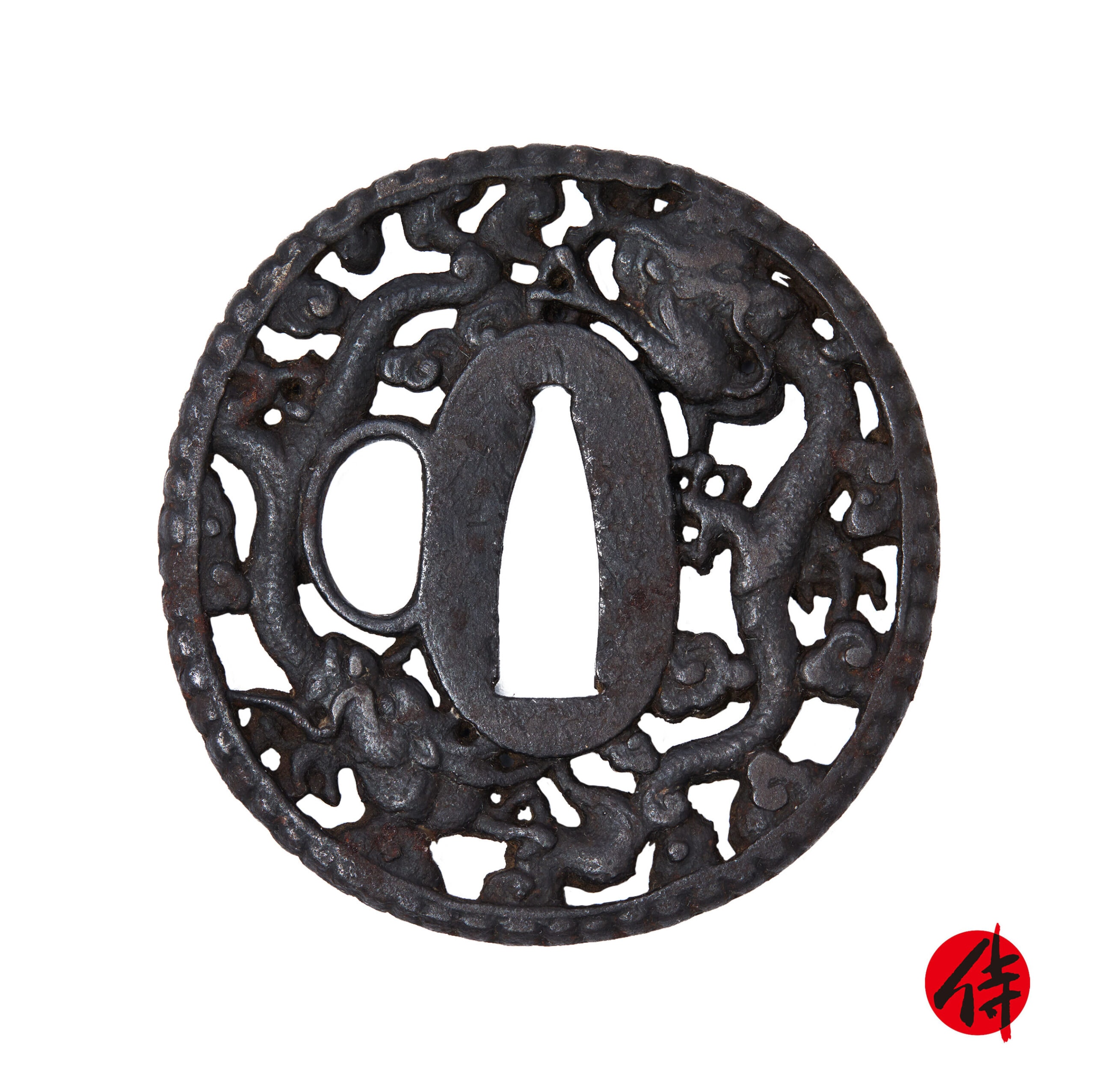
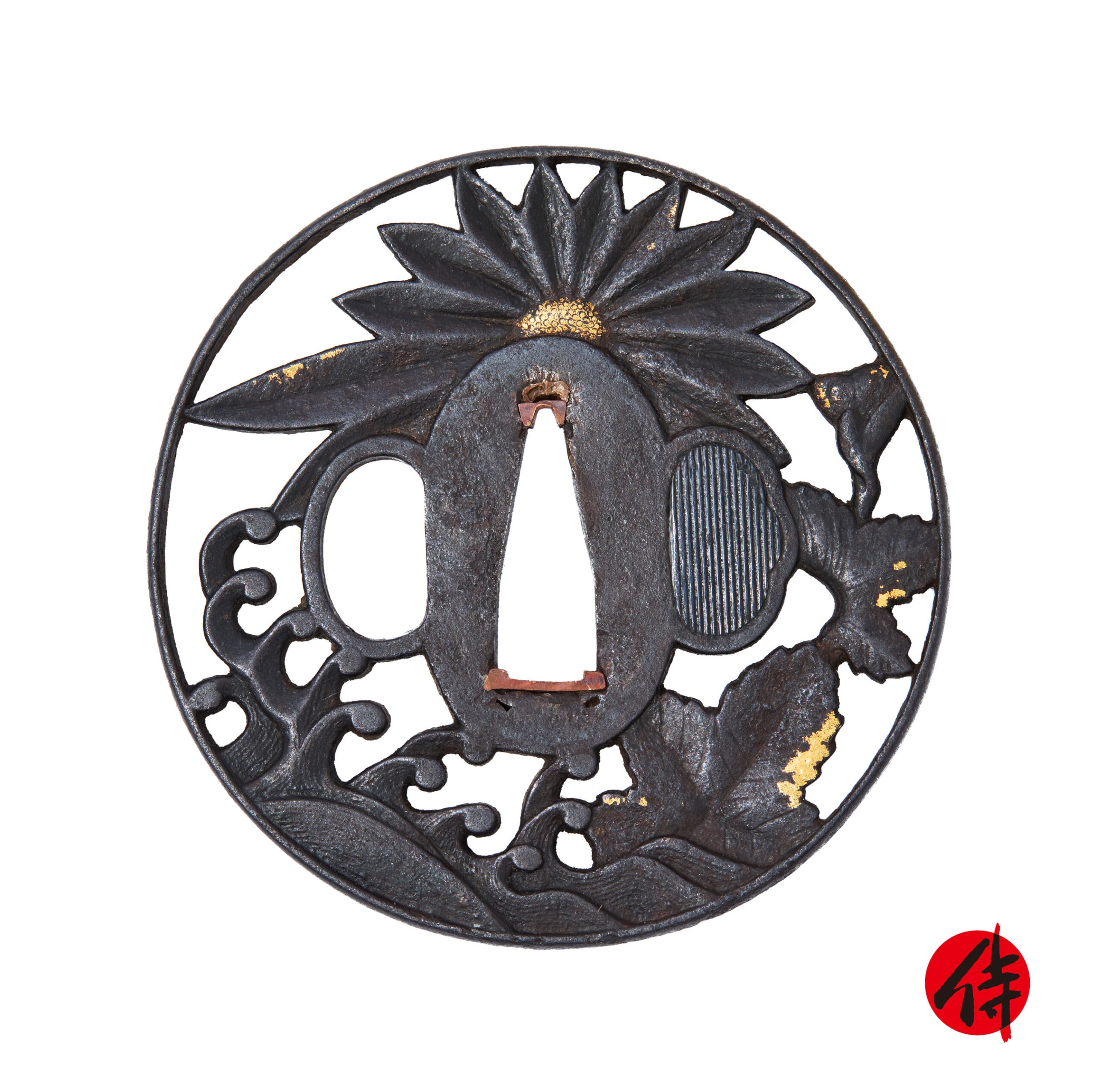
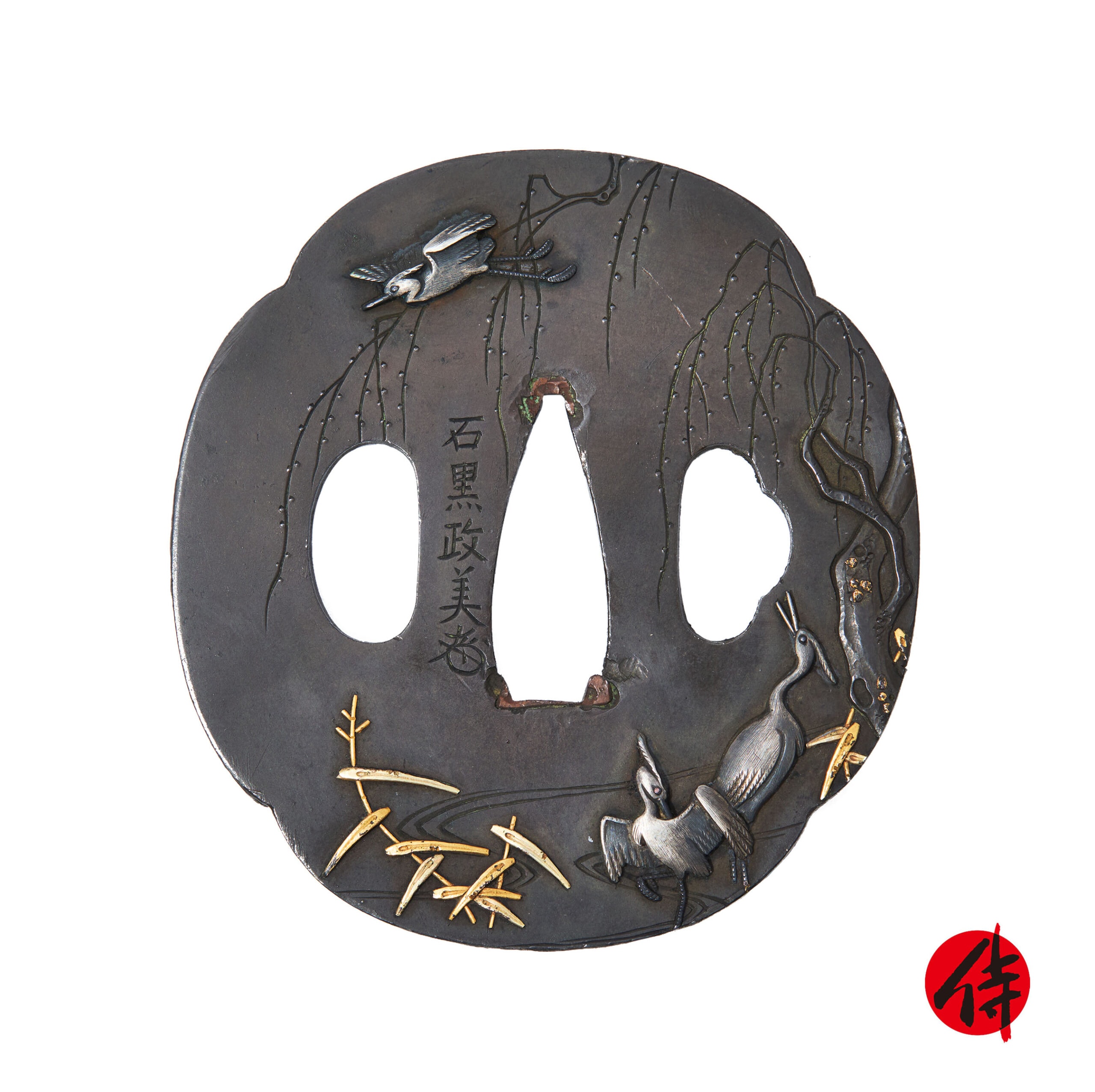
Oval-shaped Tsuba that is made from iron. According to the certificate, the motif of this Tsuba is the Genji Guruma (源氏車). It is another name for the Gosho Guruma (御所車), which is a commonly used term for the Gissya (牛車, oxcart). The Genji Guruma Mon is a pattern only the wheel part of a Gosho Guruma is designed. Therefore, it is also called the Sharin Mon (車輪文, wheel pattern). It is said that the wheel pattern had already appeared as a motif in the Heian period (794-1185). And it was described in the Genji Monogatari (源氏物語, The tale of Genji, Japanese literature written by Murasaki Shikibu in the early 11th century). That is why this design was named the Genji Guruma Mon. Guruma (車) is also pronounced as Kuruma and means car or wheel, depending on context. Some people considered that the figure of a spinning wheel represents the passing of time or it symbolizes reincarnation.
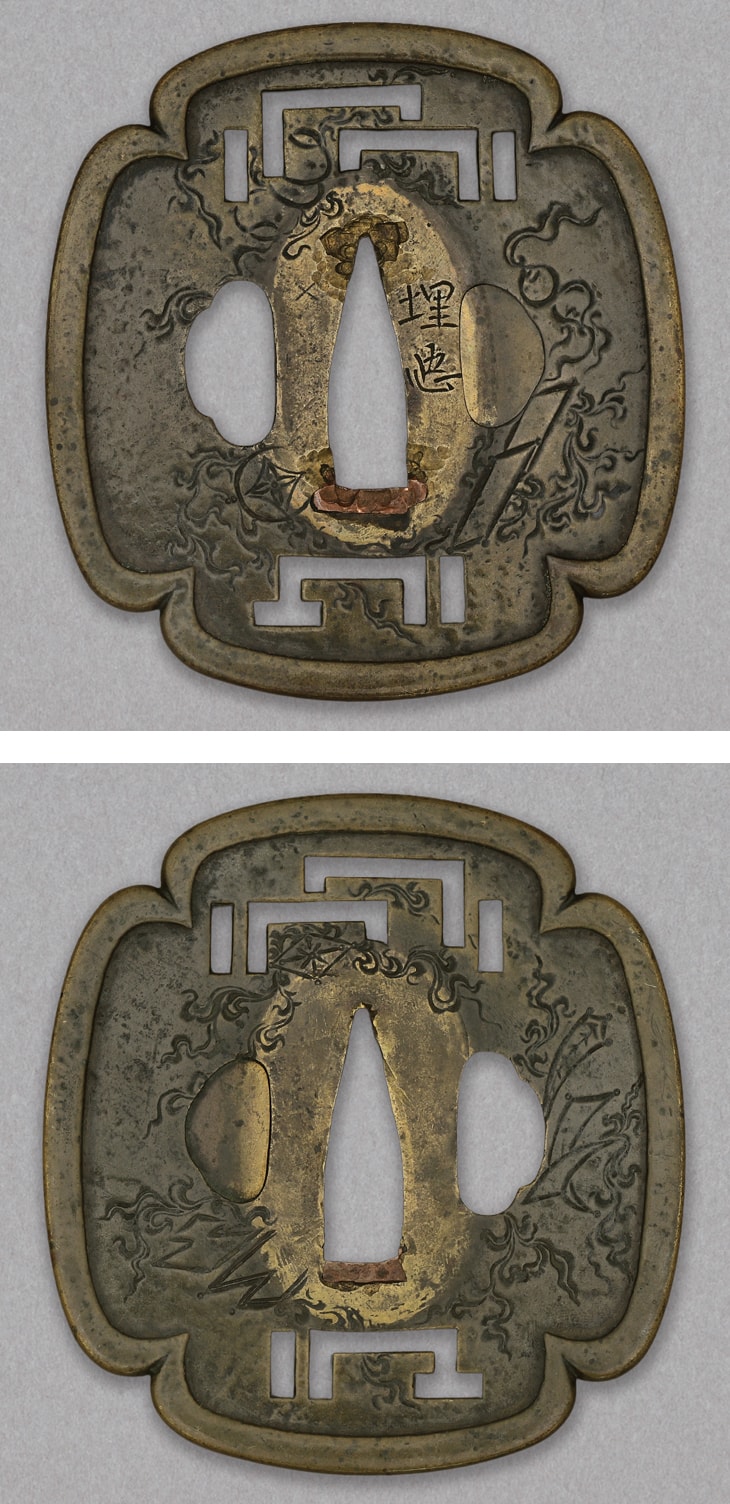
This Tsuba is recognized by The Society for Preservation of Japanese Art Swords, which is known as NBTHK. Based on its certificate, this Tsuba is categorized as the Umetada (梅忠) Tsuba. It is the same school as the Umetada (埋忠) school. Probably the notation “埋忠” is more famous than “梅忠.” According to a theory, the style of engraved inscription 梅忠 and the combination of a Japanese apricot blossom pattern and 忠 letter started to be used in the Edo period. It was because an official of Kyoto public office at that time hated the letter 埋. Instead of 埋, a different character with the same pronunciation: 梅 (Japanese apricot), was adopted.
The first Umetada: Umetada Myouju (埋忠 明寿), was born in Yamashiro-no Kuni (山城国, today’s Kyoto prefecture) as the Shigetaka (重隆) ‘s second son. The Umetada family was a distinguished family who produced excellent swordsmiths, and Myouju succeeded to the household headship. He firstly served under Ashikaga Yoshiaki (足利義昭, 1537-1597, the 15th Shogun of the Muromachi Shogunate), and later his works were admired by famous Samurais such as Oda Nobunaga (織田信長, 1534-1582), Toyotomi Hideyoshi (豊臣秀吉, 1537-1598), and Tokugawa Ieyasu (徳川家康, 1543-1616).
The Umetada family was a prestigious school of metalworks in Kyoto. They produced both Japanese swords and sword mountings. This school was involved in a wide range of areas related to Japanese swords, such as remaking famous old swords, inlaying gold inlays with the name of the sword maker, making metal fittings, and recording famous swords. It is thought that the entire studio was engaged in these various tasks.
*As this item is an antique, please check each photo and ensure its condition.
What is Tsuba?
Tsuba is the hand-guard of the Japanese sword. High-class Samurai wore his Katana sword with its beautiful sword mountings such as Tsuba. Tsuba’s front design tends to be more decorative as this part was often seen by other Samurais when he was walking on the streets.
Why is it that the sword mounting was important for Samurai?
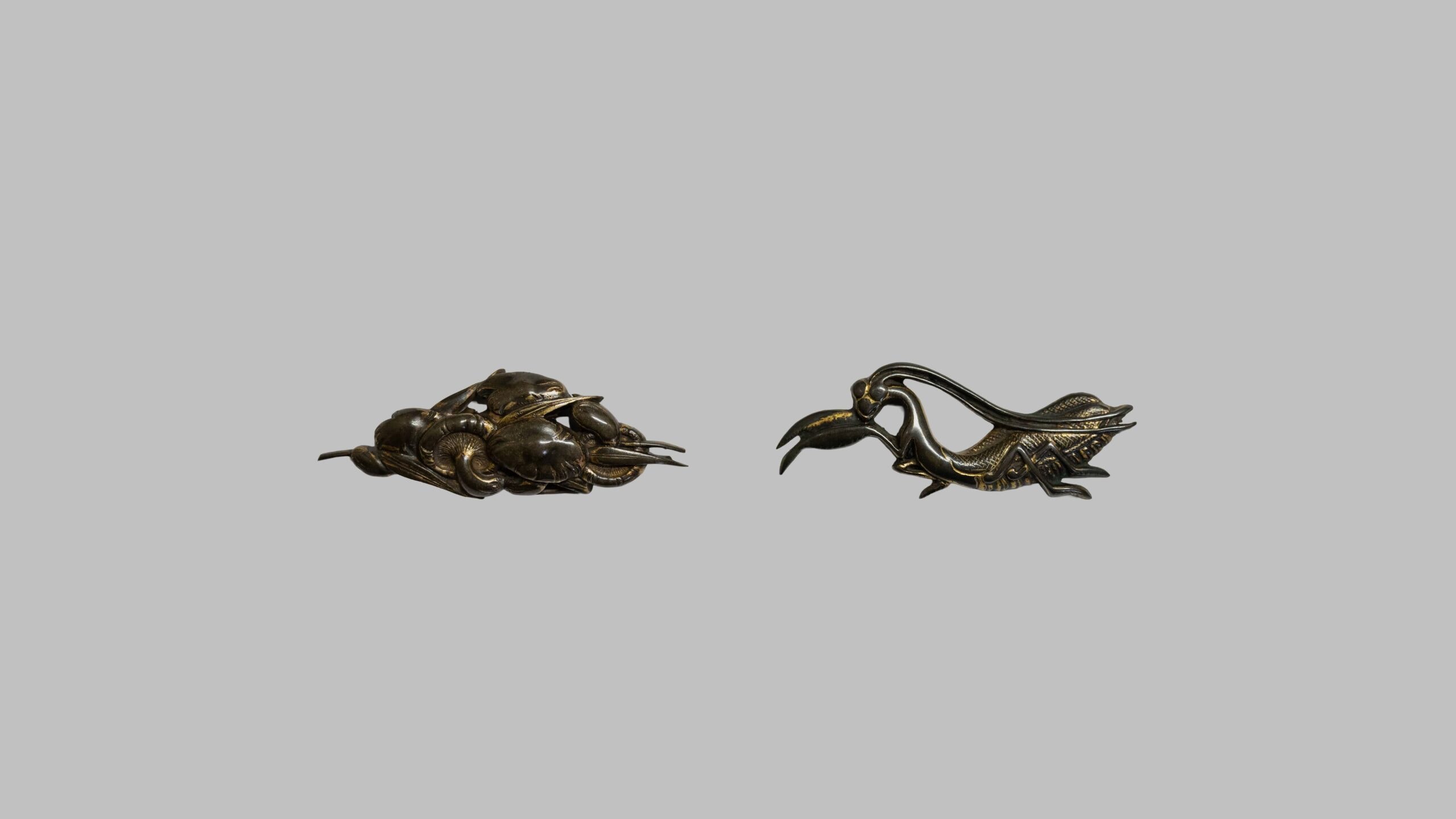
The sword mountings of the Japanese sword have many kinds of decorations such as handguards (Tsuba), sword hilt (Menuki), pommel (Fuchi Kashira). The Japanese sword worked as a weapon and as an object to show who he was. For example, it shows their personalities and beliefs. You could say that it is like decorations for smartphones today. We recommend you zoom in on the pictures of the sword fittings. When you do so, you can see the skill of Japanese metal engraving techniques. They are mainly made of iron and copper with inlays of gold, silver, and bronze. When it comes to handguard (Tsuba), each one has a different outline and weight. These sword fittings that have lived with Japanese swords of the same age might be worth as much as the Japanese swords. They are inconspicuous parts of the Japanese sword. Nevertheless, if you are knowledgeable or particular about it, you will become a connoisseur of the Samurai.
Authentication Paper
:
NBTHK Hozon Certificate
NBTHK, also known as Nihon Bijutsu Touken Hozon Kyoka