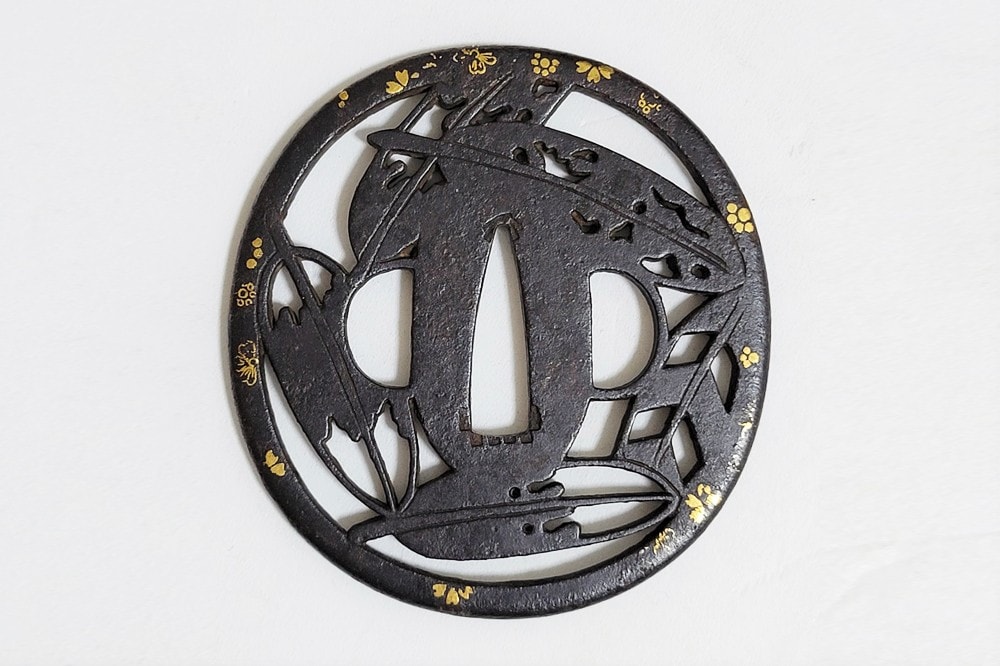
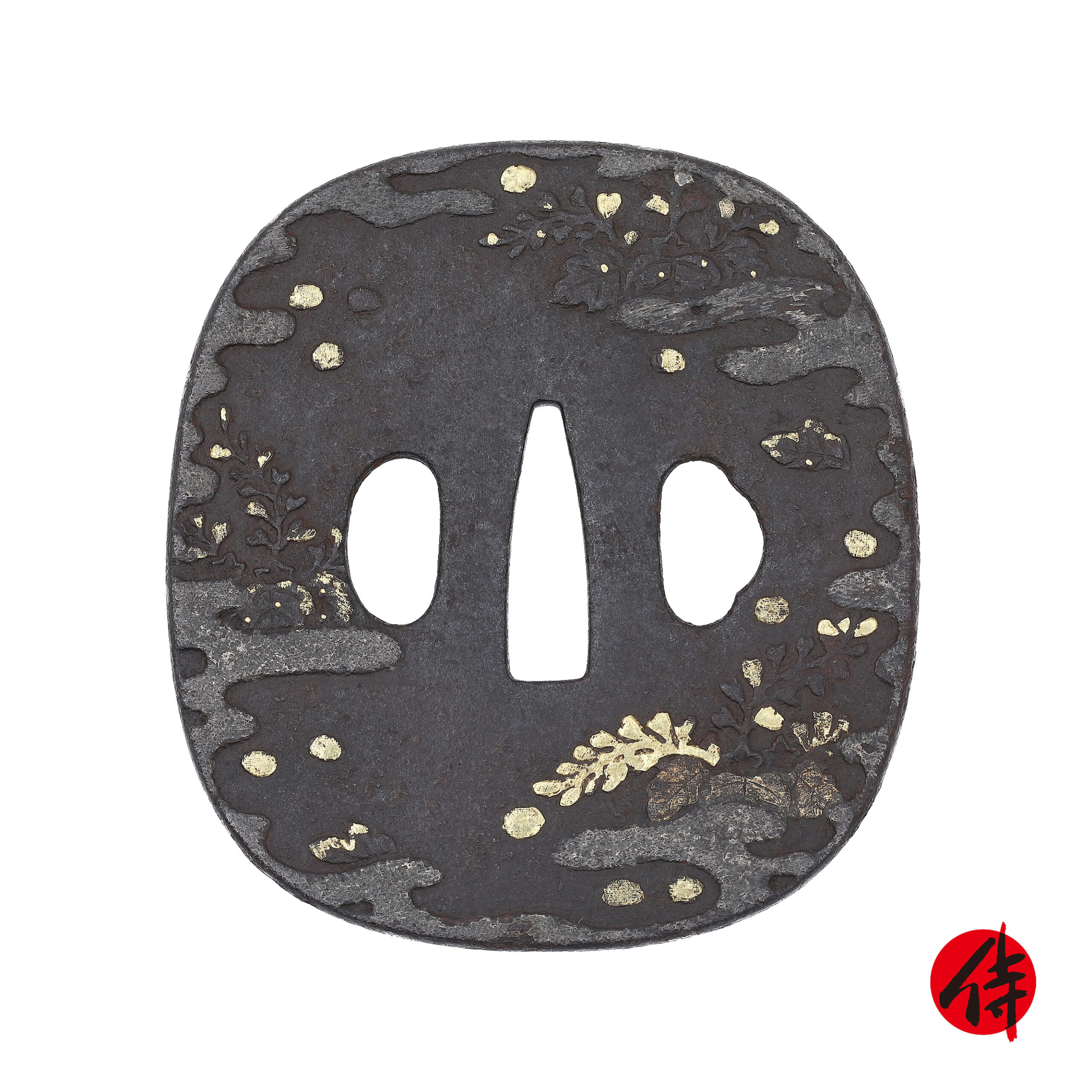
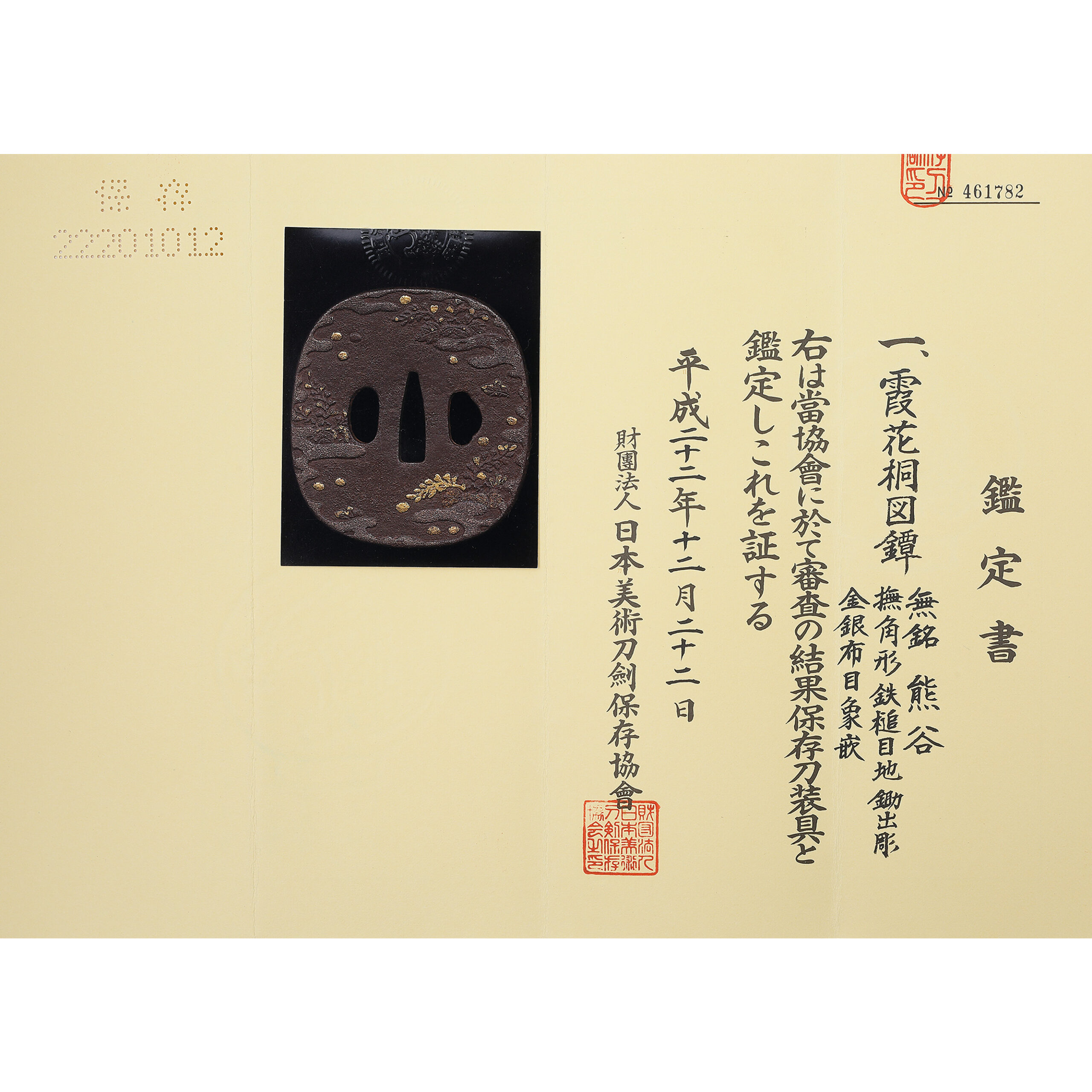
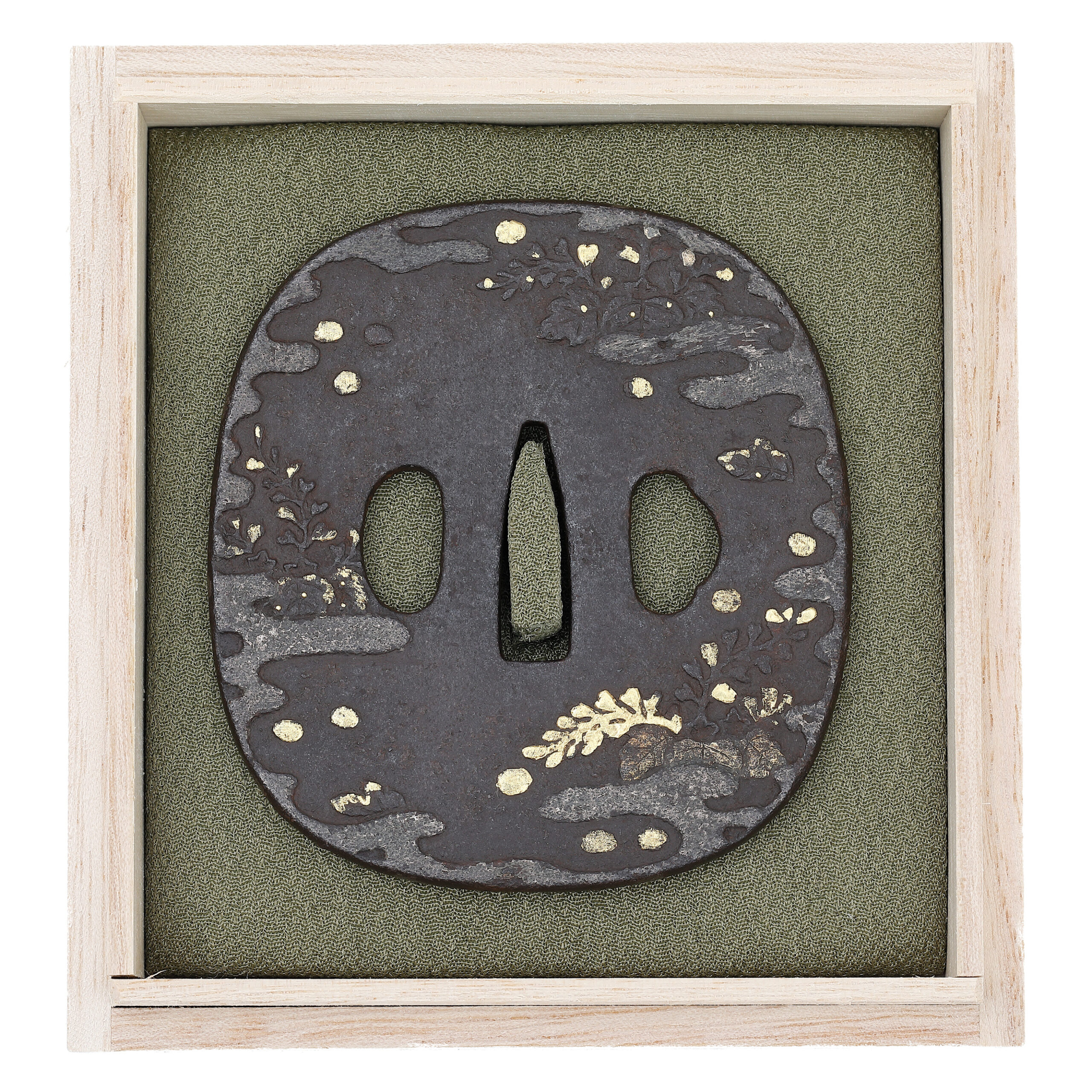
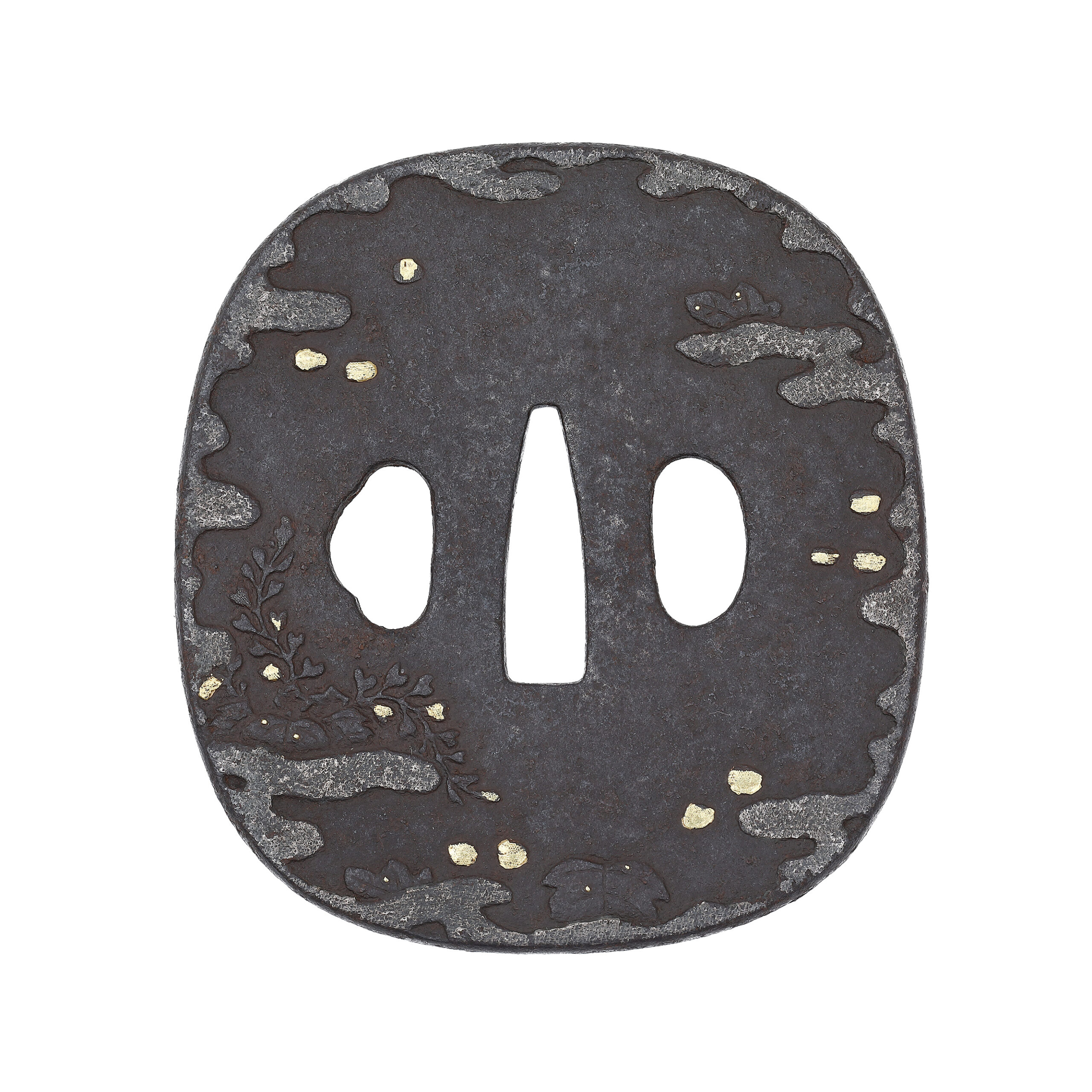
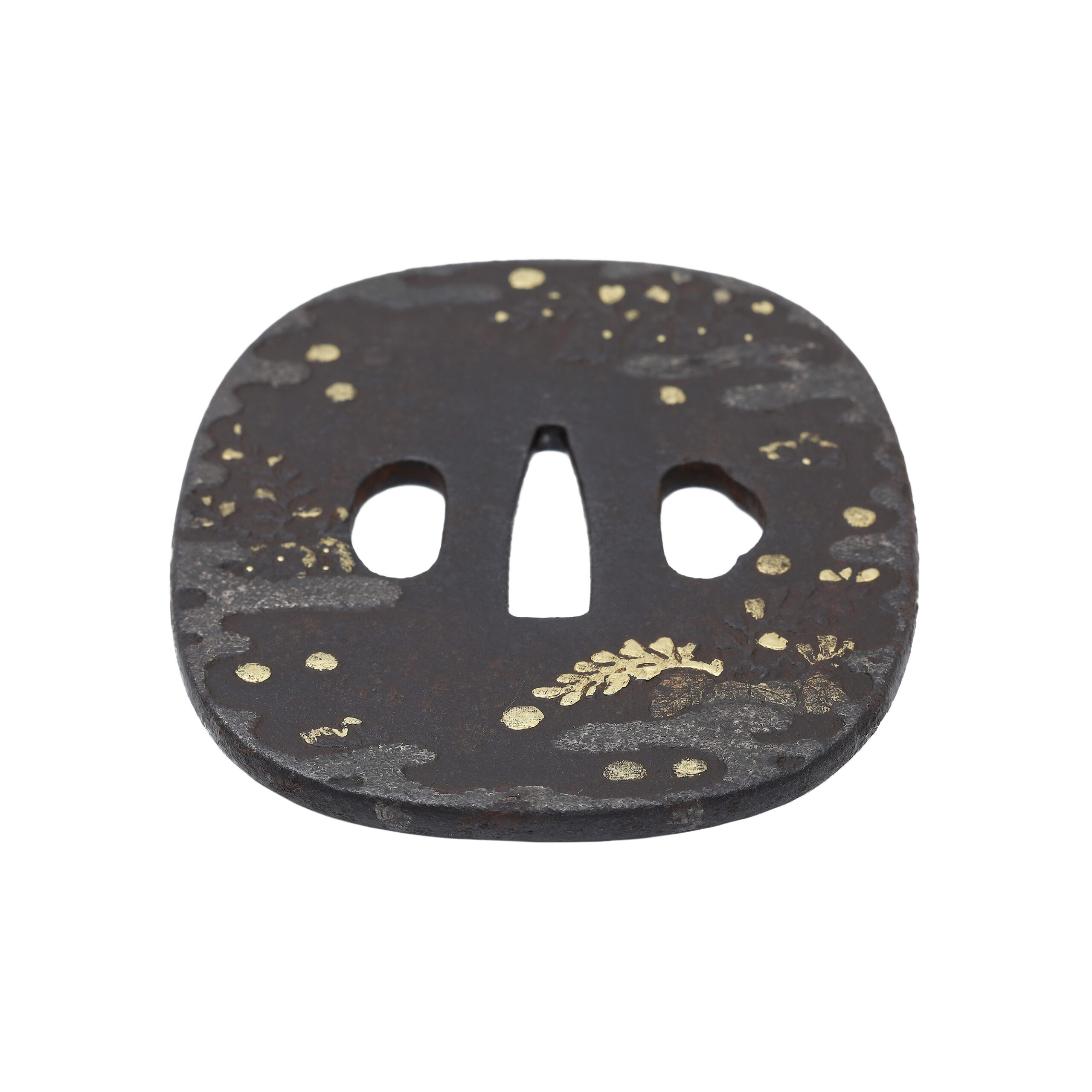
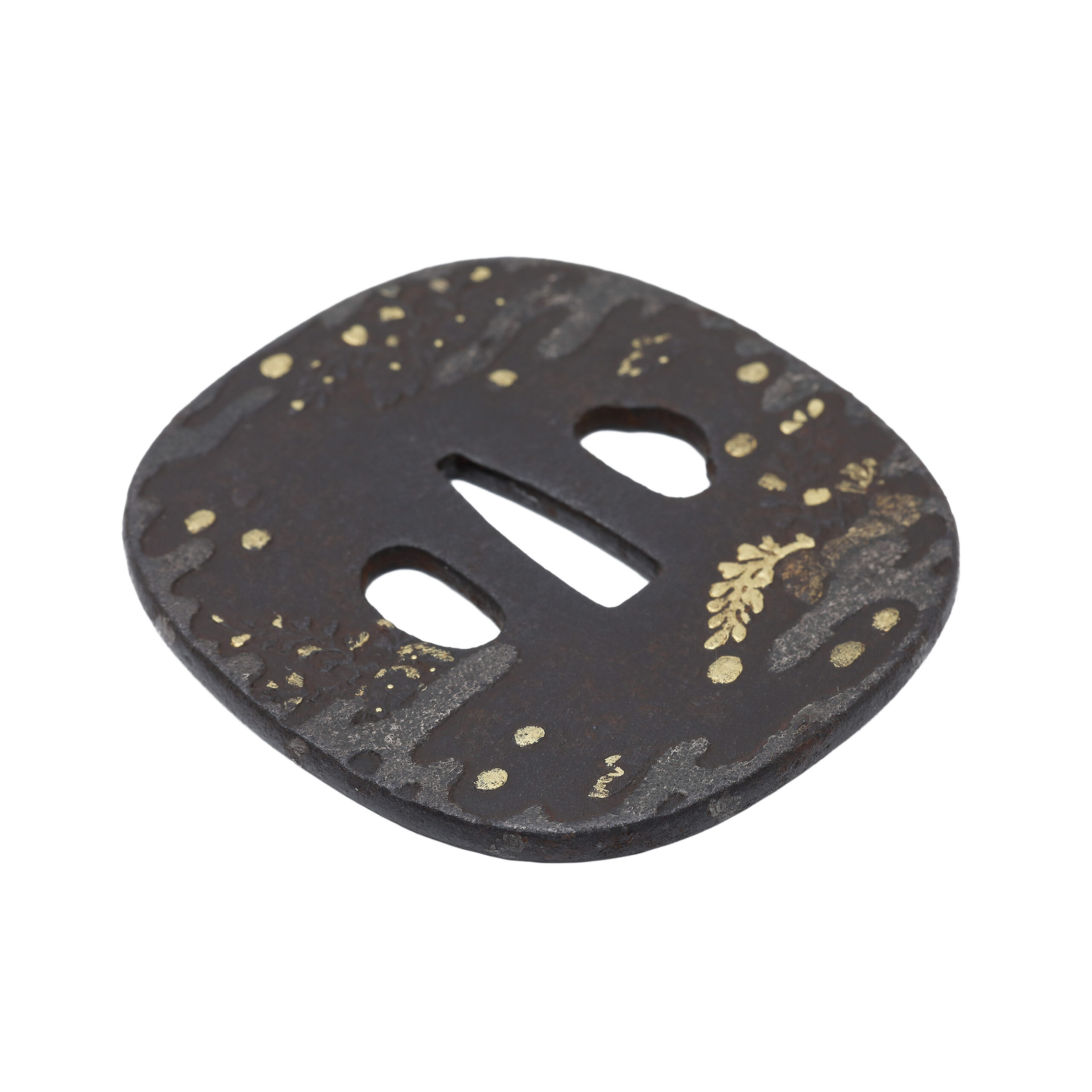
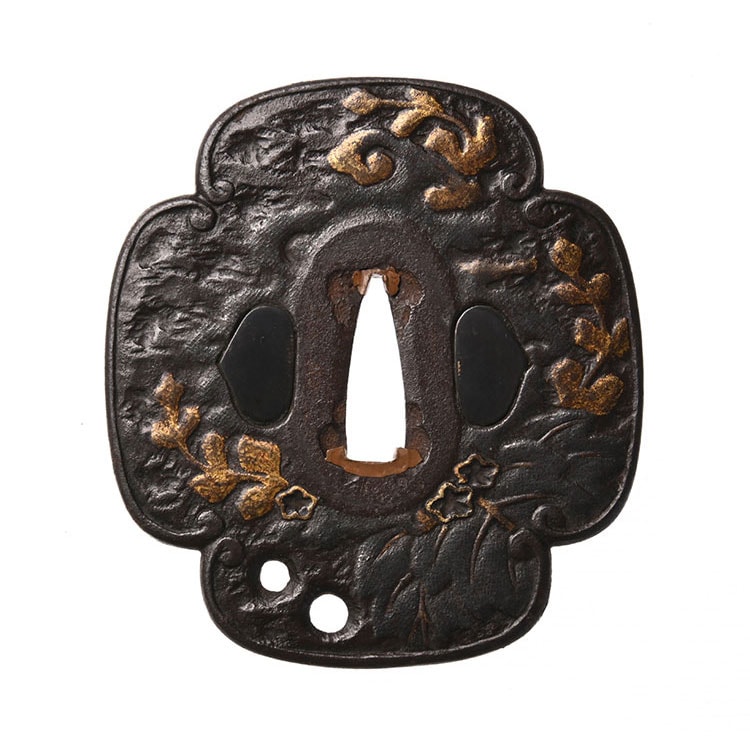
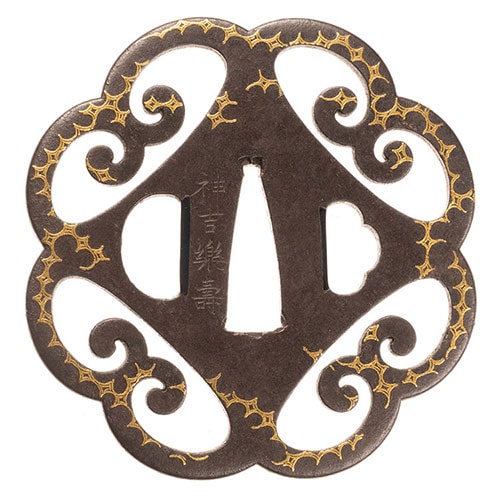
Title: Kumagaya-style, Kasumi Hana Kiri Zu Description This rectangular-shaped iron Tsuba is recognized by The Society for Preservation of Japanese Art Swords, which is known as NBTHK. Also, this Tsuba is unsigned, but is appraised as the attribution to the work of Kumagaya (熊谷) school by NBTHK. The Kumagaya school was also known as Edo Higo or Yotsuya Higo because they lived in Yotsuya (today’s Shinjuku in Tokyo) and became the official metalworkers of the Hosokawa family of Higo province (today’s Kumamoto prefecture) during the late Edo period. In this work, paulownia flowers (桐花, Kirihana) are elegantly depicted surrounded by a haze (霞, Kasumi). The paulownia flowers is expressed by the inlay technique called the Kin Gin Nunome Zogan (金銀布目象嵌, gold and silver inlay). The Nunome Zougan (布目象嵌) is a technique in which vertical and horizontal stripes are attached to the surface that seems to be a texture of a fabric, and gold or silver foil is pasted on the surface to make it bite in and prevent it from peeling off. Although the golden color is partly faded, this inlay makes this Tsuba look decorative. Paulownia, called the Kiri (桐) in Japanese, is a plant that colors the fields after cherry blossoms. And its colors are calm and gentle. The Kiri pattern is generally composed of three standing straight inflorescences and three leaves. The number of flowers that are blooming at each inflorescence means the ranks of this design. It is also famous that one of the most popular Samurais in Japan: Toyotomi Hideyoshi used the Kiri pattern for his family crest. According to a theory, Hideyoshi used Omodaka (沢瀉, arrowhead) pattern as his family crest. However, Oda Nobunaga, a well-known military commander in the Warring States period, permitted Hideyoshi to use Kiri design. This plant pattern was once used by the imperial family and national leaders of the time. Today, this plant pattern is used as the crest of the Japanese Government. The haze is represented by a series of straight lines piled up horizontally, and is called the Kasumi Mon (霞文). It is said to have the meaning of eternity because it appears and disappears. The Kasumi pattern has been drawn together with auspicious patterns and flowers, or used as pattern separators. *As this item is an antique, please check each photo and ensure its condition. What is Tsuba? Tsuba is the hand-guard of the Japanese sword. High-class Samurai wore his Katana sword with its beautiful sword mountings such as Tsuba. Tsuba’s front design tends to be more decorative as this part was often seen by other Samurais when he was walking on the streets. Why is it that the sword mounting was important for Samurai? The sword mountings of the Japanese sword have many kinds of decorations such as handguards (Tsuba), sword hilt (Menuki), pommel (Fuchi Kashira). The Japanese sword worked as a weapon and as an object to show who he was. For example, it shows their personalities and beliefs. You could say that it is like decorations for smartphones today. We recommend you zoom in on the pictures of the sword fittings. When you do so, you can see the skill of Japanese metal engraving techniques. They are mainly made of iron and copper with inlays of gold, silver, and bronze. When it comes to handguard (Tsuba), each one has a different outline and weight. These sword fittings that have lived with Japanese swords of the same age might be worth as much as the Japanese swords. They are inconspicuous parts of the Japanese sword. Nevertheless, if you are knowledgeable or particular about it, you will become a connoisseur of the Samurai. Authentication Paper : NBTHK Hozon Certificate (No. 461782) NBTHK , also known as Nihon Bijutsu Touken Hozon Kyokai (the Society for the Preservation of the Japan Art Sword), is one of the oldest Japanese sword appraising organizations in modern-day Japan. They authenticated the Tsuba on December 22nd in the 22nd year of Heisei (2010). They appraised it as Hozon Tousougu, the Tsuba wort
 NihontoWatch
無銘 · Kumagaya · 江戸
熊谷派
江戸
肥後
無銘
保存 (NBTHK)
肥後 · 武蔵
現在8点販売中
銘が正しい、または無銘でも年代・流派を指摘でき、美術工芸的価値が認められる、保存に値する真正の刀装具と鑑定されたものです。
日本美術刀剣保存協会(NBTHK)は、1948年に設立され、文化庁の監督を受ける公益財団法人で、東京・刀剣博物館に本部を置きます。専門の審査員が出品作を直接審査し、美術的・歴史的価値に応じた鑑定書を発行します。NBTHKの鑑定書は、日本刀および刀装具の真正性を示す最も広く認知された基準です。
NBTHK公式サイトReturns/exchanges limited to defects caused by shipping (except willful misconduct or gross negligence by the company); customers must contact within 72 hours of receiving the product.
Title: Kumagaya-style, Kasumi Hana Kiri Zu Description This rectangular-shaped iron Tsuba is recognized by The Society for Preservation of Japanese Art Swords, which is known as NBTHK. Also, this Tsuba is unsigned, but is appraised as the attribution to the work of Kumagaya (熊谷) school by NBTHK. The Kumagaya school was also known as Edo Higo or Yotsuya Higo because they lived in Yotsuya (today’s Shinjuku in Tokyo) and became the official metalworkers of the Hosokawa family of Higo province (today’s Kumamoto prefecture) during the late Edo period. In this work, paulownia flowers (桐花, Kirihana) are elegantly depicted surrounded by a haze (霞, Kasumi). The paulownia flowers is expressed by the inlay technique called the Kin Gin Nunome Zogan (金銀布目象嵌, gold and silver inlay). The Nunome Zougan (布目象嵌) is a technique in which vertical and horizontal stripes are attached to the surface that seems to be a texture of a fabric, and gold or silver foil is pasted on the surface to make it bite in and prevent it from peeling off. Although the golden color is partly faded, this inlay makes this Tsuba look decorative. Paulownia, called the Kiri (桐) in Japanese, is a plant that colors the fields after cherry blossoms. And its colors are calm and gentle. The Kiri pattern is generally composed of three standing straight inflorescences and three leaves. The number of flowers that are blooming at each inflorescence means the ranks of this design. It is also famous that one of the most popular Samurais in Japan: Toyotomi Hideyoshi used the Kiri pattern for his family crest. According to a theory, Hideyoshi used Omodaka (沢瀉, arrowhead) pattern as his family crest. However, Oda Nobunaga, a well-known military commander in the Warring States period, permitted Hideyoshi to use Kiri design. This plant pattern was once used by the imperial family and national leaders of the time. Today, this plant pattern is used as the crest of the Japanese Government. The haze is represented by a series of straight lines piled up horizontally, and is called the Kasumi Mon (霞文). It is said to have the meaning of eternity because it appears and disappears. The Kasumi pattern has been drawn together with auspicious patterns and flowers, or used as pattern separators. *As this item is an antique, please check each photo and ensure its condition. What is Tsuba? Tsuba is the hand-guard of the Japanese sword. High-class Samurai wore his Katana sword with its beautiful sword mountings such as Tsuba. Tsuba’s front design tends to be more decorative as this part was often seen by other Samurais when he was walking on the streets. Why is it that the sword mounting was important for Samurai? The sword mountings of the Japanese sword have many kinds of decorations such as handguards (Tsuba), sword hilt (Menuki), pommel (Fuchi Kashira). The Japanese sword worked as a weapon and as an object to show who he was. For example, it shows their personalities and beliefs. You could say that it is like decorations for smartphones today. We recommend you zoom in on the pictures of the sword fittings. When you do so, you can see the skill of Japanese metal engraving techniques. They are mainly made of iron and copper with inlays of gold, silver, and bronze. When it comes to handguard (Tsuba), each one has a different outline and weight. These sword fittings that have lived with Japanese swords of the same age might be worth as much as the Japanese swords. They are inconspicuous parts of the Japanese sword. Nevertheless, if you are knowledgeable or particular about it, you will become a connoisseur of the Samurai. Authentication Paper : NBTHK Hozon Certificate (No. 461782) NBTHK , also known as Nihon Bijutsu Touken Hozon Kyokai (the Society for the Preservation of the Japan Art Sword), is one of the oldest Japanese sword appraising organizations in modern-day Japan. They authenticated the Tsuba on December 22nd in the 22nd year of Heisei (2010). They appraised it as Hozon Tousougu, the Tsuba wort
NihontoWatch無銘 · Kumagaya · 江戸
熊谷派
江戸
肥後
無銘
保存 (NBTHK)
肥後 · 武蔵
現在8点販売中
銘が正しい、または無銘でも年代・流派を指摘でき、美術工芸的価値が認められる、保存に値する真正の刀装具と鑑定されたものです。
日本美術刀剣保存協会(NBTHK)は、1948年に設立され、文化庁の監督を受ける公益財団法人で、東京・刀剣博物館に本部を置きます。専門の審査員が出品作を直接審査し、美術的・歴史的価値に応じた鑑定書を発行します。NBTHKの鑑定書は、日本刀および刀装具の真正性を示す最も広く認知された基準です。
NBTHK公式サイトReturns/exchanges limited to defects caused by shipping (except willful misconduct or gross negligence by the company); customers must contact within 72 hours of receiving the product.
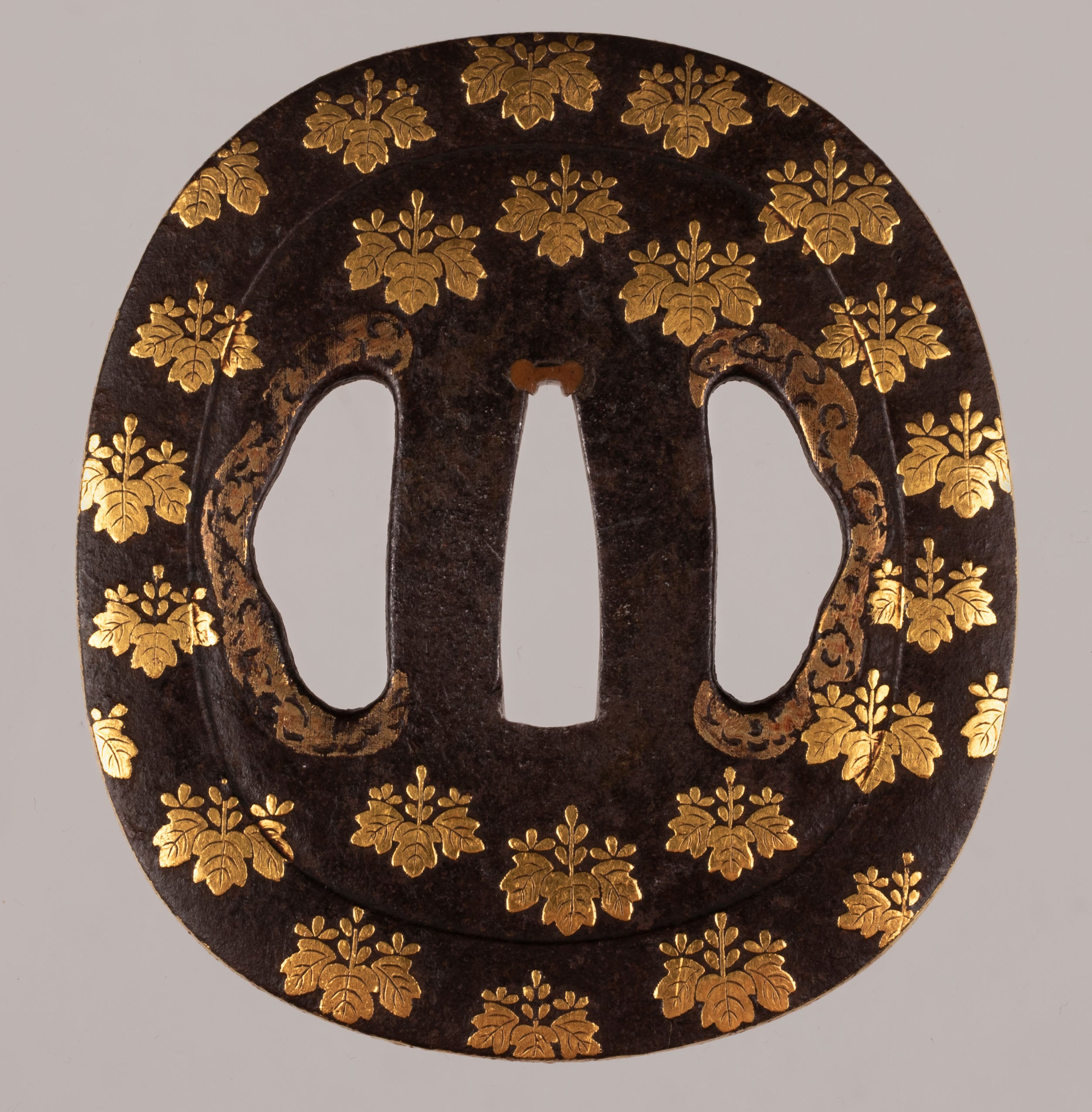


![Tsuba - Tokuho - by Kumagai School - 鐔[無銘 熊谷派 瑞雲花切図鐔][日本美術刀剣保存協会]特別保存刀装具](/_next/image?url=https%3A%2F%2Fitbhfhyptogxcjbjfzwx.supabase.co%2Fstorage%2Fv1%2Fobject%2Fpublic%2Flisting-images%2Fworld-seiyudo%2FL32555%2F00.jpg&w=2560&q=90)

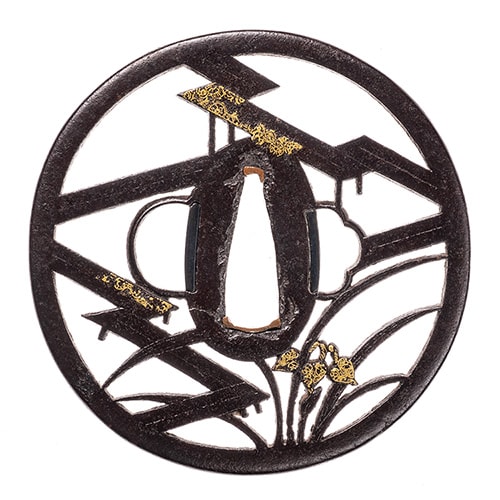
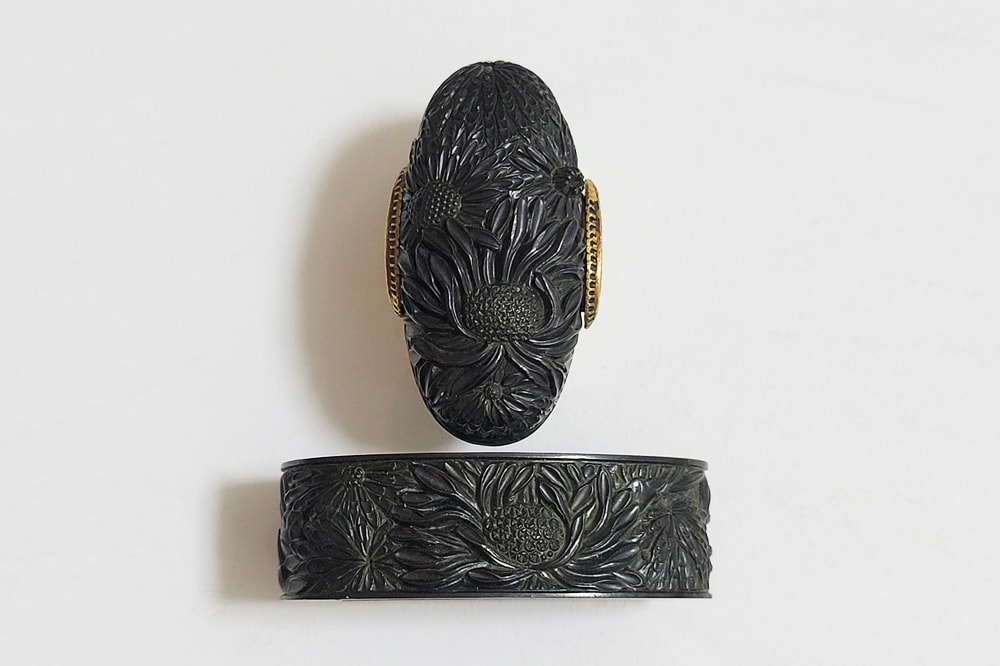
![Tsuba - Jūyō - by Hirata Hikozo - 刀装具 鑑定書内容:財)日本美術刀剣保存協会 重要刀装具[N.B.T.H.K]Juyo Tousougu No.66 銘 :無銘 彦三](/_next/image?url=https%3A%2F%2Fitbhfhyptogxcjbjfzwx.supabase.co%2Fstorage%2Fv1%2Fobject%2Fpublic%2Flisting-images%2Fiida-koendo%2FL625080%2F00.png&w=2560&q=90)