説明
Title: Ko-
Shoami-style, Budou Shoju
Zu
Description
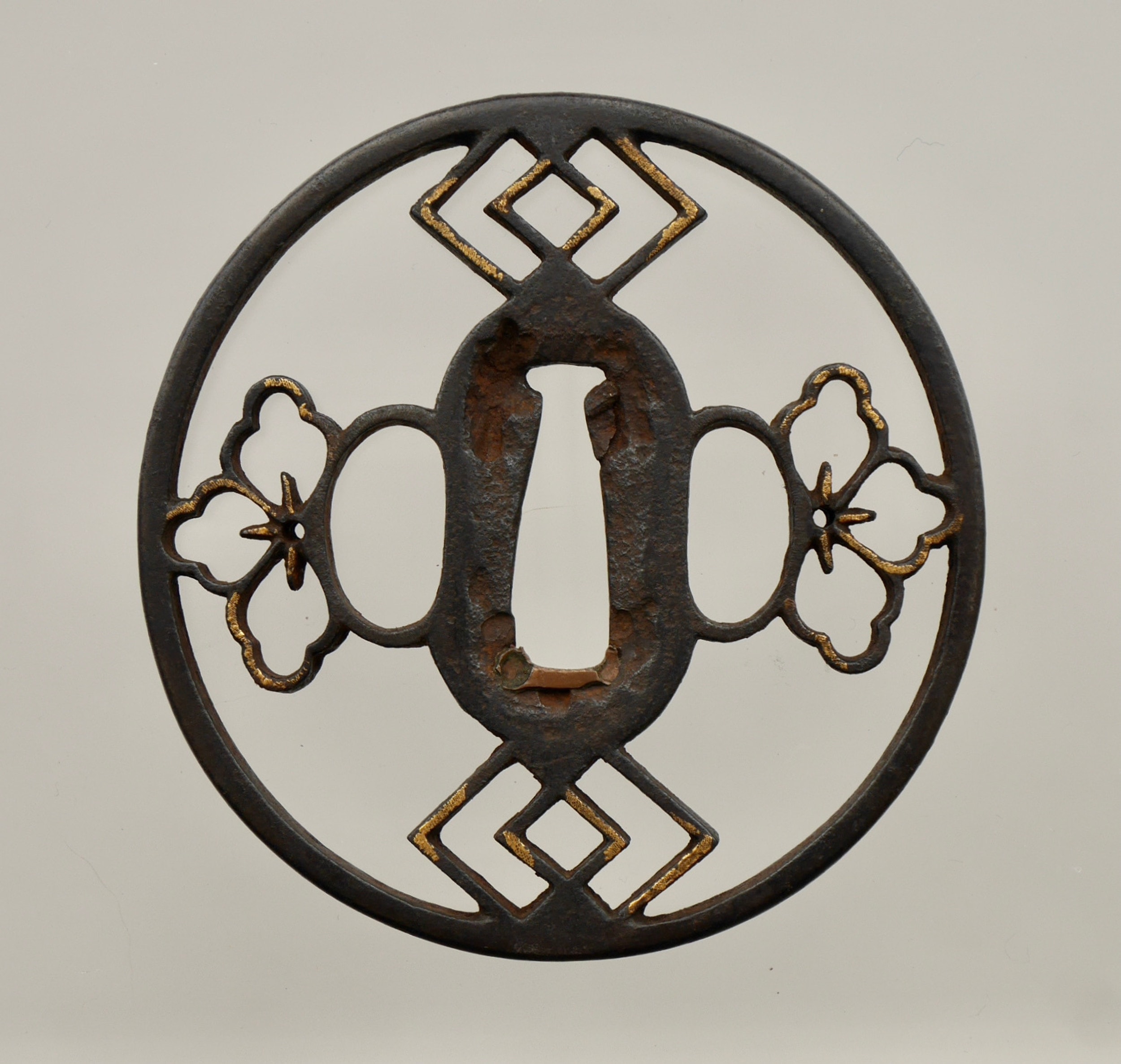
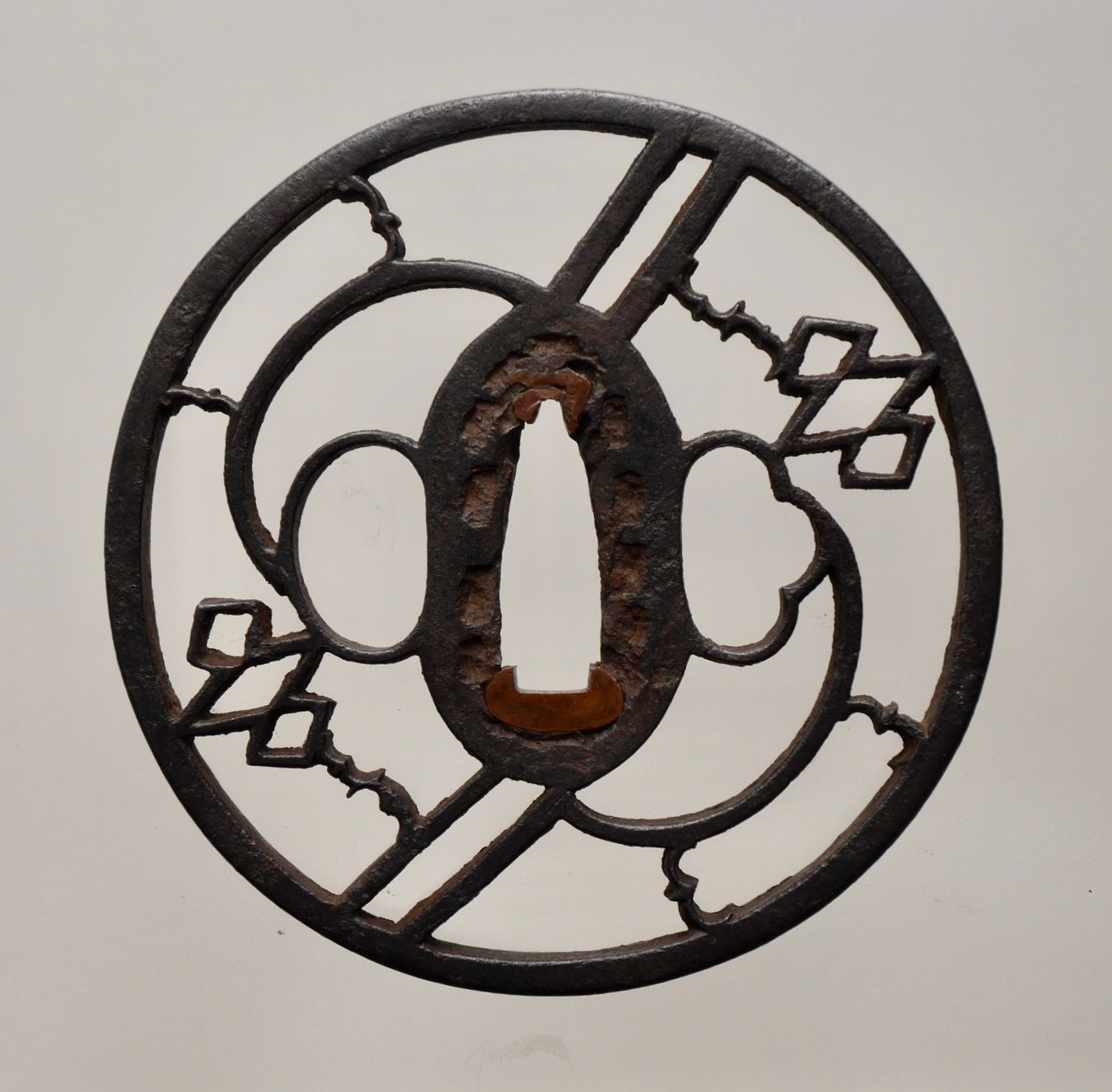
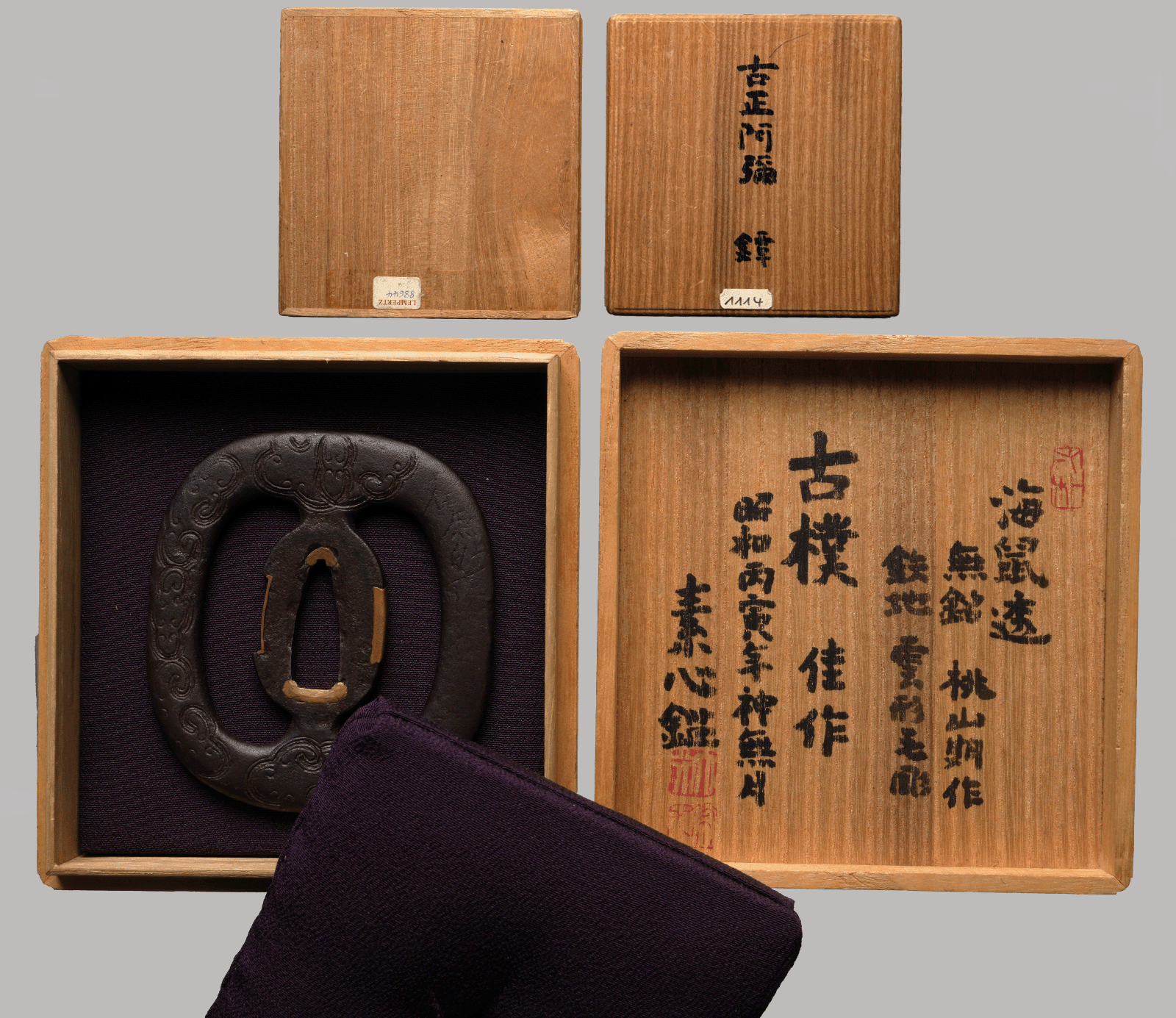
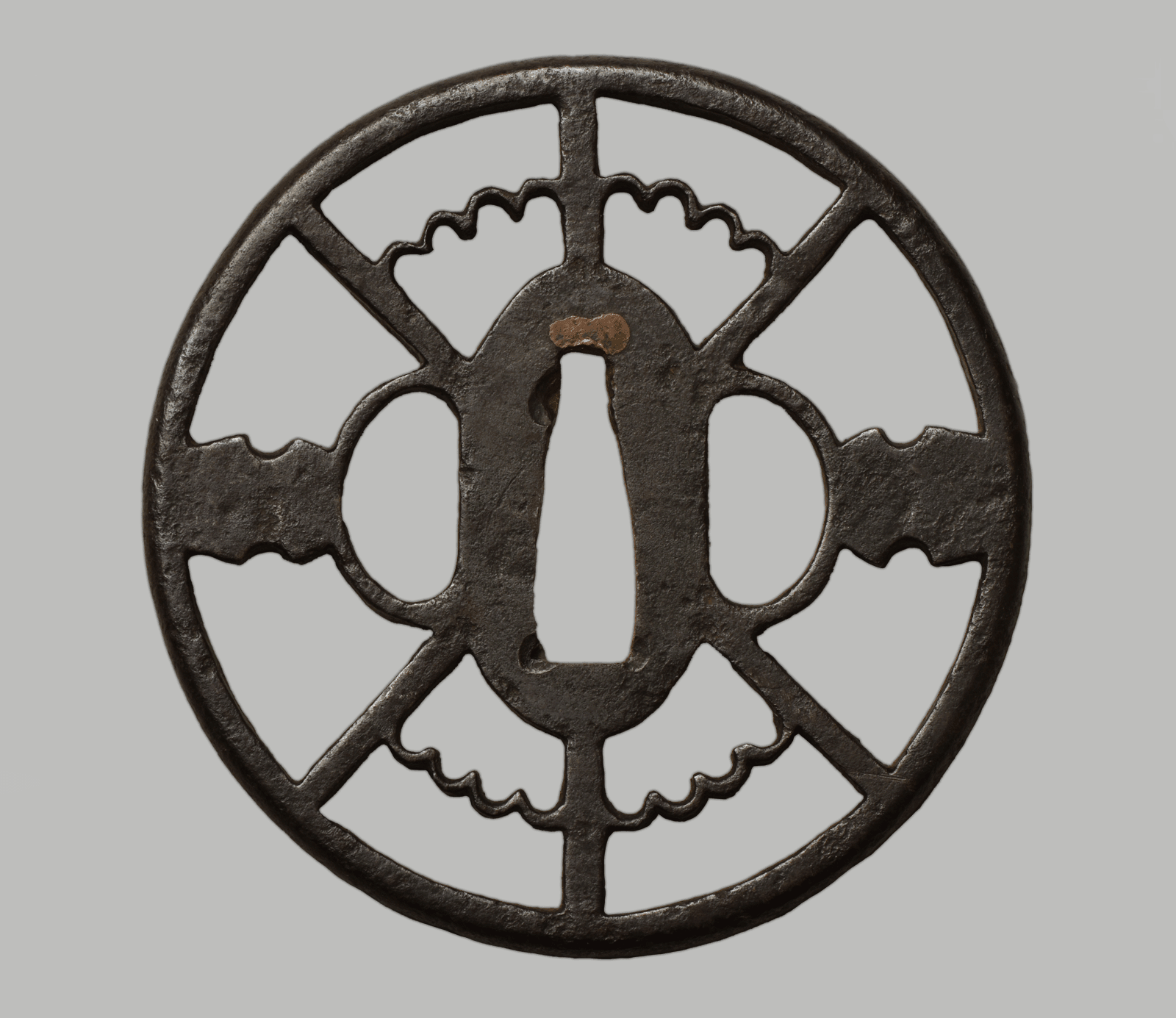
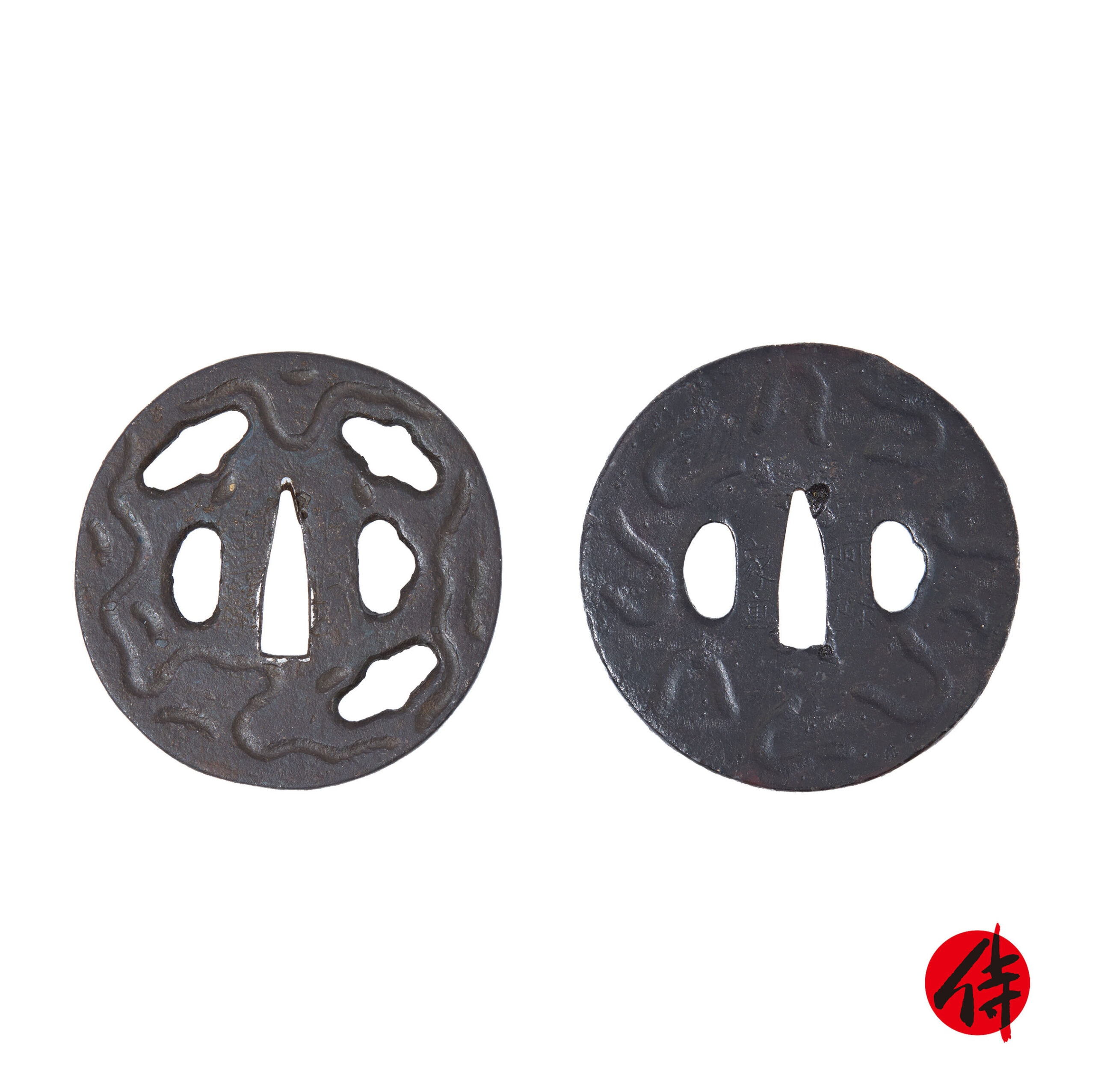
This circle-shaped iron Tsuba is recognized by The Society for Preservation of Japanese Art Swords, which is known as NBTHK. Also, this Tsuba is unsigned, but is appraised as the attribution to the work of Ko Shoami (古正阿弥) school by NBTHK. The Shoami is the school’s name and this Tsuba is categorized as Ko-Shoami (古正阿弥) Tsuba. It is said that the production of the Shoami style’s Tsubas continued from the Muromachi period (1336-1573) to the Edo period. A theory says the Shoami school originated in Kyoto prefecture, and in various places and each era, there were many craftsmen who called themselves the Shoami school. The Akita (秋田) Shoami, the Aizu (会津) Shoami, and the Iyo (伊予, today’s Ehime prefecture) Shoami exceedingly prospered in this school. Tsubas made from the Muromachi period to the Azuchi-Momoyama period are categorized as Ko-Shoami.
As for the design, while the front side of this Tsuba depicts grapes (葡萄, Budou), and the back side depicts pine trees (松, Matsu/松樹, Shoju).
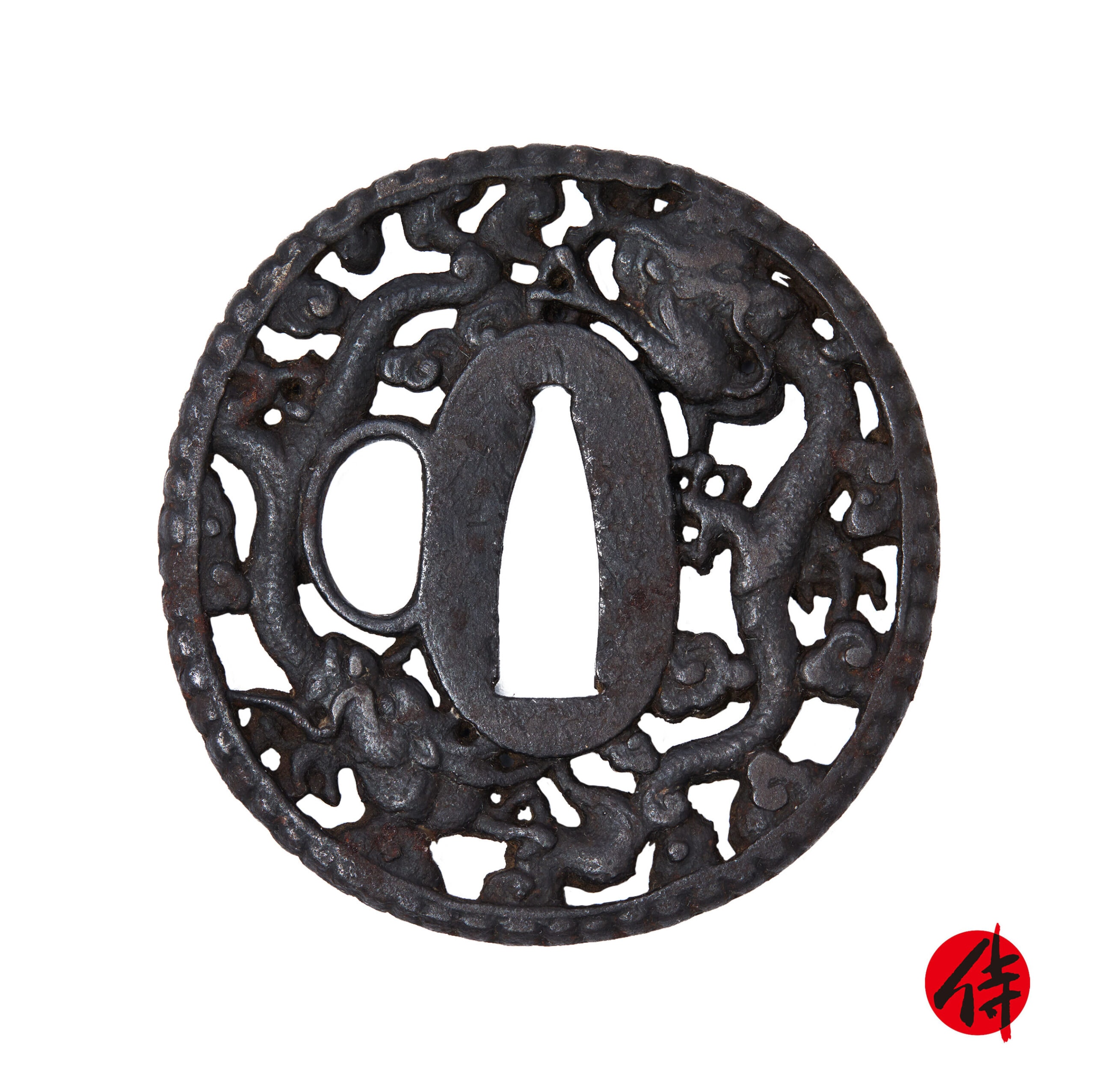
A theory says the grape pattern represents fertility, good health, and longevity. People treat this motif as an auspicious design. In Japanese, there is the word Budou (武道) which means martial arts. As Budou (葡萄, grape) has the same pronunciation of this word, it is considered that grape pattern shares some underlying ideas with Bushido (武士道, Japanese chivalry). That is why many Samurai appreciated the grape motif. Especially the combination of grape and squirrel patterns was widespread, as you see in the second Tsuba in this category. The squirrel is a familiar animal to people since ancient times. According to a theory, this motif was brought to Japan in the Muromachi period (1336-1573).
Regarding pine trees, as they keep their green color throughout the years by withstanding severe heat and cold, people thought this plant pattern represents eternal youth. Furthermore, its color is called Tokiwa-Iro (常盤色, evergreen trees’ dark green color with brown), and pine trees have another name “Tokiwa-Gi (常盤木).” Tokiwa means immutability, so Tokiwa-Iro is a color that praises green with a wish for longevity and prosperity. It is said this color was appreciated, especially in the Edo period, as a good-luck color. The pine tree design gives us an elegant and noble impression; it might be another reason that people love this motif.
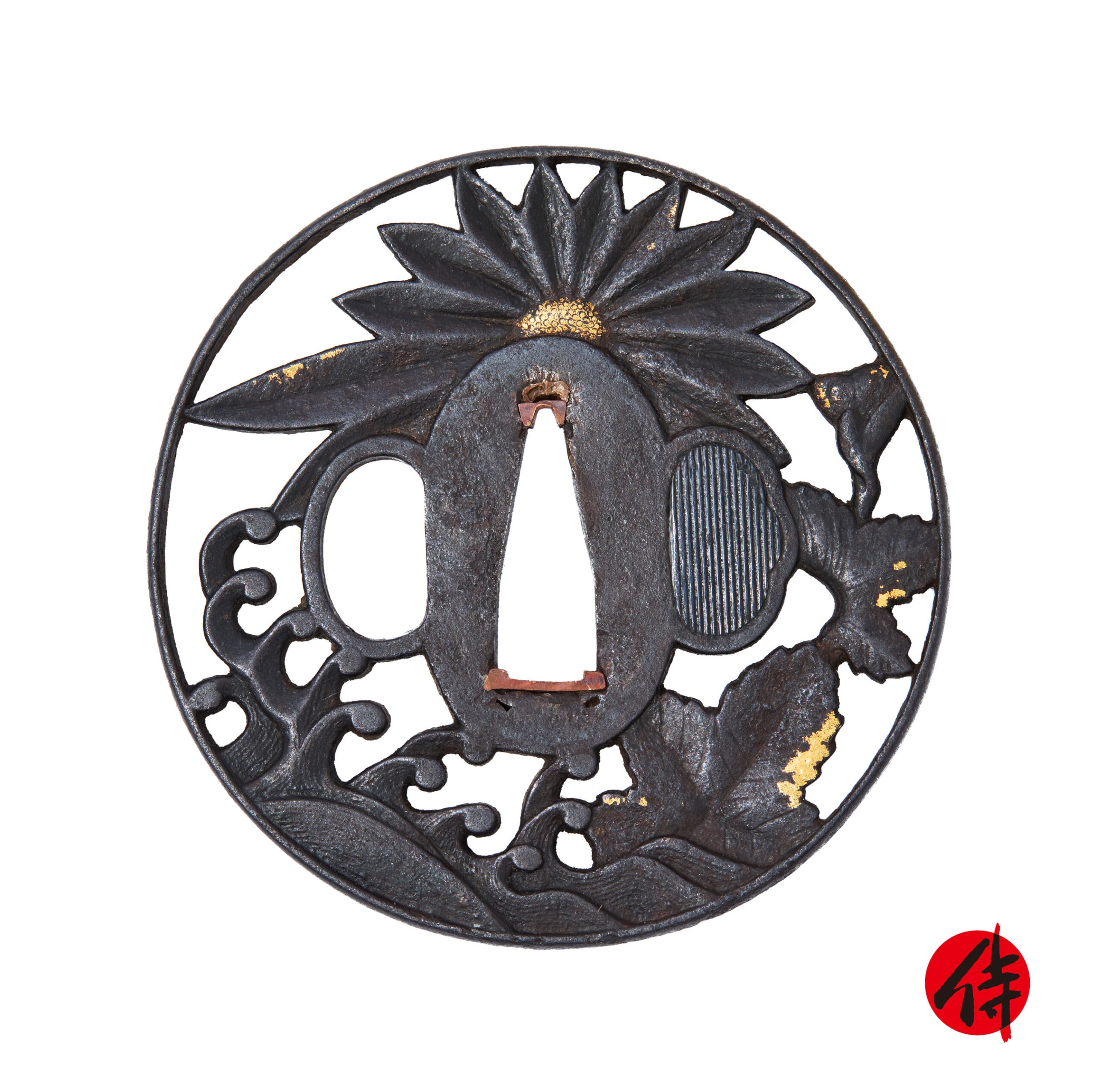
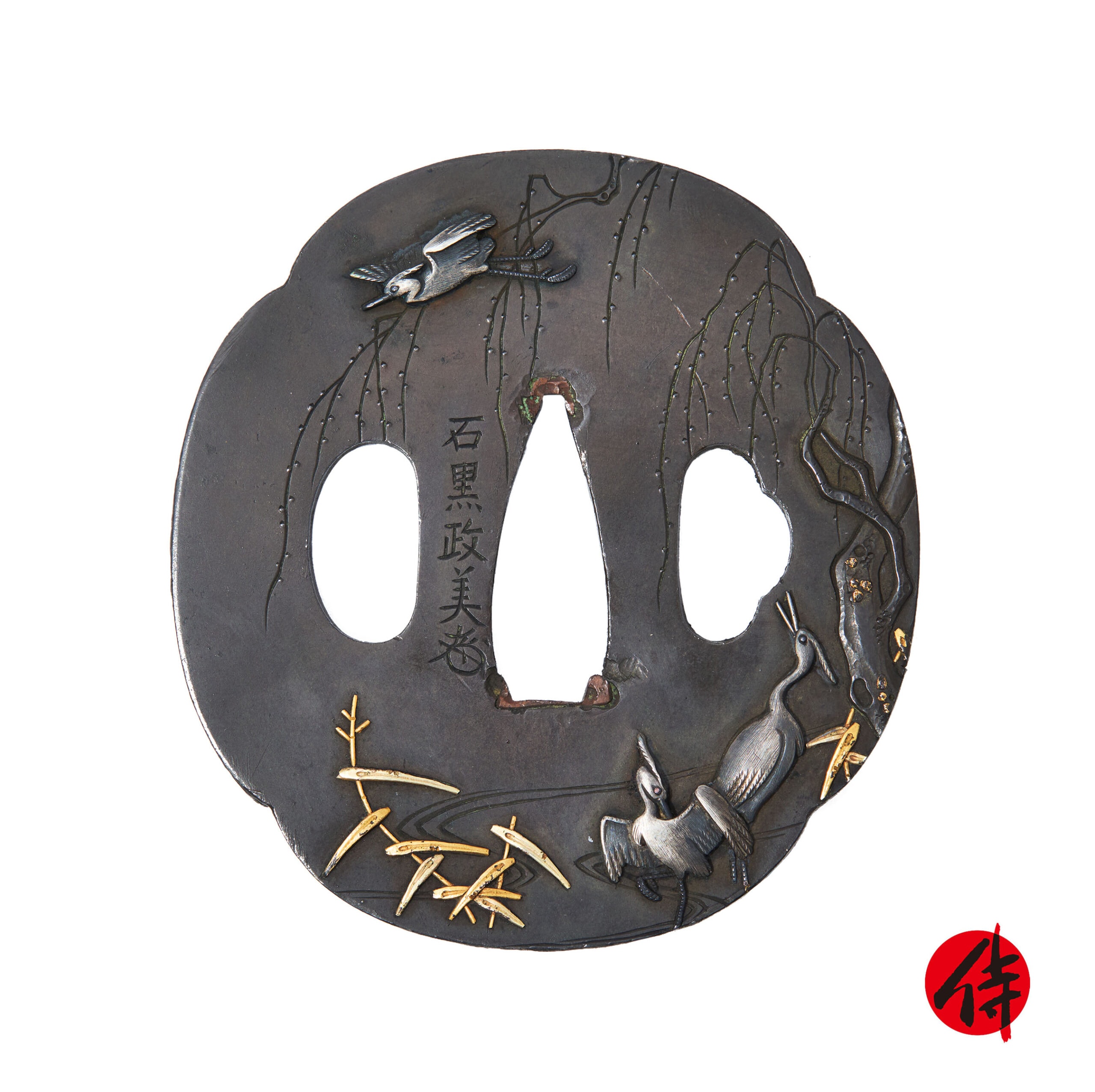
Also, these motifs are partly colored with the Zougan (象嵌) technique. The Zougan (象嵌) technique is a technique in which a pattern is engraved on a metal surface and another metal is inlaid to express the pattern by the difference in color and texture of each metal. Although the color is partly faded, this inlay makes this Tsuba look decorative.
*As this item is an antique, please check each photo and ensure its condition.
What is Tsuba?
Tsuba is the hand-guard of the Japanese sword. High-class Samurai wore his Katana sword with its beautiful sword mountings such as Tsuba. Tsuba’s front design tends to be more decorative as this part was often seen by other Samurais when he was walking on the streets.
Why is it that the sword mounting was important for Samurai?
The sword mountings of the Japanese sword have many kinds of decorations such as handguards (Tsuba), sword hilt (Menuki), pommel (Fuchi Kashira). The Japanese sword worked as a weapon and as an object to show who he was. For example, it shows their personalities and beliefs. You could say that it is like decorations for smartphones today. We recommend you zoom in on the pictures of the sword fittings. When you do so, you can see the skill of Japanese metal engraving techniques. They are mainly made of iron and copper with inlays of gold, silver, and bronze. When it comes to handguard (Tsuba), each one has a different outline and weight. These sword fittings that have lived with Japanese swords of the same age might be worth as much as the Japanese swords. They are inconspicuous parts of the Japanese sword. Nevertheless, if you