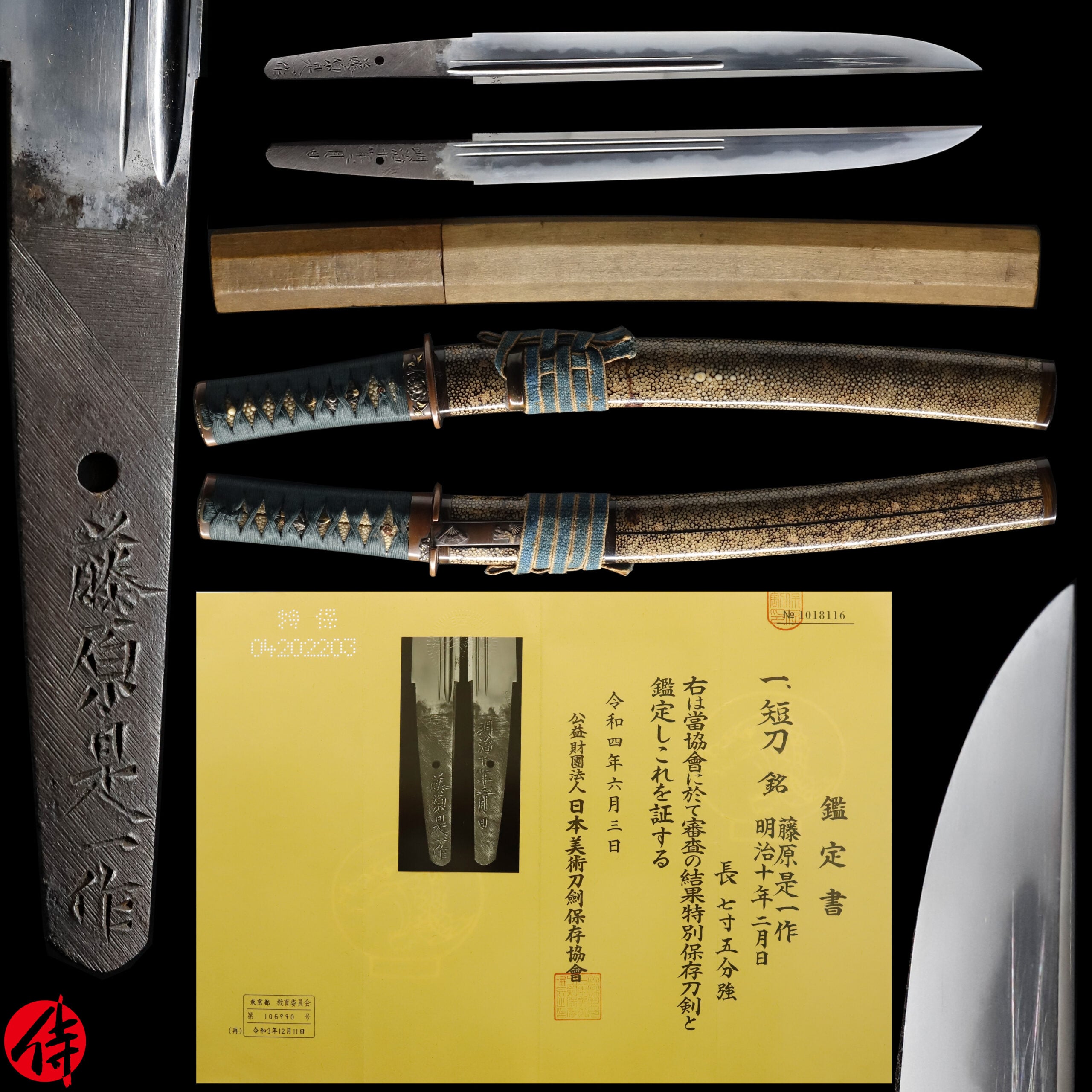
説明

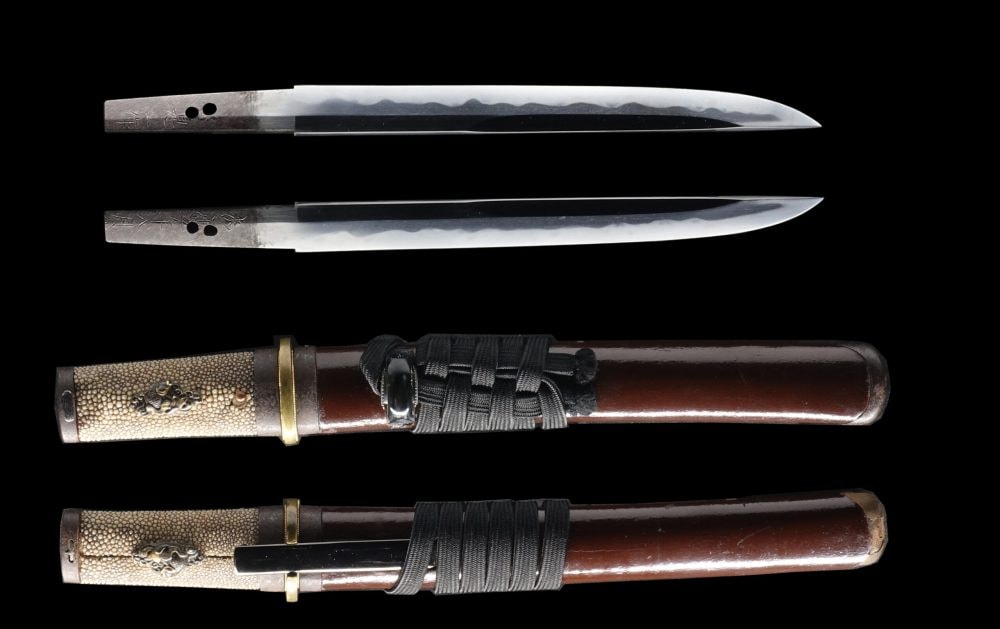
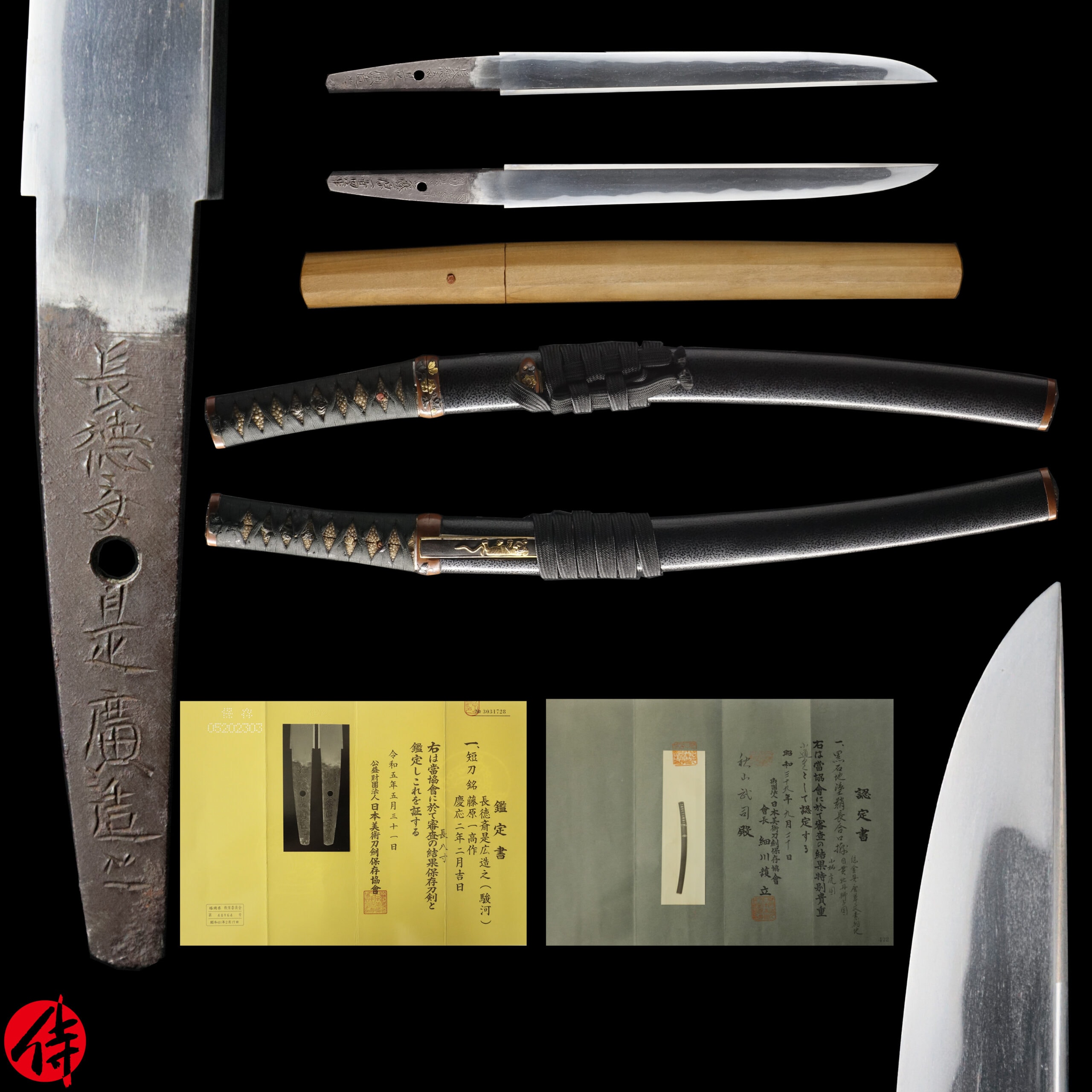
Modern Japanese Sword Tanto Signed by Korekazu with Tokubetsu Hozon Certificate 【Description】 Fujiwara Korekazu This blade was forged by Fujiwara Korekazu (藤原是一), also known as the seventh-gen Ishido Korekazu in the 10th year of the Meiji era ( 1877 ). The seventh-gen Korekazu, who was active at the end of the Edo period, is especially highly regarded among Japanese sword experts because of his superb craftsmanship. The 7th-gen Korekazu is also known as Unjyu Korekazu. The 7th-gen Korekazu’s real name is Masataro, and he was born in 1820 and learned the sword-forging technique from his uncle Kato Cho Unsai Tsuna Toshi, who lived in Dewano Kuni(Today’s Yamagata prefecture).Later on, he became a son-in-law of 6th-gen Ishido Korekazu and eventually took over Edo Ishido school. Seventh-gen Korekazu forged swords up until the early Meiji period. He died at the age of 75 in the 24th year of the Meiji era (1891). The 7th-gen Korekazu was ordered to forge a sword for Ise Shrine in Mie prefecture and Toshogu Shrine in Tochigi prefecture. And he was allowed to inscribe the Tokugawa family emblem on these swords. Furthermore, in 1854, he was ordered to forge a sword for sending to the USA and created Naginata for the UK, which was gifts from Japan for diplomatic relations. This fact indicates that Korekazu was one of the Edo government’s trusted swordsmiths and played an essential role at the end of the Edo period. The 7th-gen Korekazu was a great master as well because he trained quite a few renowned swordsmiths, such as Katsumura Norikatsu. His sword style is called Bizen-Den, and he was great at forging blades with Choji Midare Hamon, which makes Bizen DEN special. When Korekazu started his career, it was the end of the Edo period when the military government of Samurai (Tokugawa Shogunate) controlled Japan, and feudal society was the norm. There was plenty of demand of weapons from Samurai back then. However, in 1868, there was a civil war between Tokugawa’s Shogunate government and the new Meiji imperial government. After this battle, the Tokugawa shogunate was ousted, and the imperial government gained control. The whole feudal system was dismantled, and the new government took the social status of Samurai. The demand for Japanese swords decreased dramatically from the beginning of the Meiji era. Many swordsmiths lost their jobs or changed their career. However, Korekazu kept forging swords to keep the tradition of Japanese sword-forging alive. The first gen Ishido Korekazu The first-gen Korekazu was originally from Omi Koku(Today’s Shiga prefecture). It is said that he was a descendant of Ichimonji Sukemune(一文字助宗) from Bizen Koku(Today’s Okayama prefecture). He moved to Edo and founded Edo Ishido school at the beginning of the Edo period. This school flourished during the whole Edo period and became one of the most popular ones in Edo city, Musashi Koku. Ishido Korekazu became an Okakaekaji for the Edo government in 1721, exclusively forging swords for the Tokugawa clan. In total, the smith name “Korekazu” lasted 8th generations. This blade is appraised as a Tokubetsu Hozon Token(特別保存刀剣) issued by NBTHK(Nihon Bijutsu Touken Hozon Kyokai:日本美術刀剣保存協会). This authentication paper was only given to authentic Japanese swords, especially well preserved and high quality with artistic value. *Please keep in mind that the Habaki is made of wood. If you prefer to have a metal one, please contact us prior to your purchase. 【 Blade】 Cutting Edge Length(Nagasa) : 22.8 cm (8.9 inches) Curvature(Sori) : 0.0 cm (0.0 inches) Hamon : The crystalline structure which forms along the cutting edge of a blade as a result of the hardening process Jimon(Jihada) : visible steel surface pattern created by folding and hammering during forging process Nakago : Nakago is the tang of the Japanese sword. Japanese swordsmiths left the black rust on the tang because it prevents red rust while the tang is in its handle. And the discoloration of the tang was created o

Modern Japanese Sword Tanto Signed by Korekazu NBTHK Tokubetsu Hozon Certificate
売切れ
Tokuho売切れ

Modern Japanese Sword Tanto Signed by Korekazu NBTHK Tokubetsu Hozon Certificate

短刀

売却済

世界81社の刀剣商を横断追跡 · 価格履歴 · 売却アーカイブ

仕様

長さ

22.8 cm

作者について

Ishido Korekazu是一

1 御物24 重要刀剣

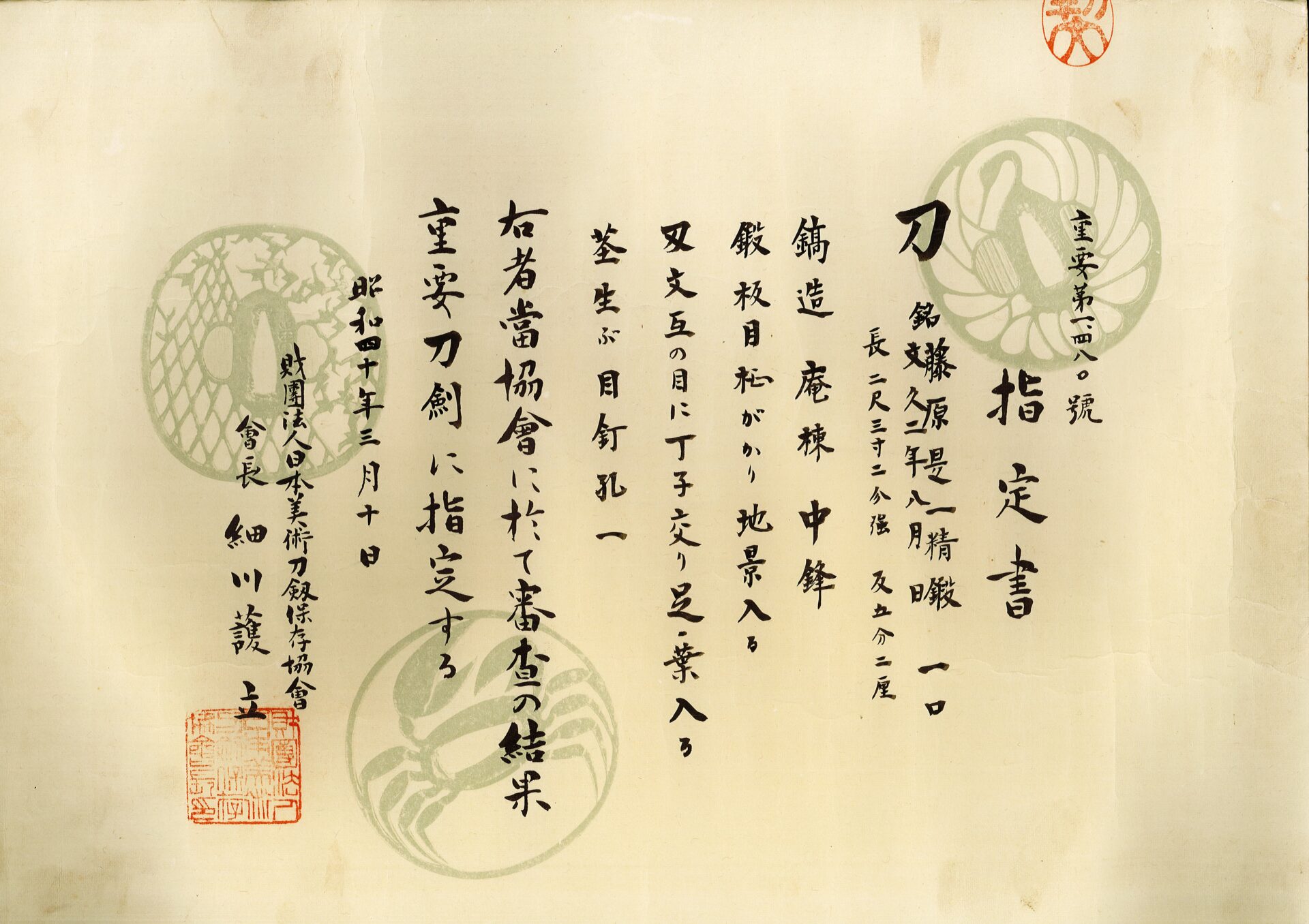
是一は通称を政太郎といい、江戸石堂派の七代目、すなわち備前丁子の伝統を都に伝え、十九世紀の新々刀再興期にこれを保った一統の当主である。説明書はその素性をほぼ定型の伝記で諸指定に繰り返し記す。米沢藩工加藤長運斎綱俊の甥で、初め綱俊に鍛刀を学び、後に六代目石堂是一の聟となってこれを継ぎ、明治二十四年に七十五歳で歿した、と。作刀期は天保末年から明治初年に及び、現存は比較的多く、その大半が在銘年紀の刀である。彼は幕末の上手の列に立ち、説明書はその技を次郎太郎直勝・細川正義と肩を並べるものとする。 その手は意匠ではなく手法によって定まり、説明書はそれを幾度も同じように述べる。作は備前伝と相州伝に大別されるが、本領は石堂家の御家芸ともいえる備前丁子にあった。新々刀期の他の備前伝の刀工が丁子を匂出来で焼くのに対し、是一はこれを沸出来で焼いた。説明書は彼の独創性をまさにそこに見出し、世に「備前伝の丁子乱れを沸で焼いた」と評される工と総括して、「ここに彼の独創性が窺える」とする。よくつんだ小板目に丁子を主とし、互の目・小丁子・小互の目・尖りごころの刃を交え、足長く頻りに入り、匂深く、沸厚く処々荒めの沸を交えてやや叢づき、刃中を砂流しと長い金筋が走る。これは相州の地に運ばれた備前の刃であり、およそ五口に四口の刃中を縫う砂流しがその目に見える証である。 地鉄はその刃を支える終始変わらぬところである。小板目はよくつみ、時に流れ肌や杢を交え、地沸が微塵に厚くつき地景細かに頻りに入り、最も強くつまったところでは無地風に近づく。説明書はこの鍛えを本工の作中でも特に強いと特筆する。帽子は乱れ込んで小丸、しばしば先掃きかけ、放胆な作では火焰風に掃きかける。ある説明は帽子の所作に師綱俊の手くせを窺い、師との作風上の関係を推す。作そのものは生ぶの頑健な刀で、身幅広く重ね厚く、反りは浅きより深きに至り、中鋒延びごころないし大鋒に結び、茎は大筋違の化粧鑢に太鏨の六字長銘をきる。 この一個の完成した作域のうちに、説明書は時代の段階ではなく作域の分かれを読む。備前の沸出来丁子が中核にして記録の大半であり、極めはその最上を本工の典型作・優品と称える。彼自身が得意と称した相州伝の一面はその傍らに立つ。ここでは地がつむより肌立って流れ、刃文は小湾れ・互の目を沸に運んで砂流しを伴い、当時流行した沸出来の相州伝に近い。総金具を横谷宗寿が作った正式の蠟塗大小拵を伴う安政二年の大小や、角大助元興が鍛えて是一が焼刃を入れた会津の合作はその成功例で、後者を極めは「全く是一の作と見える」とする。第三の、より稀な面は静かな手で、稀には直刃もあり、ある安政五年の刀は「是一としては、比較的おだやかな作風」と特筆され、無地風の地に直刃調を焼いて互の目を交える。三面はいずれも匂深い沸出来を共有するゆえ、対立する様式ではなく、一つの沸の手を異なる地に働かせたものと読める。 是一を群がる備前伝再興のなかで別格たらしめるのは、ゆえに特徴ではなく手法であり、説明書は常にその線を同じように引く。新々刀期の多くの工は古備前の丁子乱れを匂で再現し得たが、是一は御家芸の丁子を保ちつつこれを沸で焼き、匂深く沸厚く、刃中に砂流し・金筋・沸筋を働かせ、匂口は明るく冴える。綱俊との繋がりは帽子に確かに認められるが、沸出来の手法は師の締まった匂本位の丁子からの彼自身の踏み出しである。彼は新々刀の諸計画のうち最も学究的なもの、すなわち鎌倉備前の忠実な写しを、描く文様ではなく鋼の焼き方を変えることによって我がものとした工である。 収集の観点では、是一は主だった新々刀の名のうち比較的入手しやすい一人であり、その記録はありのままに読むべきである。藤代の極めは上々作、刀工大鑑は四百を与える。国宝も重要文化財もなく、その評価は近代の指定の級に拠り、現に二十口余りの刀が昭和三十九年から平成にかけての各回にわたって重要刀剣に列している。これは健全で年紀のある在銘作が多く遺ることの反映である。説明書は最上をしばしば本工の代表作・典型作と称え、ある重要刀剣の刀については「運寿是一の本領が遺憾無く発揮された一口で、秀抜な出来映えを示している」と記す。伝来の知られる一口に皇室の蔵するものがある。作はまた幕末の時代相をも帯びる。ある刀は時代相を映す「譲夷」の文字を彫り、真田家の注文になる一刀は万葉仮名で「この太刀に貯めし心は身一つよ、守るたまかは我が君のため」と添える。在銘年紀の是一の刀は、一生に一度というよりはある程度の規律をもって真剣な収集家のもとに現れ、本領たる沸出来の丁子の佳作は、備前伝最後の開花の一片を手にする最も報いある道の一つである。

刀剣商

サムライミュージアム

samuraimuseum.jp

売切れ