売切れ
Tokuho売切れ
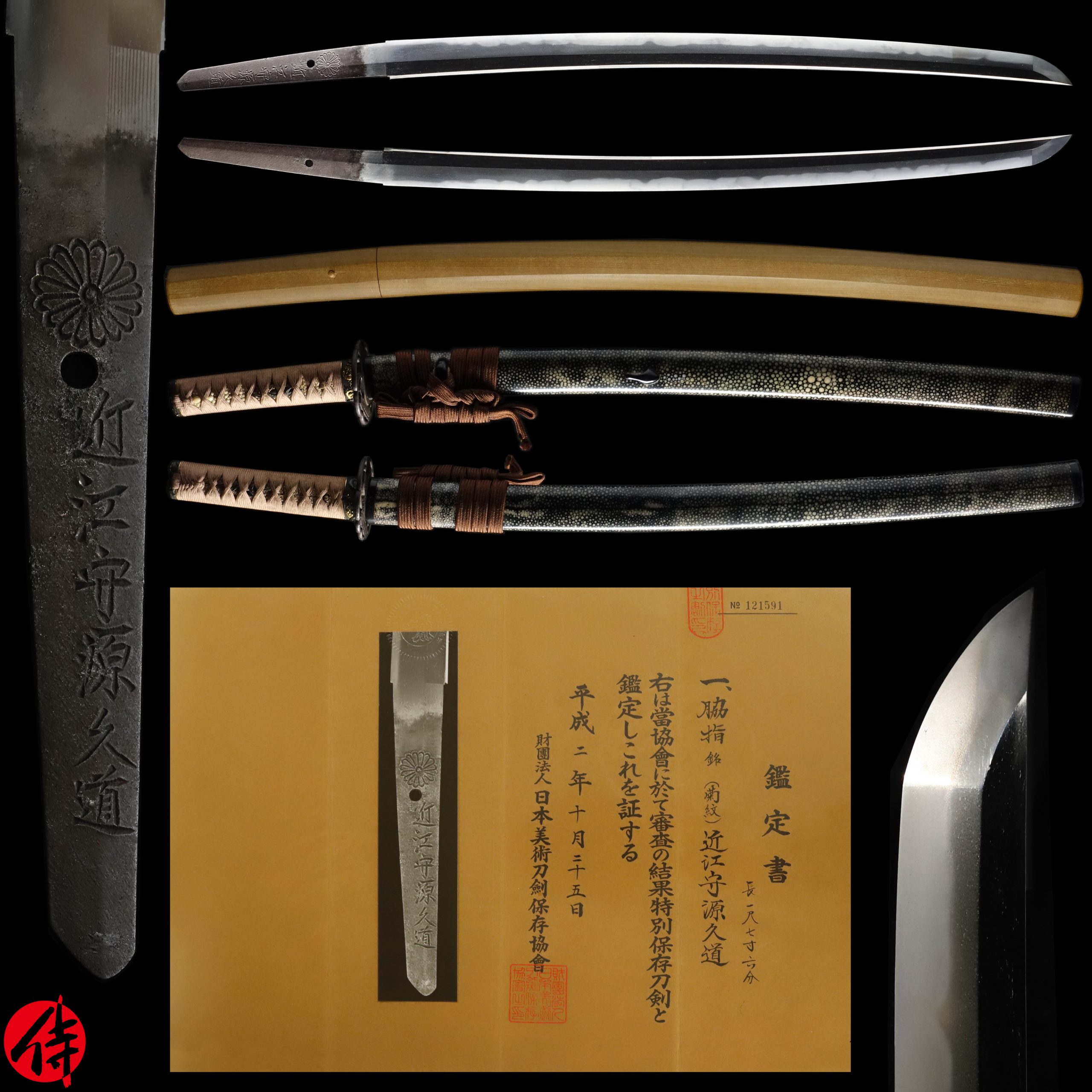
Antique Japanese Sword Wakizashi Signed by Hisamichi NBTHK Tokubetsu Hozon Certificate
売却済
世界81社の刀剣商を横断追跡 · 価格履歴 · 売却アーカイブ
仕様
長さ
51.7 cm
反り
1.2 cm
Antique Japanese Sword Wakizashi Signed by Hisamichi with Tokubetsu Hozon Certificate 【Description】 This blade was signed by Omi no Kami Minamoto Hisamichi (近江守源久道). Judging from the signature, we believed the first-gen Hisamichi forged it. The swordsmith’s name Hisamichi lasted seventh generations. The first generation was active in sword-forging during the Keian-Kanbun era ( 1650-1673 : Early Edo Period). Hisamichi was born in the second year of the Kan-Ei era (1625) in Omi province (Shiga prefecture). He belonged to Mishina school, a prestigious school in Yamashiro province(today’s Kyoto prefecture). He studied sword forging techniques under the master, the second-gen Iganokami Kinmichi (伊賀守金道), one of the most famous swordsmiths in Yamashiro province during the early Edo period. The first-gen Hisamichi received the honorable title of Omi No Kami(近江守) in 1662 when he was 37 years old. The emperor back then gave the title of Kami to those who were excellent at sword making. After receiving this title, the swordsmith added it to his maker’s name when he signed his swords, such as Omino Kami Hisamichi. Hisamichi was also known as one of Gokaji. (five most prestigious swordsmiths in Kyoto). He was allowed to inscribe a chrysanthemum emblem, which is the symbol of the Japanese emperor. His sword forging technique was so great that the emperor permitted him to use this emblem, which was honorable for any swordsmith. A chrysanthemum emblem remains in the tang of this blade. The sword forged by him were also famous for their sharpness. He passed his excellent craftsmanship to the second-gen Hisamichi. And, he died at the age of 86 in 1711. Since the fourth generation, Hisamichi served Date clan in Iyo province and lasted until the early Meiji period. This blade is appraised as a Tokubetsu Hozon Token(特別保存刀剣) issued by NBTHK(Nihon Bijutsu Touken Hozon Kyokai:日本美術刀剣保存協会). This authentication paper was only given to authentic Japanese swords, especially well preserved and high quality with artistic value. 【 Blade】 Cutting Edge Length(Nagasa) : 51.7 cm( 20.3 inches) Curvature(Sori) : 1.2 cm( 0.47 inches) Hamon : The crystalline structure which forms along the cutting edge of a blade as a result of the hardening process Jimon(Jihada) : visible steel surface pattern created by folding and hammering during forging process Nakago : Nakago is the tang of the Japanese sword. Japanese swordsmiths left the black rust on the tang because it prevents red rust while the tang is in its handle. And the discoloration of the tang was created over time, and it is a great indicator for a Japanese sword specialist to estimate when the sword was forged. Koshirae: Koshirae is the mounting of the Japanese sword. There are several parts that consist of Koshirae such as Saya(Scabbard), Tsuka( Handle), Tsuba(Handguard). Fuchi-Kashira : A pair of matching sword fittings that cover the upper and bottom parts of its sword hilt. The theme of this Fuchi Kashira’s design is the Botan Shishi Zu (牡丹獅子図, or also called the Shishi Botan Zu). It is the combination of the Botan (牡丹, peony) and the Kara-Jishi (唐獅子). The Shishi (獅子) means a lion in Japanese, and the Kara-Jishi is a lion brought from the Continent to Japan in the Toh period (唐, Tang dynasty, 618-907). The Kara-Jishi typically has curly hair for its head, neck, body, and tail, as you see in this work. In Buddhism, the Kara-Jishi is regarded as a symbol of wisdom. The Botan Shishi Zu is a classical subject, and people favored it for designing various items. There is a Houwa (法話, Buddhist monks tell the story of Buddhism in an easy-to-understand manner) that treats them. The lion is called the king of the beasts. However, even this invincible animal has only one fear; a bug in the lion’s body. This pest grows in the lion’s hair and eventually breaks the skin and bites the flesh. Nevertheless, it dies if it is exposed to be peony’s night dew. Therefore, the lion rests under peony flowers at night, looking for a
 NihontoWatchBETA
売却済
世界81社の刀剣商を横断追跡 · 価格履歴 · 売却アーカイブ
51.7 cm
1.2 cm
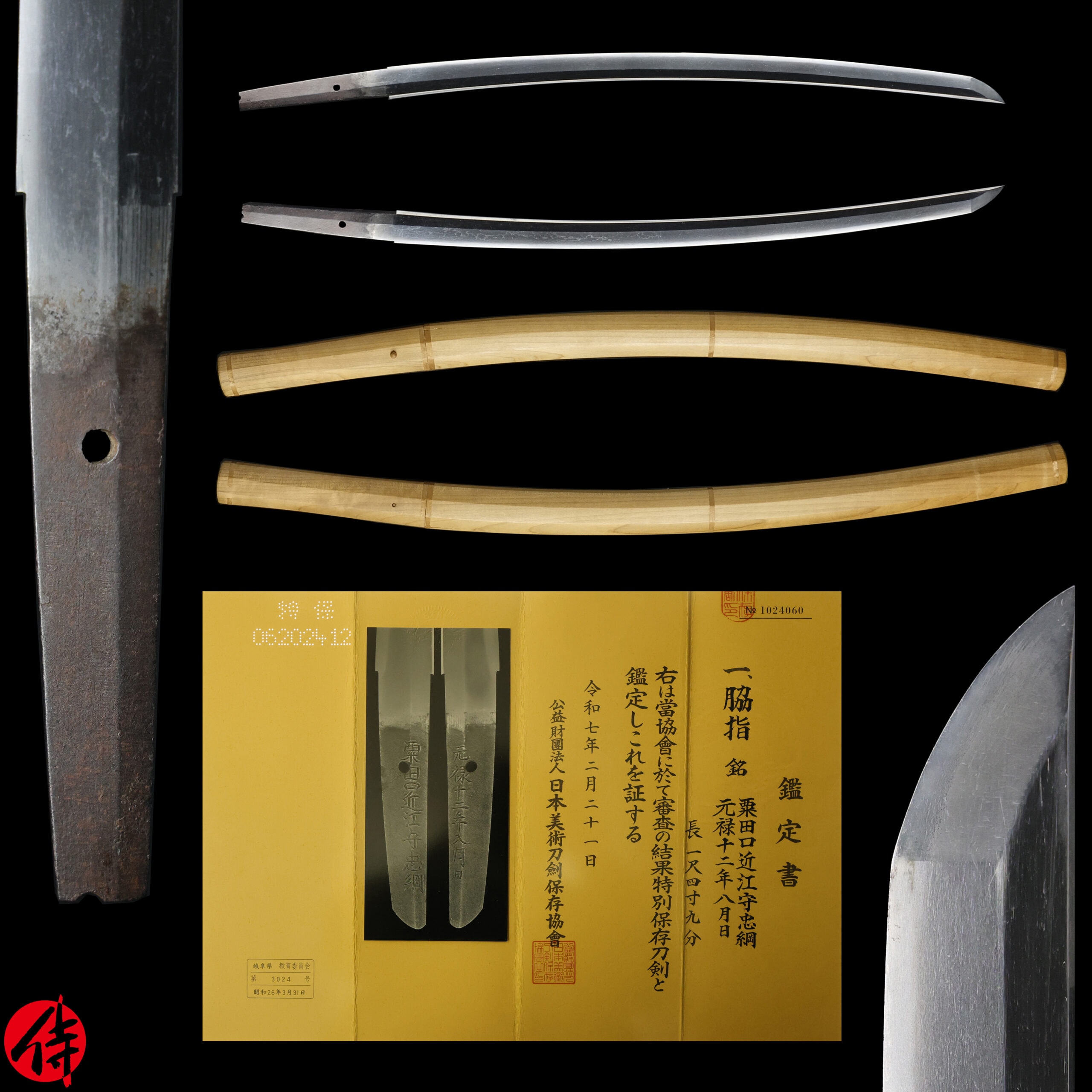
Antique Japanese Sword Wakizashi Attributed to Mihara NBTHK Hozon Certificate
$2,170
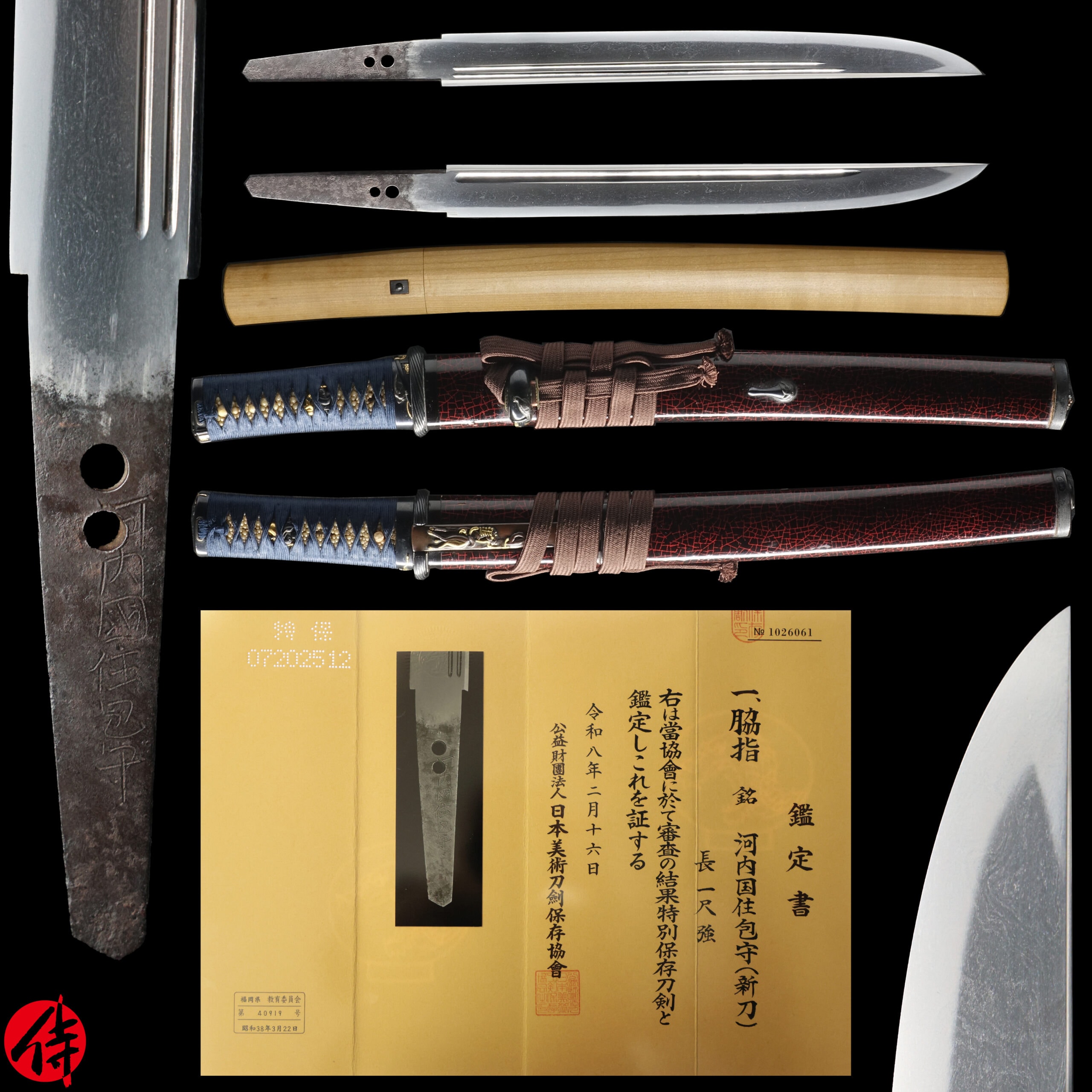
Antique Japanese Sword Wakizashi Signed by Kanemori NBTHK Tokubetsu Hozon Certificate
$5,881
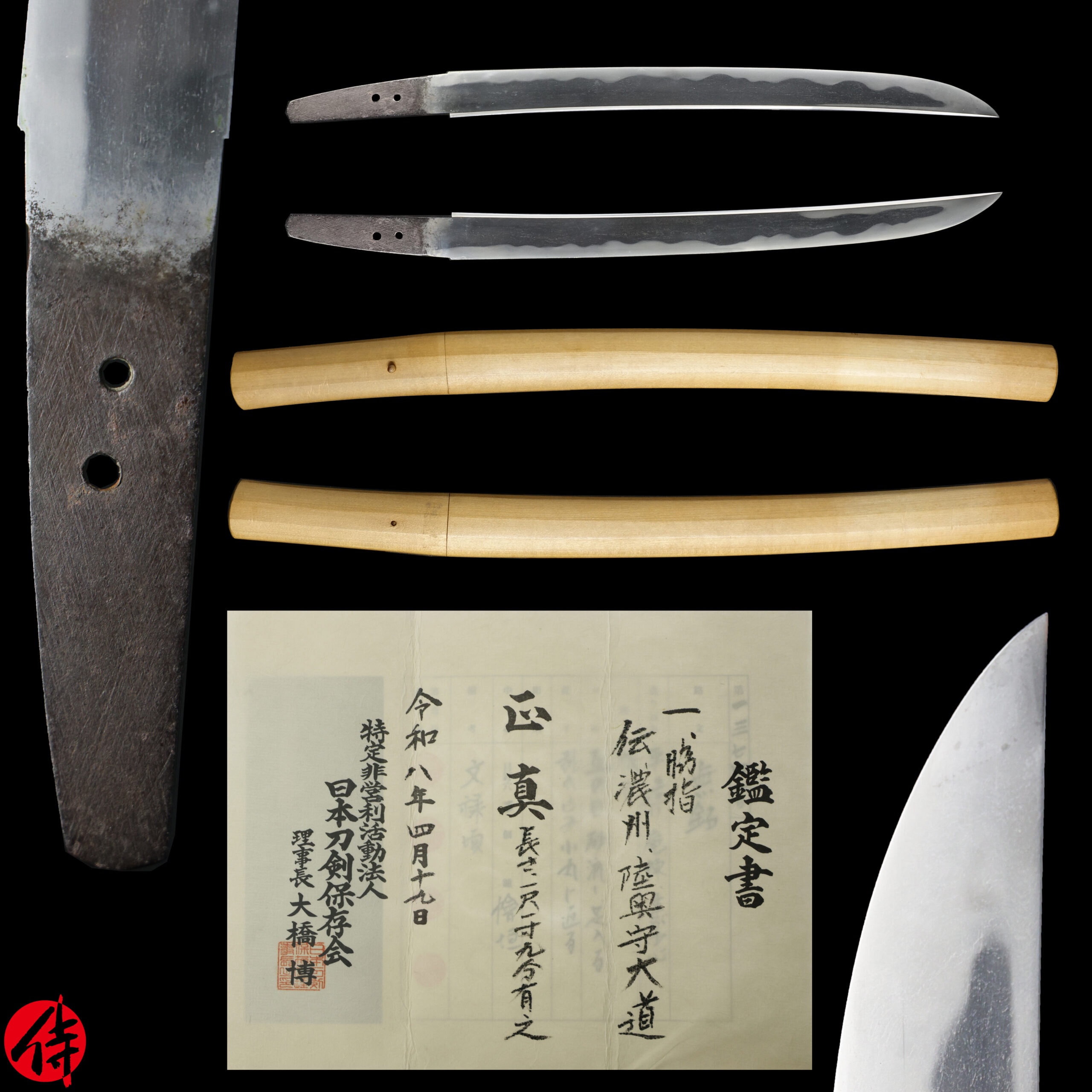
Antique Japanese Sword Wakizashi Attributed to Den Nohshu Daido NTHK Kanteisho for the blade
$1,984
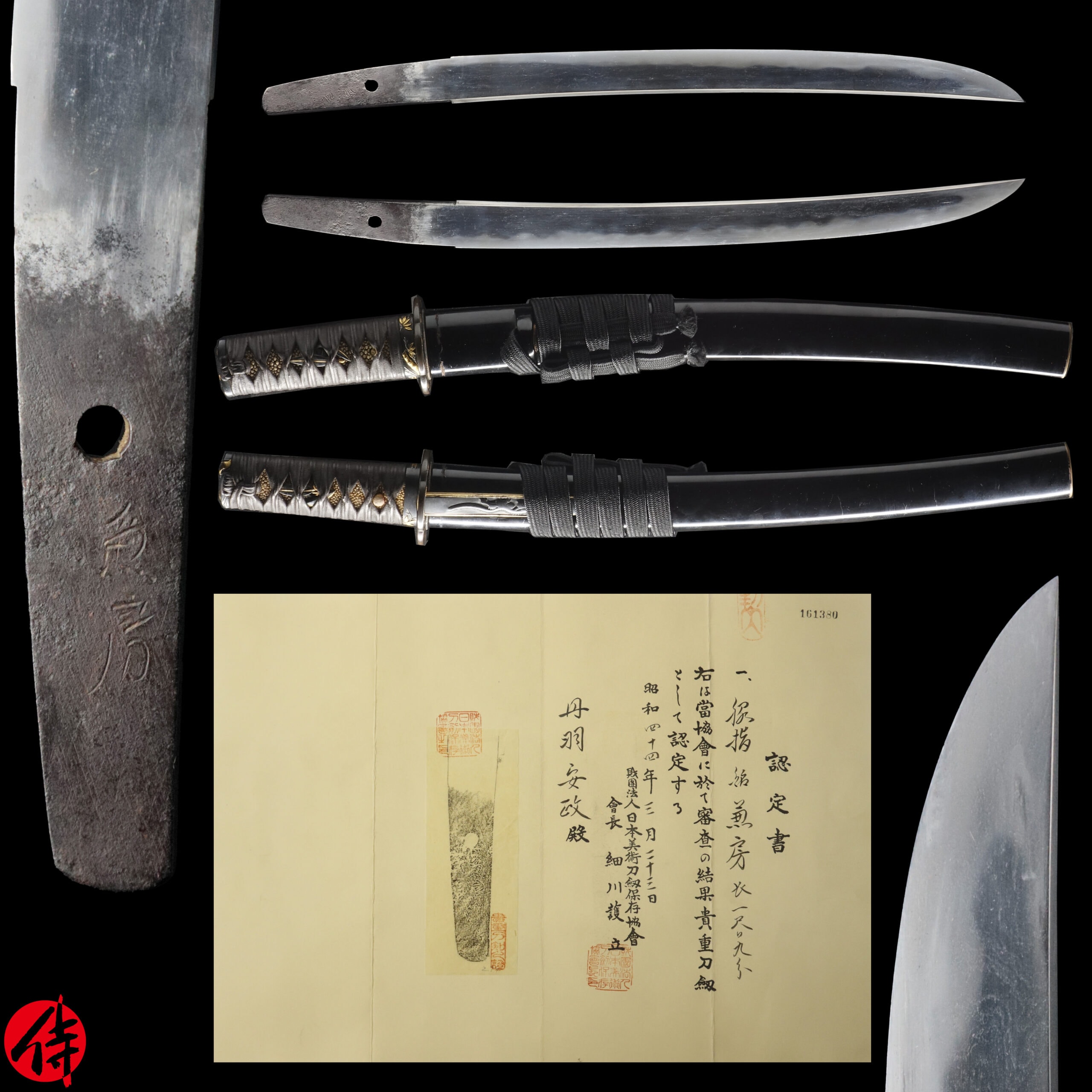
Antique Japanese Sword Wakizashi Signed by Kanefusa with NBTHK Kicho Certificate
$2,971
Antique Japanese Sword Wakizashi Signed by Hisamichi with Tokubetsu Hozon Certificate 【Description】 This blade was signed by Omi no Kami Minamoto Hisamichi (近江守源久道). Judging from the signature, we believed the first-gen Hisamichi forged it. The swordsmith’s name Hisamichi lasted seventh generations. The first generation was active in sword-forging during the Keian-Kanbun era ( 1650-1673 : Early Edo Period). Hisamichi was born in the second year of the Kan-Ei era (1625) in Omi province (Shiga prefecture). He belonged to Mishina school, a prestigious school in Yamashiro province(today’s Kyoto prefecture). He studied sword forging techniques under the master, the second-gen Iganokami Kinmichi (伊賀守金道), one of the most famous swordsmiths in Yamashiro province during the early Edo period. The first-gen Hisamichi received the honorable title of Omi No Kami(近江守) in 1662 when he was 37 years old. The emperor back then gave the title of Kami to those who were excellent at sword making. After receiving this title, the swordsmith added it to his maker’s name when he signed his swords, such as Omino Kami Hisamichi. Hisamichi was also known as one of Gokaji. (five most prestigious swordsmiths in Kyoto). He was allowed to inscribe a chrysanthemum emblem, which is the symbol of the Japanese emperor. His sword forging technique was so great that the emperor permitted him to use this emblem, which was honorable for any swordsmith. A chrysanthemum emblem remains in the tang of this blade. The sword forged by him were also famous for their sharpness. He passed his excellent craftsmanship to the second-gen Hisamichi. And, he died at the age of 86 in 1711. Since the fourth generation, Hisamichi served Date clan in Iyo province and lasted until the early Meiji period. This blade is appraised as a Tokubetsu Hozon Token(特別保存刀剣) issued by NBTHK(Nihon Bijutsu Touken Hozon Kyokai:日本美術刀剣保存協会). This authentication paper was only given to authentic Japanese swords, especially well preserved and high quality with artistic value. 【 Blade】 Cutting Edge Length(Nagasa) : 51.7 cm( 20.3 inches) Curvature(Sori) : 1.2 cm( 0.47 inches) Hamon : The crystalline structure which forms along the cutting edge of a blade as a result of the hardening process Jimon(Jihada) : visible steel surface pattern created by folding and hammering during forging process Nakago : Nakago is the tang of the Japanese sword. Japanese swordsmiths left the black rust on the tang because it prevents red rust while the tang is in its handle. And the discoloration of the tang was created over time, and it is a great indicator for a Japanese sword specialist to estimate when the sword was forged. Koshirae: Koshirae is the mounting of the Japanese sword. There are several parts that consist of Koshirae such as Saya(Scabbard), Tsuka( Handle), Tsuba(Handguard). Fuchi-Kashira : A pair of matching sword fittings that cover the upper and bottom parts of its sword hilt. The theme of this Fuchi Kashira’s design is the Botan Shishi Zu (牡丹獅子図, or also called the Shishi Botan Zu). It is the combination of the Botan (牡丹, peony) and the Kara-Jishi (唐獅子). The Shishi (獅子) means a lion in Japanese, and the Kara-Jishi is a lion brought from the Continent to Japan in the Toh period (唐, Tang dynasty, 618-907). The Kara-Jishi typically has curly hair for its head, neck, body, and tail, as you see in this work. In Buddhism, the Kara-Jishi is regarded as a symbol of wisdom. The Botan Shishi Zu is a classical subject, and people favored it for designing various items. There is a Houwa (法話, Buddhist monks tell the story of Buddhism in an easy-to-understand manner) that treats them. The lion is called the king of the beasts. However, even this invincible animal has only one fear; a bug in the lion’s body. This pest grows in the lion’s hair and eventually breaks the skin and bites the flesh. Nevertheless, it dies if it is exposed to be peony’s night dew. Therefore, the lion rests under peony flowers at night, looking for a
NihontoWatchBETA売却済
世界81社の刀剣商を横断追跡 · 価格履歴 · 売却アーカイブ
51.7 cm
1.2 cm
Antique Japanese Sword Wakizashi Attributed to Mihara NBTHK Hozon Certificate
$2,170
Antique Japanese Sword Wakizashi Signed by Kanemori NBTHK Tokubetsu Hozon Certificate
$5,881
Antique Japanese Sword Wakizashi Attributed to Den Nohshu Daido NTHK Kanteisho for the blade
$1,984
Antique Japanese Sword Wakizashi Signed by Kanefusa with NBTHK Kicho Certificate
$2,971

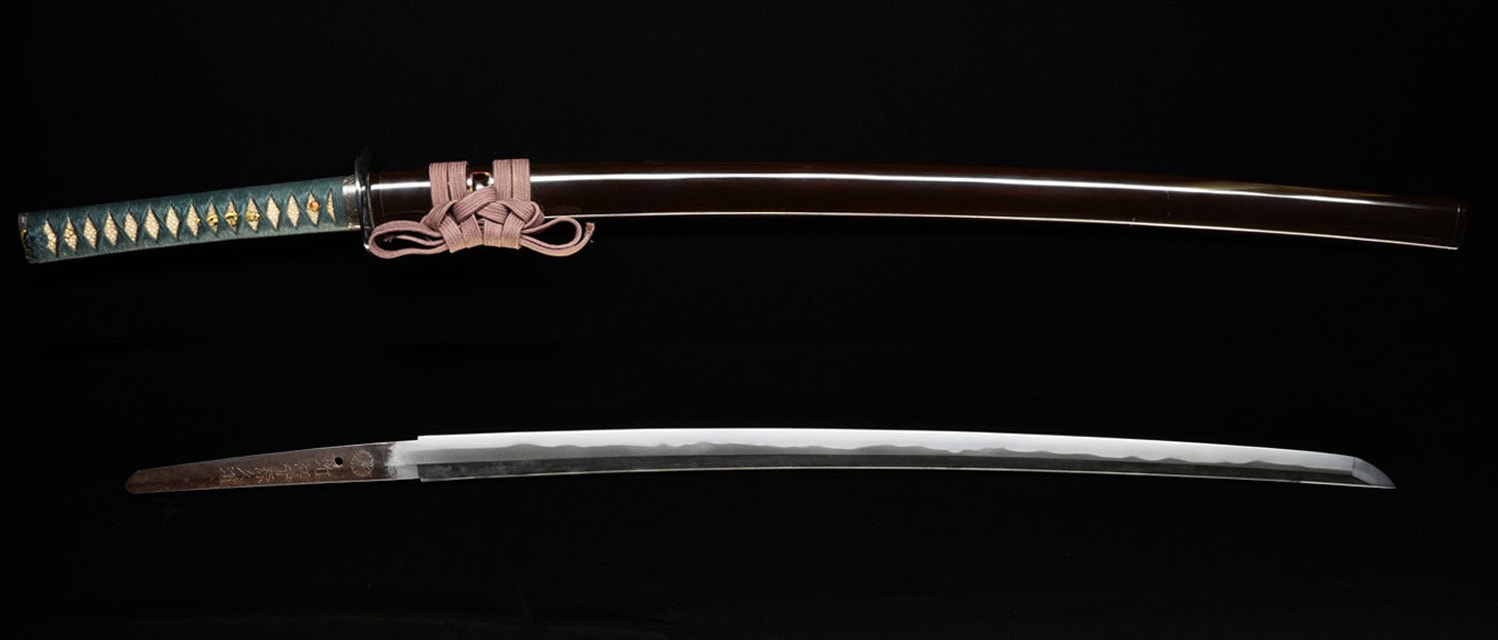
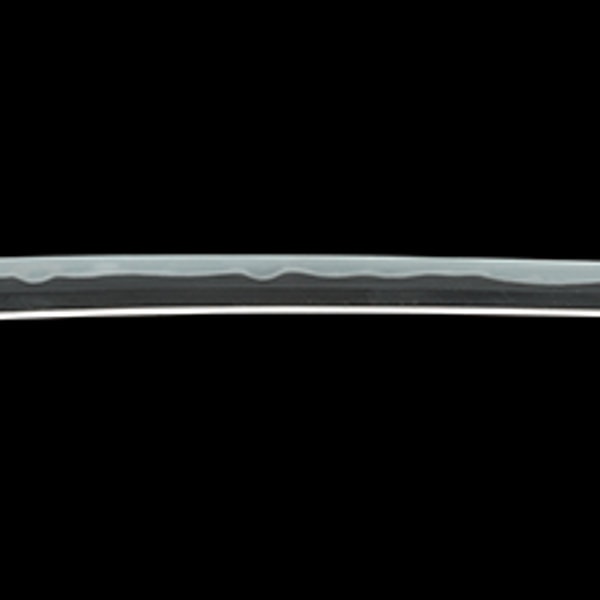
![Wakizashi [(Edakiku-mon) Omi-no-kami Minamoto Hisamichi][N.B.T.H.K] Tokubetsu Hozon Token](/_next/image?url=https%3A%2F%2Fitbhfhyptogxcjbjfzwx.supabase.co%2Fstorage%2Fv1%2Fobject%2Fpublic%2Flisting-images%2Fworld-seiyudo%2FL31354%2F00.jpg&w=2560&q=90)