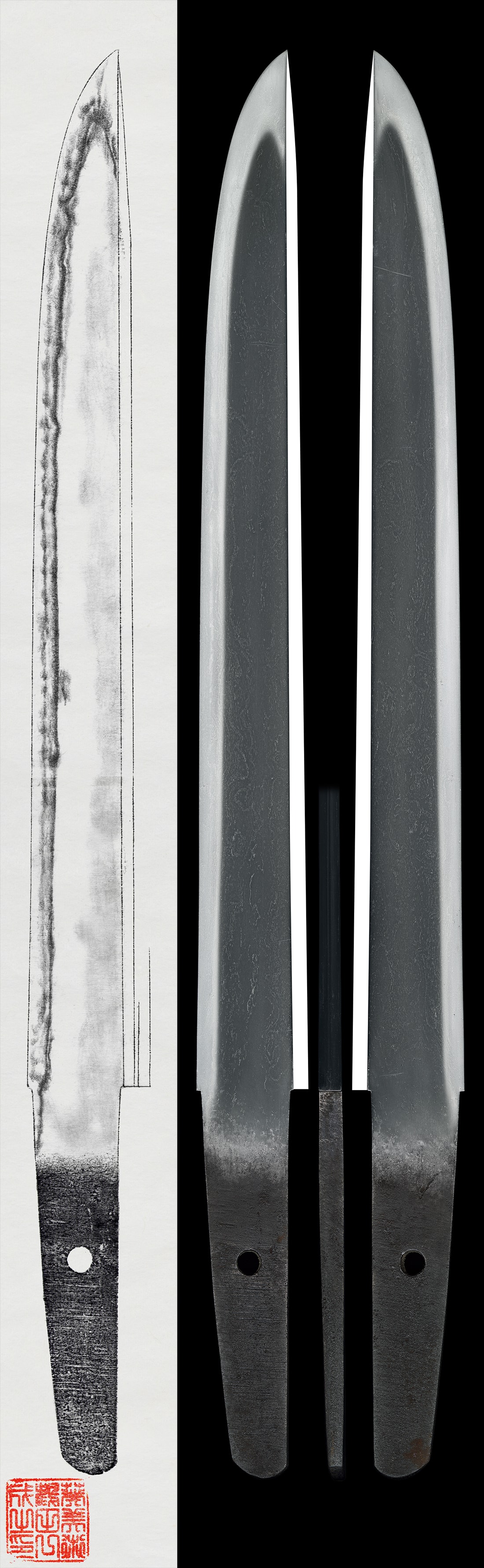
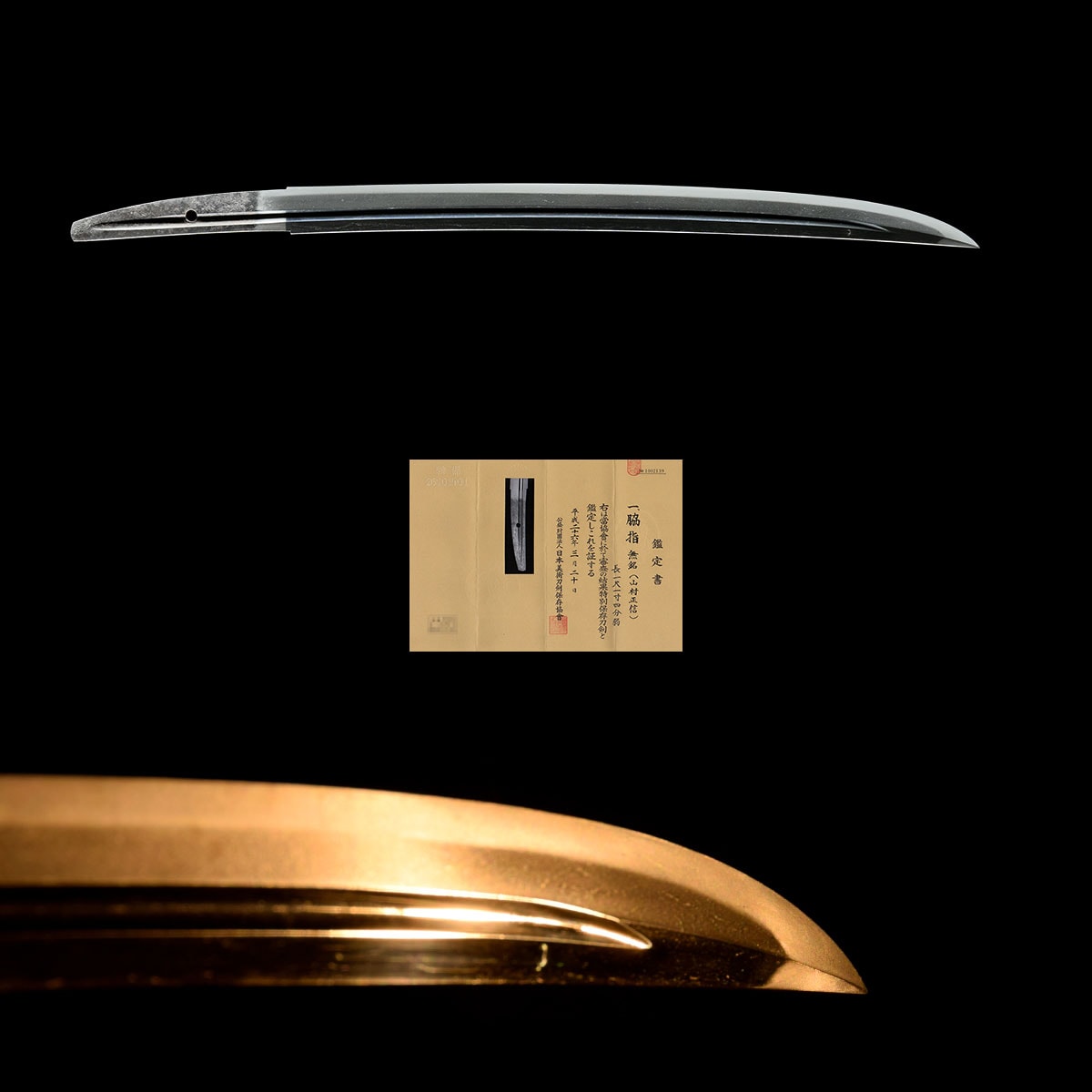
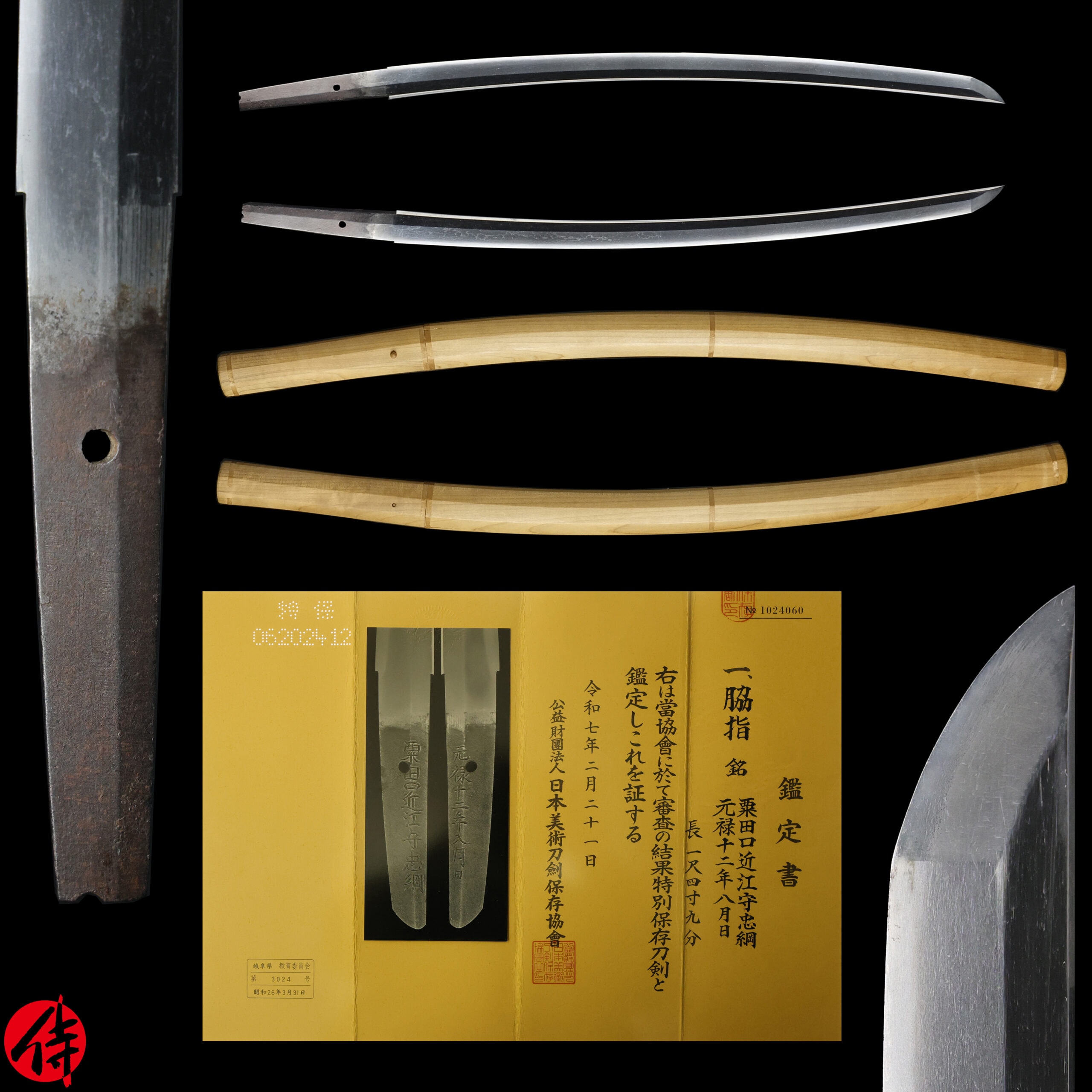
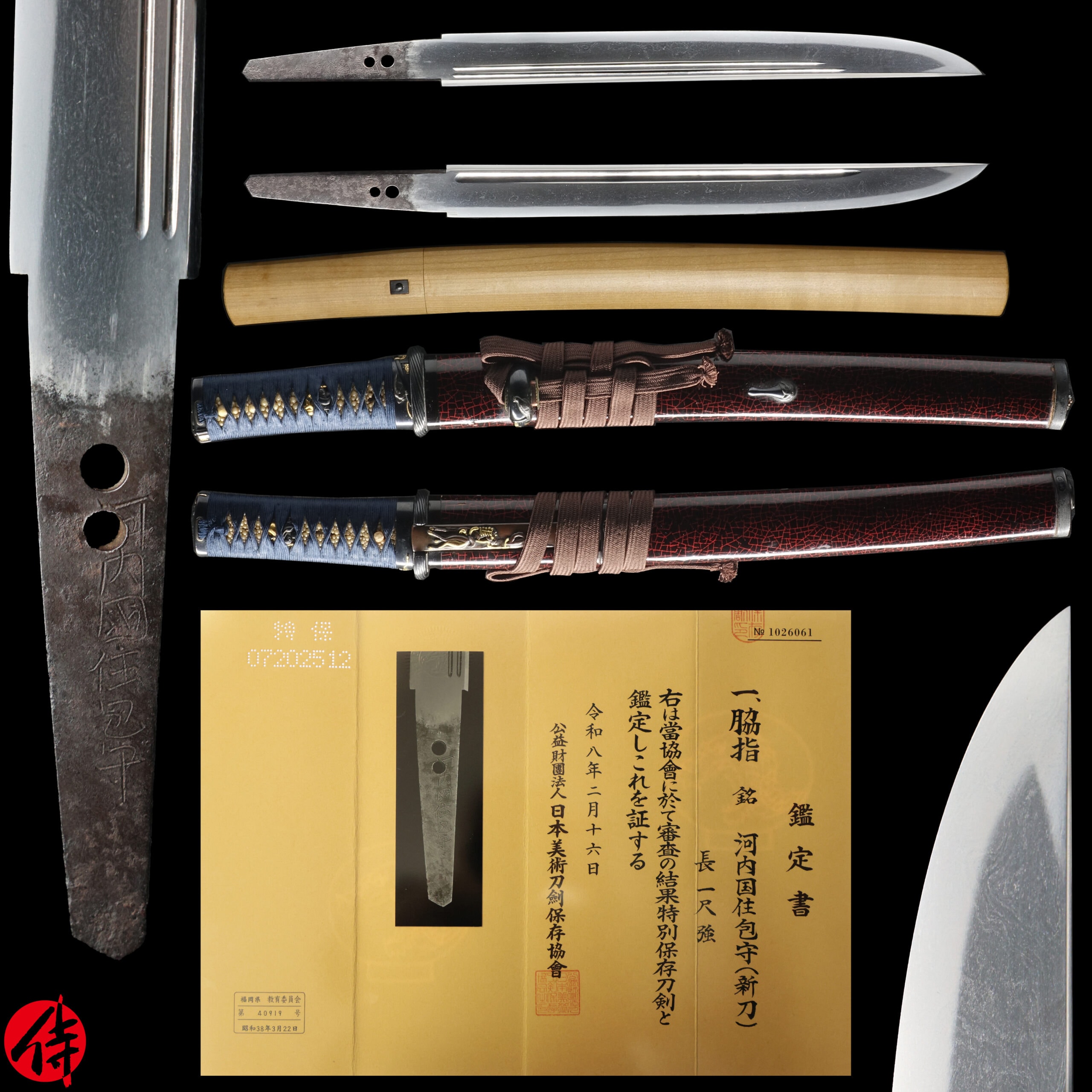
説明
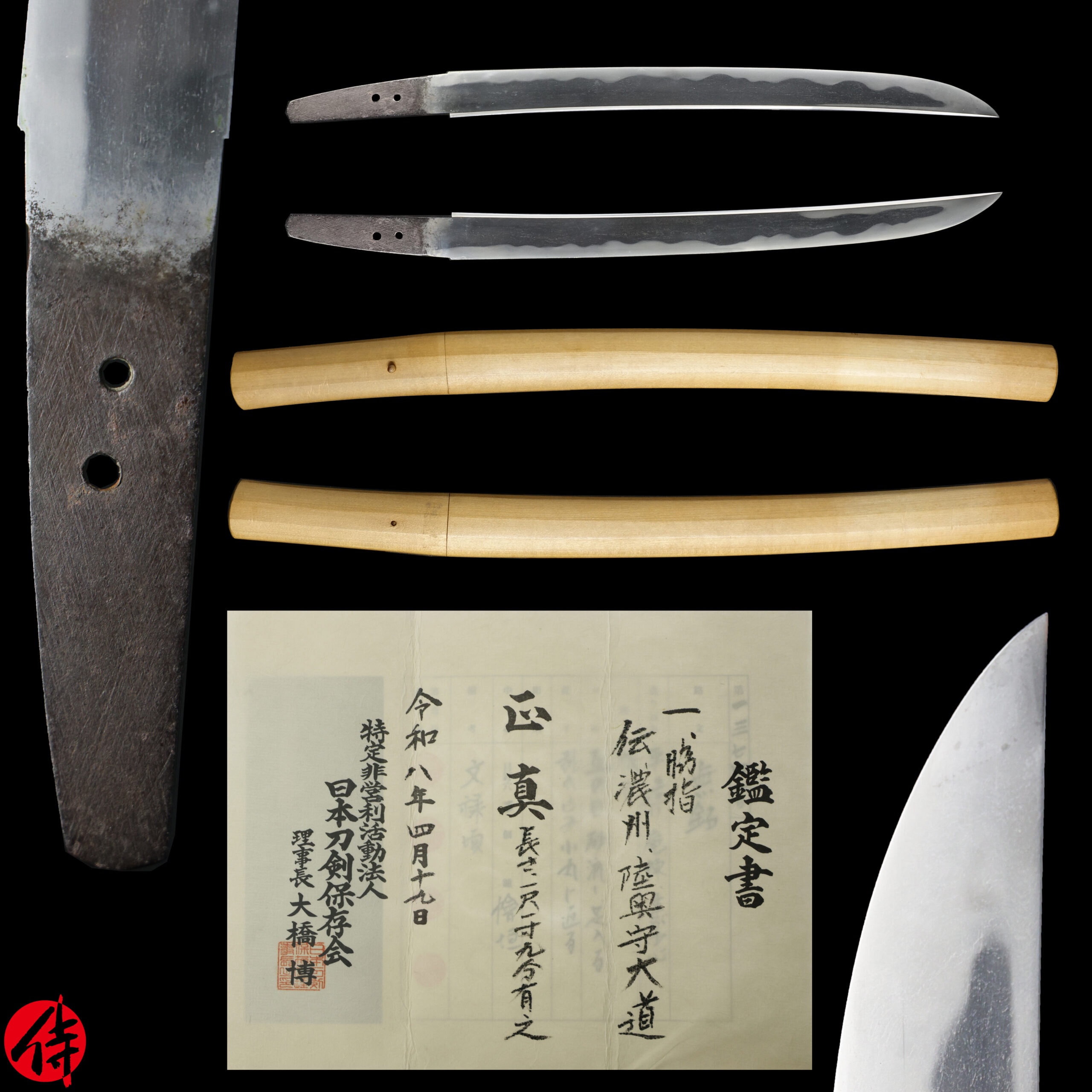
Antique Japanese Sword Wakizashi Signed by Nobukuni Yoshisada with
Hozon
Certificate
【Description】
Summary
This blade was signed by Nobukuni Minamoto Yoshisada (信国源吉貞). He is also known as 信国助左衛門吉貞 (Nobukuni Sukezaemon Yoshisada) and was active in sword-forging during the late Azuchi Momoyama-the early Edo Period (Late 16th-Early 17th century ) in Chikuzen province.
Chikuzen is the name of the province located in Fukuoka prefecture today. Nobukuni is the name of his school, and Yoshisada is his maker’s name. Those who belonged to Nobukuni School in Chikuzen province were called Tsukushi Nobukuni, one of the most prospered sword forging schools in Kyushu island during the Edo period.
The Fondation of Nobukuni School
The Nobukuni school was initially founded by the first generation Nobukuni in Kyoto. The school stayed there for a few generations. However, the 4th generation Nobukuni SADAMITSU had to evacuate Kyoto city because the battle between the south emperor court and the north emperor court became severe. And as a result, Kyoto city was burnt(the late 1300’s). We called it the Nanbokucho war when the Japanese imperial court was separated into two.
Nobukuni SADAMITSU managed to escape and arrive at Usaha(Ohita prefecture)to serve the Ajimu clan. Nobukuni school prospered there from third to 11th generation. However, Toyotomi Hideyoshi, one of the three unifiers of Japan, destroyed the Ajimu clan during the late Azuchi Momoyama period (1582). And, the 12th generation Nobukuni YOSHISADA moved to Chikuzen(Fukuoka prefecture), being invited by Kuroda Nagamasa, a famous feudal lord who served Toyotomi Hideyoshi (1602).
Since then, Nobukuni school had been under the auspices of Kuroda clan for generations during the Edo period, and they exclusively forged for this clan.
Nobukuni Yoshisada
It is said that the swordsmith name Yoshisada lasted two generations, and we believe the first generation forged this blade. This Yoshisada is the one that moved from Usaha to Chikuzen to found Chikuzen Nobukuni School. His first son Yoshimasa and second son Yoshitsugu also exclusively forged swords for the Kuroda clan.
Tachi Koshirae & Wakizashi blade
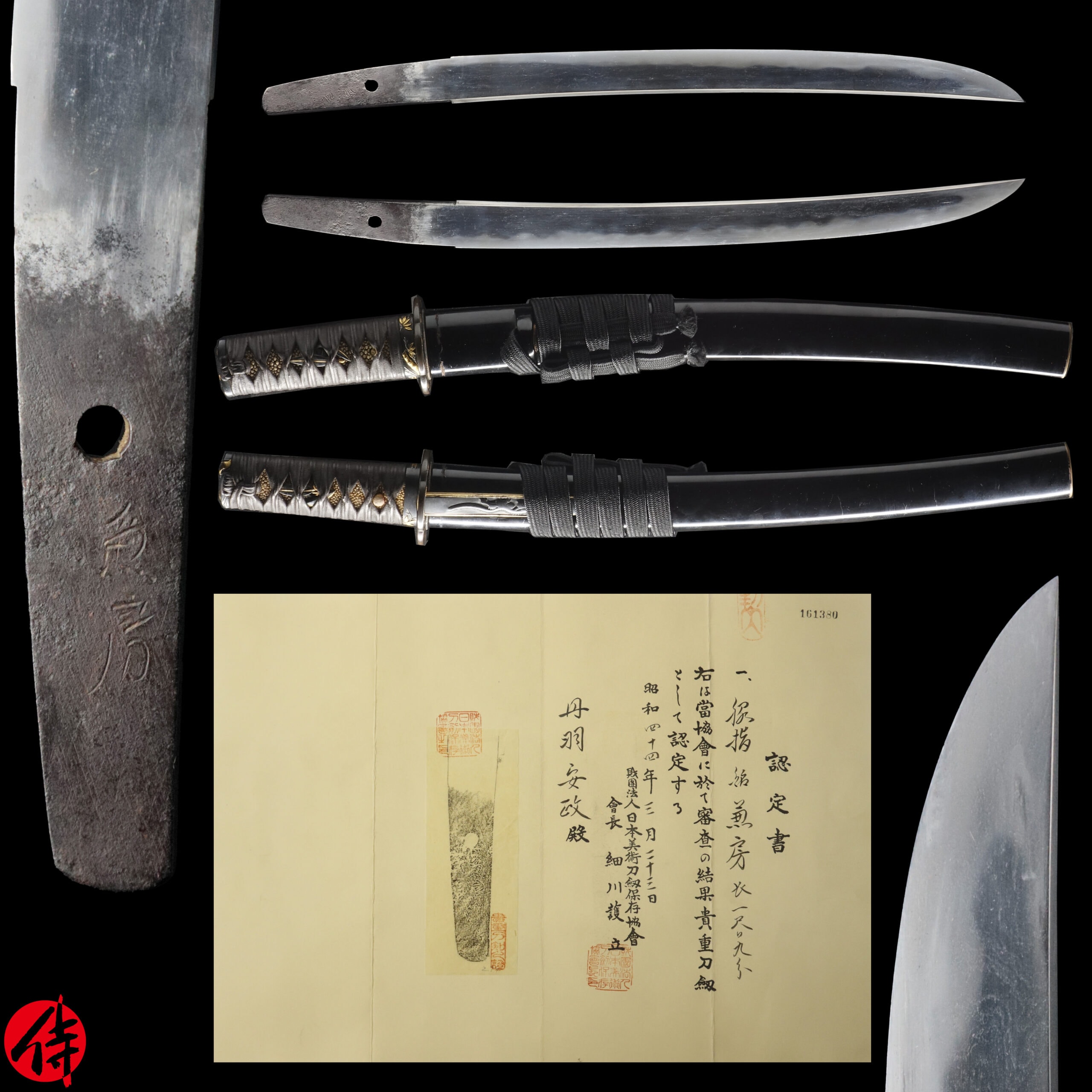
This blade is stored in Tachi(太刀) Koshirae. Tachi was mainly used by an armored Samurai with one hand on horseback from the Heian period (794-1185 A.D.) until the early Muromachi period. TACHI was suspended loosely on the left waist with its edge facing the ground so that you could draw it faster to cut down soldiers on the ground.
Because of its gorgeous looking, having a Tachi-style sword mounting became a social status among Samurai. You can see many gold family emblem design on the scabbard, which makes the whole appearance of the sword mounting beautiful.
We assume this blade might have been made for the Genpuku ceremony for a high-class Samurai’s child. Genpuku ceremony is a special event when a child of a Samurai becomes 12 or 13 years old. He was treated as an adult at this age, and his hairstyle also had to change to a Chonmage hairstyle. It is often the case that the father presents a special wakizashi to his son. We suppose this blade was one of them.
This blade is appraised as a Hozon Token(保存刀剣) issued by NBTHK(Nihon Bijutsu Touken Hozon Kyokai:日本美術刀剣保存協会). This au
thentication paper was only given to authentic Japanese swords, well preserved with artistic value.
【 Blade】
Cutting Edge Length(Nagasa)
:
53.5 cm( 21.0 inches)
Curvature(Sori)
:
1.6 cm ( 0.63 inches)
Hamon
:
The crystalline structure which forms along the cutting edge of a blade as a result of the hardening process
Jimon(Jihada)
:
visible steel surface pattern created by folding and hammering during forging process
Nakago
:
Nakago is the tang of the Japanese sword.
Japanese swordsmiths left the black rust on the tang because it prevents red rust while the tang is in its handle. And the discoloration of the tang was created over time, and it is a great indicator for a Japanese sword specialist to estimate when the sword was