説明
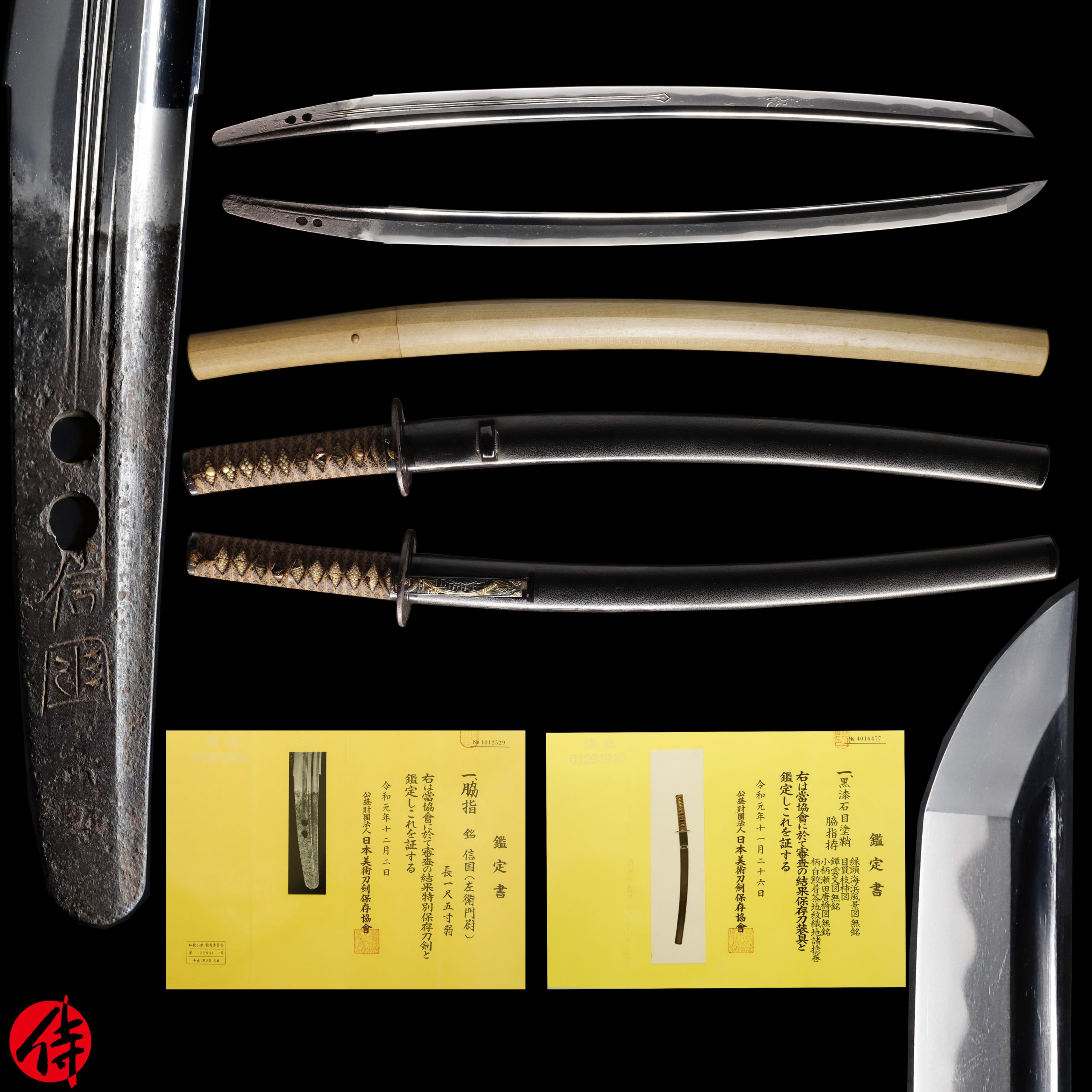
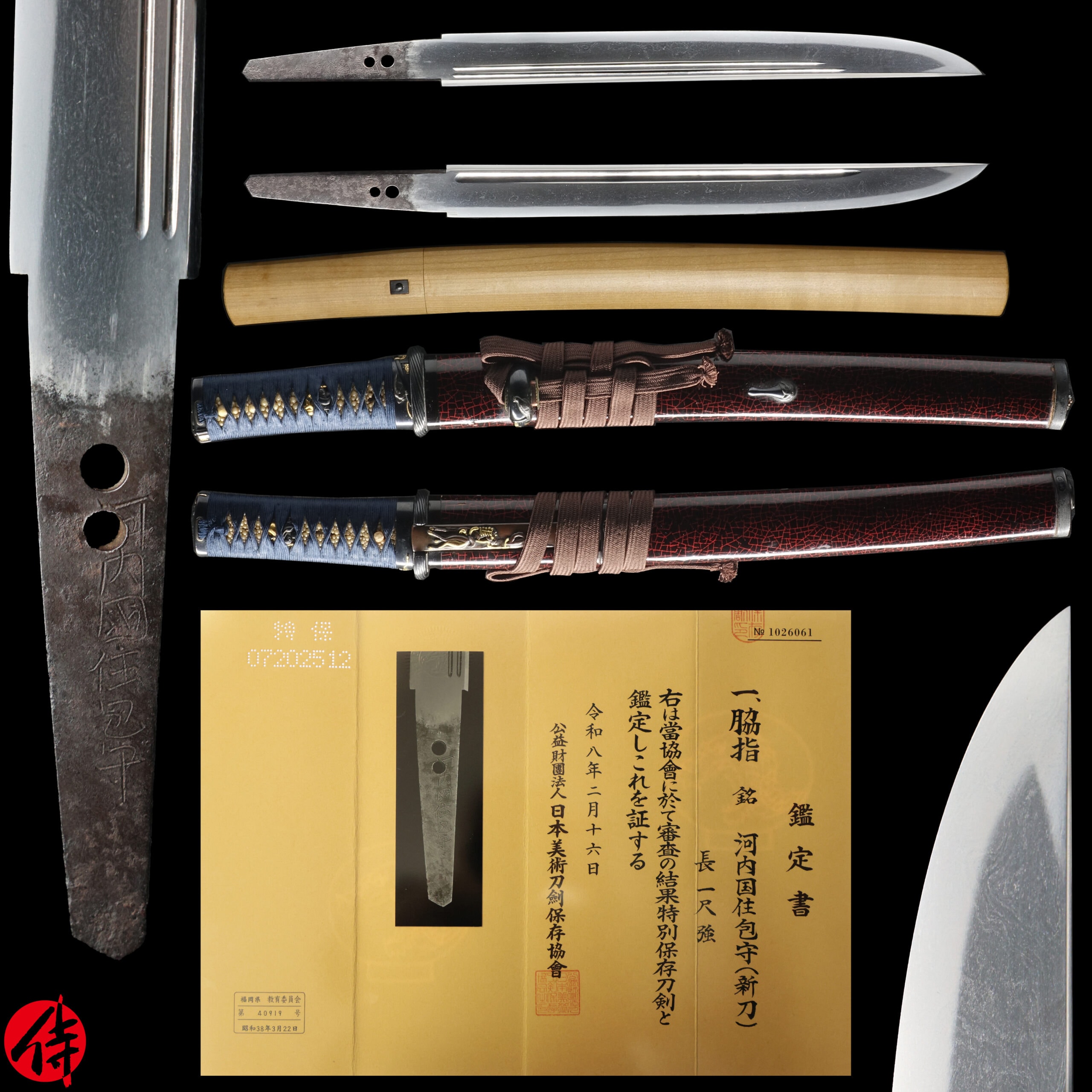
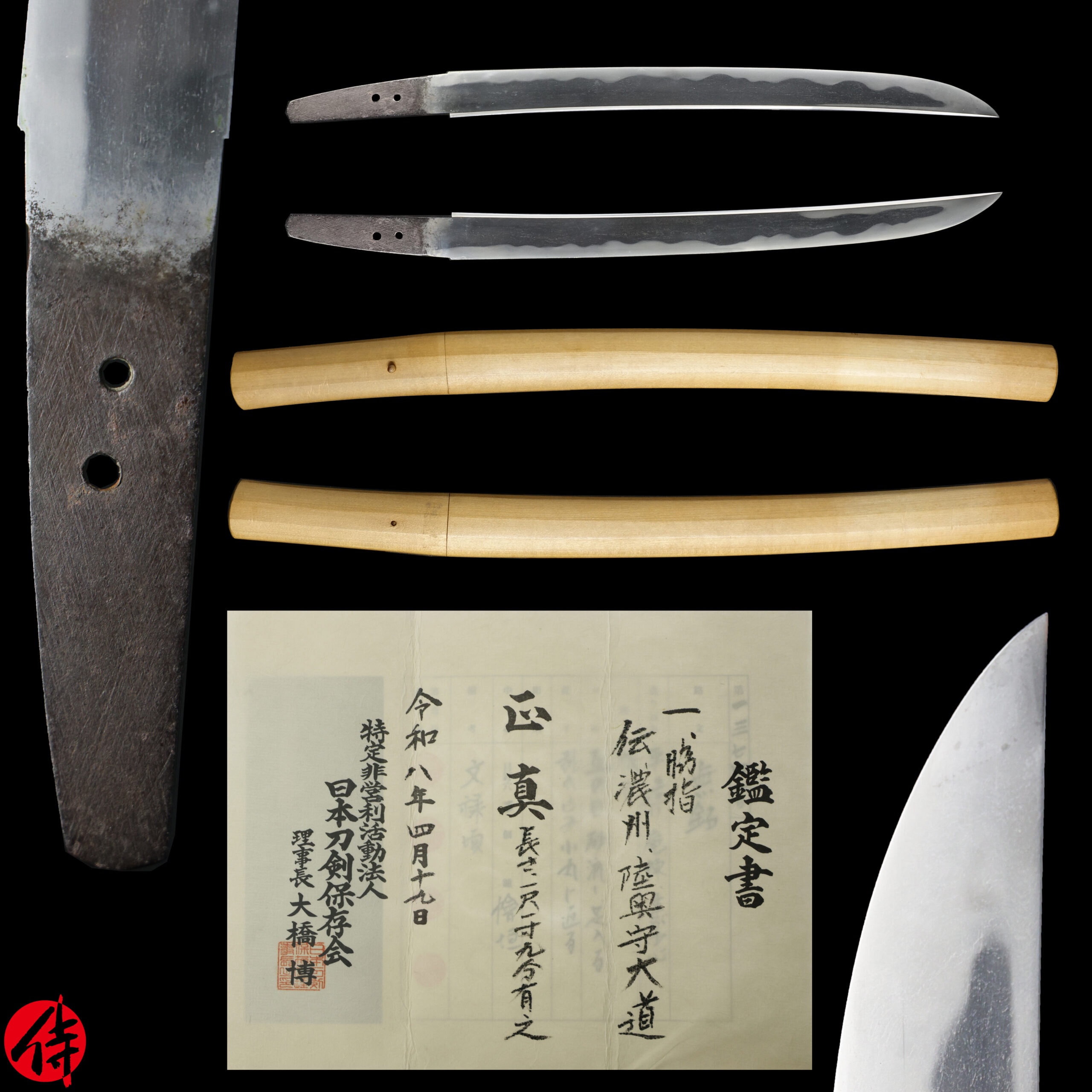
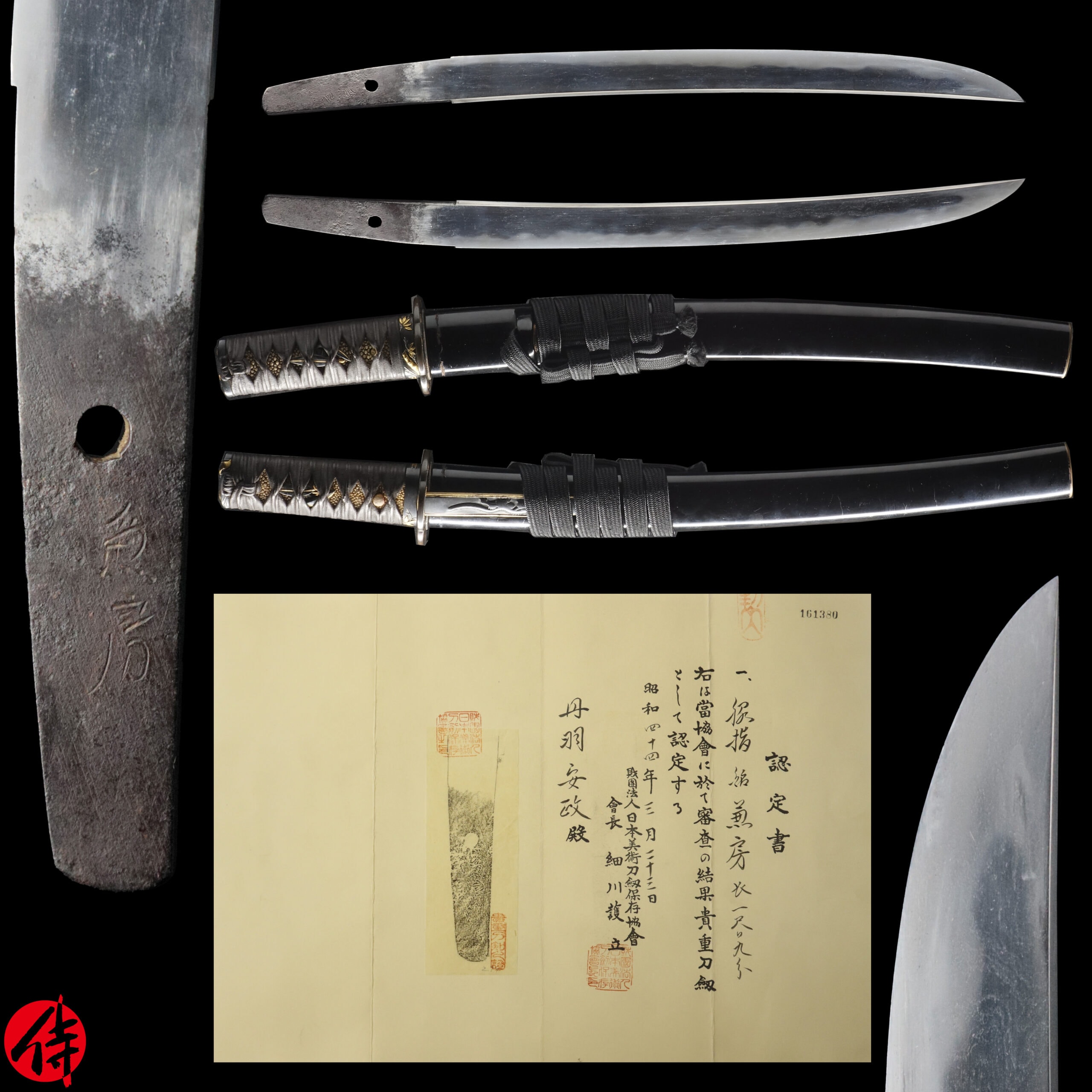
Antique Japanese Sword Wakizashi Signed by Saemon no Jyo Nobukuni with NBTHK
Tokubetsu
Hozon
Certificate
【Description】
Summary
This blade was signed by Saemon no Jyo Nobukuni (左衛門尉信国) according to NBHTK’s Tokubetsu Hozon appraisal. He was active during the O-Ei era (
1394-1427
: Early Muromachi period) in Yamashiro province (Today’s Kyoto).
Nobukuni is also the name of the school he belonged to, and it was prosperous during the Nanbokucho-Muromachi period. He was also known as a master of engraving and one of the prominent figures in the school. There were a few generations of Nobukuni, and he was the third-gen Nobukuni. To distinguish him from other Nobukuni, he is often called O-Ei Nobukuni because of the era he forged blades.
The first-gen Nobukuni was an apprentice of Soshu Sadamune (相州貞宗), one of the most famous swordsmiths. He was a grandson of Ryokai Hisanobu, who was a renowned maker in Ryokai school.
Ryokai School
Ryokai was a swordsmith from the late Kamakura period in Yamashiro Province(Today’s Kyoto). It is said that he was a son of Rai Kuniyuki (来国行) and a younger brother of Rai Kunitoshi (来国俊). Both of them are renowned swordsmiths throughout Samurai history.
Ryokai founded his school, and the apprentices were allowed to use Ryokai in their maker’s names. Ryokai’s son was Ryokai Hisanobu, who took over the school.
Engraving
This blade also has a Horimono(engraving) of Sanscrit letter and Kurikara Ken. Kurikara-Ken (倶利伽羅剣) is the sword that Fudo Myo-O (不動明王, acalanātha) holds with his right hand(you can see it on the tang part). Fudo Myo-O is one of the objects of worship in Buddhism. According to a theory, it is the incarnation of Dainichi Nyorai (大日如来, Mahāvairocana, the principal image of esoteric Buddhism).
Kurikara-ken was named due to the appearance that Kurikara Ryu-O (倶利伽羅龍王, dragon) is winding around the sword. It is believed that Kurikara-Ken could cut off worldly desires: Sandoku (三毒). Sandoku is the three fundamental earthly desires; Ton (貪, greed), Jin (瞋, anger, grudge), and Chi (癡, delusion, complaint).
This blade is appraised as a
Tokubetsu Hozon Token
(特別保存刀剣) issued by NBTHK(Nihon Bijutsu Touken Hozon Kyokai:日本美術刀剣保存協会). This authentication paper was only given to authentic Japanese swords, especially well preserved and high quality with artistic value.
【Blade】
Cutting Edge Length(Nagasa)
:
45.4 cm (
17.9
inches)
Curvature(Sori)
:
1.2
cm ( 0.47 inches)
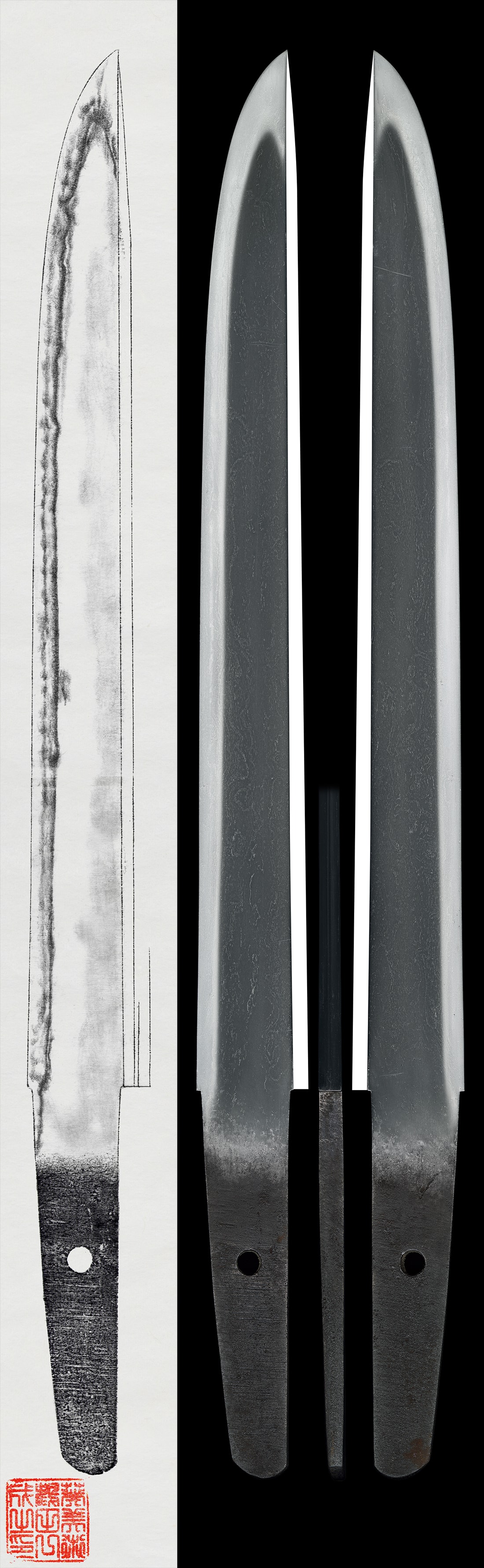
Hamon
:
The crystalline structure which forms along the cutting edge of a blade as a result of the hardening process
Jimon(Jihada)
:
visible steel surface pattern created by folding and hammering during forging process
Nakago
:
Nakago is the tang of the Japanese sword.
Japanese swordsmiths left the black rust on the tang because it prevents red rust while the tang is in its handle. And the discoloration of the tang was created over time, and it is a great indicator for a Japanese sword specialist to estimate when the sword was forged.
Koshirae:
Koshirae is the mounting of the Japanese sword. There are several parts that consist of Koshirae such as Saya(Scabbard), Tsuka(Handle), Tsuba(Handguard).
Fuchi-Kashira
:
A pair of matching sword fittings that cover the upper and bottom parts of its sword hilt.
The Kaihin Hukei Zu (海浜風景図, landscape of beach) is the theme of this Fuchi Kashira. The scenery of the seashore is depicted; you would find huts and sailing ships. And pine trees are growing near buildings. Some parts are colored with golden paint, and this coloring adds decorativeness to this work.
Tsuka and Menuki
:
Tsuka is the handle of the Japanese sword and Menuki is its decoration.
This Menuki’s motif is the Kaki (柿, Japanese persimmon). A large persimmon fruit hangs down from a beautifully curved branch. A part of the branches and the calyx of the persimmon are colored with gold. Persimmon is an autumn fruit that bears bright vermilion fruits. In this work, fruit parts are colored with reddish-brown metal. Since persimmon trees have long lives,