大坂は町人の都であり、刀も金の流れに従った。脇差一腰しか許されぬ町人のための贅沢な作、助広の濤瀾乱れ、大坂正宗と呼ばれた真改。率直に言えば、見られるために作られた刀である。
 NihontoWatchNihontoWatch
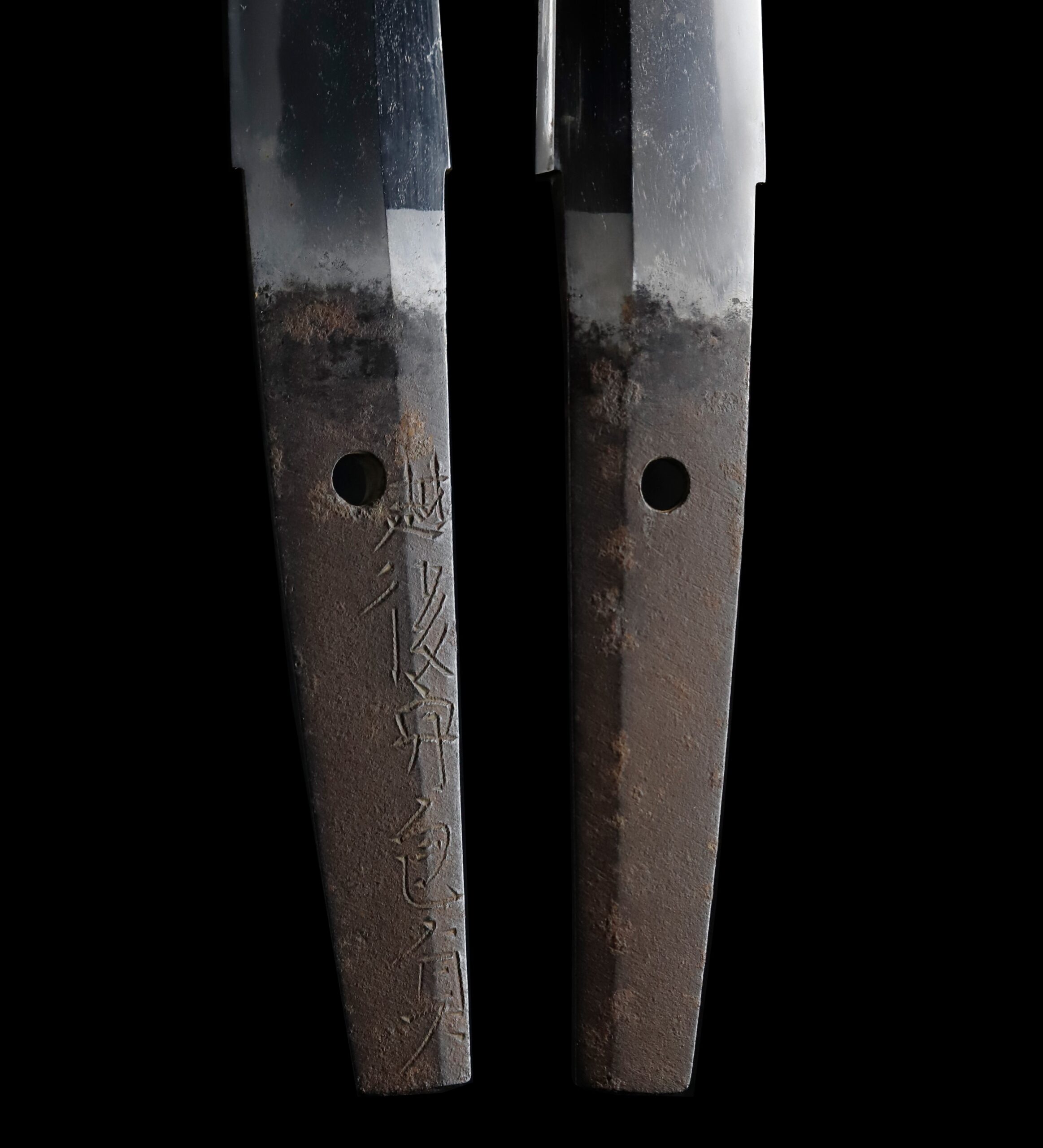
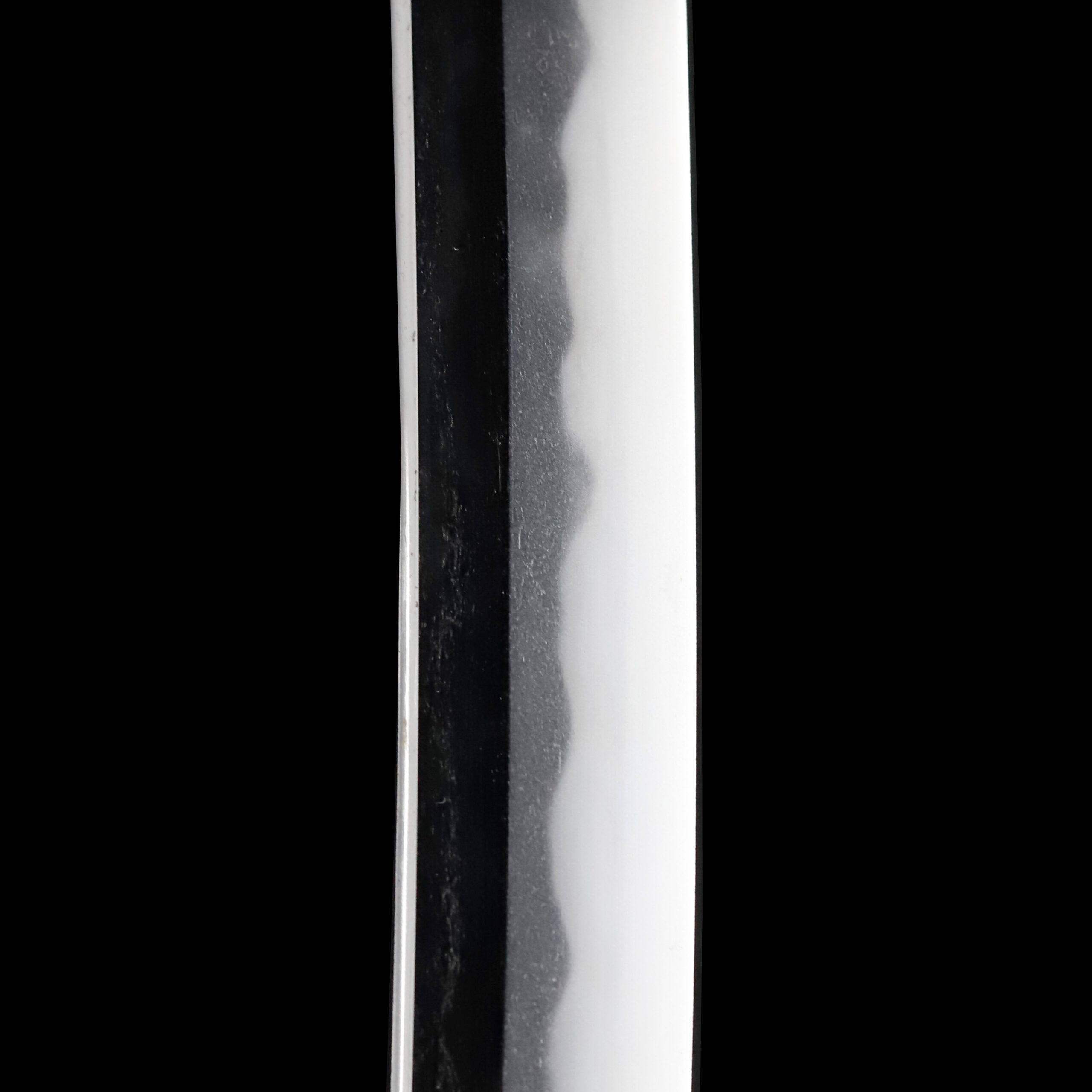
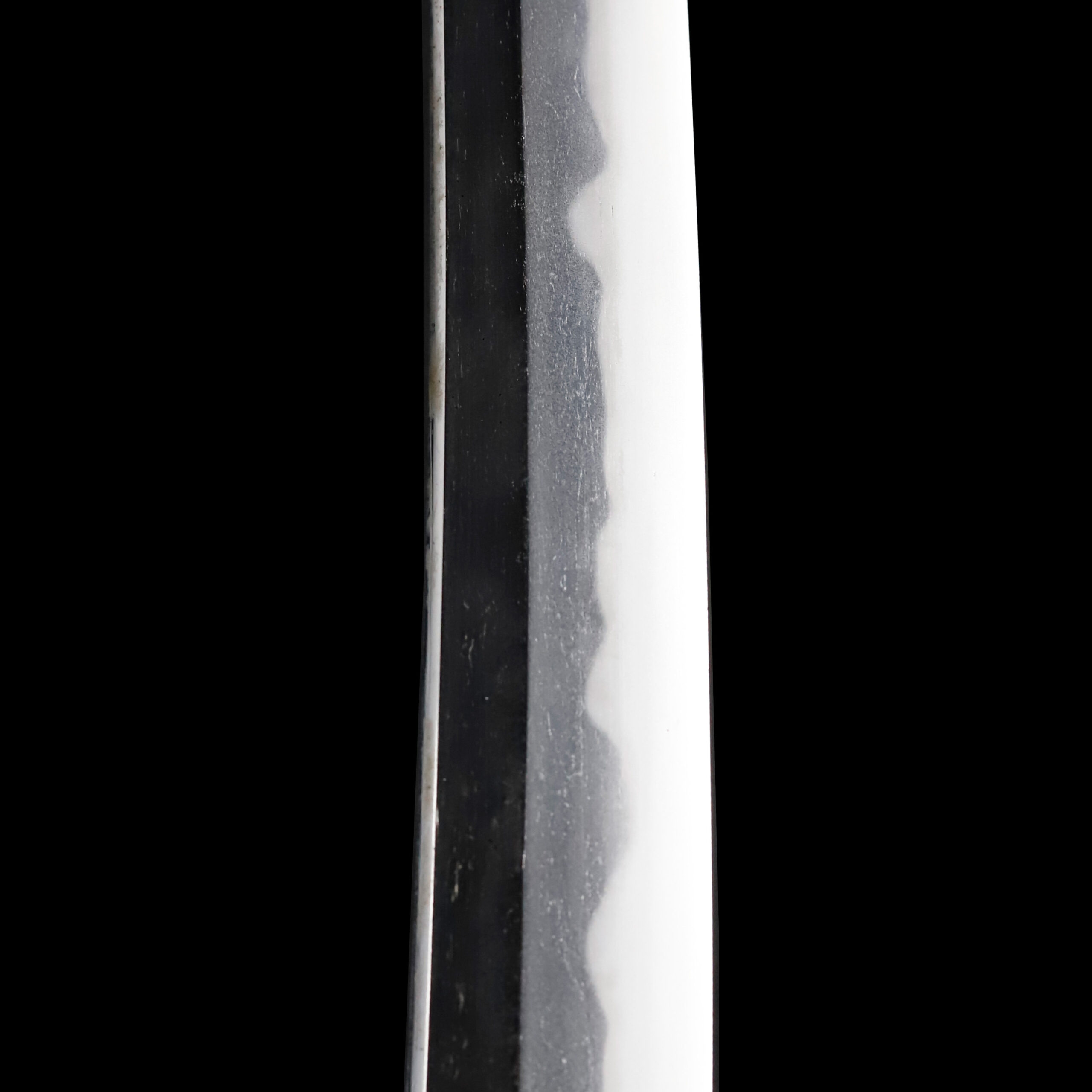
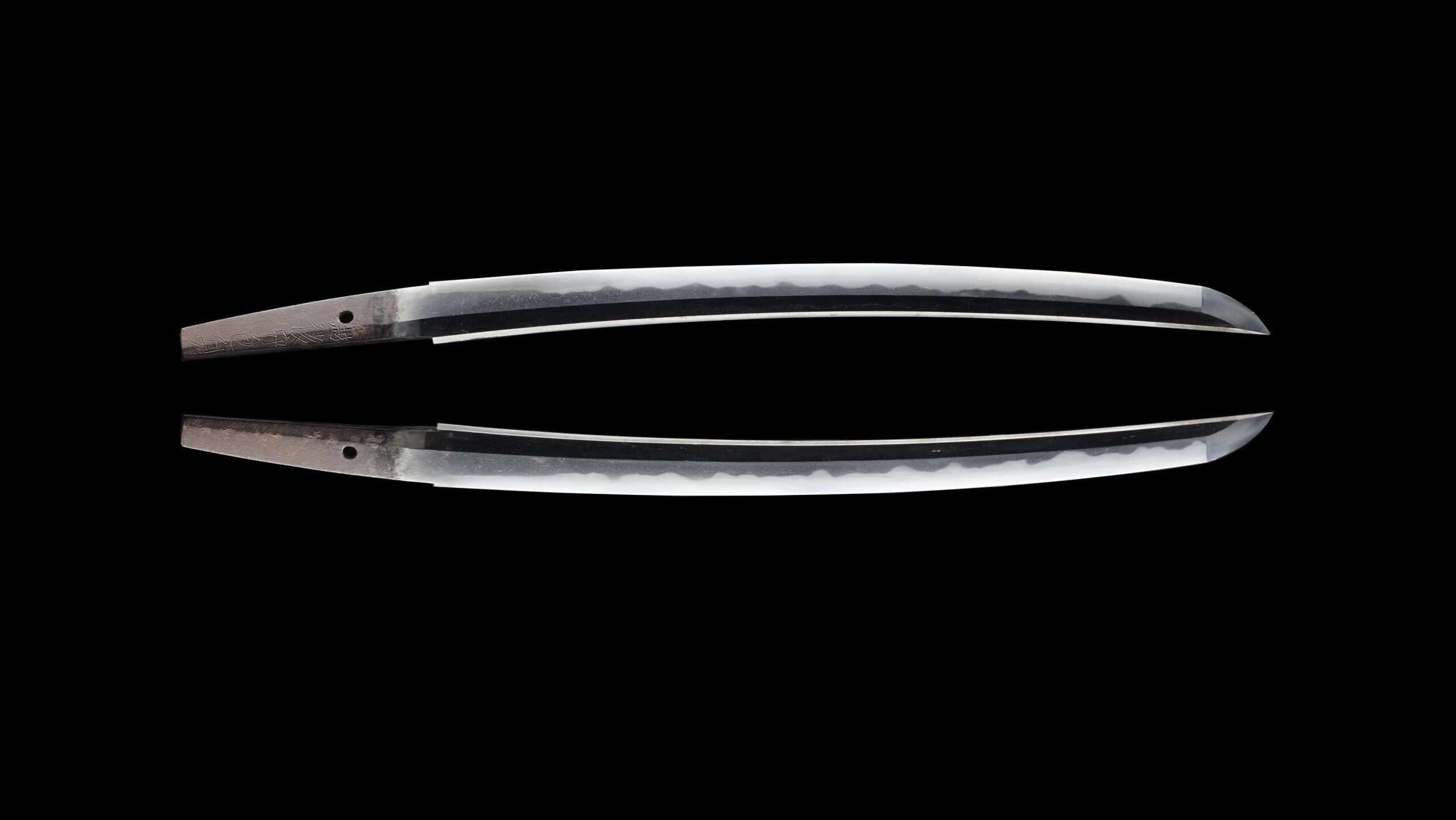
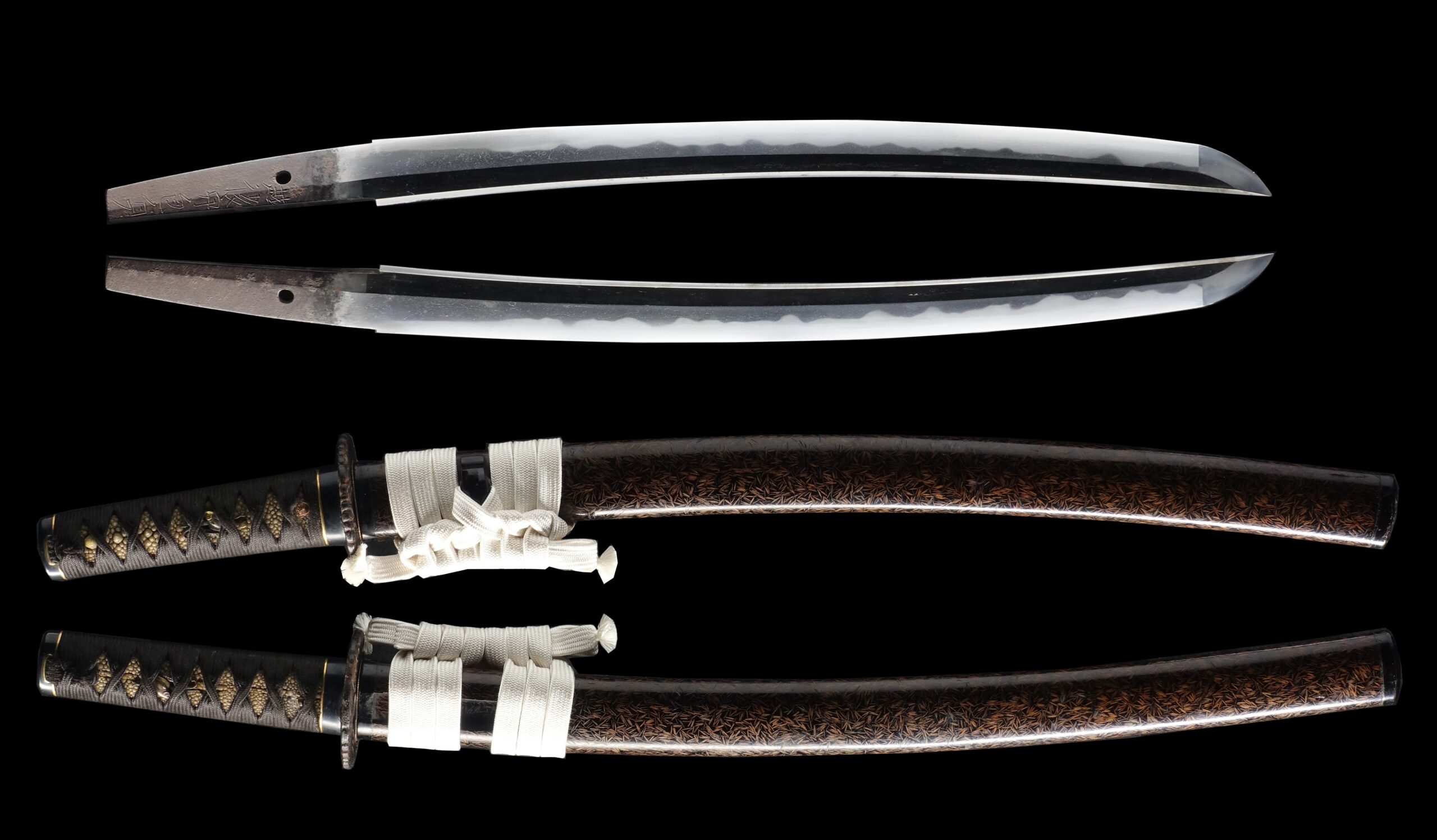
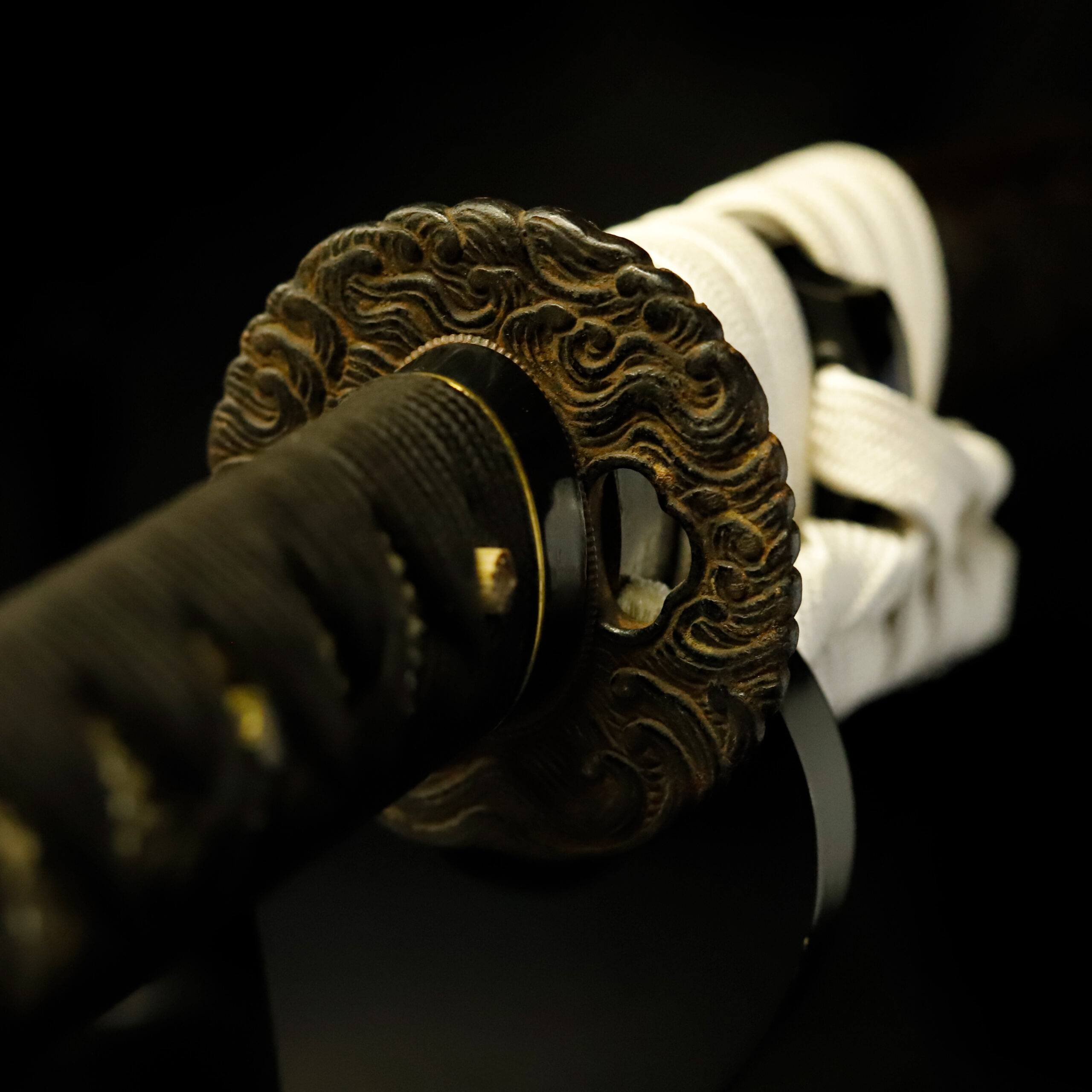
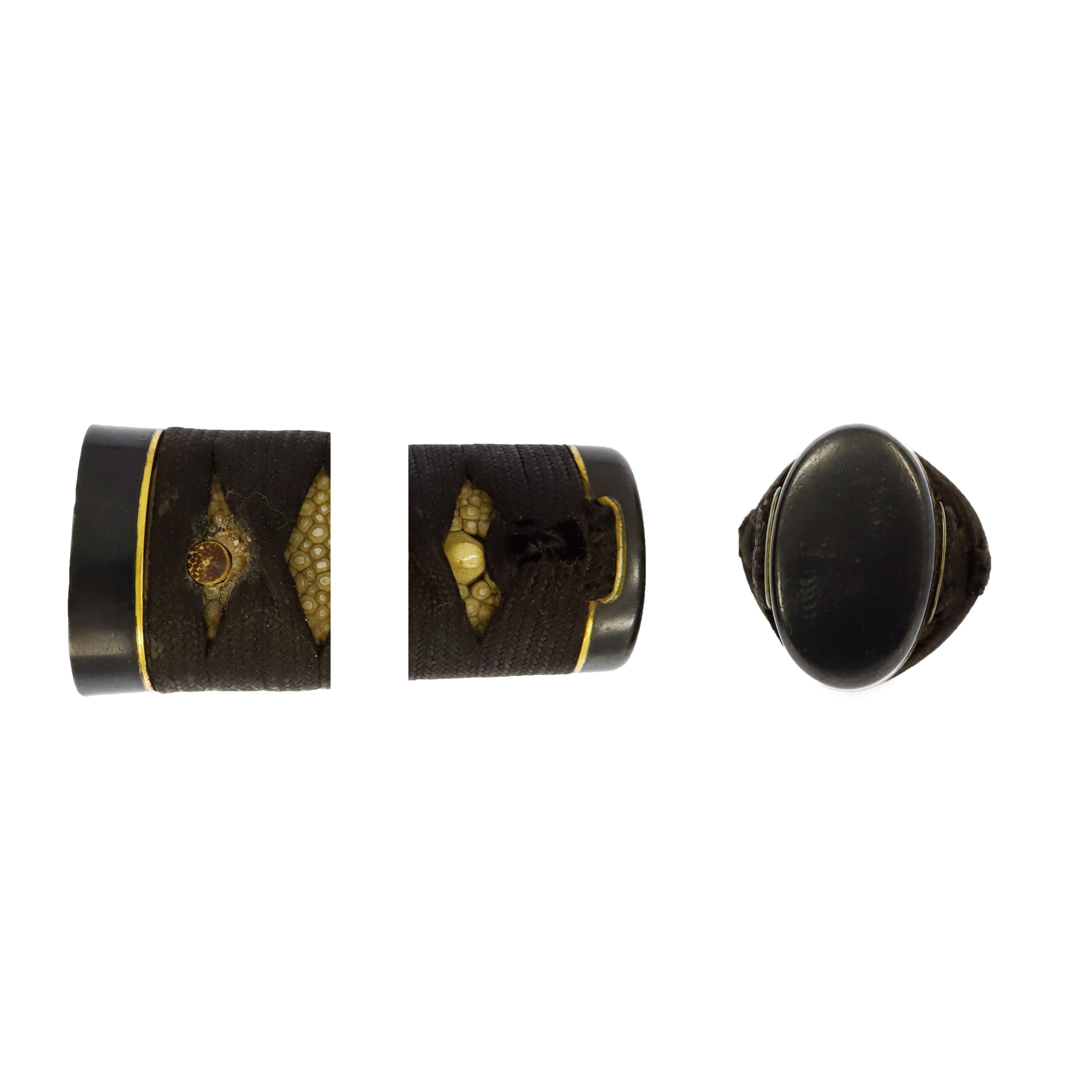
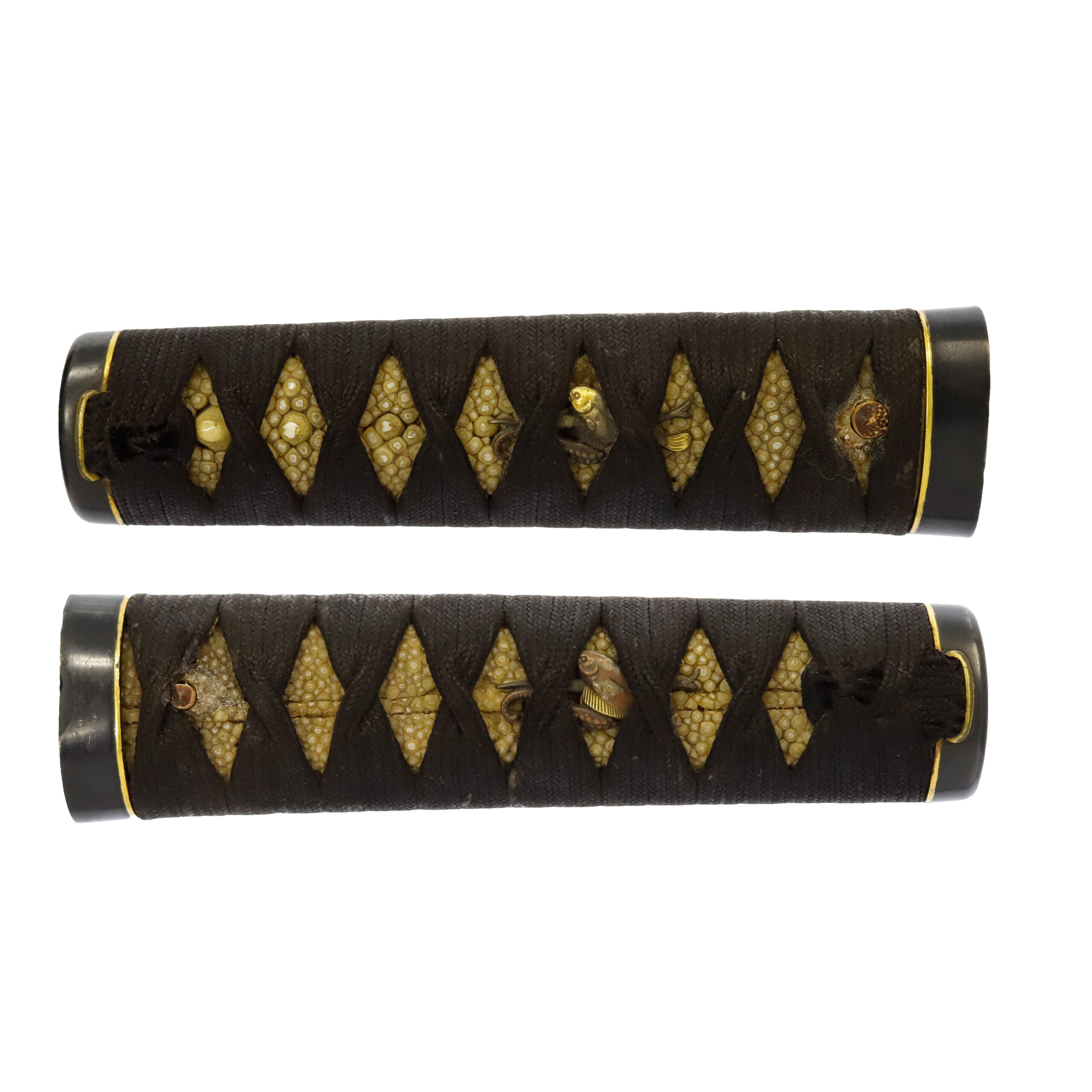
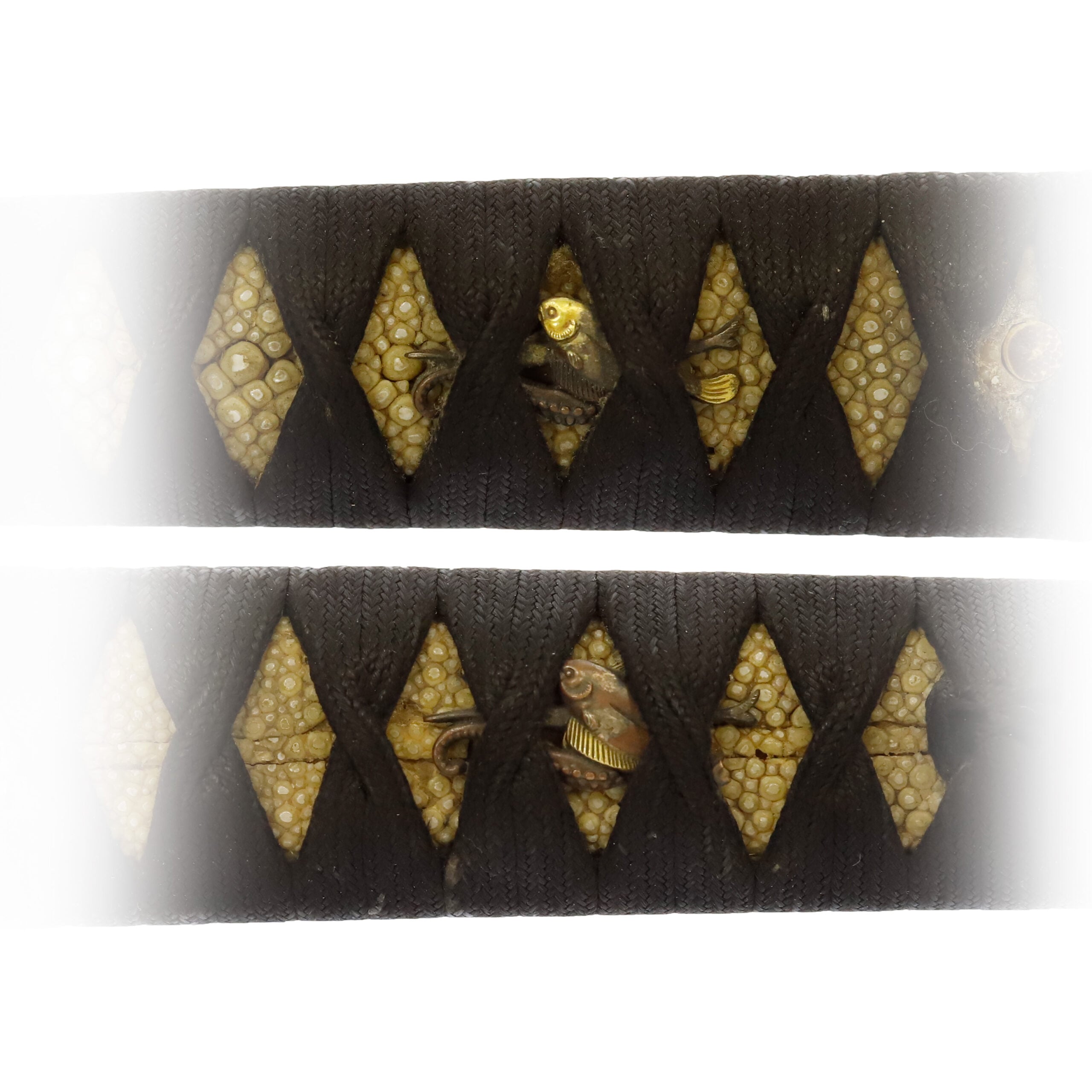
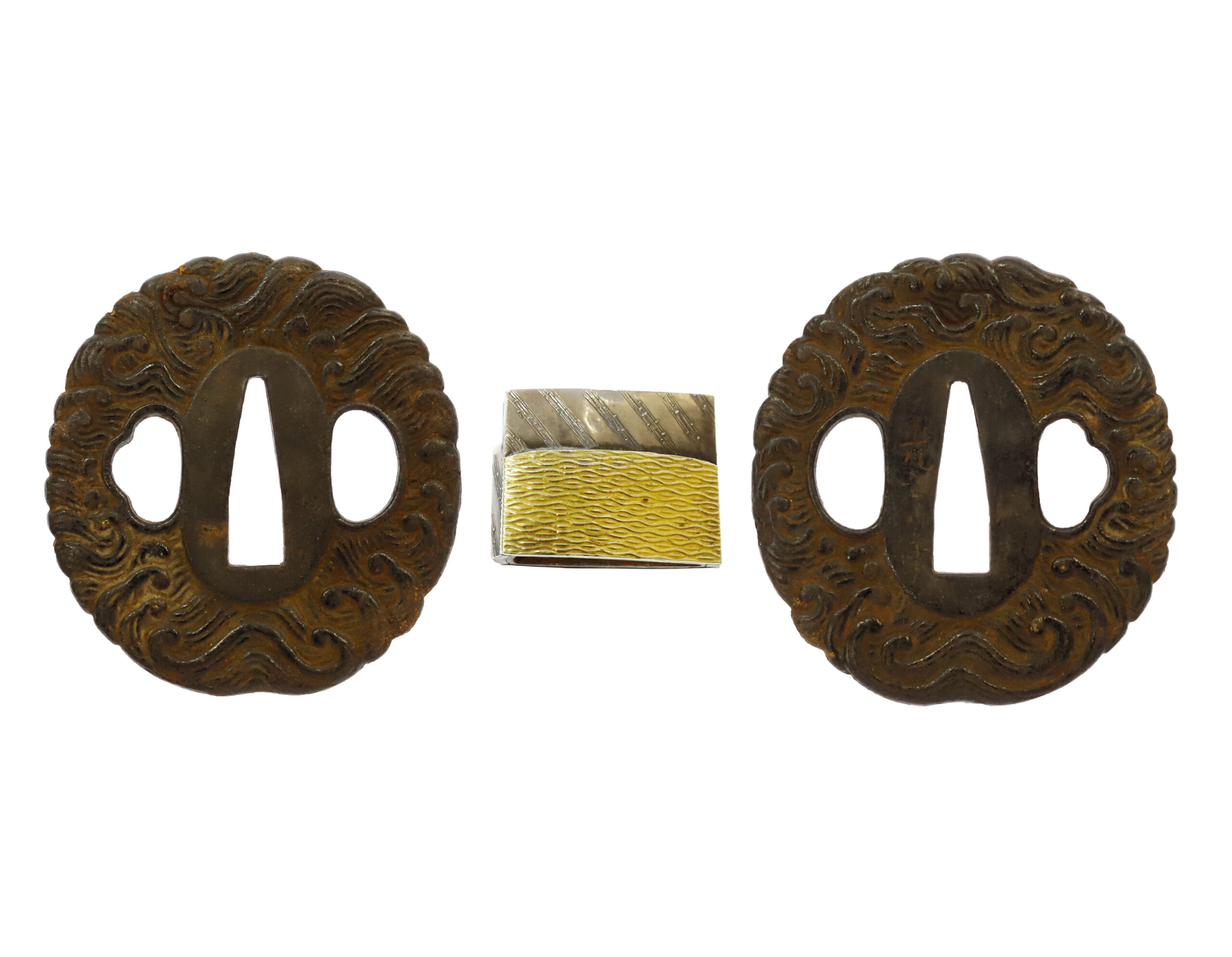
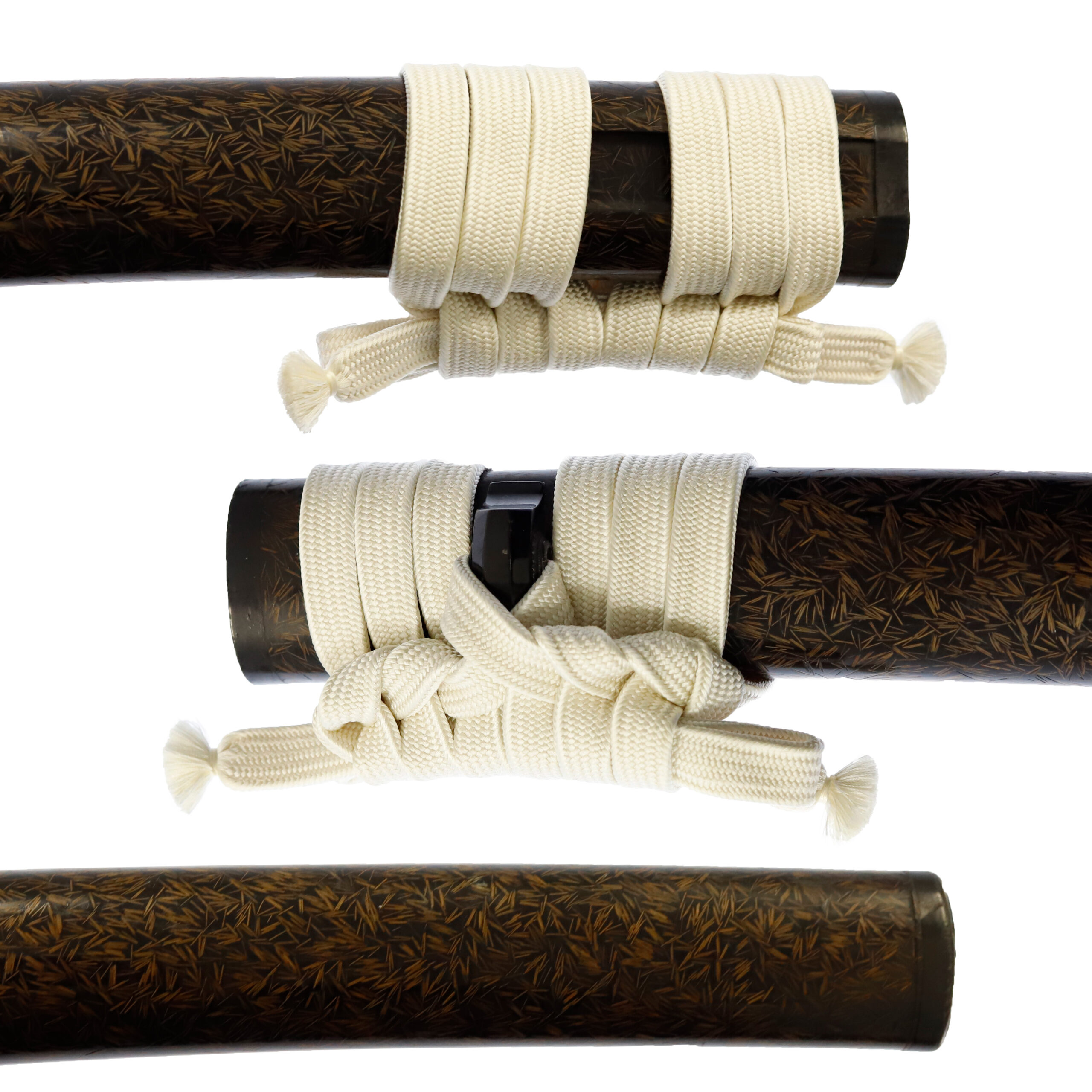
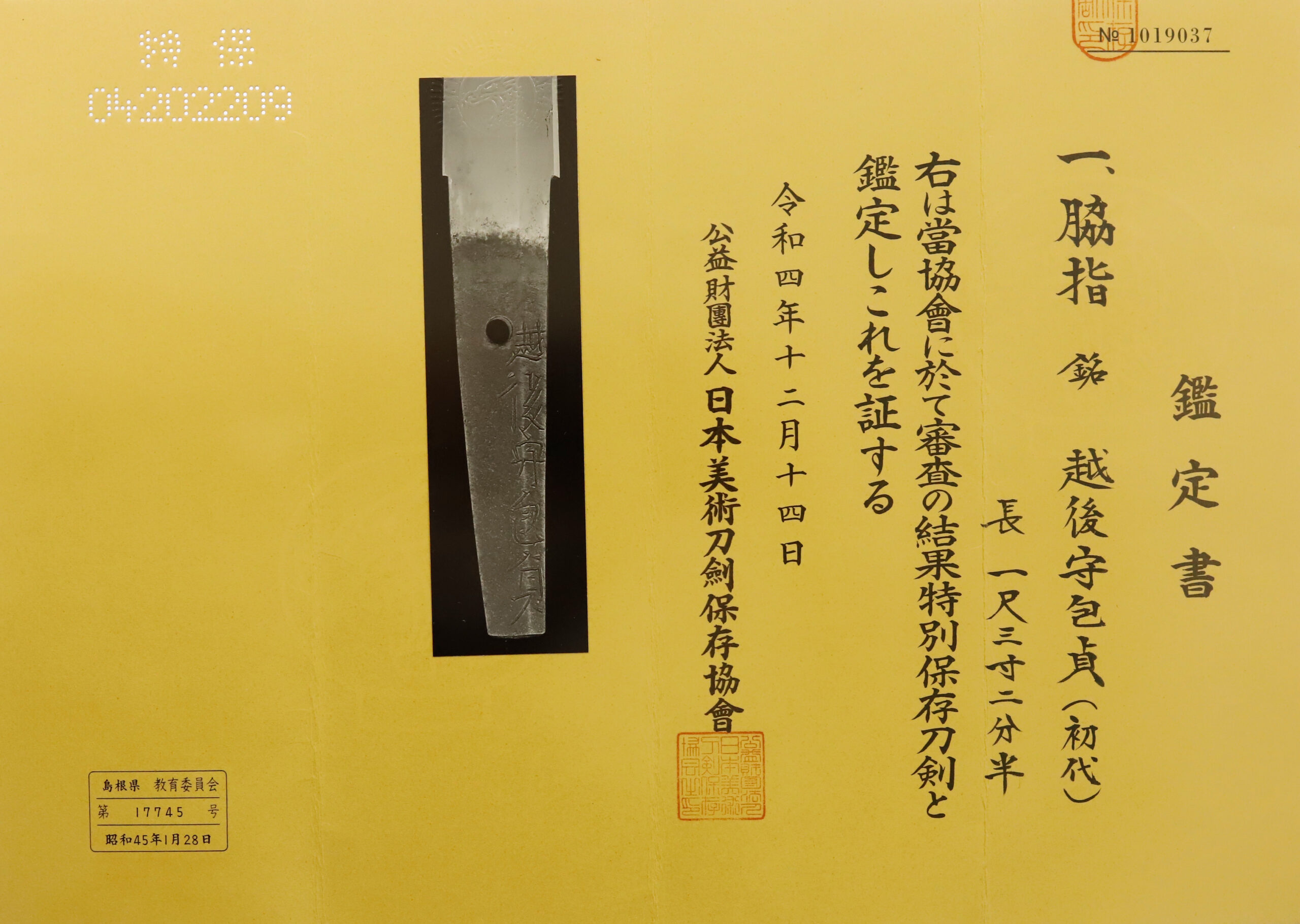
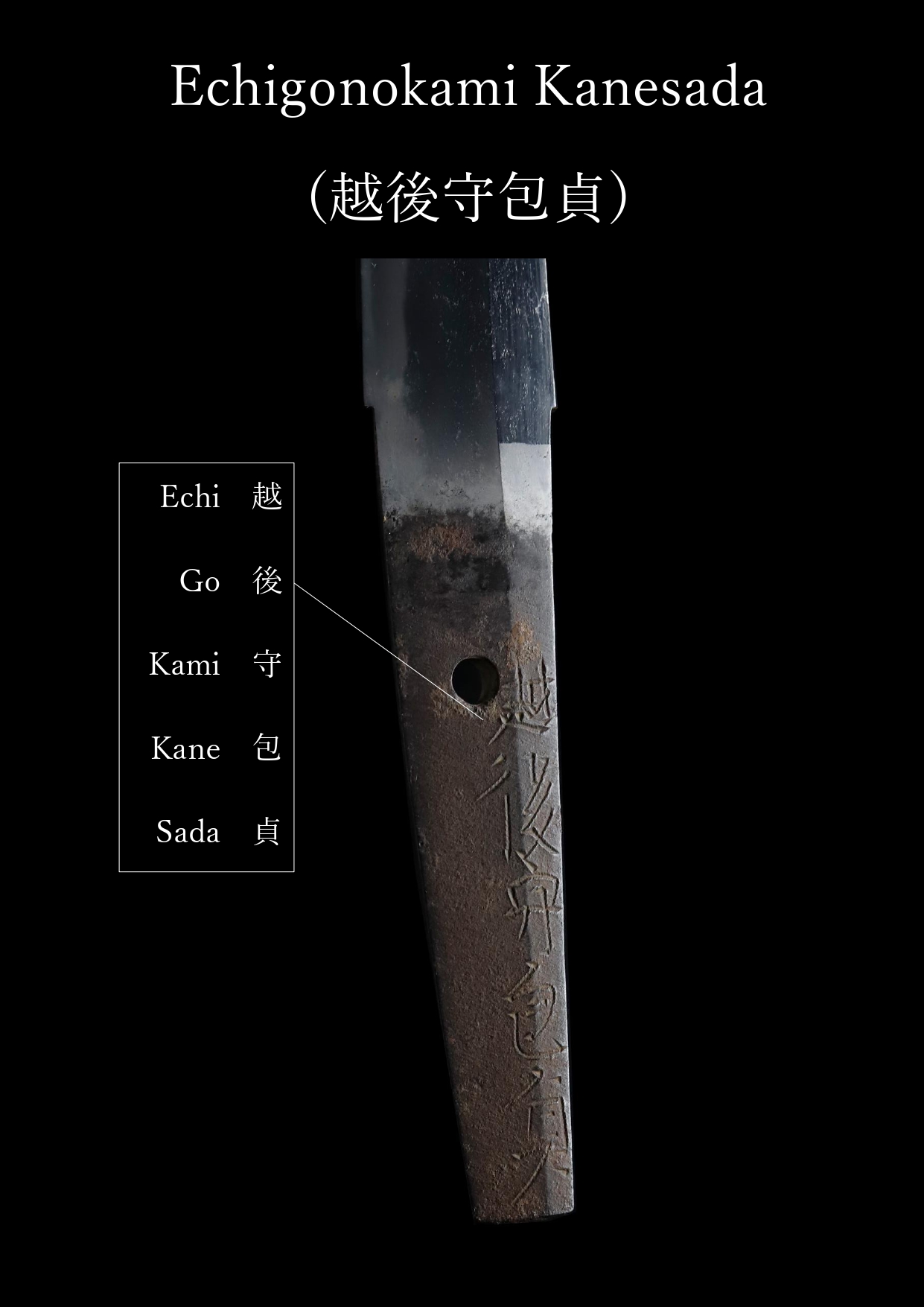
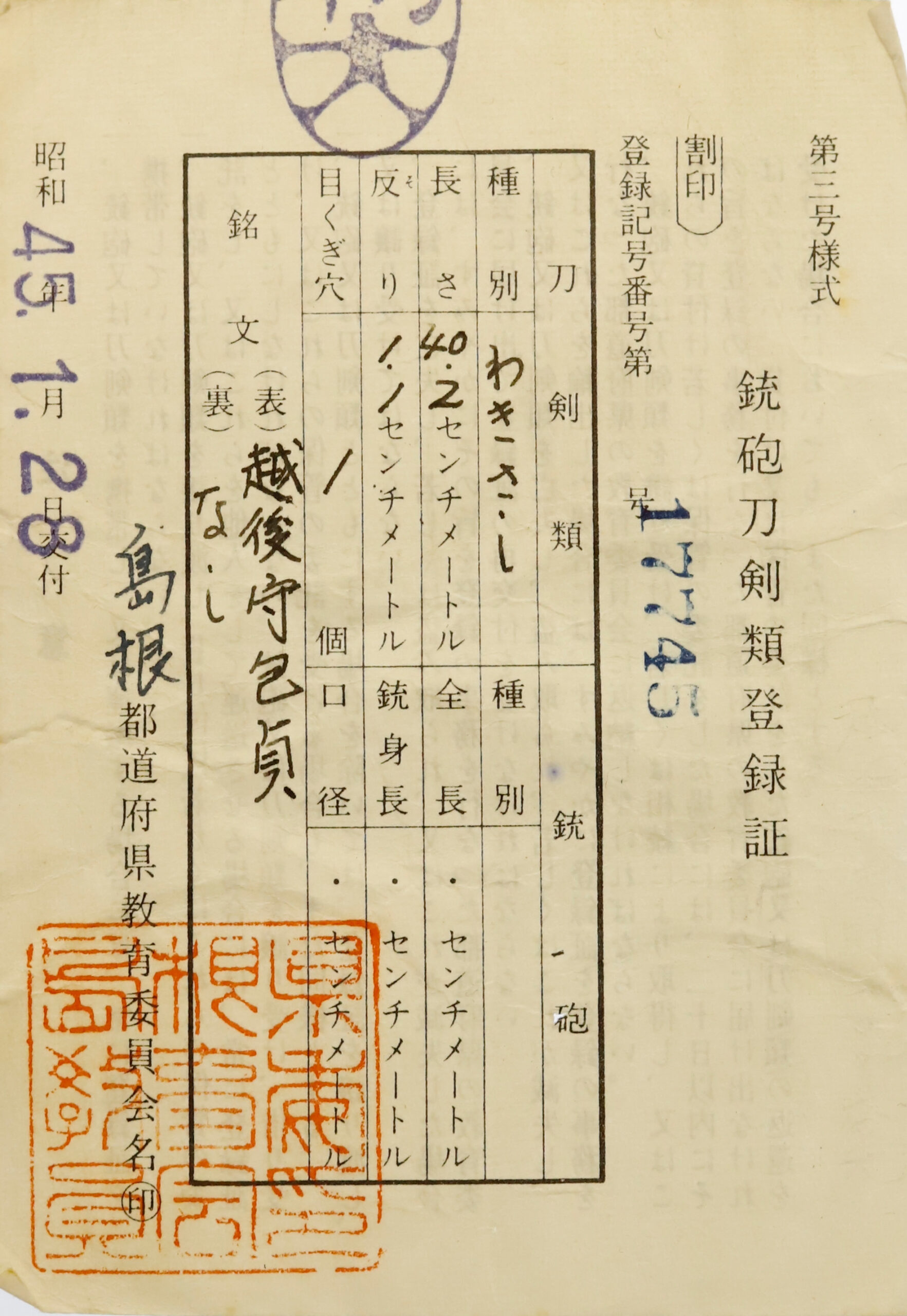
日本刀 脇差 銘 越後守包貞(初代) 日本美術刀剣保存協会 特別保存刀剣鑑定書付 【解説】 概要 本作は「越後守包貞」の銘がある脇差です。包貞の名は三代続きましたが、本作は日本美術刀剣保存協会(日美工)により、江戸時代前期(慶安〜寛文年間)に活躍した初代の真作と鑑定されています。 初代包貞は本名を山田平太夫といい、大和国(現在の奈良県)の出身です。南北朝時代の名工、手掻包貞の末裔と伝えられています。後に大和から摂津国(現在の大阪府)へ移り、伊賀守金道に師事しました。 その優れた技量により、寛文四年(1664年)に「越後守」を受領しました。本作の茎には「越後守」の受領銘が刻まれていることから、寛文四年以降に制作された円熟期の作品であることがわかります。 師:伊賀守金道 金道もまた大和国の出身です。寛文年間に大阪へ移り、大阪の名工として知られる陸奥守包保に師事しました。金道もまた、その卓越した技術により「伊賀守」の受領銘を許されています。 大阪新刀 初代越後守包貞の作品は「大阪新刀」に分類されます。新刀とは慶長から天明年間(1596-1781年)に制作された刀剣を指し、その中でも大阪で打たれたものは大阪新刀と呼ばれます。豊臣秀吉による大坂城築城後、大阪は城下町・商業の中心地として繁栄し、多くの刀工が好機を求めて集まりました。彼らは地元の武士のみならず、全国の諸大名のためにも刀を鍛えました。一竿子忠綱(粟田口近江守忠綱)、井上真改、津田助広などは、その代表格として知られています。 大阪新刀の最大の特徴の一つは、地鉄(じがね)の美しさにあります。大阪は良質な玉鋼の産地との交易が盛んであったため、刀工たちは極めて質の高い原料を手にすることができ、それが精緻で美しい地鉄を生み出しました。 本作は、日本美術刀剣保存協会(NBTHK)より「特別保存刀剣」に認定されています。この鑑定書は、保存状態が極めて良く、かつ芸術的価値の高い真作の日本刀にのみ与えられるものです。 ※棟(むね)に僅かな鍛え傷、および身に部分的な黒錆が見受けられます。詳細なコンディションについては、お気軽にお問い合わせください。 【刀身】 長さ(刃長):40.2 cm 反り:1.1 cm 刃文:焼入れによって刃先に現れる結晶構造 地紋(地肌):折り返し鍛錬によって現れる鋼の模様 茎(なかご): 刀身の柄に収まる部分です。日本の刀工は、柄内での赤錆を防ぐために茎の黒錆をあえて残します。この経年による錆色は、専門家が制作年代を推定する際の重要な指標となります。 【外装】 拵(こしらえ): 鞘、柄、鍔など、日本刀の外装一式を指します。 縁頭(ふちがしら): 柄の両端を保護する一対の金具です。 本作の縁頭は、黒地に縁のみを金で彩った、質実剛健で落ち着きのある意匠となっております。経年による微細な擦れがございます。
NihontoWatch取扱店 サムライミュージアム

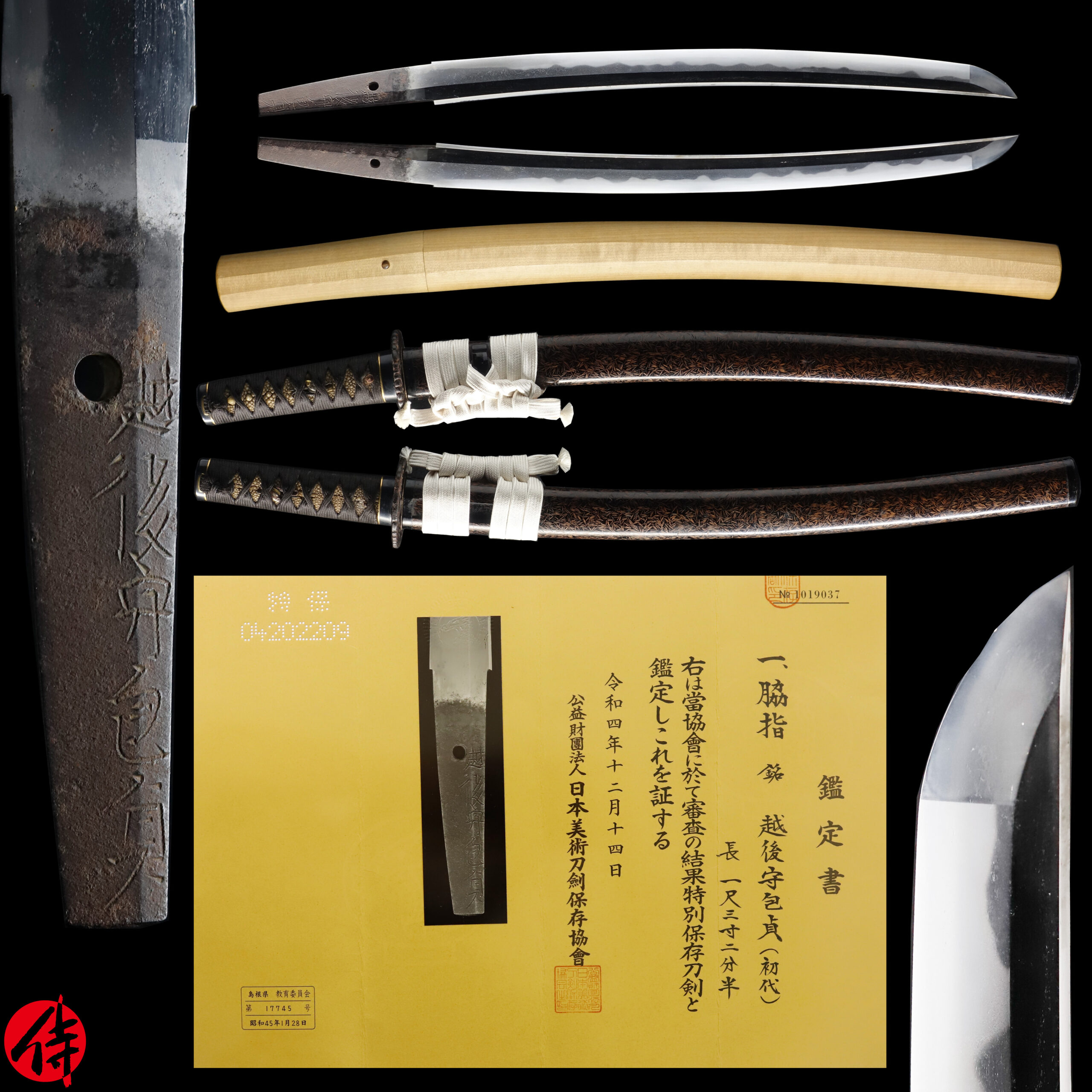
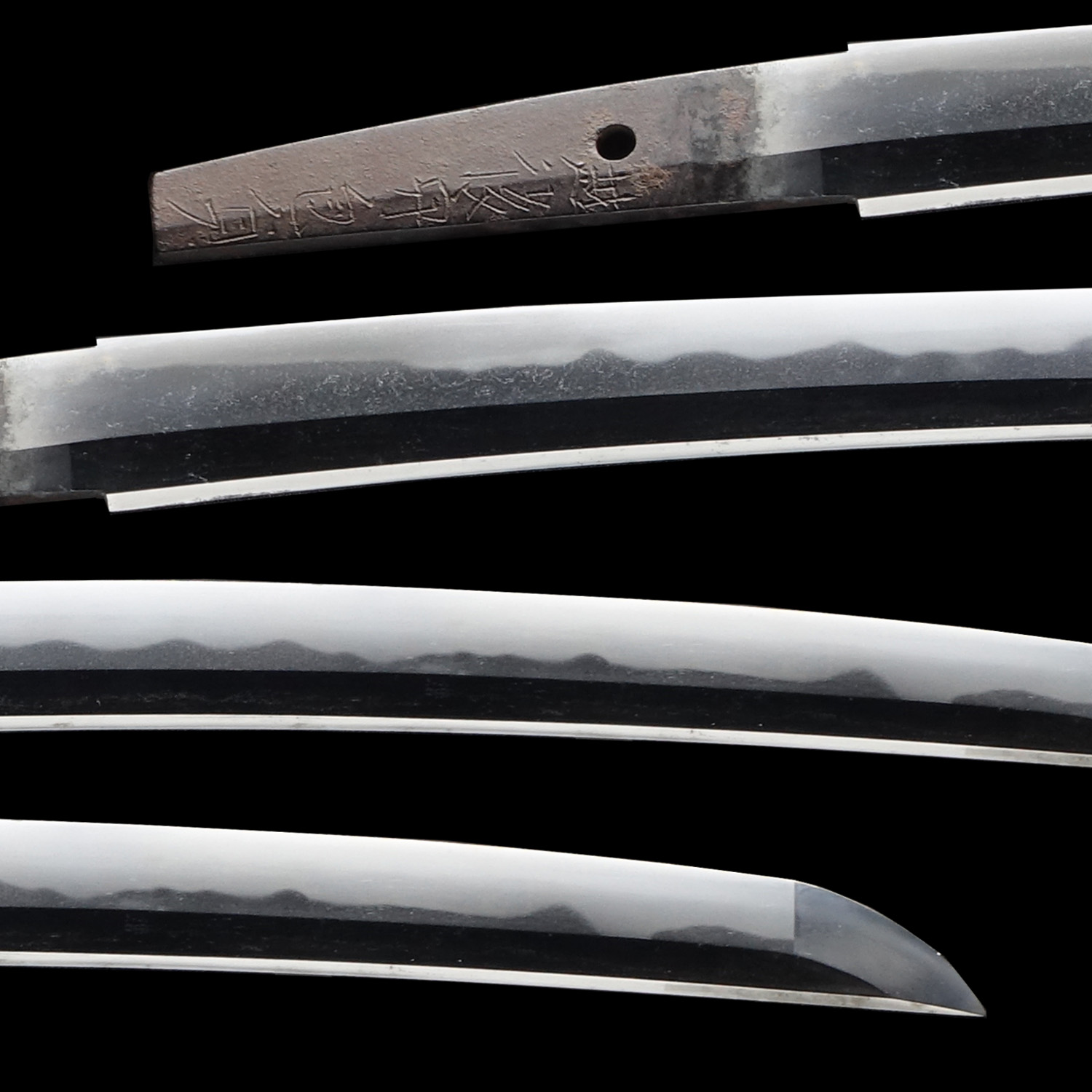
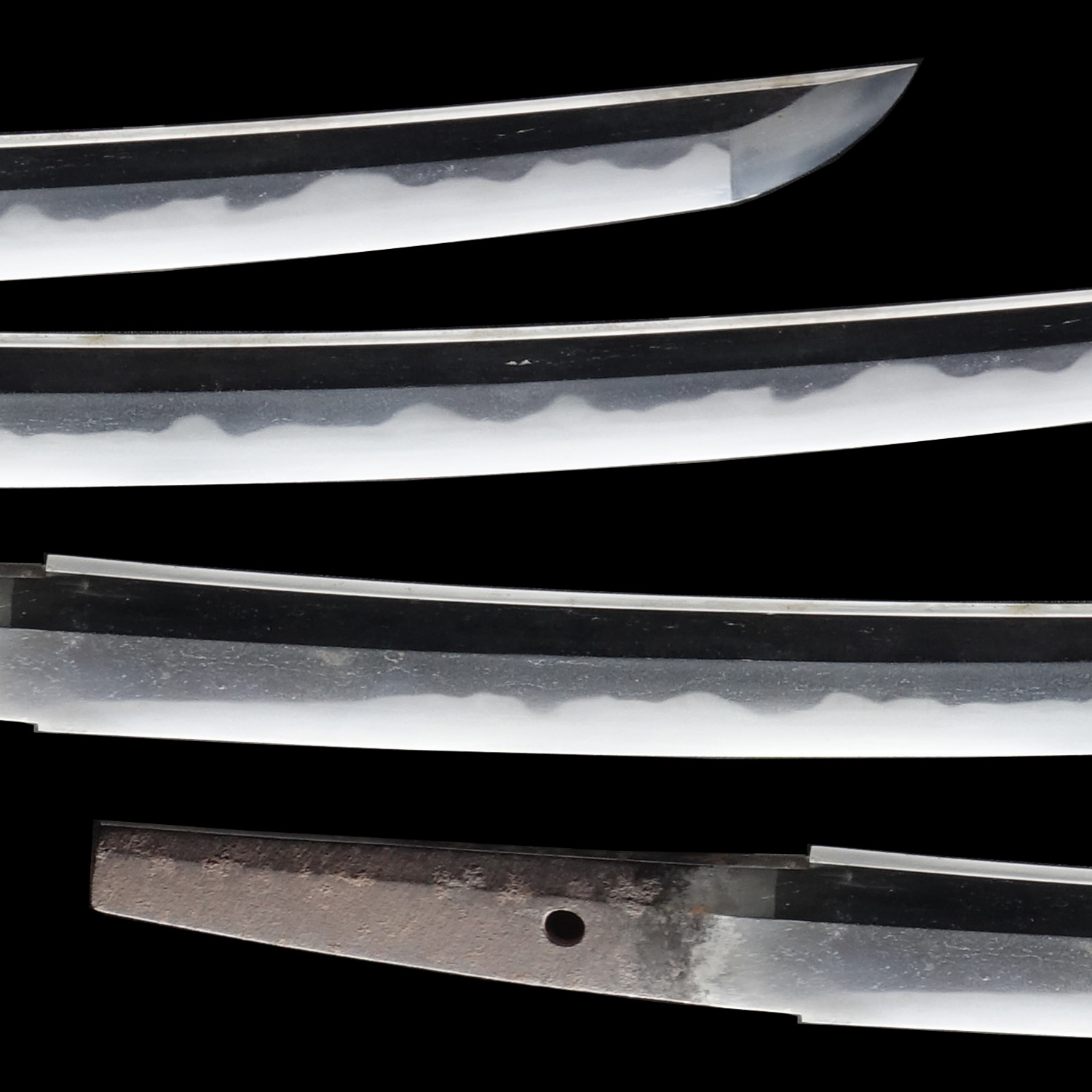
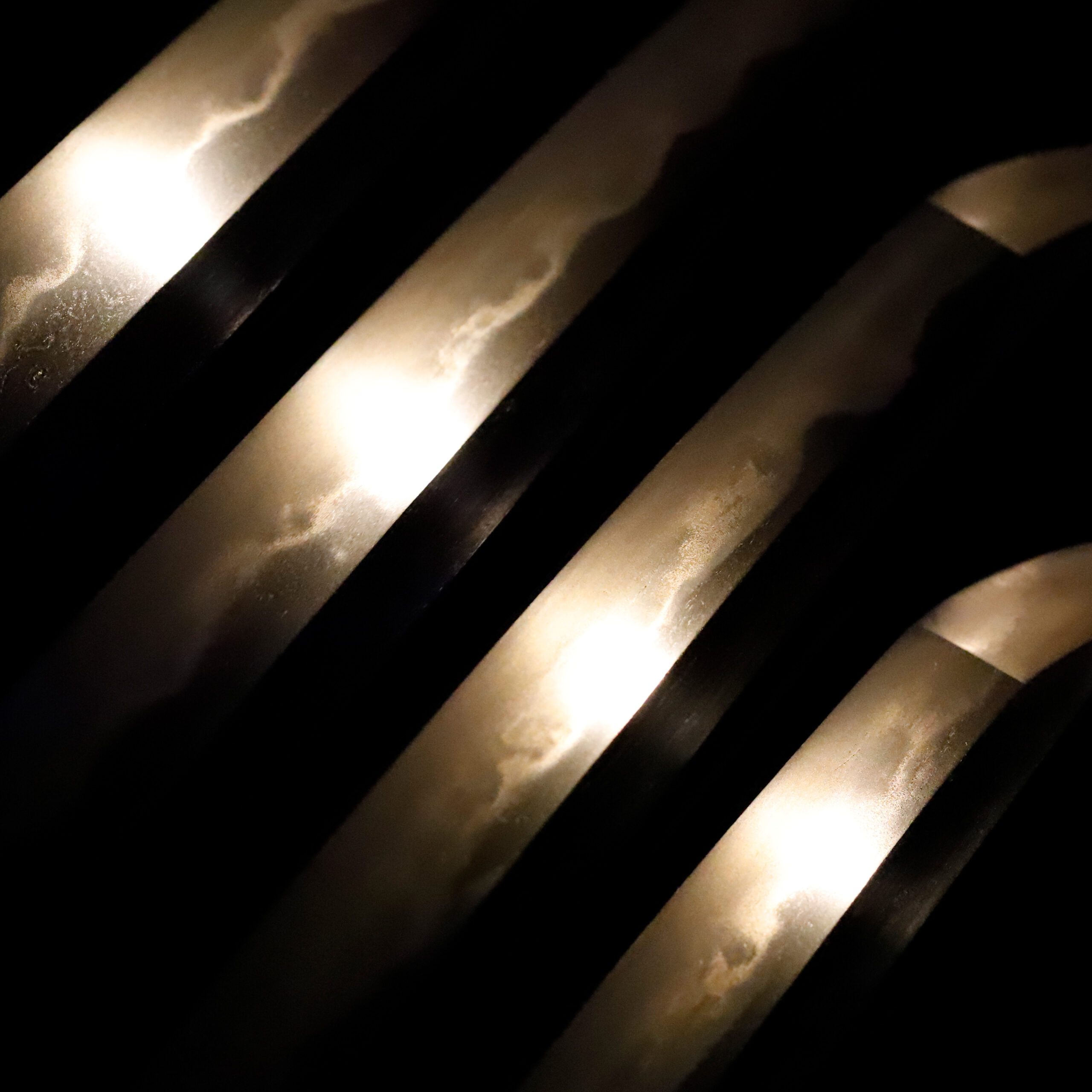
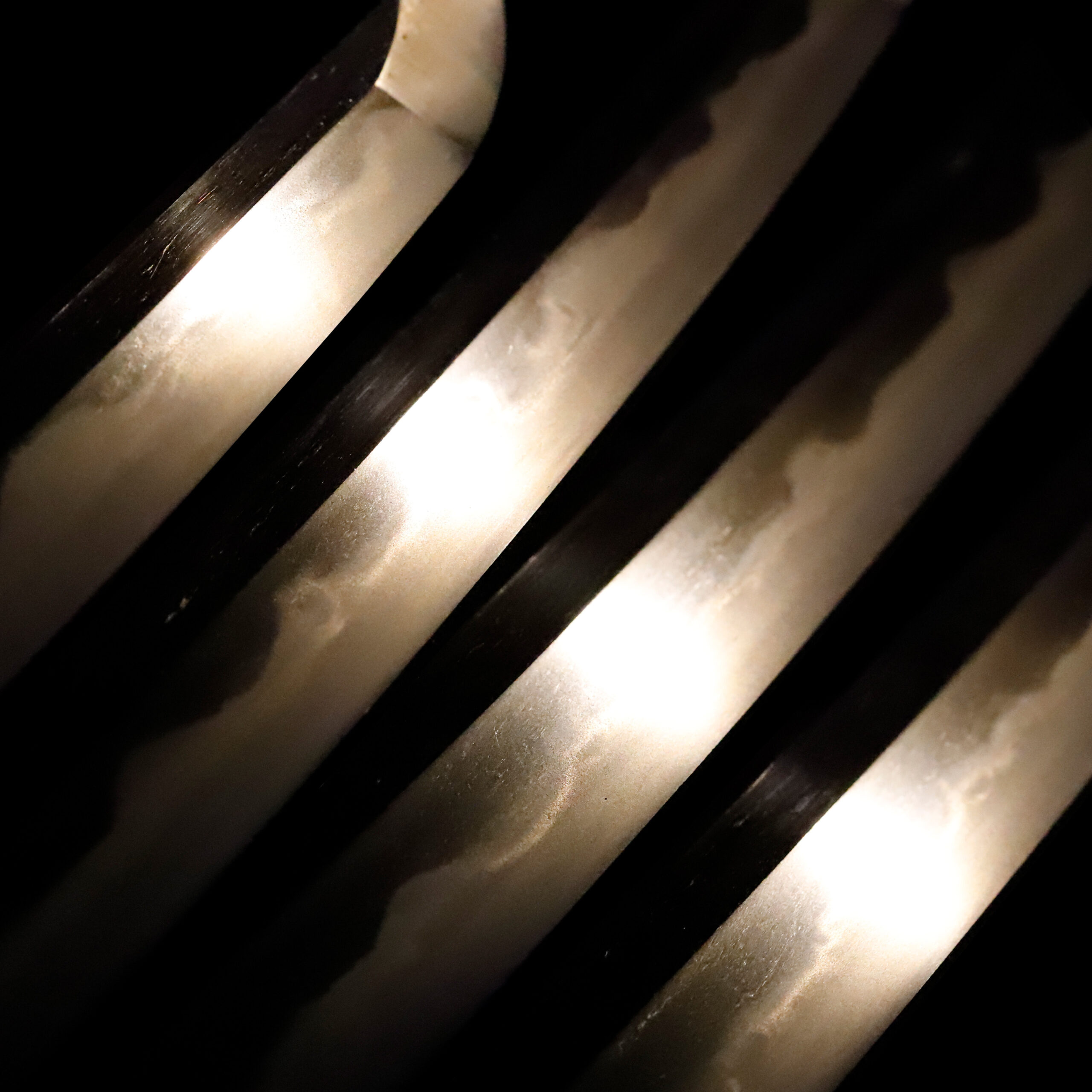
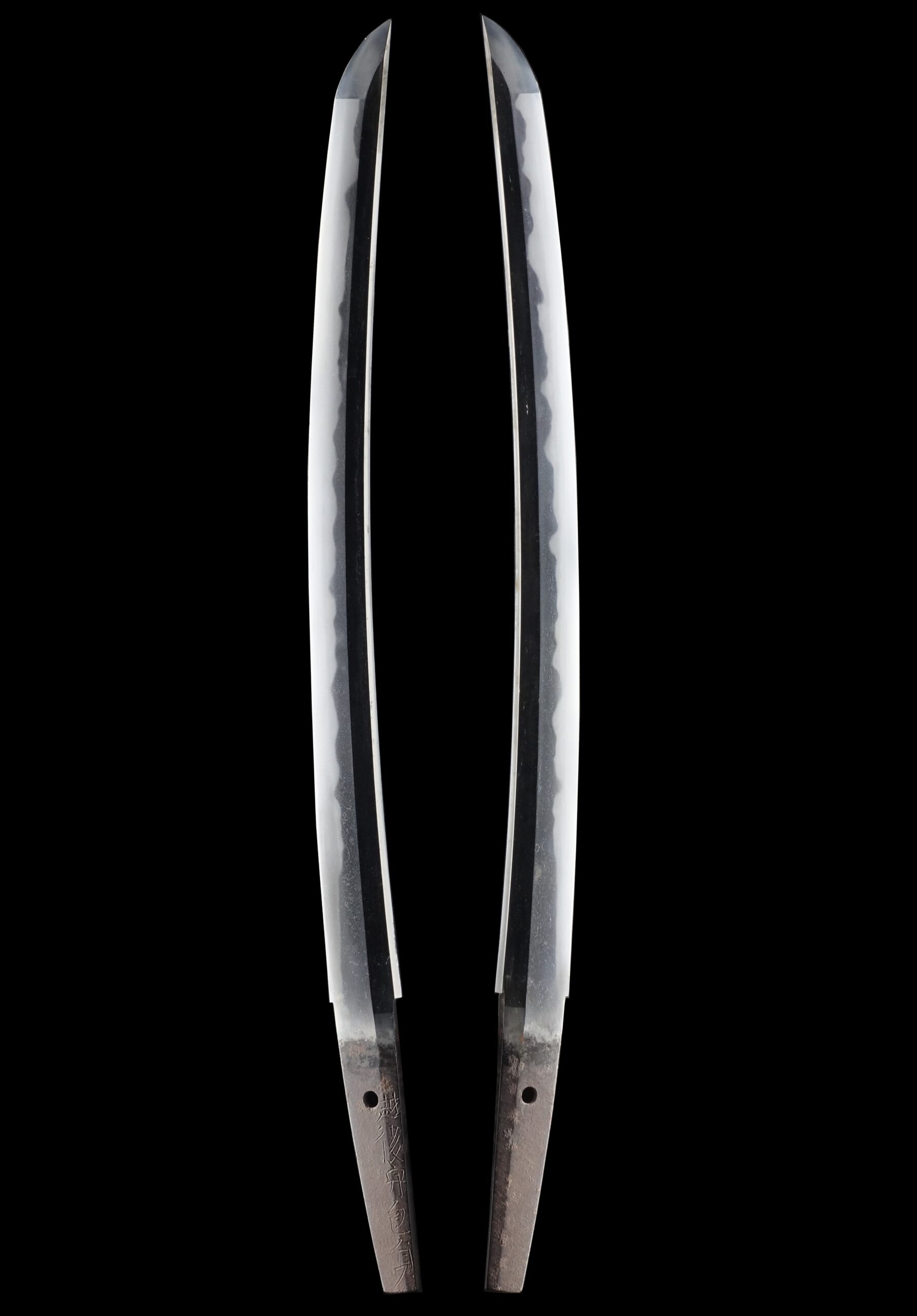
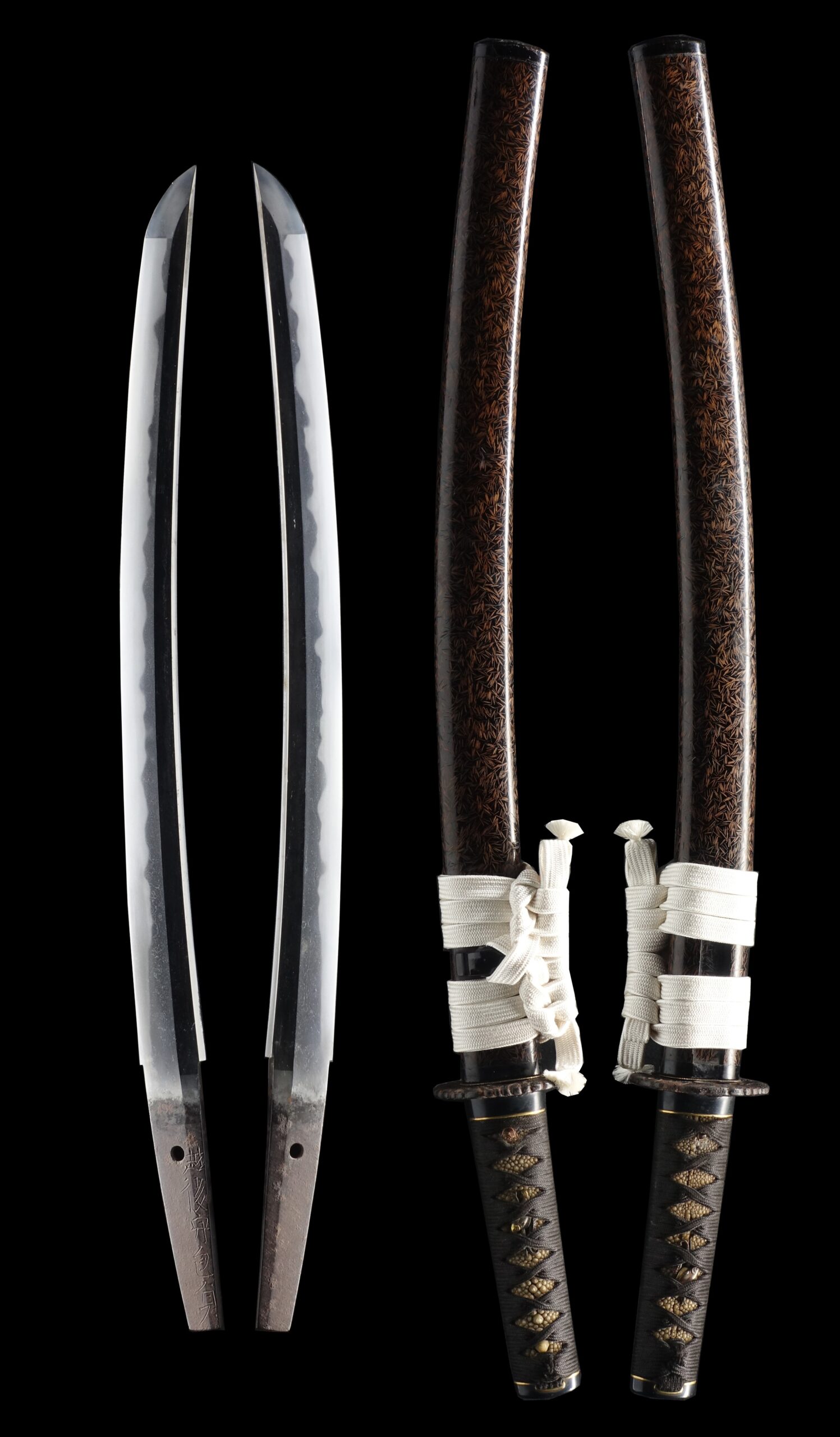
大坂新刀 · 摂津 · 1648-1652頃
刀剣大鑑 上位37%
現在6点販売中
初代越後守包貞は大坂に住し、通称を山田平太夫と伝える。説明は生国を大和とし、左陸奥と呼ばれた初代陸奥守包保の弟子伊賀守包道の門に学んだ文殊系の刀工とし、製作年代を慶安から寛文始め頃とする。銘は始め摂州藤原包貞ときり、越後守を受領して越後守包貞と銘した。寛文四年八月紀の刀は、比較的少ない初代の現存品の中で唯一の年紀作として貴重とされる。
説明は彼の作風を「互の目丁子を得意とした」[[c:1]]とする。小板目肌よくつむ地に地沸つき、互の目丁子に足よく入り、匂深く匂口冴え、砂流しがかかって沸がよくつき、帽子は小丸となる。この点で津田助広と近似していると説明は記す。
説明は「初代作の現存するものは比較的に少ない」[[c:2]]とし、その中のある有銘の刀を同作中の代表作として、「殆ど津田越前守助広の若打を見るが如き感があり」[[c:3]]と評する。身幅広い平造の脇指は元に直ぐに短く焼出し、その上に頭の丸い互の目を交えた互の目乱れを焼き、地刃の沸強く砂流し目立ち、表裏の物打上に玉を焼き、彫物も珍しい。
一部の作は次代に近く立ち、説明自身がその線を引く。ある刀は「濤欄乱を焼いて津田助広に迫るものがある」[[c:4]]とされ、互の目丁子に砂流しがしきりにかかった一口は「殆んど二代包貞を思わせるような冴えた作」[[c:5]]とされる。寛文四年紀の刀は常と異なる大互の目に小のたれを交え、説明は「二代のおもかげが偲ばれて、恐らくはその代作であろうか」[[c:6]]とする。平造脇指の玉焼もまた「後の二代包貞の刃文のさきがけを見る想いがする」[[c:7]]と読まれる。
二代は弟子の坂倉言之進照包で、養子となって二代越後守包貞を襲名し、初代の子が成人するに及んで越後守包貞の名を譲り、言之進照包と名乗った。説明は両代を主に銘字で分かち、二代が丸味を持つ銘振りであるのに対し、「初代は直線的で角ばり、一門の祖の左陸奥に通じる書風である」[[c:8]]とする。
初代は指定の記録に重要刀剣六口を数え、いずれも在銘で、伝来の記録はない。現存作が少なく、包貞の名は弟子の濤瀾乱れが代表するため、初代の確かな一口に出会うことは稀であり、角ばった銘字と丁子がかった互の目がその見どころとなる。
包貞の位置づけを、日本刀全体および伝法・時代・時期ごとに示します。各区分(随一・屈指・有数・著名)は、NBTHK および文化庁による指定に加え、三作や名物帳などの歴史的栄誉を加味したものです。
各項目を選ぶと評価方法が表示されます。
在銘年紀作が示す、確実に活動していた年代
新刀 · 摂津
現在60点販売中
大坂新刀は、商都大坂を本拠として江戸前期から中期にかけて興隆した摂津の一門である。その草創は京の堀川一門にあり、堀川国広の門に学んだ和泉守国貞、親国貞こと国貞と河内守国助とが、慶長十九年に師の没した後そろって大坂へ下り、この地に鍛刀の家を興した。国助は伝に伊勢国の出にして石堂の流れを汲み、堀川より受け継いだ枯れた肌合とともに、古備前を慕う石堂の丁子をこの地にもたらした。そこへ大和文殊系の包保・包道に承けた越後守包貞が摂州に居を構え、肥後菊池より出て井上真改の門を叩いた貞則のごとき遊歴の工も加わって、堀川と石堂と文殊の脈が大坂の地で一つの作域に結ばれていった。やがて親国貞の子真改、津田越前守助広、一竿子忠綱らがあらわれ、寛文・延宝・元禄の頃にこの一門は最も華やぐ。 一門の作風は、まず明るく冴える大坂鍛えに標識を持つ。鍛えはよくつんだ無地風の小板目で、地沸が微塵に厚くつき、地景が細かにさかんに入り、鉄色は明るく潤う。その地の上に、刃区を直ぐに焼き出し、その上から己の刃文を起こすのが一門に通じる約束で、収集家のいう大坂焼出しである。匂口は終始深く明るく冴え、刃縁は締まる。この共通の文法の上に、各工はおのおのの差を置く。井上真改は華やかな乱れを焼かず、よくつんだ精美な地に浅いのたれを帯びた沸深き直刃を本領とし、相州の郷義弘への意図的な写しにその沸の妙味を尽くして、大坂正宗と称された。津田助広は波濤のごとくうねる濤瀾刃を創始し、真改の小沸の直刃と並んで両大関と仰がれる。一竿子忠綱は揃った長足の丁子に簾刃の濤瀾を交え、何にもまして真の倶利迦羅や鯉の滝上りを刻んだ一竿子彫をもって分かたれる。河内守国助の家は丁子の旗頭で、二代中河内は握り拳の頭を戴く拳形丁子を創始して新刀一文字と賞され、その弟肥後守国康や四男国輝もこの石堂の丁子と津田風の濤瀾を担った。越後守包貞は助広に倣う濤瀾に片山乱れと文珠の砂流しを通わせ、貞則は師真改の沸深き直刃をよく継いだ。共通するのは明るい匂口と直ぐの焼出し、異なるのは真改の沈める沸、助広の濤瀾、国助一門の丁子という、地の上に置かれた手の差である。 収集家が大坂新刀を求める理由は、鑑定の勘所が明快で、主要工の格が高いことにある。明るく冴える大坂鍛えと、刃を起こす直ぐの焼出しという二つの見どころは、地と刃のいずれにも紛れなく現れて工と作域を定める手懸りとなり、真改の沸深き郷写し、忠綱の一竿子彫、中河内の拳形丁子といった各工独自の標識が、そこに重なって名を分かつ。一門の作はおおむね在銘年紀で、銘そのものが時の標識となるため、由緒の確かさをもって賞翫される。真改や助広や忠綱の最上手は市に現れることが稀で、現れれば一頭地を抜く出来事となるが、包貞・国助・国康・国輝のごとき名手の在銘作は、辛抱をもって相応に相見え、大坂新刀へ分け入る手近な入口を提供する。来歴の知られる作は谷干城や山内家、皇室の蔵を経て近代に伝わり、美術刀剣としての魅力は、真改の沸と助広の濤瀾が後世の刀鍛冶に及ぼした影響とともに、商都大坂が新刀期に成し遂げた一個の到達を今に伝える。 詳しく見る →
大坂 町人の都の刀
大坂は町人の都であり、刀も金の流れに従った。脇差一腰しか許されぬ町人のための贅沢な作、助広の濤瀾乱れ、大坂正宗と呼ばれた真改。率直に言えば、見られるために作られた刀である。
保存刀剣のうち、出来が一層優れ、保存状態も良好と認められたものです。再刃や、室町・江戸期の多くの無銘作は対象外となり、保存刀剣より高い基準が課されます。
日本美術刀剣保存協会(NBTHK)は、1948年に設立され、文化庁の監督を受ける公益財団法人で、東京・刀剣博物館に本部を置きます。専門の審査員が出品作を直接審査し、美術的・歴史的価値に応じた鑑定書を発行します。NBTHKの鑑定書は、日本刀および刀装具の真正性を示す最も広く認知された基準です。
NBTHK公式サイトReturns/exchanges limited to defects caused by shipping (except willful misconduct or gross negligence by the company); customers must contact within 72 hours of receiving the product.