説明
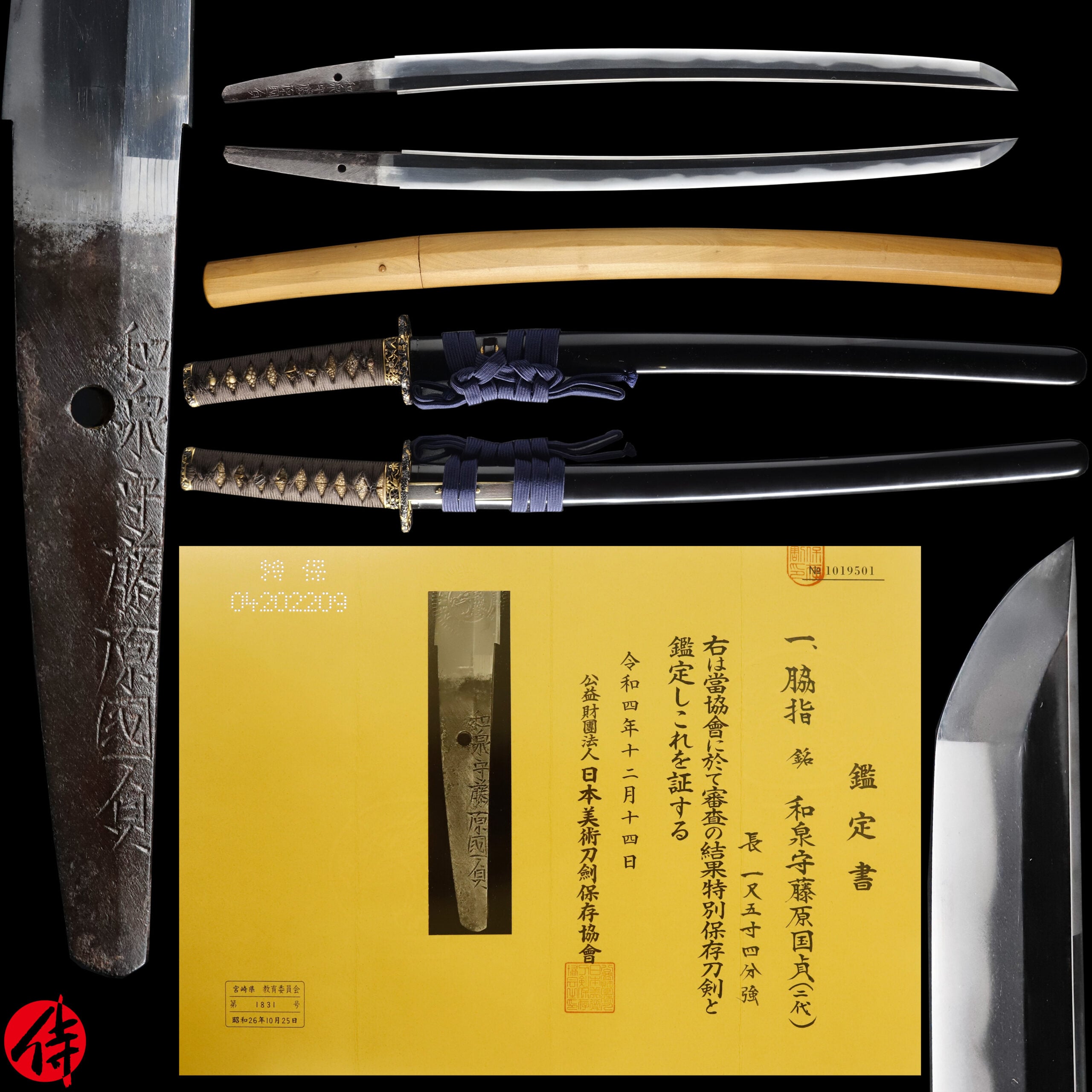
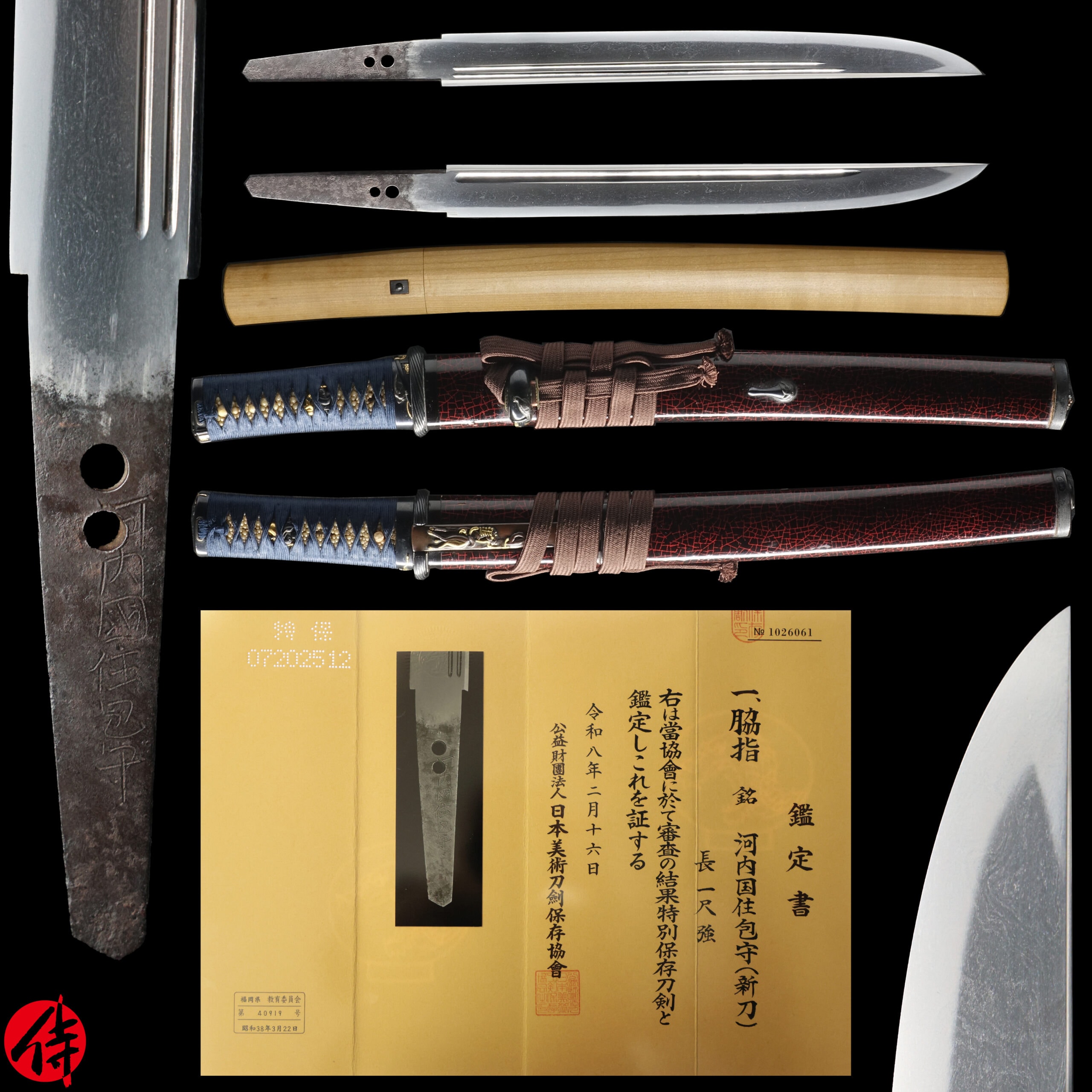
Antique Japanese Sword Wakizashi Signed by Izumi no Kami Kunisada with NBTHK
Tokubestsu
Hozon
Certificate
【Description】
Summary
Kunisada (国貞) split the popularity of the Osaka Shinto (大阪新刀) with the master Sukehiro (助広). He was born as the second son of Izuminokami Kunisada (和泉守国貞), who is famous as the founder of Osaka Shinto.
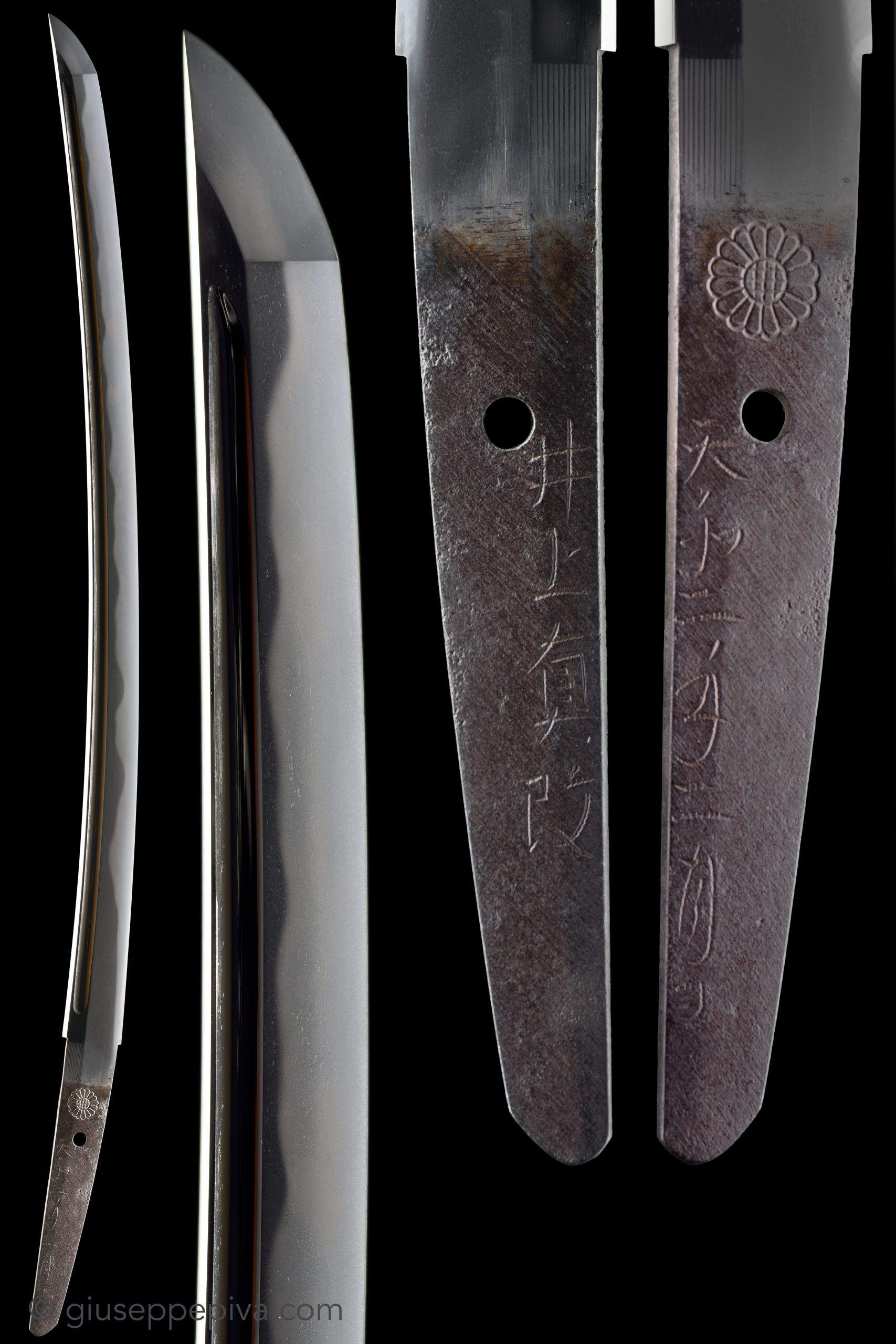
By 1650 (3rd year of Keian; 慶安), the second generation Kunisada had already completed many works on behalf of his father because of his old age. And in 1652 (the first year of Jouo; 承応), he received the title of Izuminokami (和泉守). In 1661 (4th year of Manji, 万治), the Imperial Court granted permission to use the 16-leaved chrysanthemum crest.
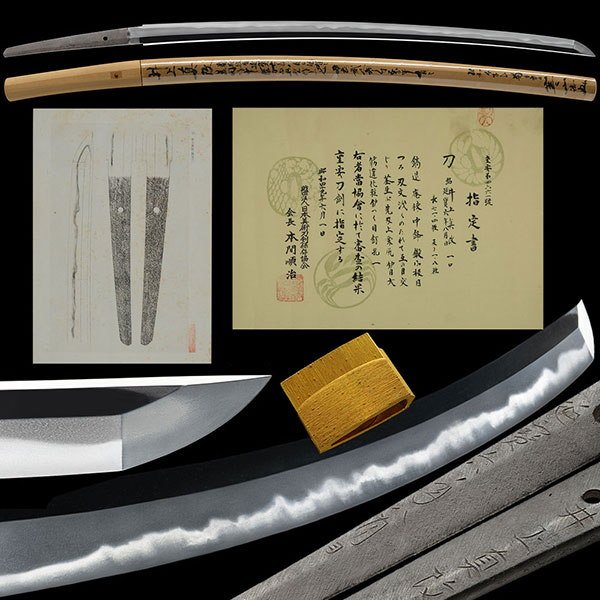
After that, Kunisada carved his engraved inscription as “Inoue Izuminokami Shinkai (井上和泉守真改),” but changed it to “Inoue Shinkai (井上真改)” from August 1672 (12th year of Kanubun; 寛文). Since his father also used the name Kunisada, the swords of the first Kunisada are sometimes called the Oya Kunisada (親国貞), and the sword that the second Kunisada forged are called the Shinkai Kunisada (真改国貞) to distinguish between the two.
Izumi no Kami Kunisada (His father)
Kunisada, also known as Inoue Yoshihiro, was born in the 17th year of Tensho era(1589) in the southern part of Miyazaki prefecture(Kyushu island). Later on, he moved to Kyoto and became an apprentice of Horikawa Kunihiro, one of the most famous swordsmiths in the early Edo period(early 17th century). He also learned the sword-forging technique from a senior apprentice, Echigo no Kami Kunitomo. Kunisada moved to Osaka in 1620 after his master, Kunihiro, was deceased. He became an independent swordsmith in Osaka city.
He was trusted by the third-gen head of Obi domain(Miyazaki prefecture), Ito Sukehisa, and Kunisada was able to receive the title of Izuminoakami in 1623 because of Sukehisa’s support.
He is known as one of the most influential swordsmiths to make Osaka a famous place for sword-forging in the early Edo period. Osaka was the center of business back then. Many renowned swordsmiths moved to Osaka to meet the demand from high-class Samurais.
Osaka Shinto
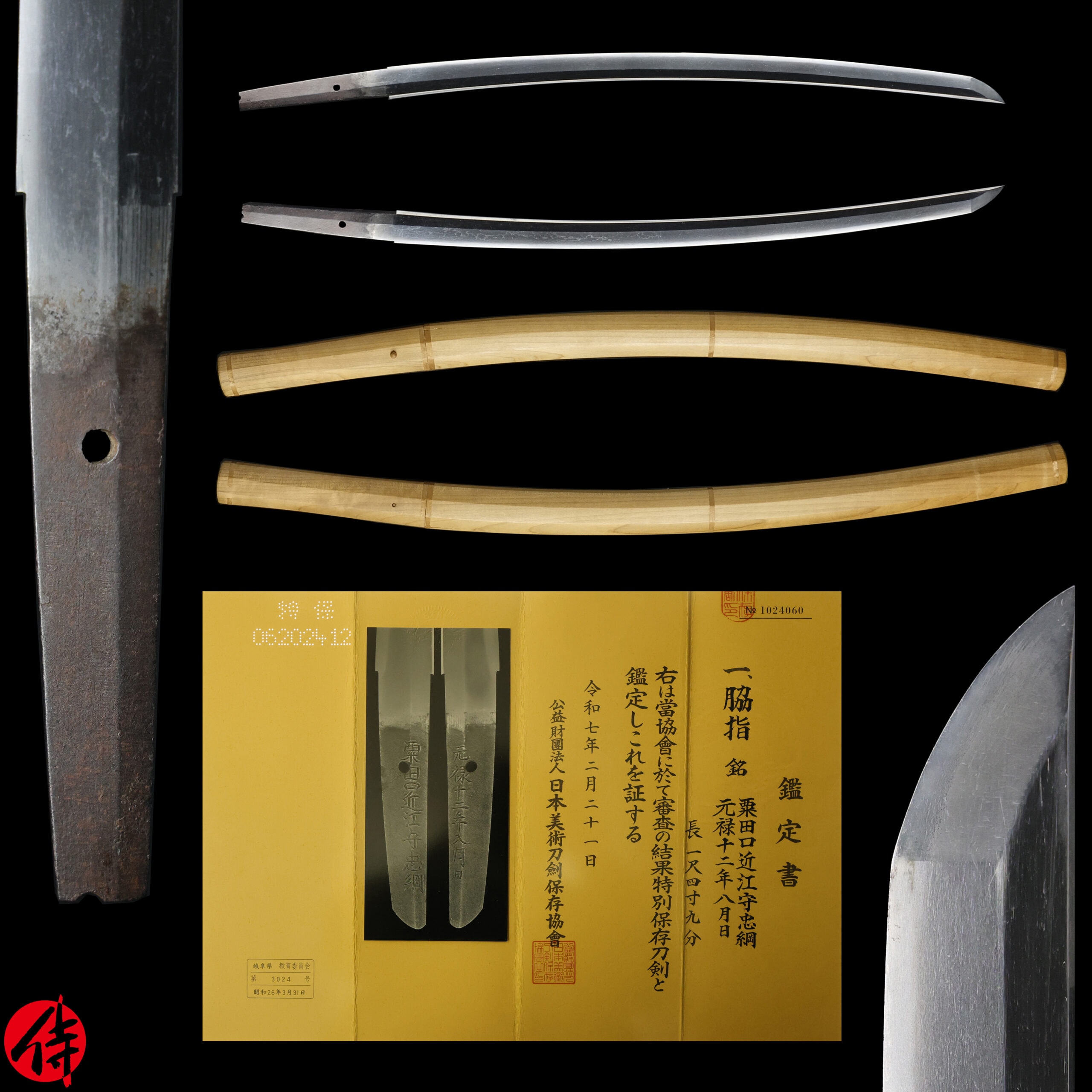
The Shinto (新刀) is Japanese sword terminology referring to swords forged from 1596 to 1781. The blades made in the Osaka area during this period are called the Osaka Shinto (大阪新刀). There are many famous swordsmiths in this Osaka Shinto era. After Toyotomi Hideyoshi (豊臣 秀吉) built the Osaka castle, Osaka city flourished as a castle town and became the business center. Many swordsmiths moved to Osaka to look for better opportunities. They not only forged swords for those Samurai who lived in Osaka but also for feudal lords nationwide. Ikkanshi Tadatsuna (一竿子 忠綱, Awataguchi Ohmi no Kami Tadatsuna), Inoue Shinkai (井上 真改), and Tsuda Sukehiro (津田助広) are the most famous among many swordsmiths.
One of the most notable characteristics of Osaka Shinto is its beauty in Jigane (地鉄). Jigane is a visible steel surface pattern created by folding and hammering during the forging process, which made it possible by the location of Osaka. Osaka had close access to the production sites of the Tamahagane (玉鋼, special carbon steel to make Japanese swords). The swordsmiths residing in Osaka could get high-quality carbon steel from these sites.
This blade is appraised as a
Tokubetsu Hozon Token
(特別保存刀剣) issued by NBTHK(Nihon Bijutsu Touken Hozon Kyokai:日本美術刀剣保存協会). This authentication paper was only given to authentic Japanese swords, especially well preserved and high quality with artistic value.
【Blade】
Cutting Edge Length(Nagasa)
:
47.0 cm (
18.5 inches)
Curvature(Sori)
:
0.91
cm ( 0.36 inches)
Hamon
:
The crystalline structure which forms along the cutting edge of a blade as a result of the hardening process
Jimon(Jihada)
:
visible steel surface pattern created by folding and hammering during forging process
Nakago
:
Nakago is the tang of the Japanese sword.
Japanese swordsmiths left the black rust on the tang because it prevents red rust while the tang is in its handle. And the