売切れ
Tokuho売切れ
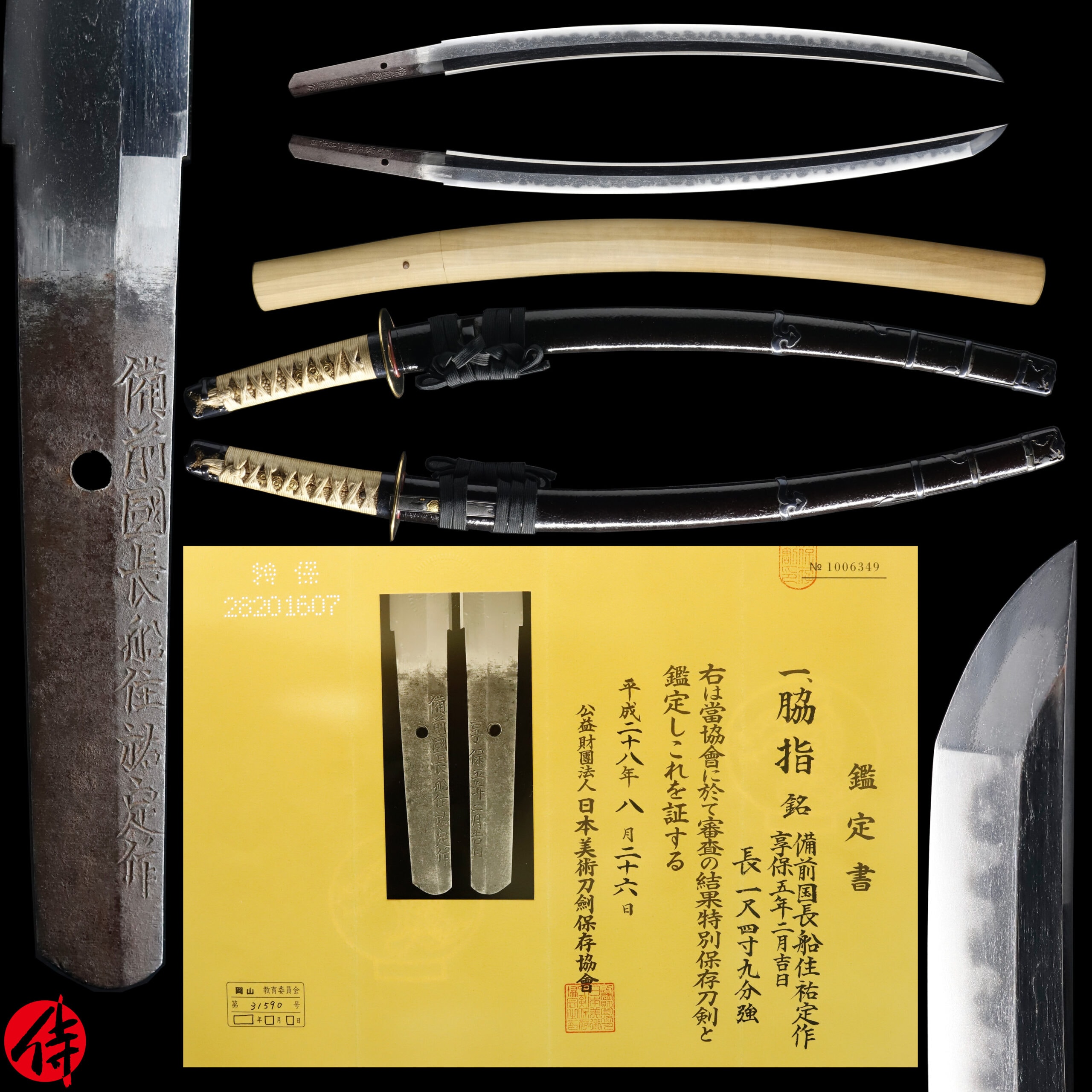
Antique Japanese Sword Wakizashi Signed by Sukesada NBTHK Tokubetsu Hozon Certificate
売却済
世界81社の刀剣商を横断追跡 · 価格履歴 · 売却アーカイブ
仕様
長さ
45.4 cm
反り
2 cm
Antique Japanese Sword Wakizashi Signed by Sukesada with NBTHK Tokubestsu Hozon Certificate 【Description】 Summary This blade was signed by Bizen Koku Osafune Jyu Sukesada (備前国長船住祐定) in Feb, the 5th year of the Kyoho era (1720) in Bizen province (today’s Okayama prefecture). He is also known as Yamato Daijo Fujiwara Sukesada (大和大掾祐定). His father was Kozuke Daijo Sukesada. This Sukesada is called the 7th-gen Yosouzaemon no jyo Sukesada, one of the most famous prominent figures in Bizen province during the early Edo period. He belonged to Bizen Osafune school located in today’s Okayama prefecture. The swordsmiths in Bizen produced many swords during the Muromachi period, as it was in the middle of the Sengoku period(Warring State period). The demand for weapons increased among strong feudal lords. However, The sword-forging tradition of Bizen province almost disappeared because of the disastrous flood of the Yoshii River (1591), which was close to Osafune school. Even after everything was destroyed, there were few remaining swordsmiths. One of them was a group of swordsmiths who signed Sukesada. The main member of the school was Yokoyama Fujishiro Sukesada, the fourth head of Sukesada School. And one of his children was Shichibei no Jyo Sukesada (七兵衛尉祐定), grandfather of Ueno Daijo Fujiwara Sukesada. After the disaster, they became one of the pioneers that revitalized the sword-forging business in Bizen province. This History of Bizen Osafune School It is said that Osafune school was founded by Mitsutada (光忠), who was active during the mid-Kamakura period. Bizen Osafune school was the biggest one of all other schools in Bizen province, and they received many orders from feudal lords or renowned Samurai. They were called Osafunemono and were beloved by Samurai warriors. Among the swordsmiths who belonged to this school, Nagamitsu, Sanenaga, and Kagemitsu are known as Osafune Sansaku, the three renowned Osafune swordsmiths. There are also four other prominent swordsmiths who were from Bizen Osafune school. They are called Osafune Shiten-no, the four masters of Osafune school. Their names are Nagamitsu, Kanemitsu, Nagayoshi, and Motoshige. BIZEN is located near the Chugoku Mountains, where iron sands, one of the essential materials for making Japanese swords, were abundant. Furthermore, BIZEN swordsmiths had close access to the Yoshi River, where they could find water and charcoal. This geological location contributed to the swordsmiths forging high-quality refined blades. We presume BIZEN was quite active in sword-forging from ancient times. It is said that BIZEN DEN was created by groups of swordsmiths there during the late Heian era (Late 12th century). These ancient swordsmiths in Bizen province are called Ko-Bizen (Old Bizen) swordsmiths. By inheriting the sword forging techniques from Ko-Bizen swordsmiths, the Bizen Osafune school flourished from the mid-Kamakura period. This blade is appraised as a Tokubetsu Hozon Token (特別保存刀剣) issued by NBTHK(Nihon Bijutsu Touken Hozon Kyokai:日本美術刀剣保存協会). This authentication paper was only given to authentic Japanese swords, especially well preserved and high quality with artistic value. *Please keep in mind that there is visible Kitae Kizu on the Mune (backbone of the blade). If you like to see the detailed condition, please check one of the uploaded photos. above. 【Blade】 Cutting Edge Length(Nagasa) : 45.4 cm (17.9 inches) Curvature(Sori) : 2.0 cm (0.79 inches) Hamon : The crystalline structure which forms along the cutting edge of a blade as a result of the hardening process Jimon(Jihada) : visible steel surface pattern created by folding and hammering during forging process Nakago : Nakago is the tang of the Japanese sword. Japanese swordsmiths left the black rust on the tang because it prevents red rust while the tang is in its handle. And the discoloration of the tang was created over time, and it is a great indicator for a Japanese sword specialist to estimate when the sword was forge
 NihontoWatchBETA
売却済
世界81社の刀剣商を横断追跡 · 価格履歴 · 売却アーカイブ
45.4 cm
2 cm
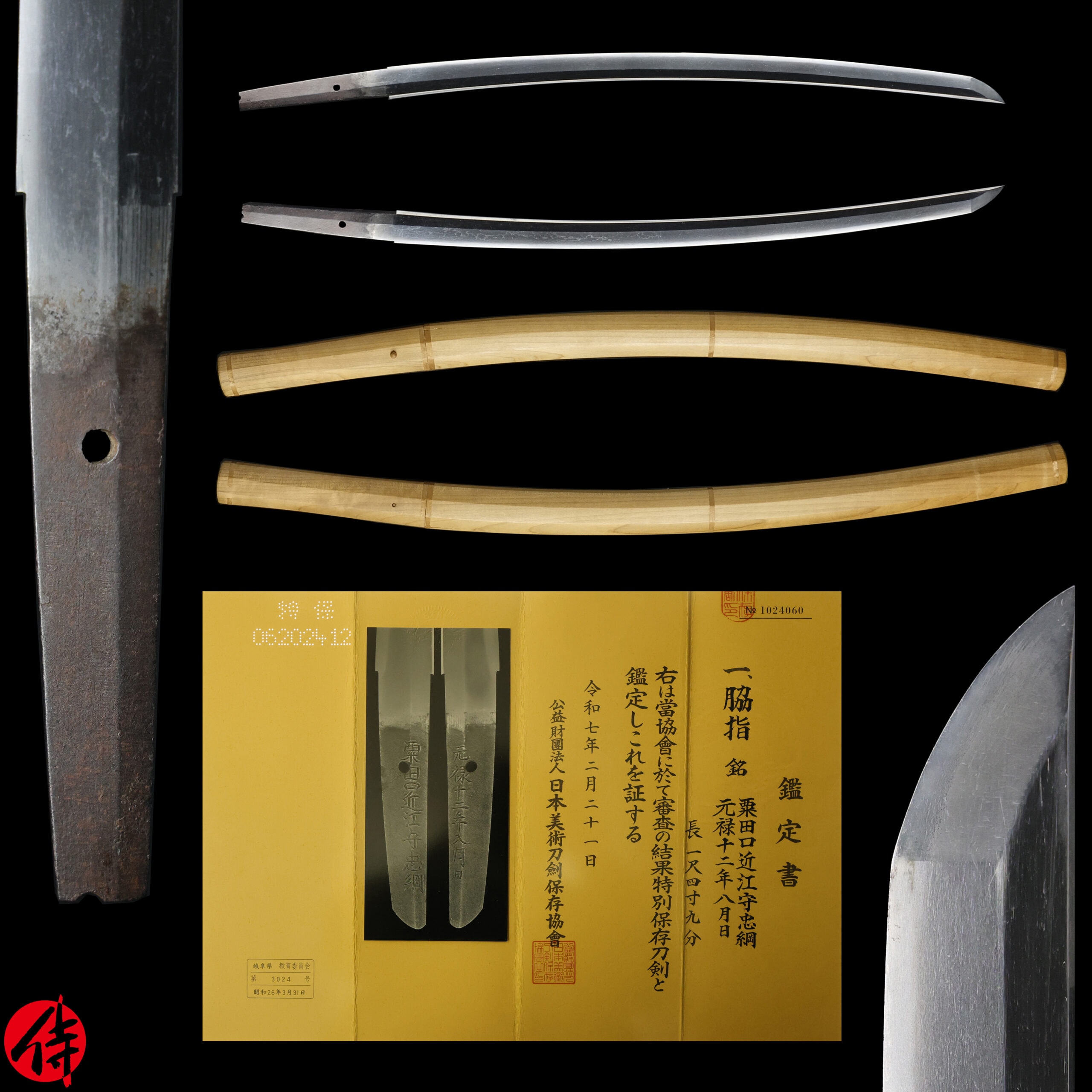
Antique Japanese Sword Wakizashi Attributed to Mihara NBTHK Hozon Certificate
$2,170
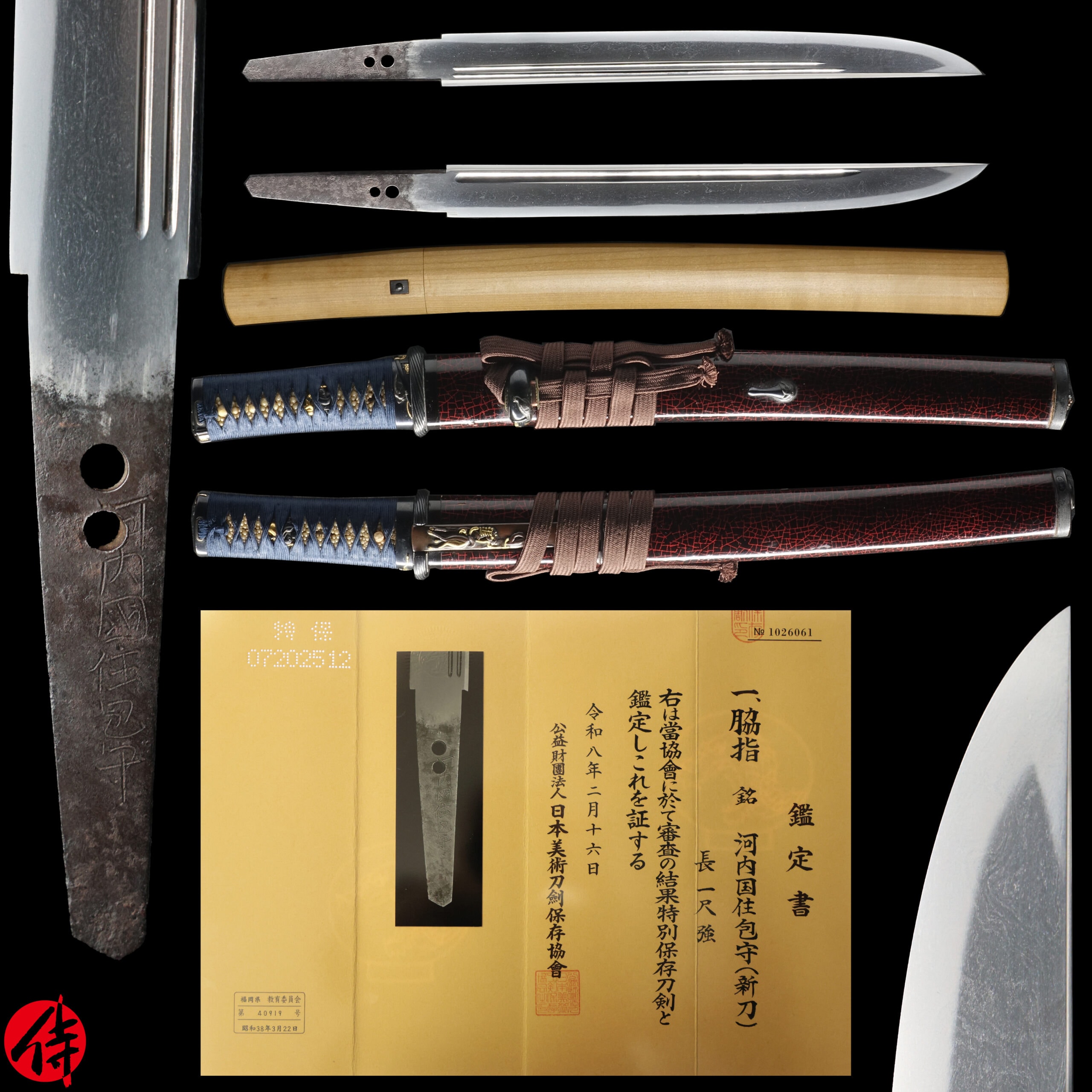
Antique Japanese Sword Wakizashi Signed by Kanemori NBTHK Tokubetsu Hozon Certificate
$5,881
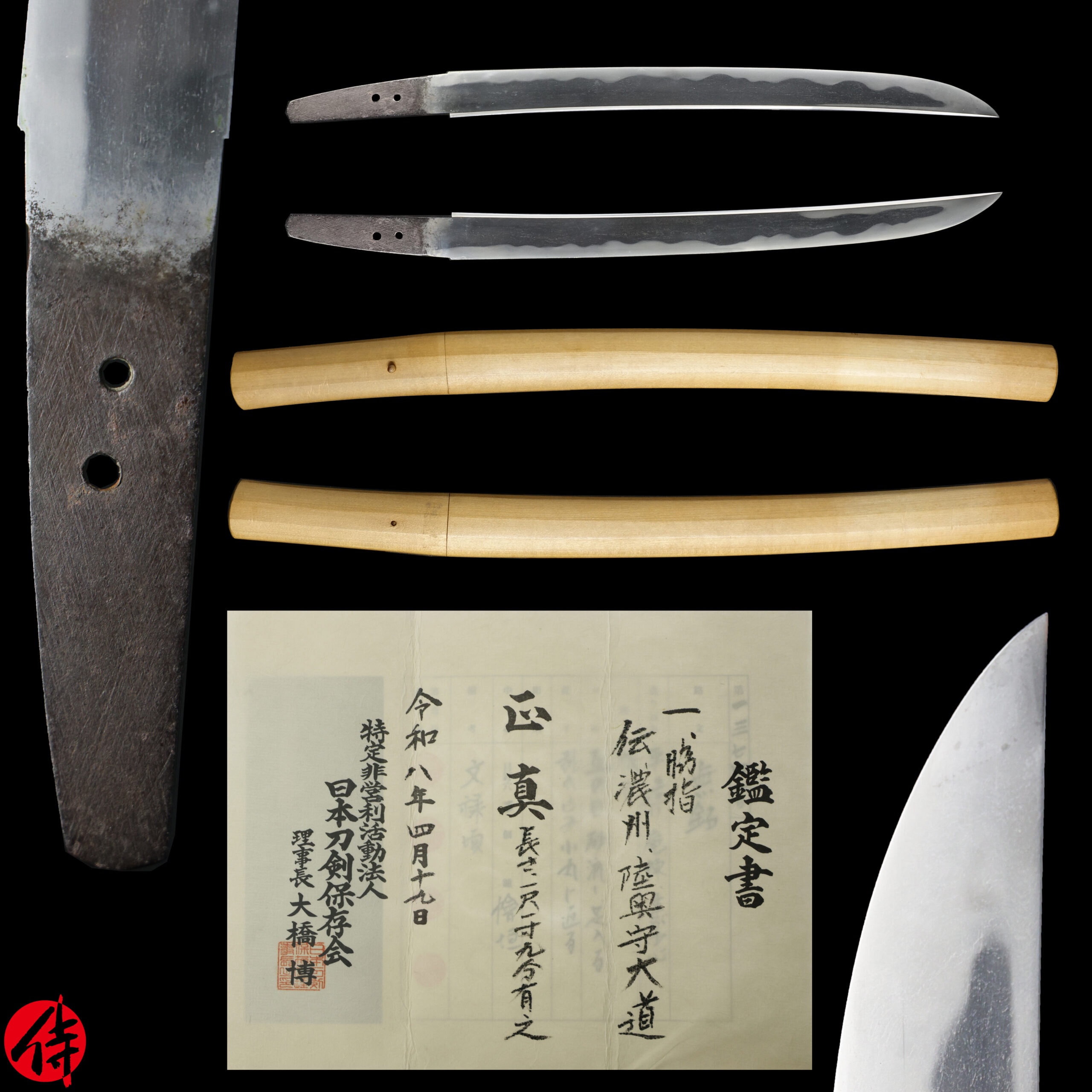
Antique Japanese Sword Wakizashi Attributed to Den Nohshu Daido NTHK Kanteisho for the blade
$1,984
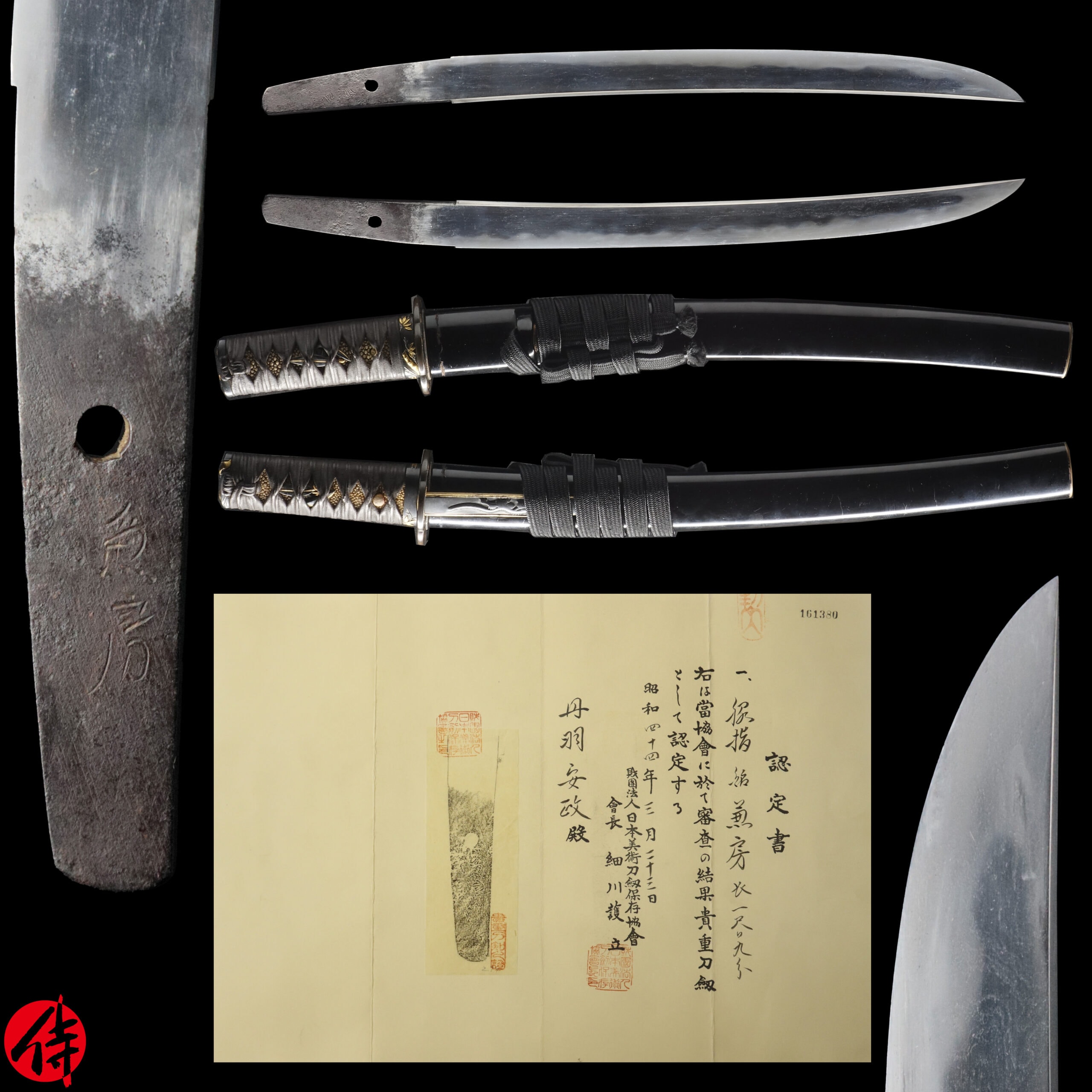
Antique Japanese Sword Wakizashi Signed by Kanefusa with NBTHK Kicho Certificate
$2,971
Antique Japanese Sword Wakizashi Signed by Sukesada with NBTHK Tokubestsu Hozon Certificate 【Description】 Summary This blade was signed by Bizen Koku Osafune Jyu Sukesada (備前国長船住祐定) in Feb, the 5th year of the Kyoho era (1720) in Bizen province (today’s Okayama prefecture). He is also known as Yamato Daijo Fujiwara Sukesada (大和大掾祐定). His father was Kozuke Daijo Sukesada. This Sukesada is called the 7th-gen Yosouzaemon no jyo Sukesada, one of the most famous prominent figures in Bizen province during the early Edo period. He belonged to Bizen Osafune school located in today’s Okayama prefecture. The swordsmiths in Bizen produced many swords during the Muromachi period, as it was in the middle of the Sengoku period(Warring State period). The demand for weapons increased among strong feudal lords. However, The sword-forging tradition of Bizen province almost disappeared because of the disastrous flood of the Yoshii River (1591), which was close to Osafune school. Even after everything was destroyed, there were few remaining swordsmiths. One of them was a group of swordsmiths who signed Sukesada. The main member of the school was Yokoyama Fujishiro Sukesada, the fourth head of Sukesada School. And one of his children was Shichibei no Jyo Sukesada (七兵衛尉祐定), grandfather of Ueno Daijo Fujiwara Sukesada. After the disaster, they became one of the pioneers that revitalized the sword-forging business in Bizen province. This History of Bizen Osafune School It is said that Osafune school was founded by Mitsutada (光忠), who was active during the mid-Kamakura period. Bizen Osafune school was the biggest one of all other schools in Bizen province, and they received many orders from feudal lords or renowned Samurai. They were called Osafunemono and were beloved by Samurai warriors. Among the swordsmiths who belonged to this school, Nagamitsu, Sanenaga, and Kagemitsu are known as Osafune Sansaku, the three renowned Osafune swordsmiths. There are also four other prominent swordsmiths who were from Bizen Osafune school. They are called Osafune Shiten-no, the four masters of Osafune school. Their names are Nagamitsu, Kanemitsu, Nagayoshi, and Motoshige. BIZEN is located near the Chugoku Mountains, where iron sands, one of the essential materials for making Japanese swords, were abundant. Furthermore, BIZEN swordsmiths had close access to the Yoshi River, where they could find water and charcoal. This geological location contributed to the swordsmiths forging high-quality refined blades. We presume BIZEN was quite active in sword-forging from ancient times. It is said that BIZEN DEN was created by groups of swordsmiths there during the late Heian era (Late 12th century). These ancient swordsmiths in Bizen province are called Ko-Bizen (Old Bizen) swordsmiths. By inheriting the sword forging techniques from Ko-Bizen swordsmiths, the Bizen Osafune school flourished from the mid-Kamakura period. This blade is appraised as a Tokubetsu Hozon Token (特別保存刀剣) issued by NBTHK(Nihon Bijutsu Touken Hozon Kyokai:日本美術刀剣保存協会). This authentication paper was only given to authentic Japanese swords, especially well preserved and high quality with artistic value. *Please keep in mind that there is visible Kitae Kizu on the Mune (backbone of the blade). If you like to see the detailed condition, please check one of the uploaded photos. above. 【Blade】 Cutting Edge Length(Nagasa) : 45.4 cm (17.9 inches) Curvature(Sori) : 2.0 cm (0.79 inches) Hamon : The crystalline structure which forms along the cutting edge of a blade as a result of the hardening process Jimon(Jihada) : visible steel surface pattern created by folding and hammering during forging process Nakago : Nakago is the tang of the Japanese sword. Japanese swordsmiths left the black rust on the tang because it prevents red rust while the tang is in its handle. And the discoloration of the tang was created over time, and it is a great indicator for a Japanese sword specialist to estimate when the sword was forge
NihontoWatchBETA売却済
世界81社の刀剣商を横断追跡 · 価格履歴 · 売却アーカイブ
45.4 cm
2 cm
Antique Japanese Sword Wakizashi Attributed to Mihara NBTHK Hozon Certificate
$2,170
Antique Japanese Sword Wakizashi Signed by Kanemori NBTHK Tokubetsu Hozon Certificate
$5,881
Antique Japanese Sword Wakizashi Attributed to Den Nohshu Daido NTHK Kanteisho for the blade
$1,984
Antique Japanese Sword Wakizashi Signed by Kanefusa with NBTHK Kicho Certificate
$2,971