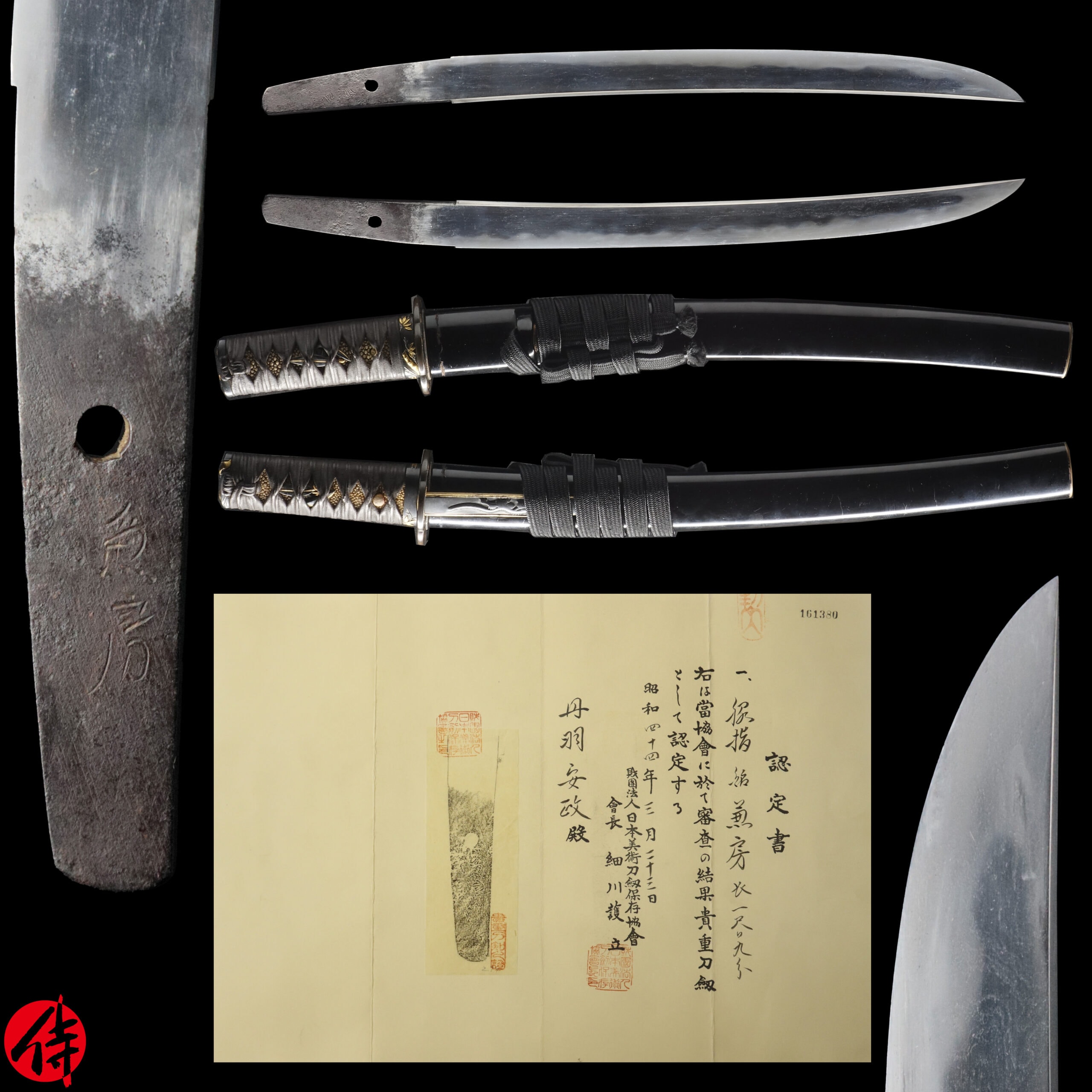
説明
Antique Japanese Sword Wakizashi Signed by Kunimitsu
with NBTHK
Tokubestsu
Hozon
Certificate
【Description】
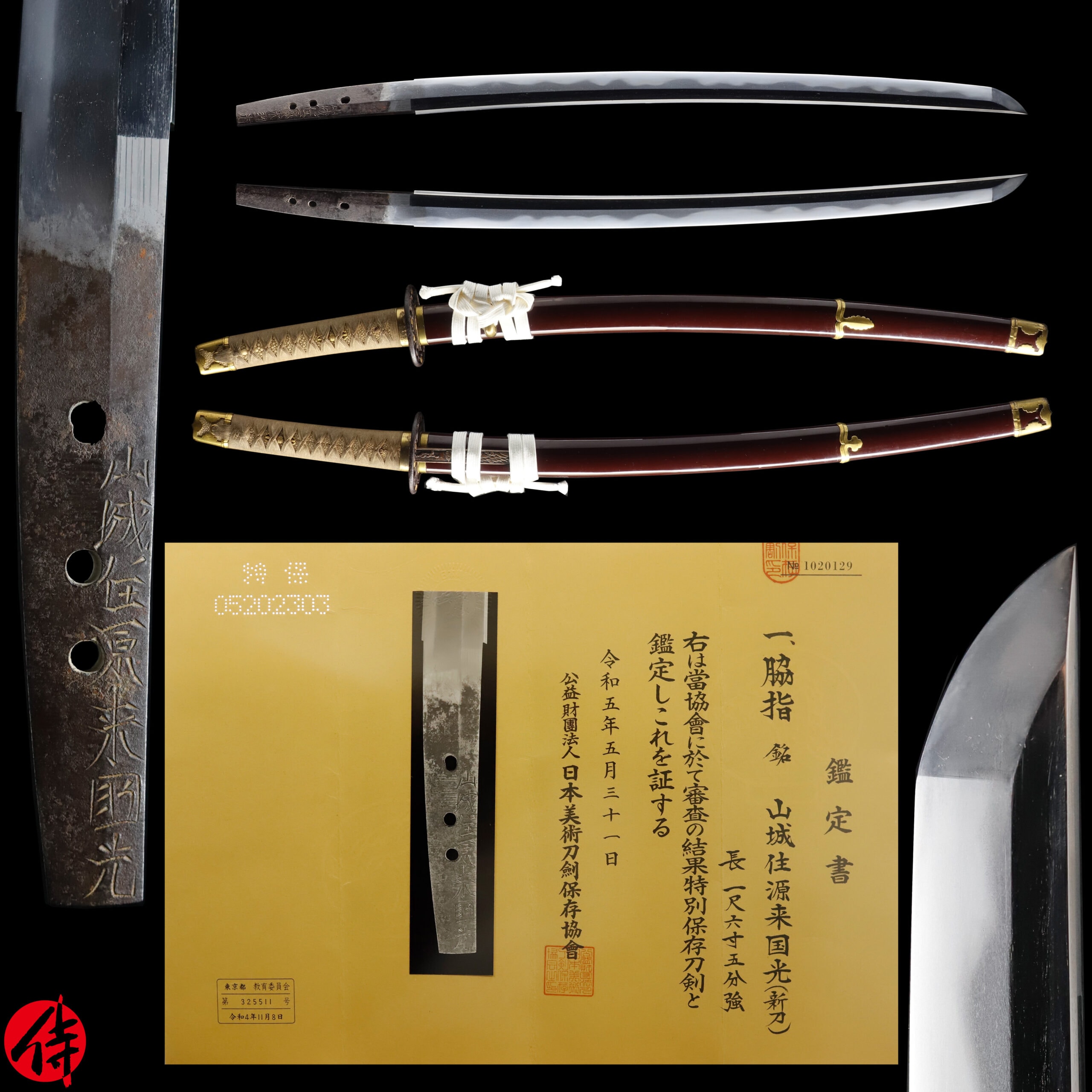
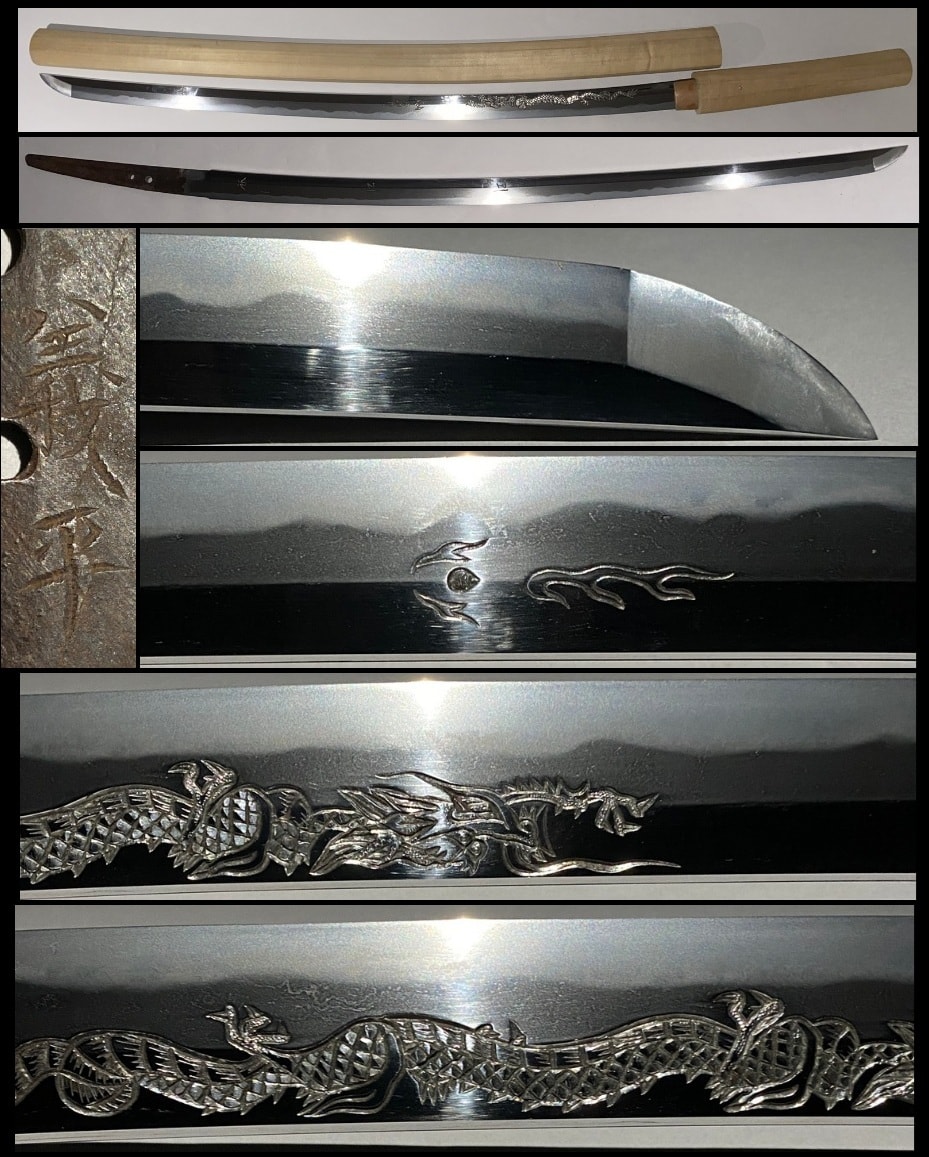
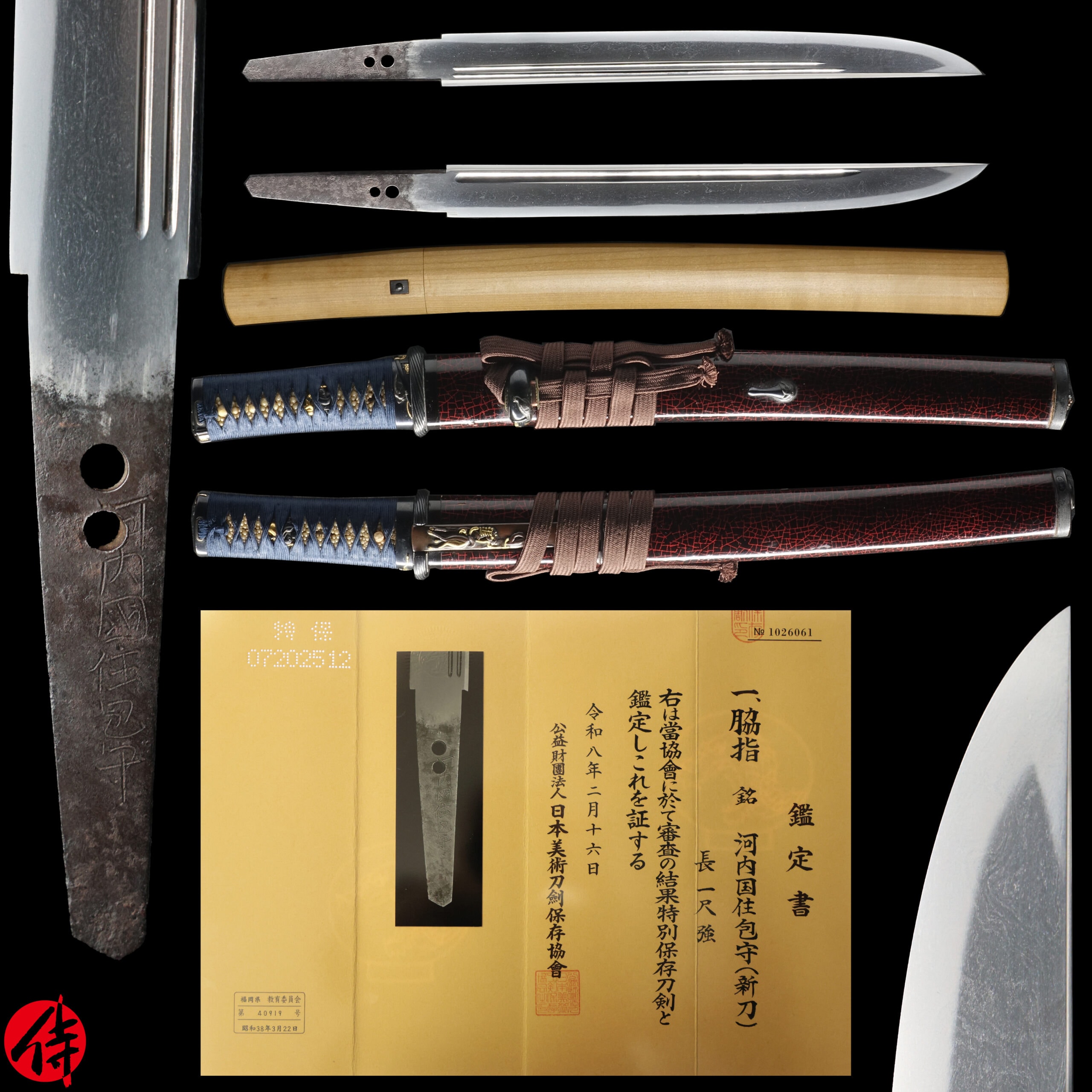
This blade was signed by Yamashiro Jyu Minamoto Rai Kunimitsu (山城住源来国光) in the early Edo period (Early-Mid 17th century), according to its NBTHK appraisal. Yamashiro was the name of the province located in today’s Kyoto prefecture. Yamashiro Jyu means Kunimitsu resided in this province when he forged this blade. It is often the case with many swordsmiths that they signed where they lived before they inscribed their maker’s names. Rai is the prestigious school to which he belonged.
Yamashiro province was famous for its sword making style called YAMASHIRO-DEN. YAMASHIRO-DEN’s origin dates back to the Heian period(794 A.D), when the capital city was moved from Nara to Kyoto. The swordsmiths in Yamashiro province initially prospered by forging swords for court nobles and imperial families. Later on, they also forged swords for feudal lords after Samurai military government took control of Japan. There are so many renowned swordsmiths from this region.
It is said that the founder of YAMASHIRO-DEN was Sanjo Munechika. And there are seven prestigious schools in this region. One of them is Rai school, where Kunimitsu belonged. Rai school and Aawata school are the most prestigious ones among YAMASHIRO-DEN.
One of the most characteristics of YAMASHIRO-DEN is its elegant design and beautiful Jigane. This blade represents a little trait of YAMASHIRO-DEN.
This blade is appraised as a
Tokubetsu Hozon Token
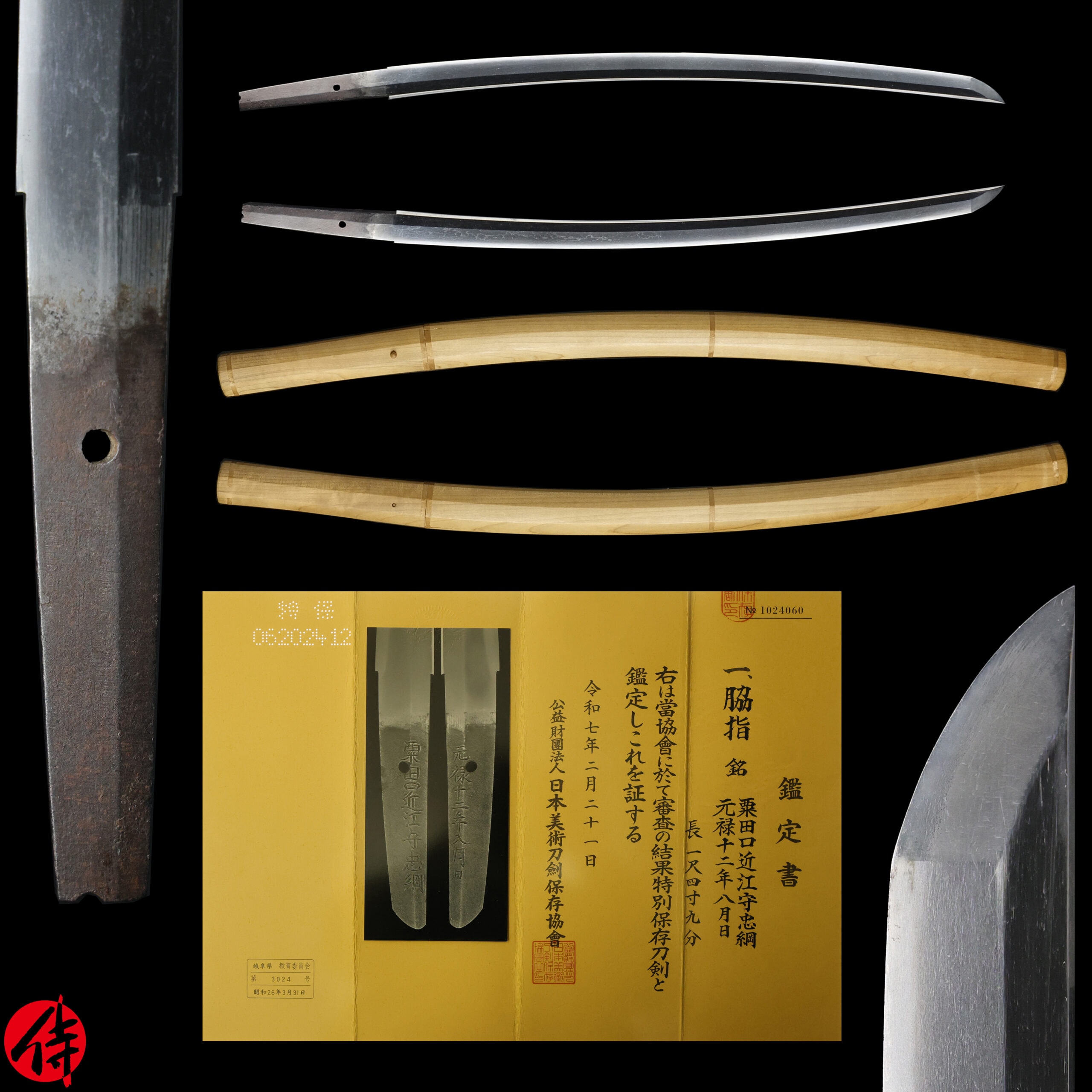
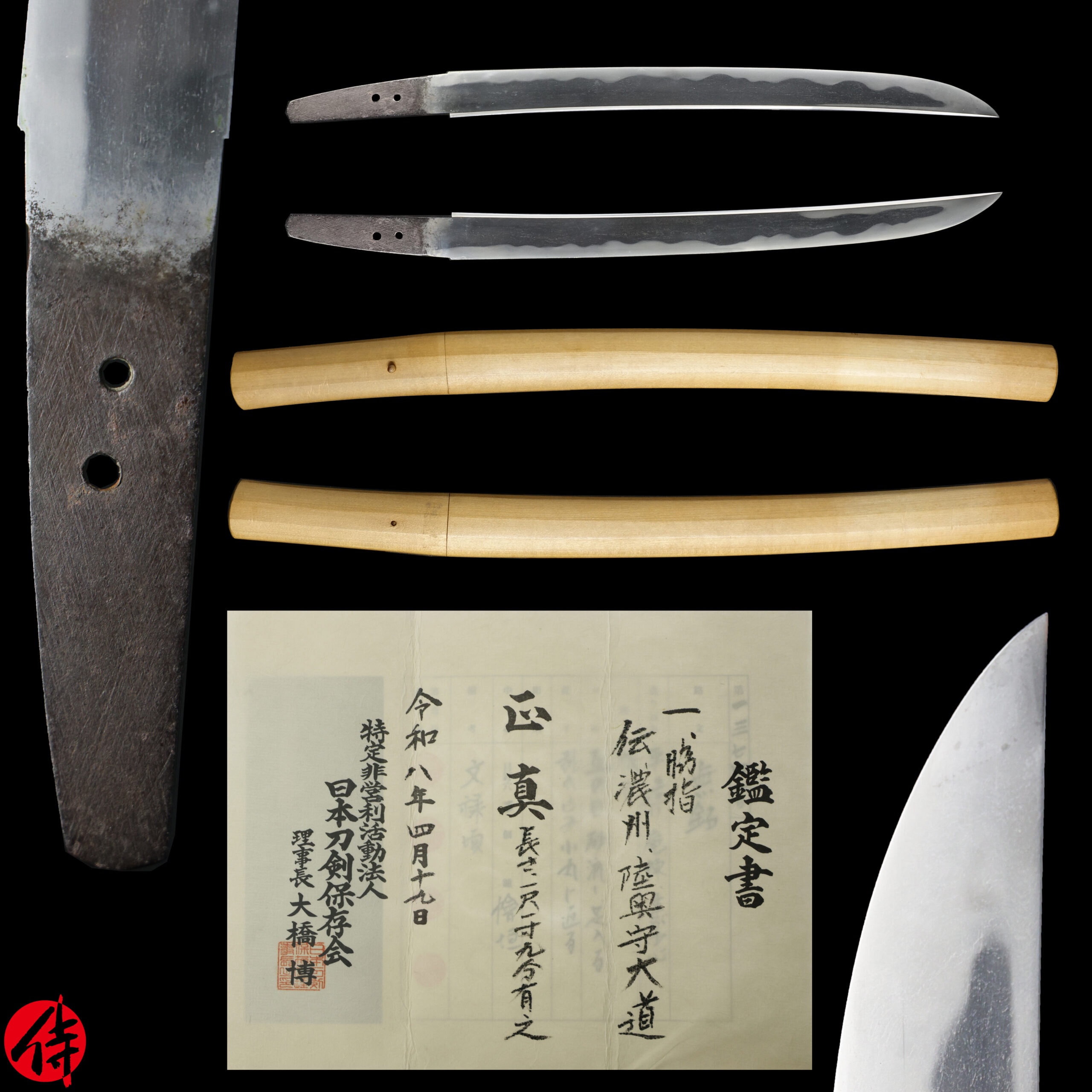
(特別保存刀剣) issued by NBTHK(Nihon Bijutsu Touken Hozon Kyokai:日本美術刀剣保存協会). This authentication paper was only given to authentic Japanese swords, especially well preserved and high quality with artistic value.
【Blade】
Cutting Edge Length(Nagasa)
:
50.1
cm (19.7
inches)
Curvature(Sori)
:
0.9 cm (0.35 inches)
Hamon
:
The crystalline structure which forms along the cutting edge of a blade as a result of the hardening process
Jimon(Jihada)
:
visible steel surface pattern created by folding and hammering during forging process
Nakago
:
Nakago is the tang of the Japanese sword.
Japanese swordsmiths left the black rust on the tang because it prevents red rust while the tang is in its handle. And the discoloration of the tang was created over time, and it is a great indicator for a Japanese sword specialist to estimate when the sword was forged.
Koshirae:
Koshirae is the mounting of the Japanese sword. There are several parts that consist of Koshirae such as Saya(Scabbard), Tsuka( Handle), Tsuba(Handguard).
Fuchi-Kashira
:
A pair of matching sword fittings that cover the upper and bottom parts of its sword hilt.
On this Fuchi Kashira, you would find a figure of animal with curly hair, and plant buds are engraved. The golden paint is applied to the entire surface of this sword mounting; this coloring adds decorativeness to this work. In addition, there is an engraved signature of this Fuchi Kashira’s maker at the side of the Fuchi part.
This Fuchi Kashira’s theme is a classical design called the Botan-ni Karajishi (牡丹に唐獅子). The Botan (牡丹) is a peony. Its design represents happiness, wealth, nobleness, and gorgeousness. This flower pattern has been treated as a kind of good-omen motif; people regarded it as a rich harvest sign. Peony is called “Botan” in Japanese. When we write this flower’s name in Japanese, its second letter means mountain hermit medicine to give us eternal youth. Based on the meaning of this letter, the peony pattern symbolizes eternal youth and longevity.
The Karajishi (唐獅子) is an auspicious beast. The Shishi (獅子) means a lion in Japanese, and the Karajishi is a lion brought from the continent to Japan in the Toh period (唐, Tang dynasty, 618-907). The Karajishi typically has curly hair for its head, neck, body, and tail. In Buddhism, the Karajishi is regarded as a symbol of wisdom, and the Monju Bosatu (文殊菩薩, Manjushri Bodhisattva) rides lions. According to a theory, the Karajishi originates from the Komainu (狛犬, stone guardi