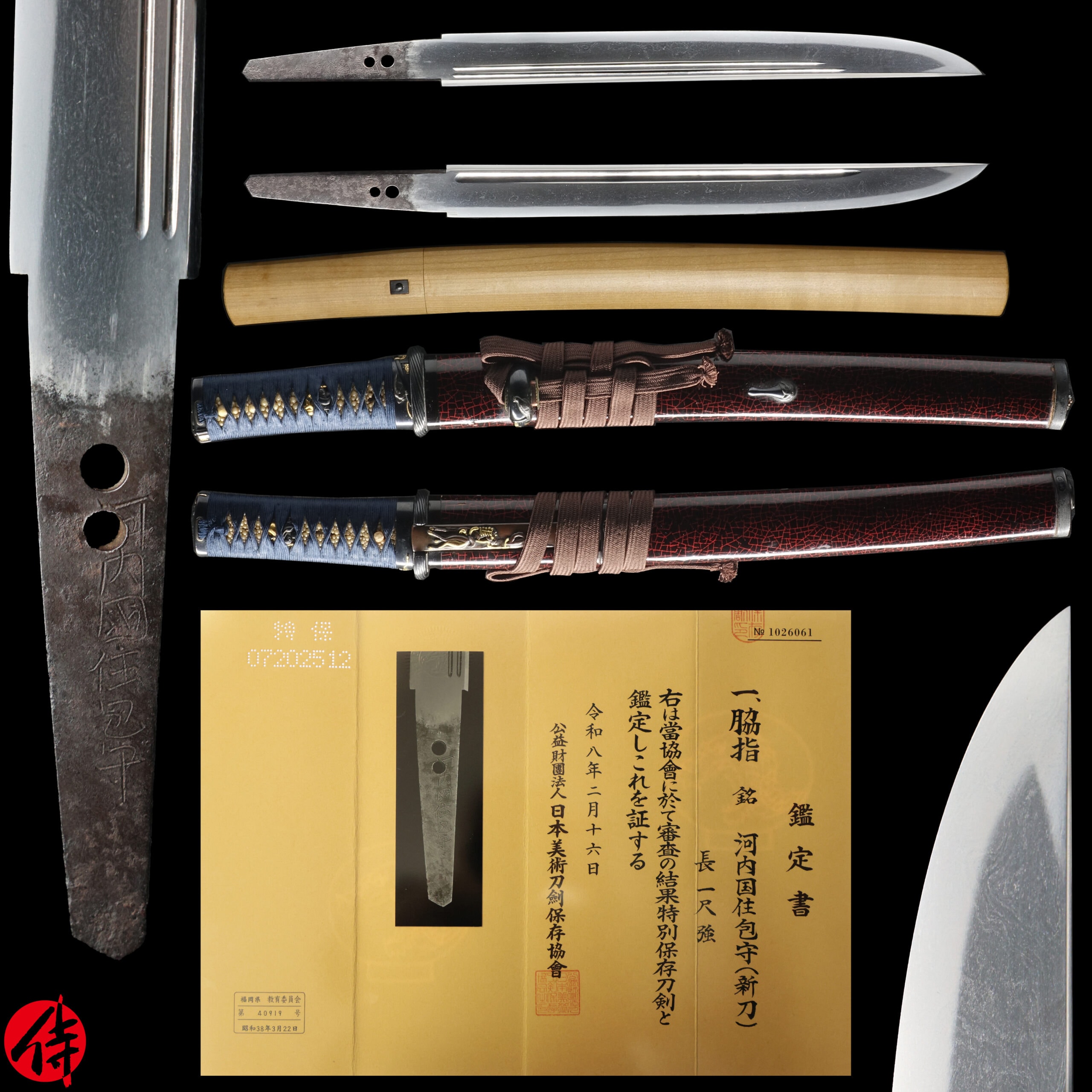
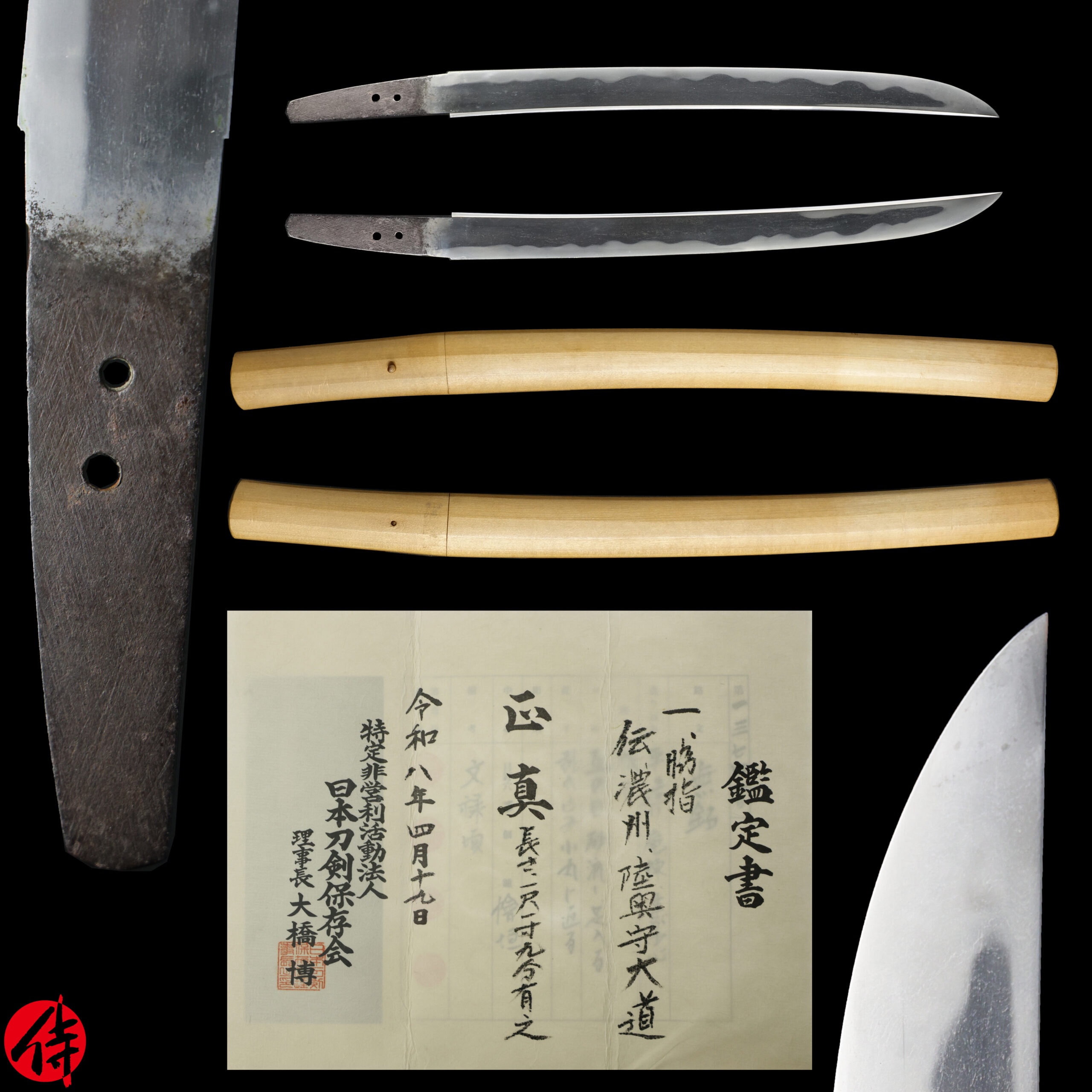
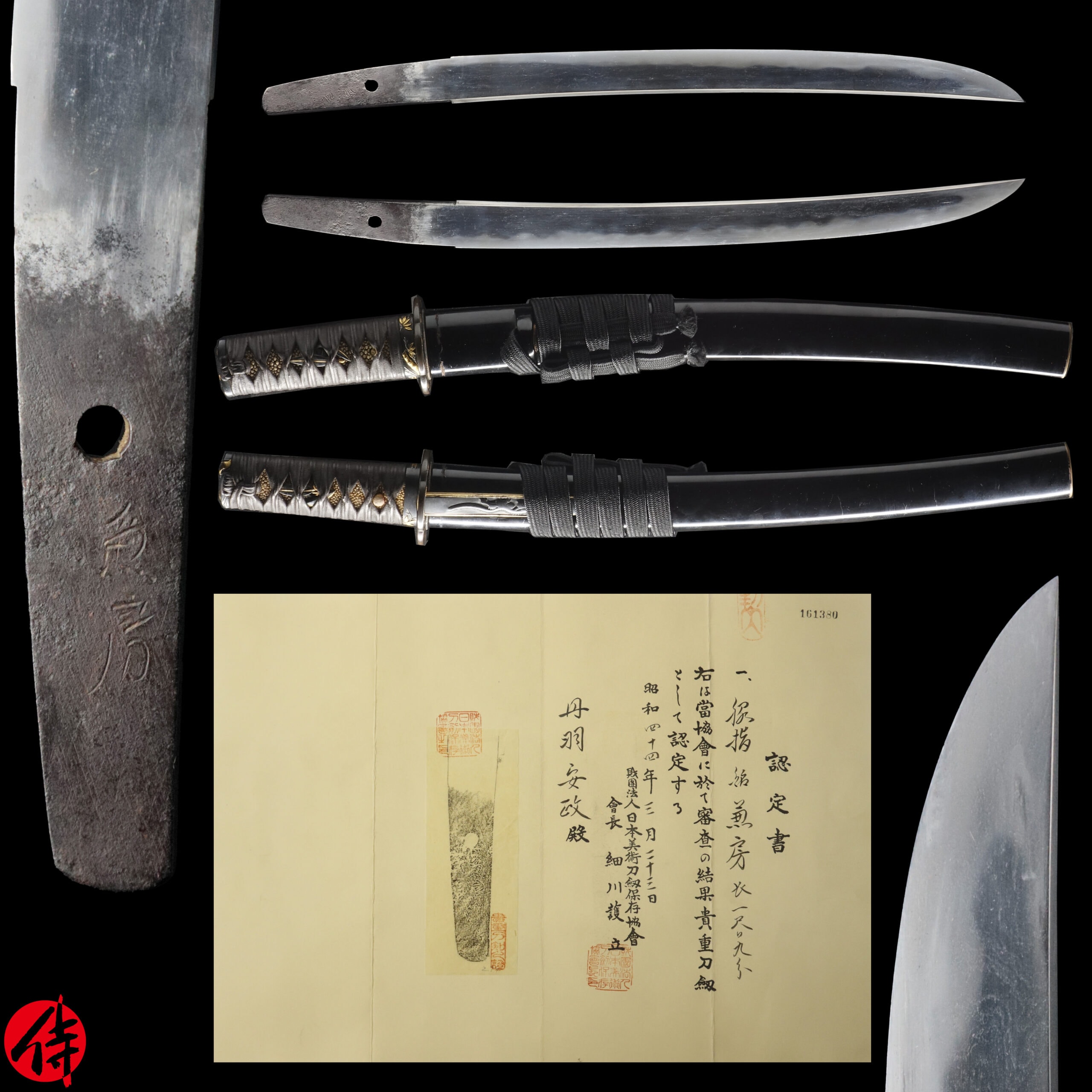
説明
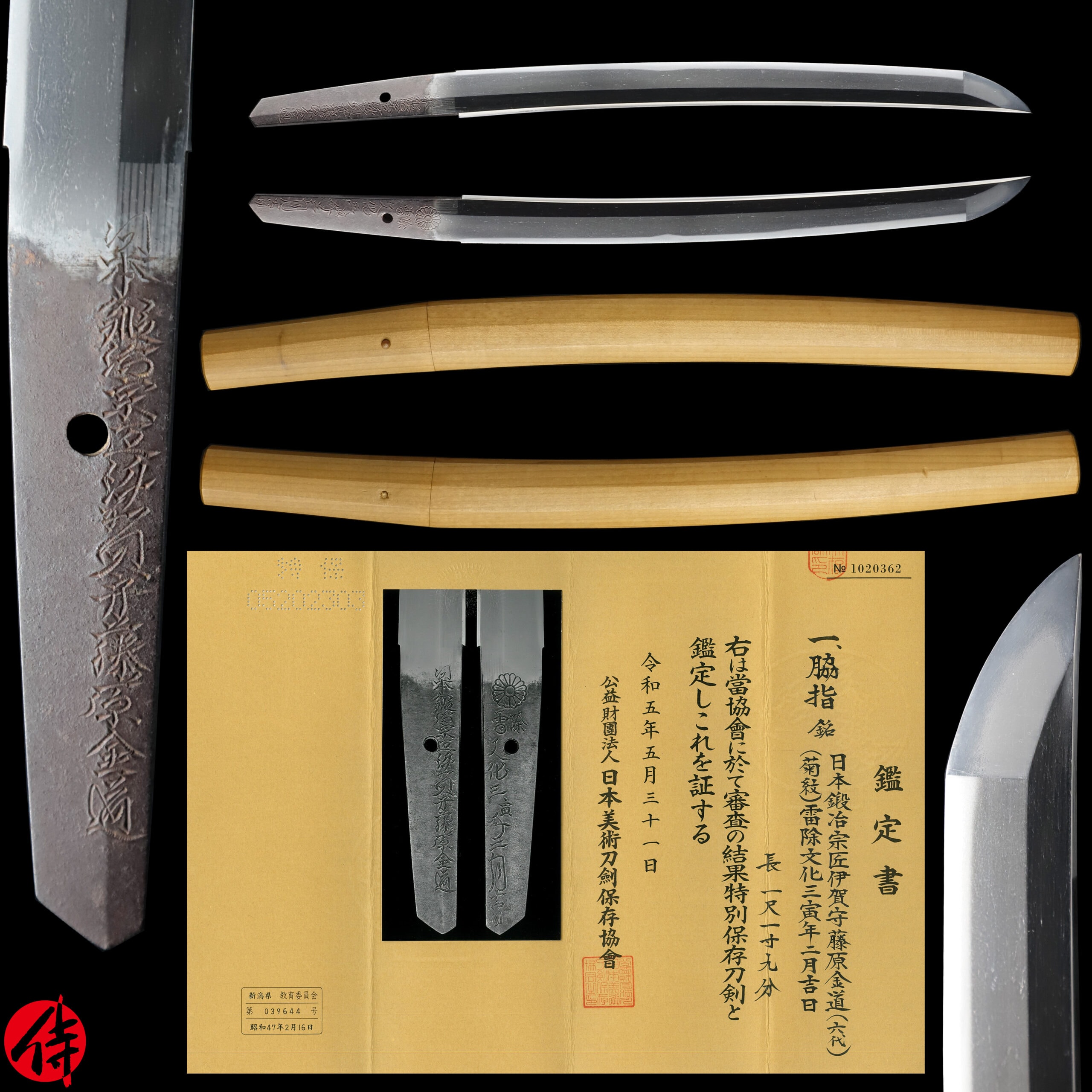
Antique Japanese Sword Wakizashi Signed by Iga no Kami Fujiwara no Kanemichi
with NBTHK
Tokubestsu
Hozon
Certificate
【Description】
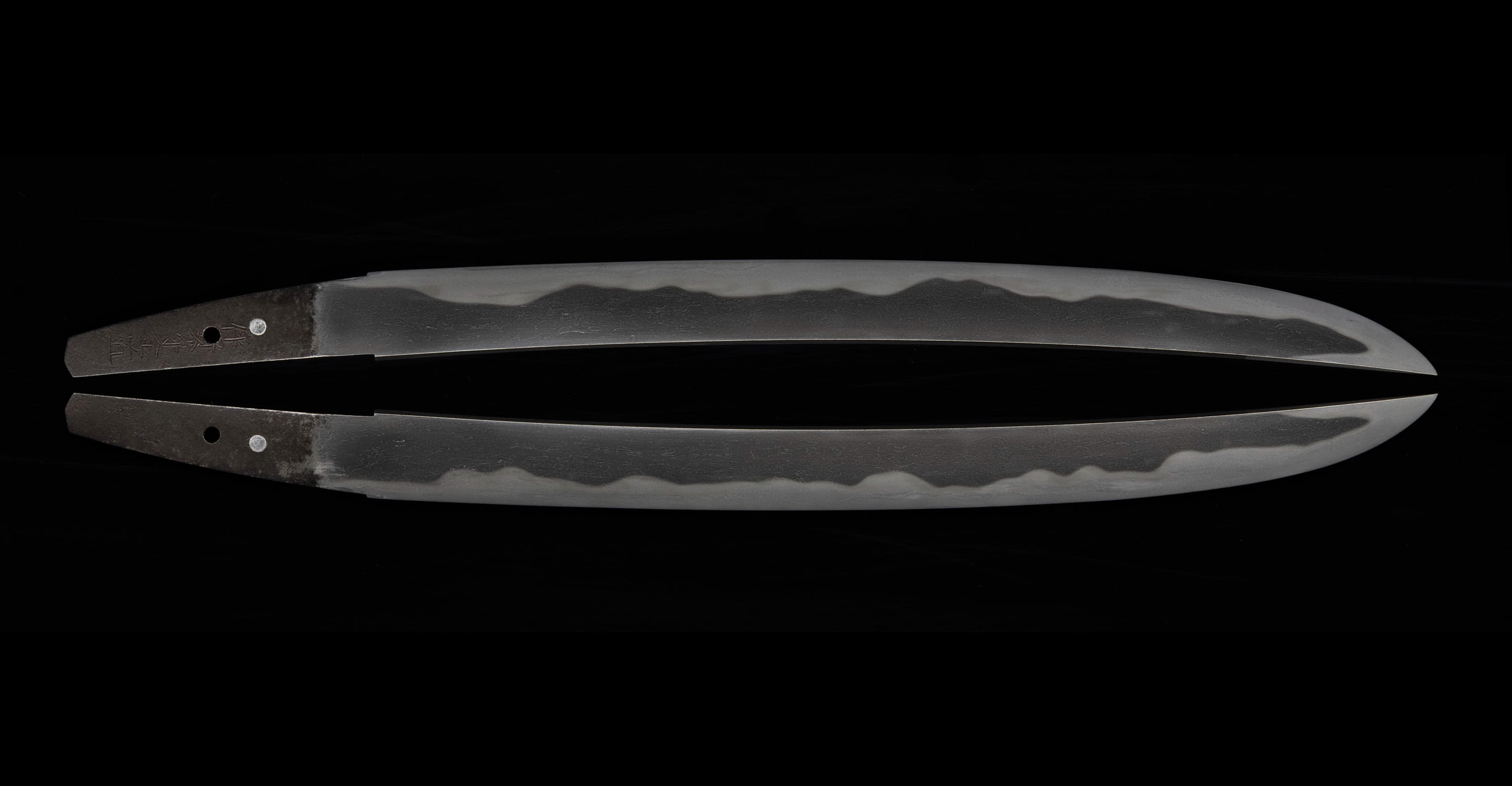
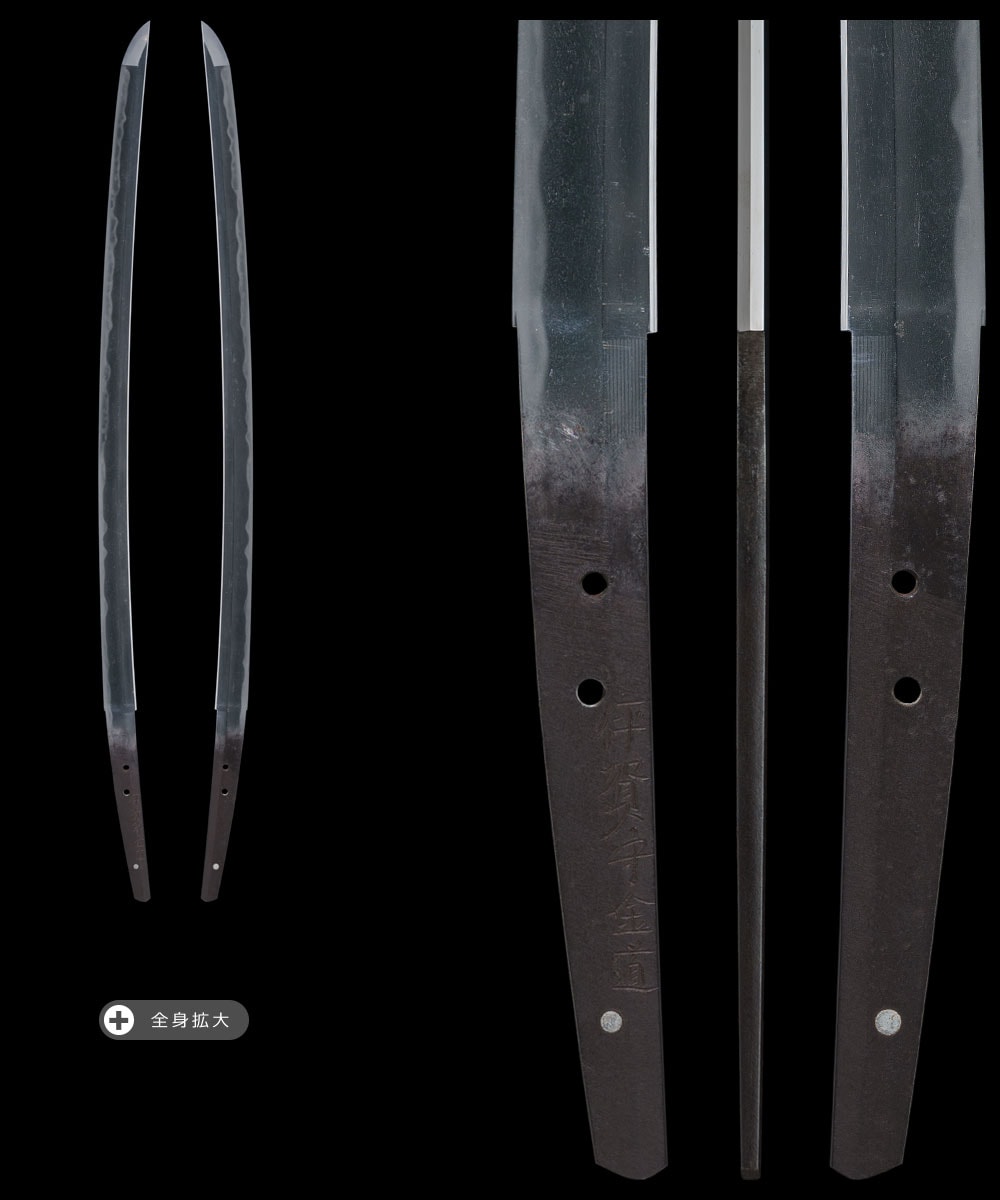
This blade was signed by Iga no Kami Fujiwara Kinmichi (伊賀守藤原金道). The swordsmith name Iga no Kami Kinmichi lasted eleven generations during the Edo period and it was forged by the 6th-gen Kinmichi according to NBTHK’s appraisal.
His birth name was Kanbei(
勘兵衛). He was born as a son of the 5th-gen Kinmichi in 1763 and he received the high honorable official title “Iga no Kami (伊賀守)” in 1799 from the emperor for his highly skilled craftsmanship. And like his father and ancestors, he belonged to the prestigious school called Mishina school(三品派) and produced many blades in the mid-late Edo period.
Kami is an honorable social title given by the imperial court for his excellent craftsmanship. The 6th-gen was allowed to inscribe a chrysanthemum emblem, which is the symbol of the Japanese emperor. His sword forging technique was so great that the emperor permitted him to use this emblem, which was honorable for any swordsmith. A chrysanthemum emblem remains in the tang of this blade. The generations of Kinmichi used Igano Kami title and inscribed this chrysanthemum emblem.
The first-gen Iga no Kami Kinmichi was a famous swordsmith as well. It is said that Tokugawa Ieyasu ordered Kimichi school to forge 1,000 Tachi blades for Sekigahara battles, under the condition that the school would become in charge of the swordsmiths residing in Kyoto back then. The first-gen Kinmichi managed to fulfill Ieyasu’s request, and Ieyasu praised him by granting a special position called *Nippon Kaji Soushou (日本鍛冶宗匠). This position was taken over by the generations of Iga no Kami Kinmichi.
The 6th-gen is also known to have produced many blades with “雷除(protection against lightning)” engraved on the tang , the inscription of which is based on a story of a blade produced by the 1st-gen : In May 1593, when the Emperor Go-Yosei was out and was in danger of being struck by lightning, an amulet sword produced by the 1st- gen slipped out by itself and cut through the thunder cloud, It is said that the weather cleared up. In accordance with this story, the 1st-gen’ blade, inscribed with “雷除 ” , became popular as a protection against disasters, and the 6th-gen also began to use the same inscription.
Mishina School
The first-gen Iga no Kami Kinmichi belonged to Mishina school and was the first son of the Mishina school’s founder. Mishina school was established by the first-gen Mutsu no Kami Omichi (陸奥守大道), also known as Kanemichi. It is said that initially, Kanemichi was from Mino province, exclusively forging blades for Shingen Takeda, a famous feudal lord. Later on, he moved to Kyoto, being invited by the emperor.
He also brought his four sons and founded Mishina school in Kyoto. Five sons were
Iga no Kami Kinmichi(伊賀守金道)
、Izumi no Kami Rai Kinmichi(和泉守来金道), Tanba no Kami Yoshimichi(丹波守吉道) and Echu no kami Masatoshi(越中守正俊). His sons were known as Kyoto Gokaji(京都五鍛冶), prestigious swordsmiths forging in Kyoto in the early Edo period.
Mishina school was pros
perous throughout the Edo period. The superb craftsmanship of the Mishina school was passed down for generations.
It is appraised as a
Tokubetsu Hozon Token
(特別保存刀剣) issued by NBTHK(Nihon Bijutsu Touken Hozon Kyokai:日本美術刀剣保存協会). This authentication paper was only given to authentic Japanese swords, especially well preserved and high quality with artistic value.
【Blade】
Cutting Edge Length(Nagasa)
:
36.2
cm (14.2
inches)
Curvature(Sori)
:
0.8 cm (0.3 inches)
Hamon
:
The crystalline structure which forms along the cutting edge of a blade as a result of the hardening process
Jimon(Jihada)
:
visible steel surface pattern created by folding and hammering during forging process
Kissaki
:
Kissaki is the tip of the Japanese sword.
Nakago
:
Nakago is the tang of the Japanese sword.
Japanese swordsmiths left the black rust on the tang because it prevents red rust while the tang is in