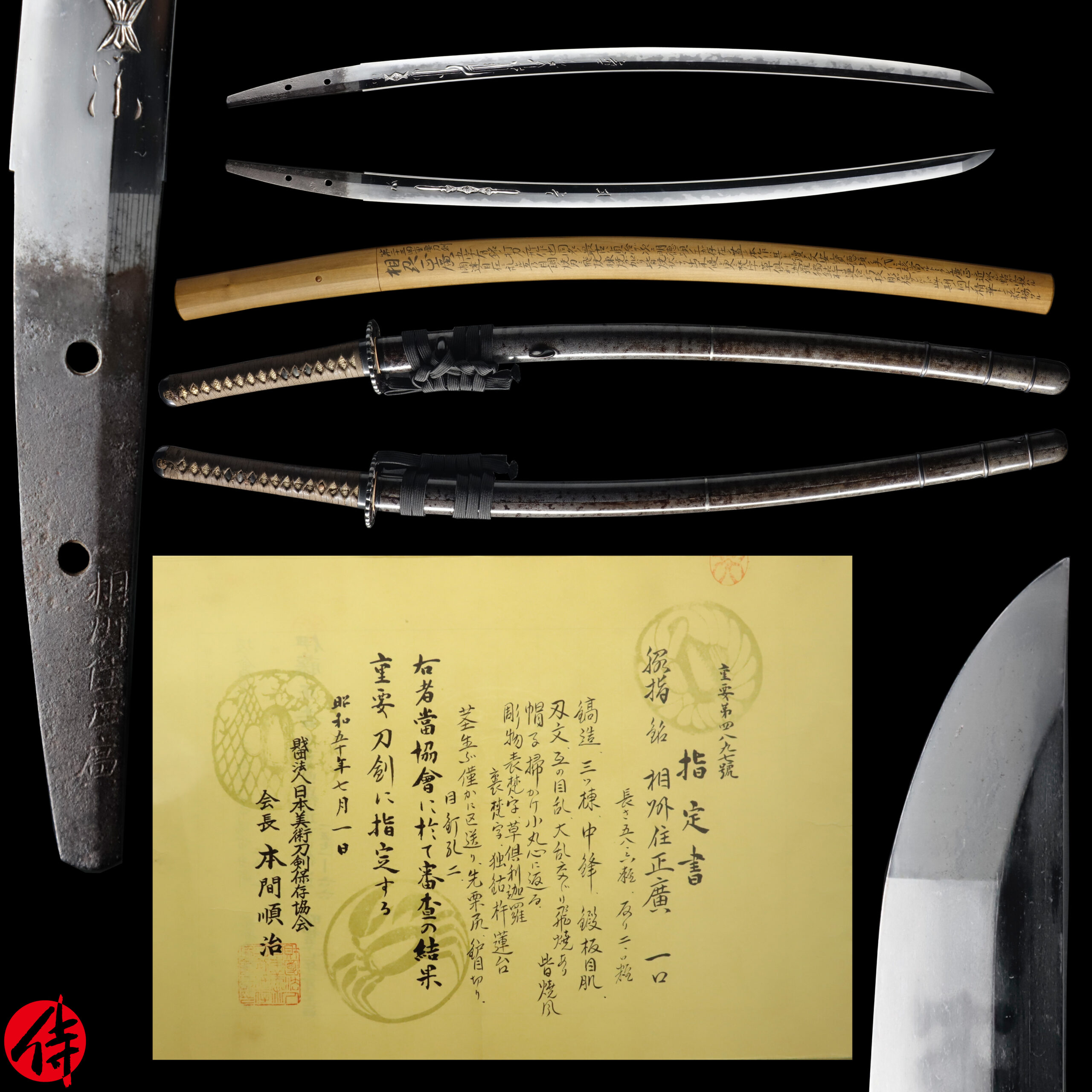
説明

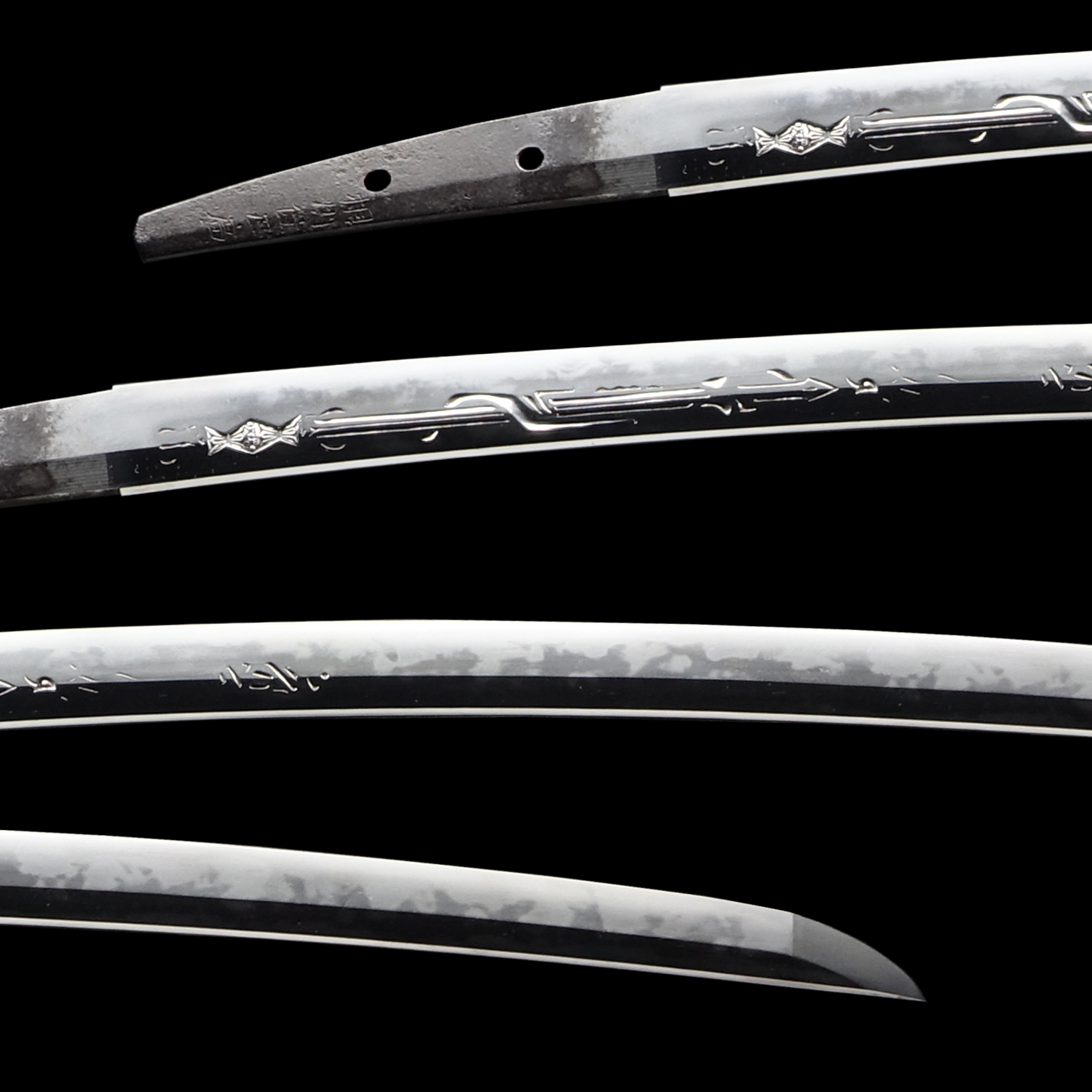
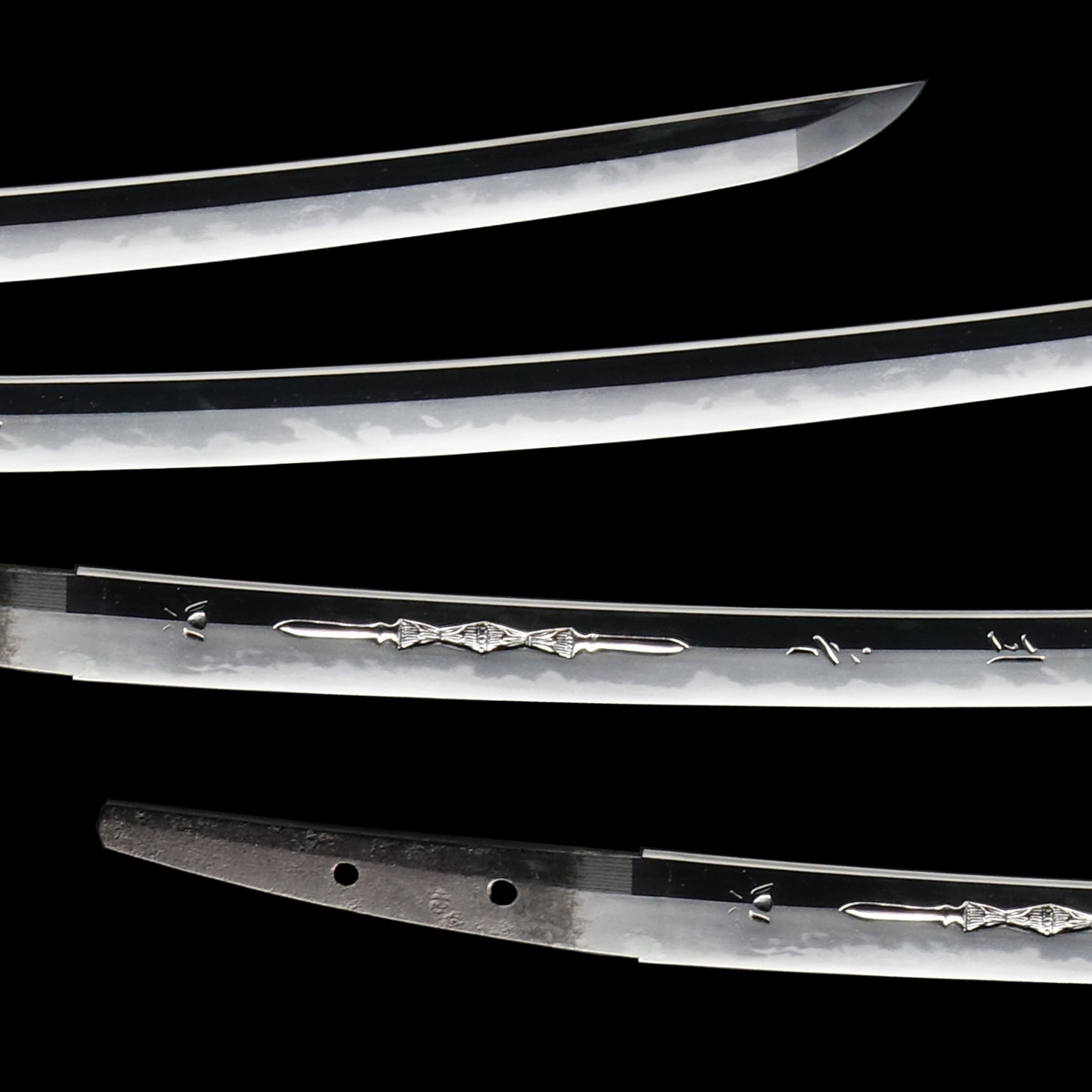
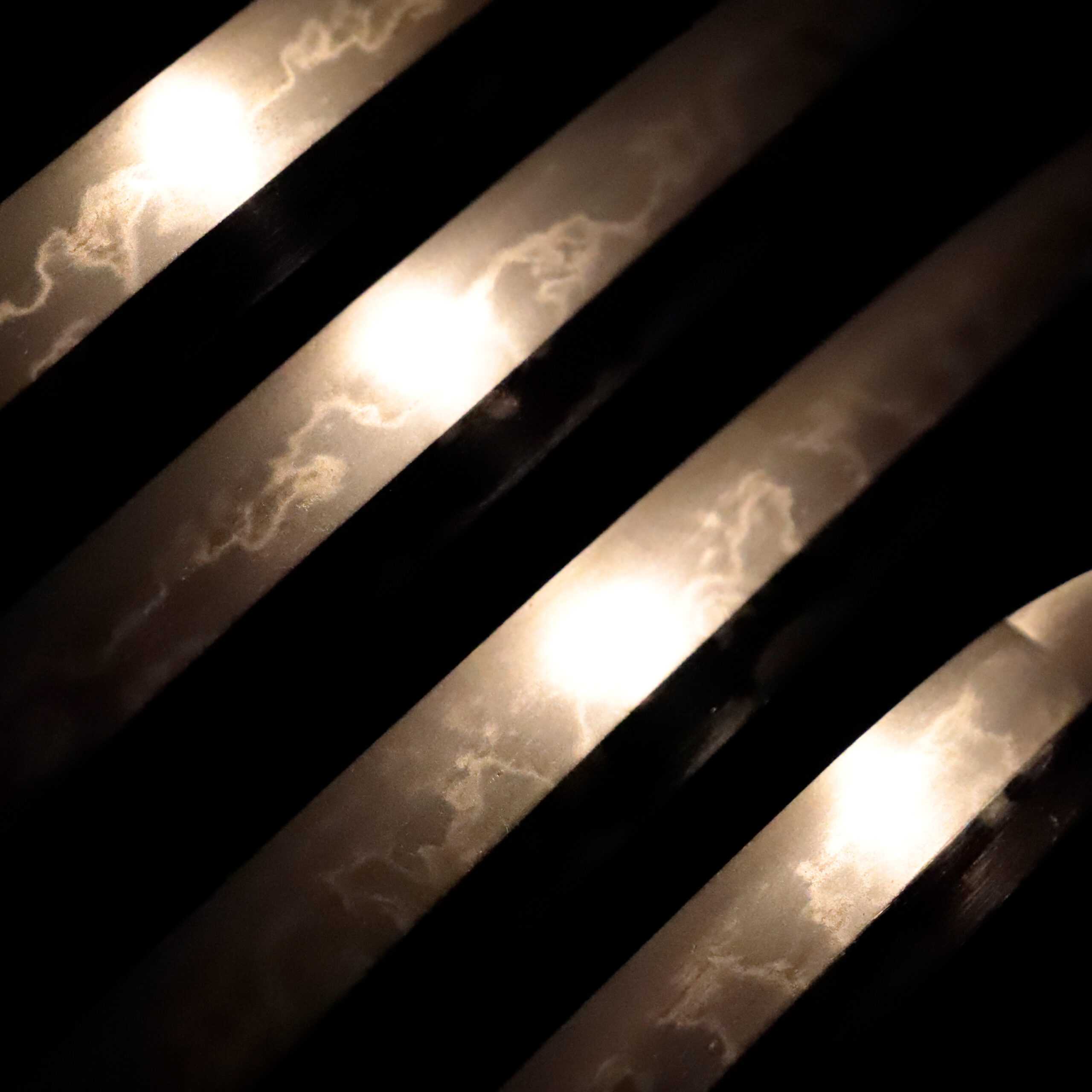
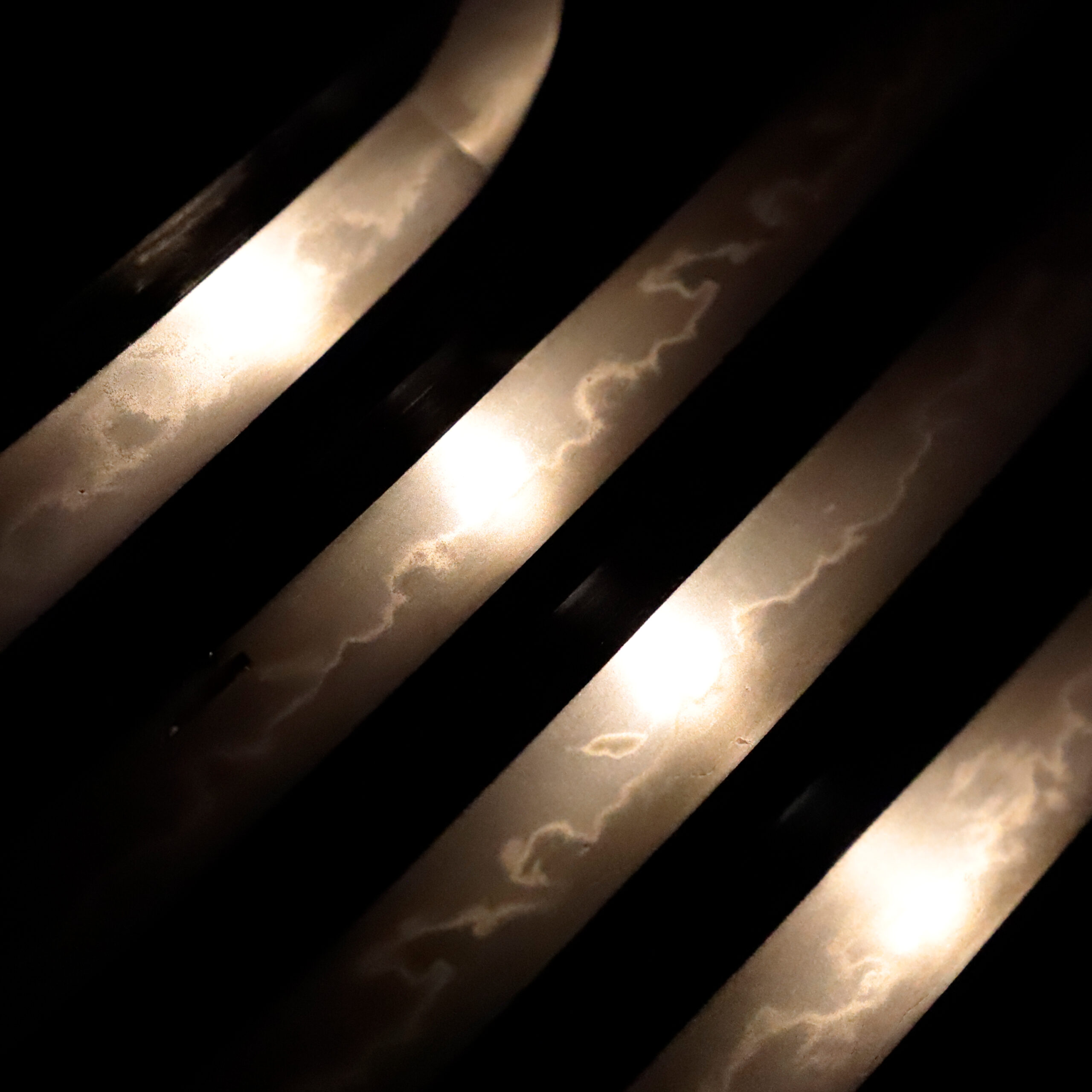
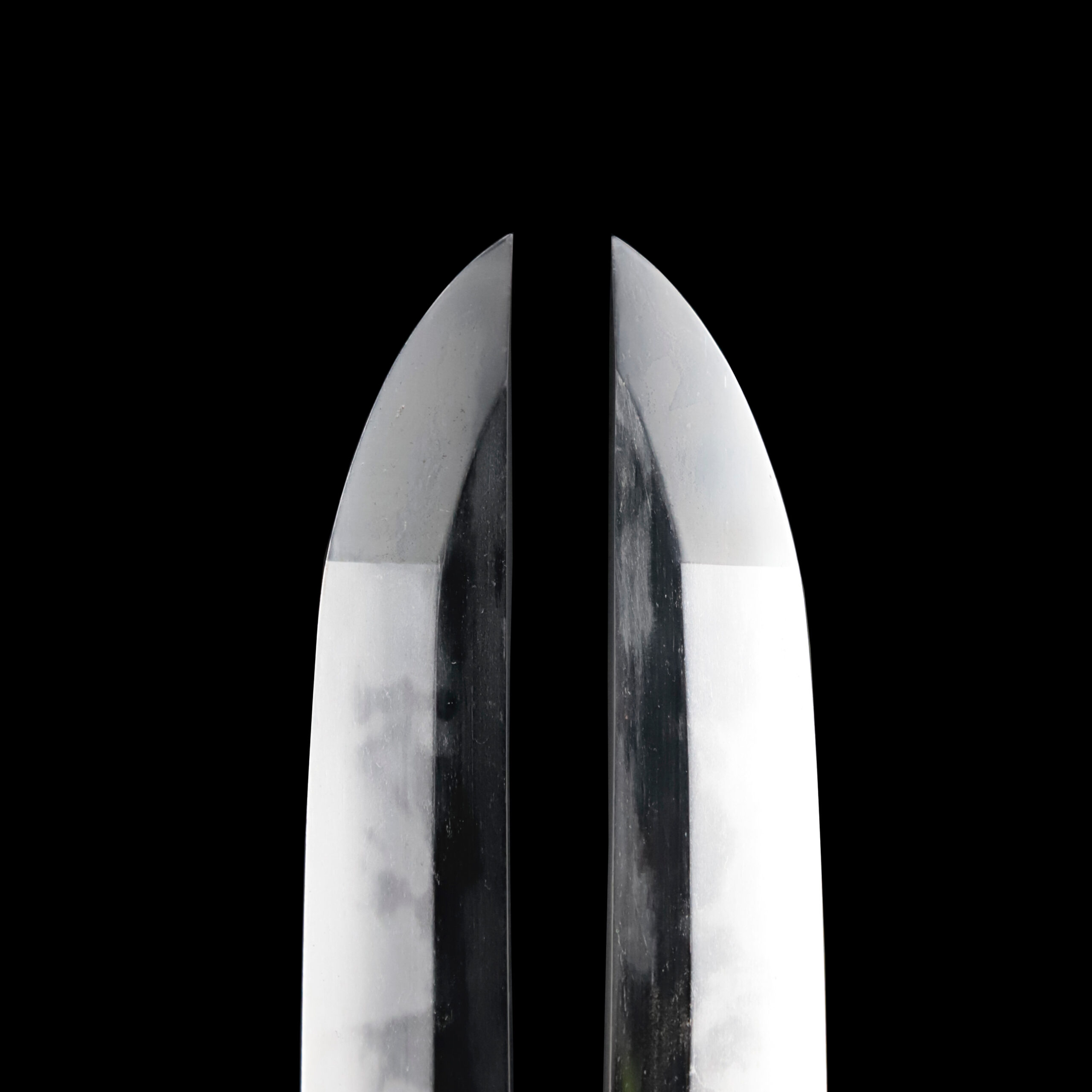
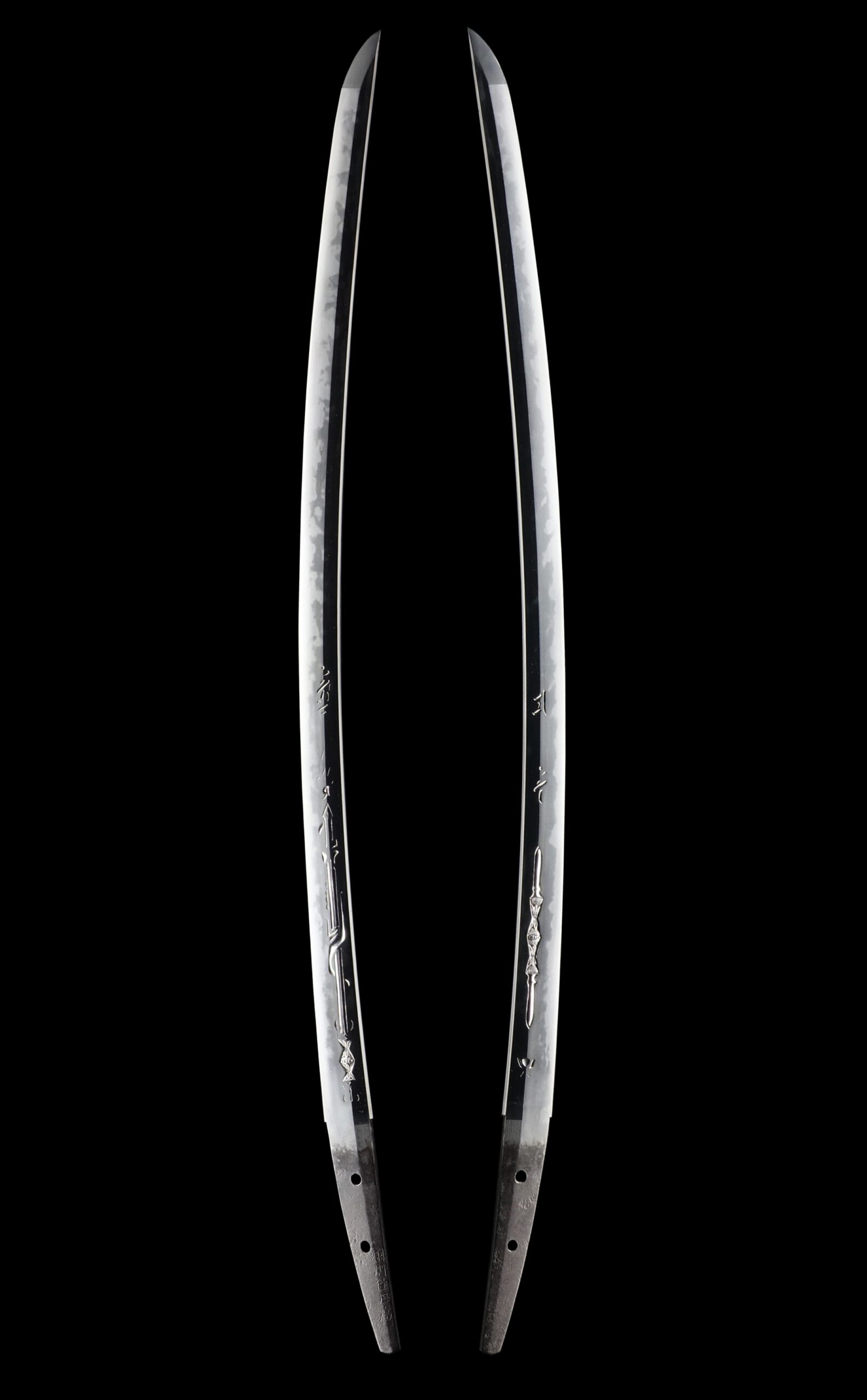
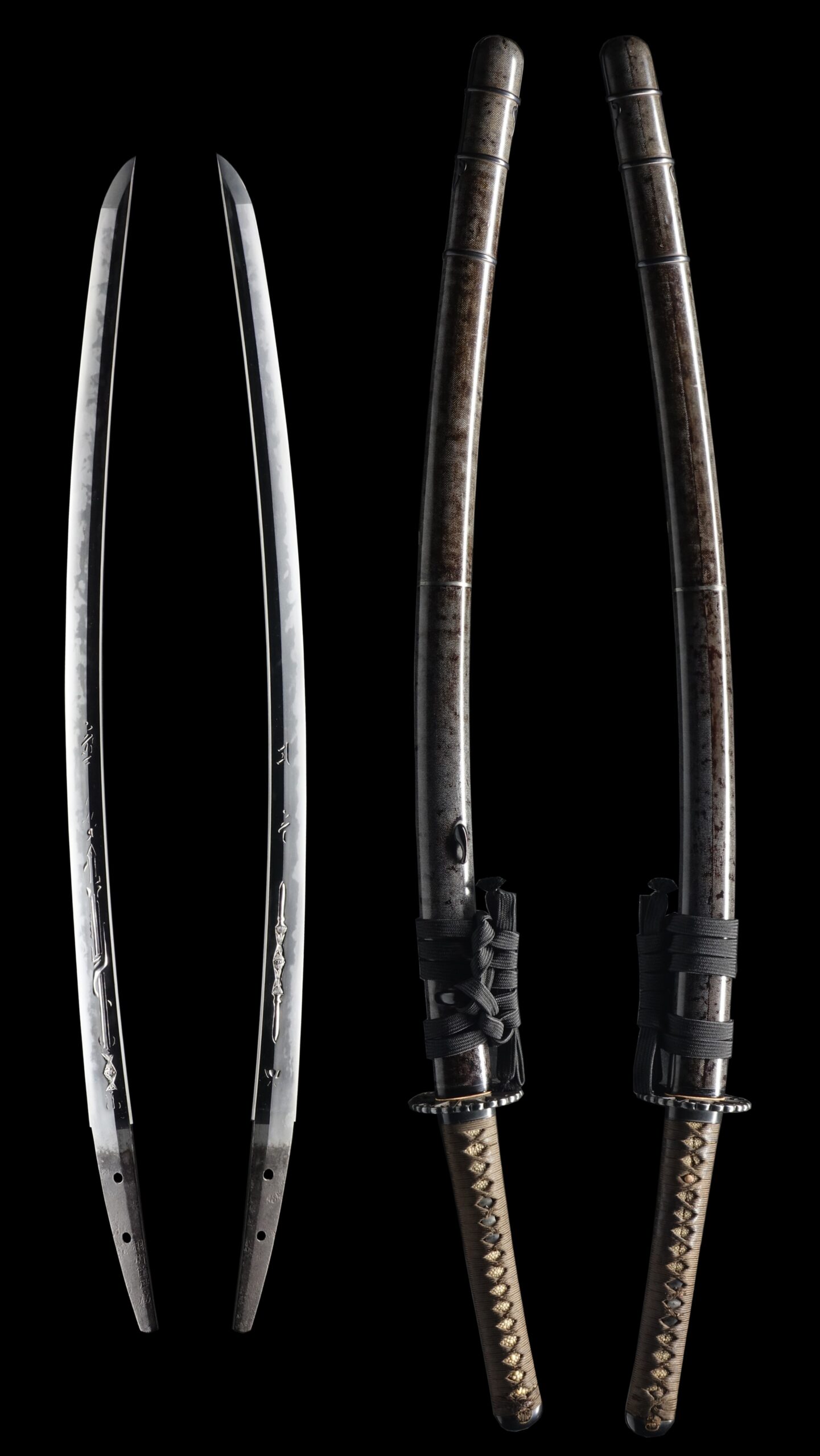
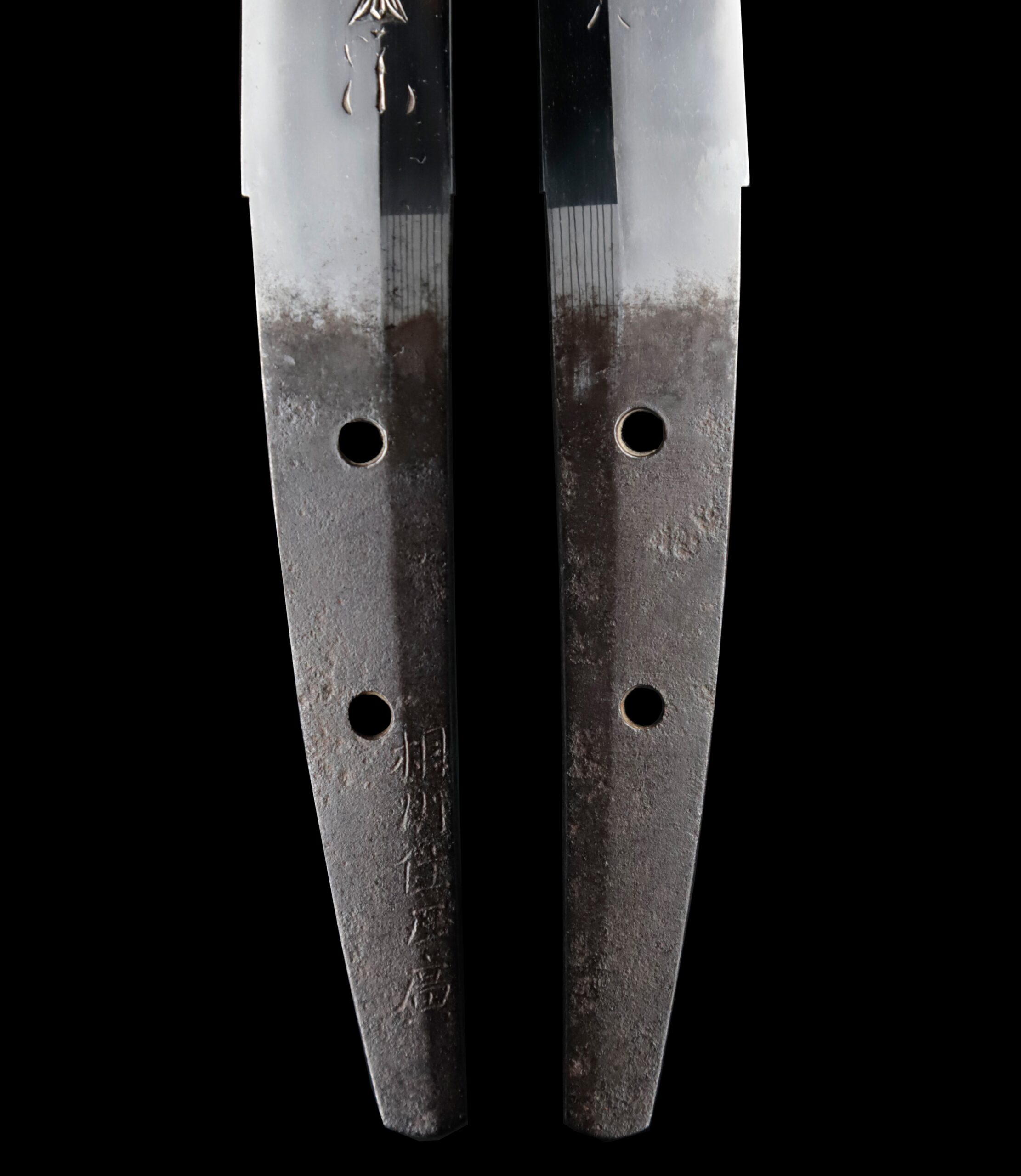
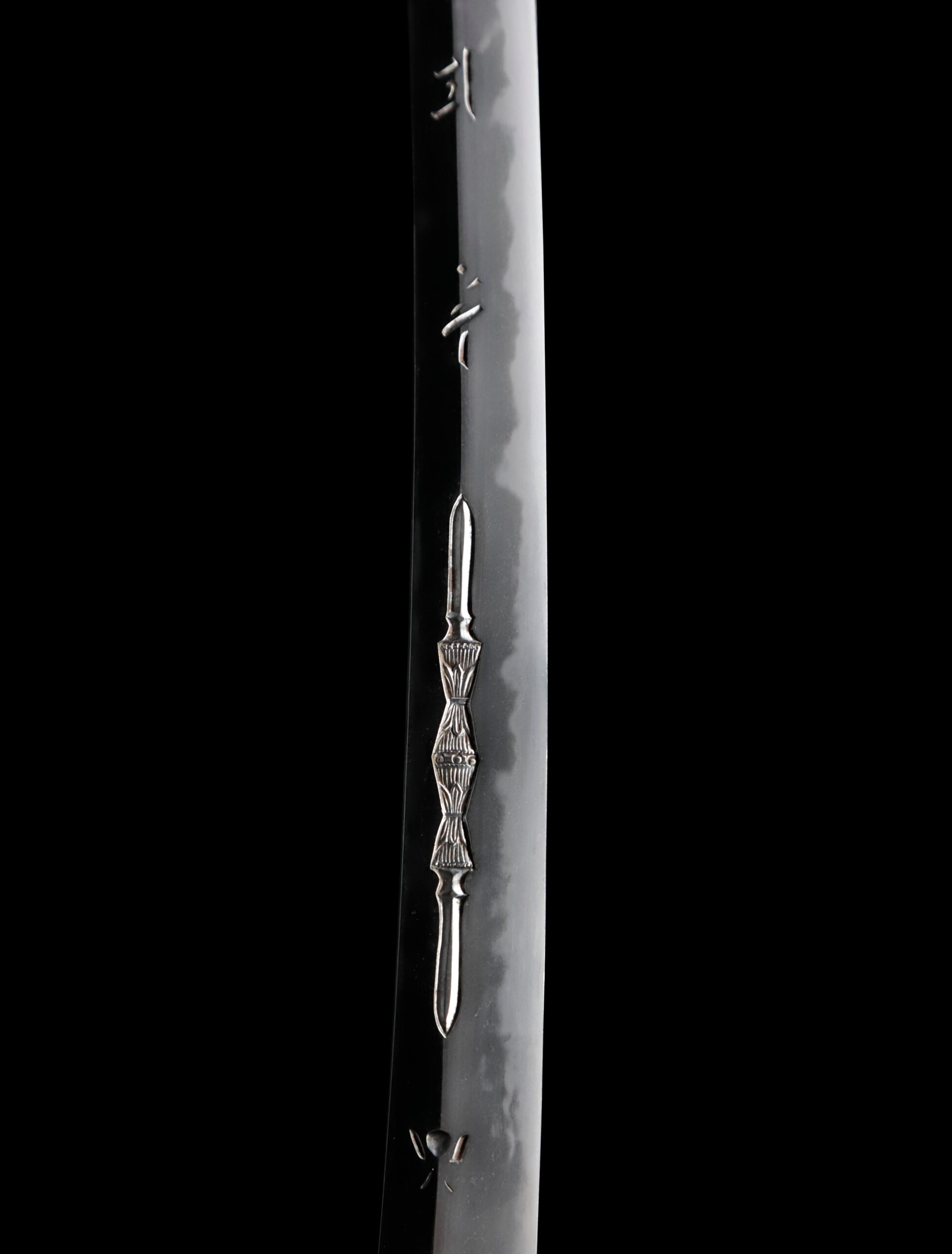
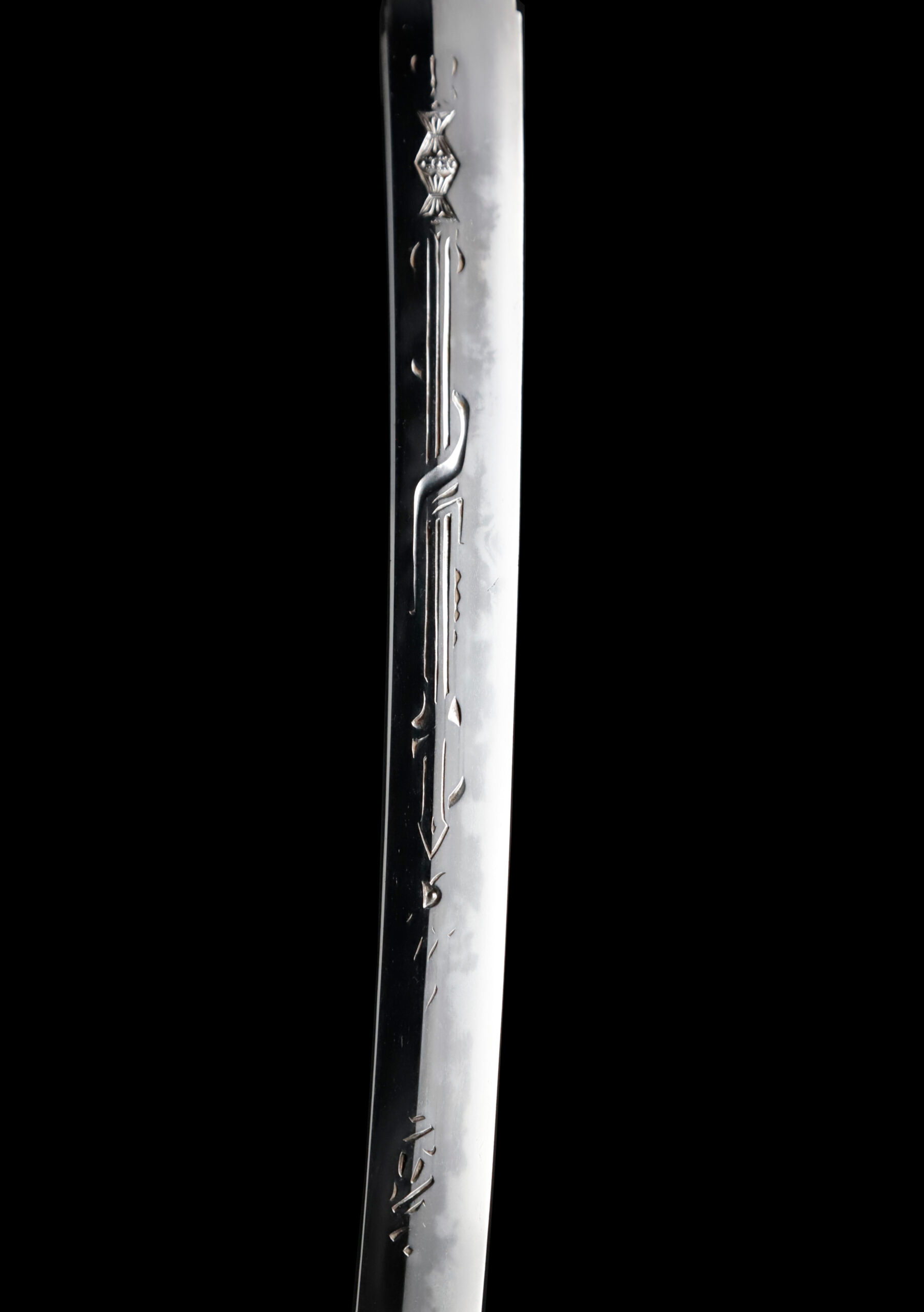
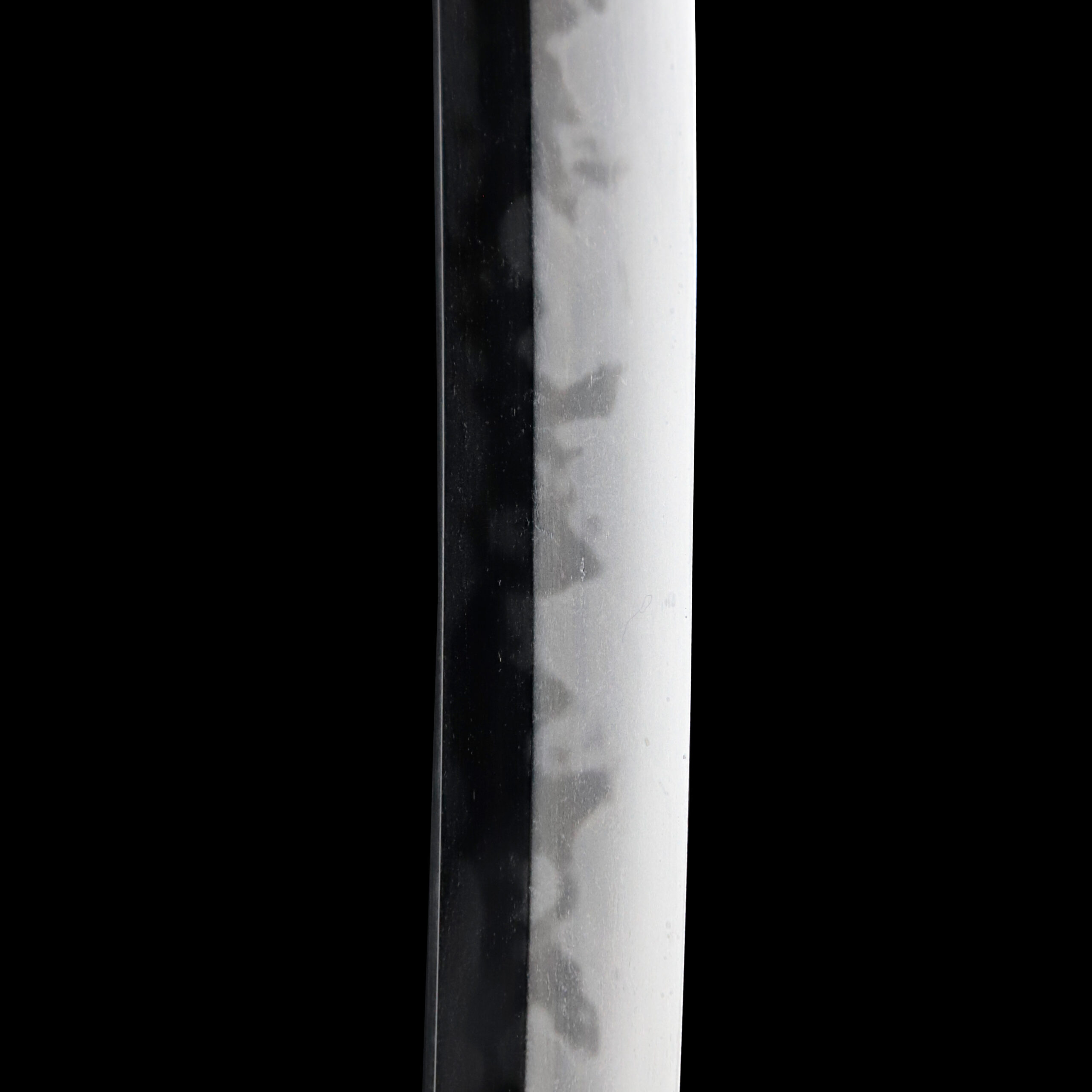
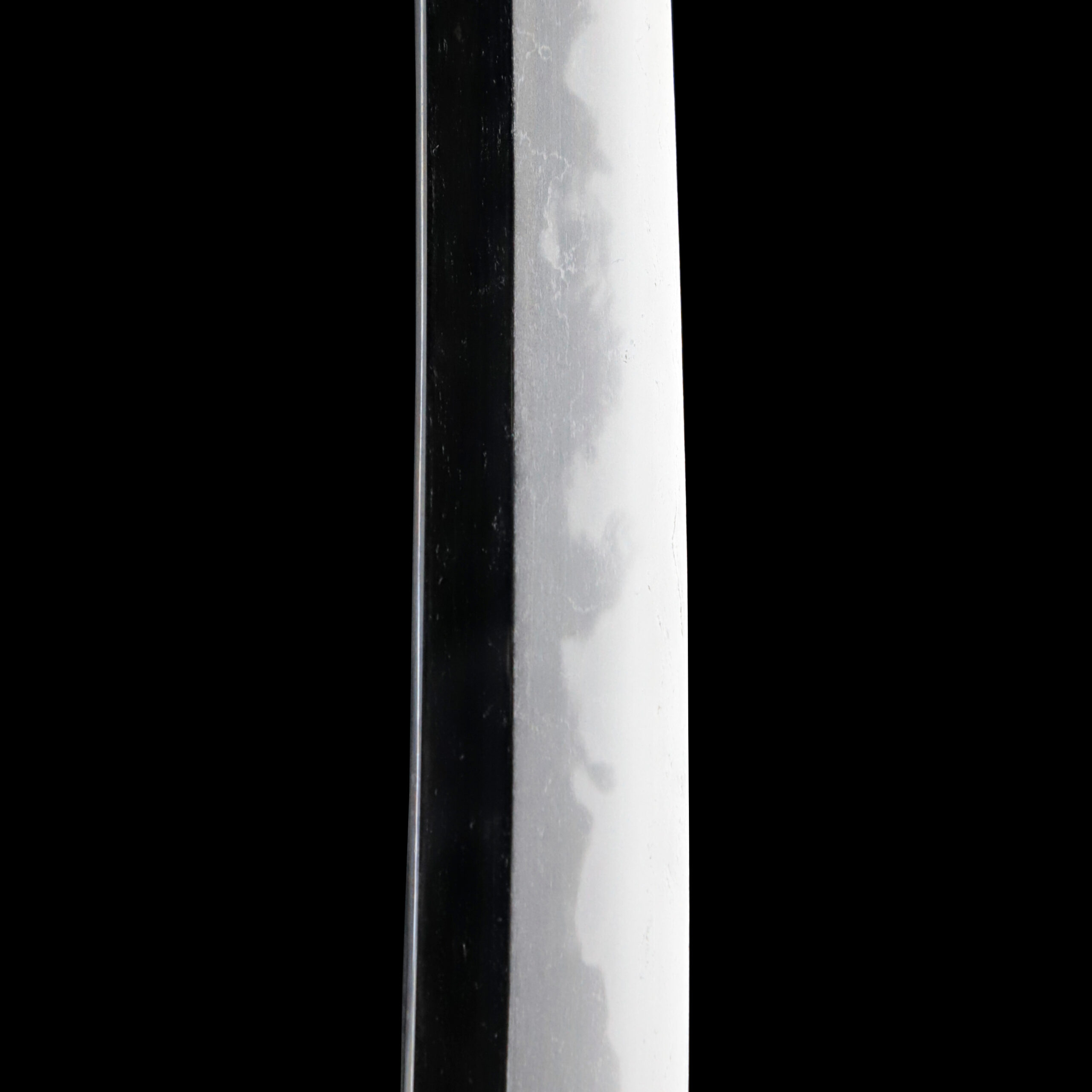
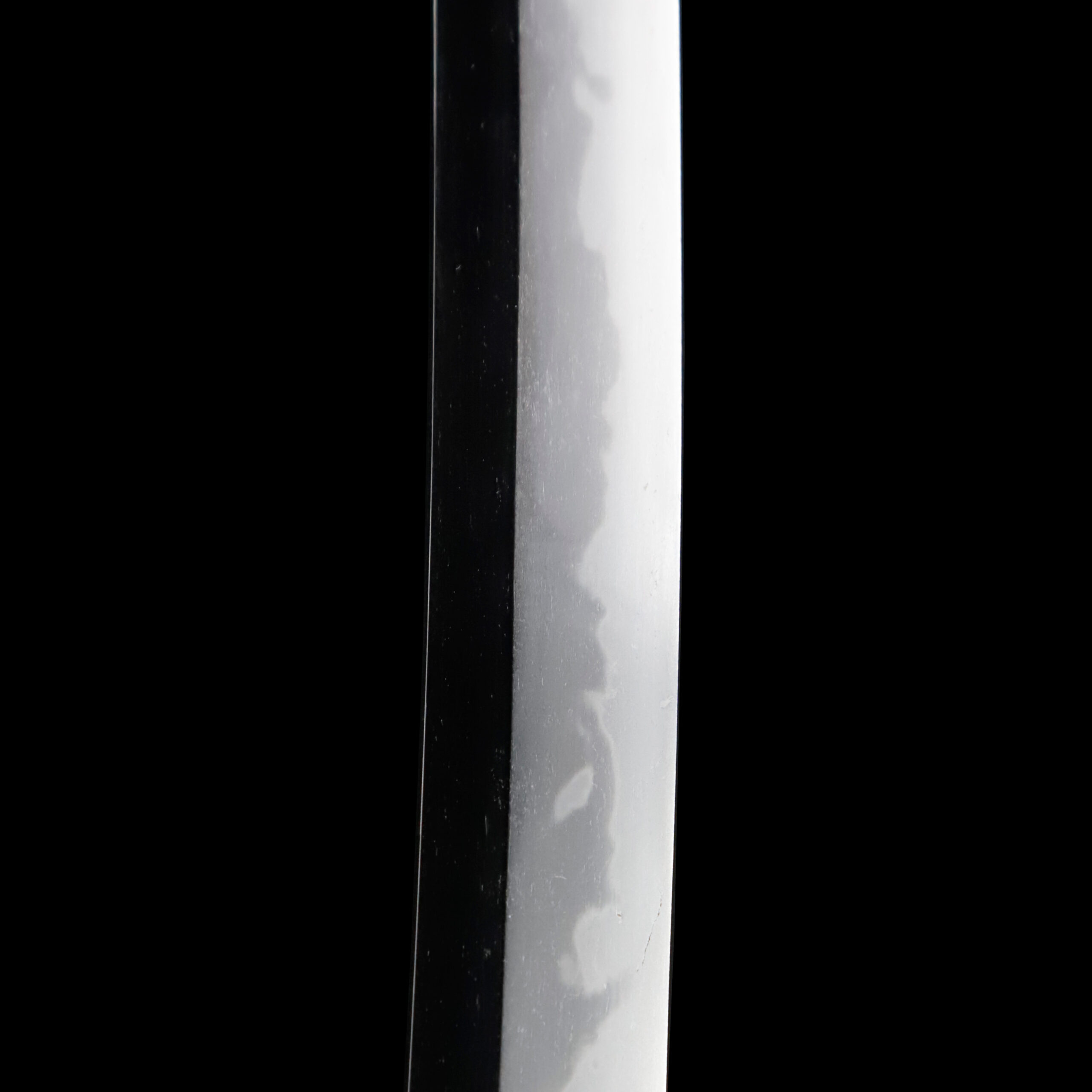
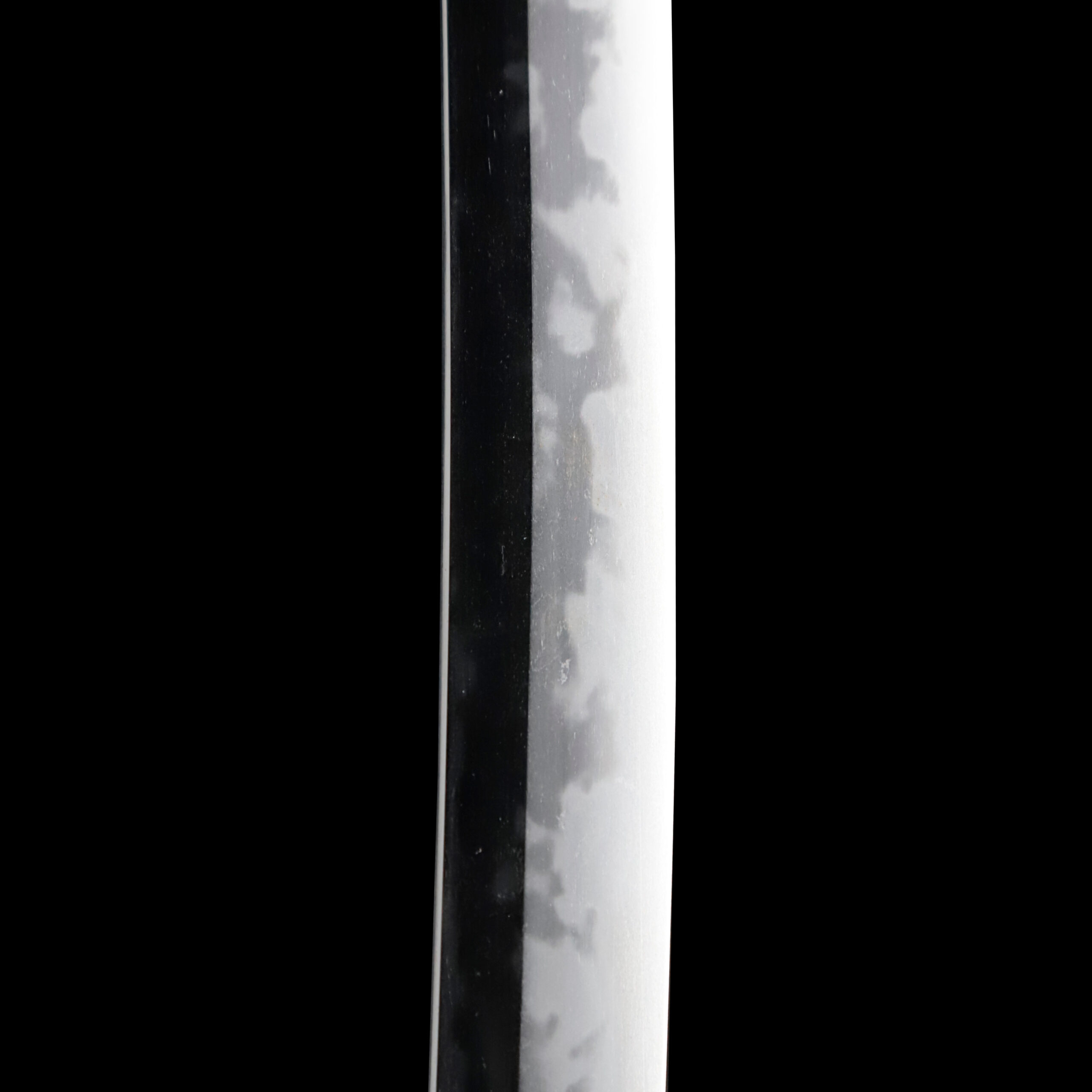
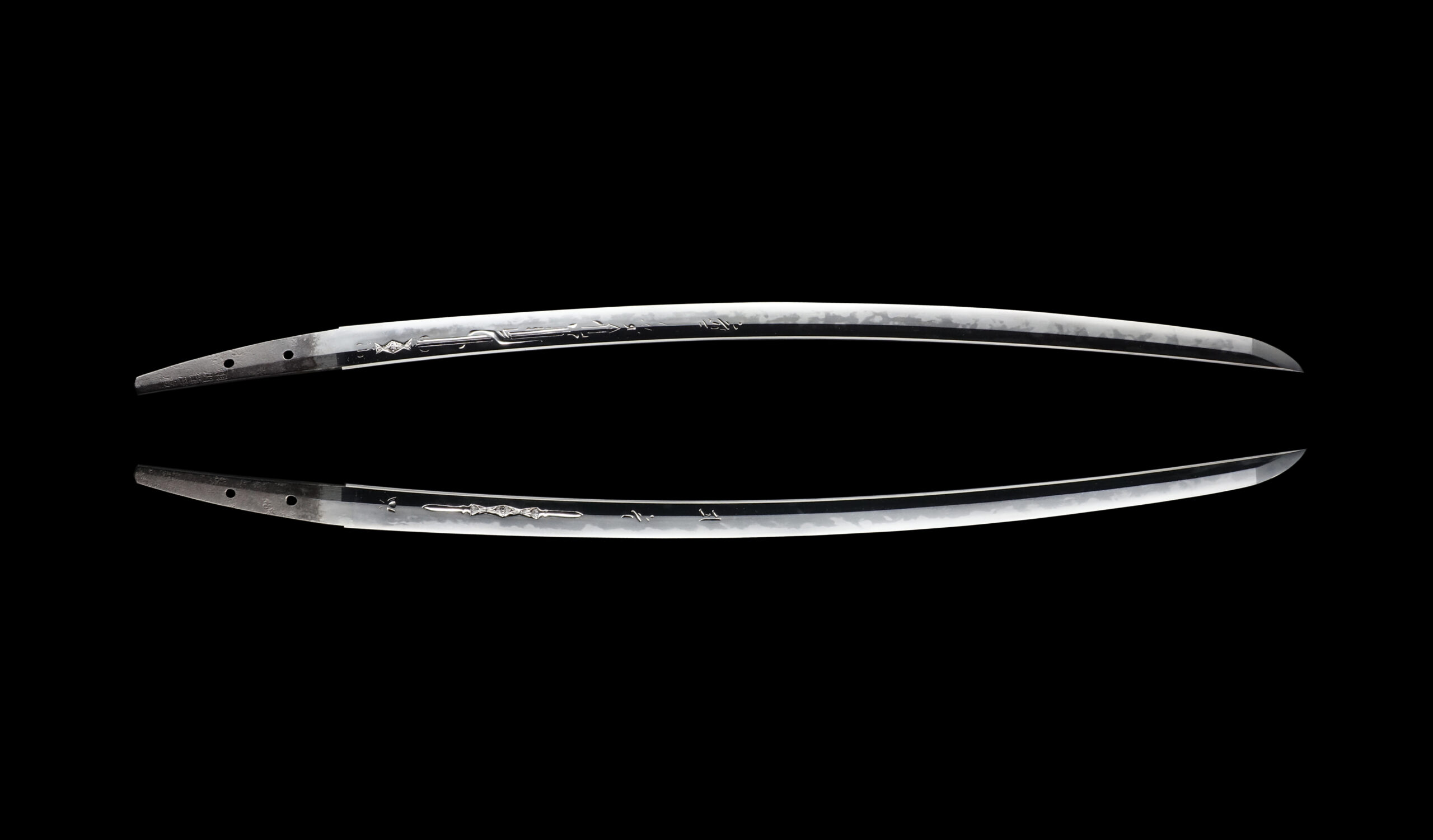
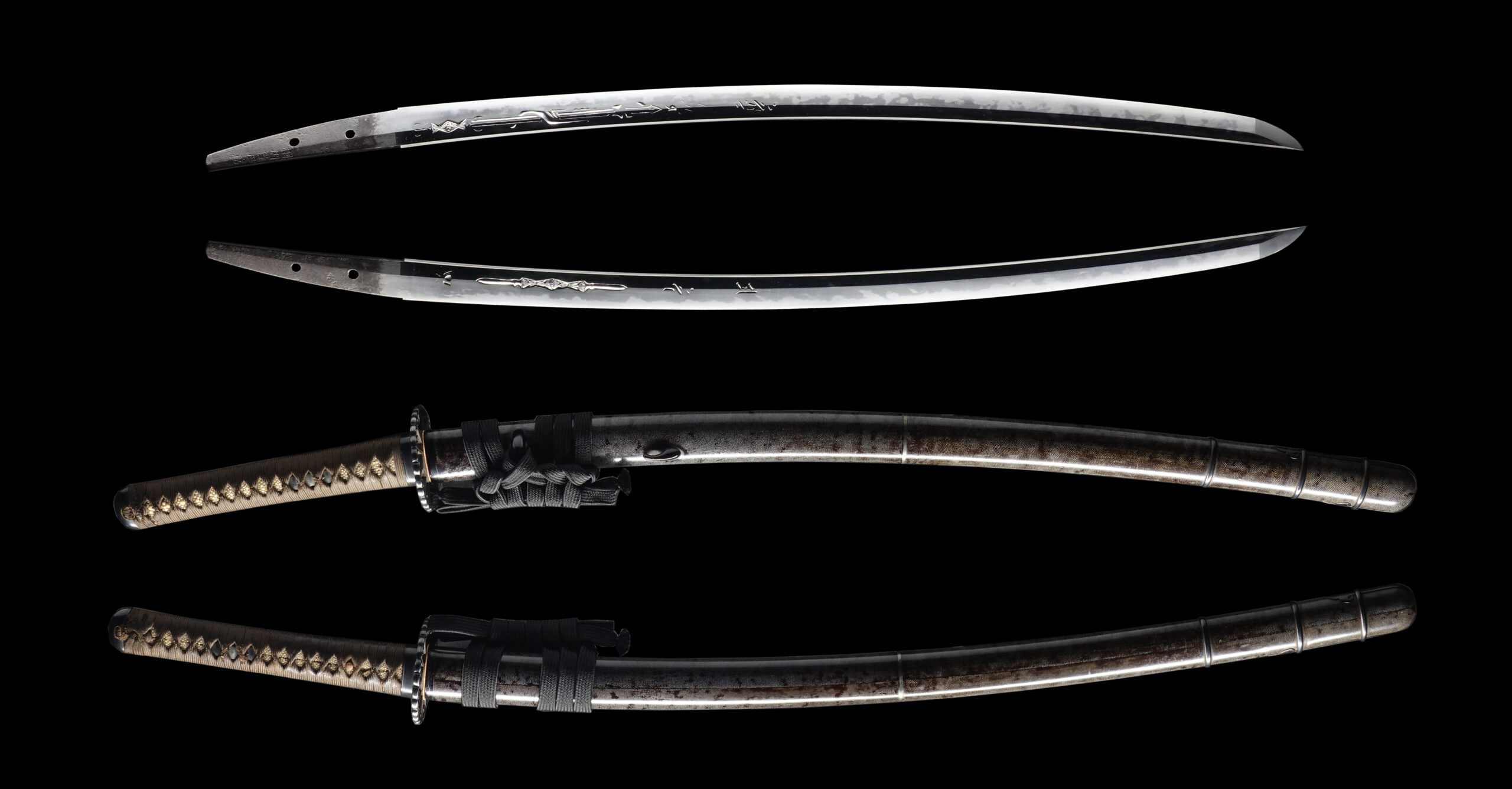
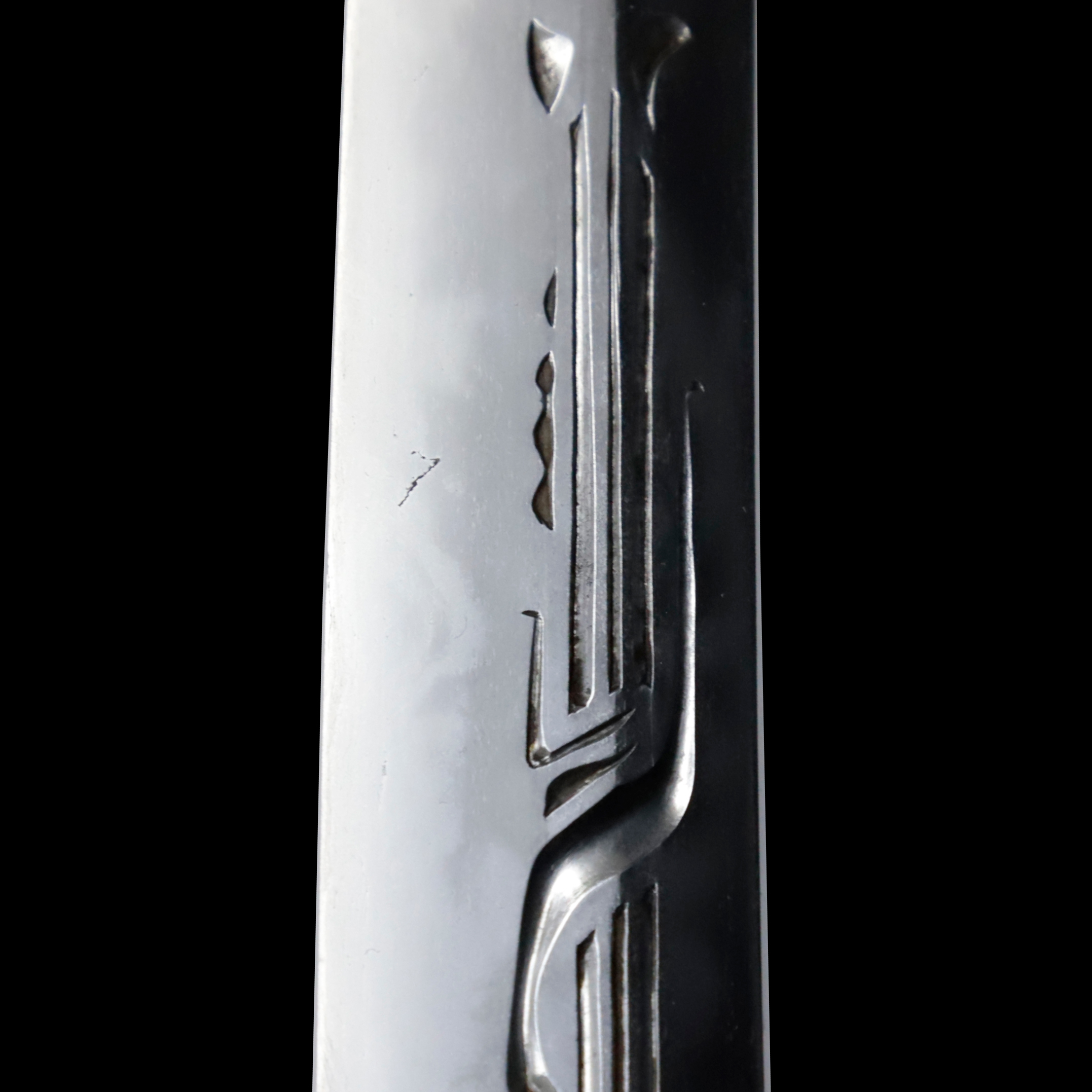
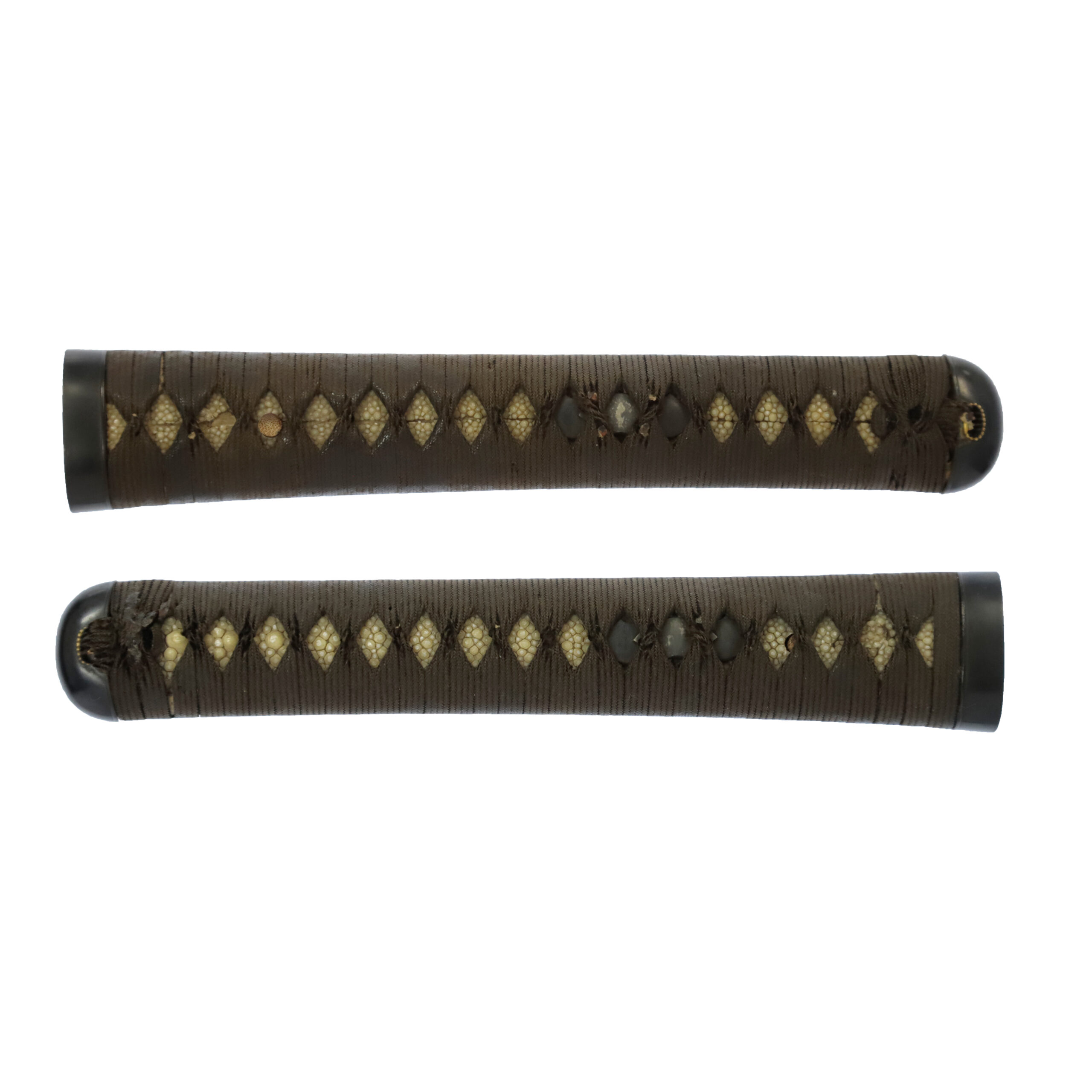
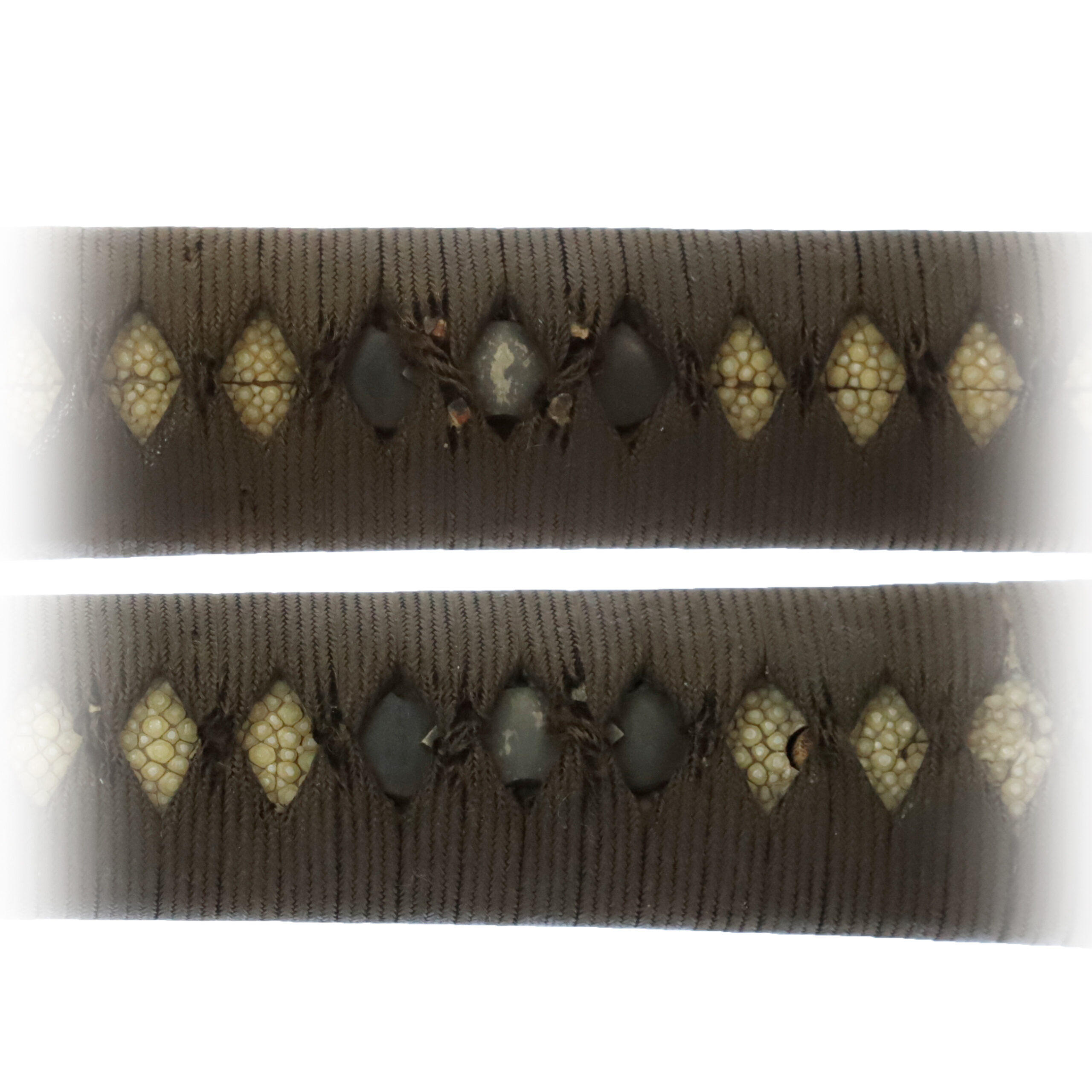
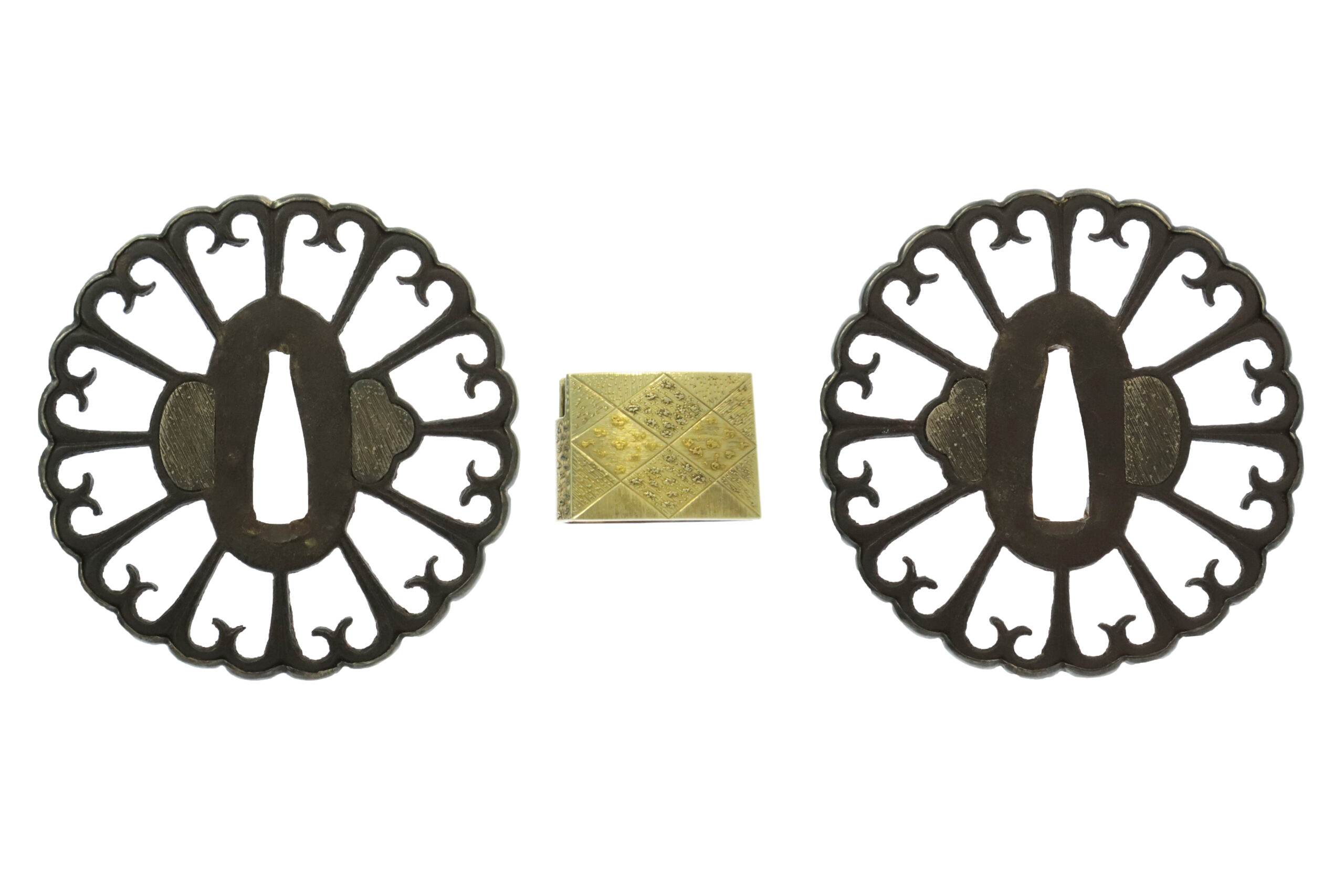
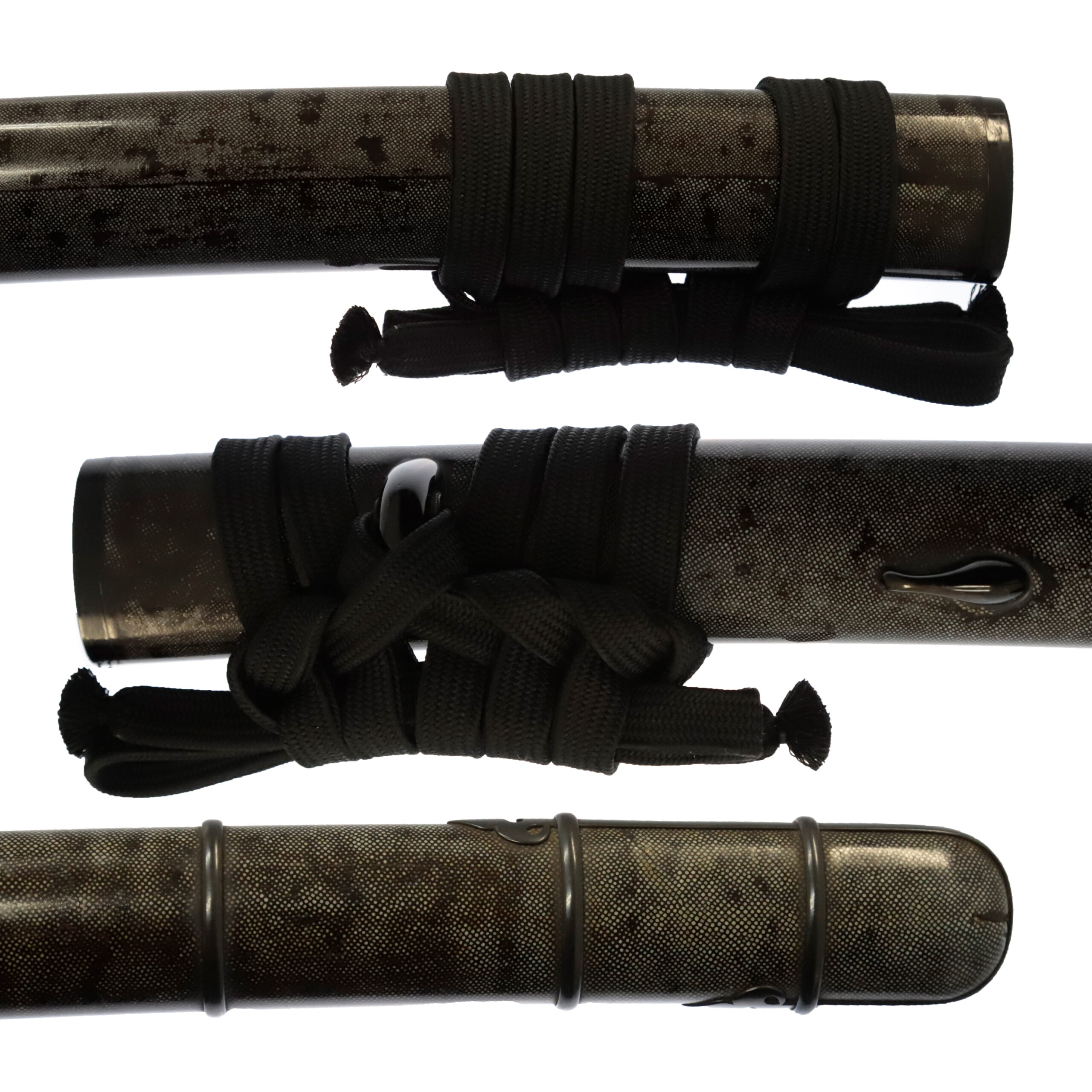
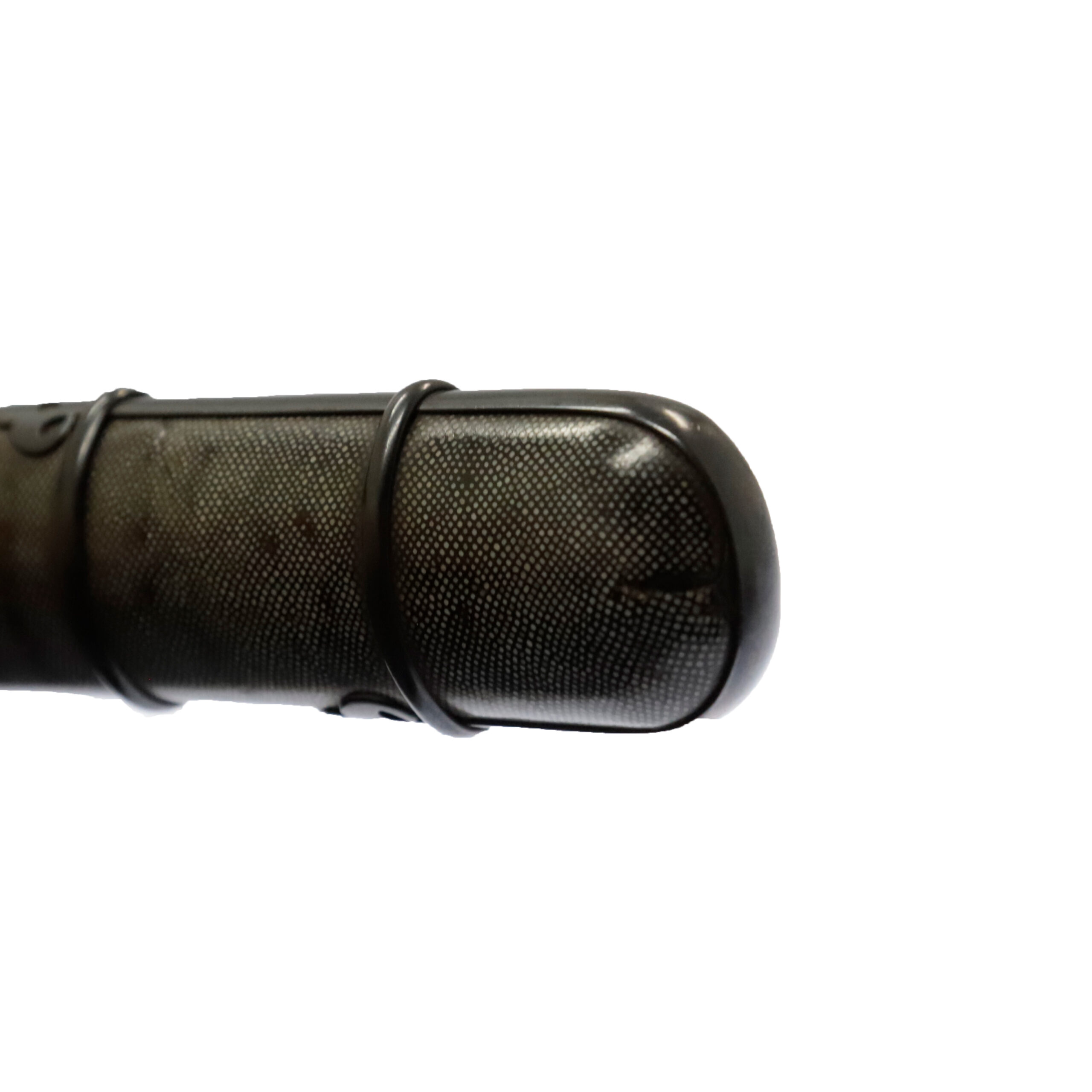
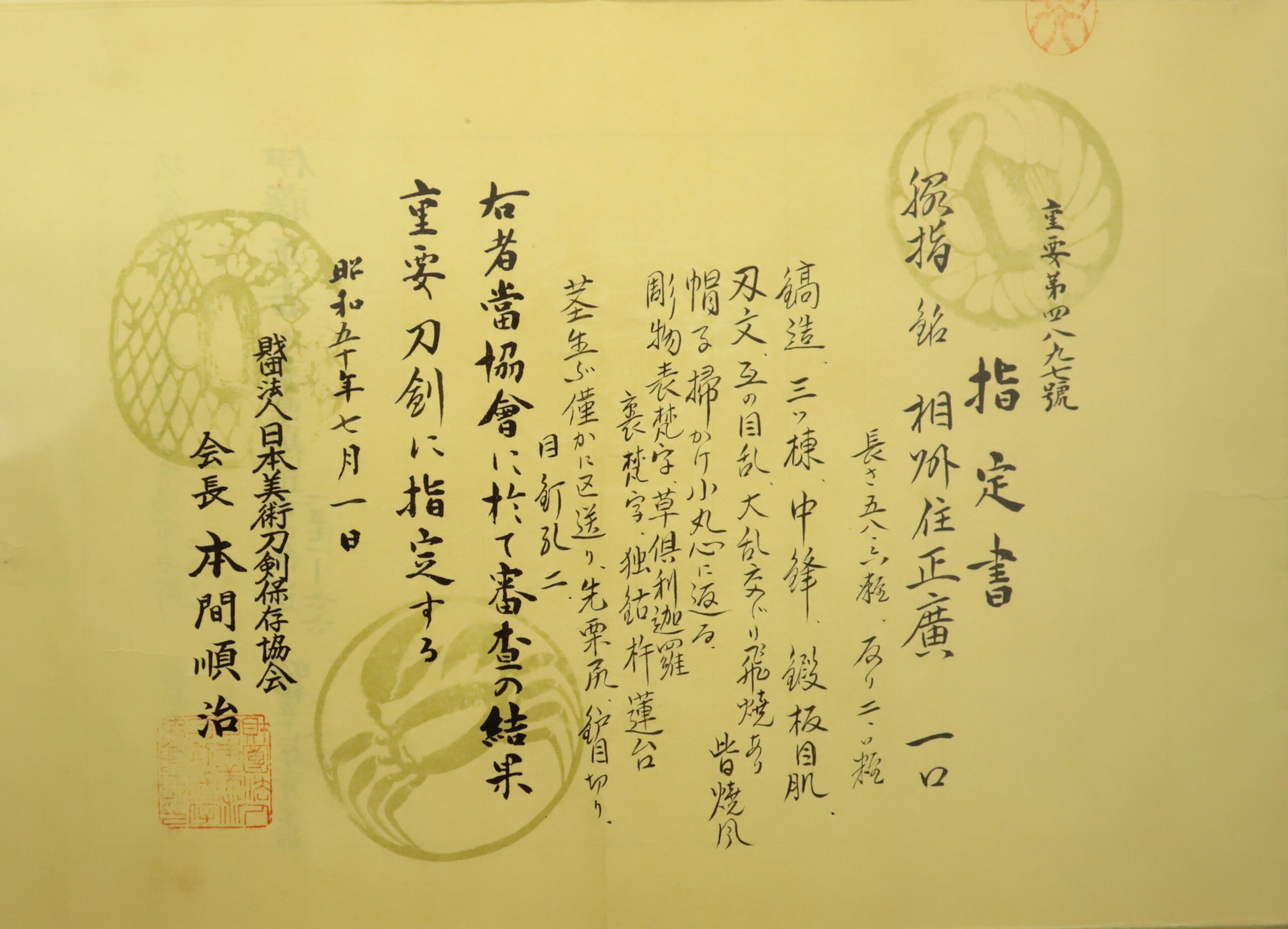
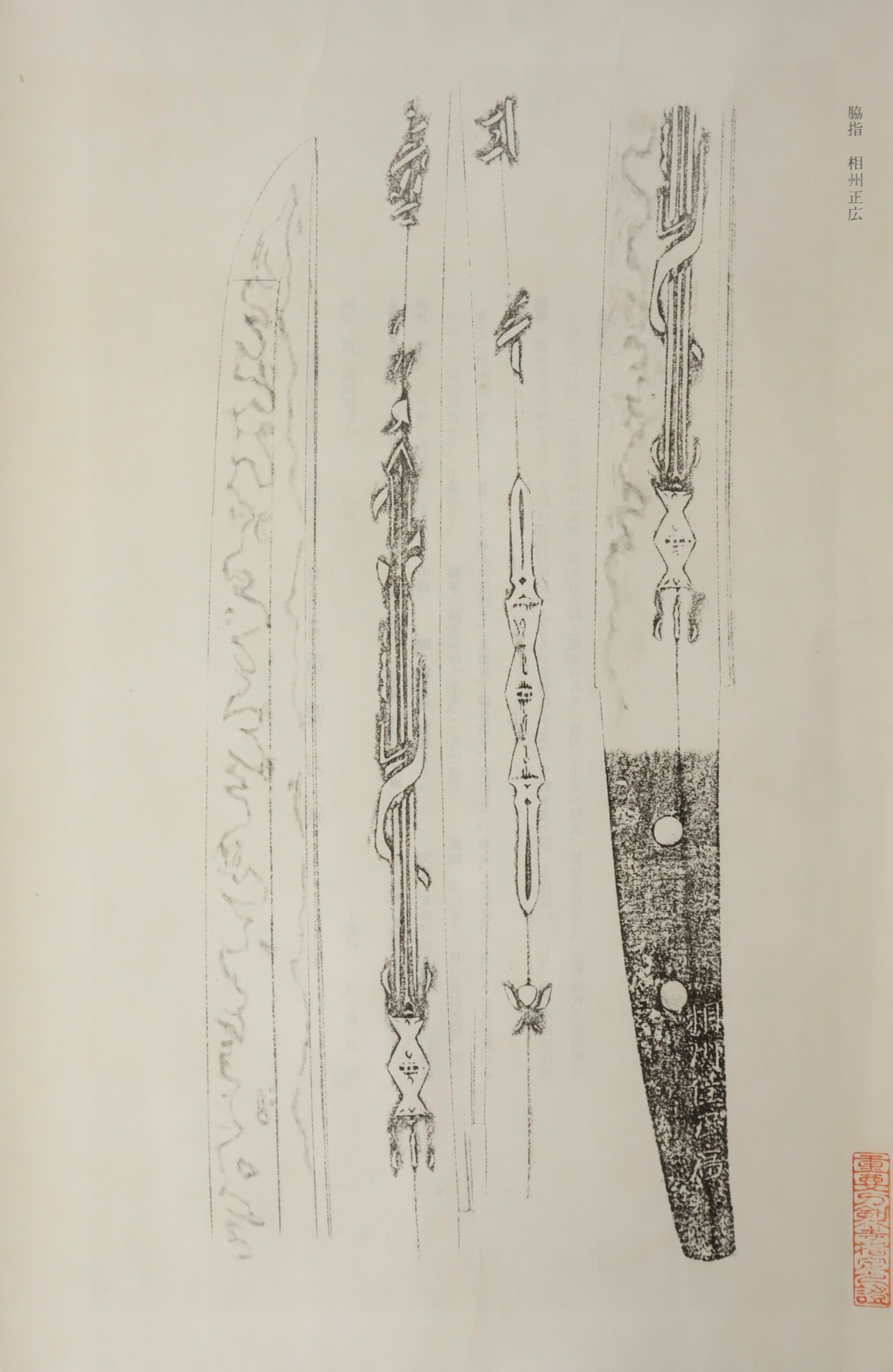
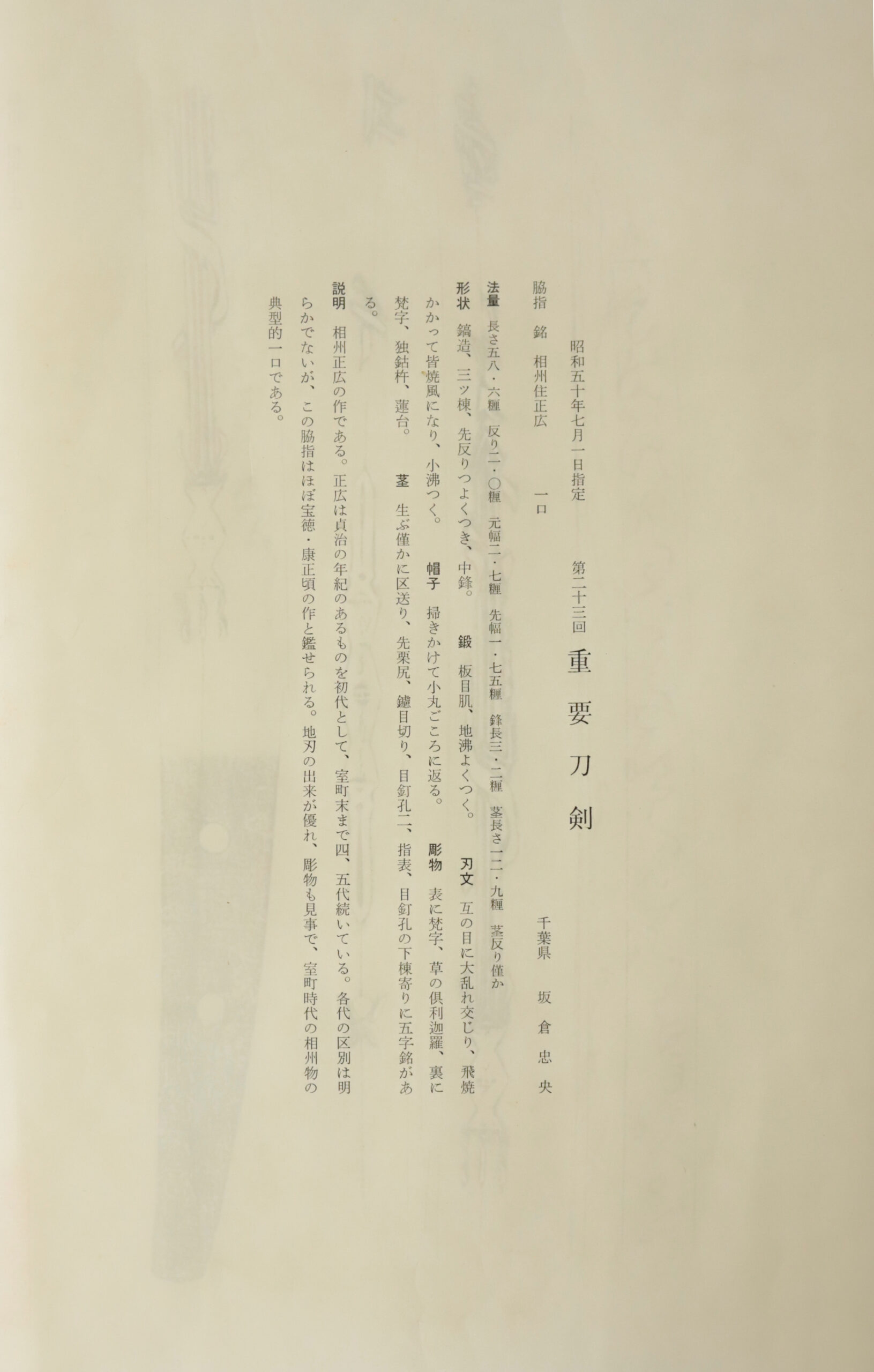
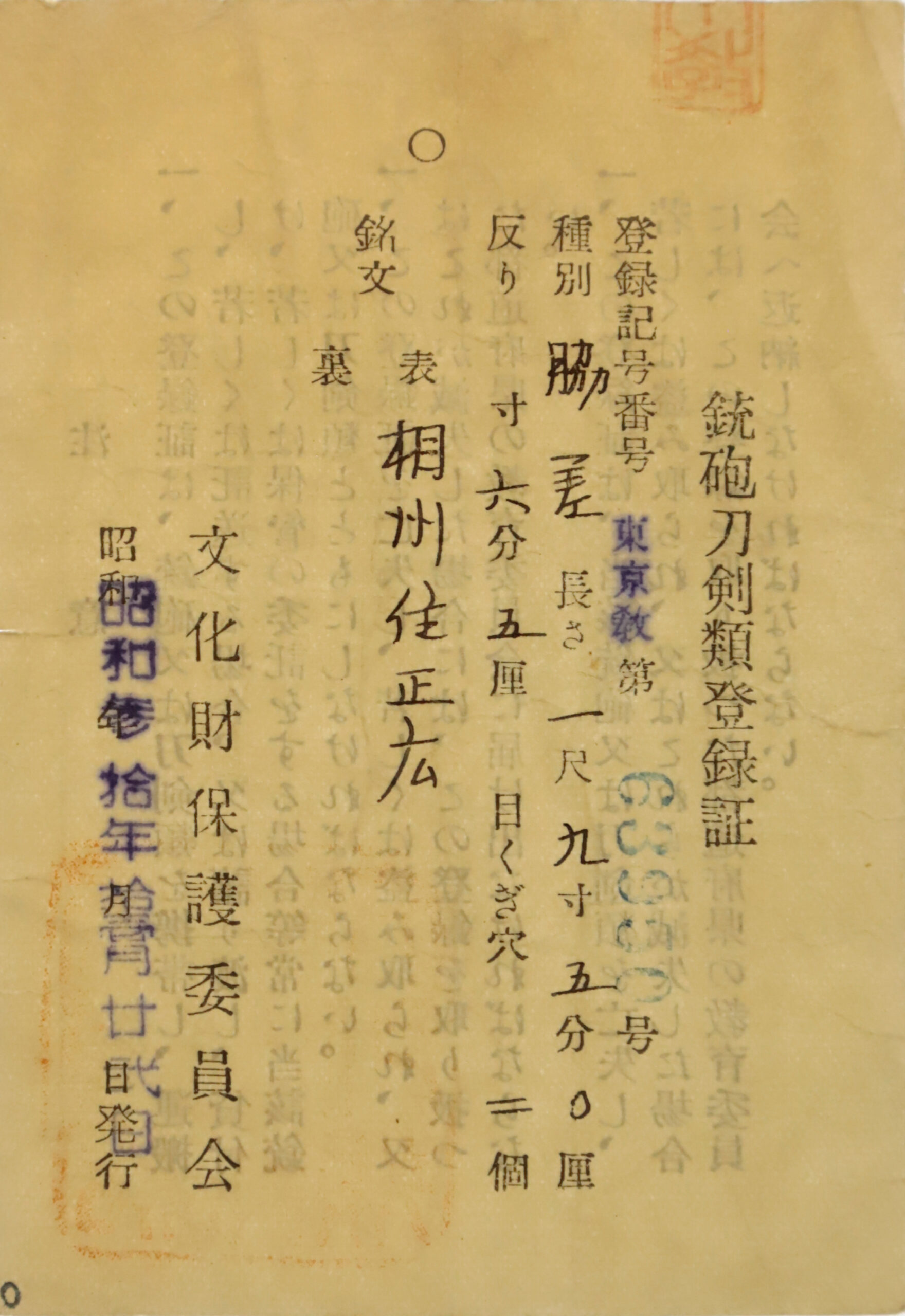
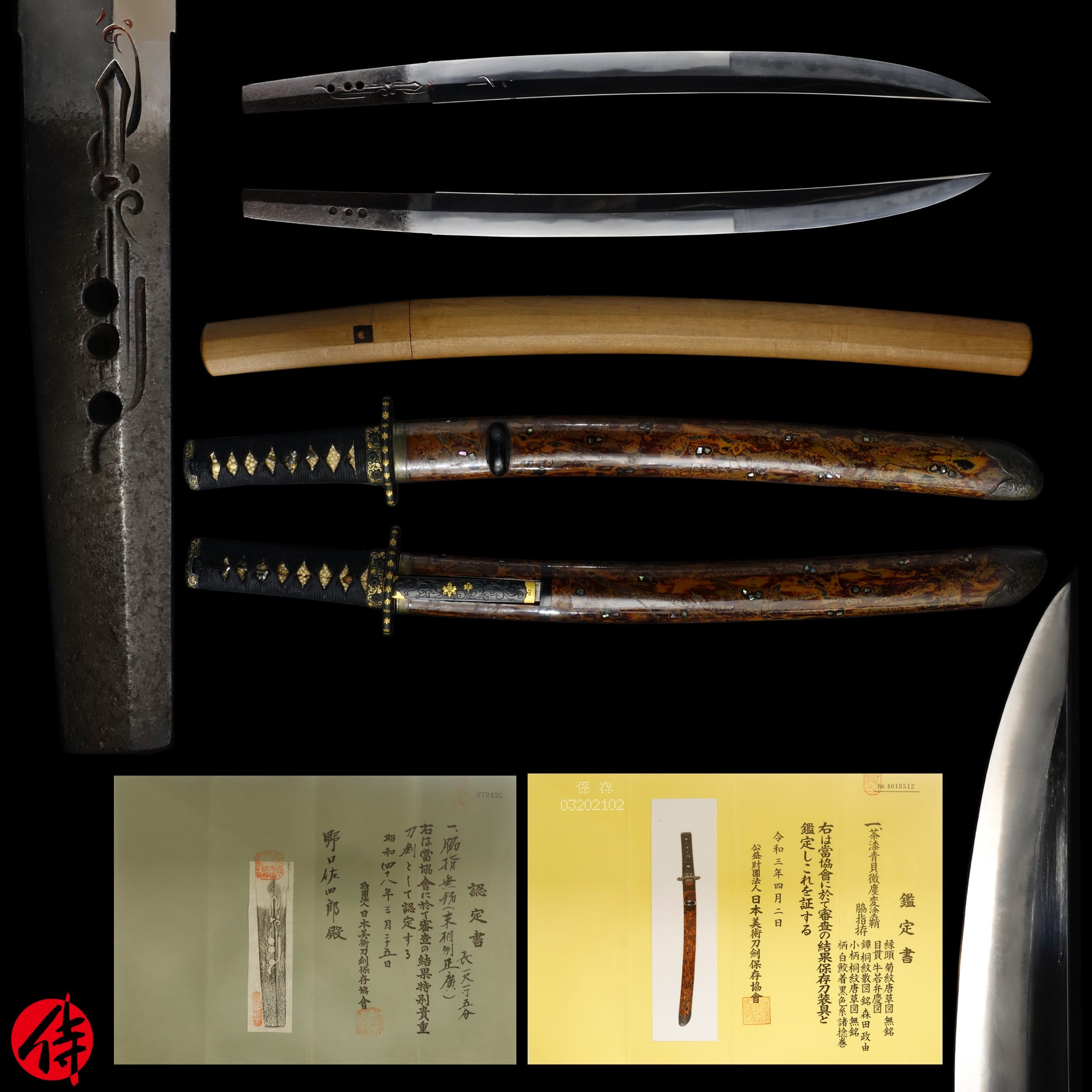
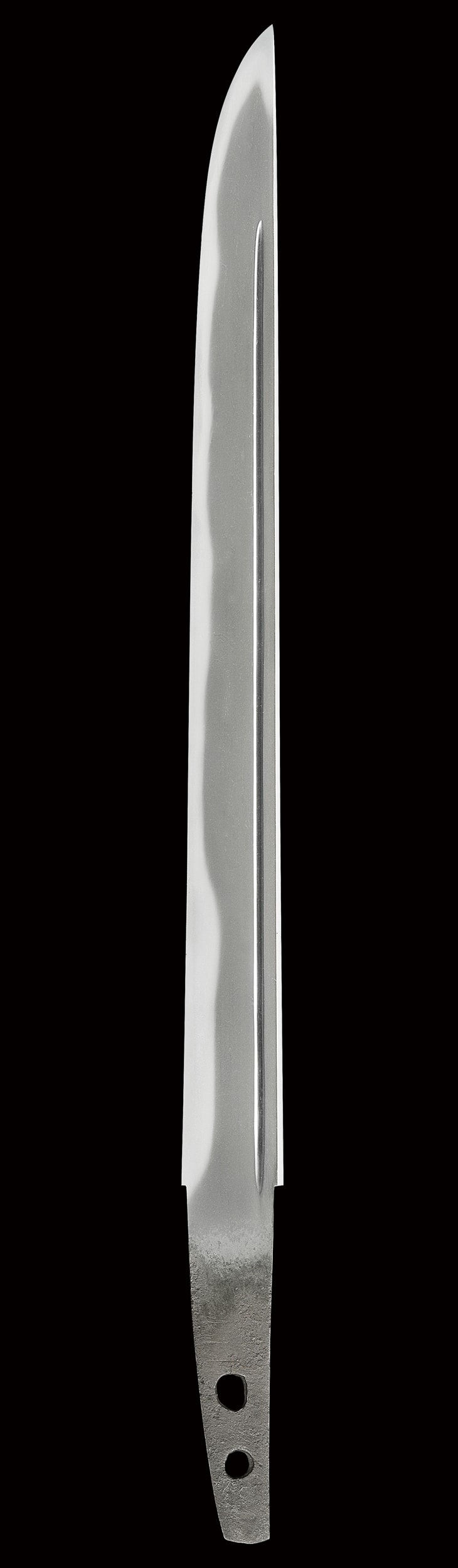
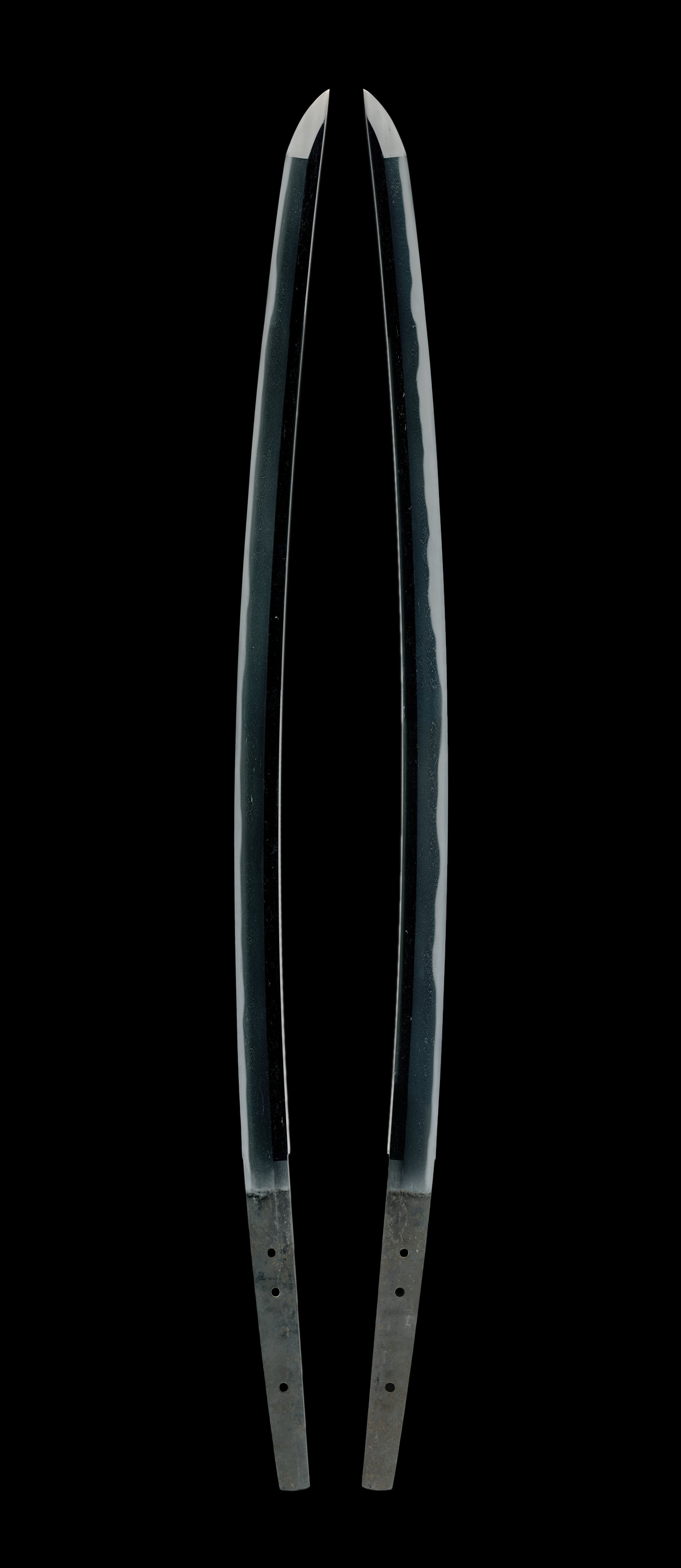
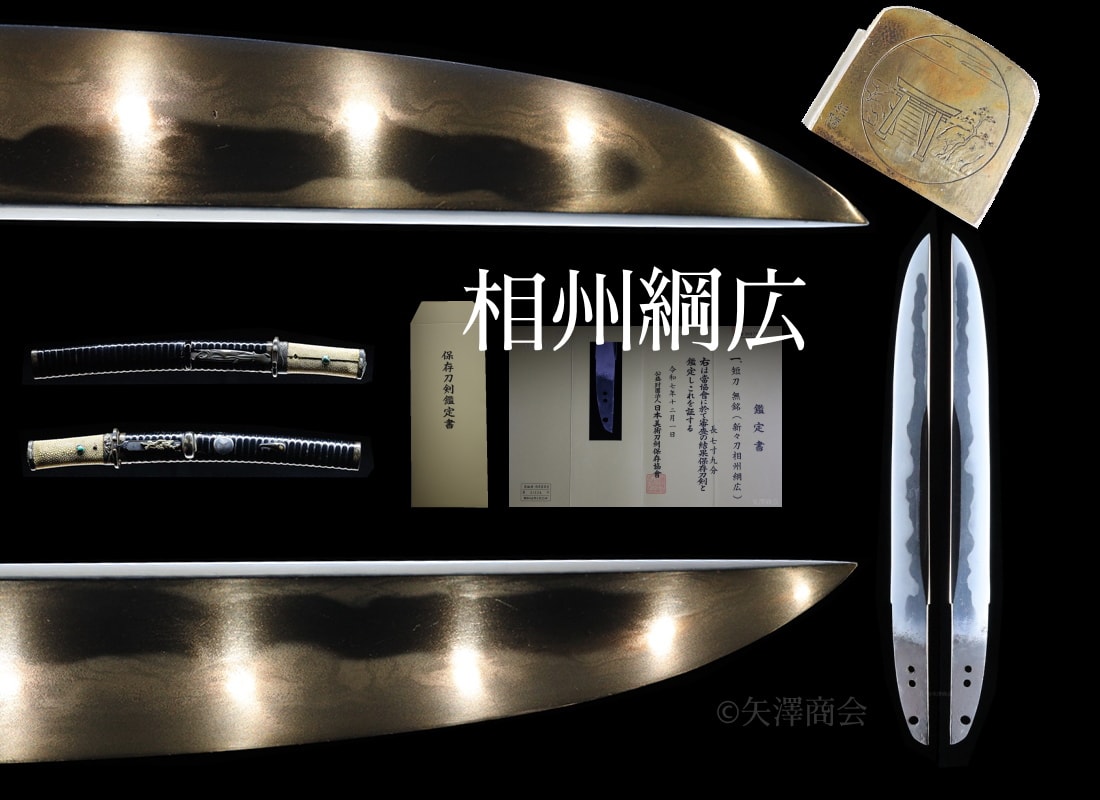
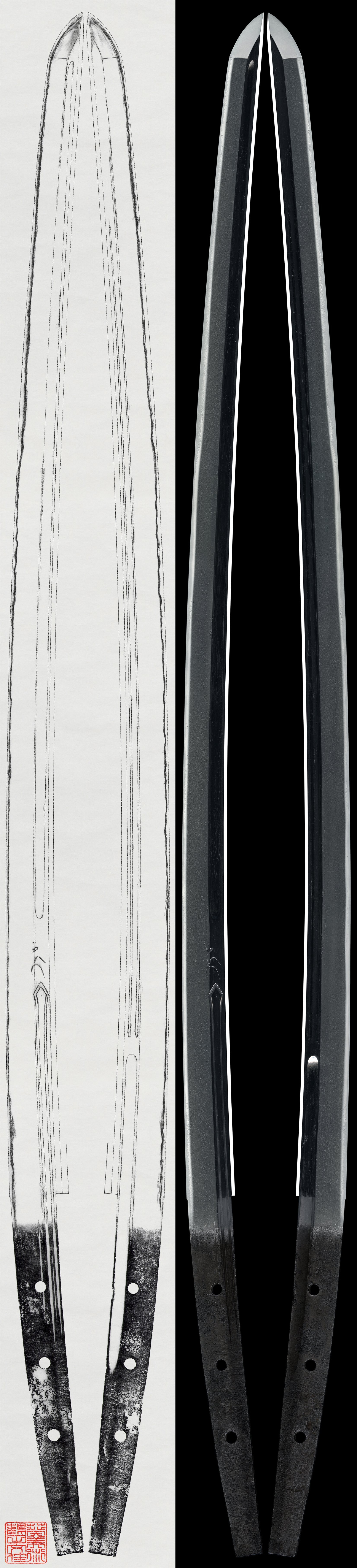
Antique Japanese Sword Wakizashi Signed by Soshu Masahiro with NBTHK JUYO TOKEN Certificate 【Description】 Summary This blade was signed by Soshu Jyu Masahiro (相州住正広). Soshu is the name of the province located in today’s Kanagawa prefecture. Soshu Jyu means a resident of this province. According to available records, the maker’s name Masahiro lasted 4-5 generations from the Nanbokucho-late Muromachi period(mid 14th -late 16th century). Based on the characteristic of this blade, NBTHK mentions that it was approximated made during Hotoku-Kosho era (1449-1466: Mid-Late Muromachi period). The first-gen Masahiro is said to have been an apprentice of Masamune, one of the most famous swordsmiths in Japanese history. According to one theory, a late-gen Masahiro served Hojo Ujitsuna (北条氏綱), the head of the Hojyo clan in Odawara castle town. And, Masahiro received one of the letters, Tsuna (綱) from his master and changed his maker’s name to Tsunahiro (綱廣). During Sengoku Jidai (Warring state period), Masahiro forged swords to meet the high demand for weapons. Masahiro was one of the most famous swordsmiths who mastered Soshu traditions (Soshu DEN) along with Masamune, Sadamune and Hiromitsu. This blade has beautiful Hitatsura. Hitatsura is a type of Hamon (tempering line) where Hamon liberally spreads across the width of the blade. Soshu Den Swordsmiths residing in Soshu province (Today’s Kanagawa prefecture) used a particular sword-forging tradition called Soshu Den. And, Shimada school also used this tradition to forge blades. Shoshu Den was born in the middle of the Kamakura period (mid 13th century). Back then, the Yamato and Yamashiro traditions were highly developed, and there were a few renowned swordsmiths from those regions. However, the sword-forging practice was in its infancy in the Kanto area, where the Soshu region was located. At the beginning of the Kamakura government, which was established in 1185, the first Shogun, Minamoto Yoritomo, prioritized making a lot of rules to have its political stability. And he couldn’t afford to hire swordsmiths within the same region or train them. Therefore, the Kamakura government originally ordered weapons to the swordsmiths in the other areas, such as Yamato and Yamashiro. But, since the government was established, the demand for weapons increased exponentially in the government, and they had to figure out how to meet those demands from Samurai who served Kamakura shogunate. Then, the 5th head of the Shogun, Hojo Tokiyori, invited two renowned swordsmiths from other parts of Japan. They were Awataguchi Kunitsuna from Yamashiro province and Bizen Saburo Kunimune from Bizen province. And the 7th-gen Shogun Koreyasu Shino also invited Fukuoka Ichimonji Sukezane from Bizen province. It is said that those three swordsmiths played an essential role in creating the Soshu Den and making the foundation of the Soshu Den. Also another famous figure in the Soshu den is Intou Kunimitsu, an adopted son of Awataguchi Knitsuna. And Kunimitsu passed his excellent craftsmanship to Yukimitsu, his apprentice. And Masamune, one of the most famous swordsmiths in Japanese history, was an apprentice of Yukimitsu. And Masamune was the one that brought Shoshuden to nationwide fame. The tradition Masamune completed became an example of other swordsmiths who learned Soshu Den. Also, Soshu Den influenced many renowned swordsmiths during the Koto- Shinto era. One of examples is Inoue Shinkai from Osaka and Suishinshi Masahide from Edo. Horimono (Engraving) Different kinds of objects are engraved on this blade. They are Kusakurikara Ken(草倶利伽羅剣), Dokko (独鈷), Rendai (蓮台) and Bonji (梵字: Sanskrit letter). These items are all related to Buddhism.Kurikara is the sword that Fudo Myo-O (不動明王, acalanātha) holds with his right hand. Fudo Myo-O is one of the objects of worship in Buddhism. According to a theory, it is the incarnation of Dainichi Nyorai (大日如来, Mahāvairocana, the principal image of esoteric Buddhism). Kurikara

Antique Japanese Sword Wakizashi Signed by Soshu Masahiro NBTHK JUYO TOKEN Certificate
売切れ
Jūyō売切れ

Antique Japanese Sword Wakizashi Signed by Soshu Masahiro NBTHK JUYO TOKEN Certificate

脇差

売却済

世界81社の刀剣商を横断追跡 · 価格履歴 · 売却アーカイブ

仕様

長さ

58.6 cm

反り

2 cm

作者について

Sue-Soshu Masahiro正廣

1 重要美術品7 重要刀剣

相州住正広は、南北朝時代から室町時代にかけて相州鎌倉で活躍した刀工である。初代は貞治年間(1362-1368)に年紀のあるものが確認されており、室町時代末期まで四、五代続いたとされる。銘鑑には正宗の門人と記載されることもあるが、年代的に考慮すると正宗との直接的な師弟関係は疑問視され、間に一人を介在させる必要があろう。作風から広光、秋広との関連性も指摘されている。政広と銘を切る刀工も存在する。 正広の作風は、板目肌に地沸がよくつく地鉄に特徴がある。刃文は、互の目乱れを基調とし、丁子刃、小湾れなどが交じる。飛焼、湯走り、金筋、砂流しが見られるものもあり、皆焼風となる作もある。帽子は乱れ込み、尖りごころに返るもの、掃きかけて小丸ごころに返るものなどがある。姿は、平造、鎬造があり、寸延びで身幅が広く、重ね薄く、反りの浅いものが多く見られる。彫物は、倶利迦羅、梵字、三鈷剣などを表裏に施す。茎は生ぶが多く、先栗尻、鑢目は切り、勝手下りがある。銘は指表の目釘孔の下、棟寄りに五字銘を切るものが多い。「相州住」と在銘するものが多いが、「鎌倉住」と切るものもある。 正広の刀は、地刃の出来が優れ、彫物も見事であると評される。健全なものが多く、資料的価値も高い。南北朝時代の年紀のあるものは珍重される。各代の区別は明らかではないものの、室町時代の相州物の典型として位置づけられている。

刀剣商

サムライミュージアム

samuraimuseum.jp

売切れ