説明

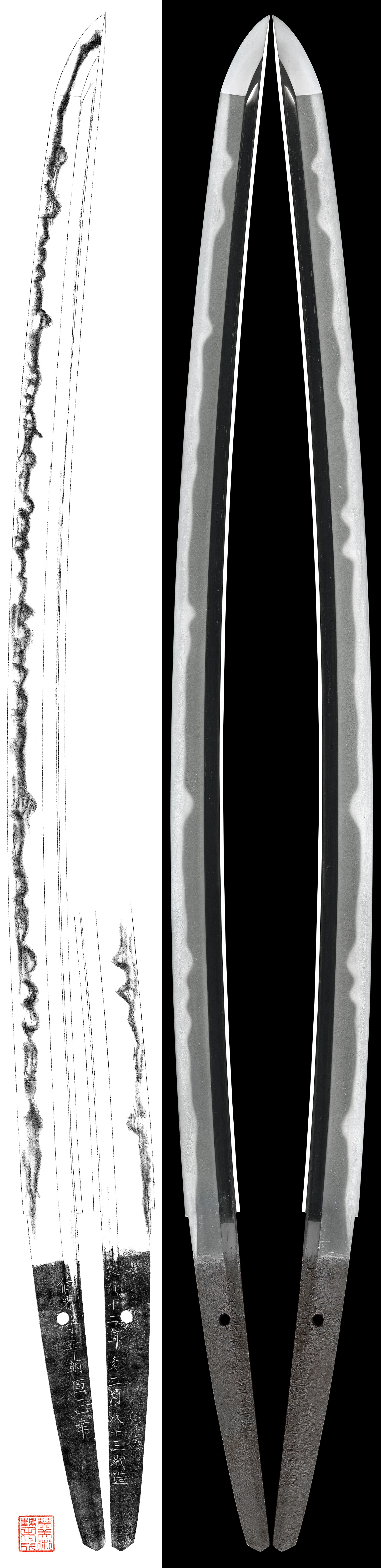
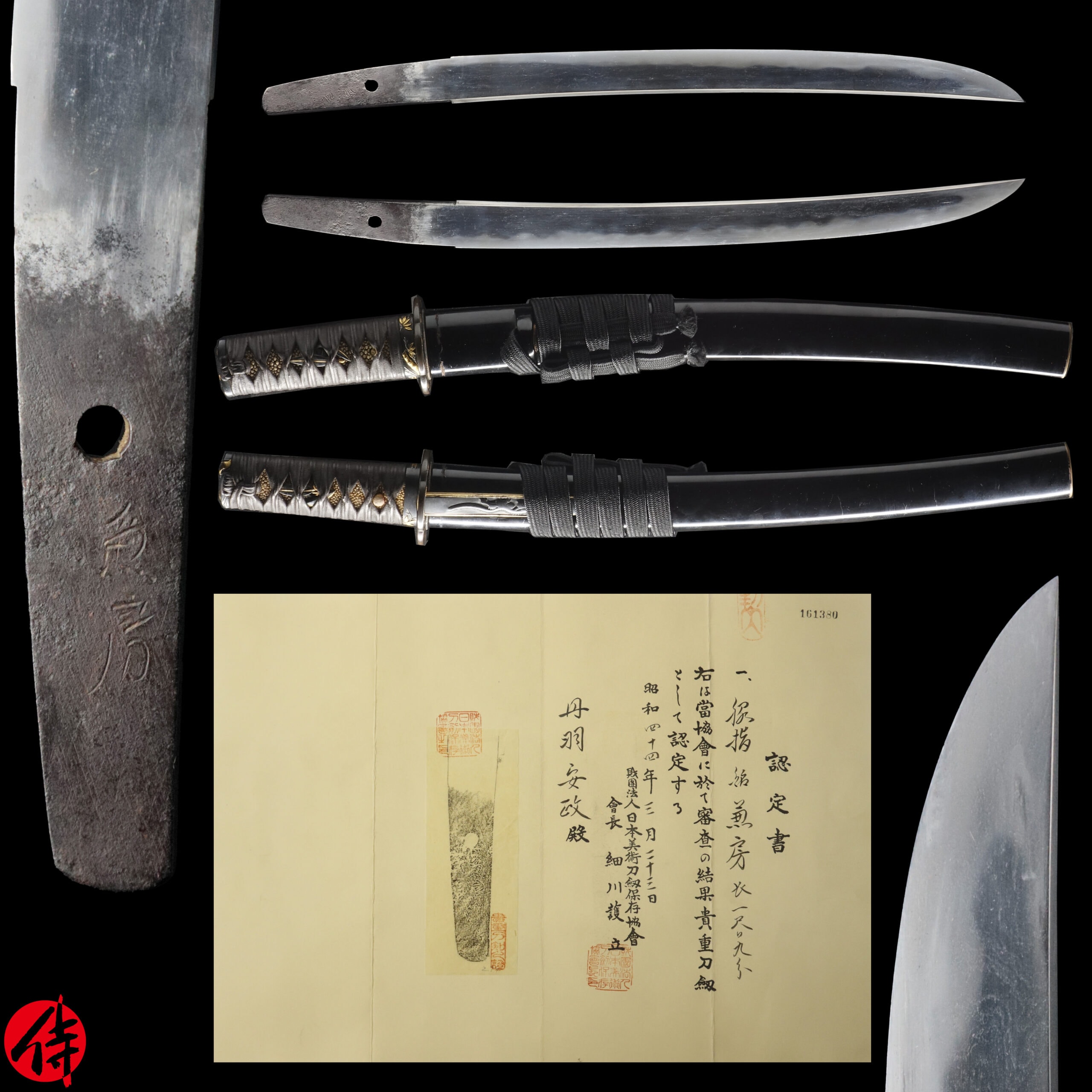
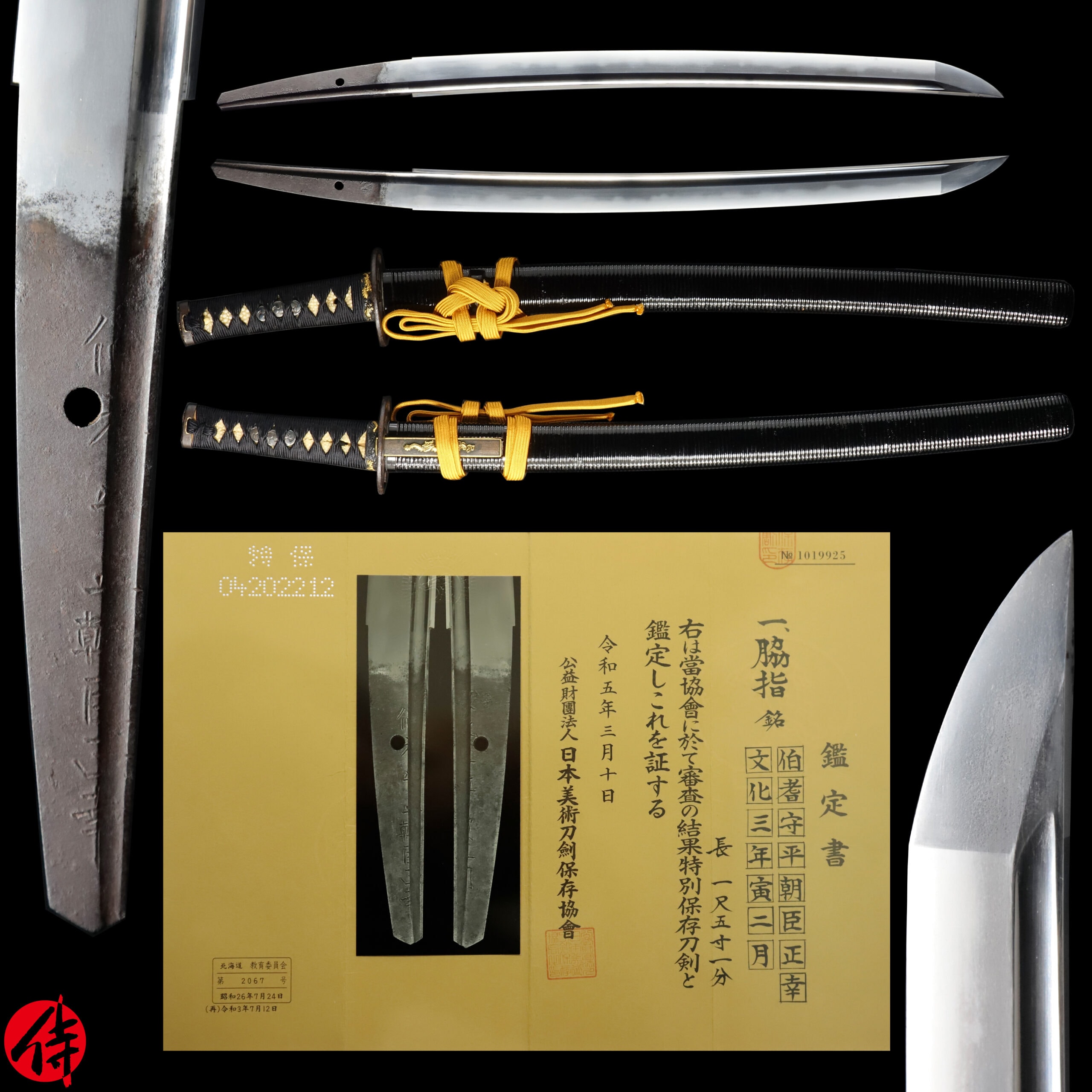
Antique Japanese Sword Wakizashi Signed by Masayuki with NBTHK Tokubestsu Hozon Certificate 【Description】 This blade was signed by Hoki no Kami Taira Ason Masayuki (伯耆守平朝臣正幸) in the third year of the Bunka era (1806). Due to the Hi (groove on the blade), the half the signature is not very clear. Nevertheless, NBTHK appraised it a a work of Masayuki. According to available records, Masayuki was active during 1772-1817 (The end of the Edo period). Masayuki was born in the 18th year of the Kyoho era(1733)as the first son of the second-gen Ijichi Masayoshi(伊地知正良). Masayuki first called himself Masayoshi(third-generation Masayoshi) after taking over his father’s school. And in the first year of Kanei(1769), he received Hoki no Kami (伯耆守) as an official title and changed his maker’s name to Masayuki. He passed down the maker’s name, “Masayoshi” name to his first son. Masayuki died at the age of 86 in the first year of 1818. We believed he reached the pinnacle of his career when he forged this blade and you can see excellent quality. Masayuki was one of the most famous swordsmiths in the Satsuma domain(Kagoshima prefecture) in the late Edo period, apart from Okuyamato no Kami Motohira. It is said that Masayuki was passionate about training his students. There were 60 swordsmiths who learned the sword-forging technique under Masayuki. Satsuma province had a high ratio of Samurai population compared to other parts of Japan. And they are famous for their military power ruled by Shimazu clan. We assume a swordsmith needed to be very skilled to stay active and popular in this demanding place. Masayuki was one of them. Masayuki’s father served the Satsuma domain. It was highly likely that Msayuki also forged swords for this domain, considering his prestigious position. This blade is appraised as a Tokubetsu Hozon Token (特別保存刀剣) issued by NBTHK(Nihon Bijutsu Touken Hozon Kyokai:日本美術刀剣保存協会). This authentication paper was only given to authentic Japanese swords, especially well preserved and high quality with artistic value. *Please keep in mind that there are a couple of tiny black rust on this blade. If you like to know the detailed condition, please feel free to contact us. 【Blade】 Cutting Edge Length(Nagasa) : 45.8 cm ( 18.0 inches) Curvature(Sori) : 0.9 cm (0.35 inches) Hamon : The crystalline structure which forms along the cutting edge of a blade as a result of the hardening process Jimon(Jihada) : visible steel surface pattern created by folding and hammering during forging process Kissaki : Kissaki is the tip of the Japanese sword. Nakago : Nakago is the tang of the Japanese sword. Japanese swordsmiths left the black rust on the tang because it prevents red rust while the tang is in its handle. And the discoloration of the tang was created over time, and it is a great indicator for a Japanese sword specialist to estimate when the sword was forged. Koshirae: Koshirae is the mounting of the Japanese sword. There are several parts that consist of Koshirae such as Saya(Scabbard), Tsuka( Handle), Tsuba(Handguard). Fuchi-Kashira : A pair of matching sword fittings that cover the upper and bottom parts of its sword hilt. About the design of the Kshira, we believe the motif is probably a Kabu (蕪, turnip). Although some coloring has already been flaked off due to aging, it looks it was initially painted with bright golden color. It is one of the seven herbs of spring in Japan. People eat these herbs on January 7th, hoping for good health. Also, it is believed that it would protect people from evil spirits. About the Fuchi, the principal motif is the dragon. This dragon is carefully carved even in detail. You would enjoy its dignified figure. Initially, the dragon is an imaginary creature found in ancient traditions or myths. Furthermore, it is regarded as a symbol of auspicious signs. Its body is likened to nine animals: antlers are deer, the head is a camel, eyes are demons, the neck is a snake, belly is the Mizuchi (蛟, mythical animal in Ja

Antique Japanese Sword Wakizashi Signed by Masayuki NBTHK Tokubetsu Hozon Certificate
売切れ
Tokuho売切れ

Antique Japanese Sword Wakizashi Signed by Masayuki NBTHK Tokubetsu Hozon Certificate

脇差

売却済

世界81社の刀剣商を横断追跡 · 価格履歴 · 売却アーカイブ

仕様

長さ

45.8 cm

反り

0.9 cm

作者について

Satsuma Masayuki正幸

27 重要刀剣

伯耆守正幸は二代伊地知正良の子で、薩摩の藩工伊地知家の工、享保十八年に生まれた。三代目を継いで初めは正良と銘し、宝暦の頃よりの作が記録に残る。寛政元年、年長の同郷の工奥元平が大和守を受けると同時に伯耆守を受領し、正良の名を嫡男に譲って、自らは正幸と改めた。作歴は長く、年紀と行年を切る作が八十五歳まで残り、文政元・二年、八十六・七歳で没している。説明書は本工を、今に至るまで変らぬ一つの併称で位置づける。奥元平とともに薩摩新々刀の双璧と称えられ、説明書自身の言葉で、奥元平とともに「薩摩新々刀中の双璧」であるとする。父祖に優る技量を示し、出藍の誉が高かったと同じ説明書は記す。 本領は、説明書が本工得意の相州伝と称する身幅広く長寸で頑丈な造込みの刀であり、本工自らこれを相州伝と呼び、説明書は「自から相州伝という」と記す。体配は身幅広く重ね厚く鋒延び、一般に頑丈な造込みである。その上に浅いのたれ調の互の目乱れを焼き、尖りごころの刃を交える。尖りを帯びた互の目こそ、極めが本工の得意として最も多く挙げる見どころであり、匂深く、沸厚くやや荒めにぱらぱらとつき、荒沸を交える。刃を貫いて頻りな砂流しと長い金筋がかかり、これが薩摩で芋蔓と称される沸の流れ筋である。尖り刃と流れる蔓とが本工を認める背骨であり、丁子にあらず荒い沸に読む相州伝であって、説明書はその手本を直に名指し、本工の作風を「相州伝、就中、志津に倣った作柄を得意としている」とする。 下地の地鉄は終始変らぬところである。よく練れた板目、多く杢・流れ肌を交えてつみ、地沸厚く地景風の黒い変りがね入り、最上の作では明るく冴える。その上で帽子は乱れ込みあるいは直ぐに小丸・大丸に返り、先を掃きかけて時に沸崩れごころとなる。説明書が茎そのものに鑑定点として挙げる一つの見どころがある。茎は殆んど生ぶで、剣形あるいは入山形の先へ細り、鑢目勝手上り、太鏨の大振りの長銘を切り行年を添えるものが多い。そして大半の刀に棒樋を彫るのは、身幅広く重ね厚い関係からと説明書は記し、身幅が比較的尋常な作にのみ樋を掻かない。 記録は銘と時期で分かれる。前期、受領と改名の前に正良と銘した作は、覇気ある相州伝の手が現れる前の、より静かな面として読まれる。小のたれに互の目を交え、足・ほつれ入り、厚く沸つき処々荒沸つき砂流しかかり、帽子は大丸ごころとなって先沸崩れる。その前期の刃の下地はすでに本領に持ち込む薩摩の鉄であり、大板目の目立つ広い板目に流れごころを交えるから、正良の面は別の伝ではなく同じ手を静かに保ったものである。年紀作の中には日付を超える銘もある。寛政十二年の一口は、庚申の日が一年に七度当たる年に鍛えた刀は武運長久を得るという庚申信仰を切り、説明書が珍しいとする銘であり、別の一口は茎に「南無八幡大菩薩」の神号を彫る。 同国の中で本工を位置づけるのは、まさに極めの言う併称と説明書の立ち返る手である。まず年長の同郷の工元平に対して読まれ、両者は薩摩新々刀の双璧として併べられる。一方は奥家、一方は伊地知家であり、同年に受領した。他と分かつのは借りものの比較ではなく本工自身の描かれた見どころである。身幅広く頑丈な姿、匂深い互の目乱れに交わる尖り刃、掃きかけの帽子に通じる荒沸、そして流れる芋蔓である。説明書はその品位をこの蔓に照らして測り、島津家伝来の一口を、かえって「芋蔓風の金筋・沸筋」が表れぬがゆえに品位が高いと称える。本工は伊地知家の筆頭に立ち、この系の薩摩新々刀を読む手である。 収集の観点では、本工は薩摩末期の屈指の名であり、藤代の極めは上作である。国宝はなく、重要文化財もない。現代の指定は重要刀剣の級を通じ、二十八口がこの級にあり、寛政の頃から歿年近くに及ぶ作歴にわたって、いずれも生ぶ・在銘である。その中の伝来は格高く、彼の藩に固有である。一口は薩摩藩主島津家に伝来して鶴丸城の御用意刀として襲蔵され、一口は島津の分家樺山家に伝わり、縁頭と鐺が正幸自身の手になる薩摩拵を伴う。指定を受けた作の多くは、私蔵のものを含めて取引されず保たれており、本工得意の相州伝の在銘の良品が市に出るのは時に、そして忍んで初めてである。本工の作は、古伝の固く保たれた遺産に比べては、一流の新々刀の名工の中では比較的見出しやすいが、年紀と行年を切った覇気のある相州伝の刀はなお相応の収集であり、薩摩の鍛刀が奥元平と並んで末期の頂に至った証である。

刀剣商

サムライミュージアム

samuraimuseum.jp

売切れ