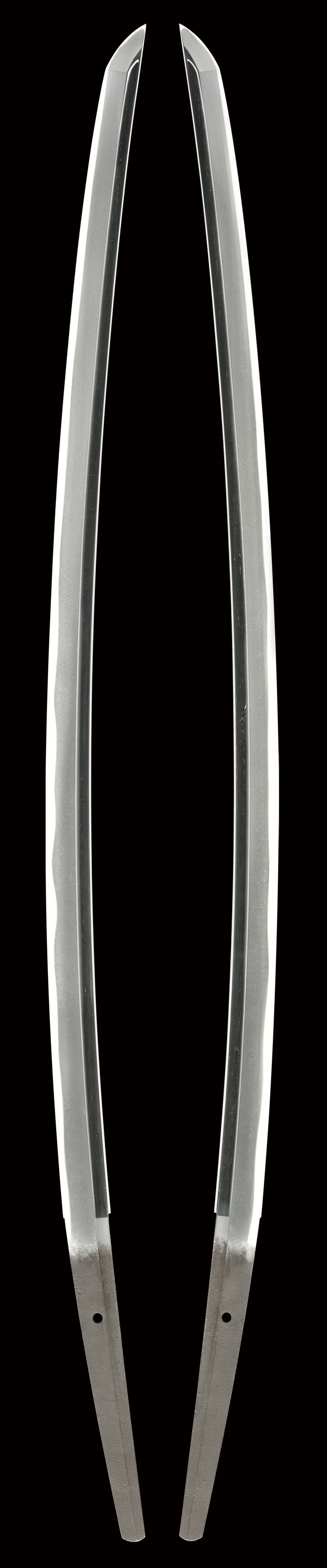
応仁の乱が足利の体制を砕いた後、戦国の一世紀はほとんどすべての国を武装させた。この時代は選ぶ目に報いる。並の作は多いが、その傍らには第一級の注文打ちが立っている。
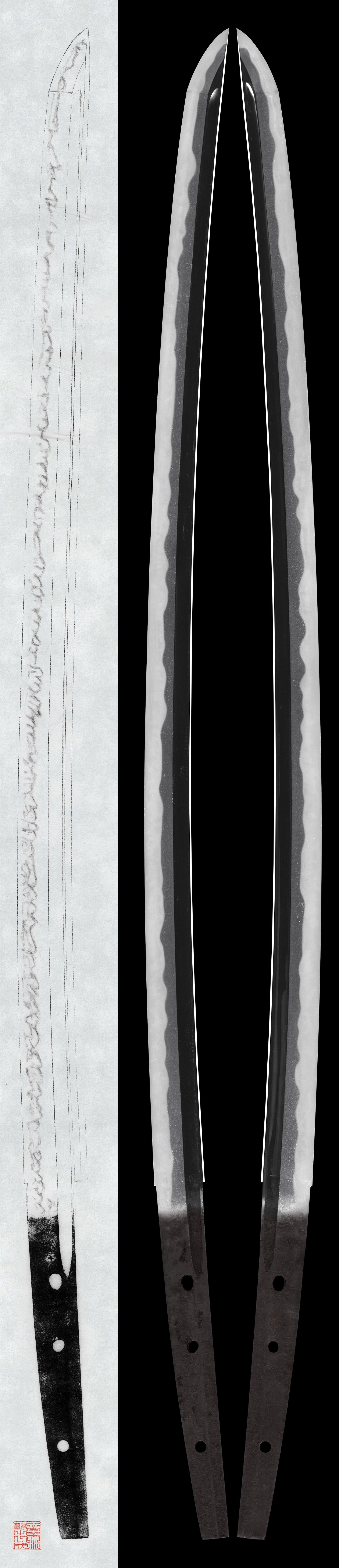
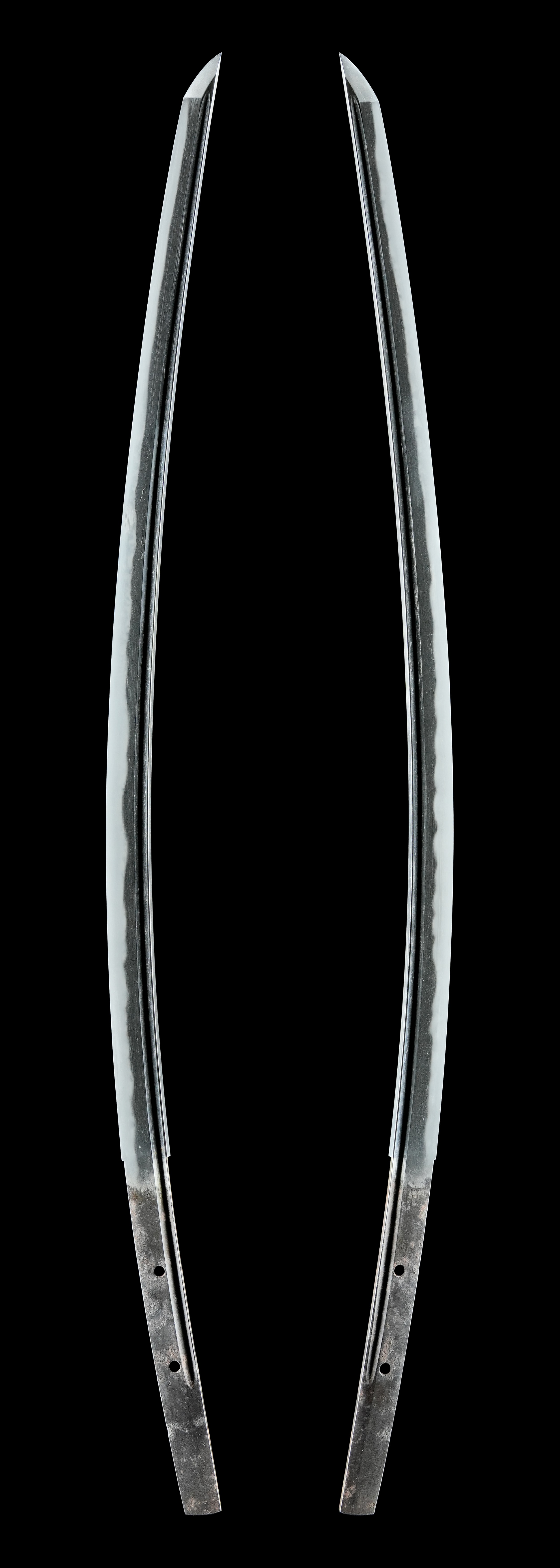
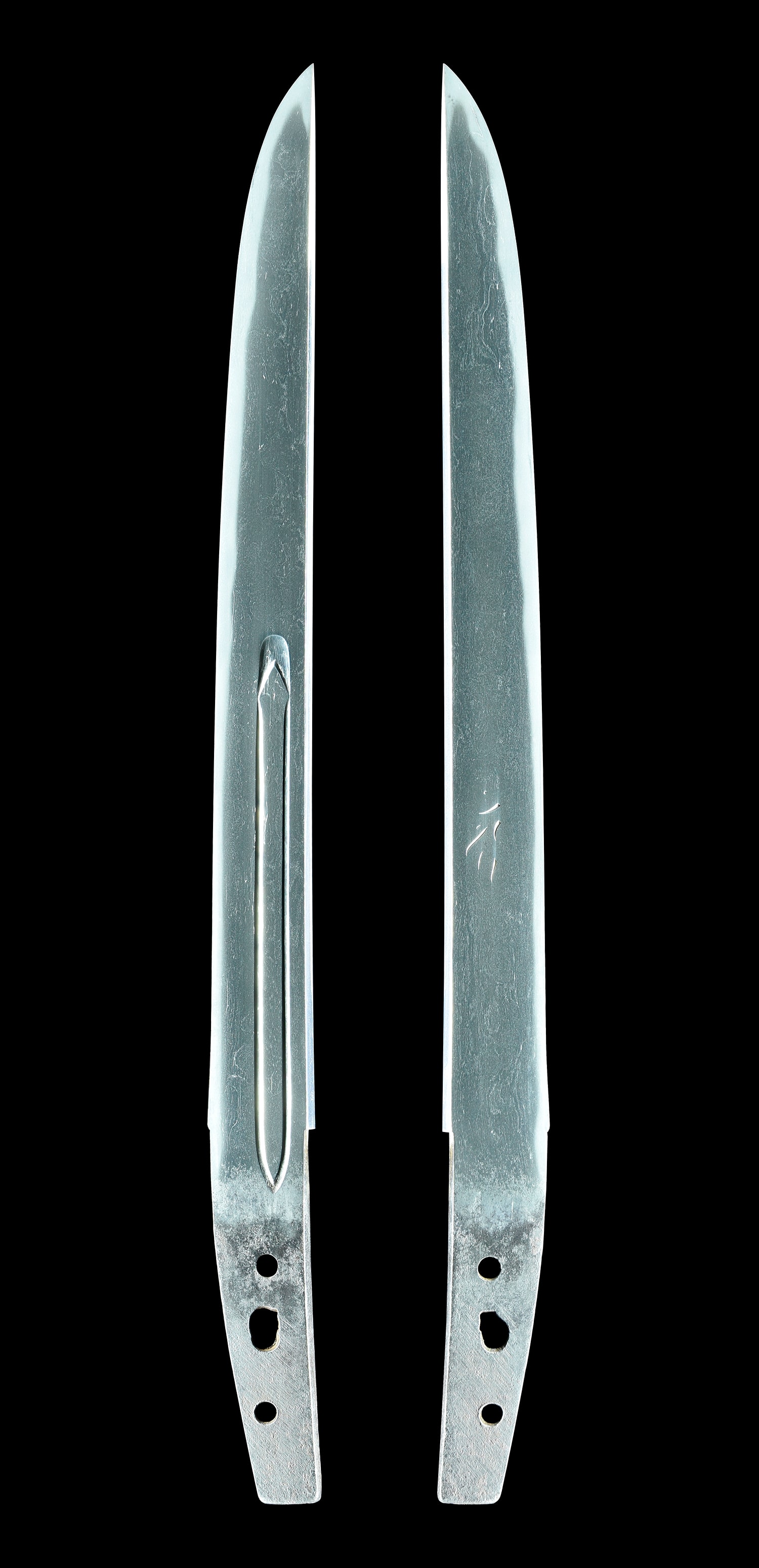
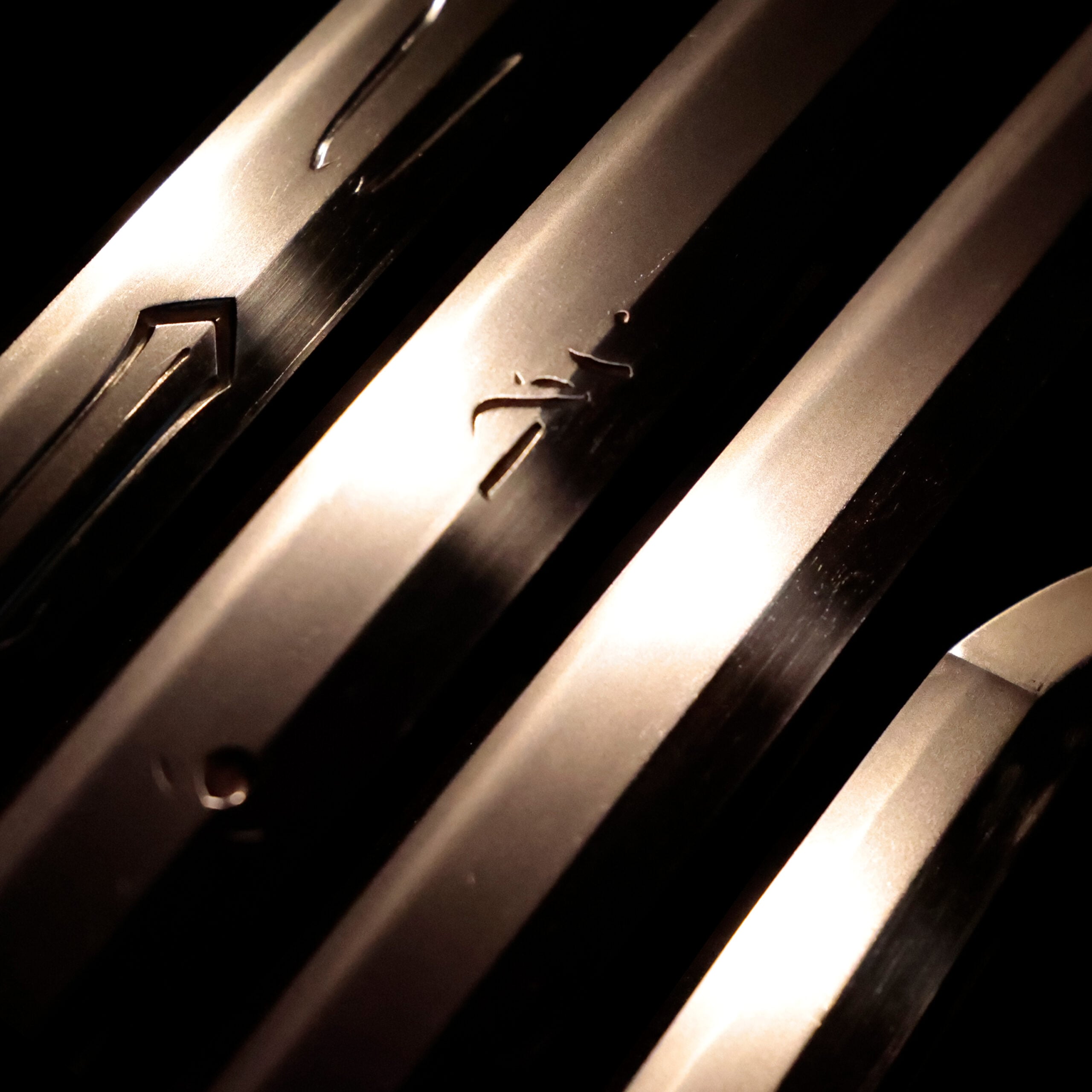
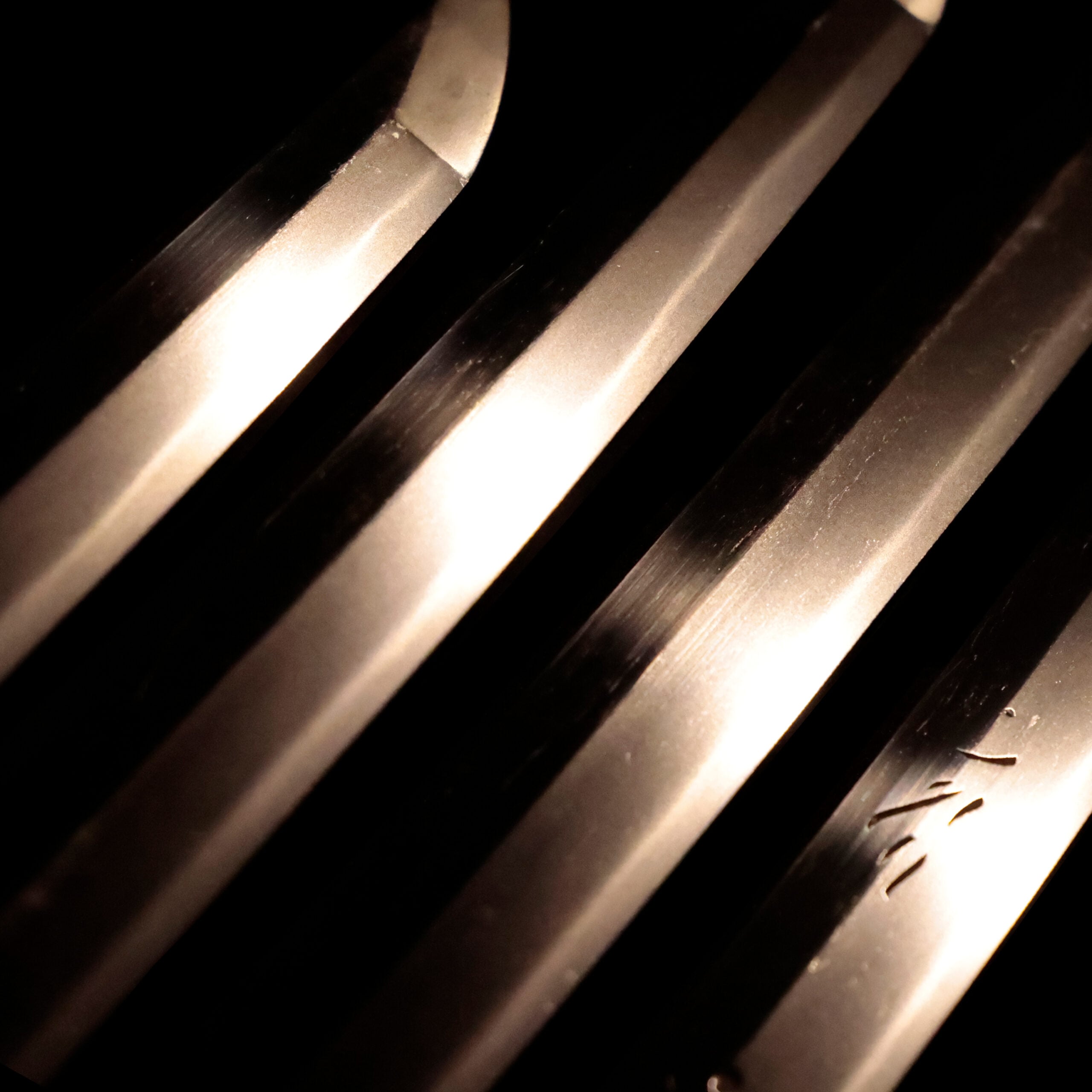
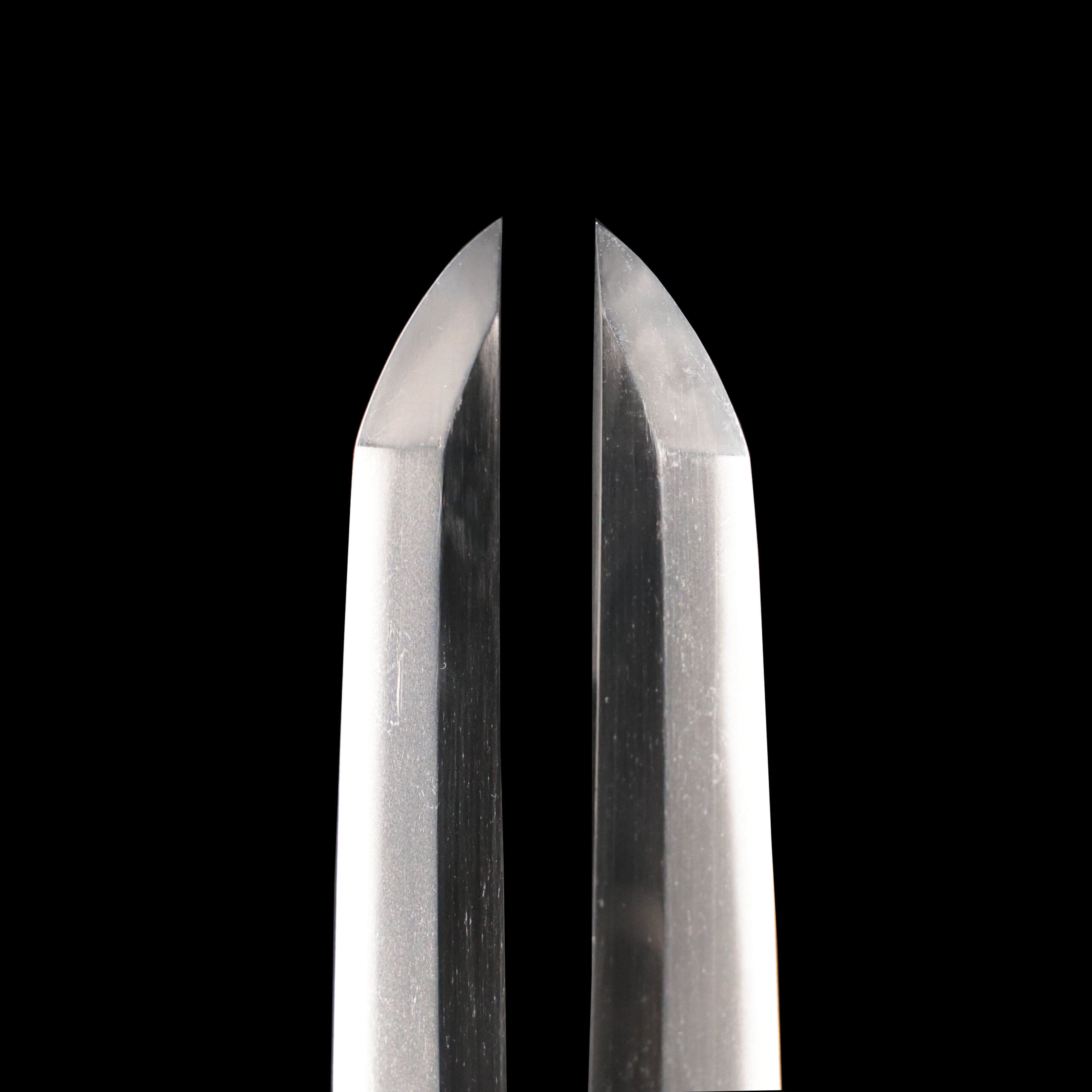
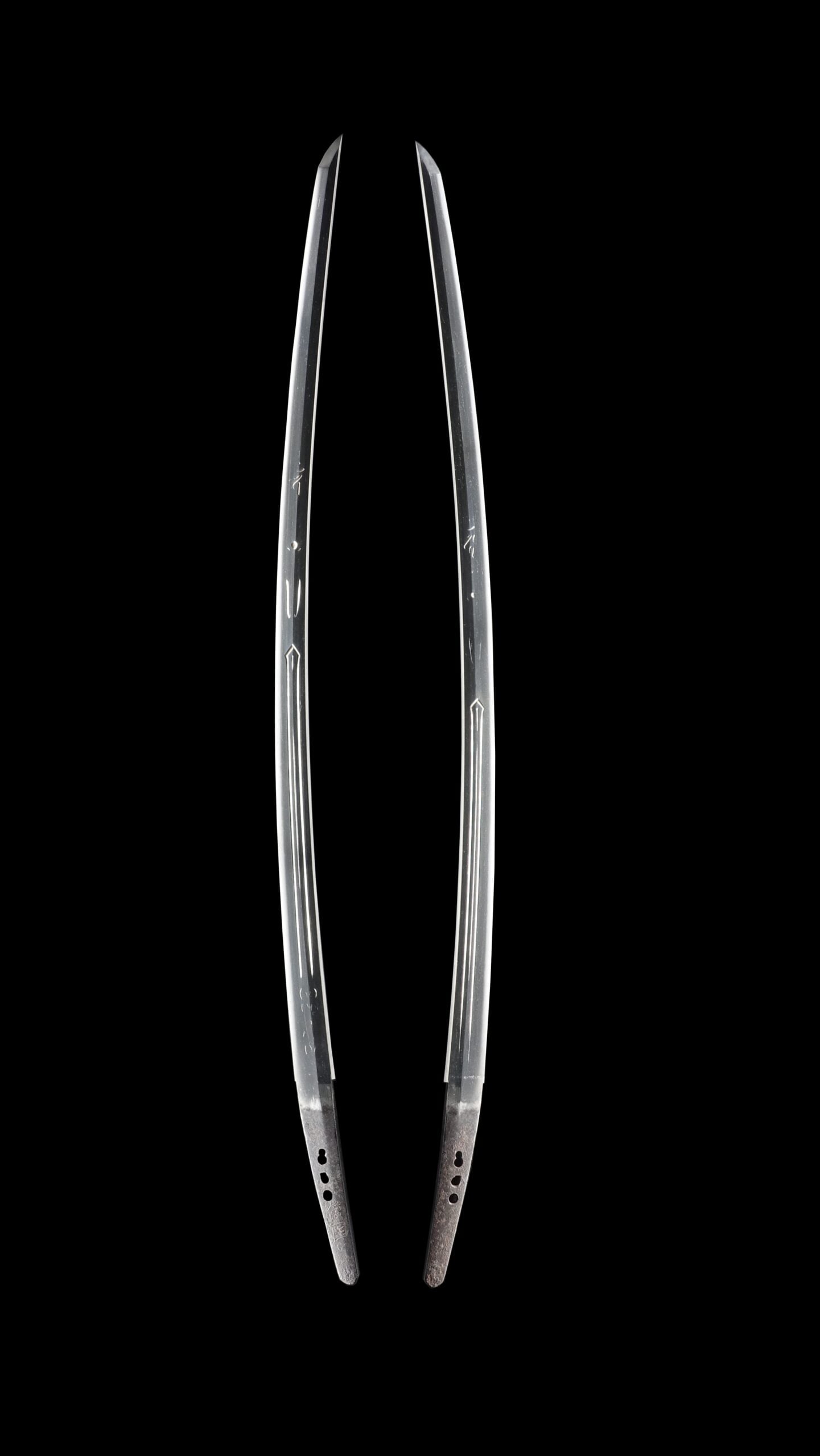
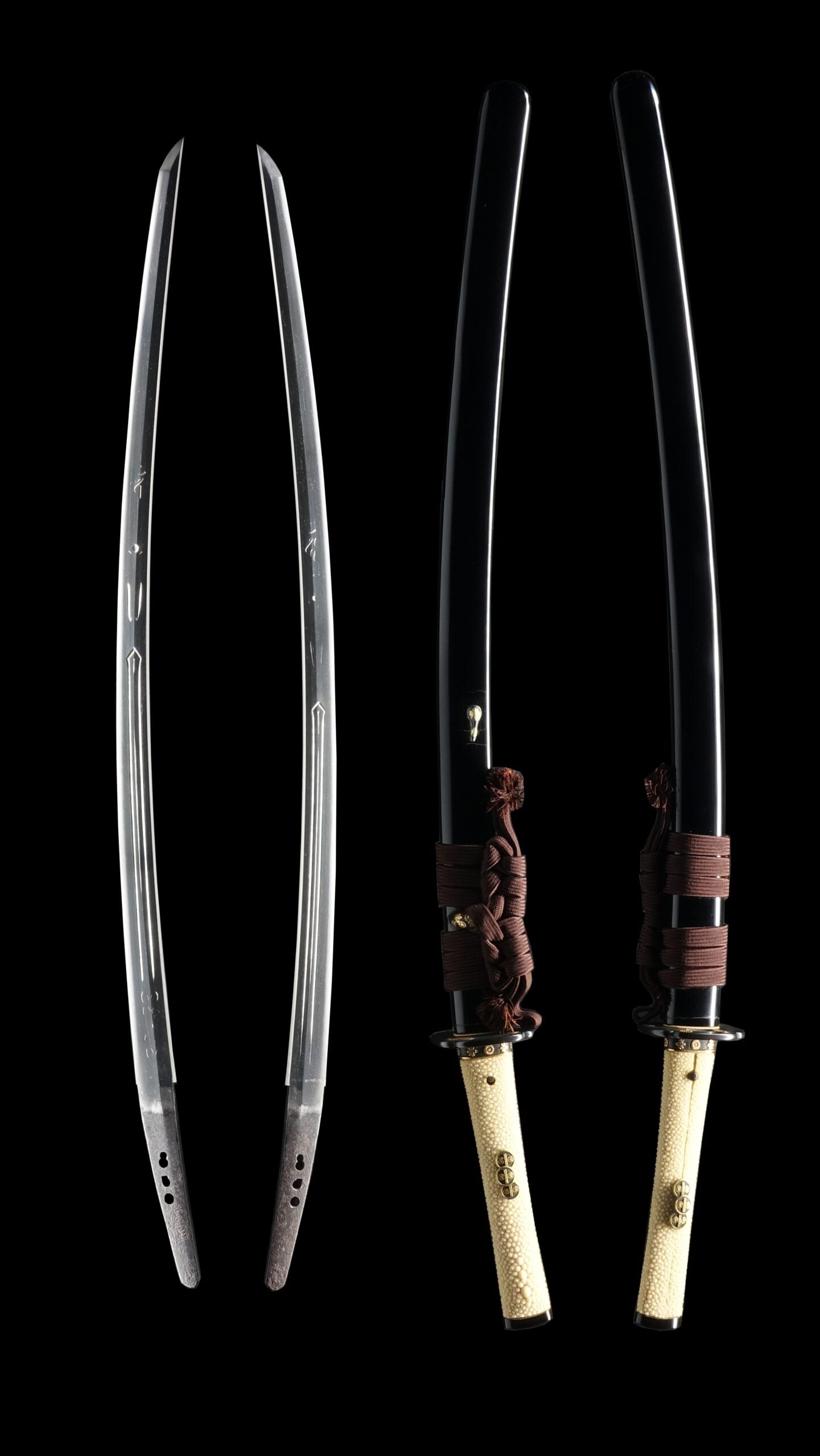
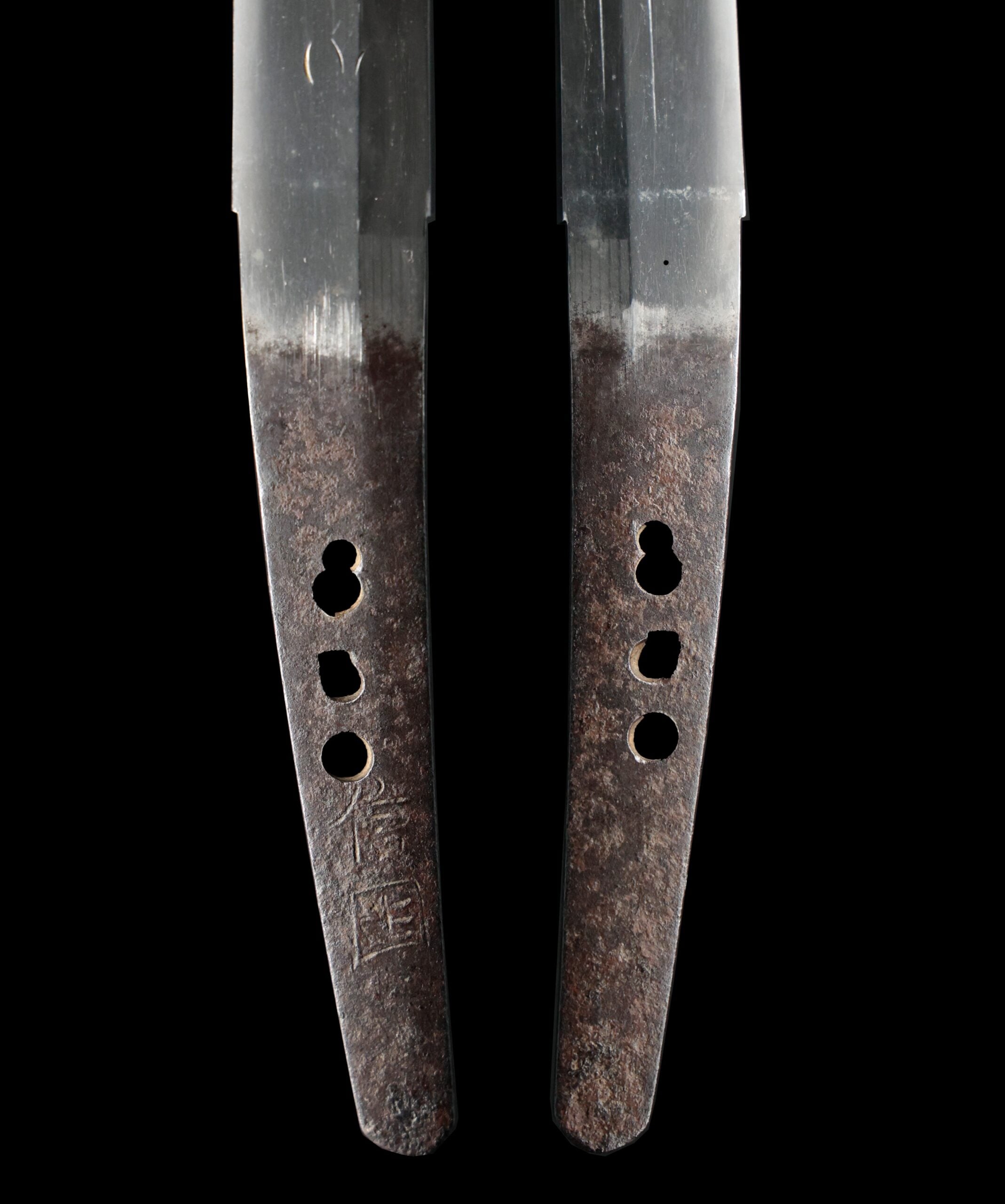
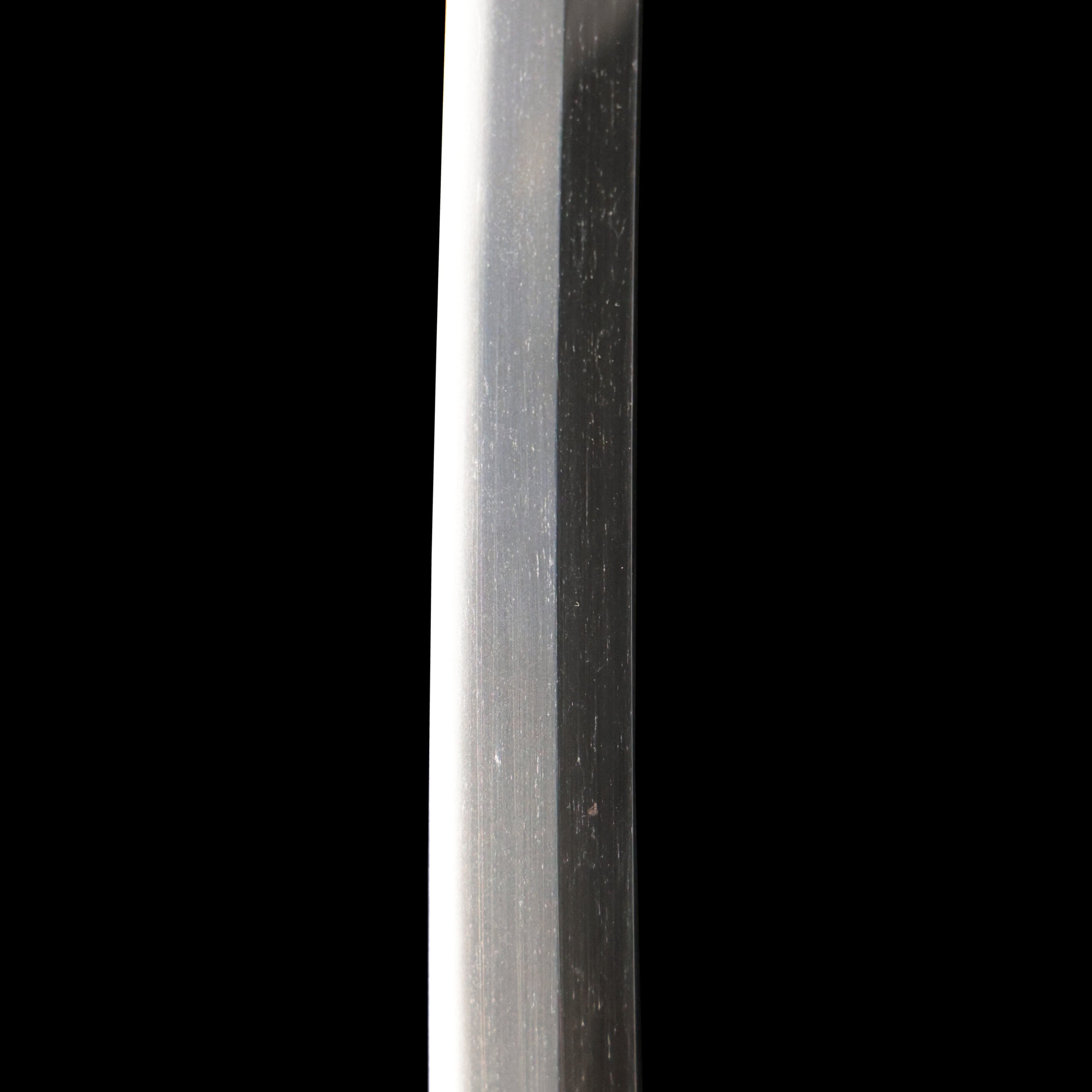
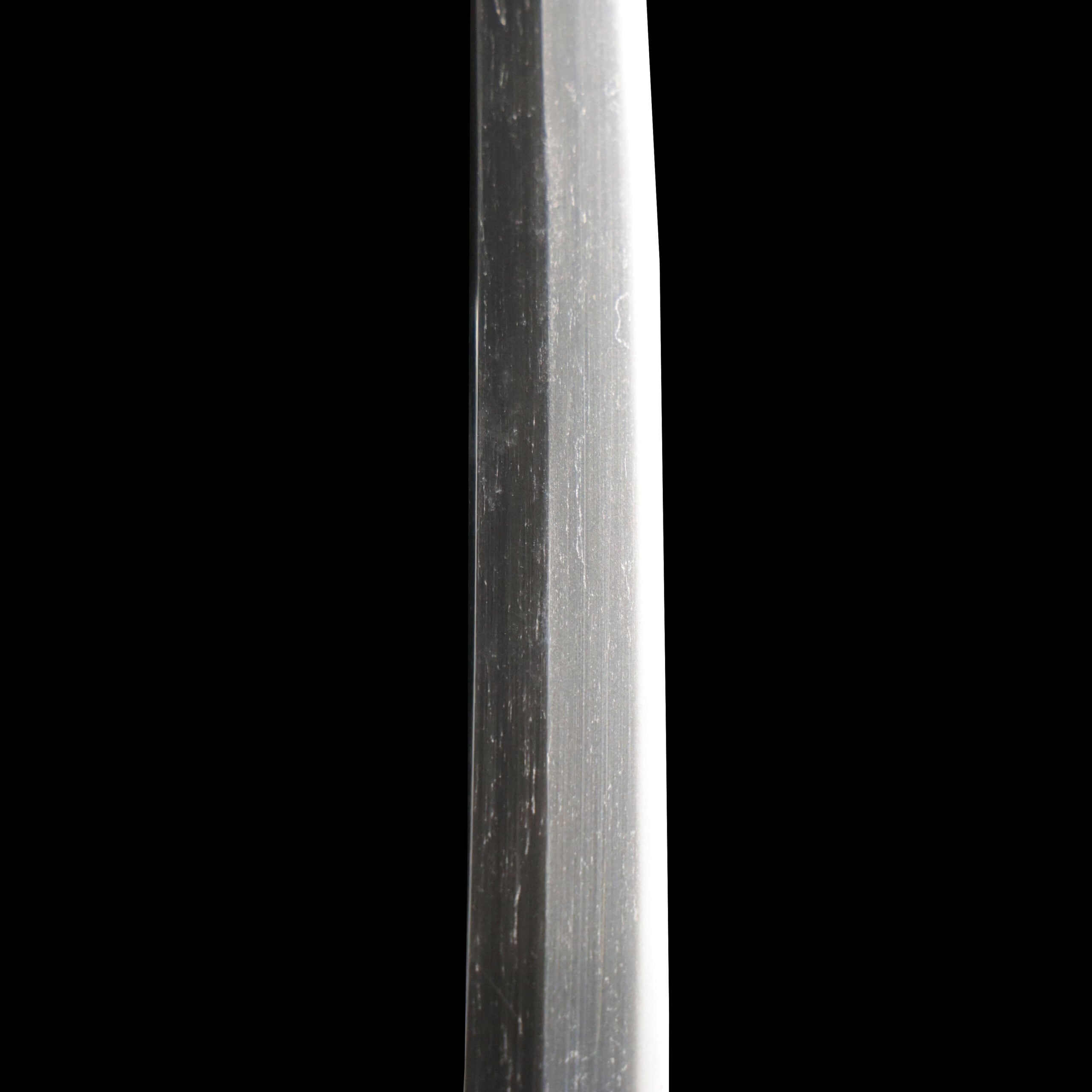
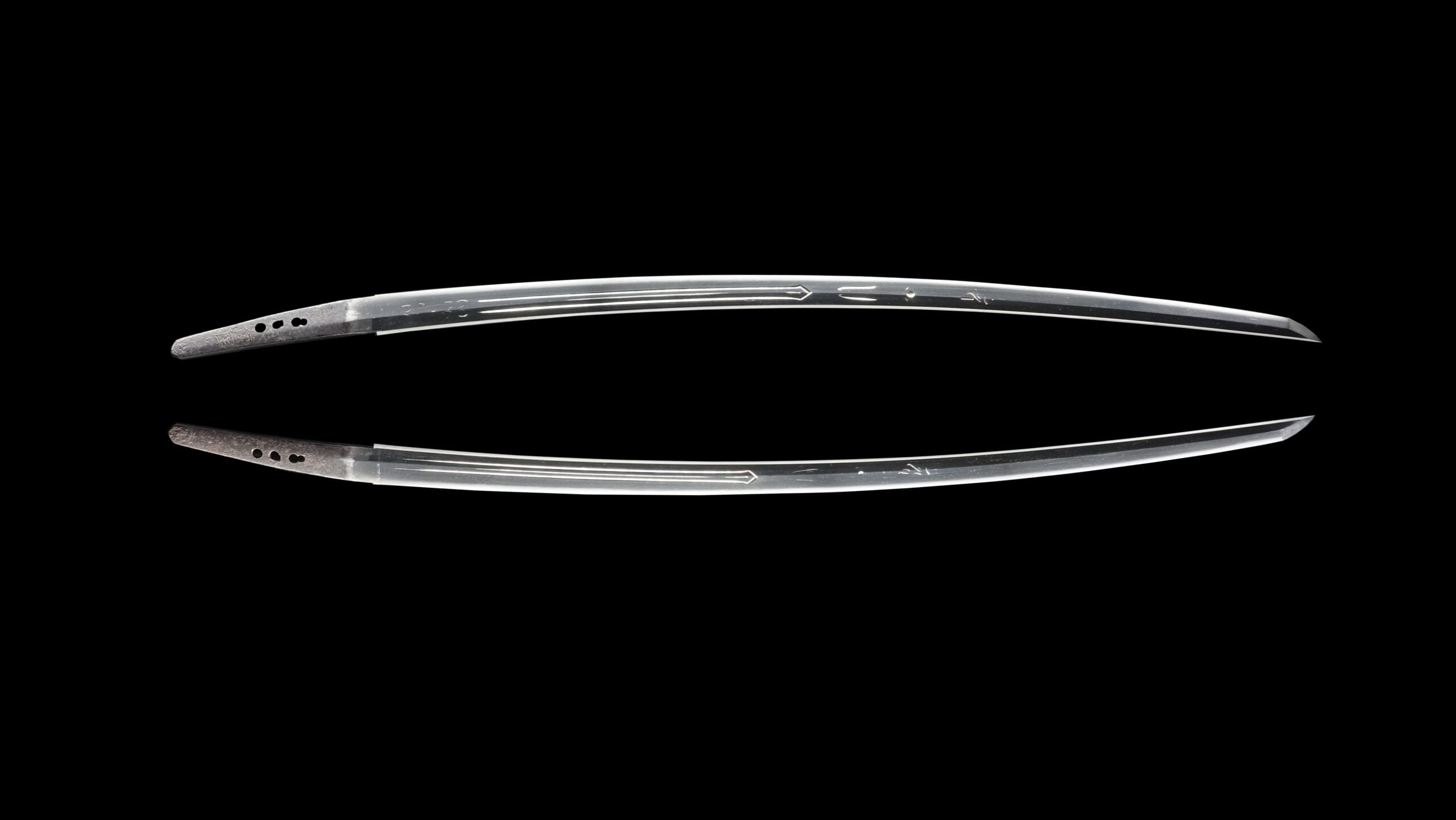
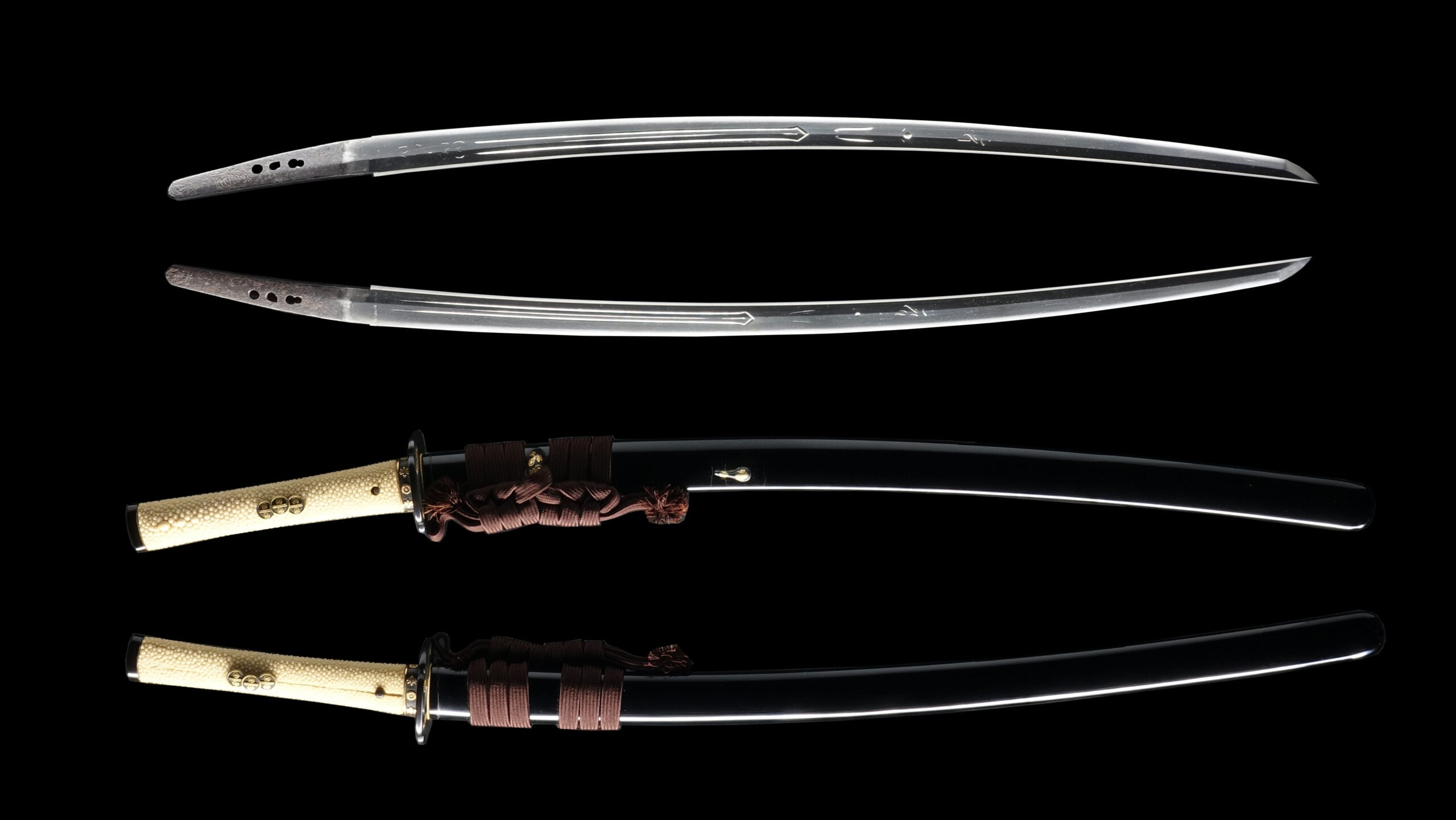
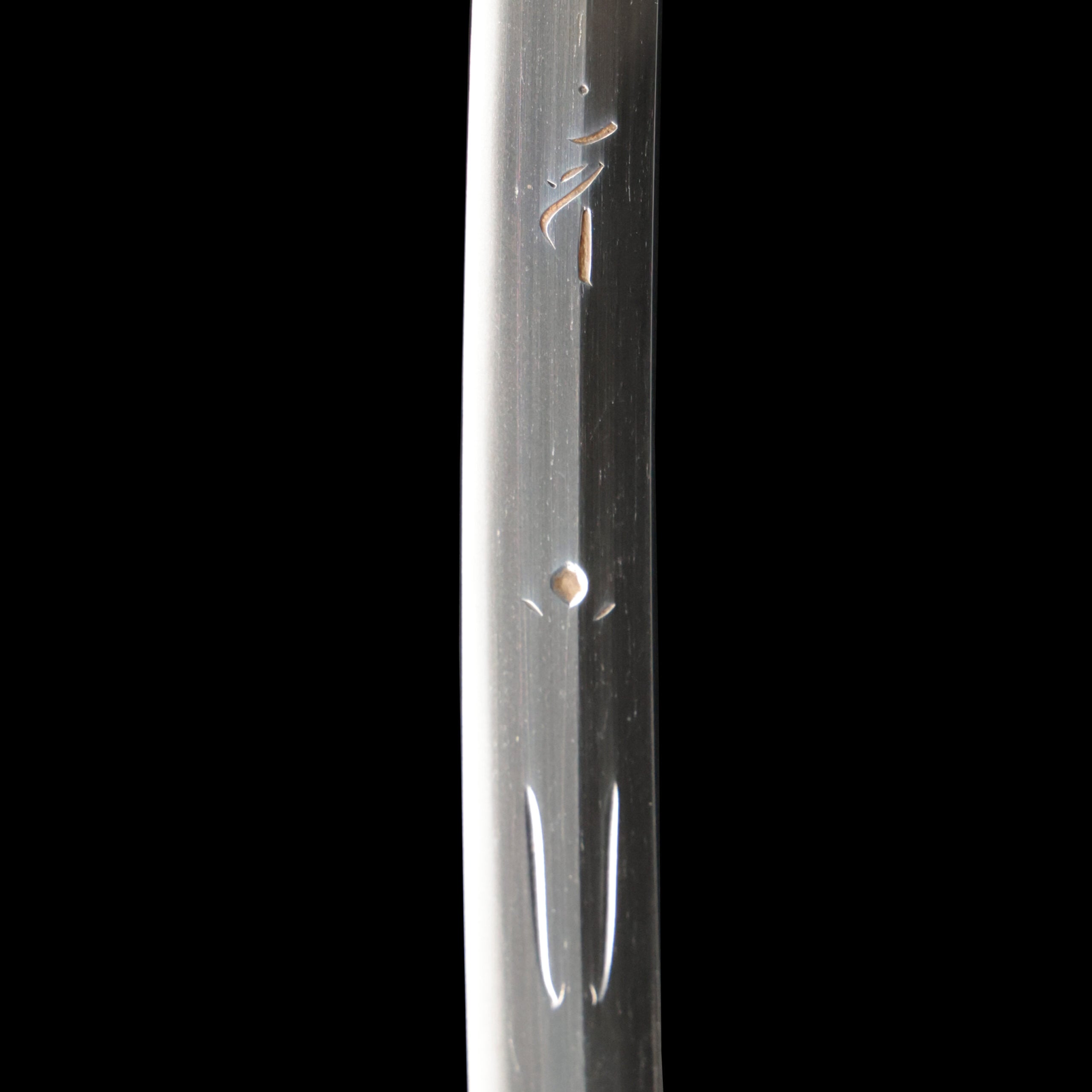
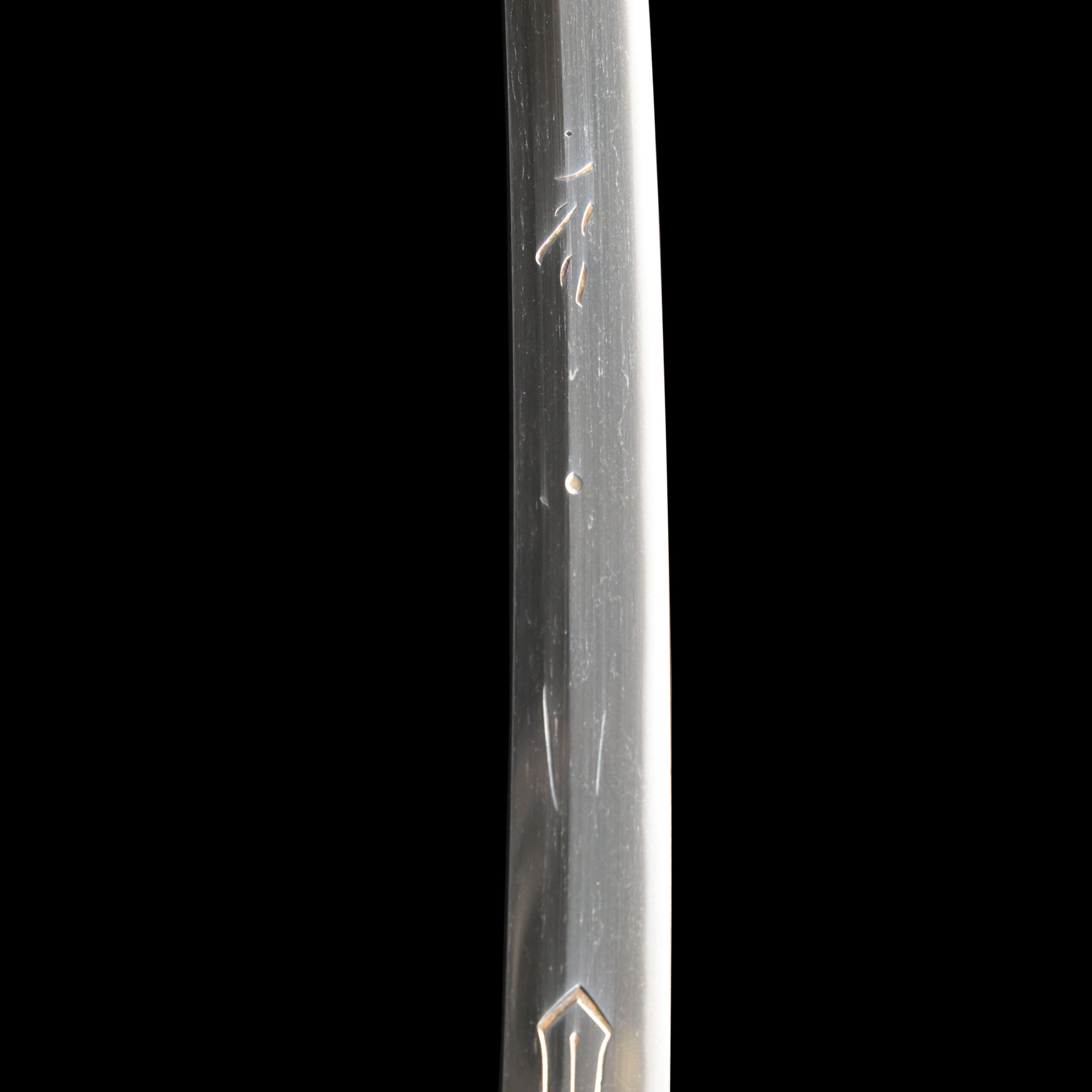
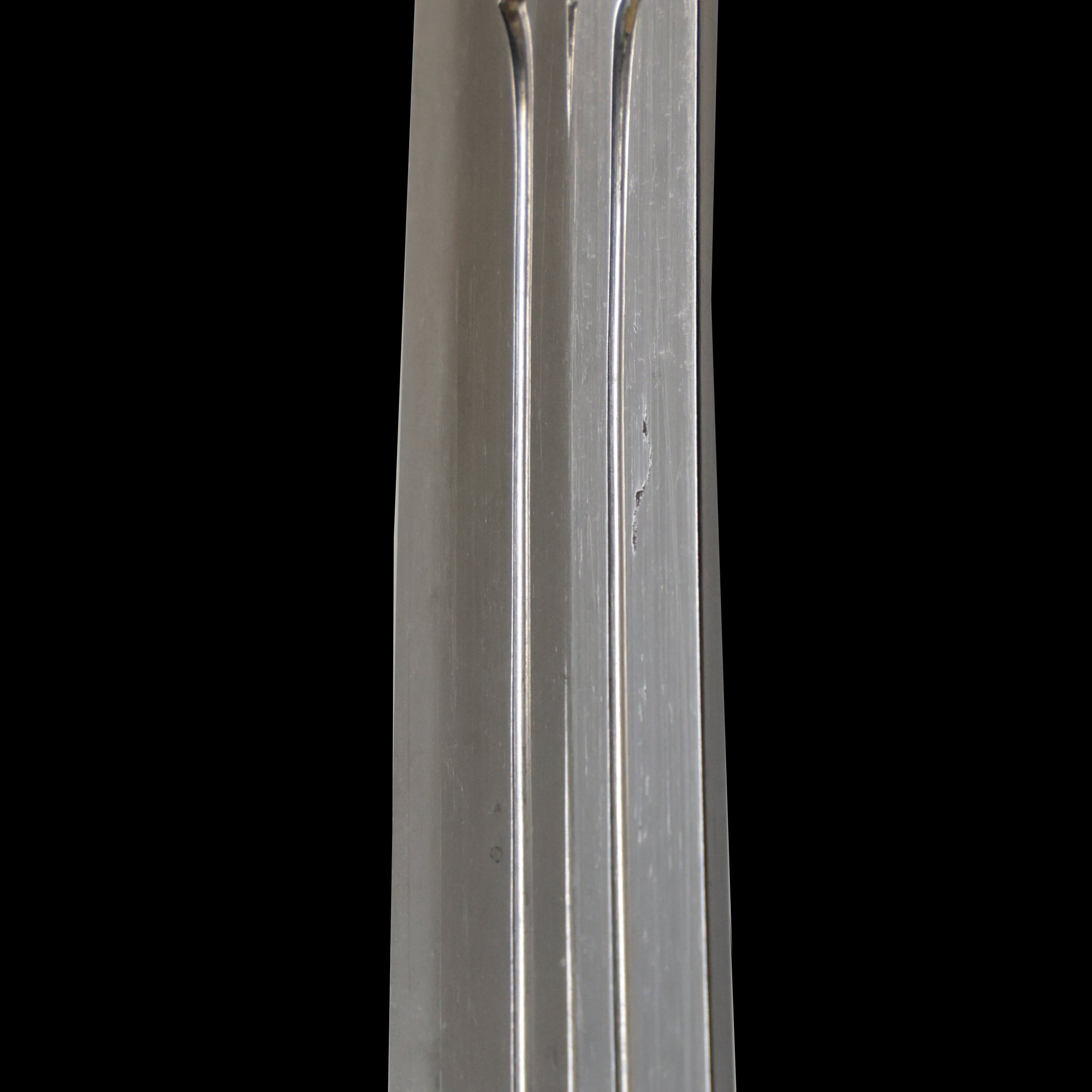
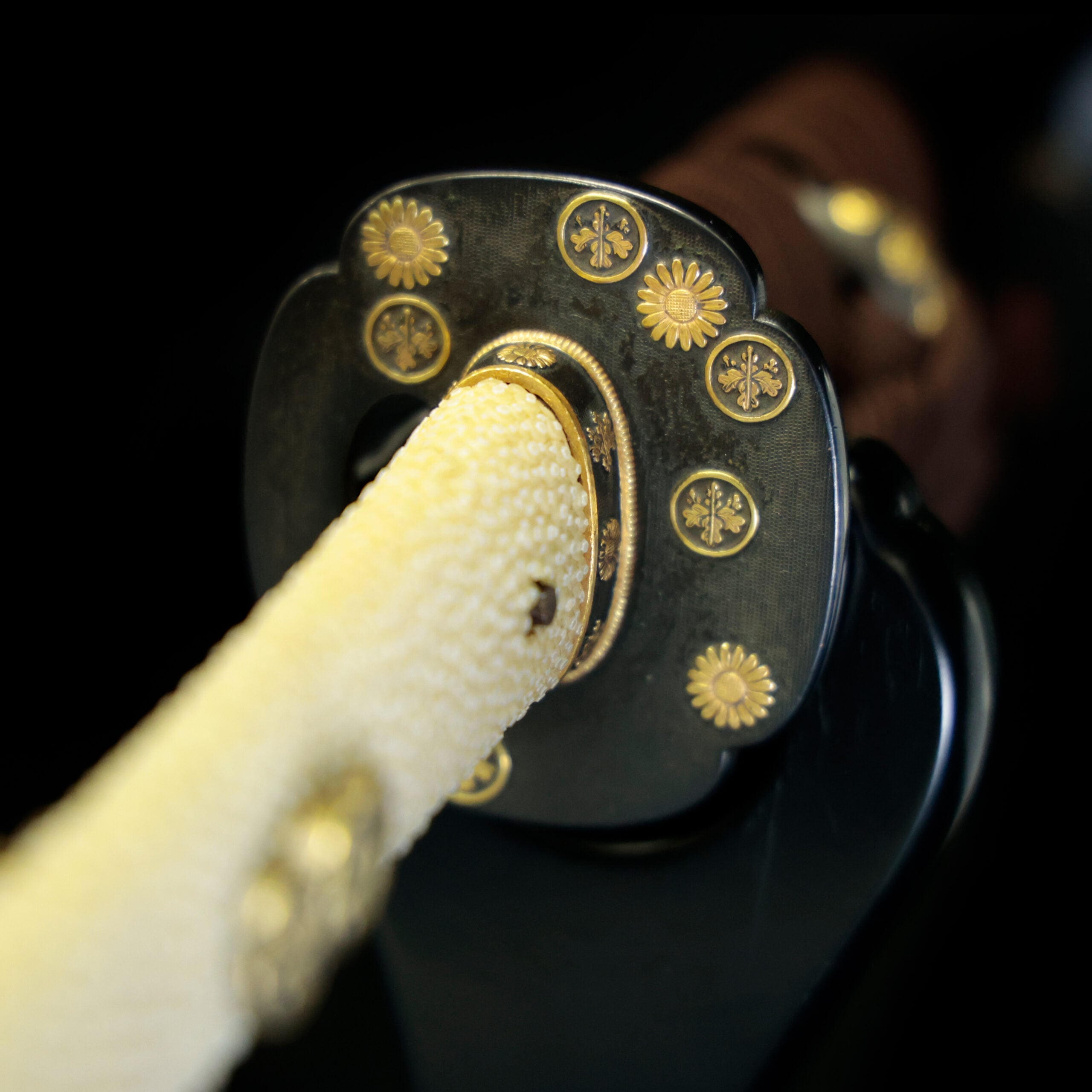
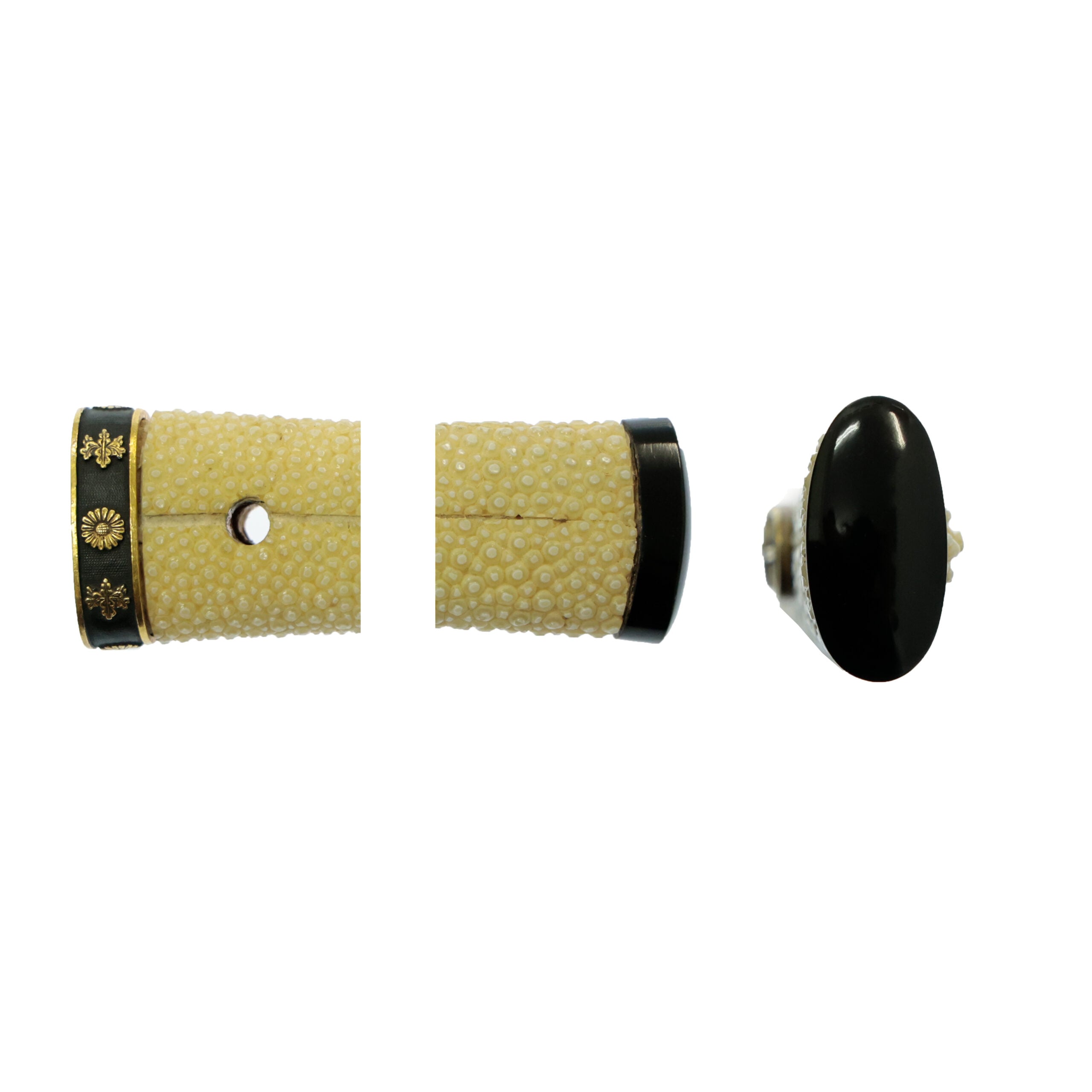
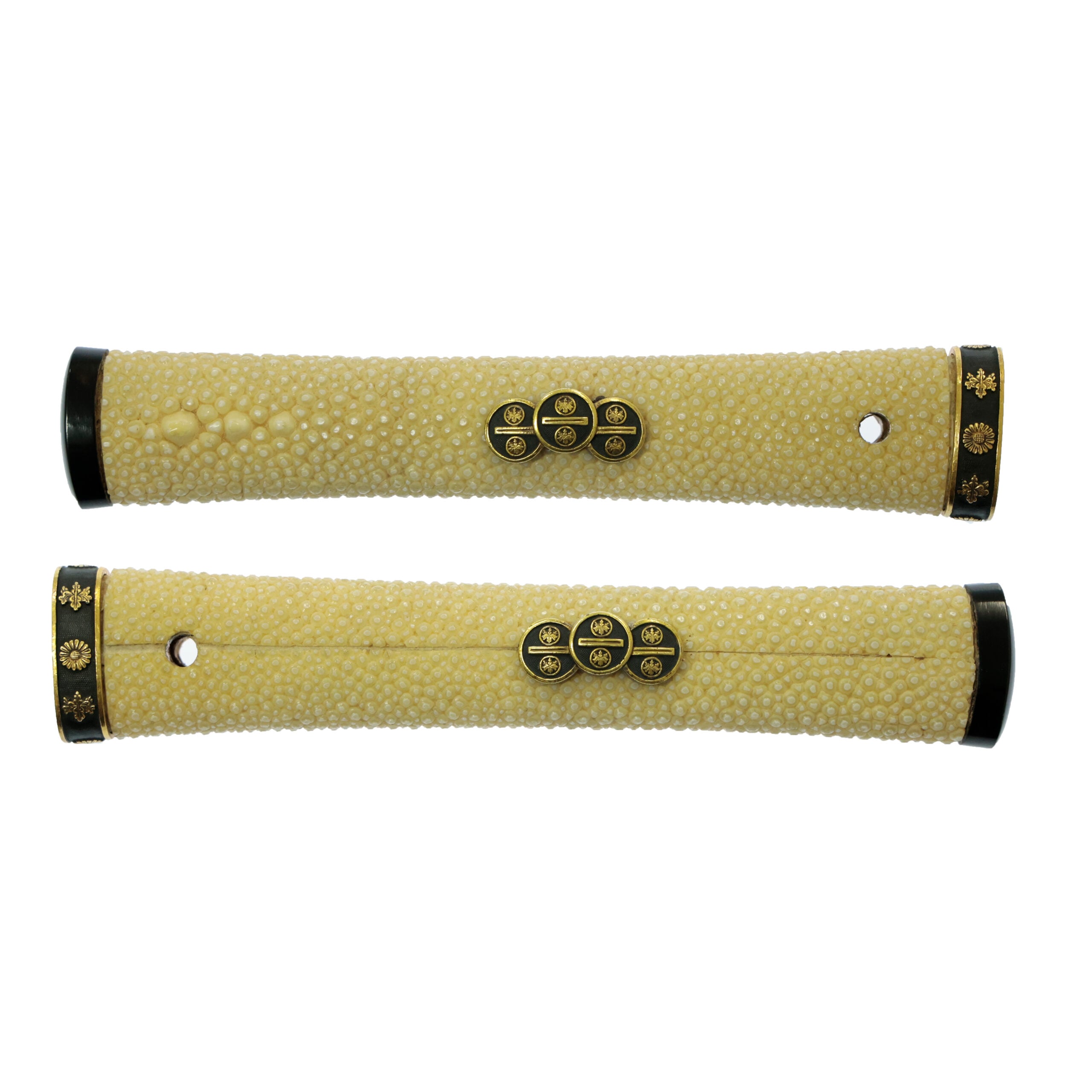
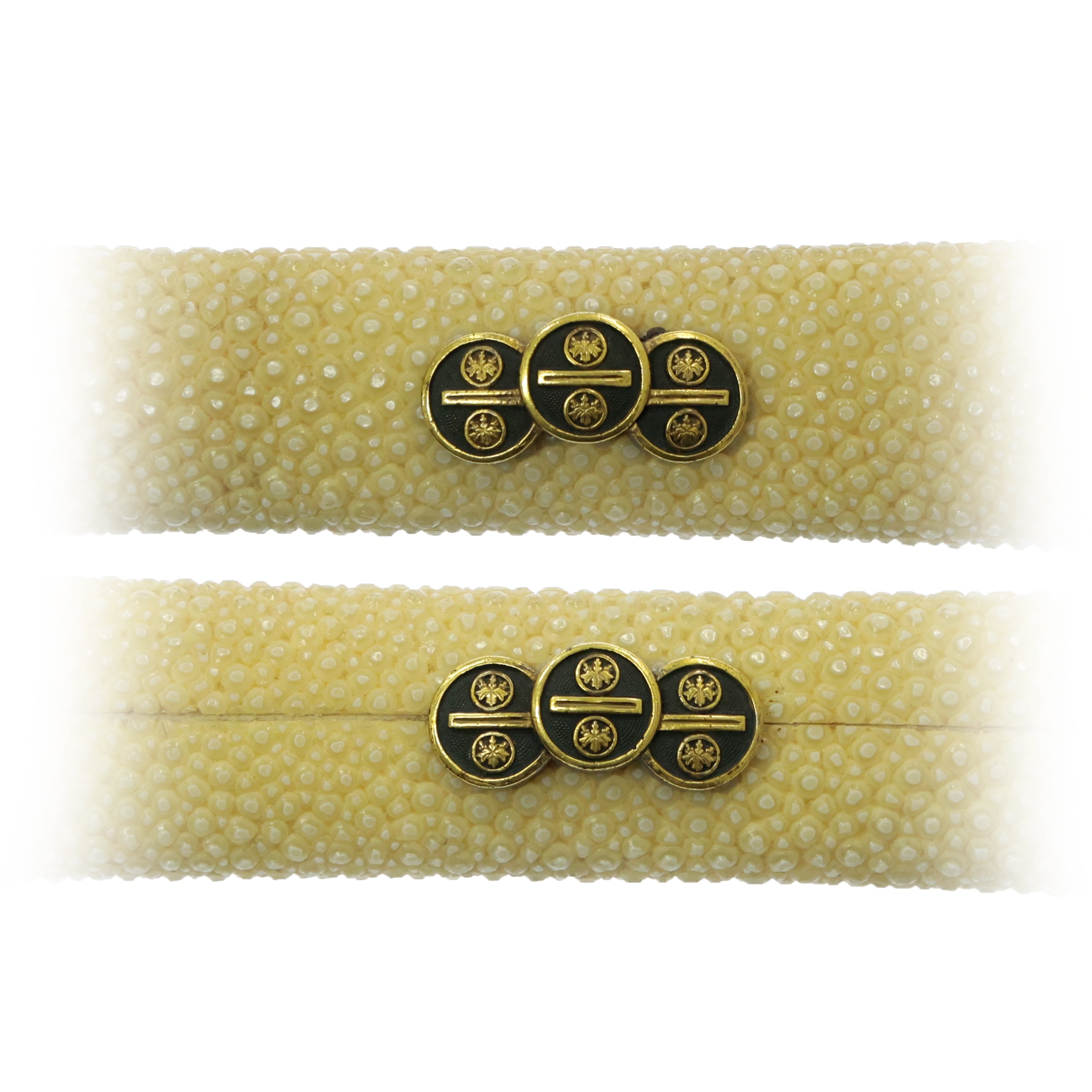
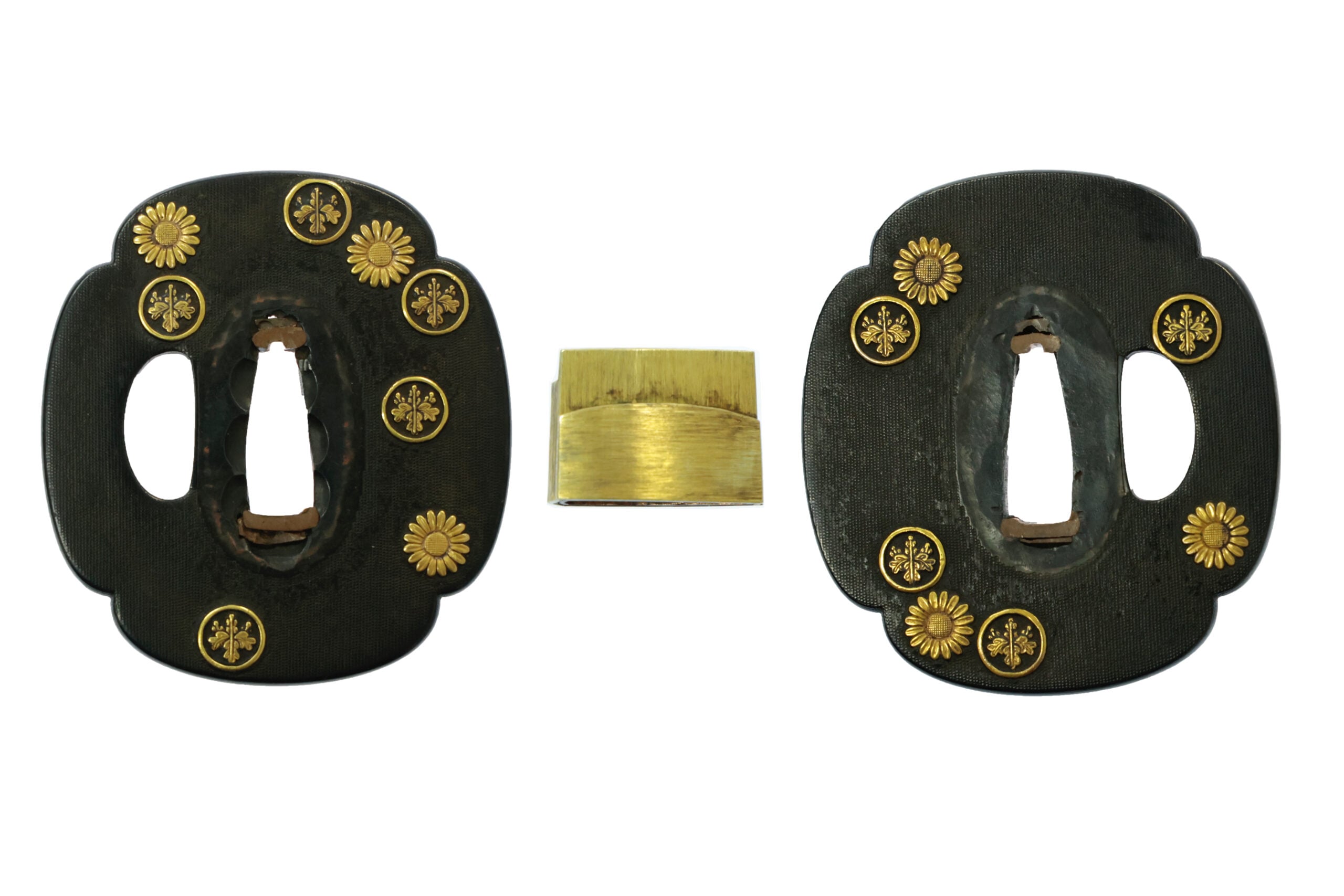
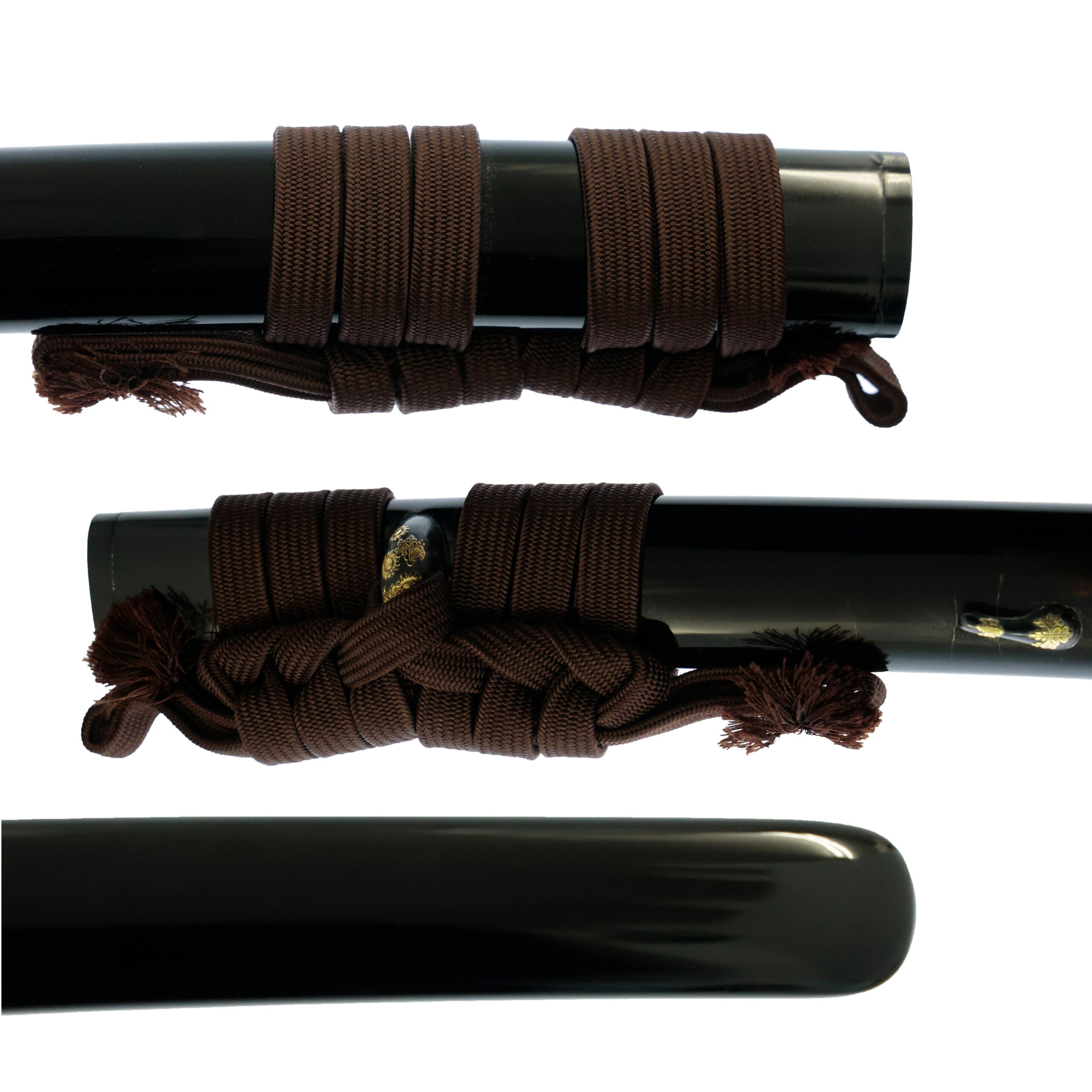
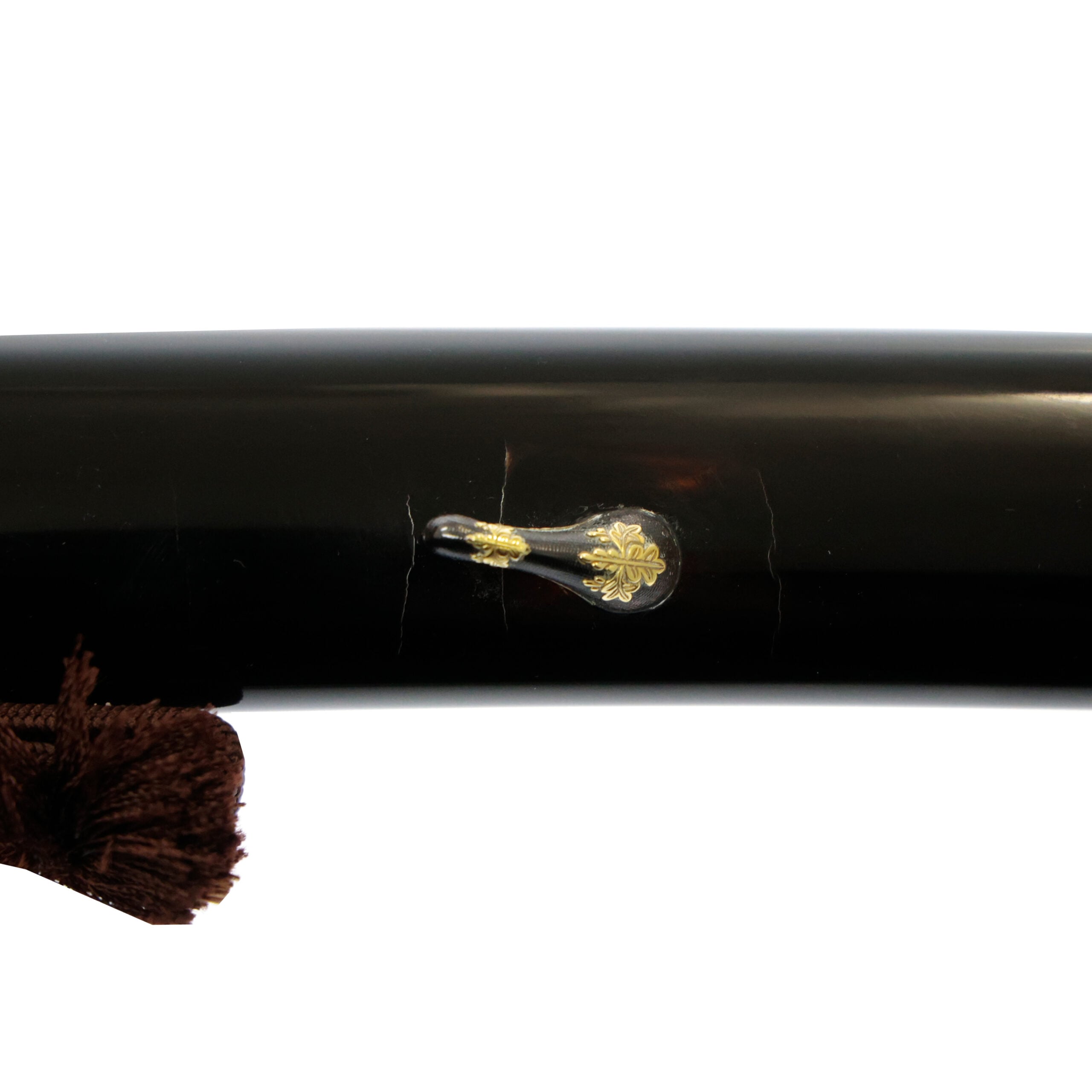
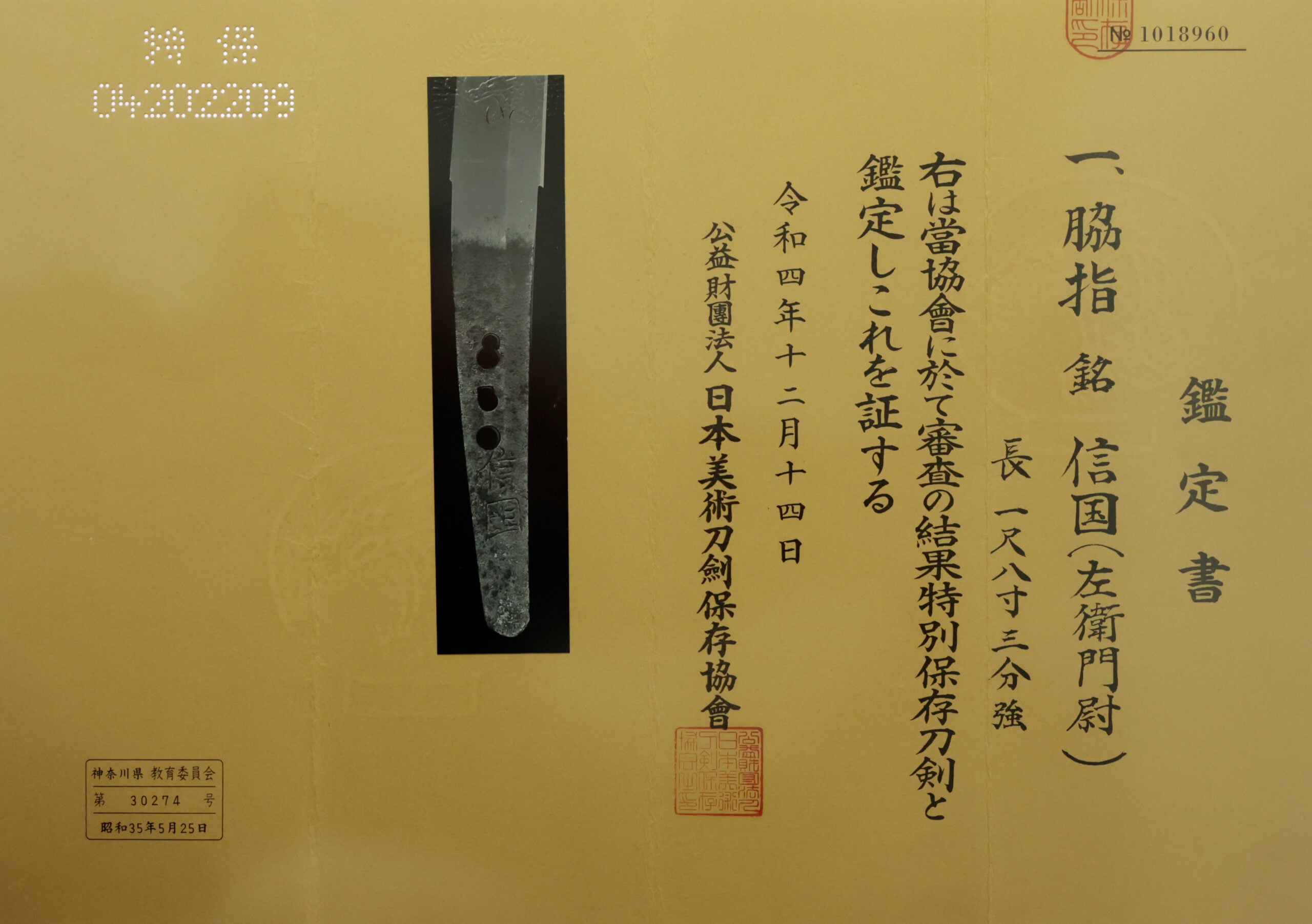
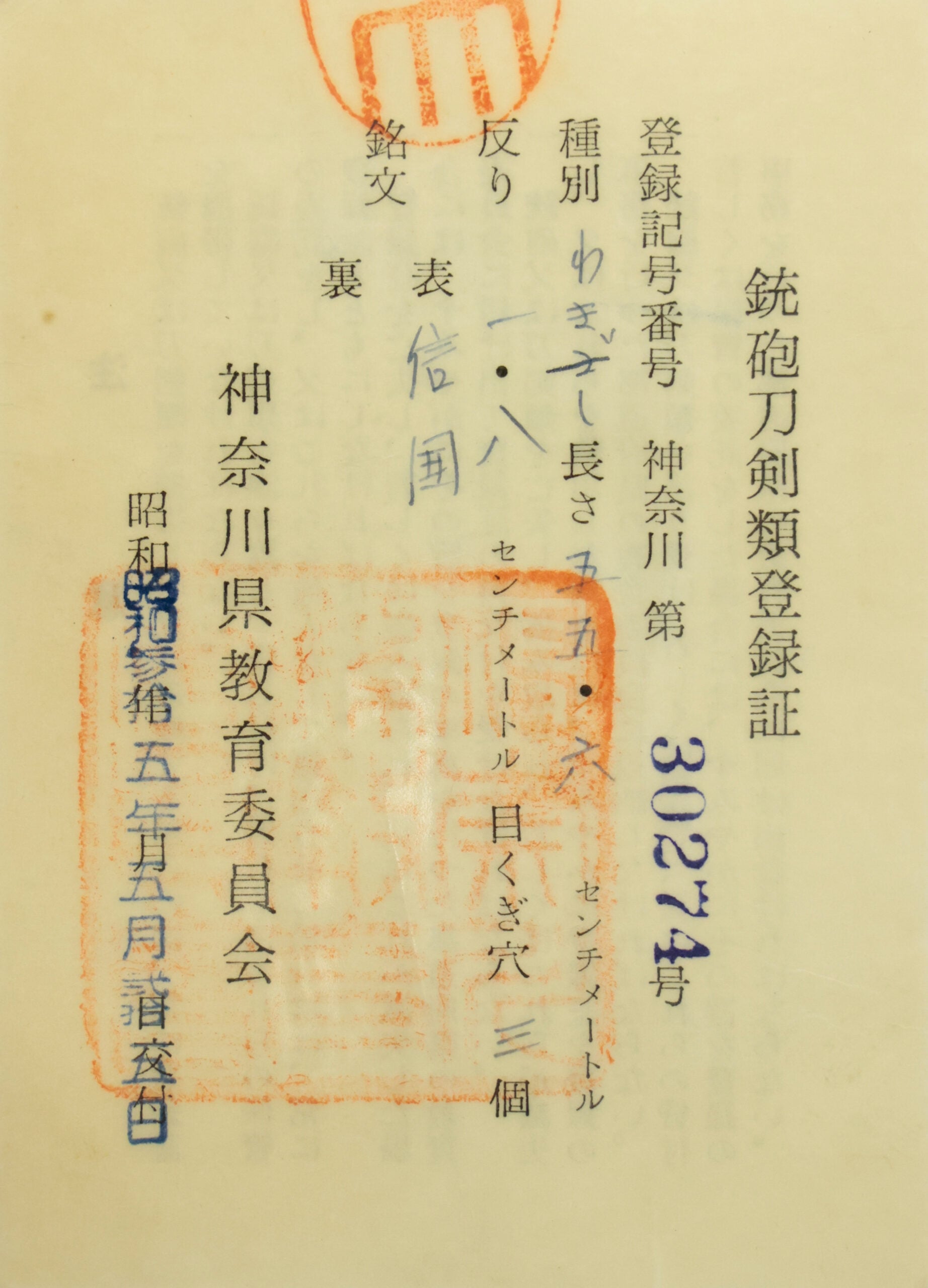
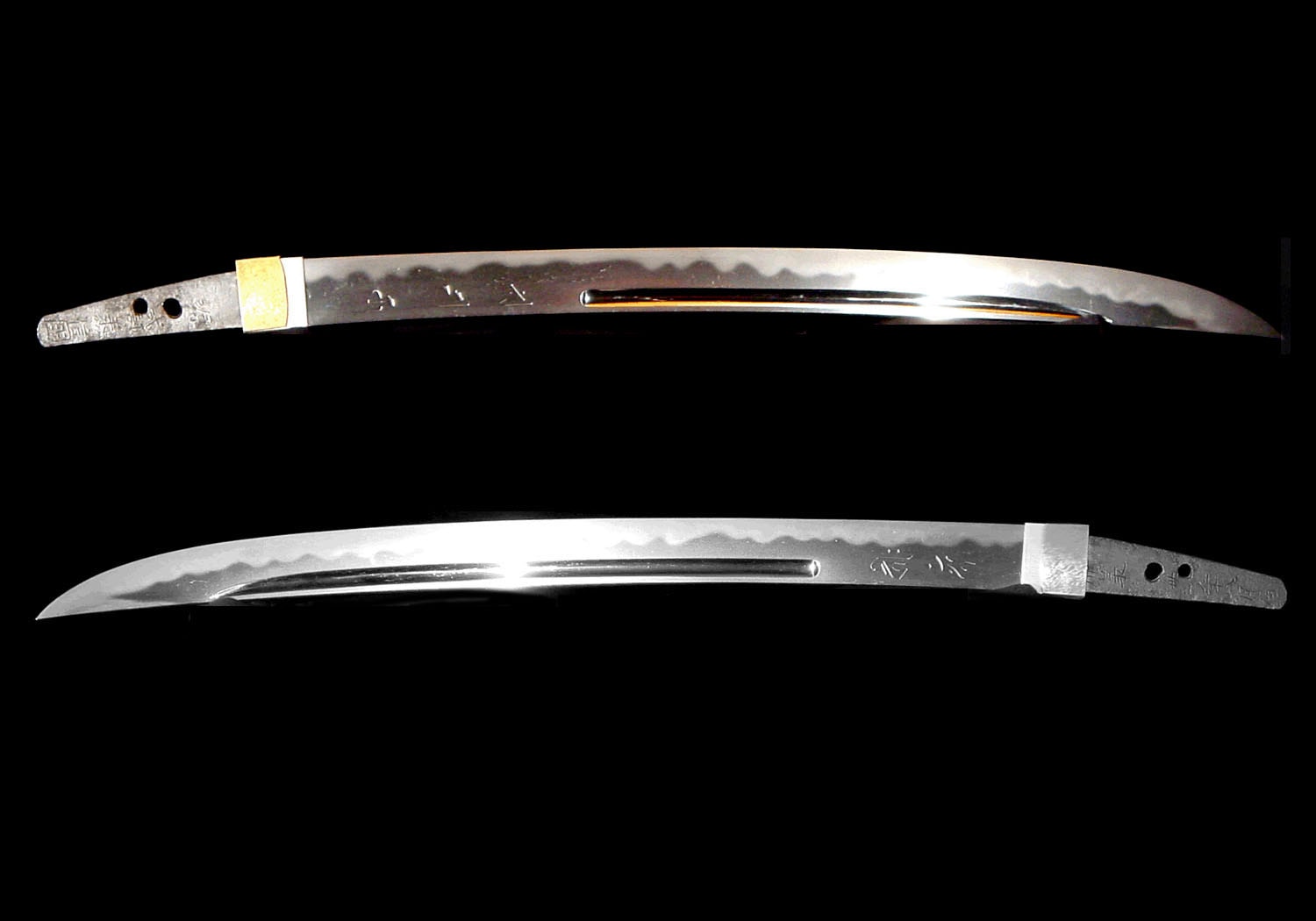
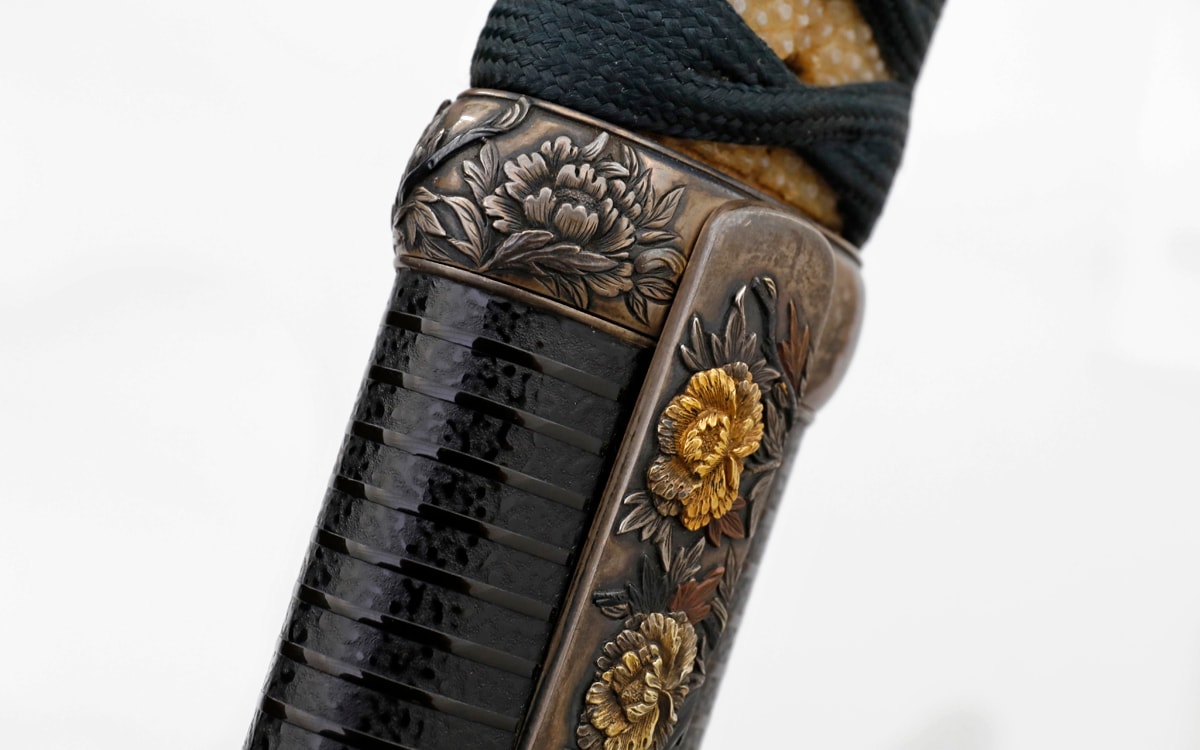
日本刀 脇差 銘 信国(日本美術刀剣保存協会 特別保存刀剣) 【解説】 概要 本作は、日本美術刀剣保存協会(日美工)の特別保存鑑定により、山城国(現在の京都府)で応永年間(1394-1427年:室町時代初期)に活躍した「信国」、通称「左衛門尉信国」の真作と認められた一振りです。 信国は南北朝時代から室町時代にかけて繁栄した名門・信国派の銘であり、本作の作者はその中でも彫物の名手として知られる同派の代表的な工です。信国には数代ありますが、本作は三代目にあたります。他の信国と区別するため、その活躍年代から「応永信国」と称され、高く評価されています。 初代信国は、天下三作の一人として名高い相州貞宗の門人であり、また山城伝の名門・良海派の良海久信の孫にあたると伝えられています。 良海派について 良海は鎌倉時代後期の山城国の刀工です。一説には来国行の子、来国俊の弟とも伝えられ、いずれも日本刀史上屈指の名工です。良海が興した良海派は、その子である良海久信が継承し、門葉にその名を冠することを許しました。 彫物について 本刀の刀身には、見事な梵字の彫物が施されています。刀身彫刻には不動明王やその化身、あるいはそれらを象徴する梵字がしばしば用いられます。不動明王は、大日如来の化身とも言われ、古来より武士の間で深く信仰されてきました。 本作に彫られた「カーン」は不動明王を、「カンマーン」は不動明王の真言を象徴する文字です。かつての武士たちは、甲冑や刀剣に宗教的な意匠を凝らすことで、戦場での加護を祈念しました。刀身自体の美しさはもちろん、当時の武士の精神性が宿るこの彫物も、ぜひ併せてお楽しみください。 本作は、日本美術刀剣保存協会(NBTHK)より「特別保存刀剣」に指定されています。これは、保存状態が極めて良好であり、かつ美術品としての価値が特に高い真作の刀剣にのみ与えられる格付けです。 ※刀身には数箇所、鍛え傷(きたえず)が見受けられます。詳細なコンディションについては、お気軽にお問い合わせください。 【刀身諸元】 長さ(Nagasa):55.6 cm 反り(Sori):1.8 cm 刃文(Hamon):焼入れによって刃先に現れる結晶構造。 地文(Jihada):鍛錬の過程で現れる鋼の表面模様。 切先(Kissaki):刀身の先端部分。 茎(Nakago):柄に収まる中心(なかご)部分。 日本の刀工は、柄内での赤錆を防ぐため、茎に生じる黒錆をあえて残します。この錆色(経年変化)は、専門家が製作年代を特定する際の重要な指標となります。 拵(Koshirae):刀剣の外装。鞘、柄、鍔などの諸金具で構成されます。 本拵の金具一式には、共通の意匠として「五三の桐紋」が施されています。桐紋は古くから高貴な紋章として尊ばれ、五三の桐はその代表的な図案です。桐紋は一般に三本の直立した花序と三枚の葉で構成されます。
 NihontoWatch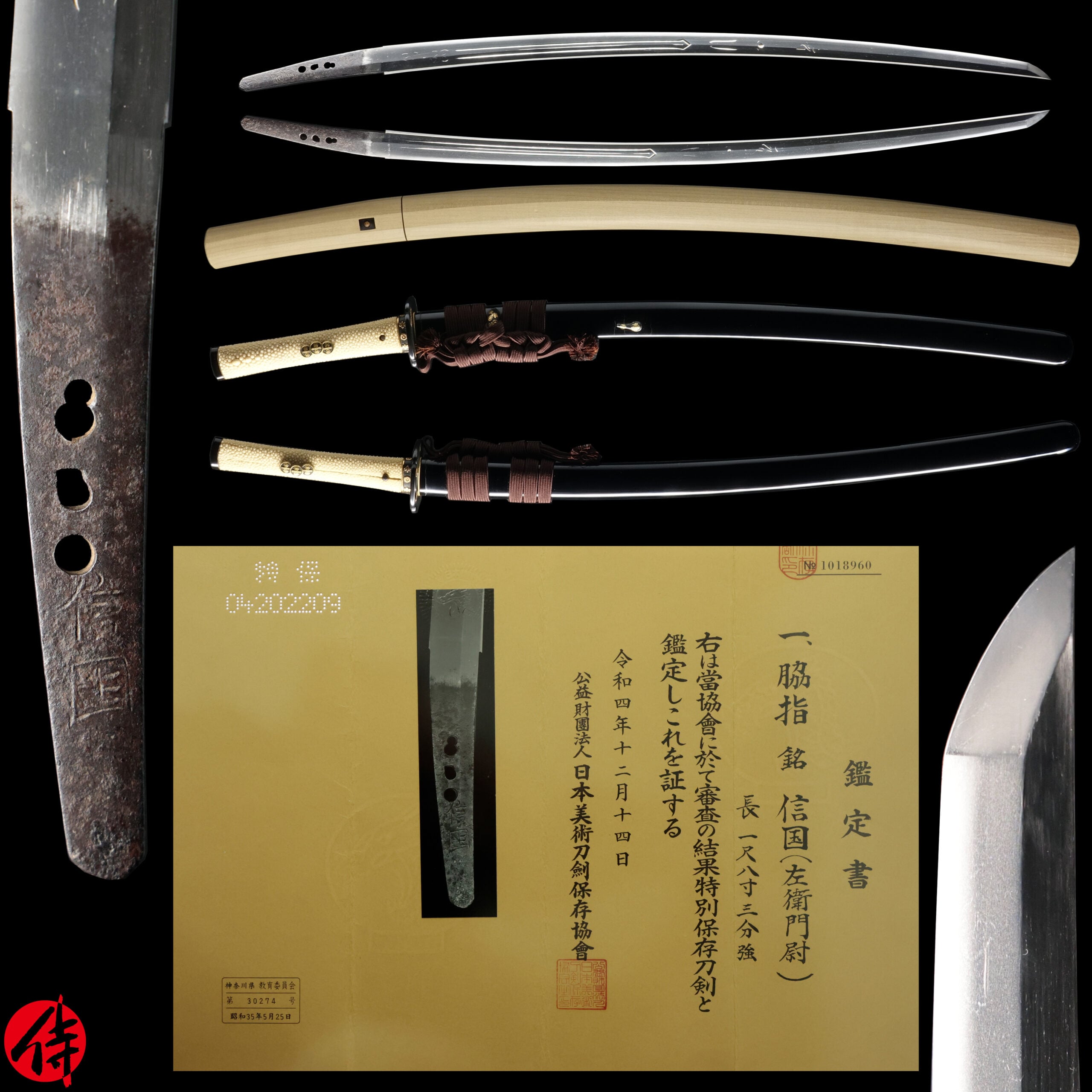
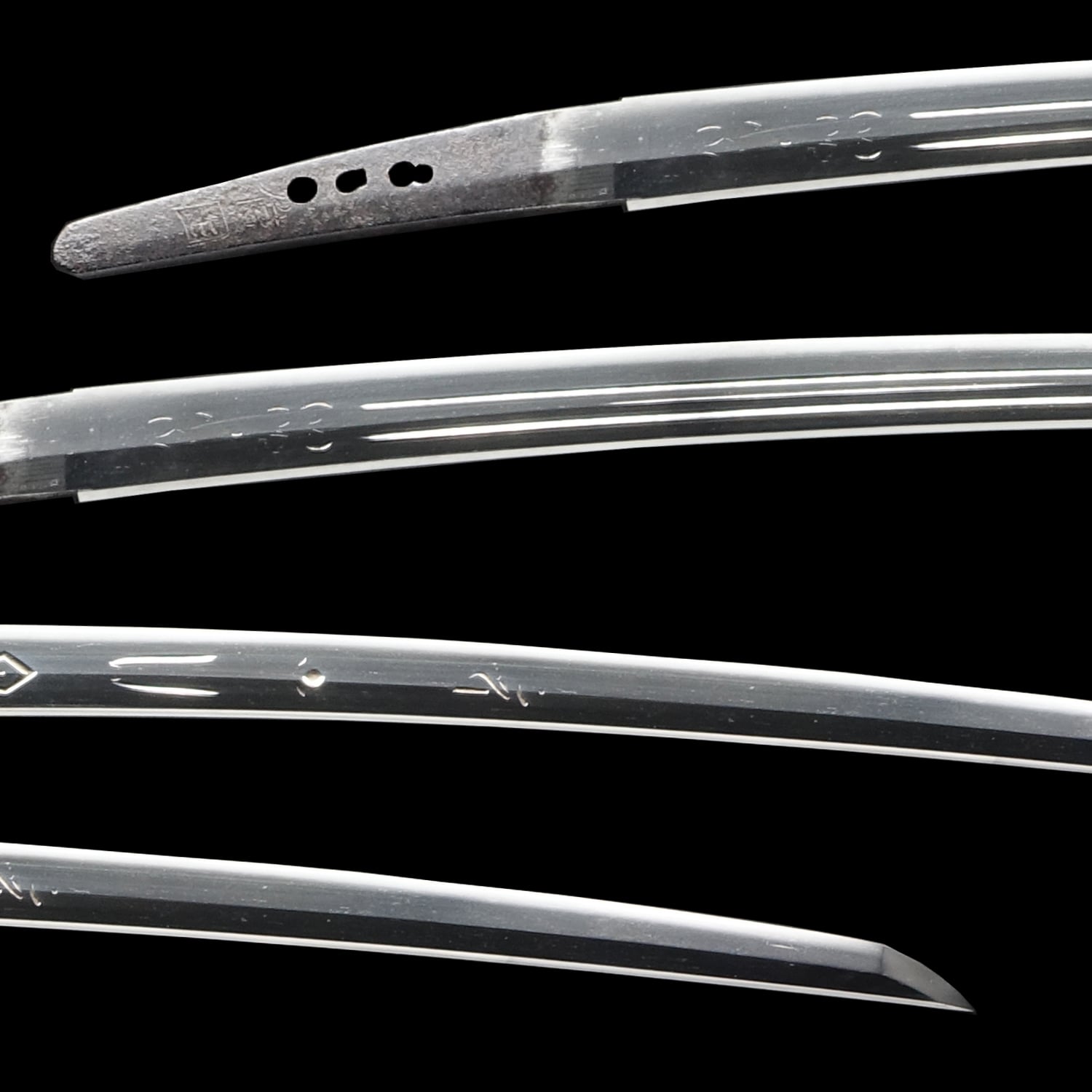
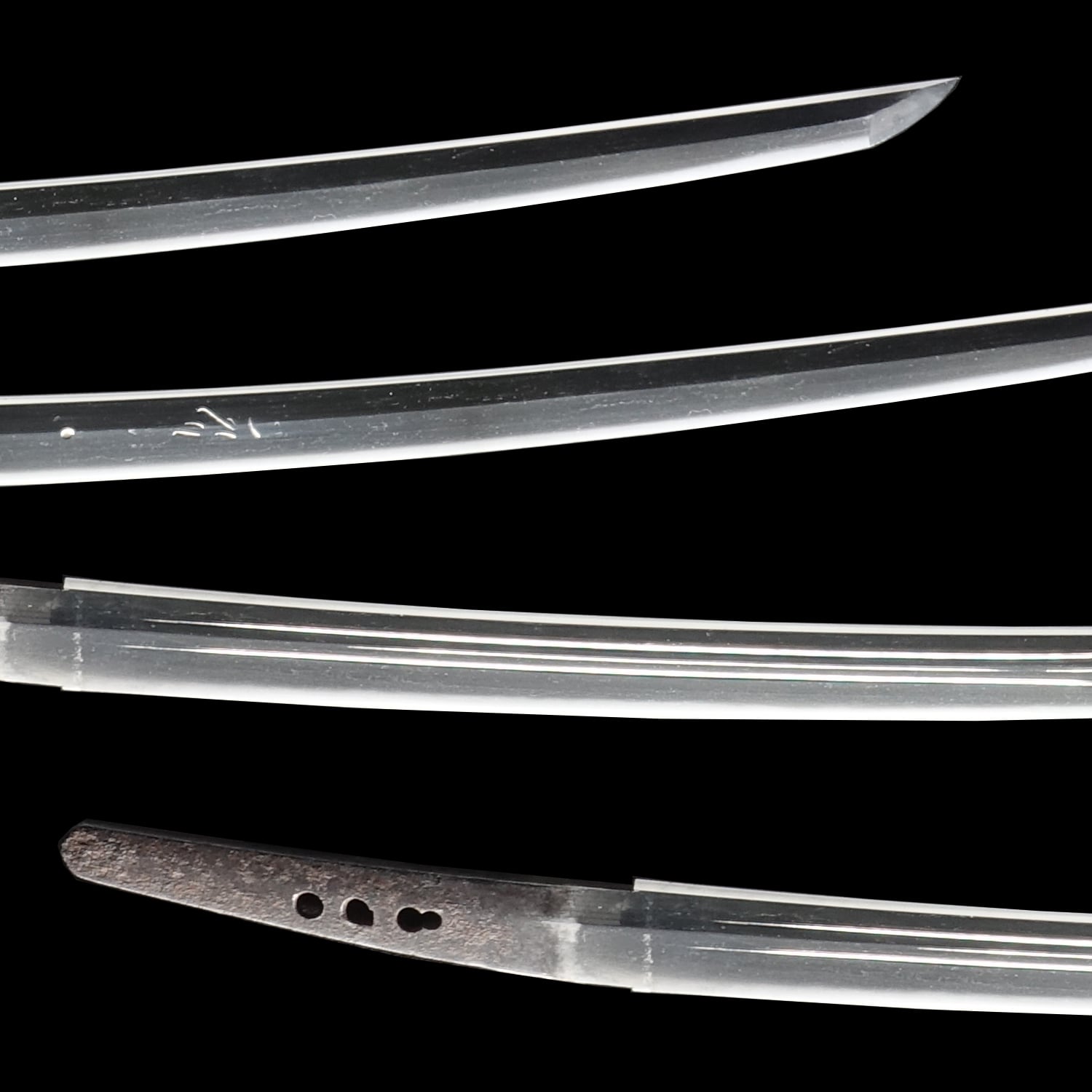
Nobukuni (Kyoto / Yamashiro), Ōei generation · 山城 · 1394-1428頃
藤代 Jo-jo saku · 刀剣大鑑 上位8%
現在1点販売中
応永二十年八月の年紀をきる脇指は、薩摩の大島津家に伝わり、今は特別重要刀剣に列するが、その銘は源左衛門尉信国と読め、「国」の字のクニ構えの中が左字に作られている、この手を鑑する見どころである。これが応永信国、すなわち京の名門信国家の室町初期の世代で、通常三代と数えられ、源左衛門尉信国と式部丞信国の両名工を代表とする。両者ともに応永年紀をきるところから、説明書はこれを応永信国と呼んで賞翫すると記す。一家は了戒系より出て、初代は相州貞宗に学び貞宗三哲の一に数えると伝え、応永の工は京の精緻と相州の沸の双方を一身に負う。説明書はその冒頭に平らかに、「信国は京鍛冶の名門で」[[c:1]]南北朝時代から室町時代にかけて大いに栄えたと述べる。
応永信国の最も一貫した特徴は、一つの刃文ではなく彫物であり、説明書もそのように名指して、左衛門尉・式部丞ともに濃密で力強い彫物を得意とするという。梵字や火焔梵字、櫃中に浮彫または欄間透しの倶利迦羅、三鈷剣・素剣、旗鉾、蓮台、樋中に切った八幡大菩薩の神号などが繰り返し現れ、重ね彫りにされて、説明書は度々これを見事と評する。銘は第二の見どころである。左衛門尉は「国」の字の中が逆に作られる点で一部鑑せられ、説明書はこれを大きな見どころとし、「国」の字のクニ構えの中が左字になっているとする。これは南北朝後期の至徳・明徳から見え、応永に多い。姓は源であるから、通称源左衛門尉は正しくは源左衛門尉である。
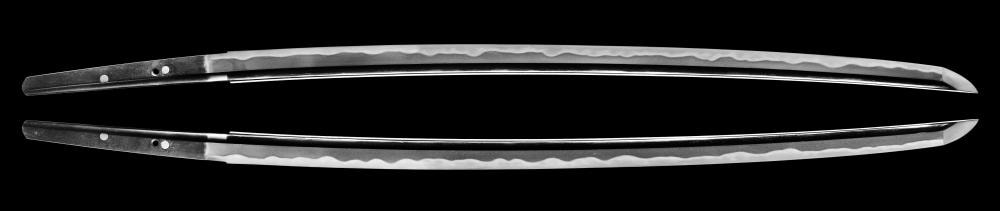
二様の刃のいずれの下にも、一つの地鉄がある。地鉄は杢を交えた板目で、刃寄りに流れて柾となり、やや肌立ち、地沸厚くつき地景頻りに入る。鍛えがつまれば小板目となり、ある脇指では刃寄りに淡い棒映りと地斑が立つ。その地の上で刃文は二つに分かれる。一つは京物本来の伝統を保つ直刃で、細直刃から中直刃、匂口明るく、小足・葉入り、小沸つき、細かに砂流し・金筋がかかり、刃縁処々ほつれ、帽子は直ぐに小丸、僅かに掃きかける。説明書はこの直刃をこの時代の信国には珍しいものとして賞し、慎重な比較を引いて、「応永備前も直刃の作を好んで焼くがや」[[c:3]]はり信国の方が沸が強いようであるとする。
もう一つの作域は、貞宗の系譜を継ぐ沸の強い互の目乱れである。一派には、と説明書は説く、二様の刃が降る、すなわち「京物の伝統を示した直刃と貞宗風を受け継い」[[c:4]]だのたれ刃である。そして南北朝末期の代替わりから応永の代にかけて、さらに新たな作域、すなわち「互の目主調の乱れ刃の作域を新たに見ることが」[[c:5]]できるとする。これらの作では互の目に小のたれ・尖り刃を交え、時に角張った互の目や矢筈風を交え、足・葉入り、小沸よくつき、総じて砂流し・金筋がかかり、処々に飛焼・湯走りを交える。帽子は乱れ込んで小丸あるいは尖りごころに返り、時に焼詰めとなる。現存する作の多くは短刀・脇指でやや寸延び、在銘年紀の太刀は少数で、説明書は在銘信国の太刀を頗る貴珍とし、健全と稀少をもって貴ぶ。
応永信国を際立たせるのは、この二つの系譜が京の一手に出会うところである。初代は、と説明書は記す、相州貞宗の門下で、「殆んど師貞宗に迫る作風」[[c:6]]を示す。応永の工はその相州の強さを互の目乱れに保ちつつ、明るい山城の直刃と都の精緻な彫物を守る。明るい匂口と冴えた刃中の働き、刃寄りに柾を交えた肌立ちの板目、何より重ね彫りの宗教彫物は、同時代の備前の実用的な樋とは彼を分かつ。両名工の関係は未決のままで、通説に左衛門尉を兄、式部丞を弟と伝えるが、説明書は年紀を厳密に読めば上下が前後すると注し、今後の研究に委ねる。
収集の観点では、応永信国は記録の確かな有数の名である。藤代の極めは上々作、刀工大鑑も京の古刀上位に値する。国宝はなく、その記録はむしろ重要文化財二口、うち一口は富士の宮に奉納された式部丞の脇指で富士山本宮浅間大社に伝わり、これに特別重要刀剣一口と戦前の重要美術品、御物二口を加える。その作は来歴の確かな神社・博物館・旧家に伝わり、薩摩大島津家の脇指、徳川宗敬旧蔵の重要美術品の太刀のほか、熱田神宮・伊勢神宮・徳川美術館・三井記念美術館・佐野美術館・黒川古文化研究所に記録される。特別重要刀剣・重要刀剣の級はわずかであり、在銘の応永信国が世に出るのは時折にとどまり、残るものの多くは稀少な在銘太刀ではなく短刀・脇指である。健全で、濃密な彫物と明るい直刃あるいは沸の強い互の目乱れを備えた私蔵の一口は、収集家にとって出会う価値のあるものであり、京の貞宗の系譜がいかに室町へ運ばれたかを語る証である。
信國の位置づけを、日本刀全体および伝統・時代・時期ごとに示します。各位(随一・屈指・有数・著名)は、NBTHK および文化庁による指定に加え、三作や名物帳などの歴史的栄誉を加味したものです。
各項目を選ぶと評価方法が表示されます。
在銘年紀作が示す、確実に活動していた年代
山城伝 · 山城
現在31点販売中
信国派は山城国京都に興った名門で、その流れは南北朝時代に遡る。一派の祖と仰がれる信国は了戒系の京鍛冶で、血脈の上では来の伝統を承けながら、修業の上では相州貞宗の門に入って貞宗三哲の一人に数えられた。来の系譜と相州伝という二つの根がこの一門の作のすべてを導く。銘鑑は祖を建武に置くが、説明書はこれを繰り返し退ける。建武年間の作は残らず、現存最古の延文・貞治の年紀作が貞宗に直結することから、本会は延文・貞治の工をもって初代と見做す。南北朝の末期には永徳・至徳・明徳の代替りの信国が続き、同銘数工があったと見られる。室町初期には左衛門尉・式部丞を冠する応永信国が栄え、これを通常三代と数える。一派は後に豊前へ、さらに筑前へ移り、慶長の頃より明治初年まで福岡藩黒田家の抱え鍛冶として吉貞・吉政・吉次・吉包・重包の代々を出し、新々刀期まで栄えた。 一派に通う語法は、まず地鉄に現れる。鍛えは杢を交えた板目で、刃寄りに流れて柾となりやや肌立ち、地沸を厚くとり地景が頻りに入り、よくつんだ作には淡い沸映りが立つ。刃寄りに流れる鍛えは了戒系の所伝を首肯せしめる証とされ、厚い地沸と頻りの地景は貞宗に学んだ相州伝の痕跡として読まれる。刃文は文様の如何を問わず沸で焼かれ、砂流し・金筋が絶えず働き、匂口は明るい。その作域は二様を基とする。一つは来派の伝統を示した直刃で、中直刃・細直刃に小沸つき、細かにほつれ喰違刃・二重刃ごころを交えて京物の格調を伝える。いま一つは貞宗風ののたれ乱れで、小のたれに互の目・小互の目を交え、足・葉入り、沸厚く明るく、刃縁にほつれ湯走りがかかり、最も多く出会う作域をなす。帽子はのたれ込みまたは乱れ込んで小丸となり掃きかける。御家芸とも言うべき濃密な彫物も貞宗譲りで、梵字・素剣・護摩箸・三鈷剣・倶利迦羅を重ね彫りにし、刀身に八幡大菩薩の神号を切る作もあって、彫物によって一門を見分けうる。代を下ると差異が明瞭となる。南北朝末期の後代は一派に初めて太刀を生み、二様に加えて互の目主調の乱れ刃を新たに見せ、互の目が二つ宛連れたものを腰の低い小のたれで繋ぐ矢筈状の刃を見どころとする。応永信国は左衛門尉が「国」の字のクニ構えの中を左字に作る点を大きな鑑別点とし、直刃と互の目乱れの双方に冴えた沸を宿す。筑前に移った吉包・重包は相州伝の志向と、流れ肌の乱れ映りを伴う一派の丁子乱れとを高い技倆で並べ持ち、重包は名物写しの名手として石堂風に紛う華やかな丁子を、地沸・地景・刃中の沸の顕著さによって石堂と分かった。 鑑定の勘所は明快である。刃寄りに流れる柾がかった肌、厚い地沸と頻りの地景、沸で焼いた直刃と貞宗風ののたれ乱れ、重ね彫りの宗教彫物が一門を束ね、相州の同門とも後世の備前丁子とも分かつ拠りどころとなる。無銘極めも代の弁別も延文三年紀の作との照合によって決せられ、後代は連れ互の目と矢筈刃で、応永信国は逆字の銘で、筑前の工は流れ肌の乱れ映りで読み分けられる。藤代の極めは初代信国を上々作とし、後代から応永信国まで京古刀の上位に列し、筑前の吉包・重包は地方新刀の堅実な工として上作の評を得る。在銘作は祖において短刀・小脇指に限られて稀であり、それゆえ年紀のある後代の太刀・薙刀は何よりの好資料として貴ばれる。伝来は大名家と社寺に厚く、黒田家・浅野家・山内家・佐竹家らの蔵刀に加え、本願寺名物や富士山本宮浅間大社に奉納された式部丞の脇指がある。上位指定の多くは公私の蔵に秘められて市に現れず、在銘の信国が世に出ること自体が稀であって、現れた時は南北朝以来の山城物の蒐集で特筆すべき機会となる。 詳しく見る →
室町時代
応仁の乱が足利の体制を砕いた後、戦国の一世紀はほとんどすべての国を武装させた。この時代は選ぶ目に報いる。並の作は多いが、その傍らには第一級の注文打ちが立っている。
保存刀剣のうち、出来が一層優れ、保存状態も良好と認められたものです。再刃や、室町・江戸期の多くの無銘作は対象外となり、保存刀剣より高い基準が課されます。
日本美術刀剣保存協会(NBTHK)は、1948年に設立され、文化庁の監督を受ける公益財団法人で、東京・刀剣博物館に本部を置きます。専門の審査員が出品作を直接審査し、美術的・歴史的価値に応じた鑑定書を発行します。NBTHKの鑑定書は、日本刀および刀装具の真正性を示す最も広く認知された基準です。
NBTHK公式サイトReturns/exchanges limited to defects caused by shipping (except willful misconduct or gross negligence by the company); customers must contact within 72 hours of receiving the product.
日本刀 脇差 銘 信国(日本美術刀剣保存協会 特別保存刀剣) 【解説】 概要 本作は、日本美術刀剣保存協会(日美工)の特別保存鑑定により、山城国(現在の京都府)で応永年間(1394-1427年:室町時代初期)に活躍した「信国」、通称「左衛門尉信国」の真作と認められた一振りです。 信国は南北朝時代から室町時代にかけて繁栄した名門・信国派の銘であり、本作の作者はその中でも彫物の名手として知られる同派の代表的な工です。信国には数代ありますが、本作は三代目にあたります。他の信国と区別するため、その活躍年代から「応永信国」と称され、高く評価されています。 初代信国は、天下三作の一人として名高い相州貞宗の門人であり、また山城伝の名門・良海派の良海久信の孫にあたると伝えられています。 良海派について 良海は鎌倉時代後期の山城国の刀工です。一説には来国行の子、来国俊の弟とも伝えられ、いずれも日本刀史上屈指の名工です。良海が興した良海派は、その子である良海久信が継承し、門葉にその名を冠することを許しました。 彫物について 本刀の刀身には、見事な梵字の彫物が施されています。刀身彫刻には不動明王やその化身、あるいはそれらを象徴する梵字がしばしば用いられます。不動明王は、大日如来の化身とも言われ、古来より武士の間で深く信仰されてきました。 本作に彫られた「カーン」は不動明王を、「カンマーン」は不動明王の真言を象徴する文字です。かつての武士たちは、甲冑や刀剣に宗教的な意匠を凝らすことで、戦場での加護を祈念しました。刀身自体の美しさはもちろん、当時の武士の精神性が宿るこの彫物も、ぜひ併せてお楽しみください。 本作は、日本美術刀剣保存協会(NBTHK)より「特別保存刀剣」に指定されています。これは、保存状態が極めて良好であり、かつ美術品としての価値が特に高い真作の刀剣にのみ与えられる格付けです。 ※刀身には数箇所、鍛え傷(きたえず)が見受けられます。詳細なコンディションについては、お気軽にお問い合わせください。 【刀身諸元】 長さ(Nagasa):55.6 cm 反り(Sori):1.8 cm 刃文(Hamon):焼入れによって刃先に現れる結晶構造。 地文(Jihada):鍛錬の過程で現れる鋼の表面模様。 切先(Kissaki):刀身の先端部分。 茎(Nakago):柄に収まる中心(なかご)部分。 日本の刀工は、柄内での赤錆を防ぐため、茎に生じる黒錆をあえて残します。この錆色(経年変化)は、専門家が製作年代を特定する際の重要な指標となります。 拵(Koshirae):刀剣の外装。鞘、柄、鍔などの諸金具で構成されます。 本拵の金具一式には、共通の意匠として「五三の桐紋」が施されています。桐紋は古くから高貴な紋章として尊ばれ、五三の桐はその代表的な図案です。桐紋は一般に三本の直立した花序と三枚の葉で構成されます。
NihontoWatchNobukuni (Kyoto / Yamashiro), Ōei generation · 山城 · 1394-1428頃
藤代 Jo-jo saku · 刀剣大鑑 上位8%
現在1点販売中
応永二十年八月の年紀をきる脇指は、薩摩の大島津家に伝わり、今は特別重要刀剣に列するが、その銘は源左衛門尉信国と読め、「国」の字のクニ構えの中が左字に作られている、この手を鑑する見どころである。これが応永信国、すなわち京の名門信国家の室町初期の世代で、通常三代と数えられ、源左衛門尉信国と式部丞信国の両名工を代表とする。両者ともに応永年紀をきるところから、説明書はこれを応永信国と呼んで賞翫すると記す。一家は了戒系より出て、初代は相州貞宗に学び貞宗三哲の一に数えると伝え、応永の工は京の精緻と相州の沸の双方を一身に負う。説明書はその冒頭に平らかに、「信国は京鍛冶の名門で」[[c:1]]南北朝時代から室町時代にかけて大いに栄えたと述べる。
応永信国の最も一貫した特徴は、一つの刃文ではなく彫物であり、説明書もそのように名指して、左衛門尉・式部丞ともに濃密で力強い彫物を得意とするという。梵字や火焔梵字、櫃中に浮彫または欄間透しの倶利迦羅、三鈷剣・素剣、旗鉾、蓮台、樋中に切った八幡大菩薩の神号などが繰り返し現れ、重ね彫りにされて、説明書は度々これを見事と評する。銘は第二の見どころである。左衛門尉は「国」の字の中が逆に作られる点で一部鑑せられ、説明書はこれを大きな見どころとし、「国」の字のクニ構えの中が左字になっているとする。これは南北朝後期の至徳・明徳から見え、応永に多い。姓は源であるから、通称源左衛門尉は正しくは源左衛門尉である。
二様の刃のいずれの下にも、一つの地鉄がある。地鉄は杢を交えた板目で、刃寄りに流れて柾となり、やや肌立ち、地沸厚くつき地景頻りに入る。鍛えがつまれば小板目となり、ある脇指では刃寄りに淡い棒映りと地斑が立つ。その地の上で刃文は二つに分かれる。一つは京物本来の伝統を保つ直刃で、細直刃から中直刃、匂口明るく、小足・葉入り、小沸つき、細かに砂流し・金筋がかかり、刃縁処々ほつれ、帽子は直ぐに小丸、僅かに掃きかける。説明書はこの直刃をこの時代の信国には珍しいものとして賞し、慎重な比較を引いて、「応永備前も直刃の作を好んで焼くがや」[[c:3]]はり信国の方が沸が強いようであるとする。
もう一つの作域は、貞宗の系譜を継ぐ沸の強い互の目乱れである。一派には、と説明書は説く、二様の刃が降る、すなわち「京物の伝統を示した直刃と貞宗風を受け継い」[[c:4]]だのたれ刃である。そして南北朝末期の代替わりから応永の代にかけて、さらに新たな作域、すなわち「互の目主調の乱れ刃の作域を新たに見ることが」[[c:5]]できるとする。これらの作では互の目に小のたれ・尖り刃を交え、時に角張った互の目や矢筈風を交え、足・葉入り、小沸よくつき、総じて砂流し・金筋がかかり、処々に飛焼・湯走りを交える。帽子は乱れ込んで小丸あるいは尖りごころに返り、時に焼詰めとなる。現存する作の多くは短刀・脇指でやや寸延び、在銘年紀の太刀は少数で、説明書は在銘信国の太刀を頗る貴珍とし、健全と稀少をもって貴ぶ。
応永信国を際立たせるのは、この二つの系譜が京の一手に出会うところである。初代は、と説明書は記す、相州貞宗の門下で、「殆んど師貞宗に迫る作風」[[c:6]]を示す。応永の工はその相州の強さを互の目乱れに保ちつつ、明るい山城の直刃と都の精緻な彫物を守る。明るい匂口と冴えた刃中の働き、刃寄りに柾を交えた肌立ちの板目、何より重ね彫りの宗教彫物は、同時代の備前の実用的な樋とは彼を分かつ。両名工の関係は未決のままで、通説に左衛門尉を兄、式部丞を弟と伝えるが、説明書は年紀を厳密に読めば上下が前後すると注し、今後の研究に委ねる。
収集の観点では、応永信国は記録の確かな有数の名である。藤代の極めは上々作、刀工大鑑も京の古刀上位に値する。国宝はなく、その記録はむしろ重要文化財二口、うち一口は富士の宮に奉納された式部丞の脇指で富士山本宮浅間大社に伝わり、これに特別重要刀剣一口と戦前の重要美術品、御物二口を加える。その作は来歴の確かな神社・博物館・旧家に伝わり、薩摩大島津家の脇指、徳川宗敬旧蔵の重要美術品の太刀のほか、熱田神宮・伊勢神宮・徳川美術館・三井記念美術館・佐野美術館・黒川古文化研究所に記録される。特別重要刀剣・重要刀剣の級はわずかであり、在銘の応永信国が世に出るのは時折にとどまり、残るものの多くは稀少な在銘太刀ではなく短刀・脇指である。健全で、濃密な彫物と明るい直刃あるいは沸の強い互の目乱れを備えた私蔵の一口は、収集家にとって出会う価値のあるものであり、京の貞宗の系譜がいかに室町へ運ばれたかを語る証である。
信國の位置づけを、日本刀全体および伝統・時代・時期ごとに示します。各位(随一・屈指・有数・著名)は、NBTHK および文化庁による指定に加え、三作や名物帳などの歴史的栄誉を加味したものです。
各項目を選ぶと評価方法が表示されます。
在銘年紀作が示す、確実に活動していた年代
山城伝 · 山城
現在31点販売中
信国派は山城国京都に興った名門で、その流れは南北朝時代に遡る。一派の祖と仰がれる信国は了戒系の京鍛冶で、血脈の上では来の伝統を承けながら、修業の上では相州貞宗の門に入って貞宗三哲の一人に数えられた。来の系譜と相州伝という二つの根がこの一門の作のすべてを導く。銘鑑は祖を建武に置くが、説明書はこれを繰り返し退ける。建武年間の作は残らず、現存最古の延文・貞治の年紀作が貞宗に直結することから、本会は延文・貞治の工をもって初代と見做す。南北朝の末期には永徳・至徳・明徳の代替りの信国が続き、同銘数工があったと見られる。室町初期には左衛門尉・式部丞を冠する応永信国が栄え、これを通常三代と数える。一派は後に豊前へ、さらに筑前へ移り、慶長の頃より明治初年まで福岡藩黒田家の抱え鍛冶として吉貞・吉政・吉次・吉包・重包の代々を出し、新々刀期まで栄えた。 一派に通う語法は、まず地鉄に現れる。鍛えは杢を交えた板目で、刃寄りに流れて柾となりやや肌立ち、地沸を厚くとり地景が頻りに入り、よくつんだ作には淡い沸映りが立つ。刃寄りに流れる鍛えは了戒系の所伝を首肯せしめる証とされ、厚い地沸と頻りの地景は貞宗に学んだ相州伝の痕跡として読まれる。刃文は文様の如何を問わず沸で焼かれ、砂流し・金筋が絶えず働き、匂口は明るい。その作域は二様を基とする。一つは来派の伝統を示した直刃で、中直刃・細直刃に小沸つき、細かにほつれ喰違刃・二重刃ごころを交えて京物の格調を伝える。いま一つは貞宗風ののたれ乱れで、小のたれに互の目・小互の目を交え、足・葉入り、沸厚く明るく、刃縁にほつれ湯走りがかかり、最も多く出会う作域をなす。帽子はのたれ込みまたは乱れ込んで小丸となり掃きかける。御家芸とも言うべき濃密な彫物も貞宗譲りで、梵字・素剣・護摩箸・三鈷剣・倶利迦羅を重ね彫りにし、刀身に八幡大菩薩の神号を切る作もあって、彫物によって一門を見分けうる。代を下ると差異が明瞭となる。南北朝末期の後代は一派に初めて太刀を生み、二様に加えて互の目主調の乱れ刃を新たに見せ、互の目が二つ宛連れたものを腰の低い小のたれで繋ぐ矢筈状の刃を見どころとする。応永信国は左衛門尉が「国」の字のクニ構えの中を左字に作る点を大きな鑑別点とし、直刃と互の目乱れの双方に冴えた沸を宿す。筑前に移った吉包・重包は相州伝の志向と、流れ肌の乱れ映りを伴う一派の丁子乱れとを高い技倆で並べ持ち、重包は名物写しの名手として石堂風に紛う華やかな丁子を、地沸・地景・刃中の沸の顕著さによって石堂と分かった。 鑑定の勘所は明快である。刃寄りに流れる柾がかった肌、厚い地沸と頻りの地景、沸で焼いた直刃と貞宗風ののたれ乱れ、重ね彫りの宗教彫物が一門を束ね、相州の同門とも後世の備前丁子とも分かつ拠りどころとなる。無銘極めも代の弁別も延文三年紀の作との照合によって決せられ、後代は連れ互の目と矢筈刃で、応永信国は逆字の銘で、筑前の工は流れ肌の乱れ映りで読み分けられる。藤代の極めは初代信国を上々作とし、後代から応永信国まで京古刀の上位に列し、筑前の吉包・重包は地方新刀の堅実な工として上作の評を得る。在銘作は祖において短刀・小脇指に限られて稀であり、それゆえ年紀のある後代の太刀・薙刀は何よりの好資料として貴ばれる。伝来は大名家と社寺に厚く、黒田家・浅野家・山内家・佐竹家らの蔵刀に加え、本願寺名物や富士山本宮浅間大社に奉納された式部丞の脇指がある。上位指定の多くは公私の蔵に秘められて市に現れず、在銘の信国が世に出ること自体が稀であって、現れた時は南北朝以来の山城物の蒐集で特筆すべき機会となる。 詳しく見る →
室町時代
応仁の乱が足利の体制を砕いた後、戦国の一世紀はほとんどすべての国を武装させた。この時代は選ぶ目に報いる。並の作は多いが、その傍らには第一級の注文打ちが立っている。
保存刀剣のうち、出来が一層優れ、保存状態も良好と認められたものです。再刃や、室町・江戸期の多くの無銘作は対象外となり、保存刀剣より高い基準が課されます。
日本美術刀剣保存協会(NBTHK)は、1948年に設立され、文化庁の監督を受ける公益財団法人で、東京・刀剣博物館に本部を置きます。専門の審査員が出品作を直接審査し、美術的・歴史的価値に応じた鑑定書を発行します。NBTHKの鑑定書は、日本刀および刀装具の真正性を示す最も広く認知された基準です。
NBTHK公式サイトReturns/exchanges limited to defects caused by shipping (except willful misconduct or gross negligence by the company); customers must contact within 72 hours of receiving the product.


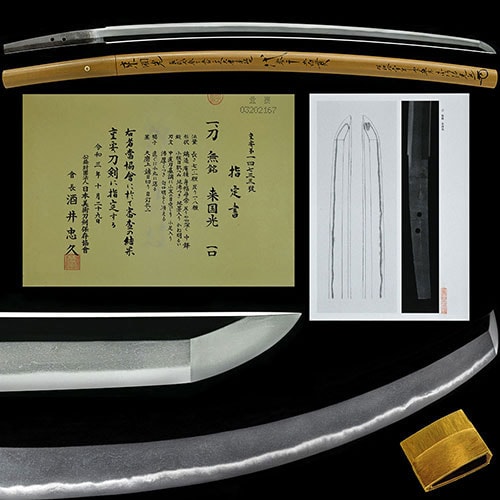
![Wakizashi - Jūyō - 作 信國 - 脇差[信国]重要刀剣(日本美術刀剣保存協会)](/_next/image?url=https%3A%2F%2Fitbhfhyptogxcjbjfzwx.supabase.co%2Fstorage%2Fv1%2Fobject%2Fpublic%2Flisting-images%2Fworld-seiyudo%2FL31974%2F00.jpg&w=2560&q=90)
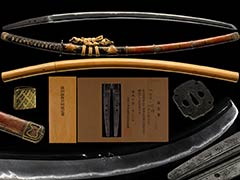
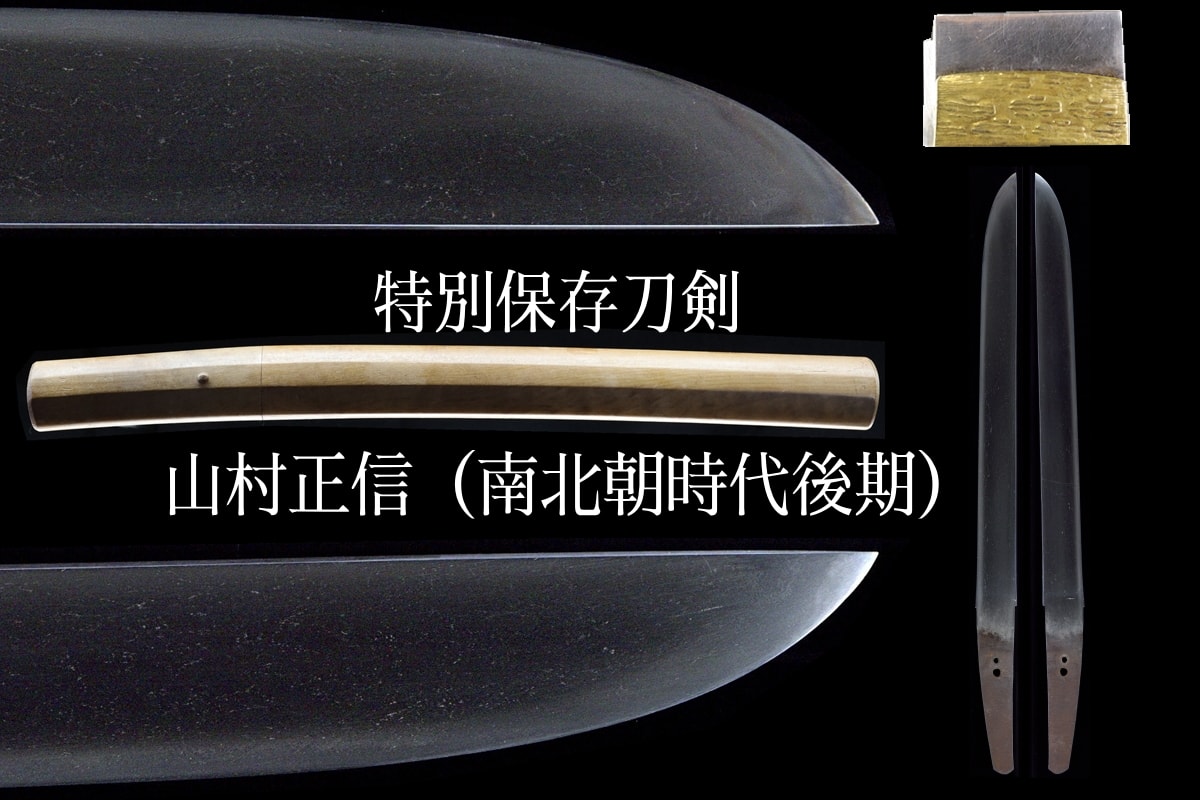
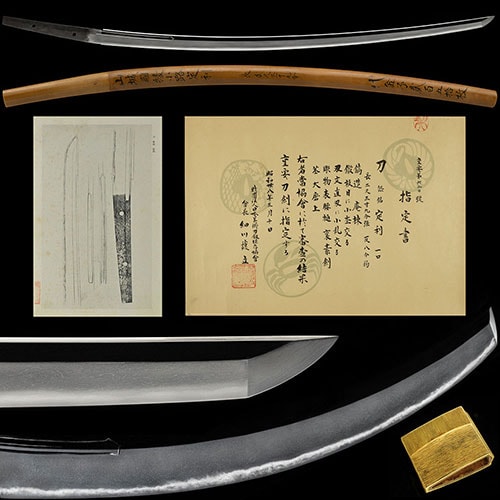
![Tanto - Tokuho - 作 信國 - 古刀 鑑定書内容:財)日本美術刀剣保存協会 特別保存刀剣[N.B.T.H.K]Tokubetsu Hozon Token 銘文:信国(応永)](/_next/image?url=https%3A%2F%2Fitbhfhyptogxcjbjfzwx.supabase.co%2Fstorage%2Fv1%2Fobject%2Fpublic%2Flisting-images%2Fiida-koendo%2FL500630%2F00.jpg&w=2560&q=90)