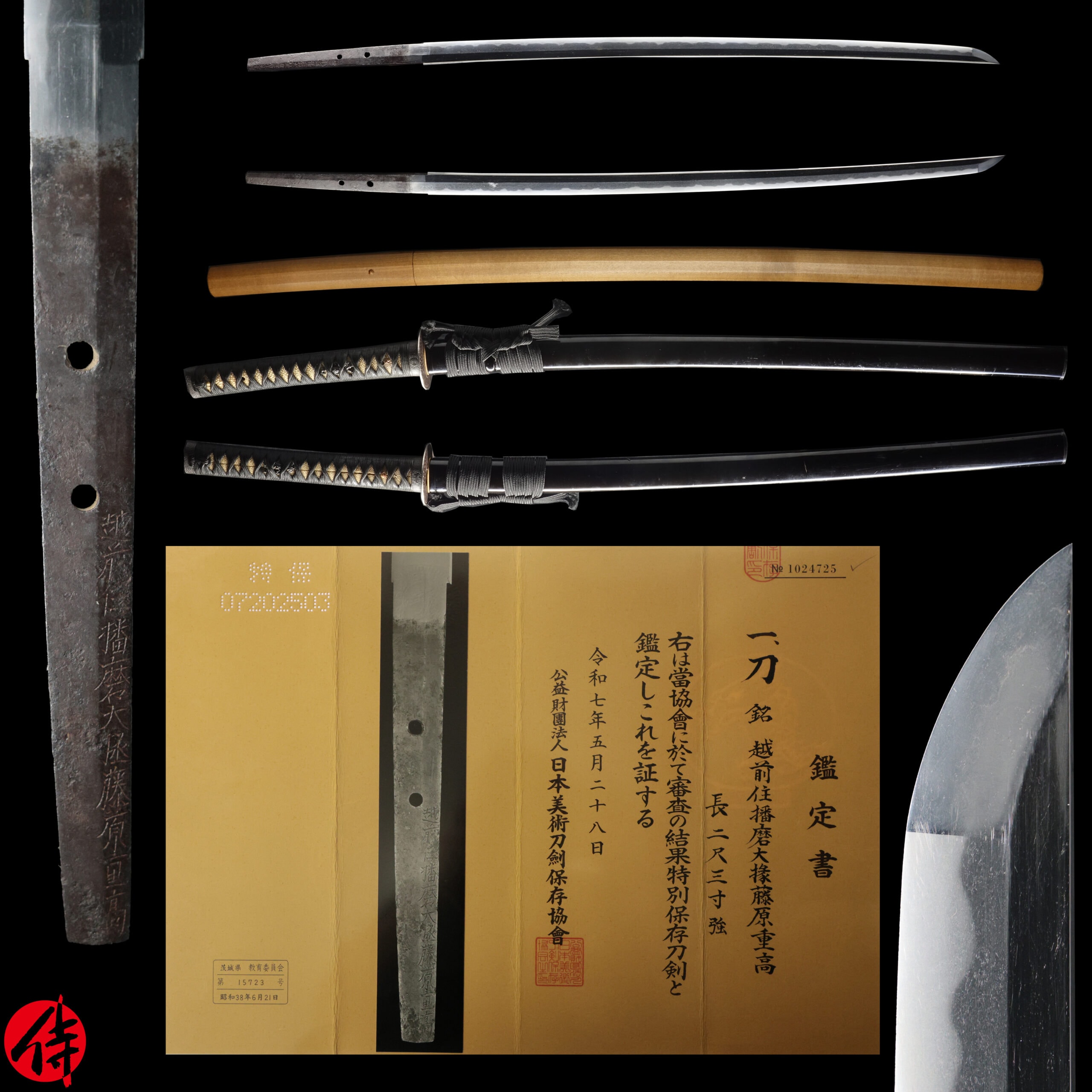
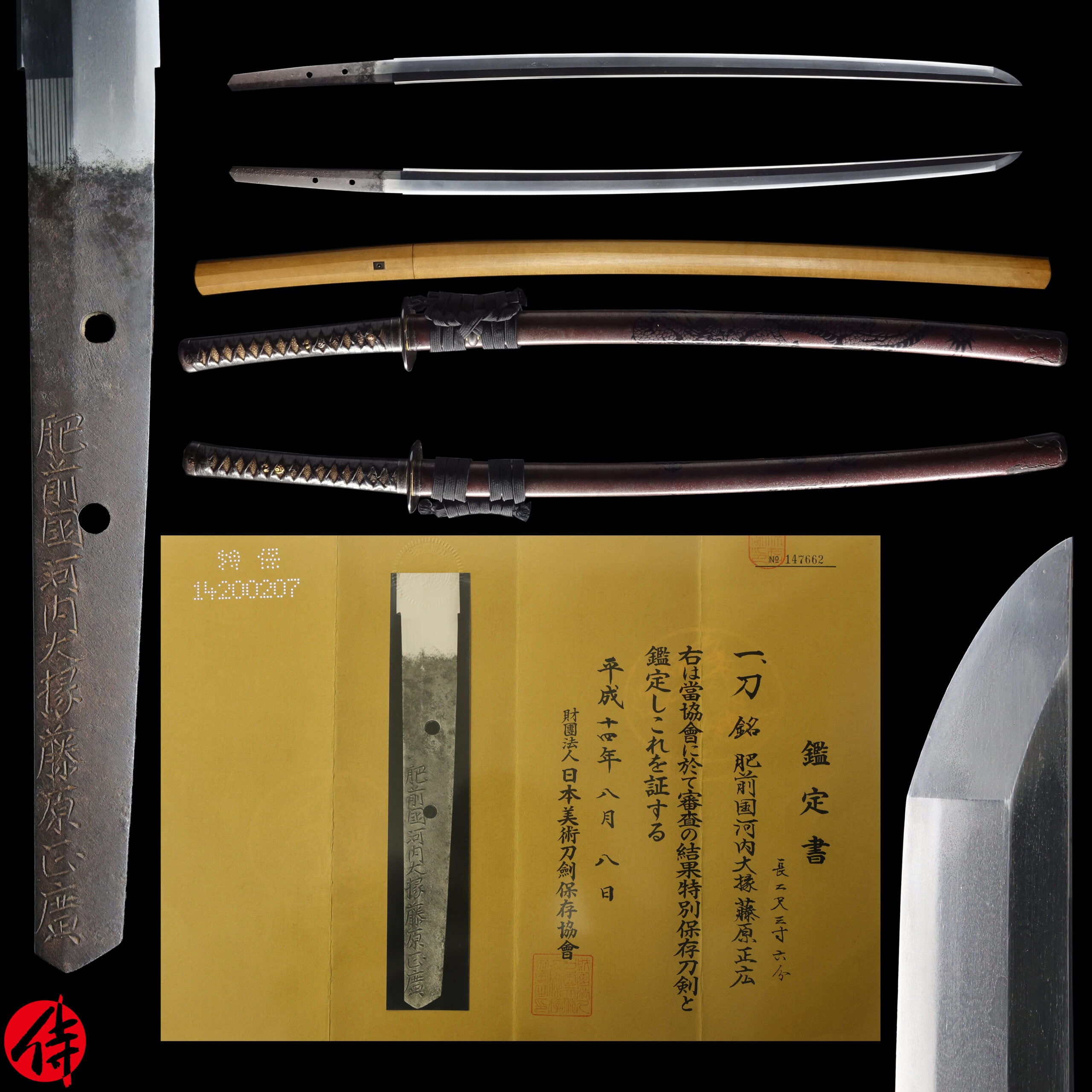
説明
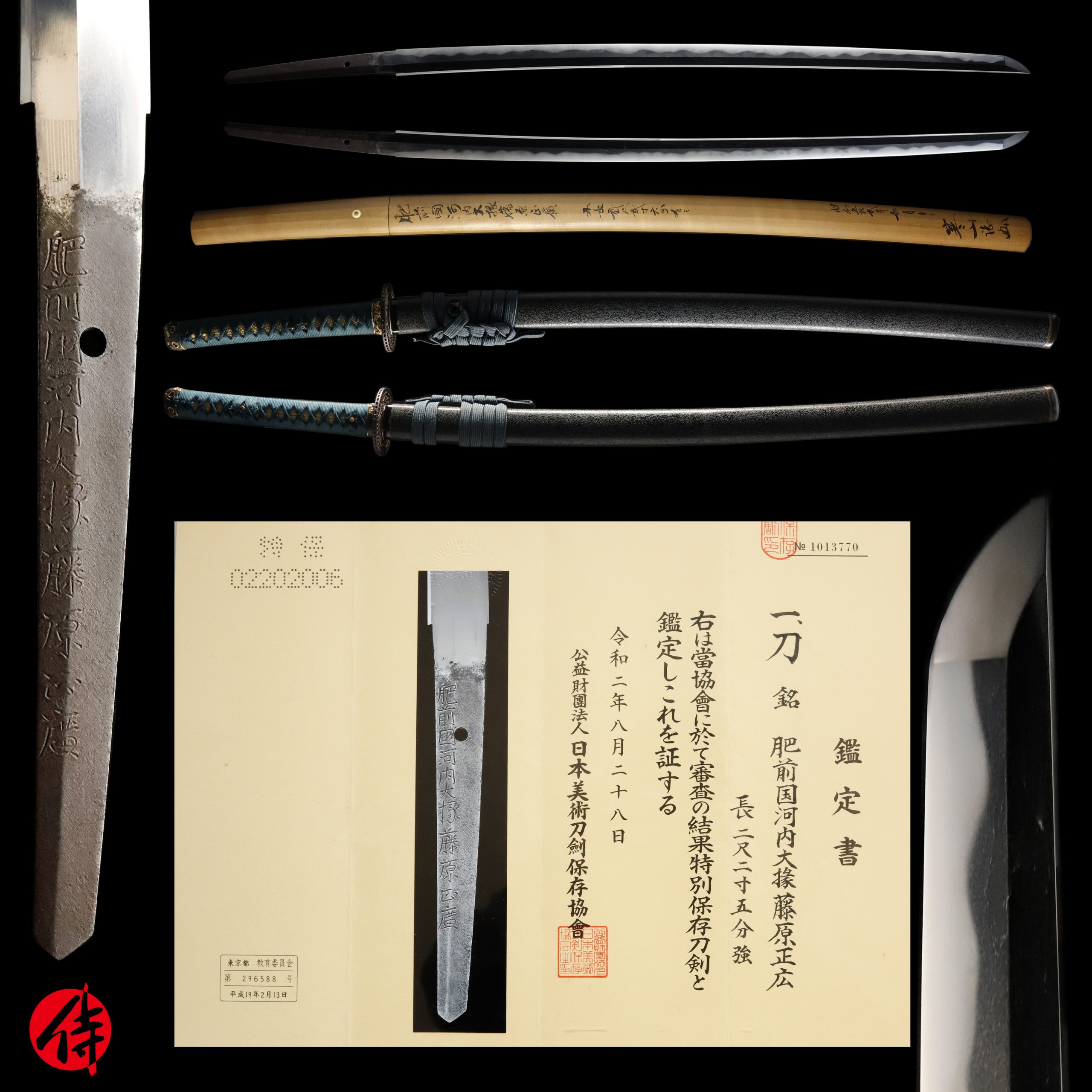
Antique Japanese Sword Katana Signed by Masahiro with NBTHK
Tokubetsu Hozon
Certificate
【Description】
Kawachi Daijyo Fujiwara Masahiro(河内大掾藤原正広) is a renowned swordsmith from Hizen province. (today’s Saga prefecture).This blade was forged by the first-generation.
He was the grandson of Tadayoshi, the founder of Tadayoshi school in Hizen province. At the beginning of his career, Masahiro signed as Masanaga and then changed it to Masahiro in 1625 A.D(the second year of Kanei).
He was especially highly regarded among the Nabeshima clan, a powerful feudal family in Hizen province. Nabeshima Katsushige is the one who ordered Masahiro to change his maker’s name. Masahiro was selected as Okakae Kaji for Nabeshima clan, meaning he was exclusively forging swords for the feudal family. It was quite honorable for any swordsmiths to be an Okakae Kaji. It is said that Masahiro’s forging technique was so great that he sometimes forged swords on behalf of Tadayoshi.
The swords forged in Hizen province are known as Hizen To, famous for its beautiful Jigane. (The steel of a constructed blade)
This sword has a Tokubetsu Hozon certificate issued by NBTHK. This authentication paper was only given to Japanese swords, especially worth preserving by Nihon Bijutsu Touken Hozon Kyokai(the Society for the Preservation of the Japan Art Sword). This blade is in excellent condition and comes with a beautiful set of sword mountings.
【 Blade】
Cutting Edge Length(Nagasa)
:
68.5
c
m( 27.0 inches)
Curvature(Sori)
:
0.8
cm( 0.3 inches)
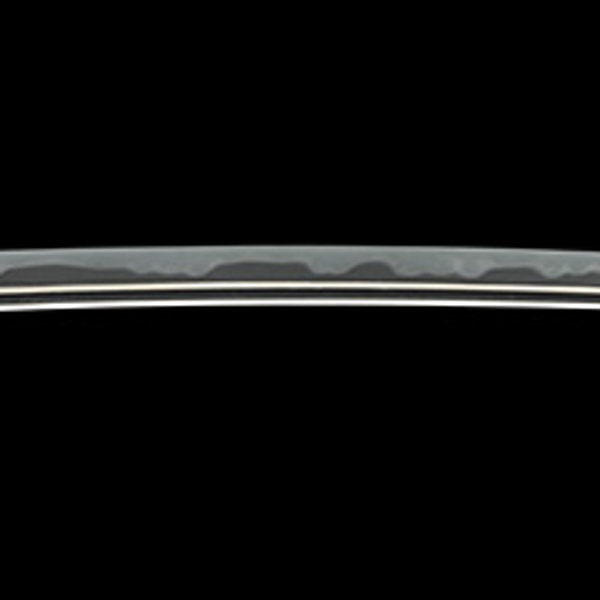
Hamon
:
The crystalline structure which forms along the cutting edge of a blade as a result of the hardening process
Jimon(Jihada)
:
visible steel surface pattern created by folding and hammering during forging process
Nakago
:
It was signed by Hizen Koku Kawachi Daijyo Fujiwara Masahiro.
Japanese swordsmiths left the black rust on the tang because it prevents red rust while the tang is in its handle. And the discoloration of the tang was created over time, and it is a great indicator for a Japanese sword specialist to estimate when the sword was forged.
Koshirae:
Koshirae is the mounting of the Japanese sword. There are several parts that consist of Koshirae such as Saya(Sabbard), Tsuka( Handle), Tsuba(Handguard).
Fuchi-Kashira
:
A pair of matching sword fittings that cover the upper and bottom parts of its sword hilt. Gold inlay was applied on them.
Dragons are designed for this Fuchi Kashira, and their bodies are colored with golden metal (it might be gold or brass). There are clouds around dragons, and some of them wrap these dragons’ bodies. Initially, the dragon is an imaginary creature found in ancient Chinese traditions or myths. Furthermore, it is a symbolic beast of auspicious signs. Its body is likened to nine animals: antlers are deer, the head is a camel, eyes are demons, the neck is a snake, belly is Mizuchi (蛟, mythical animal in Japan which looks like a snake and have a horn and four legs), scales are fish, claws are falcons, palms are tigers, and ears are cows. It was thought that the dragon would reign at the top of all animals because of its odd-looking appearance. Even today, the dragon design maintains its meaning as the all-purpose auspicious pattern. In Japan, some people worship this beast as a water god or farming god.
At the edge of the Kashira, you would find heart mark-shaped holes. It is known as the Inome (猪の目, boar’s eye) pattern. This design has been being used since ancient times. This pattern was named because of its shape. Some people believed that the Inome design works as an amulet to protect people from evil spirits or fire. Also, it is said it would bring good luck. This pattern is often found in traditional Japanese architectures such as shrines or temples or used for Gegyo (懸魚, decoration under the roof, where the roof is jointed) or metal fittings for hiding timber joints.
Tsuka and Menuki
:
Tsuka is the handle of the Japanese sword and Menuki is its decoration.
Although the whole figure