売切れ
Hozon売切れ
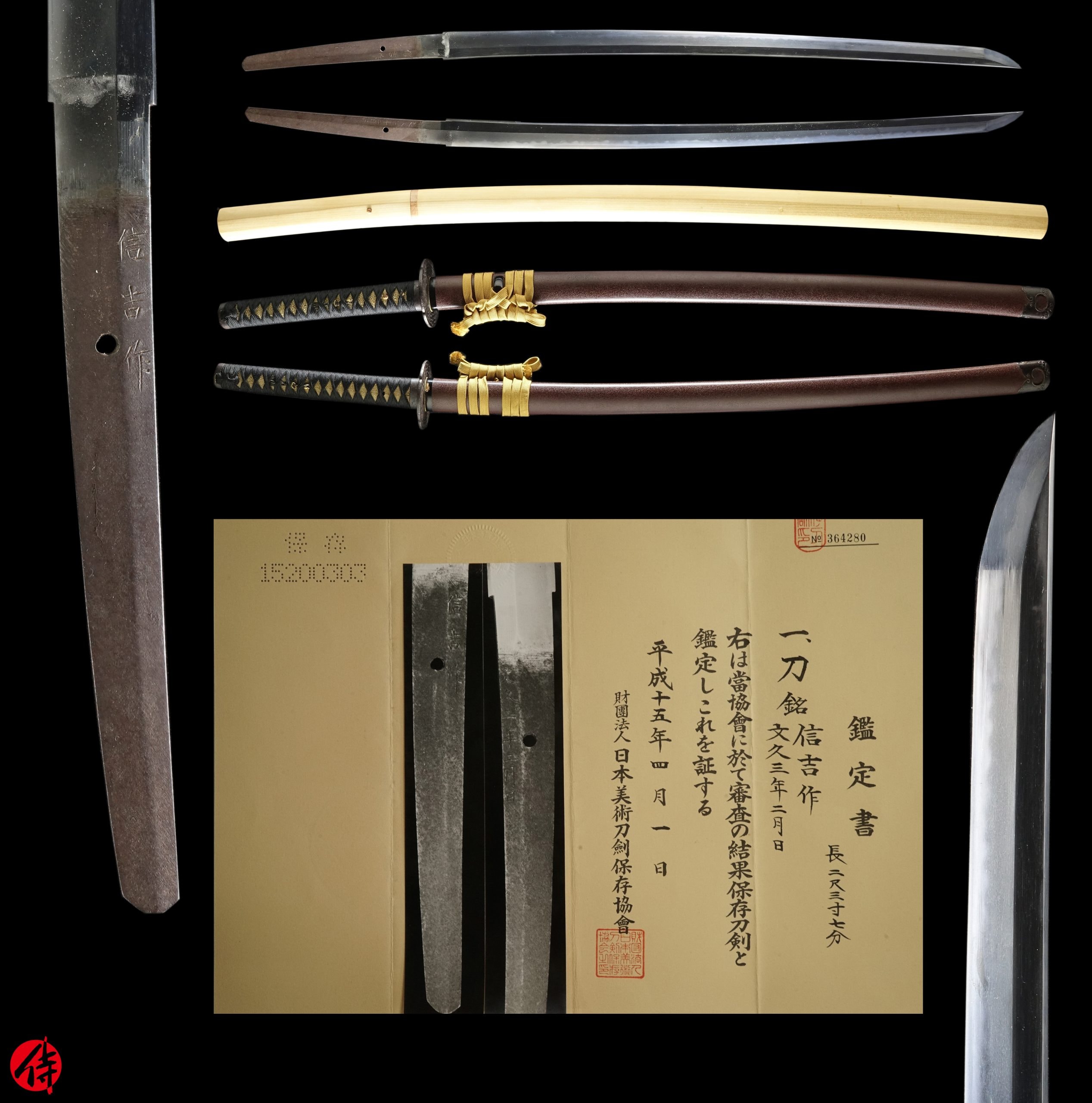
Antique Japanese Sword Katana Signed by Nobuyoshi NBTHK Hozon Certificate
売却済
世界81社の刀剣商を横断追跡 · 価格履歴 · 売却アーカイブ
時代
Bunka (1804-1818)
仕様
長さ
71.7 cm
反り
1 cm
Antique Japanese Sword Katana Signed by Nobuyoshi with NBTHK Hozon Certificate 【Description】 Nobuyoshi forged this blade in the third year of Bunkyu(1863). This blade is categorized as SHIN SHIN TO, which refers to the Japanese blades forged from the early 1760s to the beginning of the Meiji period. Japan enjoyed a relatively peaceful time from the early Edo period to the mid-Edo period(the 1600s-1760s) because of the stable economy and the powerful government run by Tokugawa Shogunate. Many Samurai didn’t have many opportunities to utilize his Katana sword in public or on battlefields during this time. Thus, they carried their swords more as a symbol of their social status. The demand for swords decreased accordingly compared to the previous Warring state period called Sengoku Jidai. (1467-1600) However, toward the end of the Edo period(1764-1876), the Japanese sword’s role changed dramatically. With the poverty spreading in Japan, there were so many riots initiated by the civilians. Japanese sword started to play an essential role in maintaining public safety. Pressure from foreign countries to open Japanese borders also forced Samurai to order strong-looking swords to survive this tumultuous time. We believe many swordsmiths made great efforts to forged high-quality, practical swords for their masters to prepare for battles. There was a civil war between Tokugawa’s military government and the new Meiji government at the end of the Edo period. That means the original owner of this Katana might have seen the moment when Samurai’s life changed forever. This blade has a strong looking and must have been practical to use it in that demanding time. This sword has a Hozon certificate issued by NBTHK. This authentication paper was only given to Japanese swords, worth preserving by Nihon Bijutsu Touken Hozon Kyokai(the Society for the Preservation of the Japan Art Sword). 【Blade】 Cutting Edge Length(Nagasa) : 71.7 cm( 28.2 inches) Curvature(Sori) : 1.0 c m(0.39 inches) Hamon: The crystalline structure which forms along the cutting edge of a blade as a result of the hardening process Jimon(Jihada): visible steel surface pattern created by folding and hammering during forging process Nakago : Nakago is the tang of the Japanese sword. Japanese swordsmiths left the black rust on the tang on purpose to prevent red rust while the tang is in its handle. And the discoloration of the tang was created over time, which is a great indicator for a Japanese sword specialist to estimate when the sword was forged. Koshirae: Koshirae is the mounting of the Japanese sword. There are several parts that consist of Koshirae such as Saya(Sabbard), Tsuka( Handle), Tsuba(Handguard). Fuchi-Kashira : A pair of matching sword fittings that cover the upper and bottom parts of its sword hilt. It is challenging to judge what was designed for this Fuchi Kashira because of the determination over time. Probably, a kind of plant motif was inlaid with brass. Tsuka and Menuki : Tsuka is the handle of the Japanese sword and Menuki is its decoration. Kabura-ya (鏑矢) is the motif of this Menuki. Kabura-ya is a type of arrow which is attached to Kabura (鏑, a kind of weapon) to the tip of an arrow. Kabura-ya whistles when it is shot. Therefore, it was used as a signal on the battlefield to notify the start of a battle. In Japan, we can find it in traditional events such as Yabusame (流鏑馬, horseback archery) today. Also, it is enjoyed as an interior as a good-omen that will protect people from evil spirits. Tsuba and Habaki : Tsuba is the handguard for the Japanese Sword and Habaki is the equipment to make the blade not touch its scabbard inside. It prevents the blade from getting rusty and chipped. Yotsu-Mokkou-shaped Tsuba made from iron. The clouds pattern is designed on both sides. As clouds make it rain or snow, their movements greatly influence the weather of the day. People once believed that clouds have mysterious power and thought that gods and spirits dwell there.
 NihontoWatchBETA
売却済
世界81社の刀剣商を横断追跡 · 価格履歴 · 売却アーカイブ
Bunka (1804-1818)
71.7 cm
1 cm
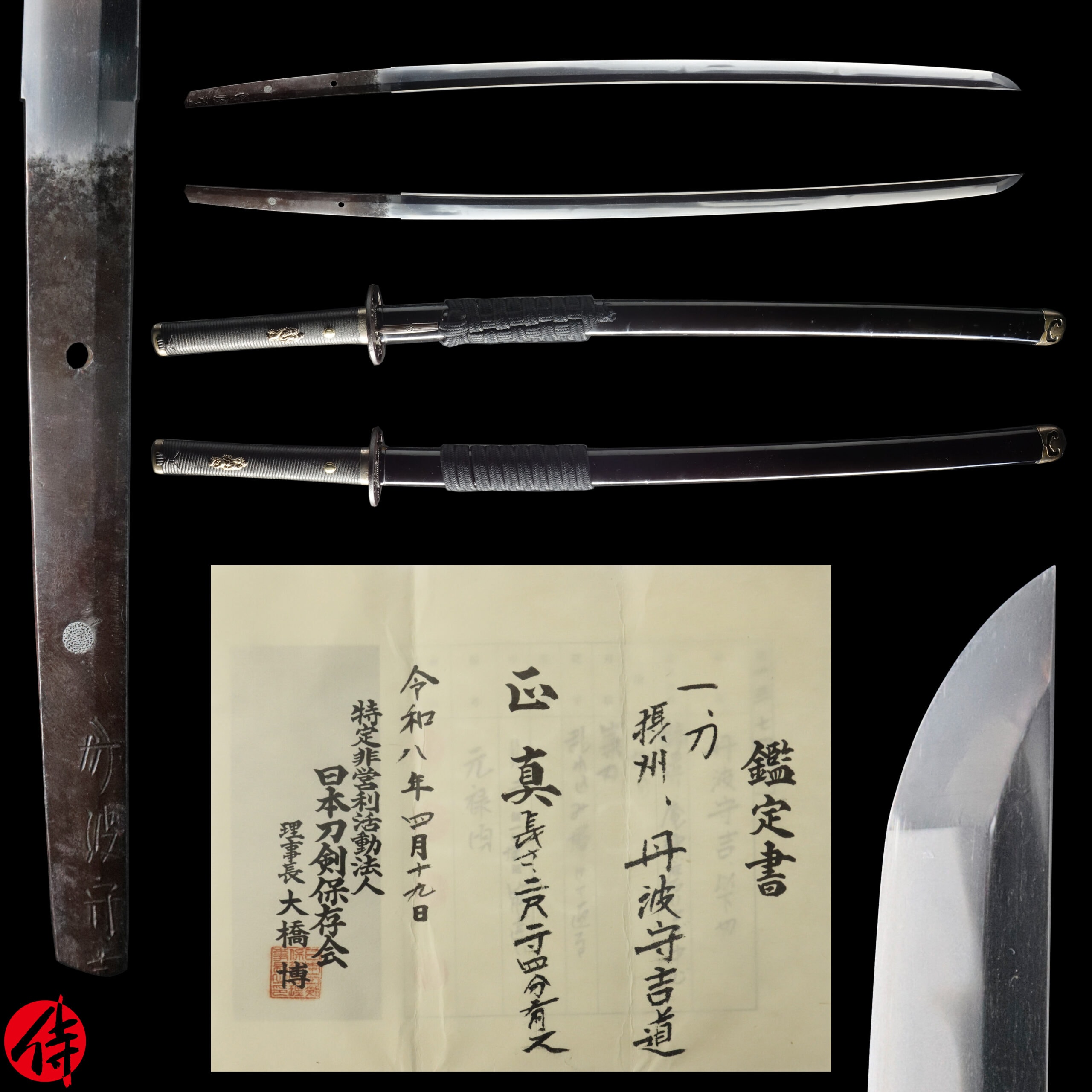
Mid Edo Katana signed by Tanba no Kami Yoshimichi for sale| Samurai Museum Shop E-mail FB Messenger Skip to content Menu Close Samurai Museum Shop Products Antique Japanese Sword Katana signed by Tanba no Kami Yoshimichi NTHK Kanteisho Certificate Updated: 22 Jun 2026 Antique Japanese Sword Katana signed by Tanba no Kami Yoshimichi NTHK Kanteisho Certificate
$7,441
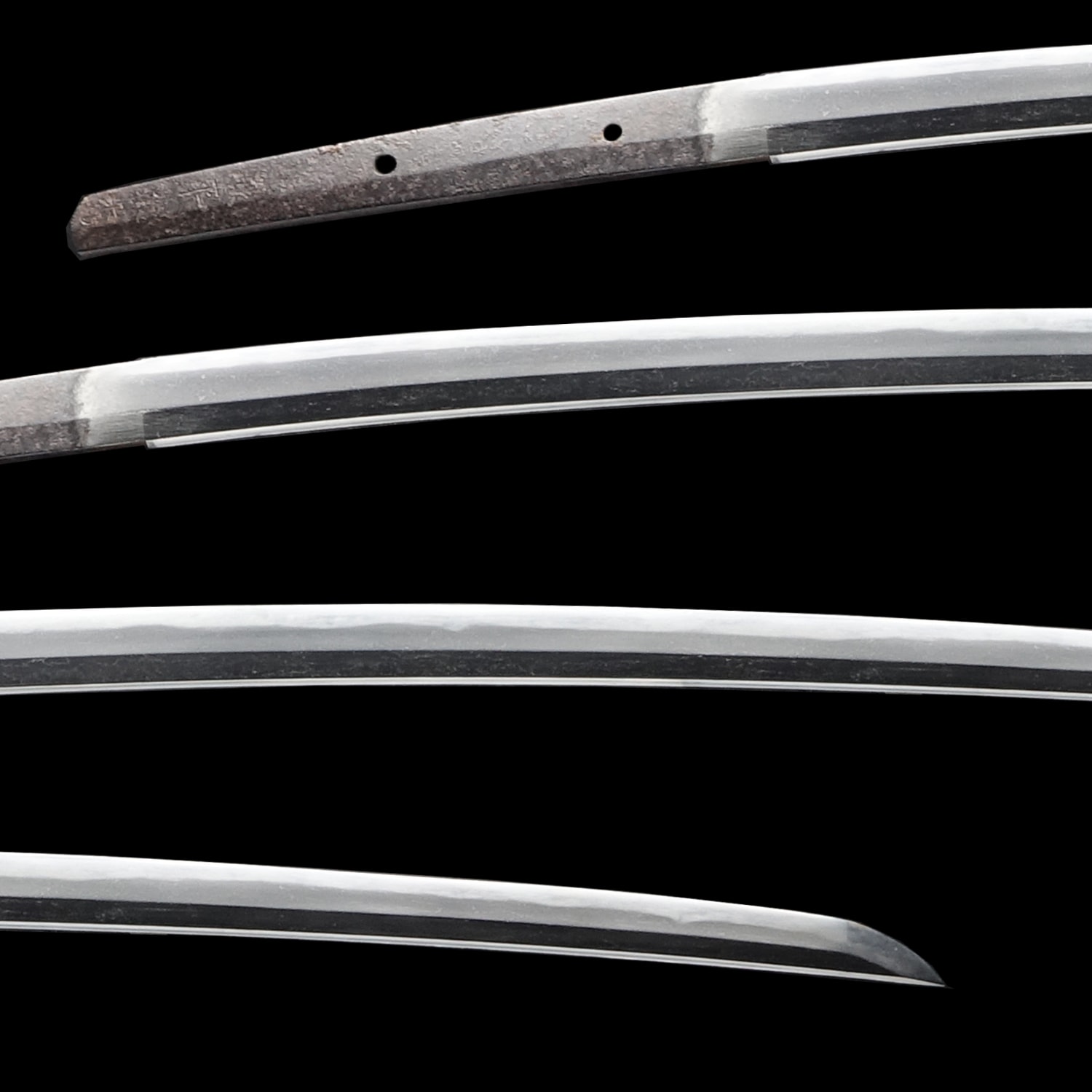
Muromachi Katana signed by Naminohira Yasuhide for sale
$7,751
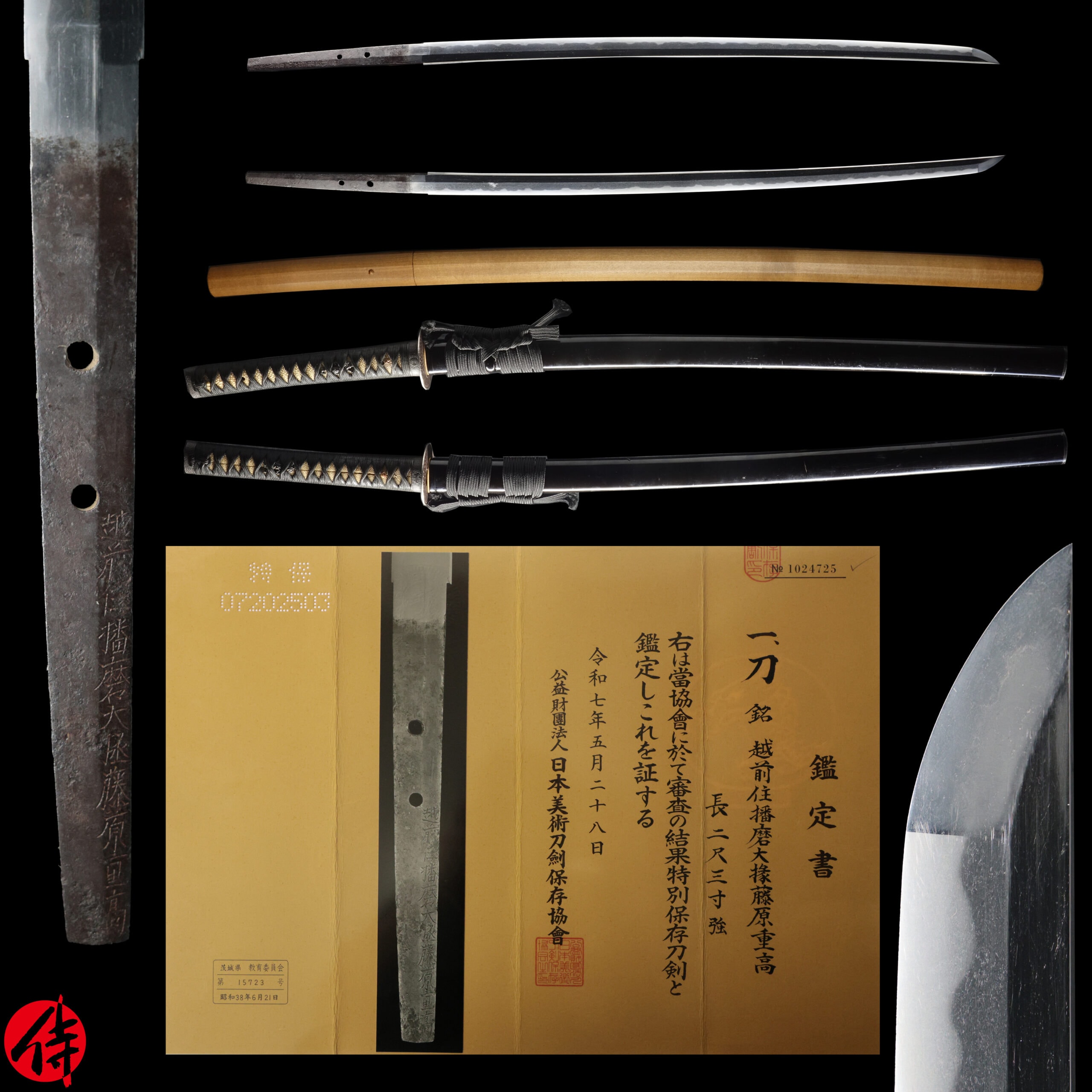
Early Edo Nihonto signed by Shigetaka for sale
$7,131
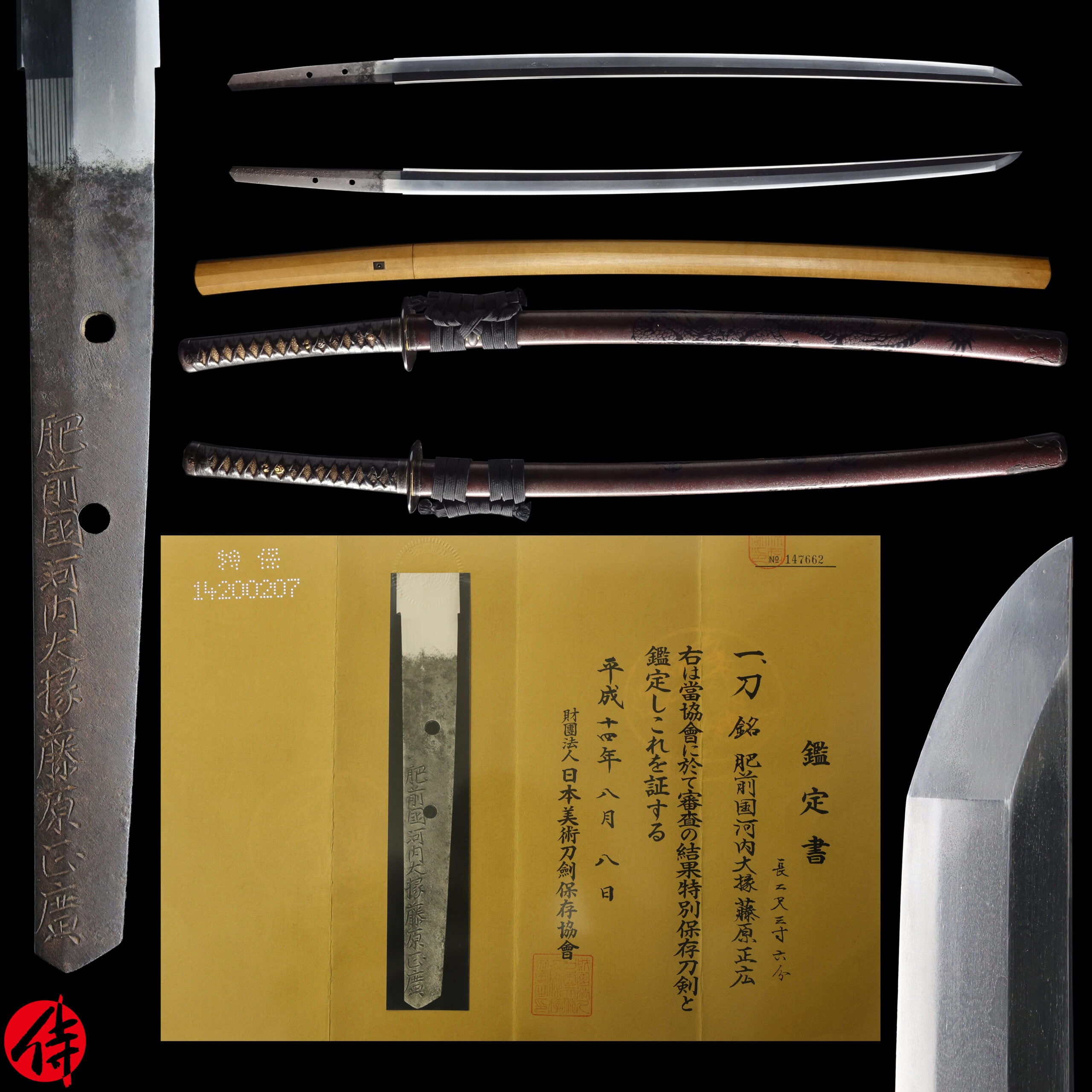
Antique Japanese Sword Katana Signed by Masahiro NBTHK Tokubetsu Hozon Certificate
$7,751
Antique Japanese Sword Katana Signed by Nobuyoshi with NBTHK Hozon Certificate 【Description】 Nobuyoshi forged this blade in the third year of Bunkyu(1863). This blade is categorized as SHIN SHIN TO, which refers to the Japanese blades forged from the early 1760s to the beginning of the Meiji period. Japan enjoyed a relatively peaceful time from the early Edo period to the mid-Edo period(the 1600s-1760s) because of the stable economy and the powerful government run by Tokugawa Shogunate. Many Samurai didn’t have many opportunities to utilize his Katana sword in public or on battlefields during this time. Thus, they carried their swords more as a symbol of their social status. The demand for swords decreased accordingly compared to the previous Warring state period called Sengoku Jidai. (1467-1600) However, toward the end of the Edo period(1764-1876), the Japanese sword’s role changed dramatically. With the poverty spreading in Japan, there were so many riots initiated by the civilians. Japanese sword started to play an essential role in maintaining public safety. Pressure from foreign countries to open Japanese borders also forced Samurai to order strong-looking swords to survive this tumultuous time. We believe many swordsmiths made great efforts to forged high-quality, practical swords for their masters to prepare for battles. There was a civil war between Tokugawa’s military government and the new Meiji government at the end of the Edo period. That means the original owner of this Katana might have seen the moment when Samurai’s life changed forever. This blade has a strong looking and must have been practical to use it in that demanding time. This sword has a Hozon certificate issued by NBTHK. This authentication paper was only given to Japanese swords, worth preserving by Nihon Bijutsu Touken Hozon Kyokai(the Society for the Preservation of the Japan Art Sword). 【Blade】 Cutting Edge Length(Nagasa) : 71.7 cm( 28.2 inches) Curvature(Sori) : 1.0 c m(0.39 inches) Hamon: The crystalline structure which forms along the cutting edge of a blade as a result of the hardening process Jimon(Jihada): visible steel surface pattern created by folding and hammering during forging process Nakago : Nakago is the tang of the Japanese sword. Japanese swordsmiths left the black rust on the tang on purpose to prevent red rust while the tang is in its handle. And the discoloration of the tang was created over time, which is a great indicator for a Japanese sword specialist to estimate when the sword was forged. Koshirae: Koshirae is the mounting of the Japanese sword. There are several parts that consist of Koshirae such as Saya(Sabbard), Tsuka( Handle), Tsuba(Handguard). Fuchi-Kashira : A pair of matching sword fittings that cover the upper and bottom parts of its sword hilt. It is challenging to judge what was designed for this Fuchi Kashira because of the determination over time. Probably, a kind of plant motif was inlaid with brass. Tsuka and Menuki : Tsuka is the handle of the Japanese sword and Menuki is its decoration. Kabura-ya (鏑矢) is the motif of this Menuki. Kabura-ya is a type of arrow which is attached to Kabura (鏑, a kind of weapon) to the tip of an arrow. Kabura-ya whistles when it is shot. Therefore, it was used as a signal on the battlefield to notify the start of a battle. In Japan, we can find it in traditional events such as Yabusame (流鏑馬, horseback archery) today. Also, it is enjoyed as an interior as a good-omen that will protect people from evil spirits. Tsuba and Habaki : Tsuba is the handguard for the Japanese Sword and Habaki is the equipment to make the blade not touch its scabbard inside. It prevents the blade from getting rusty and chipped. Yotsu-Mokkou-shaped Tsuba made from iron. The clouds pattern is designed on both sides. As clouds make it rain or snow, their movements greatly influence the weather of the day. People once believed that clouds have mysterious power and thought that gods and spirits dwell there.
NihontoWatchBETA売却済
世界81社の刀剣商を横断追跡 · 価格履歴 · 売却アーカイブ
Bunka (1804-1818)
71.7 cm
1 cm
Mid Edo Katana signed by Tanba no Kami Yoshimichi for sale| Samurai Museum Shop E-mail FB Messenger Skip to content Menu Close Samurai Museum Shop Products Antique Japanese Sword Katana signed by Tanba no Kami Yoshimichi NTHK Kanteisho Certificate Updated: 22 Jun 2026 Antique Japanese Sword Katana signed by Tanba no Kami Yoshimichi NTHK Kanteisho Certificate
$7,441
Muromachi Katana signed by Naminohira Yasuhide for sale
$7,751
Early Edo Nihonto signed by Shigetaka for sale
$7,131
Antique Japanese Sword Katana Signed by Masahiro NBTHK Tokubetsu Hozon Certificate
$7,751