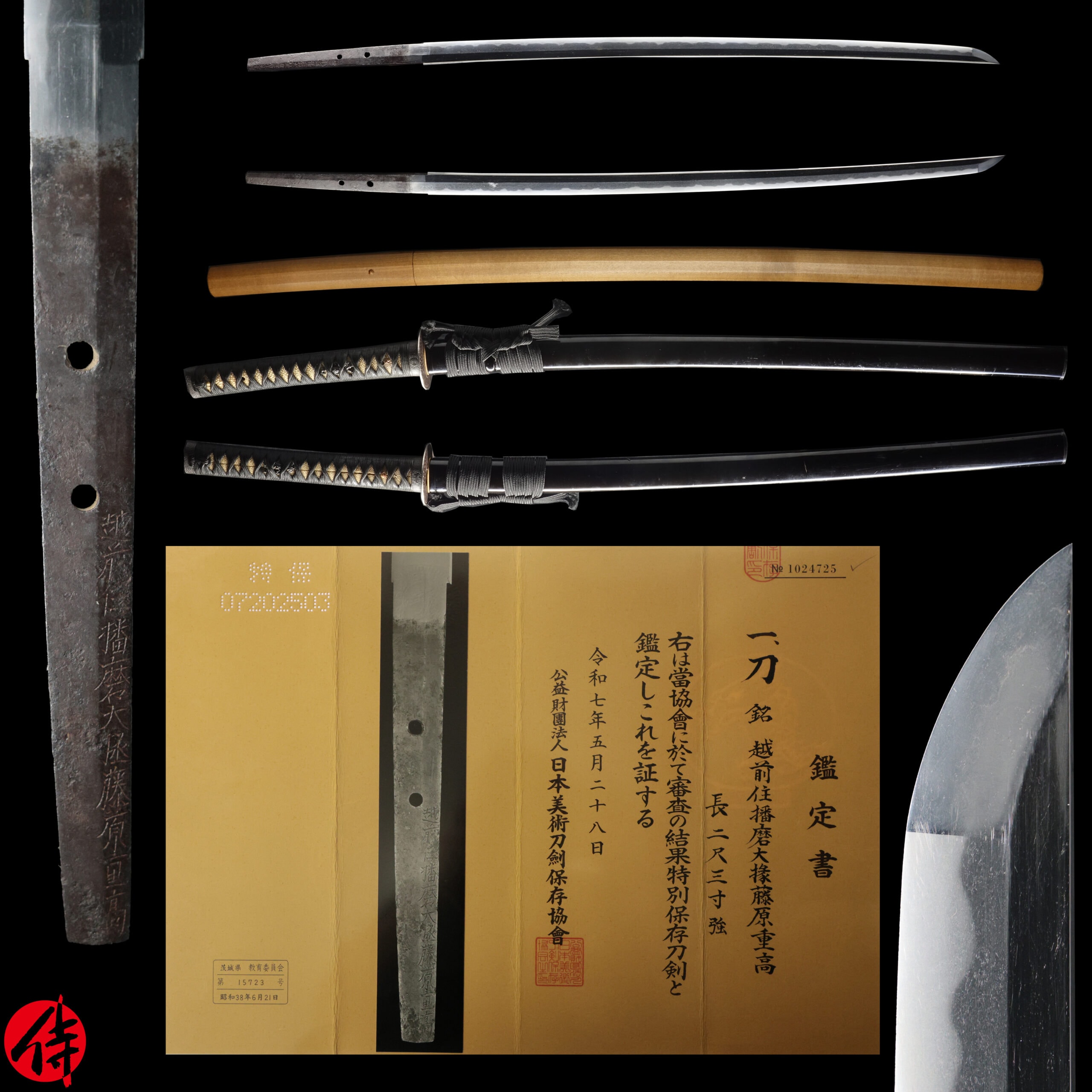
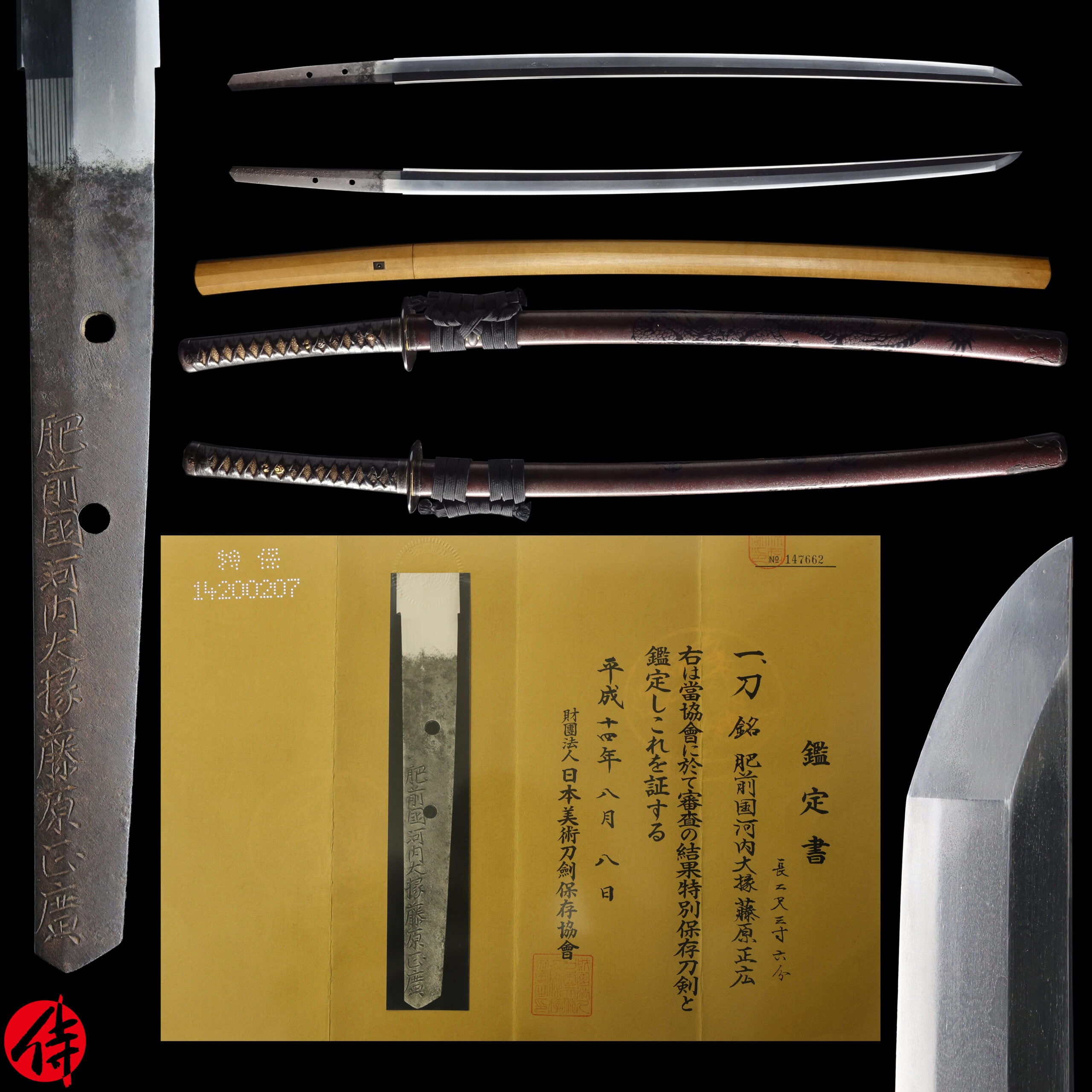
説明
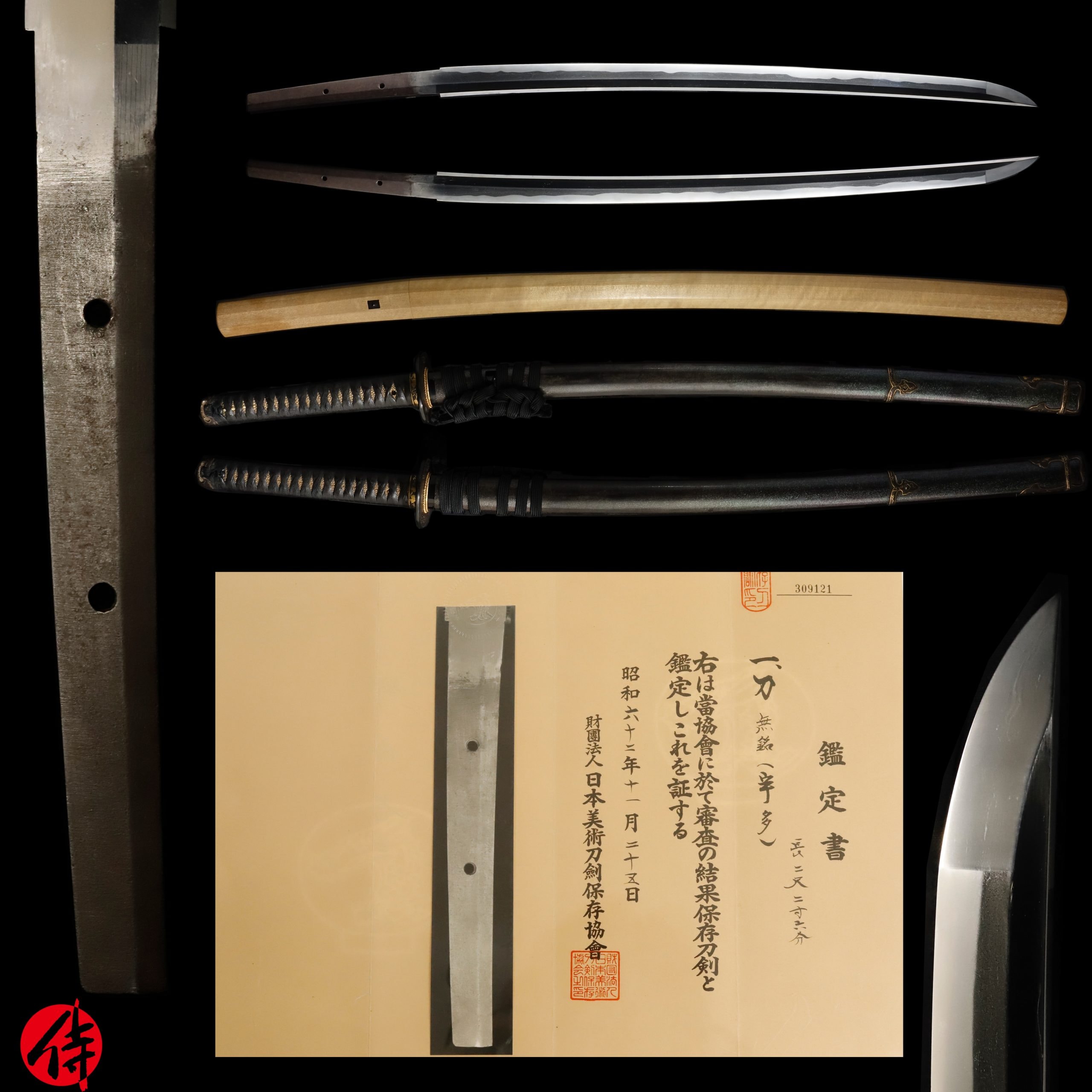
Antique Japanese Sword Katana Unsigned Uda with NBTHK
Hozon
Certificate
【Description】
This blade is attributed to the work of Uda school by NBTHK, which authenticated this blade. While the certificate doesn’t mention when it was forged, NBTHK appraises it was made in the early-mid Muromachi period(Approx. 1394-1491). We made a phone call to NBTHK to confirm it.
Uda is a prestigious school that flourished during the Nanbokuchoto-mid Muromachi period(approx. 1334-1491). It was founded by Kunimitsu(国光) in the late Kamakura period. The school was located in Etchu province in Toyama prefecture today. Kunimitsu was originally from Yamato Uda Gun(大和宇多郡), located in Nara prefecture but moved to Etchu in the late Kamakura period(1299-1333) with his apprentices including Kunifusa(国房), and Kunimune(国宗).
Uda school was famous for producing practically designed blades, which were desirable during Nanbokucho- Muromachi period. Among other schools in the Hokuriku region(the northwestern part of Honshu), Uda school was the most prominent school.
When the Uda school flourished in the Nanbokucho period, Japan had a tumultuous time because the imperial court was split into two sides(south and north). There were so many conflicts, and many Samurai were deployed. The trend in battlefields was to use a surprisingly long sword. This trend continued until the early-mid Muromachi period when this blade was approximately forged. This blade doesn’t look long now, but we assume it used to be quite a long sword based on the tang’s shape, meaning it was shortened a few times in the past.
There are two categories in the work of Uda school. One is called Ko Uda(Old Uda), and the other is called Uda. Ko Uda swords were forged during the late Kamakura period to the Nanbokucho period. Uda blades were forged during the Muromachi period.
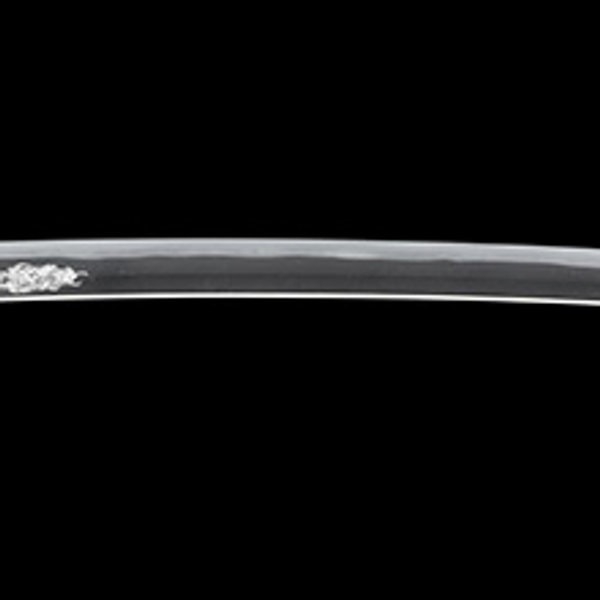
While there are kitae ware on this blade, the Sugata(whole look) is elegant with a long Kissaki(tip). It is accompanied by a Raden-style scabbard(crushed oyster shell lacquer coating). And other sword mountings are Handachi(半太刀) style, which adds a gorgeous appearance to this blade.
It comes with a Hozon certificate issued by NBTHK. This authentication paper was only given to Japanese swords, worth preserving by Nihon Bijutsu Touken Hozon Kyokai(the Society for the Preservation of the Japan Art Sword).
If you like to make sure how big the Kitae ware is, please feel free to contact us. We will be happy to send you some photos.
Please be aware of the fact that there is a Kiae Ware(Tear)on the blade before placing an order.
【Blade】
Cutting Edge Length(Nagasa)
:
68.5 cm(26.96
inches)
Curvature(Sori)
:
1.2
cm(0.47 inches)
For more detailed measurement of the blade/sword mounting
Hamon
:
The crystalline structure which forms along the cutting edge of a blade as a result of the hardening process
Jimon(Jihada)
:
visible steel surface pattern created by folding and hammering during forging process
Nakago
:
Nakago is the tang of the Japanese sword.
Japanese swordsmiths left the black rust on the tang because it prevents red rust while the tang is in its handle. And the discoloration of the tang was created over time, and it is a great indicator for a Japanese sword specialist to estimate when the sword was forged.
Kitae Ware
:
Kitae-Ware means a tear in the Japanese sword. This tear appears because of the insufficient forging. It doesn’t affect the sharpness of the sword or its toughness.
【Other Details】
Koshirae:
Koshirae is the mounting of the Japanese sword. There are several parts that consist of Koshirae such as Saya(Sabbard), Tsuka( Handle), Tsuba(Handguard).
Fuchi-Kashira
:
A pair of matching sword fittings that cover the upper and bottom parts of its sword hilt.
The Tsuta-Karakusa Monyou is designed and inlaid with brass for this Fuchi Kashira. It is the combination of Tsuta (ivy) and the arabesque pattern. As ivy has a strong vitality, lots of Samurais enjoyed using this plant motif. According to a theory, this design became popul