説明
Antique Japanese Sword Katana Signed by Sukekane with
Tokubetsu Hozon
Certificate
【Description】
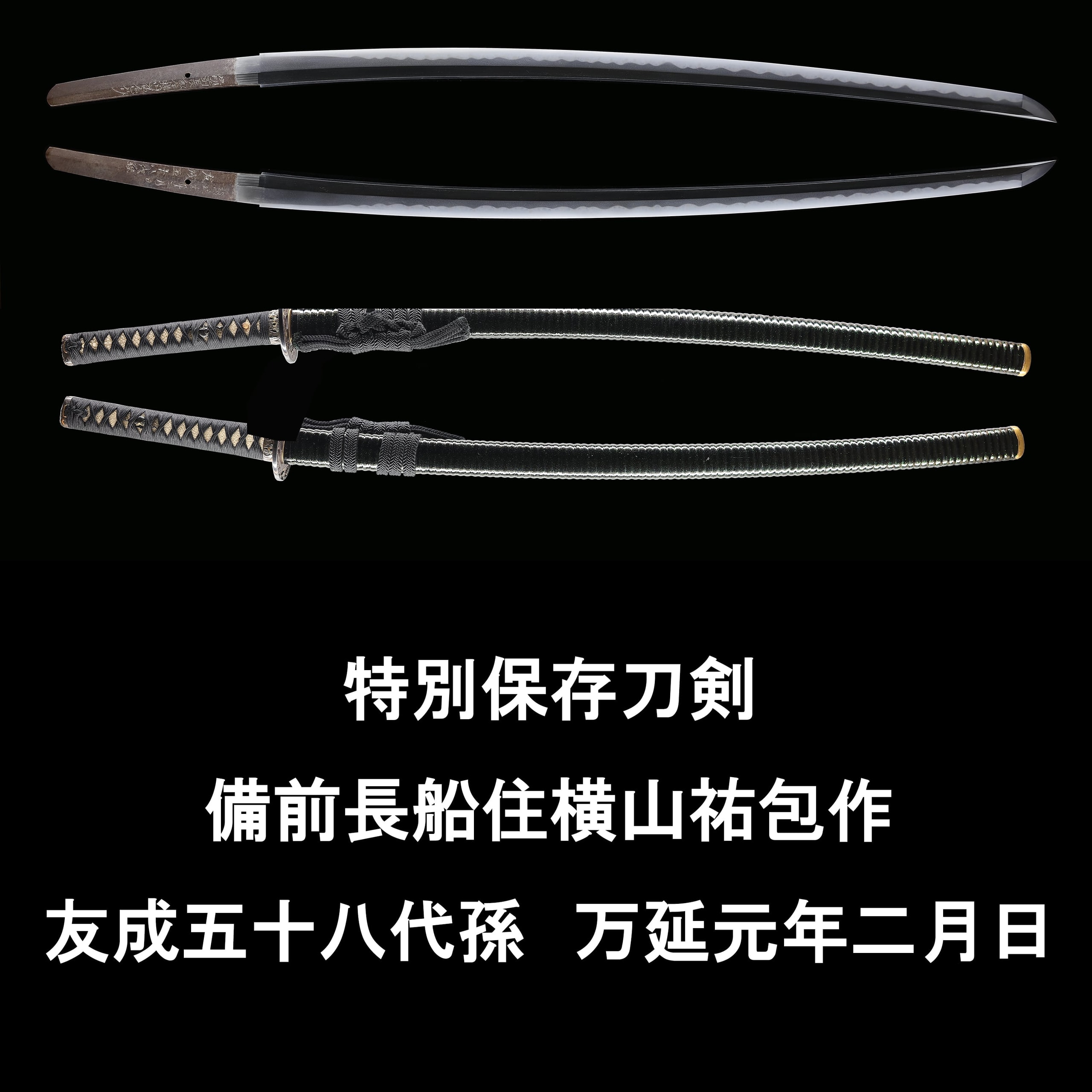
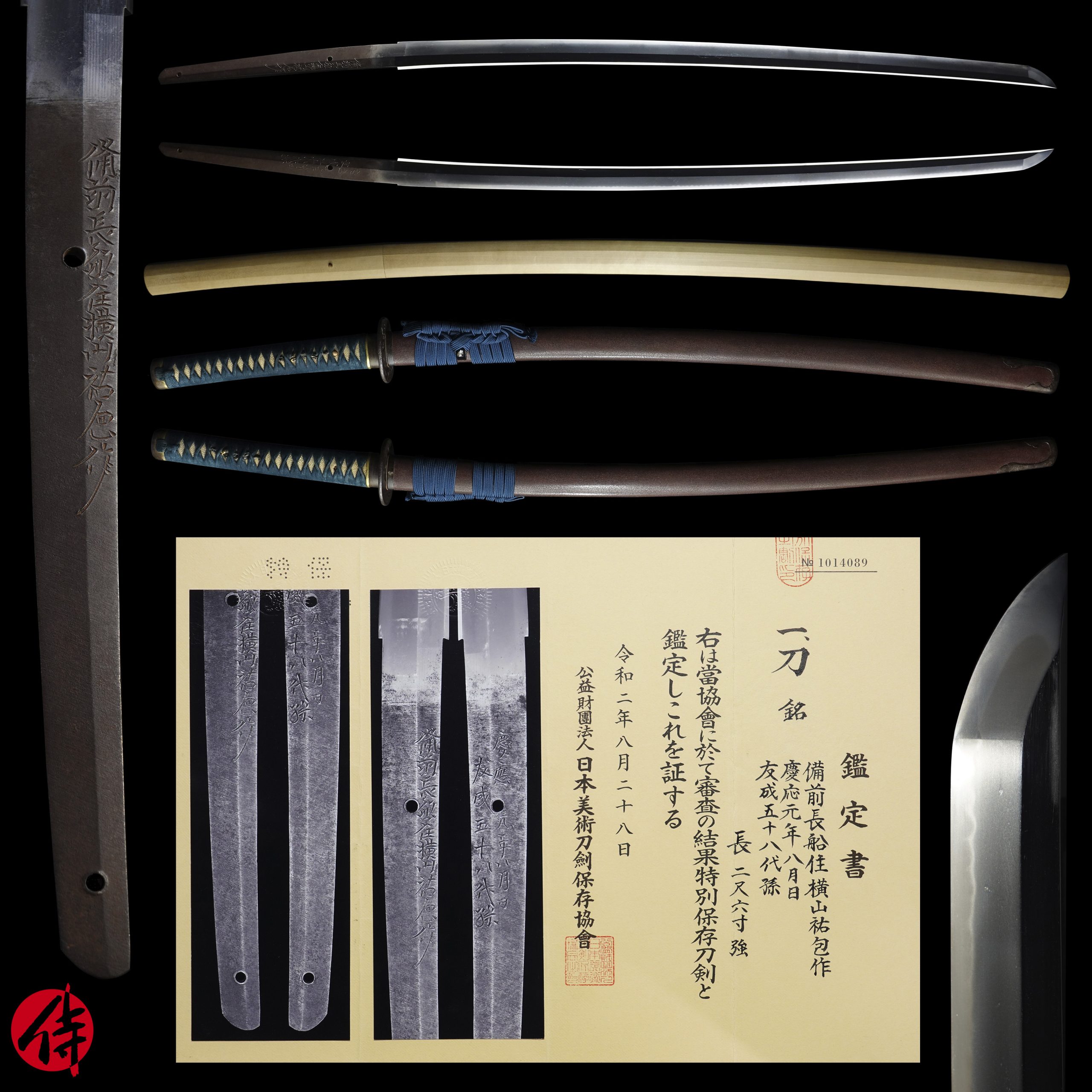
This blade was forged by Bizen Osafune Yokoyama Sukekane(備前長船横山祐包) in the first year of the Keio era(
1865
). He is one of the most famous swordsmiths in Bizen province at the end of the Edo period(
Bakumatsu era
). Sukekane forged swords from the 5th year of Tenpo to the 5th year of Meiji(1834-1872 ). He signed the 58th grandson of Tomonari on the tang as well.
Tomomori was a renowned swordsmith in the mid-late Heian period in Bizen province(today’s Okayama prefecture). We presume he signed it to be proud of his ancestry.
About Bizen Osafune
Sukekane’s ancestors dated back to Sukesada school, one of the most famous schools, and flourished for generations among Osafune schools(The head branch). There were various styles forged by the generations of Sukesada during the Muromachi-Edo period. There were about 60 swordsmiths who used Sukesada as his maker’s name in Samurai history.
The swordsmiths in Bizen produced many swords during the Muromachi period as it was in the middle of the Sengoku period(Warring state period). The demand for blades increased among strong feudal lords. The high level of craftsmanship had been passed until the end of the Edo period, and Sukekane is a good example.
About Bakumatsu Era
The Japanese swords made after the mid-Edo period towards the end of the Edo period are called Shin-Shin-To in Japanese. Shin-Shin-To were likely to be made more practical and robust. The Shin-Shin-To movement initially took place when Suishinshi Masahide began to bring back the old-school Japanese swords forged around the mid-to-late Kamakura period. Their swords rapidly gained popularity as the Edo regime had fallen into an unstable political state. As opposed to most swords of the previous era that were essentially more like luxury properties, the Shin-Shin-To spoke louder to the Samurais’ minds mourning the sad state of Edo.
This blade has approx 79.0 cm long and must have been practical to use at the end of the Edo period. This blade must have been owned by a very tall Samurai who was strong enough to handle such a long blade.
Appraisal
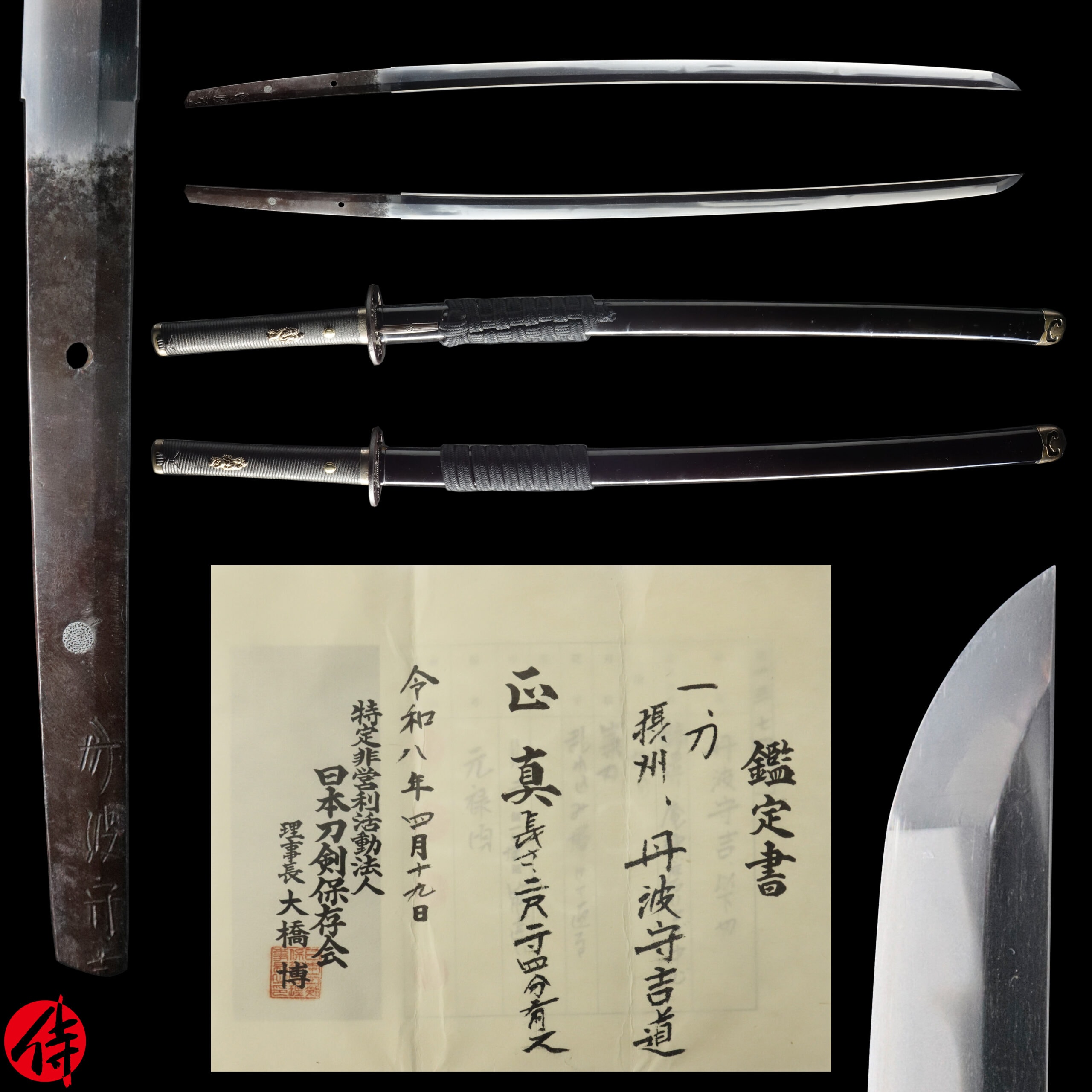
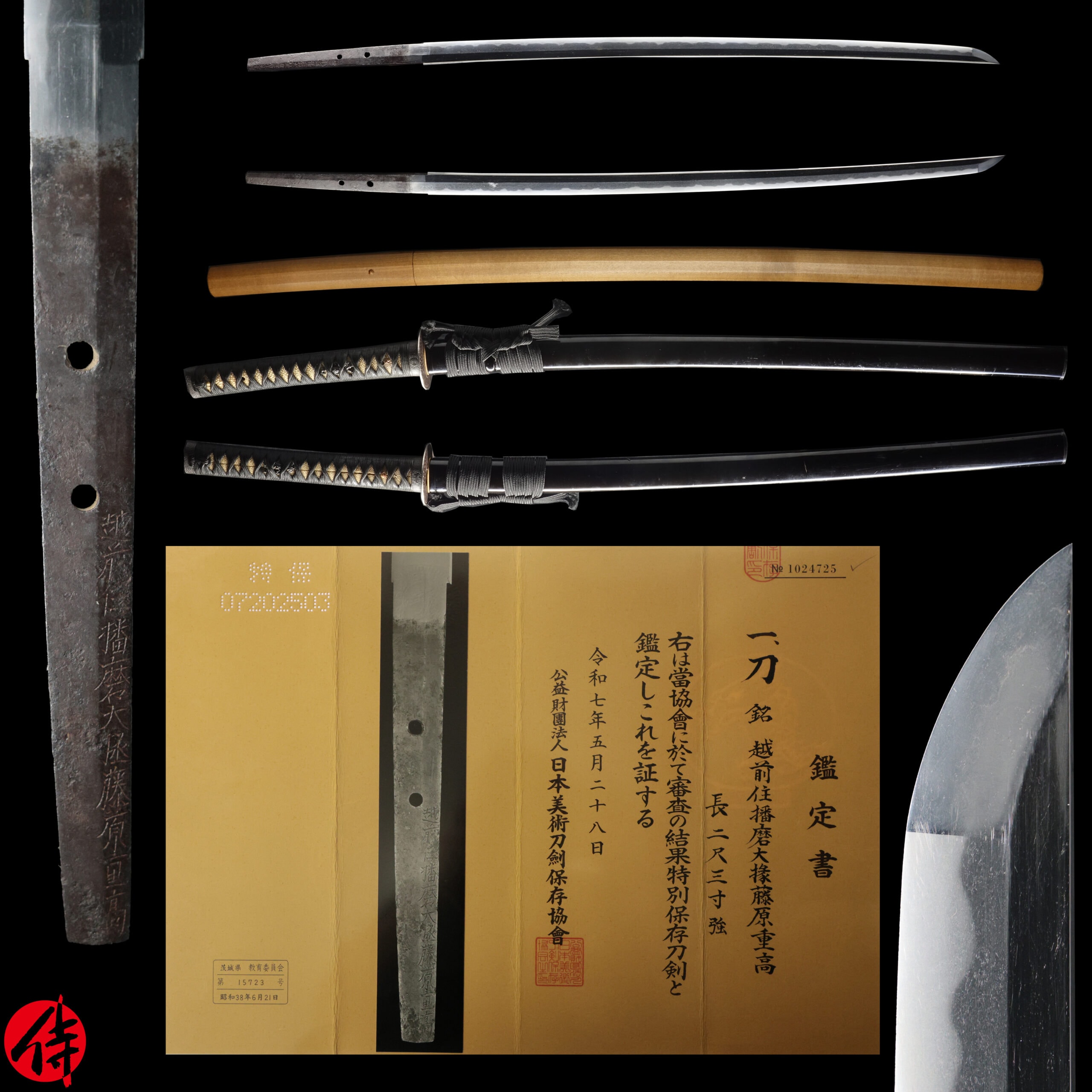
This blade is appraised as a Tokubetsu Hozon Token(特別保存刀剣) issued by NBTHK(Nihon Bijutsu Touken Hozon Kyokai:日本美術刀剣保存協会). This authentication paper was only given to authentic Japanese swords, especially well preserved and high quality with artistic value.
【 Blade】
Cutting Edge Length(Nagasa)
:
79.0 cm(31.1 inches)
Curvature(Sori)
:
1.51 cm( 0.59 inches)
For more detailed measurement of the blade/sword mounting
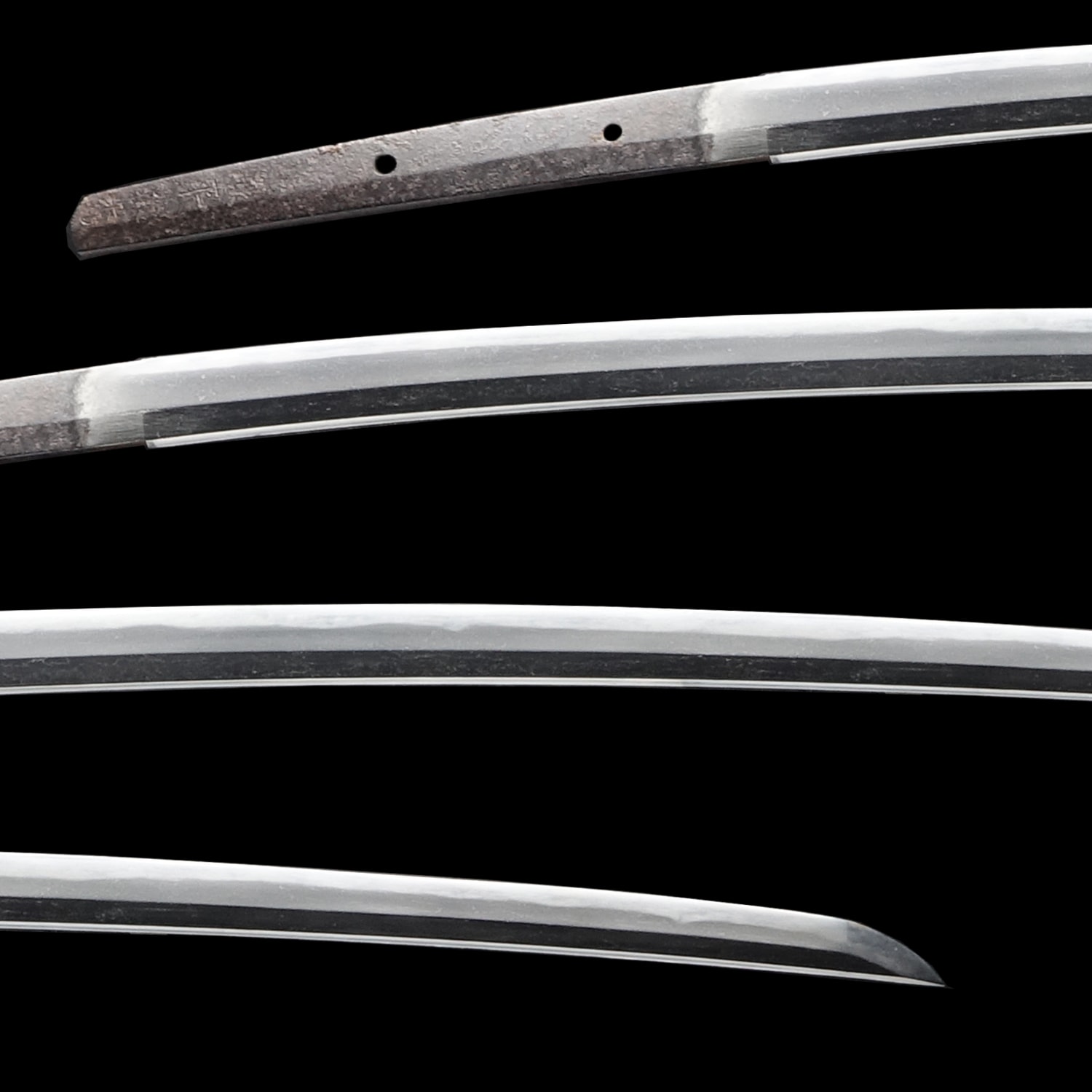
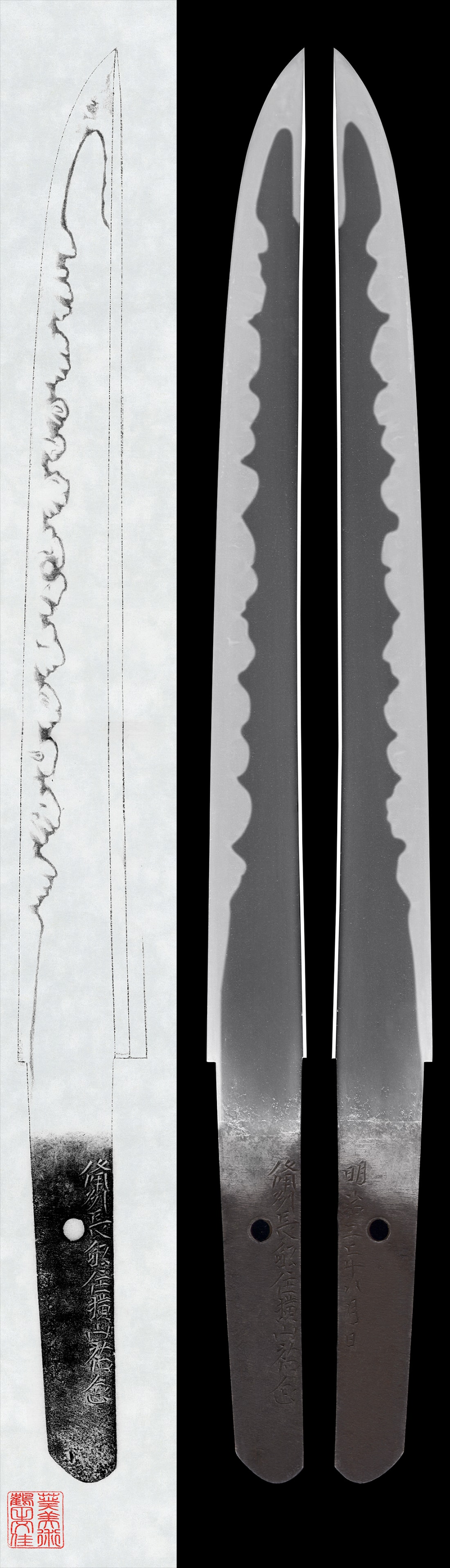
Hamon
:
The crystalline structure which forms along the cutting edge of a blade as a result of the hardening process
Jimon(Jihada)
:
visible steel surface pattern created by folding and hammering during forging process
Nakago
:
Nakago is the tang of the Japanese sword.
Japanese swordsmiths left the black rust on the tang because it prevents red rust while the tang is in its handle. And the discoloration of the tang was created over time, and it is a great indicator for a Japanese sword specialist to estimate when the sword was forged.
Koshirae:
Koshirae is the mounting of the Japanese sword. There are several parts that consist of Koshirae such as Saya(Scabbard), Tsuka( Handle), Tsuba(Handguard).
Fuchi-Kashira
:
A pair of matching sword fittings that cover the upper and bottom parts of its sword hilt.
This Fuchi Kashira has a plain design. As it does not have gorgeous meta decorations such as gold or silver inlay, you could enjoy the texture of material itself. Also, we would say that thanks to this simple design, the gorgeousness of other decorative parts (Menuki, Tsuba for example) stand out.
Tsuka and Menuki
:
Tsuka is the handle of the Japanese sword and Menuki is its decoration.
Dragon is the motif of this Menuki. It twists its body and seems to look for something. Even the details are carefully carved; it shows us its maker’s high-quality skill. Initially, the dragon is an imagina

![Katana [Bizen-koku Osafune ju Yokoyama Sukekane(Daimei Sukeharu)] [N.B.T.H.K] Tokubetsu Hozon Token](/_next/image?url=https%3A%2F%2Fitbhfhyptogxcjbjfzwx.supabase.co%2Fstorage%2Fv1%2Fobject%2Fpublic%2Flisting-images%2Fworld-seiyudo%2FL31324%2F00.jpg&w=2560&q=90)