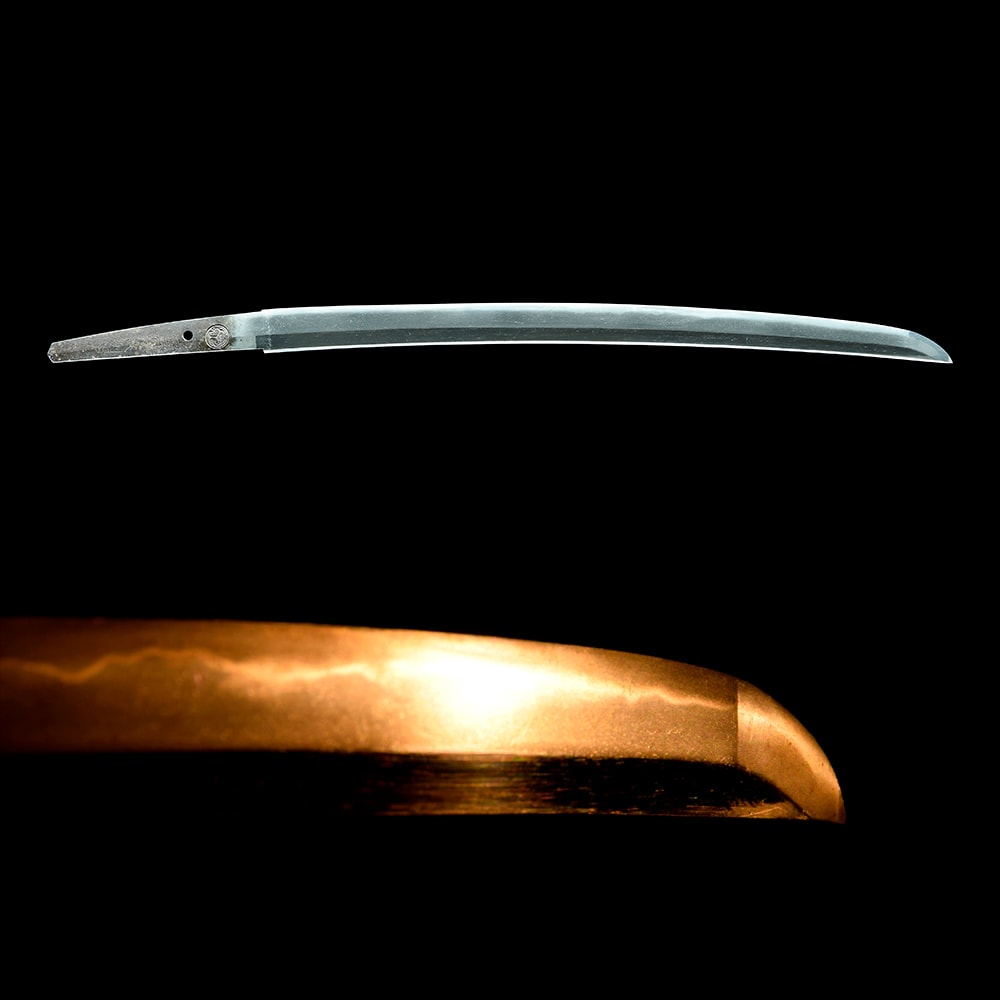
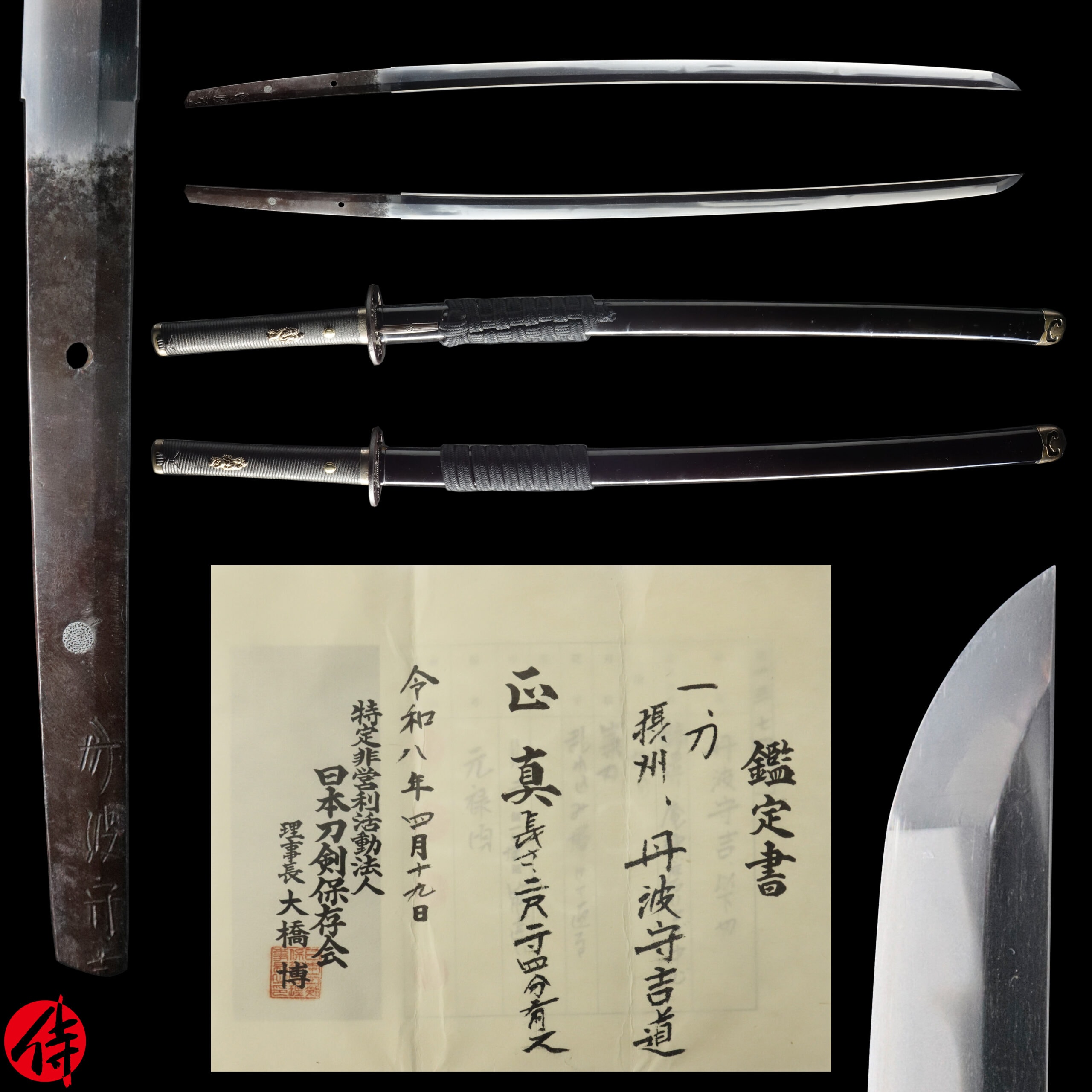
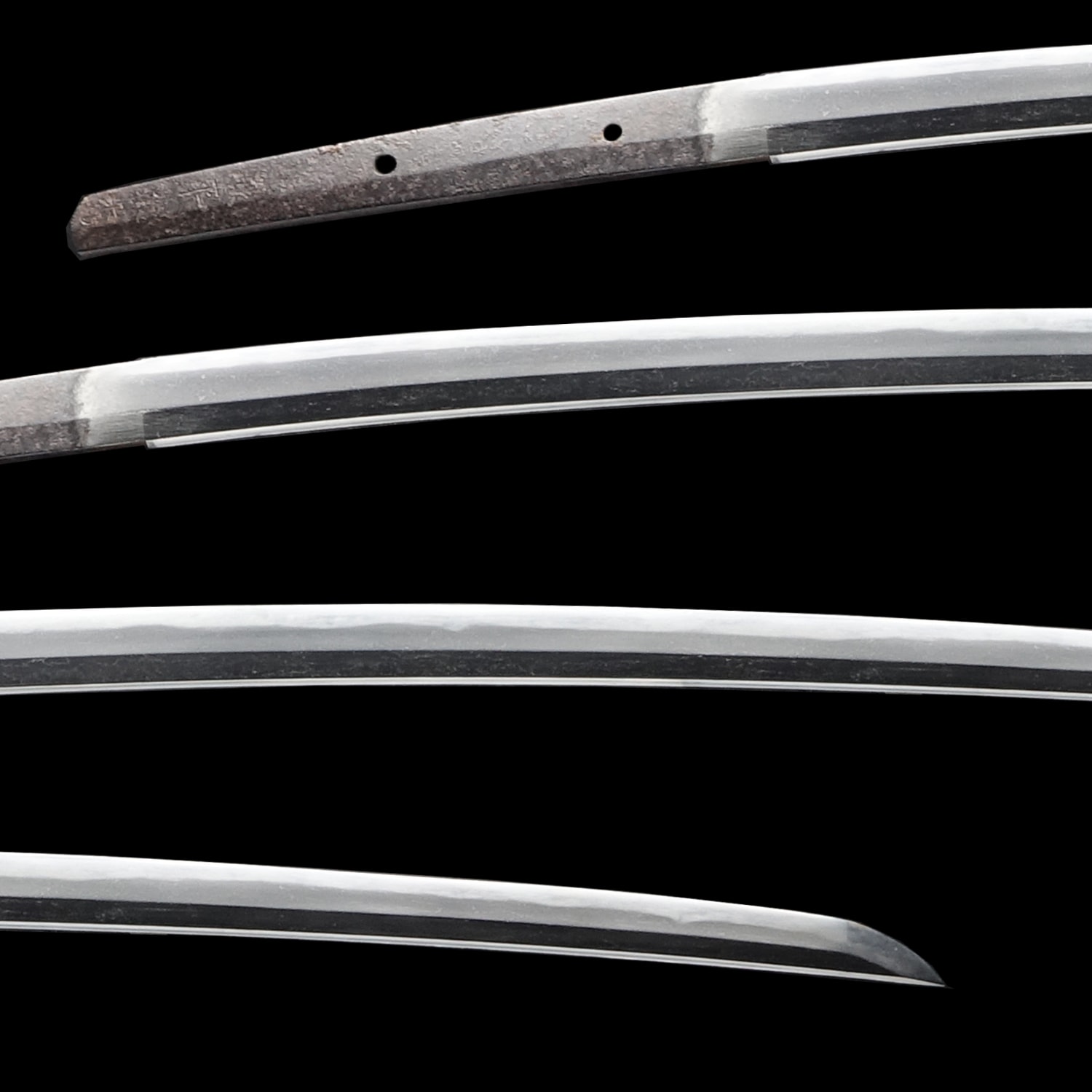
説明
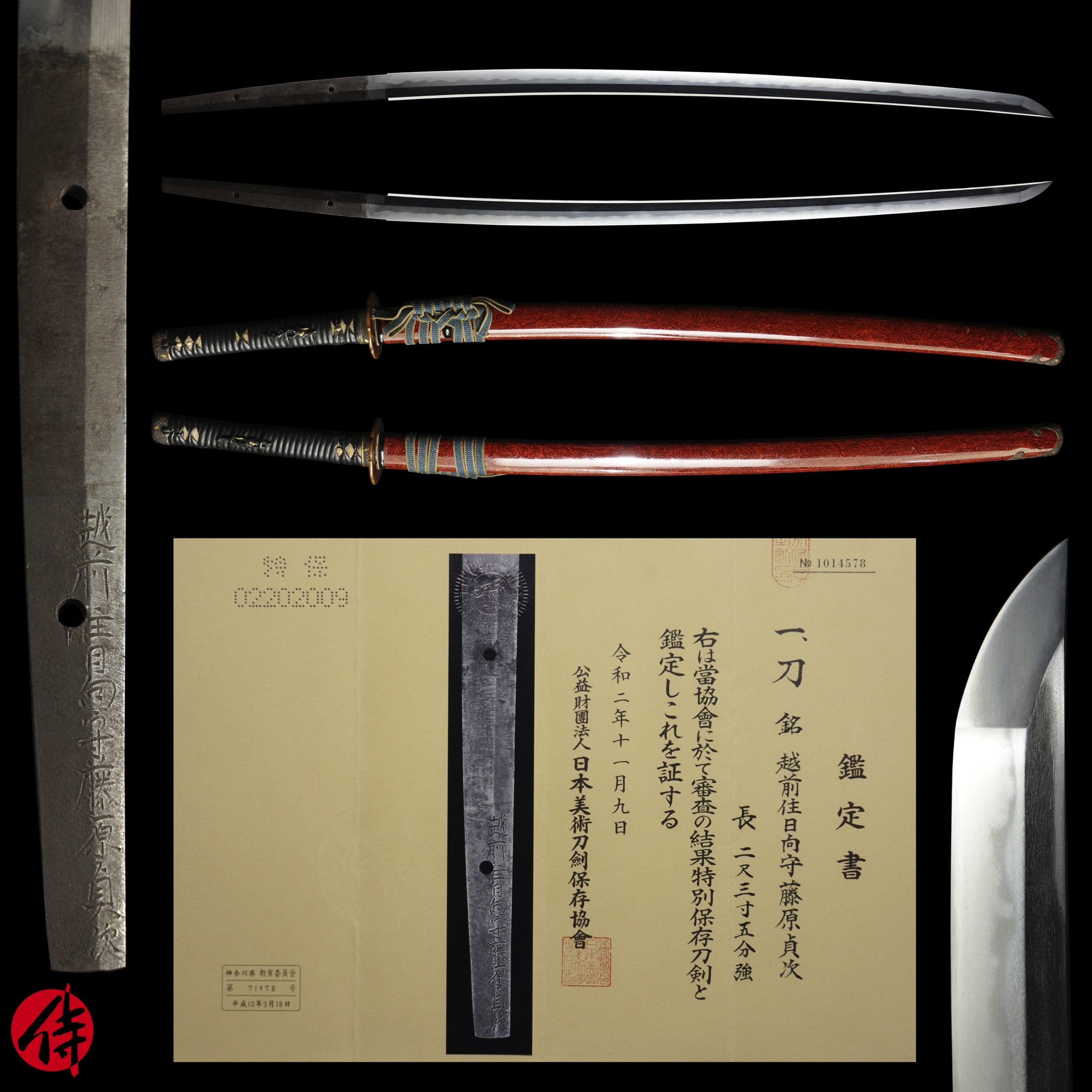
Antique Japanese Sword Katana Signed by Sadatsugu with
Tokubetsu
Hozon
Certificate
【Description】
This blade was signed by Echizen Jyu Hyuga no Kami Fujiwara Sadatsugu(越前住日向守藤原貞次) during the Kanbun era(
1624-1645: early Edo period
). Echizen Jyu means Living in Echizen province(today’s Fukui prefecture). Hyuga no Kami is the title given to this swordsmith. He belonged to Shimosaka school and is famous for being an apprentice of the first-gen Yasutsugu, the founder of Shimosaka school during the early Edo period.
Who is Yasutsugu(His master)?
It is said that the first-gen Yasutsugu was born in Shimosaka town in Shiga prefecture at the end of the Muromachi period(Late 16 century ). He built his career there until the beginning of the Keicho era(1596). However, he moved to Echizen province due to the relocation of the lord he served. He eventually was noticed and supported by Matsudaira Hideyasu, the third son of Tokugawa Ieyasu, who was the founder of the Edo government. Hideysu was the feudal lord of Echizen province during the early Edo period.
With the support of Hideyasu, the first-gen Yasutsugu was able to establish the Echizen Shimosaka school. And his school’s fame became nationwide, so as Sadatsugu’s.
Yasutsu was acknowledged by the first and second Tokugawa Shoguns, Tokugawa Ieyasu, and Tokugawa Hidetada. By Hideyasu’s recommendation, the first-gen Yasutsugu became Okakaekaji for the Tokugawa shogun family, meaning that he exclusively forged swords for the Shogun family. We believe Sadatsugu dedicated his career to helping the first-gen Yasutsu very closely while working on his creation. Considering how reputable Yasutsugu is, Sadatsugu’s craftsmanship must have been excellent enough to work with his master.
This blade is appraised as a Tokubetsu Hozon Token(特別保存刀剣) issued by NBTHK(Nihon Bijutsu Touken Hozon Kyokai:日本美術刀剣保存協会). This authentication paper was only given to authentic Japanese swords, especially well preserved and high quality with artistic value.
【 Blade】
Cutting Edge Length(Nagasa)
:
71.3 cm( 28.0 inches)
Curvature(Sori)
:
1.4
cm( 0.55 inches)
For more detailed measurement of the blade/sword mounting
Hamon
:
The crystalline structure which forms along the cutting edge of a blade as a result of the hardening process
Jimon(Jihada)
:
visible steel surface pattern created by folding and hammering during forging process
Nakago
:
Nakago is the tang of the Japanese sword.
Japanese swordsmiths left the black rust on the tang because it prevents red rust while the tang is in its handle. And the discoloration of the tang was created over time, and it is a great indicator for a Japanese sword specialist to estimate when the sword was forged.
Koshirae:
Koshirae is the mounting of the Japanese sword. There are several parts that consist of Koshirae such as Saya(Scabbard), Tsuka(Handle), Tsuba(Handguard).
Fuchi-Kashira
:
A pair of matching sword fittings that cover the upper and bottom parts of its sword hilt.
The Sakura (桜, cherry blossom) pattern is designed for this Fuchi Kashira. These flowers are colored with golden metal and make a gorgeous look for this work. Cherry blossom is one of the seasonal things of spring, and it has been loved for a long time in Japan. Its pattern is designed not only for sword mountings but also for Kimono (着物, traditional Japanese costume) or furnishings. One theory says that the god of grain exists in cherry blossoms. Therefore, this flower pattern has been treated as the symbol of a plentiful harvest.
Also, the Saya Gata (紗綾形) pattern decorates this Fuchi Kashira. It is a type of continuous design which many Samurais loved. According to a theory, This motif was brought to Japan from the Continent in the Momoyama period (1568-1600). Saya Gata pattern has a graceful appearance and represents the longevity and prosperity of the family. Due to this auspicious design combination, the cherry blossom and the Saya Gata patterns, you would feel as if it tells you its maker’s wish.
Tsuka and

![槍 越前国住下坂康綱[十文字槍]](/_next/image?url=https%3A%2F%2Fitbhfhyptogxcjbjfzwx.supabase.co%2Fstorage%2Fv1%2Fobject%2Fpublic%2Flisting-images%2Fshoubudou%2FL81480%2F00.jpg&w=2560&q=90)