売切れ
Tokuho売切れ
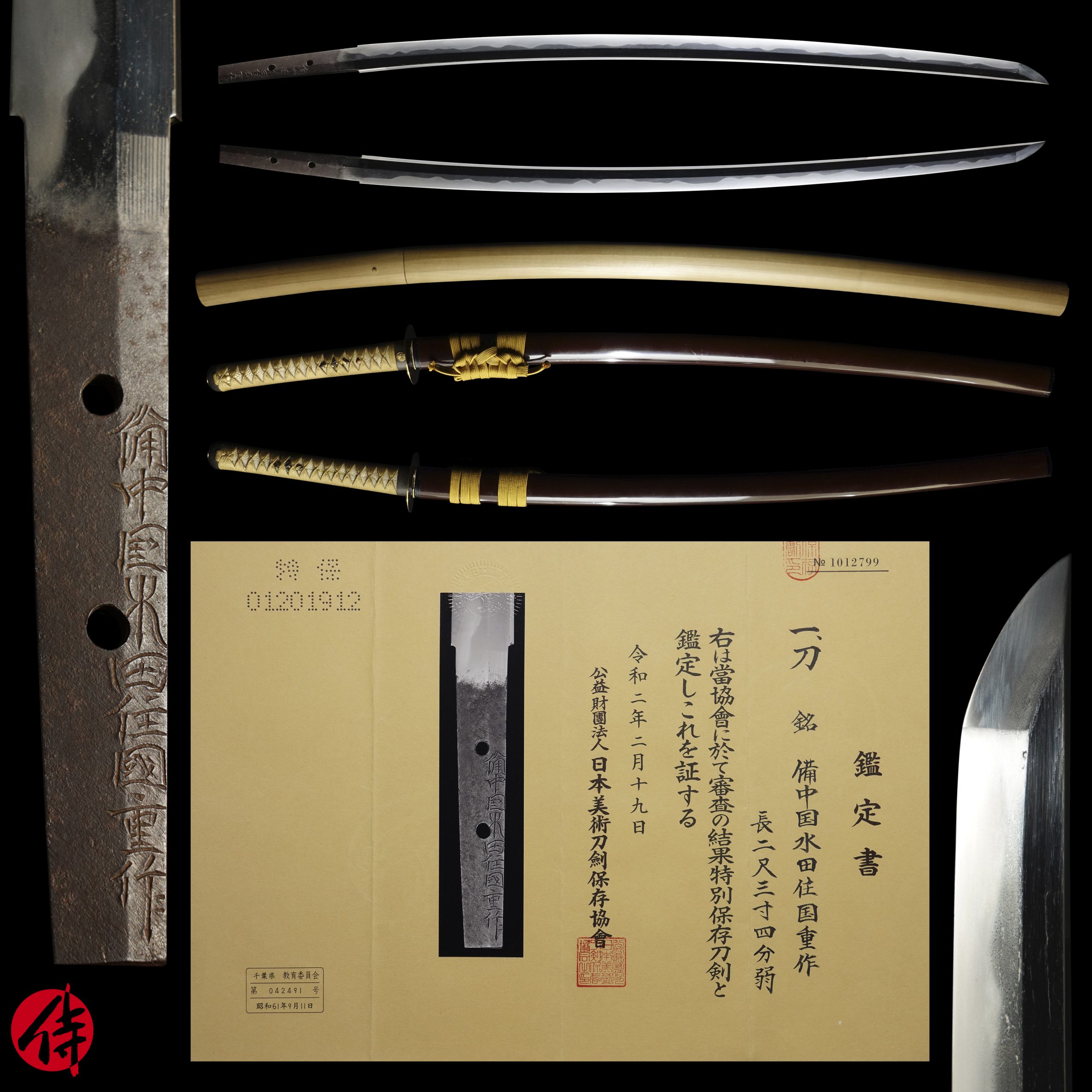
Antique Japanese Sword Katana Signed by Mizuta Kunishige NBTHK Tokubetsu Hozon Certificate
売却済
世界81社の刀剣商を横断追跡 · 価格履歴 · 売却アーカイブ
仕様
長さ
70.8 cm
反り
1.9 cm
Antique Japanese Sword Katana Signed by Kunishige with Tokubetsu Hozon Certificate 【Description】 This blade was signed by Bitchu Koku Mizuta Jyu Kunishige(備中国水田住国重). It is estimated that this swordsmith was active during the early Edo period( Mid-Late 17th century ). Kunishige belonged to Bitchu Koku Mizuta school, which had been founded by the descendants of Ko AOE Tametsugu(古青江為次) in the late Muromachi period(1530-). Tametsugu is one of the most famous swordsmiths in the late Heian period-early Kamakura period(Late 12C-Early 13C). One of his works is designated as a national treasure of Japan. AOE(青江) is the name of the school Tametsugu belonged to. It was located in Kurashiki city, Okayama prefecture today. AOE school was prosperous during the Kamakura-Nanbokucho era(-Late 12C-Late 14C), but it almost disappeared in the Muromachi period. However, because of the descendants of Tametsugu, the Ko AOE-style sword became popular again and revitalized the school by changing its name to Bitchu Koku Mizuta school. The Bitchu Koku Mizuta school flourished from 1530-1700(The end of the Sengoku period to the mid-Edo period) in today’s Okayama prefecture. There were about 60 swordsmiths who belonged to Mizuta school and Kunishige were the most prestigious smith name only selected sword makers were allowed to use in this school. During the Edo period, many Kunishige swordsmiths moved to other parts of Japan. There are two major groups in Kunishige swordsmiths during the Edo period. One is called Oyogo Kunishige school(大与五国重派), lead by Master Otsuki(大月)and the other is called Kono school(河野派) lead by Tameie(為家). Okayama prefecture is located near the Chugoku Mountains, where iron sands, one of the essential materials for making Japanese swords, were abundant. Furthermore, the swordsmiths in Okayama prefecture had close access to Yoshi River, where they could find water and charcoal. This geological location contributed to the swordsmiths to forge high-quality refined blades. We presume Bichu was quite active in sword-forging from ancient times. This blade is appraised as a Tokubetsu Hozon Token (特別保存刀剣) issued by NBTHK(Nihon Bijutsu Touken Hozon Kyokai:日本美術刀剣保存協会). This authentication paper was only given to authentic Japanese swords, especially well preserved and high quality with artistic value. 【 Blade】 Cutting Edge Length(Nagasa) : 70.8 cm( 27.87 inches) Curvature(Sori) : 1.9 cm(0.75 inches) Hamon : The crystalline structure which forms along the cutting edge of a blade as a result of the hardening process Jimon(Jihada) : visible steel surface pattern created by folding and hammering during forging process Nakago : Nakago is the tang of the Japanese sword. Japanese swordsmiths left the black rust on the tang because it prevents red rust while the tang is in its handle. And the discoloration of the tang was created over time, and it is a great indicator for a Japanese sword specialist to estimate when the sword was forged. Koshirae: Koshirae is the mounting of the Japanese sword. There are several parts that consist of Koshirae such as Saya(Scabbard), Tsuka( Handle), Tsuba(Handguard). Fuchi-Kashira : A pair of matching sword fittings that cover the upper and bottom parts of its sword hilt. You would find golden symbol marks are designed for this Fuchi Kashira. It might be its then owner’s family crest. The plant that is the motif of this crest is the Rindou (竜胆, gentian). This family crest is called the Sasa-Rindou (笹竜胆) in Japanese. It is the combination of gentian flowers and leaves. It is said the name comes from because gentian leaves resemble bamboo grass, which is called the Sasa (笹) in Japanese. Generally, five leaves are arranged like bamboo grass, and three flowers are added on top. According to a theory, people started using the Sasa-Rindou pattern as a family crest in the early Kamakura period. And it became a popular design, especially among court nobles. Some people say that Minamoto-no Yoritomo (源頼朝), who opened the Kama
 NihontoWatchBETA
売却済
世界81社の刀剣商を横断追跡 · 価格履歴 · 売却アーカイブ
70.8 cm
1.9 cm
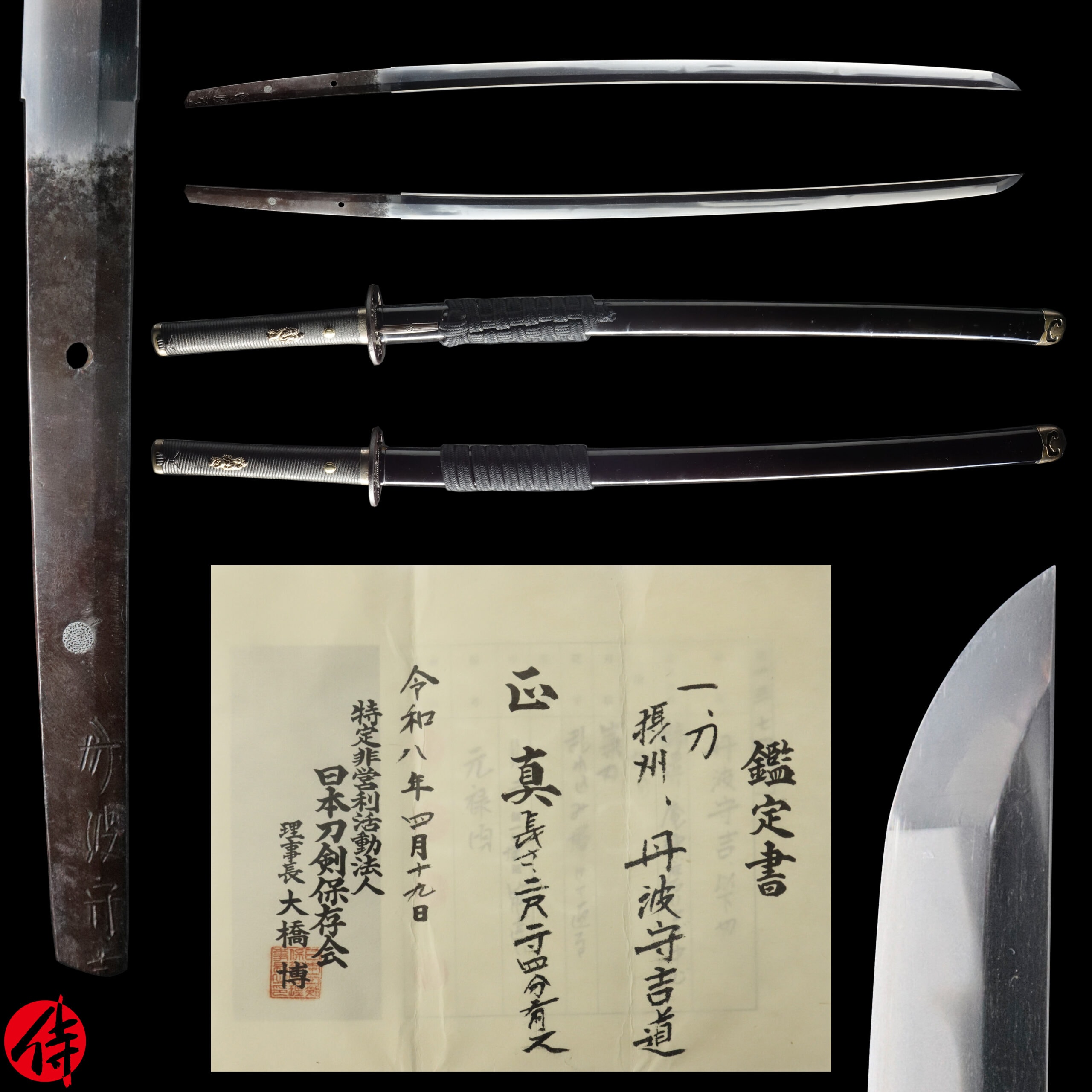
Mid Edo Katana signed by Tanba no Kami Yoshimichi for sale| Samurai Museum Shop E-mail FB Messenger Skip to content Menu Close Samurai Museum Shop Products Antique Japanese Sword Katana signed by Tanba no Kami Yoshimichi NTHK Kanteisho Certificate Updated: 22 Jun 2026 Antique Japanese Sword Katana signed by Tanba no Kami Yoshimichi NTHK Kanteisho Certificate
$7,441
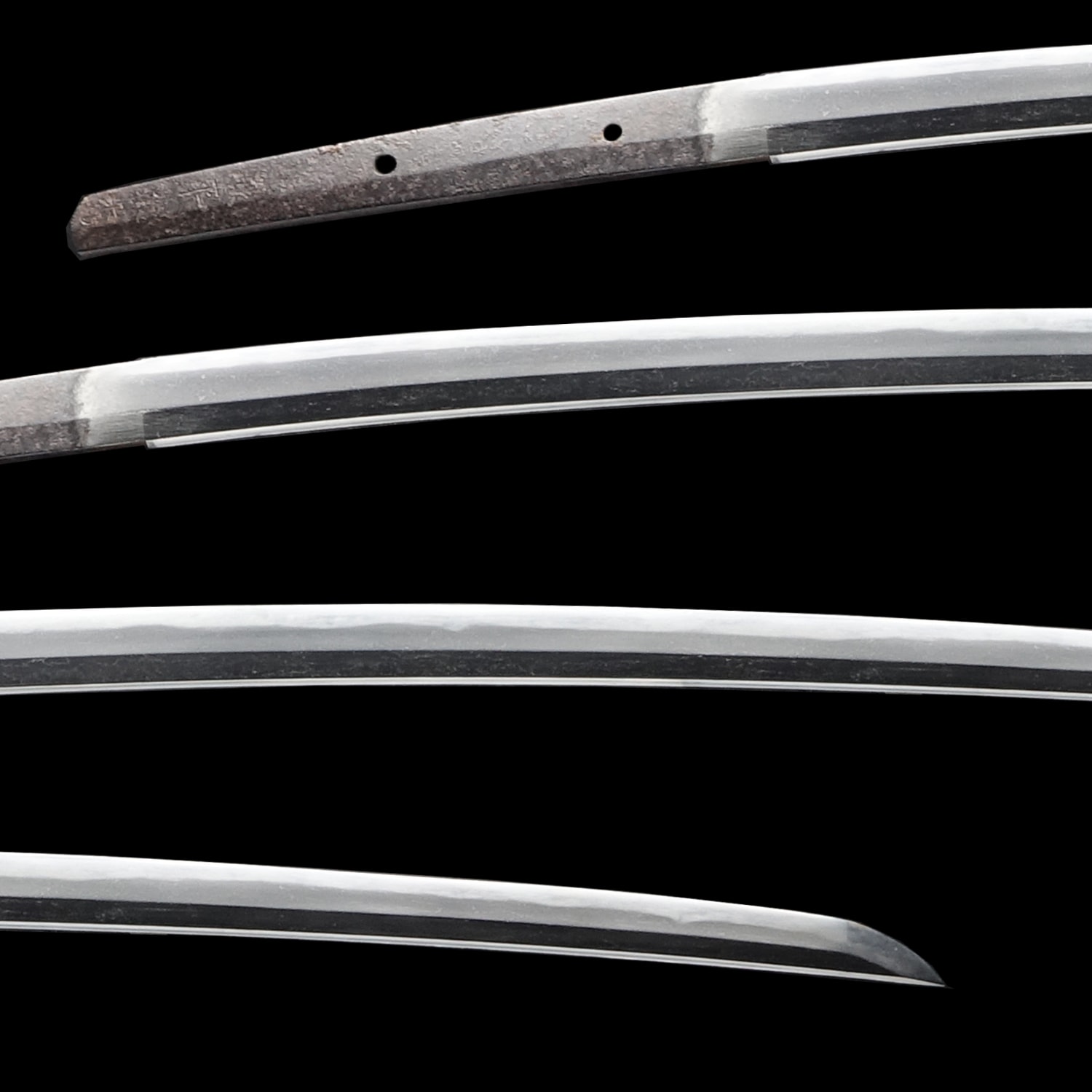
Muromachi Katana signed by Naminohira Yasuhide for sale
$7,751
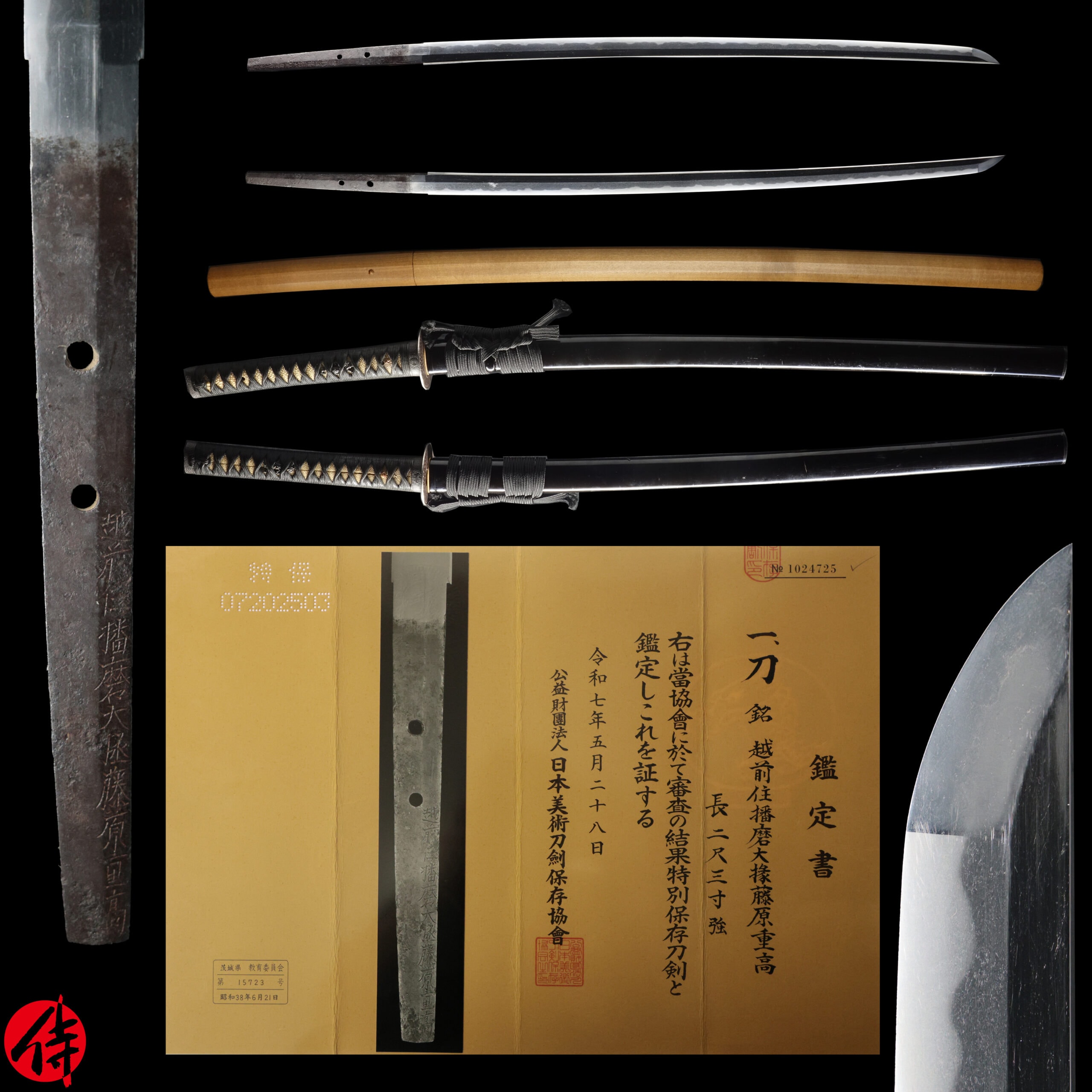
Early Edo Nihonto signed by Shigetaka for sale
$7,131
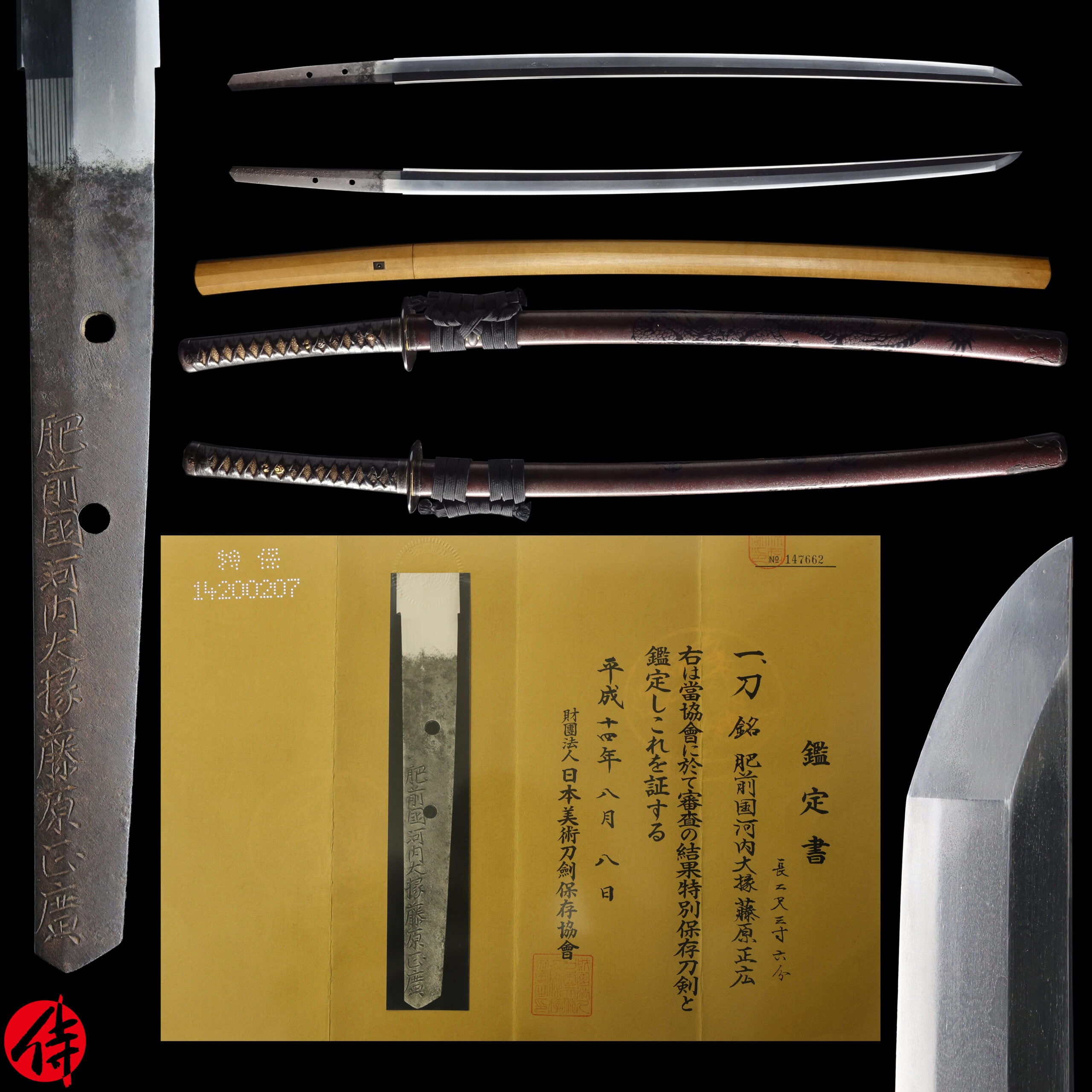
Antique Japanese Sword Katana Signed by Masahiro NBTHK Tokubetsu Hozon Certificate
$7,751
Antique Japanese Sword Katana Signed by Kunishige with Tokubetsu Hozon Certificate 【Description】 This blade was signed by Bitchu Koku Mizuta Jyu Kunishige(備中国水田住国重). It is estimated that this swordsmith was active during the early Edo period( Mid-Late 17th century ). Kunishige belonged to Bitchu Koku Mizuta school, which had been founded by the descendants of Ko AOE Tametsugu(古青江為次) in the late Muromachi period(1530-). Tametsugu is one of the most famous swordsmiths in the late Heian period-early Kamakura period(Late 12C-Early 13C). One of his works is designated as a national treasure of Japan. AOE(青江) is the name of the school Tametsugu belonged to. It was located in Kurashiki city, Okayama prefecture today. AOE school was prosperous during the Kamakura-Nanbokucho era(-Late 12C-Late 14C), but it almost disappeared in the Muromachi period. However, because of the descendants of Tametsugu, the Ko AOE-style sword became popular again and revitalized the school by changing its name to Bitchu Koku Mizuta school. The Bitchu Koku Mizuta school flourished from 1530-1700(The end of the Sengoku period to the mid-Edo period) in today’s Okayama prefecture. There were about 60 swordsmiths who belonged to Mizuta school and Kunishige were the most prestigious smith name only selected sword makers were allowed to use in this school. During the Edo period, many Kunishige swordsmiths moved to other parts of Japan. There are two major groups in Kunishige swordsmiths during the Edo period. One is called Oyogo Kunishige school(大与五国重派), lead by Master Otsuki(大月)and the other is called Kono school(河野派) lead by Tameie(為家). Okayama prefecture is located near the Chugoku Mountains, where iron sands, one of the essential materials for making Japanese swords, were abundant. Furthermore, the swordsmiths in Okayama prefecture had close access to Yoshi River, where they could find water and charcoal. This geological location contributed to the swordsmiths to forge high-quality refined blades. We presume Bichu was quite active in sword-forging from ancient times. This blade is appraised as a Tokubetsu Hozon Token (特別保存刀剣) issued by NBTHK(Nihon Bijutsu Touken Hozon Kyokai:日本美術刀剣保存協会). This authentication paper was only given to authentic Japanese swords, especially well preserved and high quality with artistic value. 【 Blade】 Cutting Edge Length(Nagasa) : 70.8 cm( 27.87 inches) Curvature(Sori) : 1.9 cm(0.75 inches) Hamon : The crystalline structure which forms along the cutting edge of a blade as a result of the hardening process Jimon(Jihada) : visible steel surface pattern created by folding and hammering during forging process Nakago : Nakago is the tang of the Japanese sword. Japanese swordsmiths left the black rust on the tang because it prevents red rust while the tang is in its handle. And the discoloration of the tang was created over time, and it is a great indicator for a Japanese sword specialist to estimate when the sword was forged. Koshirae: Koshirae is the mounting of the Japanese sword. There are several parts that consist of Koshirae such as Saya(Scabbard), Tsuka( Handle), Tsuba(Handguard). Fuchi-Kashira : A pair of matching sword fittings that cover the upper and bottom parts of its sword hilt. You would find golden symbol marks are designed for this Fuchi Kashira. It might be its then owner’s family crest. The plant that is the motif of this crest is the Rindou (竜胆, gentian). This family crest is called the Sasa-Rindou (笹竜胆) in Japanese. It is the combination of gentian flowers and leaves. It is said the name comes from because gentian leaves resemble bamboo grass, which is called the Sasa (笹) in Japanese. Generally, five leaves are arranged like bamboo grass, and three flowers are added on top. According to a theory, people started using the Sasa-Rindou pattern as a family crest in the early Kamakura period. And it became a popular design, especially among court nobles. Some people say that Minamoto-no Yoritomo (源頼朝), who opened the Kama
NihontoWatchBETA売却済
世界81社の刀剣商を横断追跡 · 価格履歴 · 売却アーカイブ
70.8 cm
1.9 cm
Mid Edo Katana signed by Tanba no Kami Yoshimichi for sale| Samurai Museum Shop E-mail FB Messenger Skip to content Menu Close Samurai Museum Shop Products Antique Japanese Sword Katana signed by Tanba no Kami Yoshimichi NTHK Kanteisho Certificate Updated: 22 Jun 2026 Antique Japanese Sword Katana signed by Tanba no Kami Yoshimichi NTHK Kanteisho Certificate
$7,441
Muromachi Katana signed by Naminohira Yasuhide for sale
$7,751
Early Edo Nihonto signed by Shigetaka for sale
$7,131
Antique Japanese Sword Katana Signed by Masahiro NBTHK Tokubetsu Hozon Certificate
$7,751