売切れ
Hozon売切れ
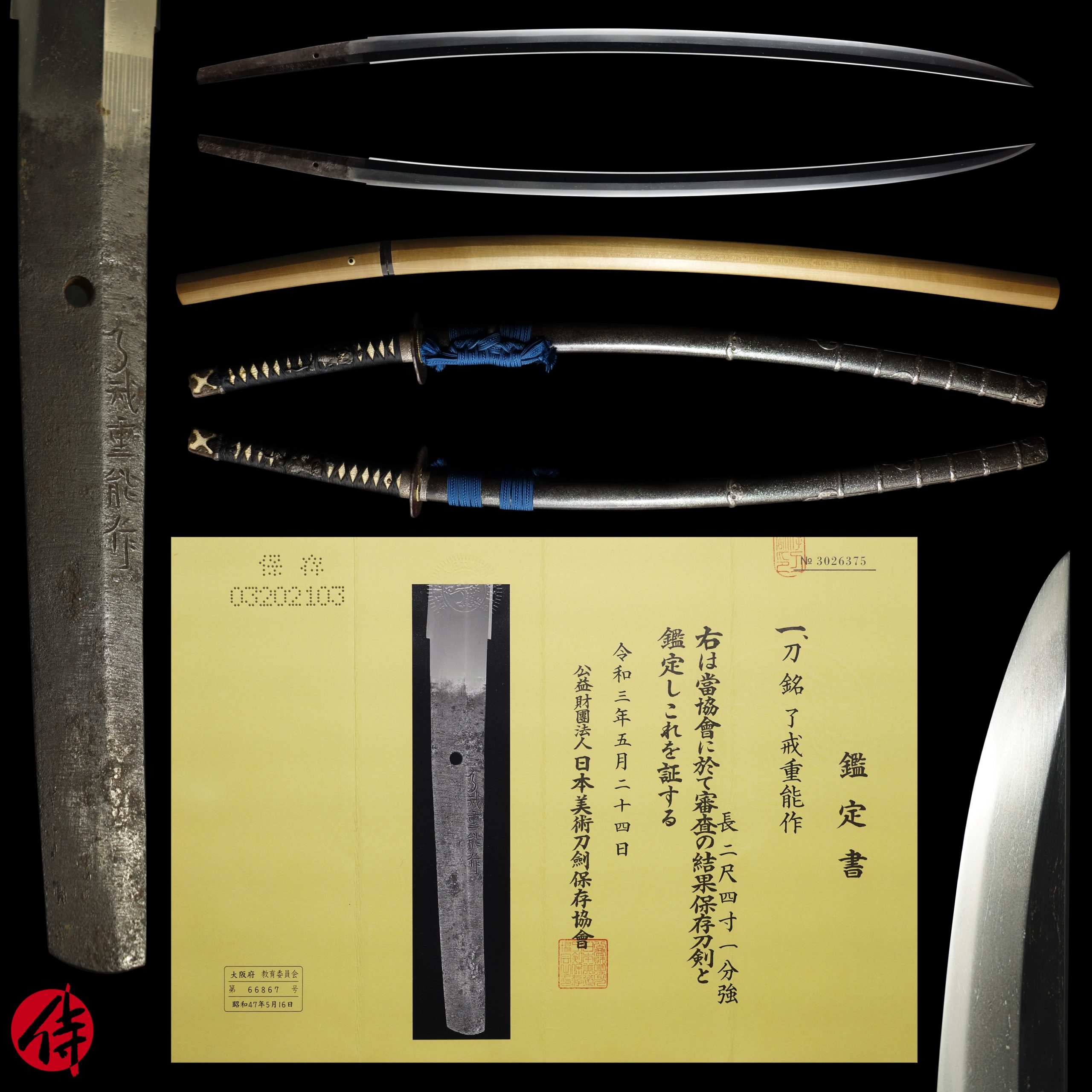
Antique Japanese Sword Katana Signed by Ryokai Shigeyoshi NBTHK Hozon Certificate
売却済
世界81社の刀剣商を横断追跡 · 価格履歴 · 売却アーカイブ
仕様
長さ
73.2 cm
反り
2.4 cm
Antique Japanese Sword Katana Signed by Ryokai Shigeyoshi with Hozon Certificate 【Description】 Summary This blade was signed by Ryokai Shigeyoshi (了戒重能). He was named Ryokai because he was a member of Tsukushi Ryokai school, which specialized in forging *Yamashiro DEN tradition. According to available records, he was especially active in sword-forging during the Chōroku era ( 1457-1460 : Mid-Muromachi Period) in Bungo province (Today’s Oita prefecture). Ryokai School Ryokai was a swordsmith from the late Kamakura period in Yamashiro Province(Today’s Kyoto). It is said that he was a son of Rai Kuniyuki (来国行) and a younger brother of Rai Kunitoshi (来国俊). Both of them are renowned swordsmiths throughout Samurai history. Ryokai founded his own school, and the apprentices were allowed to use Ryokai in their maker’s names. Ryokai’s son was Ryokai Hisanobu, who took over the school. And his apprentice Ryokai Yoshisada also run the school after Hisanobu. However, Ryokai Yoshisda had to evacuate Yamashiro province during the late 14th century because the battle between the south emperor court and the north emperor court became severe. And as a result, Kyoto city was burnt(the late 1300’s). We called it the Nanbokucho war when the Japanese imperial court was separated into two. Ryokai Yoshisda managed to escape and arrive in Kyushu island at Tsukushi Province (Today’s Fukuoka prefecture), looking for better opportunities. And, Yoshisada founded Tsukushi Ryokai school there. Among Japanese sword experts, Ryokai school in Tsukushi province is called Tsukushi Ryokai to distinguish it from the Ryokai school in Yamashiro province. Since the origin of this school came from Yamashiro province, the blades forged by the Tsukushi Ryokai school have characteristics of *Yamashiro Den tradition. Among Tsukushi Ryokai school, the swordsmiths were named with 能 (Yoshi) such as 重能 (Shigeyoshi). Ryokai Shigeyoshi (了戒重能) is one of the most prominent figures in this school. And, you can see interesting Kissaki (tip of the blade) called Shobu Zukuri (菖蒲造り). There is no Yokote on this blade. Yokote is the borderline between the tip and cutting edge. We are confident you will appreciate the elegant look of this blade. Handachi style sword mounting also enhances its aesthetic beauty. *Yamashiro Den tradition is one of the five most famous traditions in terms of Japanese sword forging techniques and styles. Others are YAMATO, BIZEN, MINO, SOSHU traditions. This blade is appraised as a Hozon Token(保存刀剣) issued by NBTHK(Nihon Bijutsu Touken Hozon Kyokai:日本美術刀剣保存協会). This authentication paper was only given to authentic Japanese swords, well preserved with artistic value. 【 Blade】 Cutting Edge Length(Nagasa) : 73.2 cm(28.8 inches) Curvature(Sori) : 2.4 cm(0.94 inches) Hamon : The crystalline structure which forms along the cutting edge of a blade as a result of the hardening process Jimon(Jihada) : visible steel surface pattern created by folding and hammering during forging process Nakago : Nakago is the tang of the Japanese sword. Japanese swordsmiths left the black rust on the tang because it prevents red rust while the tang is in its handle. And the discoloration of the tang was created over time, and it is a great indicator for a Japanese sword specialist to estimate when the sword was forged. Koshirae: Koshirae is the mounting of the Japanese sword. There are several parts that consist of Koshirae such as Saya(Scabbard), Tsuka(Handle), Tsuba(Handguard). Fuchi-Kashira : A pair of matching sword fittings that cover the upper and bottom parts of its sword hilt. The dragon is the principal motif of this Fuchi Kashira. Clear carving lines remain well. Initially, the dragon is an imaginary creature found in ancient traditions or myths in the continent. Furthermore, it is regarded as a symbol of auspicious signs. Its body is likened to nine animals: antlers are deer, the head is a camel, eyes are demons, the neck is a snake, belly is the Mizuchi (蛟, mythical animal
 NihontoWatchBETA
売却済
世界81社の刀剣商を横断追跡 · 価格履歴 · 売却アーカイブ
73.2 cm
2.4 cm
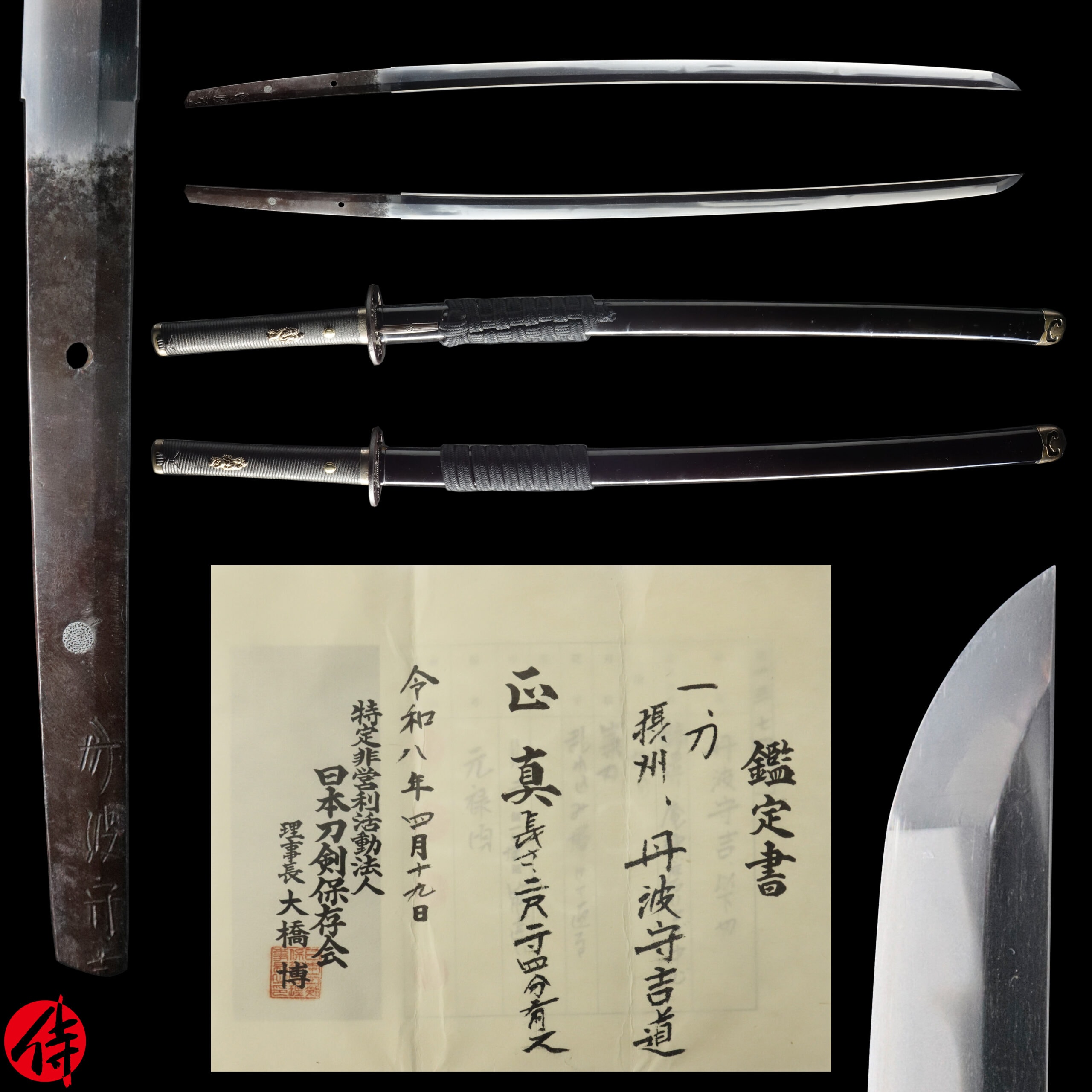
Mid Edo Katana signed by Tanba no Kami Yoshimichi for sale| Samurai Museum Shop E-mail FB Messenger Skip to content Menu Close Samurai Museum Shop Products Antique Japanese Sword Katana signed by Tanba no Kami Yoshimichi NTHK Kanteisho Certificate Updated: 22 Jun 2026 Antique Japanese Sword Katana signed by Tanba no Kami Yoshimichi NTHK Kanteisho Certificate
$7,441
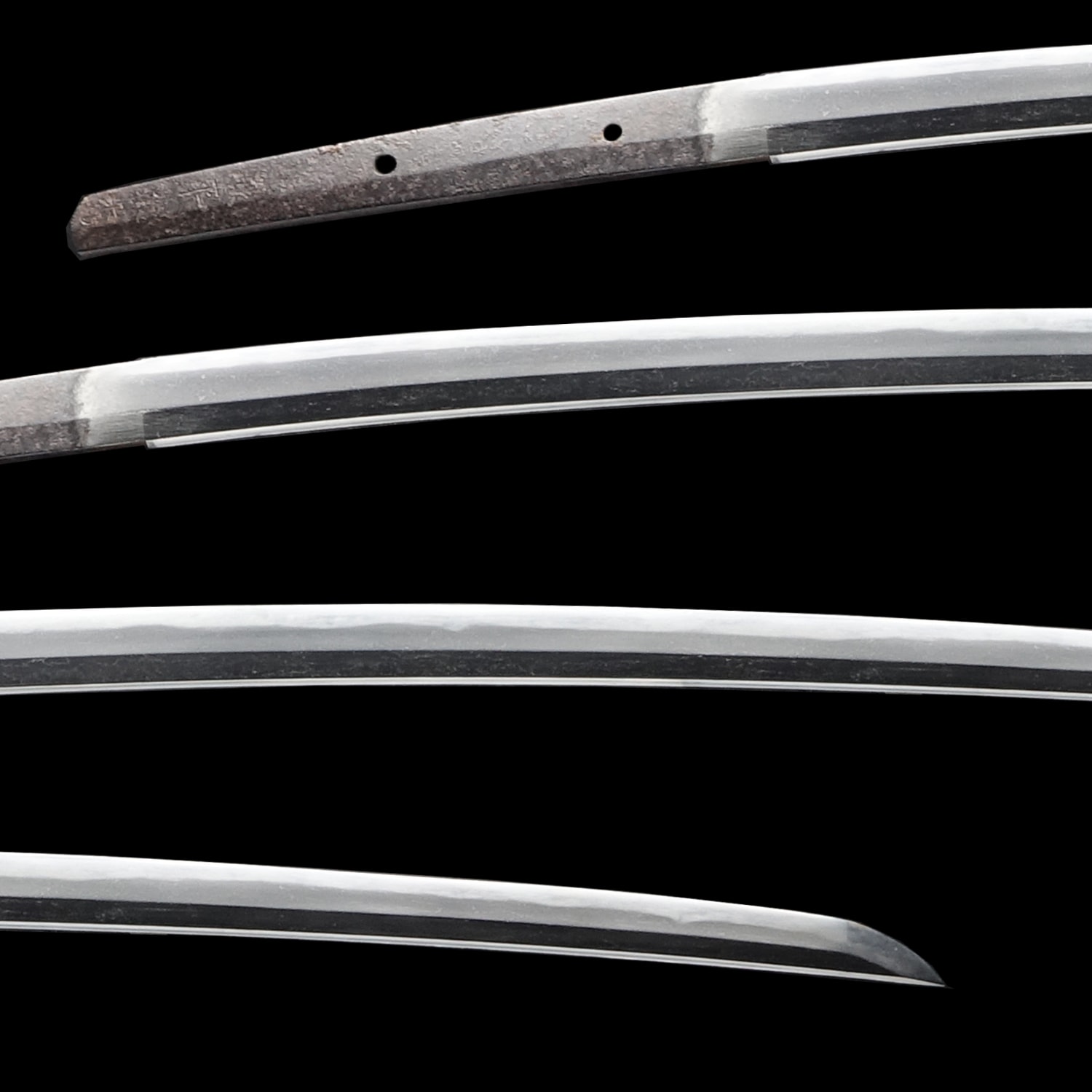
Muromachi Katana signed by Naminohira Yasuhide for sale
$7,751
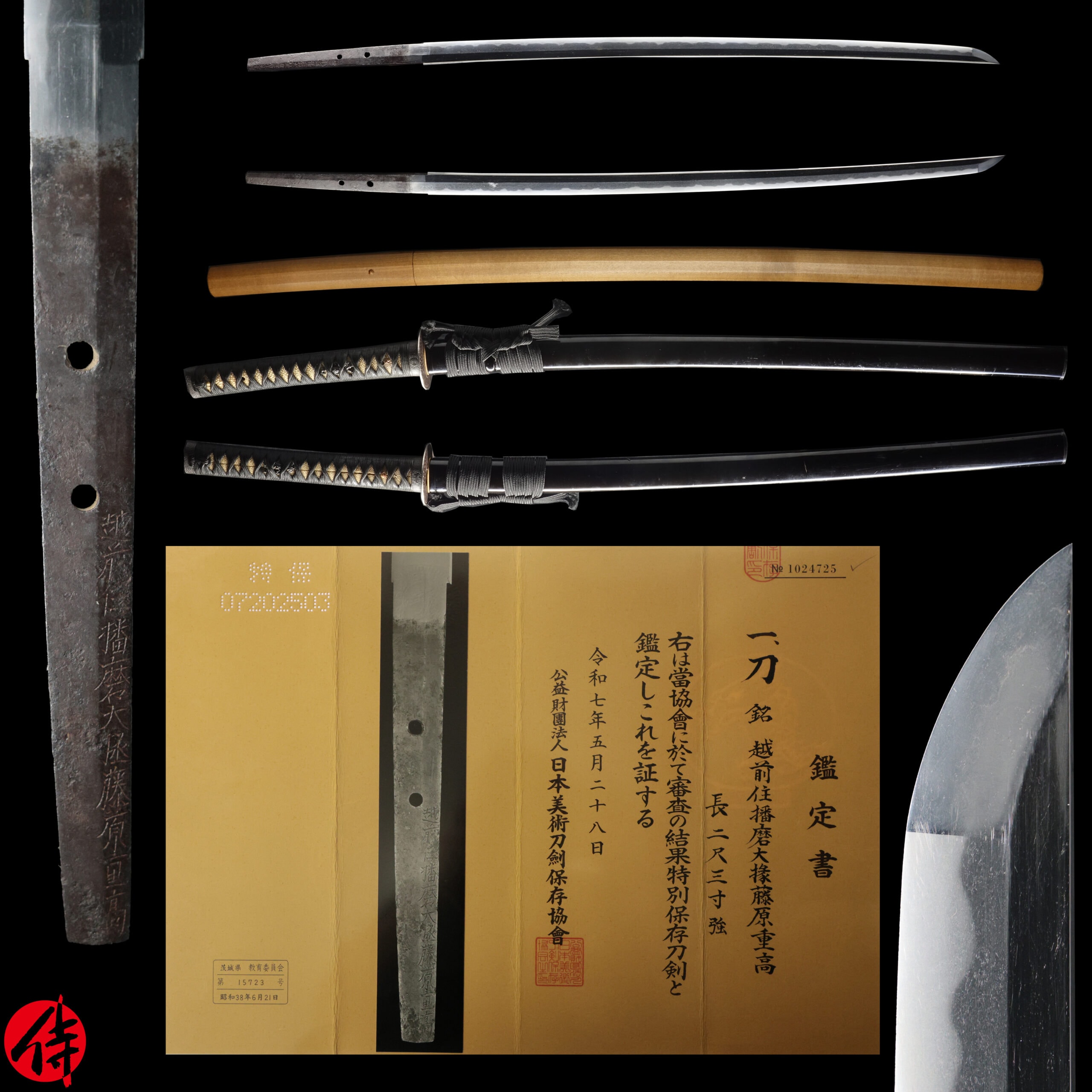
Early Edo Nihonto signed by Shigetaka for sale
$7,131
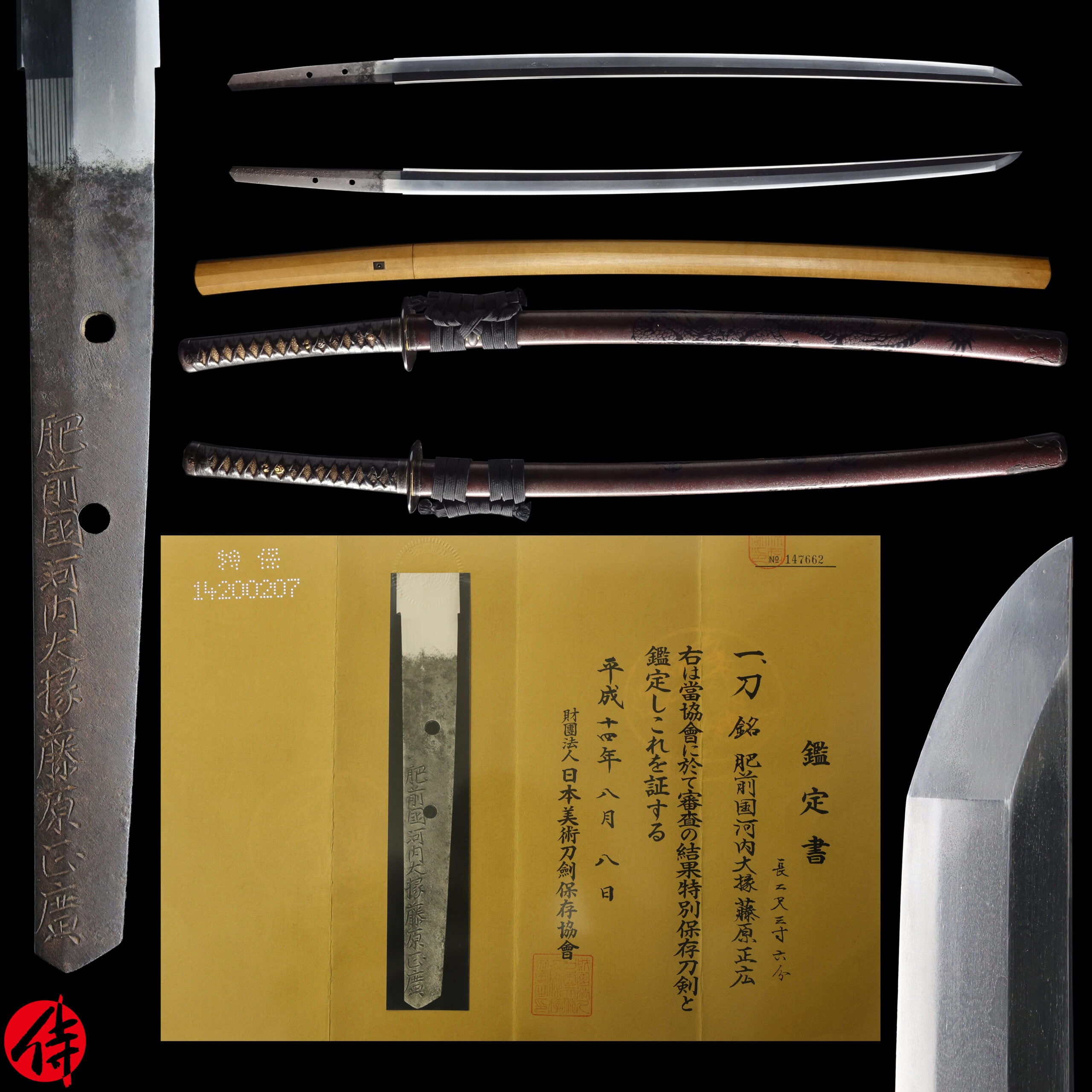
Antique Japanese Sword Katana Signed by Masahiro NBTHK Tokubetsu Hozon Certificate
$7,751
Antique Japanese Sword Katana Signed by Ryokai Shigeyoshi with Hozon Certificate 【Description】 Summary This blade was signed by Ryokai Shigeyoshi (了戒重能). He was named Ryokai because he was a member of Tsukushi Ryokai school, which specialized in forging *Yamashiro DEN tradition. According to available records, he was especially active in sword-forging during the Chōroku era ( 1457-1460 : Mid-Muromachi Period) in Bungo province (Today’s Oita prefecture). Ryokai School Ryokai was a swordsmith from the late Kamakura period in Yamashiro Province(Today’s Kyoto). It is said that he was a son of Rai Kuniyuki (来国行) and a younger brother of Rai Kunitoshi (来国俊). Both of them are renowned swordsmiths throughout Samurai history. Ryokai founded his own school, and the apprentices were allowed to use Ryokai in their maker’s names. Ryokai’s son was Ryokai Hisanobu, who took over the school. And his apprentice Ryokai Yoshisada also run the school after Hisanobu. However, Ryokai Yoshisda had to evacuate Yamashiro province during the late 14th century because the battle between the south emperor court and the north emperor court became severe. And as a result, Kyoto city was burnt(the late 1300’s). We called it the Nanbokucho war when the Japanese imperial court was separated into two. Ryokai Yoshisda managed to escape and arrive in Kyushu island at Tsukushi Province (Today’s Fukuoka prefecture), looking for better opportunities. And, Yoshisada founded Tsukushi Ryokai school there. Among Japanese sword experts, Ryokai school in Tsukushi province is called Tsukushi Ryokai to distinguish it from the Ryokai school in Yamashiro province. Since the origin of this school came from Yamashiro province, the blades forged by the Tsukushi Ryokai school have characteristics of *Yamashiro Den tradition. Among Tsukushi Ryokai school, the swordsmiths were named with 能 (Yoshi) such as 重能 (Shigeyoshi). Ryokai Shigeyoshi (了戒重能) is one of the most prominent figures in this school. And, you can see interesting Kissaki (tip of the blade) called Shobu Zukuri (菖蒲造り). There is no Yokote on this blade. Yokote is the borderline between the tip and cutting edge. We are confident you will appreciate the elegant look of this blade. Handachi style sword mounting also enhances its aesthetic beauty. *Yamashiro Den tradition is one of the five most famous traditions in terms of Japanese sword forging techniques and styles. Others are YAMATO, BIZEN, MINO, SOSHU traditions. This blade is appraised as a Hozon Token(保存刀剣) issued by NBTHK(Nihon Bijutsu Touken Hozon Kyokai:日本美術刀剣保存協会). This authentication paper was only given to authentic Japanese swords, well preserved with artistic value. 【 Blade】 Cutting Edge Length(Nagasa) : 73.2 cm(28.8 inches) Curvature(Sori) : 2.4 cm(0.94 inches) Hamon : The crystalline structure which forms along the cutting edge of a blade as a result of the hardening process Jimon(Jihada) : visible steel surface pattern created by folding and hammering during forging process Nakago : Nakago is the tang of the Japanese sword. Japanese swordsmiths left the black rust on the tang because it prevents red rust while the tang is in its handle. And the discoloration of the tang was created over time, and it is a great indicator for a Japanese sword specialist to estimate when the sword was forged. Koshirae: Koshirae is the mounting of the Japanese sword. There are several parts that consist of Koshirae such as Saya(Scabbard), Tsuka(Handle), Tsuba(Handguard). Fuchi-Kashira : A pair of matching sword fittings that cover the upper and bottom parts of its sword hilt. The dragon is the principal motif of this Fuchi Kashira. Clear carving lines remain well. Initially, the dragon is an imaginary creature found in ancient traditions or myths in the continent. Furthermore, it is regarded as a symbol of auspicious signs. Its body is likened to nine animals: antlers are deer, the head is a camel, eyes are demons, the neck is a snake, belly is the Mizuchi (蛟, mythical animal
NihontoWatchBETA売却済
世界81社の刀剣商を横断追跡 · 価格履歴 · 売却アーカイブ
73.2 cm
2.4 cm
Mid Edo Katana signed by Tanba no Kami Yoshimichi for sale| Samurai Museum Shop E-mail FB Messenger Skip to content Menu Close Samurai Museum Shop Products Antique Japanese Sword Katana signed by Tanba no Kami Yoshimichi NTHK Kanteisho Certificate Updated: 22 Jun 2026 Antique Japanese Sword Katana signed by Tanba no Kami Yoshimichi NTHK Kanteisho Certificate
$7,441
Muromachi Katana signed by Naminohira Yasuhide for sale
$7,751
Early Edo Nihonto signed by Shigetaka for sale
$7,131
Antique Japanese Sword Katana Signed by Masahiro NBTHK Tokubetsu Hozon Certificate
$7,751