売切れ
Hozon売切れ
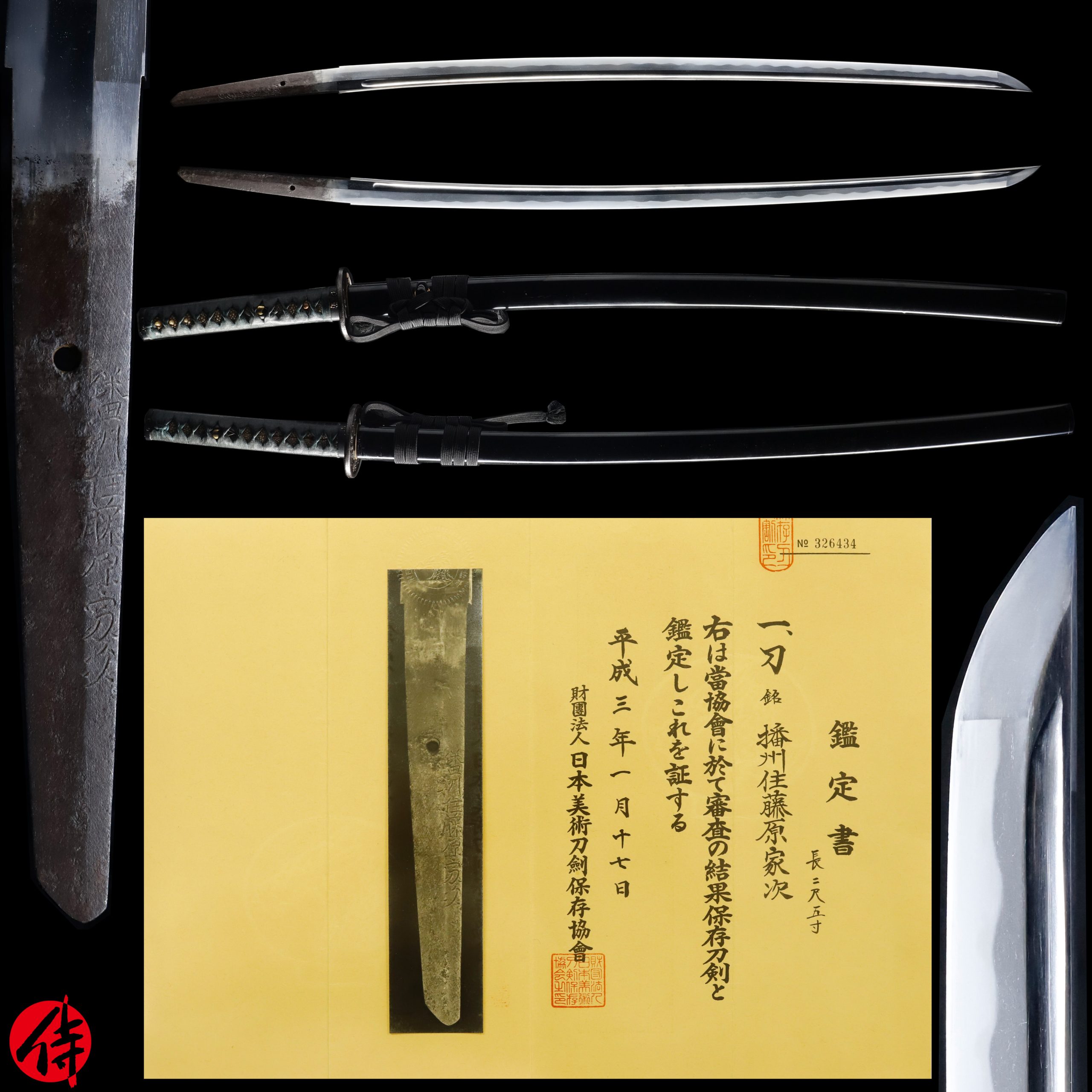
Antique Japanese Sword Katana Signed by Fujiwara Ietsugu NBTHK Hozon Certificate
売却済
世界81社の刀剣商を横断追跡 · 価格履歴 · 売却アーカイブ
仕様
長さ
76 cm
反り
1.5 cm
Antique Japanese Sword Katana Fujiwara Ietsugu with Hozon Certificate 【Description】 This blade was signed by Banshu Jyu Fujiwara Ietsugu (播州住藤原家次). Banshu, also known as Harima domain, was located in today’s Hyogo prefecture. Banshu Jyu means that Ietsugu lived in the area when he forged this blade. It was common for many swordsmiths to sign where they lived before writing their signature. The swordsmith name Ietsugu lasted two generations. The first generation was active during the Meireki (1655-1658), and the second generation was during the Enpo era (1673-1681). The authentication paper issued by NBTHK doesn’t mention which generation forged this blade. Nevertheless, you can see beautiful craftsmanship created by Ietsugu. What is the material of the Japanese sword and what makes Shinto sword special? Japanese blacksmithing has over a millennium of history. It dates back to the 1st century A.D. when ancient blacksmiths studied template method from the continent. Copper pottery and rice farming techniques were also introduced to Japan at the same time. Since then, Japanese blacksmiths had spent centuries to invent the traditional metal forging technique called TATARA(鑪). TATARA is a clay melting pot where you put iron sand and charcoal together to bond these chemicals with intensive heat. By using this technique, they started to make Japanese swords out of Tatara carbon-steel. This type of carbon-steel was later called TAMA-HAGANE (玉鋼; Ball-Steel). However, Tama-Hagane, in the early days, still had room for improvement. The schools of Katana (Japanese swords) continued carrying out various ways to make the best steel. In the Edo period (1603-1868 A.D.), they finally achieved the most steady mass-producing supply of Tama-Hagane. As transport links in the Edo period were far more advanced than those of any previous eras, Tama-Hagane has rapidly spread throughout the country. It was widely used for Shin-TO Japanese swords, since it was deemed the purest form of carbon-steel with the most stable chemical bond. It was also a defining moment in Japanese history when most swordsmiths in Japan used virtually the same ingredient in their blacksmithing. This blade is appraised as a Hozon Token(保存刀剣) issued by NBTHK(Nihon Bijutsu Touken Hozon Kyokai:日本美術刀剣保存協会). This authentication paper was only given to authentic Japanese swords, well preserved with artistic value. 【 Blade】 Cutting Edge Length(Nagasa) : 76.0 cm (29.9 inches) Curvature(Sori) : 1.5 cm (0.59 inches) Hamon : The crystalline structure which forms along the cutting edge of a blade as a result of the hardening process Jimon(Jihada) : visible steel surface pattern created by folding and hammering during forging process Nakago : Nakago is the tang of the Japanese sword. Japanese swordsmiths left the black rust on the tang because it prevents red rust while the tang is in its handle. And the discoloration of the tang was created over time, and it is a great indicator for a Japanese sword specialist to estimate when the sword was forged. Koshirae: Koshirae is the mounting of the Japanese sword. There are several parts that consist of Koshirae such as Saya(Scabbard), Tsuka(Handle), Tsuba(Handguard). Fuchi-Kashira : A pair of matching sword fittings that cover the upper and bottom parts of its sword hilt. If you focus on the Kashira part, you will find heart mark-shaped leaves are designed. This plant is the Aoi (葵), and it is the origin of a famous family crest. For example, the Tokugawa Shogunate family used this leaf motif for their family crest. This design is also used for the crest of the Kamo shrine in Kyoto prefecture. Tokugawa family had their family crest with three leaves of Aoi due to the Kamo shrine’s relation. Its leaves have a habit of always facing the sun, and the word “Aoi” is taken as “Aogu (仰ぐ, looking up)” for the sun. Therefore, people have thought the Aoi pattern would bring good fortune. At the Fuchi part, you would find two men. The one who brings
 NihontoWatchBETA
売却済
世界81社の刀剣商を横断追跡 · 価格履歴 · 売却アーカイブ
76 cm
1.5 cm
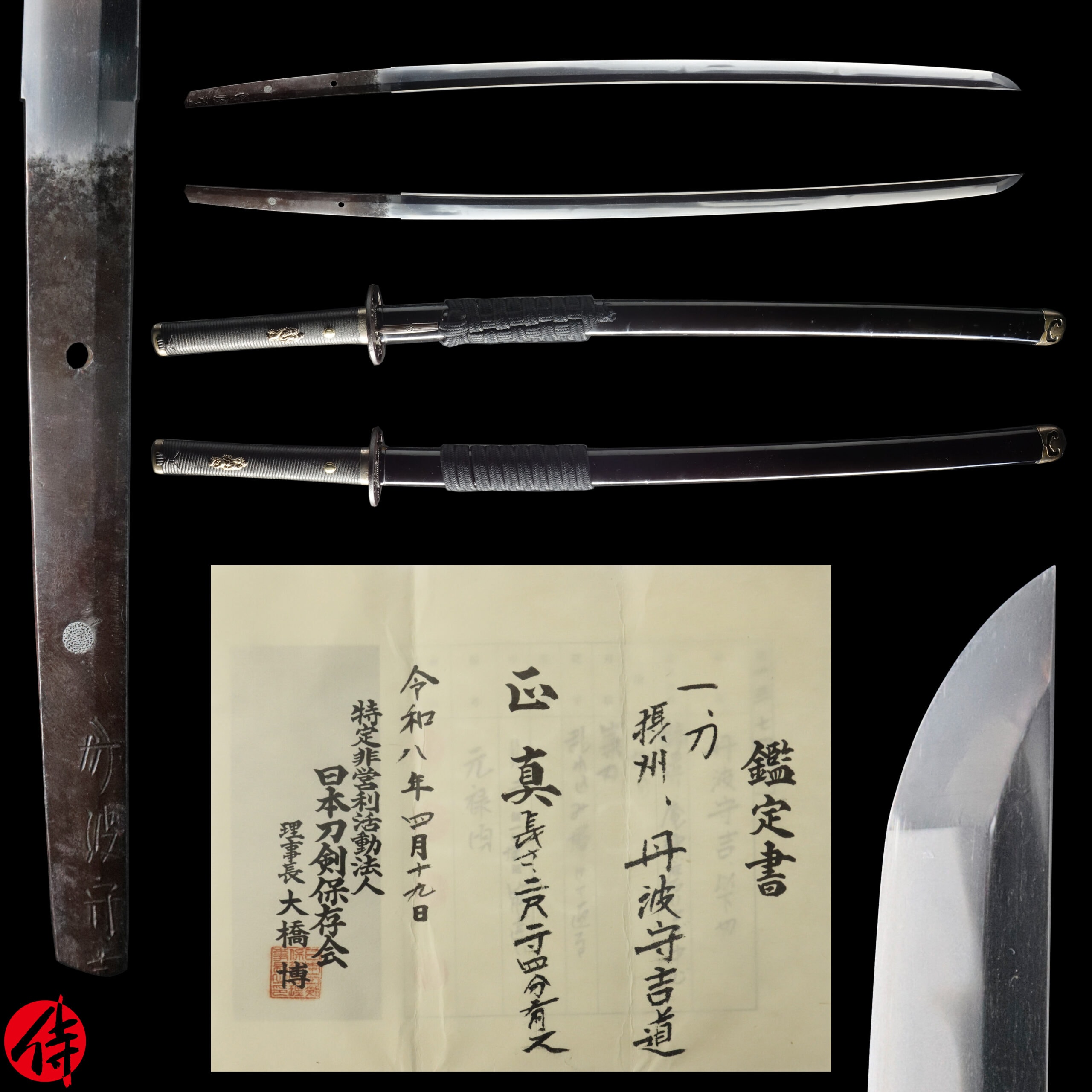
Mid Edo Katana signed by Tanba no Kami Yoshimichi for sale| Samurai Museum Shop E-mail FB Messenger Skip to content Menu Close Samurai Museum Shop Products Antique Japanese Sword Katana signed by Tanba no Kami Yoshimichi NTHK Kanteisho Certificate Updated: 22 Jun 2026 Antique Japanese Sword Katana signed by Tanba no Kami Yoshimichi NTHK Kanteisho Certificate
$7,441
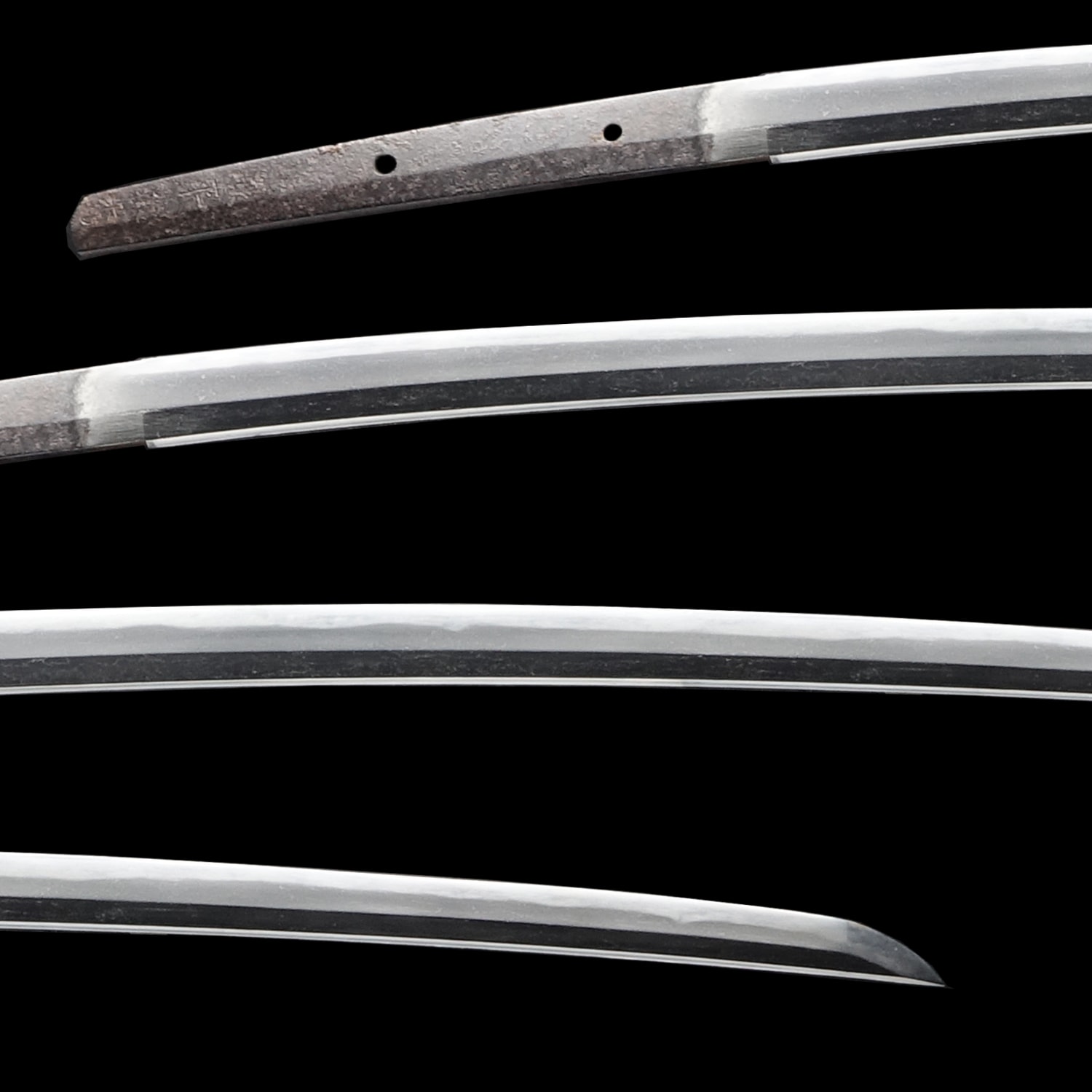
Muromachi Katana signed by Naminohira Yasuhide for sale
$7,751
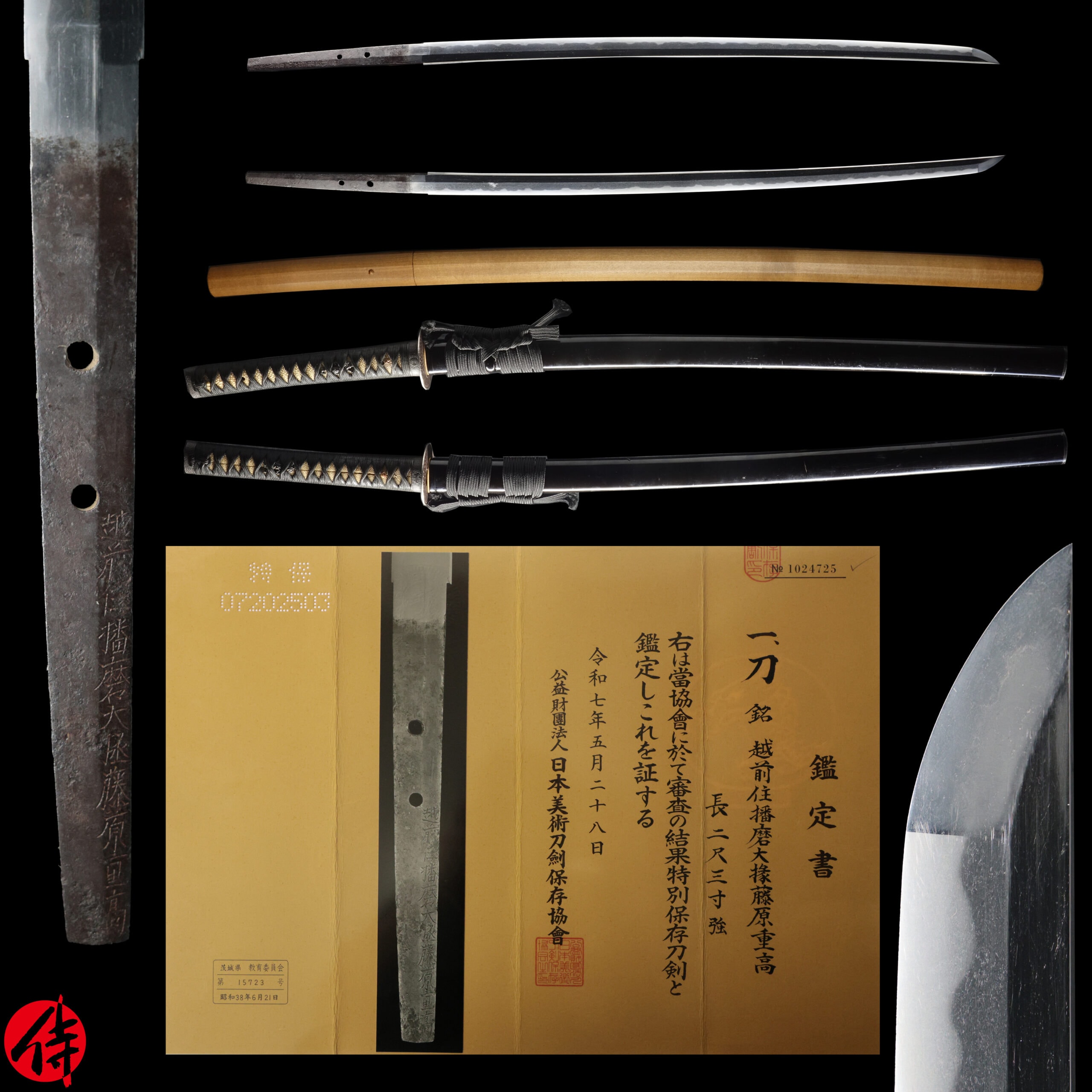
Early Edo Nihonto signed by Shigetaka for sale
$7,131
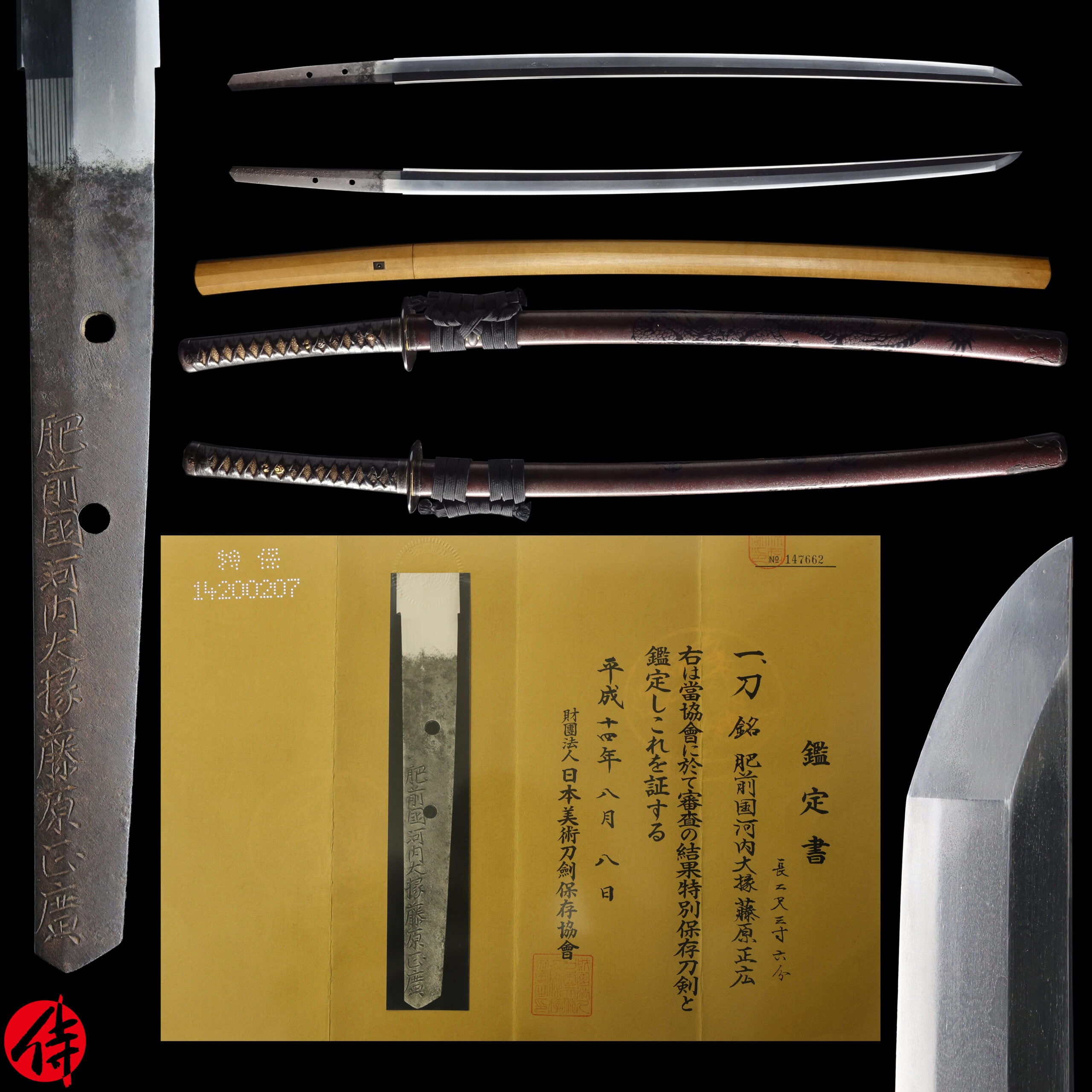
Antique Japanese Sword Katana Signed by Masahiro NBTHK Tokubetsu Hozon Certificate
$7,751
Antique Japanese Sword Katana Fujiwara Ietsugu with Hozon Certificate 【Description】 This blade was signed by Banshu Jyu Fujiwara Ietsugu (播州住藤原家次). Banshu, also known as Harima domain, was located in today’s Hyogo prefecture. Banshu Jyu means that Ietsugu lived in the area when he forged this blade. It was common for many swordsmiths to sign where they lived before writing their signature. The swordsmith name Ietsugu lasted two generations. The first generation was active during the Meireki (1655-1658), and the second generation was during the Enpo era (1673-1681). The authentication paper issued by NBTHK doesn’t mention which generation forged this blade. Nevertheless, you can see beautiful craftsmanship created by Ietsugu. What is the material of the Japanese sword and what makes Shinto sword special? Japanese blacksmithing has over a millennium of history. It dates back to the 1st century A.D. when ancient blacksmiths studied template method from the continent. Copper pottery and rice farming techniques were also introduced to Japan at the same time. Since then, Japanese blacksmiths had spent centuries to invent the traditional metal forging technique called TATARA(鑪). TATARA is a clay melting pot where you put iron sand and charcoal together to bond these chemicals with intensive heat. By using this technique, they started to make Japanese swords out of Tatara carbon-steel. This type of carbon-steel was later called TAMA-HAGANE (玉鋼; Ball-Steel). However, Tama-Hagane, in the early days, still had room for improvement. The schools of Katana (Japanese swords) continued carrying out various ways to make the best steel. In the Edo period (1603-1868 A.D.), they finally achieved the most steady mass-producing supply of Tama-Hagane. As transport links in the Edo period were far more advanced than those of any previous eras, Tama-Hagane has rapidly spread throughout the country. It was widely used for Shin-TO Japanese swords, since it was deemed the purest form of carbon-steel with the most stable chemical bond. It was also a defining moment in Japanese history when most swordsmiths in Japan used virtually the same ingredient in their blacksmithing. This blade is appraised as a Hozon Token(保存刀剣) issued by NBTHK(Nihon Bijutsu Touken Hozon Kyokai:日本美術刀剣保存協会). This authentication paper was only given to authentic Japanese swords, well preserved with artistic value. 【 Blade】 Cutting Edge Length(Nagasa) : 76.0 cm (29.9 inches) Curvature(Sori) : 1.5 cm (0.59 inches) Hamon : The crystalline structure which forms along the cutting edge of a blade as a result of the hardening process Jimon(Jihada) : visible steel surface pattern created by folding and hammering during forging process Nakago : Nakago is the tang of the Japanese sword. Japanese swordsmiths left the black rust on the tang because it prevents red rust while the tang is in its handle. And the discoloration of the tang was created over time, and it is a great indicator for a Japanese sword specialist to estimate when the sword was forged. Koshirae: Koshirae is the mounting of the Japanese sword. There are several parts that consist of Koshirae such as Saya(Scabbard), Tsuka(Handle), Tsuba(Handguard). Fuchi-Kashira : A pair of matching sword fittings that cover the upper and bottom parts of its sword hilt. If you focus on the Kashira part, you will find heart mark-shaped leaves are designed. This plant is the Aoi (葵), and it is the origin of a famous family crest. For example, the Tokugawa Shogunate family used this leaf motif for their family crest. This design is also used for the crest of the Kamo shrine in Kyoto prefecture. Tokugawa family had their family crest with three leaves of Aoi due to the Kamo shrine’s relation. Its leaves have a habit of always facing the sun, and the word “Aoi” is taken as “Aogu (仰ぐ, looking up)” for the sun. Therefore, people have thought the Aoi pattern would bring good fortune. At the Fuchi part, you would find two men. The one who brings
NihontoWatchBETA売却済
世界81社の刀剣商を横断追跡 · 価格履歴 · 売却アーカイブ
76 cm
1.5 cm
Mid Edo Katana signed by Tanba no Kami Yoshimichi for sale| Samurai Museum Shop E-mail FB Messenger Skip to content Menu Close Samurai Museum Shop Products Antique Japanese Sword Katana signed by Tanba no Kami Yoshimichi NTHK Kanteisho Certificate Updated: 22 Jun 2026 Antique Japanese Sword Katana signed by Tanba no Kami Yoshimichi NTHK Kanteisho Certificate
$7,441
Muromachi Katana signed by Naminohira Yasuhide for sale
$7,751
Early Edo Nihonto signed by Shigetaka for sale
$7,131
Antique Japanese Sword Katana Signed by Masahiro NBTHK Tokubetsu Hozon Certificate
$7,751


