売切れ
Tokuho売切れ
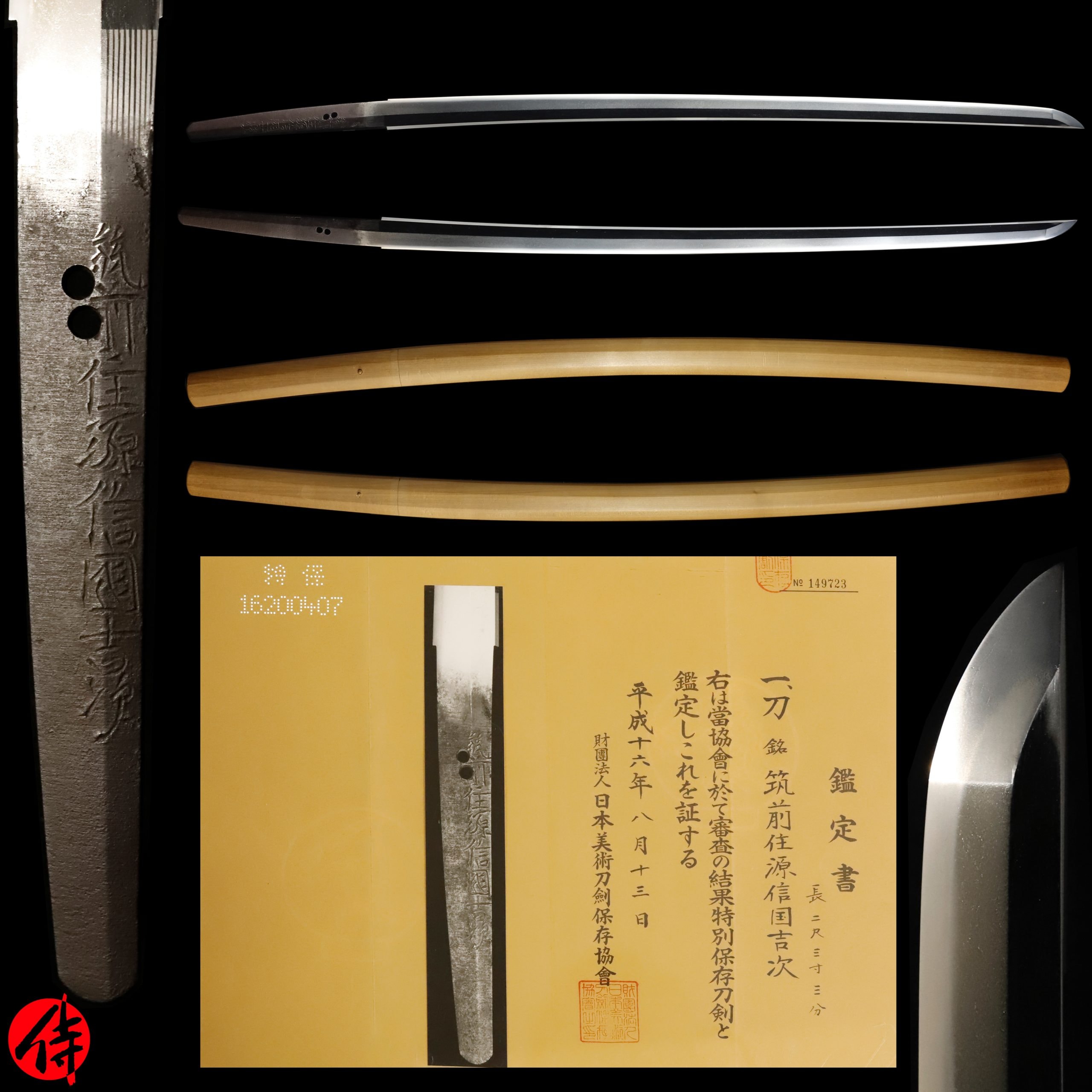
Antique Japanese Sword Katana Signed by Yoshitsugu NBTHK Tokubetsu Hozon Certificate
売却済
世界81社の刀剣商を横断追跡 · 価格履歴 · 売却アーカイブ
仕様
長さ
70.7 cm
反り
1 cm
Antique Japanese Sword Katana Signed by Yoshitsugu with NBTHK Tokubetsu Hozon Certificate 【Description】 Chikuzen Jyu Minamoto Nobukuni YOSHITSUGU(筑前住源信国吉次) signed this sword in the early Edo Period(Early 17th century).Chikuzen is the name of the province located in Fukuoka today. Jyu means living. Minamoto Nobukuni is the name of his school, and YOSHITSUGU is his maker’s name. Those who belonged to Nobukuni School in Chikuzen province were called Tsukushi Nobukuni, one of the most prospered sword forging schools in Kyushu island during the Edo period. The Nobukuni school was initially founded by the first generation Nobukuni in Kyoto. The school stayed there for a few generations. However, the 4th generation Nobukuni SADAMITSU had to leave Kyoto city as the battle between the south emperor court and the north emperor court became severe. And, as a result, Kyoto city was burnt(the late 1300’s). We called this battle the Nanbokucho war when the Japanese imperial court was separated into two. Nobukuni SADAMITSU managed to escape and arrive at Usaha(Ohita prefecture)to serve the Ajimu clan. However, after Toyotomi Hideyoshi destroyed the Ajimu clan, The 12th generation Nobukuni YOSHISADA moved to Chikuzen(Fukuoka prefecture), being invited by Kuroda Nagamasa, a famous feudal lord(1602). Since then, Nobukuni school served the Kuroda clan for generations. YOSHITSUGU was 13th-gen Nobukuni and the second son of SADAMITSU. The swords forged by Nobukuni school weren’t probably as famous as Chikuzen Sekido school back then because they were exclusively working for the Kuroda clan, being only allowed to forge swords for the Kuroda clan, not to other clans. This blade is appraised as a Tokubetsu Hozon Token(特別保存刀剣) issued by NBTHK(Nihon Bijutsu Touken Hozon Kyokai:日本美術刀剣保存協会). This authentication paper was only given to authentic Japanese swords, especially well preserved and high quality with artistic value. 【 Blade】 Cutting Edge Length(Nagasa) : 70.7 cm(27.8 inches) Curvature(Sori) : 1.0 cm( 0.39 inches) Hamon : The crystalline structure which forms along the cutting edge of a blade as a result of the hardening process Jimon(Jihada) : visible steel surface pattern created by folding and hammering during forging process Nakago : Nakago is the tang of the Japanese sword. Japanese swordsmiths left the black rust on the tang because it prevents red rust while the tang is in its handle. And the discoloration of the tang was created over time, and it is a great indicator for a Japanese sword specialist to estimate when the sword was forged. Habaki : Habaki is the equipment to make the blade not touch its scabbard inside. It prevents the blade from getting rusty and chipped. Authentication Paper : NBTHK TOKUBETSU Hozon Certificate for the blade (No.149723) NBTHK , also known as Nihon Bijutsu Touken Hozon Kyokai (the Society for the Preservation of the Japan Art Sword), is one of the oldest Japanese sword appraising organizations in modern-day Japan. They authenticated the blade on August 13th in the 16th year of Heisei (2004). They appraised it as Tokubetsu Hozon Touken, the blade especially worth preserving for Japanese society. The purchaser will receive this original certificate as well. We can also translate what is written into English and make a PDF file for your record if you request. Registration Number : Fukuoka 41445 The Board of Education in Fukuoka prefecture issued a registration paper for this sword . It is called Jyu Token Rui Torokusho(銃刀剣類登録証). Bunkacho(The Agency for Cultural Affairs) acknowledges a Japanese sword with this paper as a work of art. The sword needs to be traditionally hand-forged and made of Tamahagane carbon steel to be registered in the system. With this paper, its owner in Japan can legally own an authentic Japanese sword. Based on this registration number, we will apply for its export permit. This paper will need to be returned to the board of education when the sword is being shipped abroad, but you can
 NihontoWatchBETA
売却済
世界81社の刀剣商を横断追跡 · 価格履歴 · 売却アーカイブ
70.7 cm
1 cm
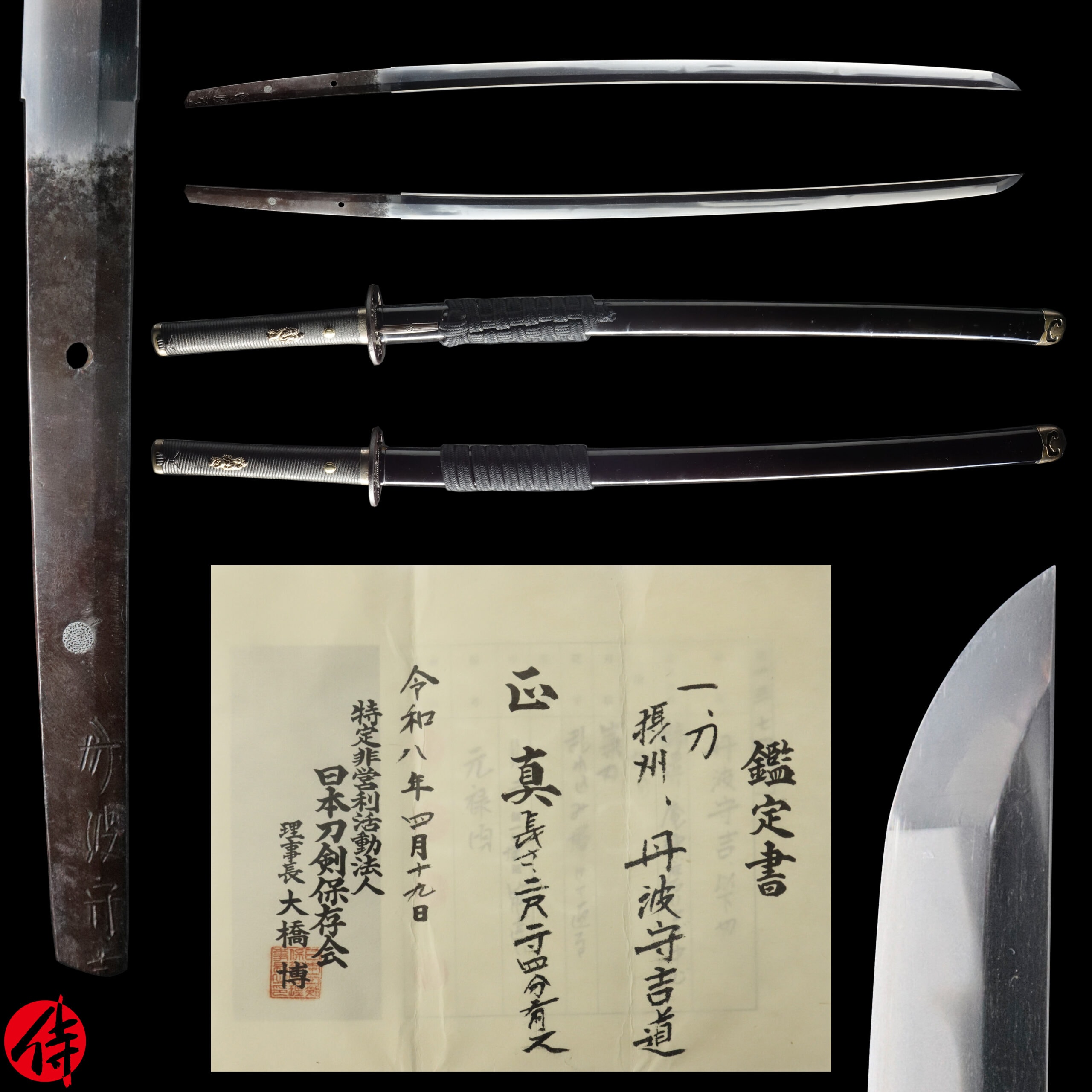
Mid Edo Katana signed by Tanba no Kami Yoshimichi for sale| Samurai Museum Shop E-mail FB Messenger Skip to content Menu Close Samurai Museum Shop Products Antique Japanese Sword Katana signed by Tanba no Kami Yoshimichi NTHK Kanteisho Certificate Updated: 22 Jun 2026 Antique Japanese Sword Katana signed by Tanba no Kami Yoshimichi NTHK Kanteisho Certificate
$7,441
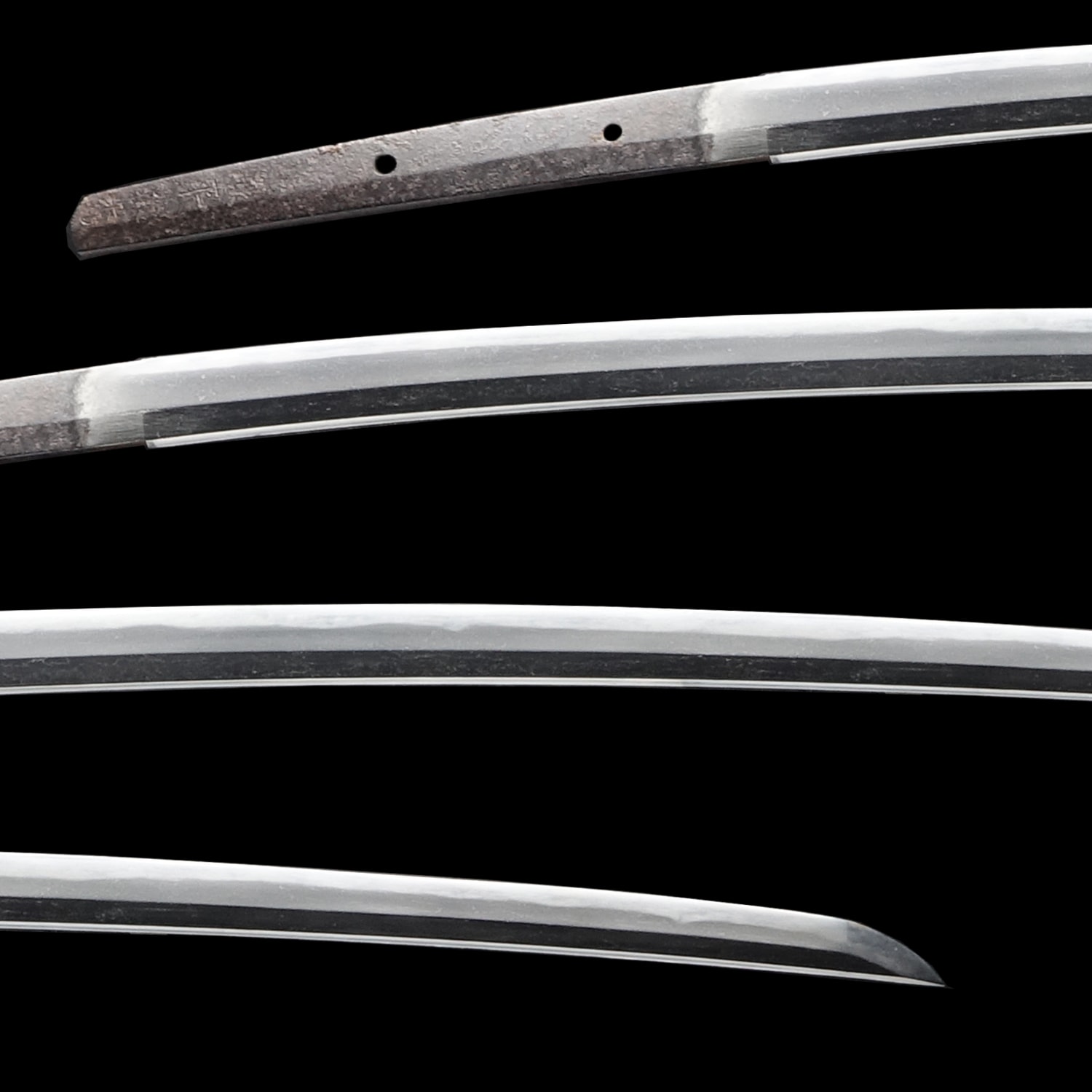
Muromachi Katana signed by Naminohira Yasuhide for sale
$7,751
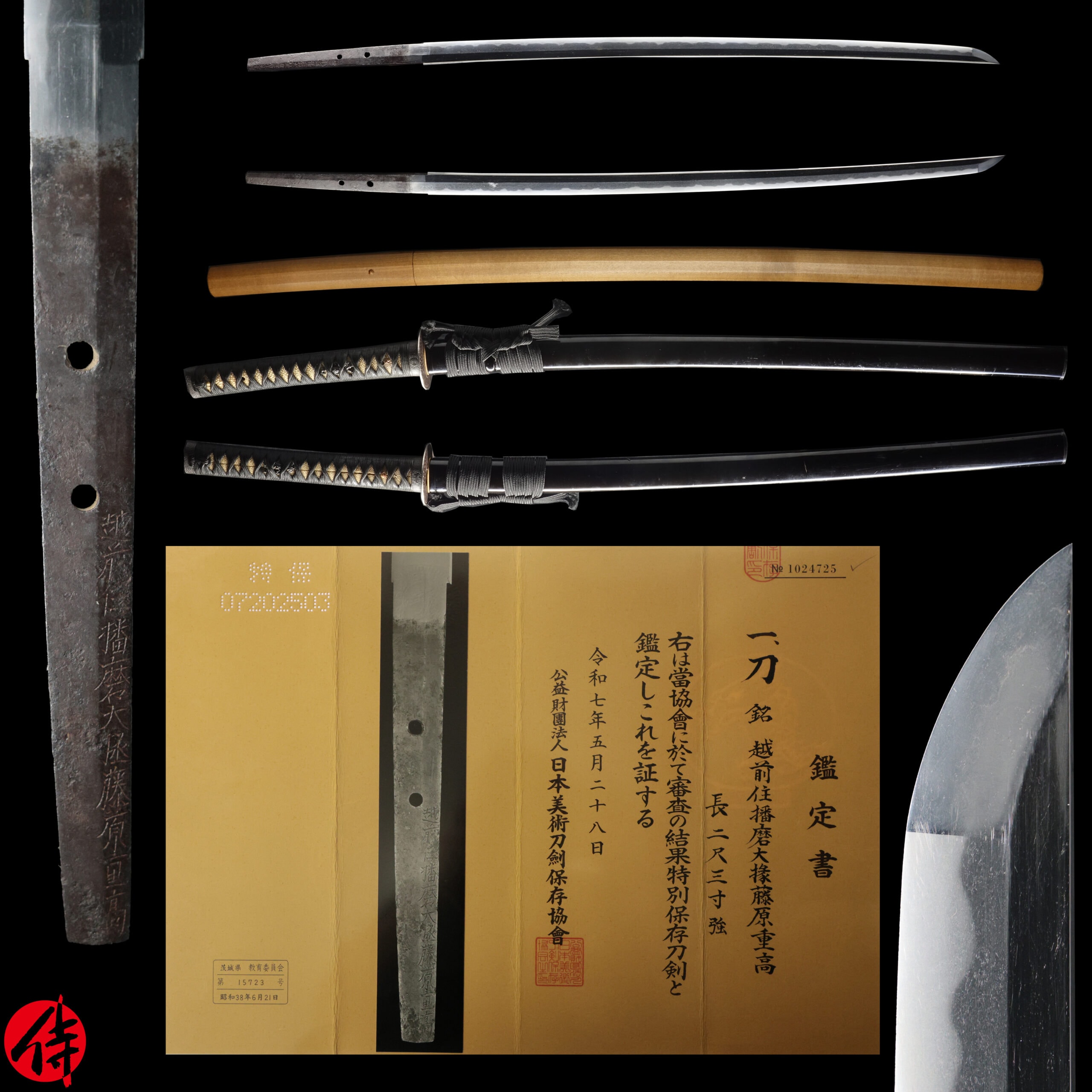
Early Edo Nihonto signed by Shigetaka for sale
$7,131
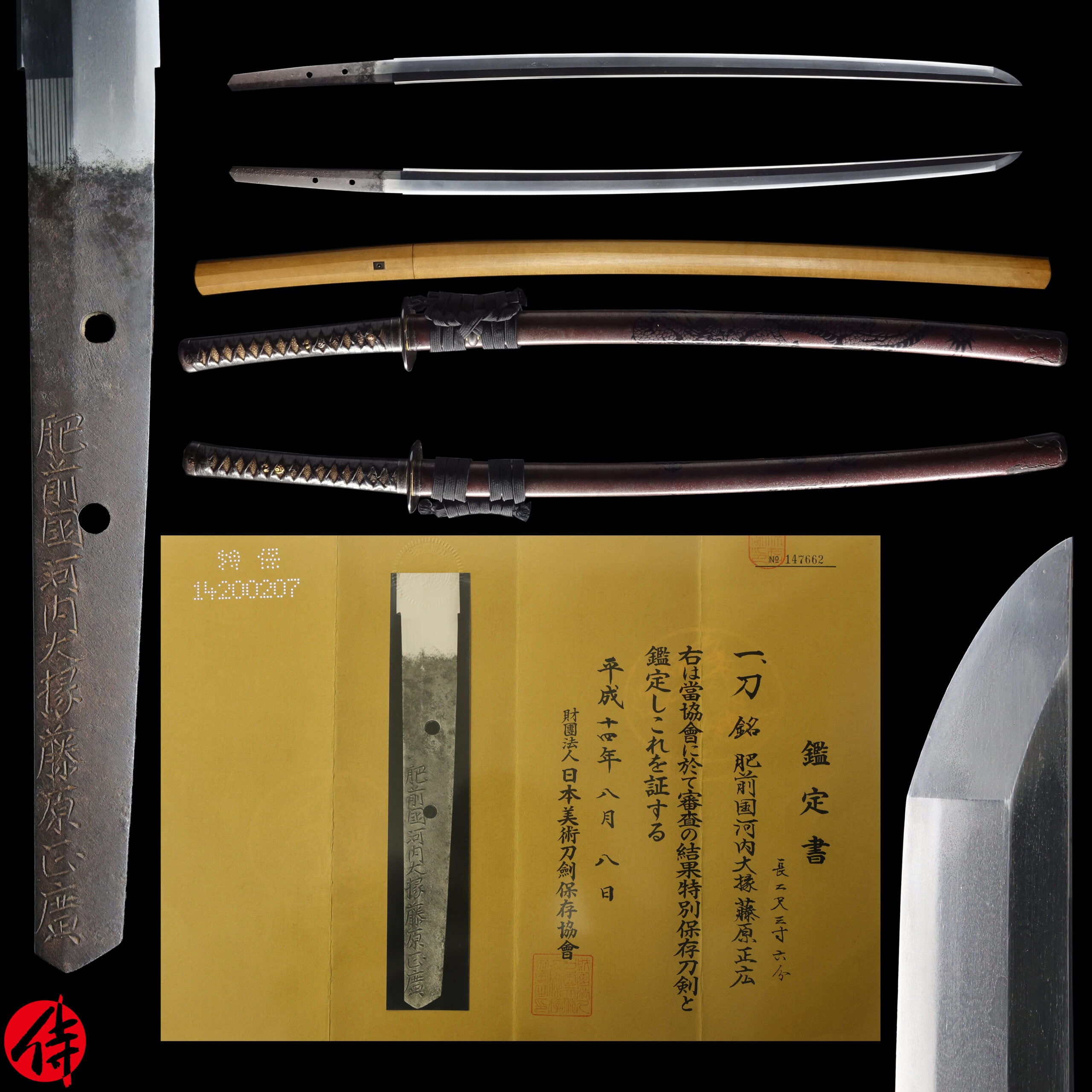
Antique Japanese Sword Katana Signed by Masahiro NBTHK Tokubetsu Hozon Certificate
$7,751
Antique Japanese Sword Katana Signed by Yoshitsugu with NBTHK Tokubetsu Hozon Certificate 【Description】 Chikuzen Jyu Minamoto Nobukuni YOSHITSUGU(筑前住源信国吉次) signed this sword in the early Edo Period(Early 17th century).Chikuzen is the name of the province located in Fukuoka today. Jyu means living. Minamoto Nobukuni is the name of his school, and YOSHITSUGU is his maker’s name. Those who belonged to Nobukuni School in Chikuzen province were called Tsukushi Nobukuni, one of the most prospered sword forging schools in Kyushu island during the Edo period. The Nobukuni school was initially founded by the first generation Nobukuni in Kyoto. The school stayed there for a few generations. However, the 4th generation Nobukuni SADAMITSU had to leave Kyoto city as the battle between the south emperor court and the north emperor court became severe. And, as a result, Kyoto city was burnt(the late 1300’s). We called this battle the Nanbokucho war when the Japanese imperial court was separated into two. Nobukuni SADAMITSU managed to escape and arrive at Usaha(Ohita prefecture)to serve the Ajimu clan. However, after Toyotomi Hideyoshi destroyed the Ajimu clan, The 12th generation Nobukuni YOSHISADA moved to Chikuzen(Fukuoka prefecture), being invited by Kuroda Nagamasa, a famous feudal lord(1602). Since then, Nobukuni school served the Kuroda clan for generations. YOSHITSUGU was 13th-gen Nobukuni and the second son of SADAMITSU. The swords forged by Nobukuni school weren’t probably as famous as Chikuzen Sekido school back then because they were exclusively working for the Kuroda clan, being only allowed to forge swords for the Kuroda clan, not to other clans. This blade is appraised as a Tokubetsu Hozon Token(特別保存刀剣) issued by NBTHK(Nihon Bijutsu Touken Hozon Kyokai:日本美術刀剣保存協会). This authentication paper was only given to authentic Japanese swords, especially well preserved and high quality with artistic value. 【 Blade】 Cutting Edge Length(Nagasa) : 70.7 cm(27.8 inches) Curvature(Sori) : 1.0 cm( 0.39 inches) Hamon : The crystalline structure which forms along the cutting edge of a blade as a result of the hardening process Jimon(Jihada) : visible steel surface pattern created by folding and hammering during forging process Nakago : Nakago is the tang of the Japanese sword. Japanese swordsmiths left the black rust on the tang because it prevents red rust while the tang is in its handle. And the discoloration of the tang was created over time, and it is a great indicator for a Japanese sword specialist to estimate when the sword was forged. Habaki : Habaki is the equipment to make the blade not touch its scabbard inside. It prevents the blade from getting rusty and chipped. Authentication Paper : NBTHK TOKUBETSU Hozon Certificate for the blade (No.149723) NBTHK , also known as Nihon Bijutsu Touken Hozon Kyokai (the Society for the Preservation of the Japan Art Sword), is one of the oldest Japanese sword appraising organizations in modern-day Japan. They authenticated the blade on August 13th in the 16th year of Heisei (2004). They appraised it as Tokubetsu Hozon Touken, the blade especially worth preserving for Japanese society. The purchaser will receive this original certificate as well. We can also translate what is written into English and make a PDF file for your record if you request. Registration Number : Fukuoka 41445 The Board of Education in Fukuoka prefecture issued a registration paper for this sword . It is called Jyu Token Rui Torokusho(銃刀剣類登録証). Bunkacho(The Agency for Cultural Affairs) acknowledges a Japanese sword with this paper as a work of art. The sword needs to be traditionally hand-forged and made of Tamahagane carbon steel to be registered in the system. With this paper, its owner in Japan can legally own an authentic Japanese sword. Based on this registration number, we will apply for its export permit. This paper will need to be returned to the board of education when the sword is being shipped abroad, but you can
NihontoWatchBETA売却済
世界81社の刀剣商を横断追跡 · 価格履歴 · 売却アーカイブ
70.7 cm
1 cm
Mid Edo Katana signed by Tanba no Kami Yoshimichi for sale| Samurai Museum Shop E-mail FB Messenger Skip to content Menu Close Samurai Museum Shop Products Antique Japanese Sword Katana signed by Tanba no Kami Yoshimichi NTHK Kanteisho Certificate Updated: 22 Jun 2026 Antique Japanese Sword Katana signed by Tanba no Kami Yoshimichi NTHK Kanteisho Certificate
$7,441
Muromachi Katana signed by Naminohira Yasuhide for sale
$7,751
Early Edo Nihonto signed by Shigetaka for sale
$7,131
Antique Japanese Sword Katana Signed by Masahiro NBTHK Tokubetsu Hozon Certificate
$7,751