説明

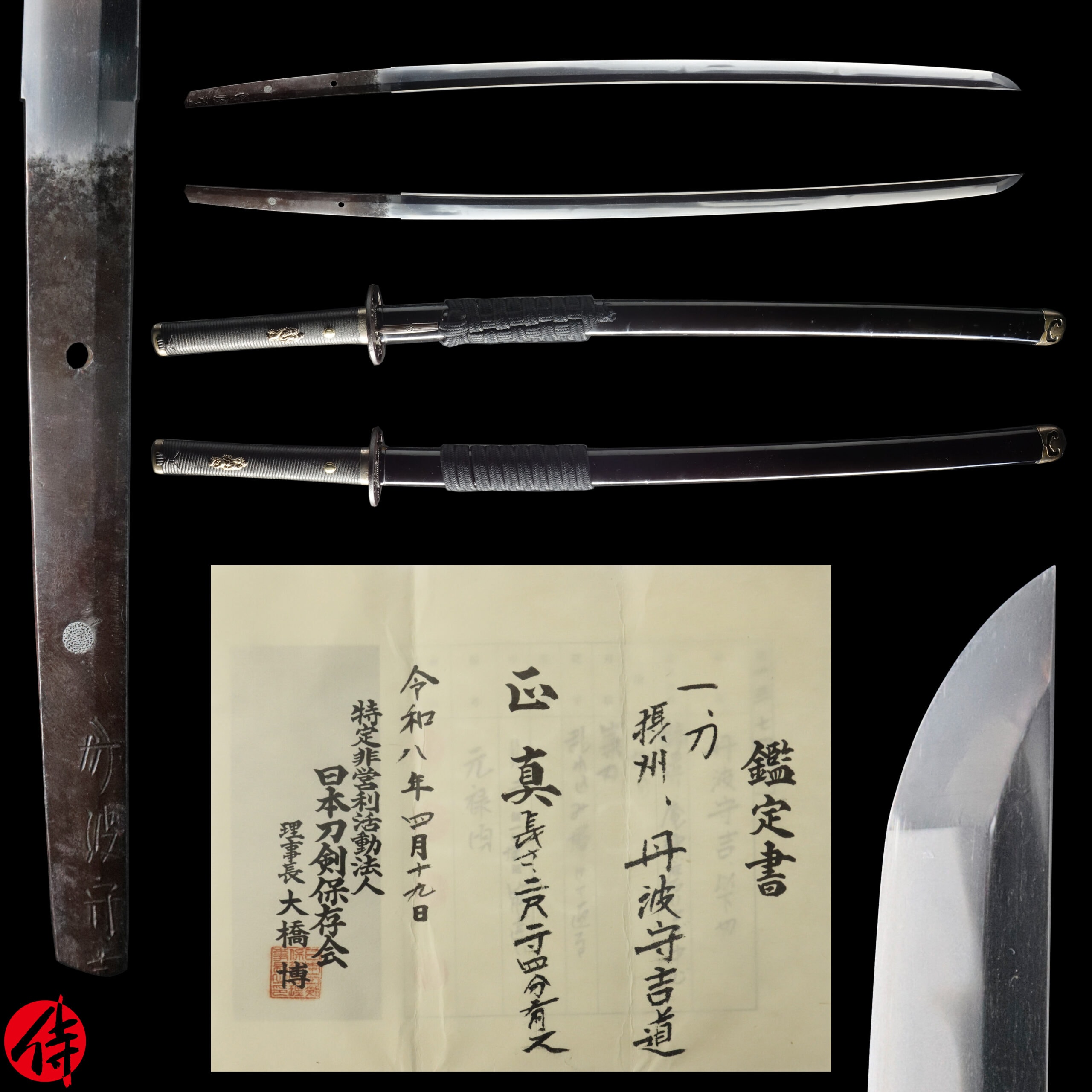
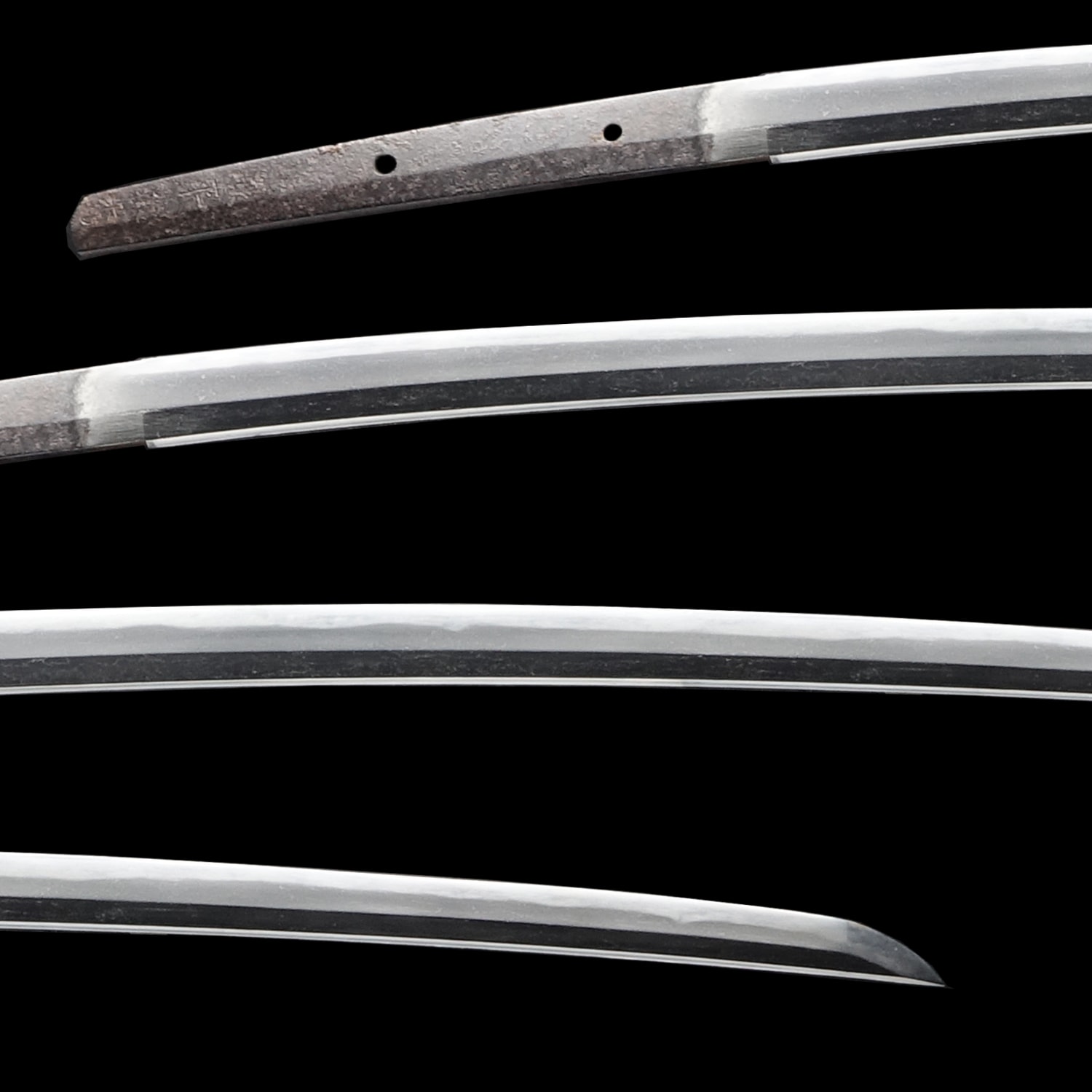
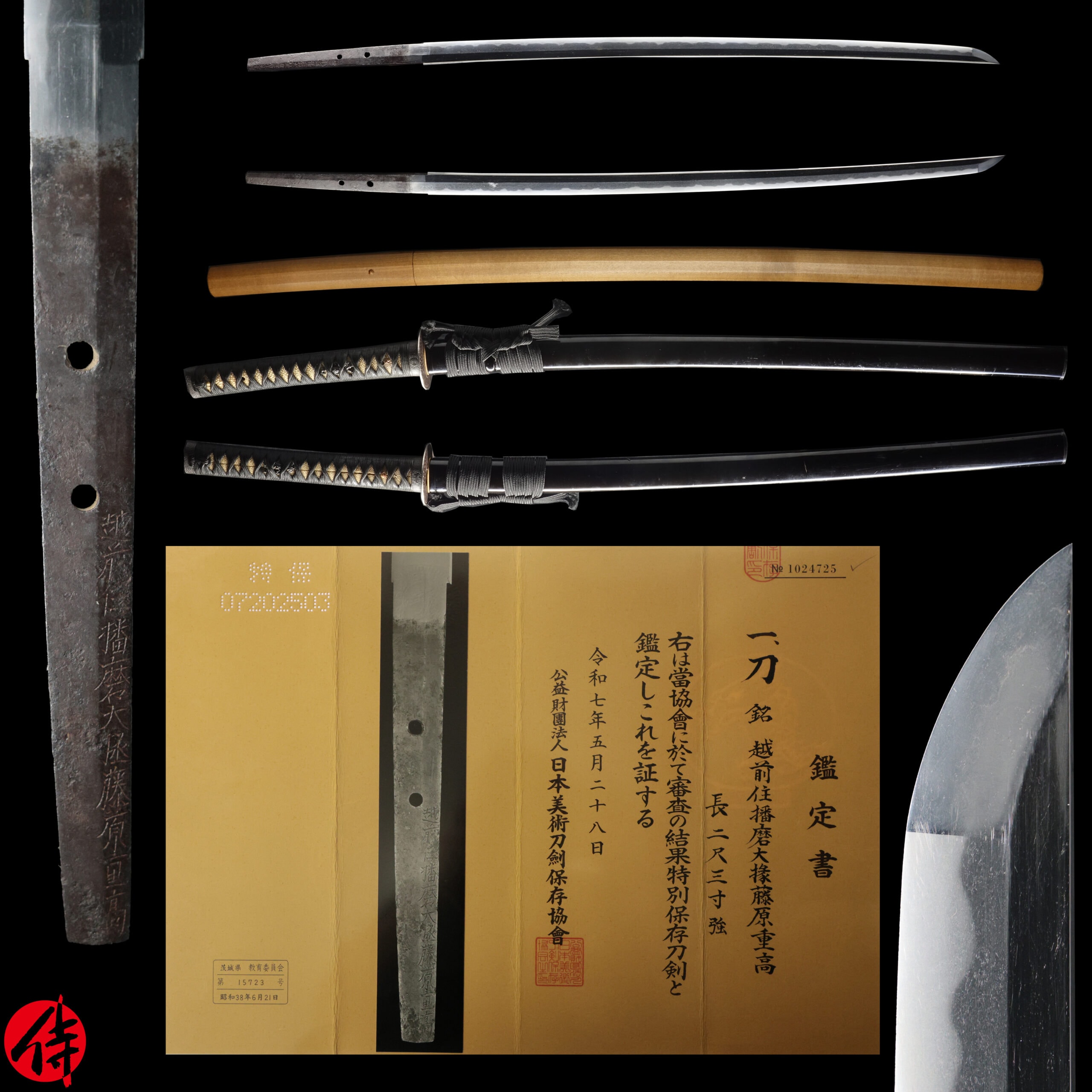
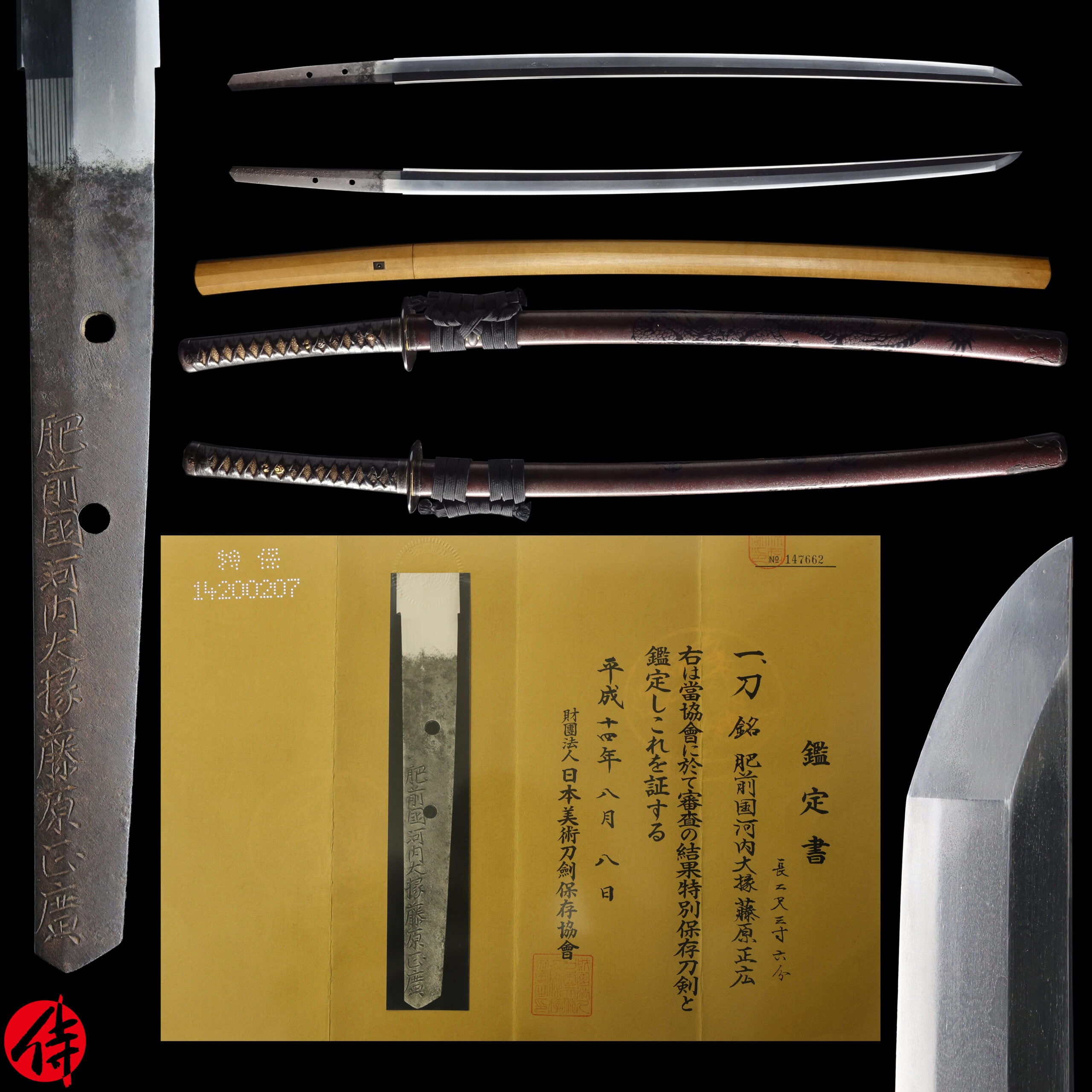
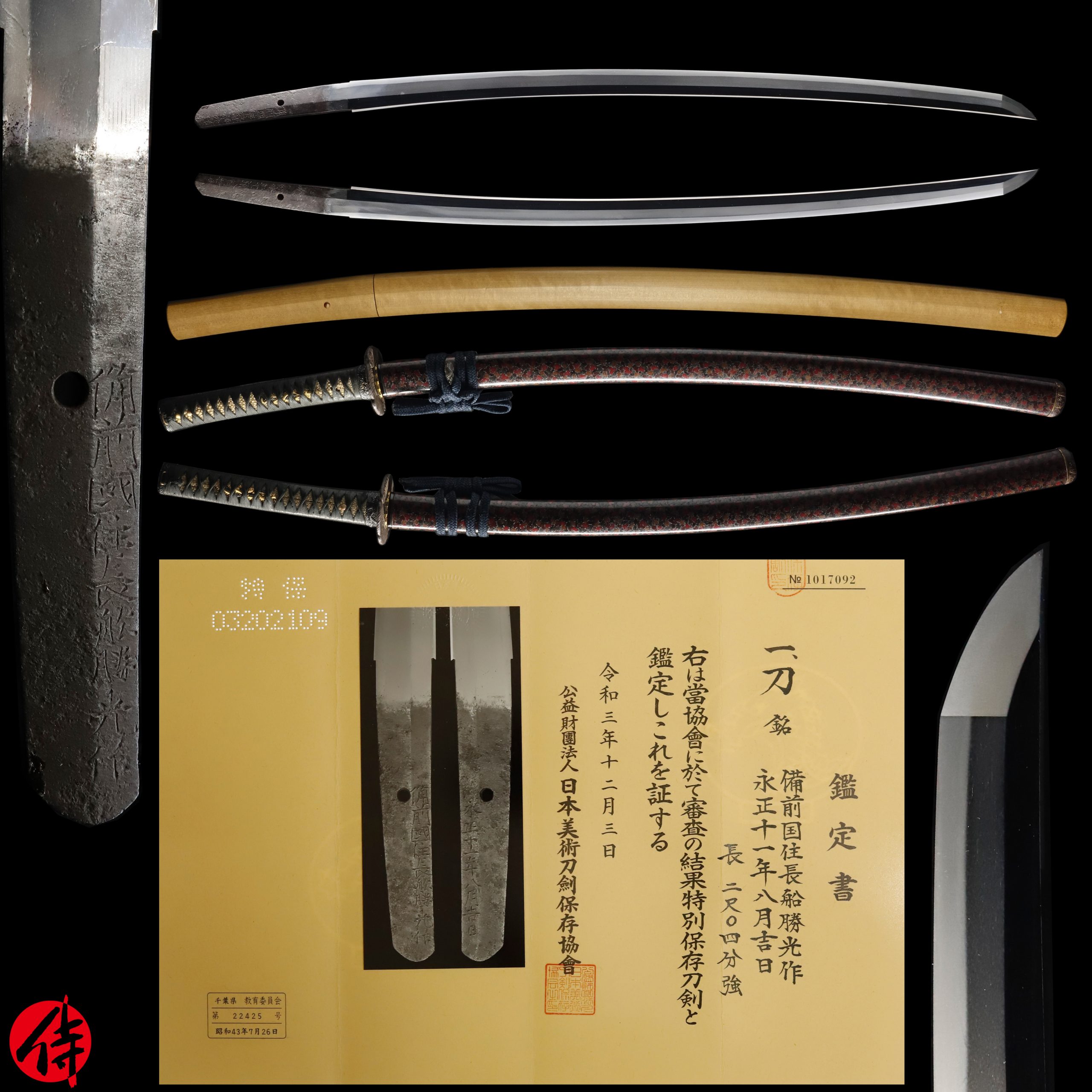
Antique Japanese Sword Katana Signed by Katsumitsu with Tokubetsu Hozon Certificate 【Description】 This blade was signed by Bizen Koku Jyu Osafune Katsumitsu (備前国住長船勝光) in August, the 11th year of the Eisho era ( 1514 : Late Muromachi period). Osafune was one of the most prestigious schools in the Bizen Koku area during the late Muromachi period. Bizen Koku is the province’s name located in today’s Okayama prefecture. Bizen Koku Jyu means that Katsumitsu resided in this area when he forged this blade. He was active during the Eisho era (1504-1521). The swordsmith Katsumitsu gained enormous fame throughout the Muromachi period in Bizen province. Based on the year inscribed on the Nakago tang, we believe this blade was created by Jirozaemon (次郎左衛門), the birth name of Katsumitsu. Judging from available records, Jirozaenmon was born as the son of Ukyonosuke Katsumitsu (右京亮勝光). The maker’s name Katsumitsu lasted a few generations and it was a hereditary name in Osafune school. And the first gen was active during the O-Ei era (1394-1428). Those who forged swords in the Bizen province(Okayama prefecture) at the end of the Muromachi Period(1492-1569 A.D) are called Matsu Bizen(Matsu means the end). Katsumitsu school was one of the most famous schools, and it flourished for generations among Osafune schools. The swordsmiths in Bizen produced many swords during the Muromachi period as it was in the middle of the Sengoku period(Warring state period). The demand for weapons increased among strong feudal lords. It would be nice to have a piece forged in the warring state period when there was so much rivalry between warlords. It was possible that this blade was ordered by a high-class Samurai and he might have carried it in a battlefield. BIZEN is located near the Chugoku Mountains, where iron sands, one of the essential materials for making Japanese swords, were abundant. Furthermore, BIZEN swordsmiths had close access to Yoshi River, where they could find water and charcoal. This geological location contributed to the swordsmiths to forge high-quality refined blades. We presume BIZEN was quite active in sword-forging from ancient times. It is said that BIZE N DEN was created by groups of swordsmiths there after the late Heian era(Late 12th century ). This blade is relatively short but has no trace of getting shortened (Suriage) in the past. Considering these facts, we believe this blade was primarily made for one-hand combat. The user could hold this sword with one hand, a popular way to fight during the late Muromachi period. It is appraised as a Tokubetsu Hozon Token (特別保存刀剣) issued by NBTHK(Nihon Bijutsu Touken Hozon Kyokai:日本美術刀剣保存協会). This authentication paper was only given to authentic Japanese swords, especially well preserved and high quality with artistic value. 【 Blade】 Cutting Edge Length(Nagasa) : 61.8 cm(24.3 inches) Curvature(Sori) : 1.8 cm( 0.70 inches) Hamon : The crystalline structure which forms along the cutting edge of a blade as a result of the hardening process Jimon(Jihada) : visible steel surface pattern created by folding and hammering during forging process Nakago : Nakago is the tang of the Japanese sword. Japanese swordsmiths left the black rust on the tang because it prevents red rust while the tang is in its handle. And the discoloration of the tang was created over time, and it is a great indicator for a Japanese sword specialist to estimate when the sword was forged. Koshirae: Koshirae is the mounting of the Japanese sword. There are several parts that consist of Koshirae such as Saya(Scabbard), Tsuka(Handle), Tsuba(Handguard). Fuchi-Kashira : A pair of matching sword fittings that cover the upper and bottom parts of its sword hilt. The dragon is the principal motif of this Fuchi Kashira. Golden coloring is applied to dragon’s eyes and mustache. And clouds surround dragon’s body. This combination is often seen in sword mountings; it shows that lots of Samurais favored this dignified beast design. Initially

Antique Japanese Sword Katana Signed by Katsumitsu NBTHK Tokubetsu Hozon Certificate
売切れ
Tokuho売切れ

Antique Japanese Sword Katana Signed by Katsumitsu NBTHK Tokubetsu Hozon Certificate

売却済

世界81社の刀剣商を横断追跡 · 価格履歴 · 売却アーカイブ

仕様

長さ

61.8 cm

反り

1.8 cm

作者について

Katsumitsu勝光

1 重要文化財1 重要美術品2 御物1 特別重要刀剣23 重要刀剣

永正九年紀の刀の長銘の下、次郎左衛門尉藤原勝光は自ら一句を添えた。「心の及ぶところ此の上の者あるべからざる也」、すなわち本作が同工快心の出来であることを述べている。この銘を切った工こそ、ひしめく同名のうち最も技倆すぐれた者である。説明書は、末備前と総称される室町末期の長船鍛冶に勝光の名を用いた数代・十数工があり、そのなかで右京亮勝光の子たる次郎左衛門尉を冠する系が特に技術すぐれ、与三左衛門尉祐定・五郎左衛門尉清光と並ぶ末備前を代表する刀工に数えられると記す。 説明書がその個性とするところは、共有の作域のなかの程度の差である。末備前の工はいずれも腰の開いた複式互の目、すなわち末備前を診断する刃文を焼く。勝光もまた同じ基調に典型を築き、小板目のよくつんだ地に地沸つき地景細かに入り、その上に焼の高い明るい刃を焼いて、足・葉さかんに入り、匂口冴えて締まりごころ、小さな飛焼を交える。極めが引く区別は、彼が諸工より丁子を多く交えて一段と華やかな出来とする点である。説明書は「勝光は祐定に比して丁子の刃文が目立ち」、いわゆる蟹の爪と呼ばれる乱が比較的少いとする。その最上の年紀脇指では同じ点を肯定的に、「乱れの中に丁子を多く交えた一段と華やかな出来を得意としている」と評する。 その華やかさの下、地鉄は終始変わらぬところである。末長船の小板目のよくつんだ地に地沸つき、地景細かに織りなし、処々やや肌立ちあるいは流れごころとなり、優品では地沸が微塵につく。古来の備前の乱れ映りはこの末の地鉄から概ね失われ、わずかの作に淡く残るのみで、永正二年紀の一刀は地沸が強いために映りが目立たず、かえって地鉄が強く見えると読まれる。帽子は刃文に応じて乱れ込み、小丸あるいは尖りごころに、先掃きかけて返る。表裏には末備前の彫物、倶利迦羅・梵字に素剣・八幡大菩薩や天照皇太神といった神号が施され、説明書はこれを鍛冶自身の彫ではなく協力者の彫物師の手と注意する。 勝光はなにより一門の合作の名手で、その記録は大半が合作である。弟左京進宗光とは古く「宗勝合作」として珍重された刀を切り、両名を連銘した片手打の打刀・脇指がある。ある永正七年紀の脇指には明らかに「弟左京進宗光」と切られ、説明書はこれを長船一門の系図再検討を促す大変重要な資料とする。最も著名なのは与三左衛門尉祐定との合作薙刀で、永正十八年紀、大振りで豪壮な薙刀造に破軍之剣・三身節一体の陰刻があり、宇喜多能家の注文になり、「末備前の薙刀中の傑作である」と評される。大永三年紀の刀は子の次郎兵衛尉治光との合作である。説明書は本工の作刀期間をほぼ明応より享禄に亘るとし、その末年、享禄二年紀には、いま一人の子息修理亮勝光との父子合作刀を打って資料的に貴重とされる。華やかな互の目の傍ら、穏やかな広直刃・直刃をも等しく能くし、説明書は、重美「朝嵐」によって乱れ刃の名手と高名な本工が叔父の協力を得て直刃にも高い技術を示すと評する。 一派のうちで勝光を分かつのは、したがって一つの見どころではなく手の幅である。明るく丁子を交えた互の目は素朴な祐定の手から本工の典型を分かち、冴えた直刃の技倆と標準の作域を外れる野心は、末備前の作域の上限を画す。その野心の最も明らかな証が、在銘文亀二年紀の太刀で、細身に先反りつき、当代の打刀を離れて、小板目に乱れ映りの立つ地へ直刃調の小乱れ・小丁子を焼く。これは「鎌倉末期の長船景光などをねらいとしたものであろう」と読まれ、一般末備前物とは異なる非常な力作と称すべきものとされつつ、技術は遠く及ばないとも記される。対する端の大永六年紀の短刀は、刃を棟へ駆け上げて飛焼を伴う皆焼風の棟焼とし、常にも増して変化に富む。これらの端の作が、末備前勝光の手を見分けうる幅を画す。 勝光は多作の工で在銘年紀の作も相応に残るが、世に出るものは少ない。藤代の極めは最上作。国宝はなく、その記録は重要文化財一口、すなわち子治光との合作で一期一腰と添銘し東京の乃木神社に蔵する刀と、御物として伝わる備州長船勝光銘の刀を通る。来歴は大名家や旧家にも続き、宇喜多能家のための合作薙刀は仙台伊達家伝来の重宝、ほかに宇山飛弾守や北村行直らの所持銘を記す作があり、重美の刀「朝嵐」はかつて松下昌俊が所持した。これらの外、指定を受けた作およそ二十数口のうち特別重要刀剣・重要刀剣の級にあるのは僅かで、在銘の次郎左衛門尉勝光が市場に出るのは折にふれてのことであり、年紀を有し丁寧な彫物をもつ一口、かつて工がこれに過ぐるものなしと書きつけたたぐいの作は、末備前を集める者にとって出会う価値のあるものである。


刀剣商

サムライミュージアム

samuraimuseum.jp

売切れ