売切れ
Tokuho売切れ
Early Edo Antique Katana Signed by Masakiyo for sale | Samurai Museum Shop
売却済
世界81社の刀剣商を横断追跡 · 価格履歴 · 売却アーカイブ
仕様
長さ
64.8 cm
反り
1.5 cm
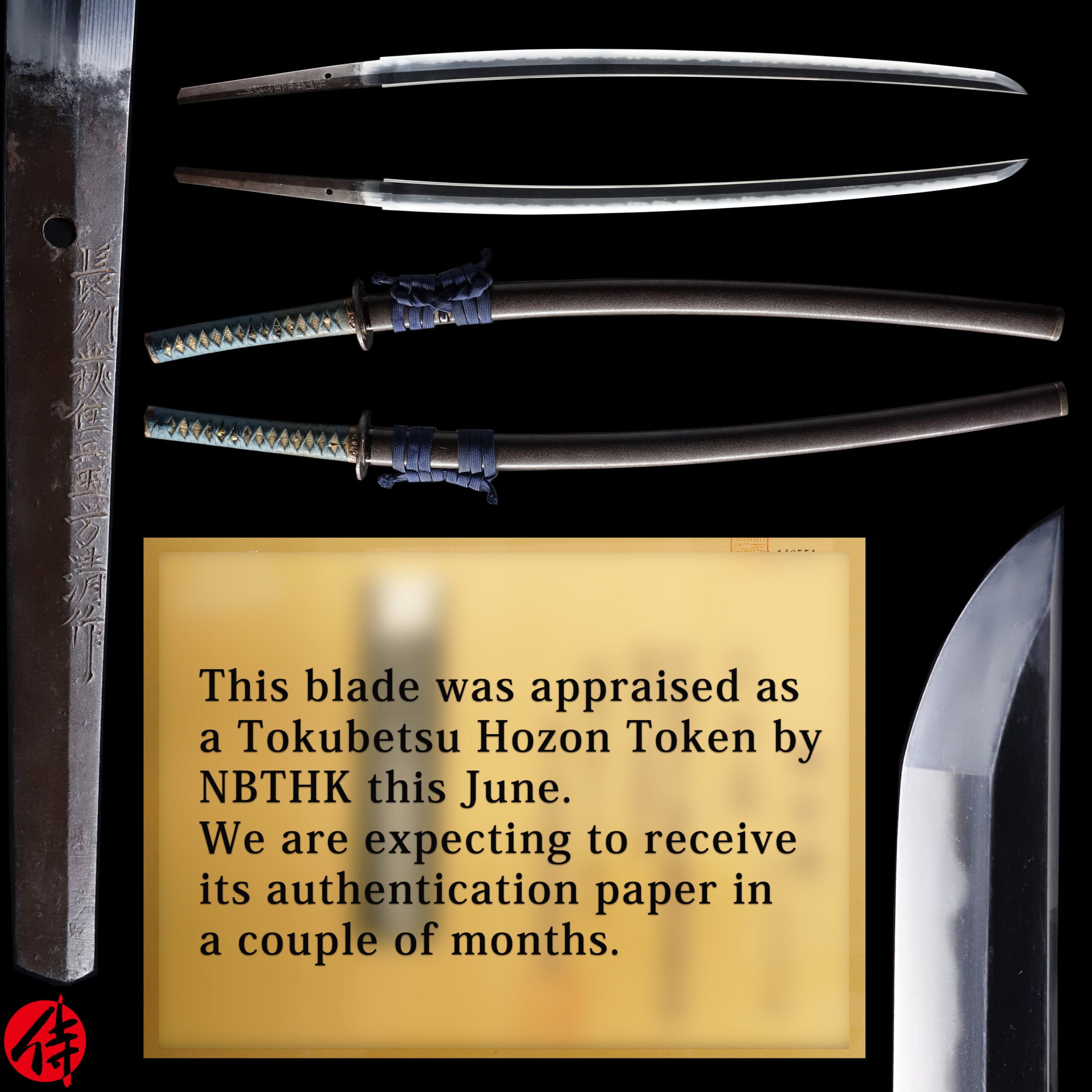
Antique Japanese Sword Katana Signed by Nioh Masakiyo with Tokubetsu Hozon Certificate 【Description】 This blade was signed by Choshu Hagi Jyu Nioh Masakiyo (長州萩二王方清). He was a descendant of Nioh Kiyotsuna, the founder of the Nioh school. He lived in Hagi city, Shimonoseki city and Toyoura city in Yamaguchi prefecture. His son, Nioh Kurou Masakiyo (二王九郎方清) and he forged strong looking blades in their career. His works don’t have hefty curvature and Mihaba (width) is wide and Kasane (thickness) is thick. I would say this blade has characteristic of his creations. His active period is during the early Edo period (Kanbun era: 1661-1673 ). Nioh school flourished from the mid-Kamakura period to the late Muromachi period (500-750 years ago) and lasted until the Edo period(150-400 years ago). The school was founded by Nioh Taro Kiyotsuna(二王太郎清綱) in Suo Province(today’s Yamaguchi prefecture). According to his remaining work, the oldest blade was forged in 1265. It is currently enshrined in Itsukushima Shrine in Hiroshima. It is said that he started to forge swords in around 1205 (early Kamakura period). The Nioh swordsmiths inherited the part of its founder’s name 清(Kiyo) such as 清房(Kiyofusa), 清長(Kiyonaga). There were a lot of lands in Suo Province controlled by the Todaiji temple in the Kamakura-Muromachi period. It is said that Nioh school and Yamato swordsmiths from Nara prefecture had a strong relationship and technological exchange. That is why the blades forged by Nioh swordsmiths had a strong influence from YAMATO-DEN. *Todaiji temple is located in Nara prefecture. Before the Edo period, temples and shrines gained strong political influence. The name Nioh came from the legend that the Tachi blade forged by Kiyotsuna(the founder of Nioh school) was able to save the Nioh statue by cutting the chain connected to it when Nioh temple was on fire. Another theory was that Nioh swordsmiths lived in a village called Nioh no Sho(二保庄) and started to call themselves Nioh swordsmiths. It was appraised as a Tokubetsu Hozon Token (特別保存刀剣) issued by NBTHK(Nihon Bijutsu Touken Hozon Kyokai:日本美術刀剣保存協会) this June. And, we are expecting to receive its authentication paper in a couple of months. This authentication paper was only given to authentic Japanese swords, especially well preserved and high quality with artistic value. 【 Blade】 Cutting Edge Length(Nagasa) : 64.8 cm (25.5 inches) Curvature(Sori) : 1.5 cm (0.59 inches) Hamon : The crystalline structure which forms along the cutting edge of a blade as a result of the hardening process Jimon(Jihada) : visible steel surface pattern created by folding and hammering during forging process Nakago : Nakago is the tang of the Japanese sword. Japanese swordsmiths left the black rust on the tang because it prevents red rust while the tang is in its handle. And the discoloration of the tang was created over time, and it is a great indicator for a Japanese sword specialist to estimate when the sword was forged. Koshirae: Koshirae is the mounting of the Japanese sword. There are several parts that consist of Koshirae such as Saya(Scabbard), Tsuka(Handle), Tsuba(Handguard). Fuchi-Kashira : A pair of matching sword fittings that cover the upper and bottom parts of its sword hilt. The horse is the motif of this Fuchi Kashira. Many horses are drawn all over on each small screen. While making the most of the brown color of copper, it is a colorful and gorgeous piece that is partly colored with gold and silver. The expressions and movements of the horses are also lively. These expressions make this Fuchi Kashira looks bright and cheerful. Horses have been around human life for a long time, not only as our food but also for transportation or carriage of luggage. In Japan, in ancient times, horses were considered vehicles for gods to be dedicated to shrines. It is said it is the origin of Ema (絵馬, picture tablet used as an offering at a shrine) today. Horses had been used as a tool for rituals and festivals. Afte
 NihontoWatchBETA
売却済
世界81社の刀剣商を横断追跡 · 価格履歴 · 売却アーカイブ
64.8 cm
1.5 cm
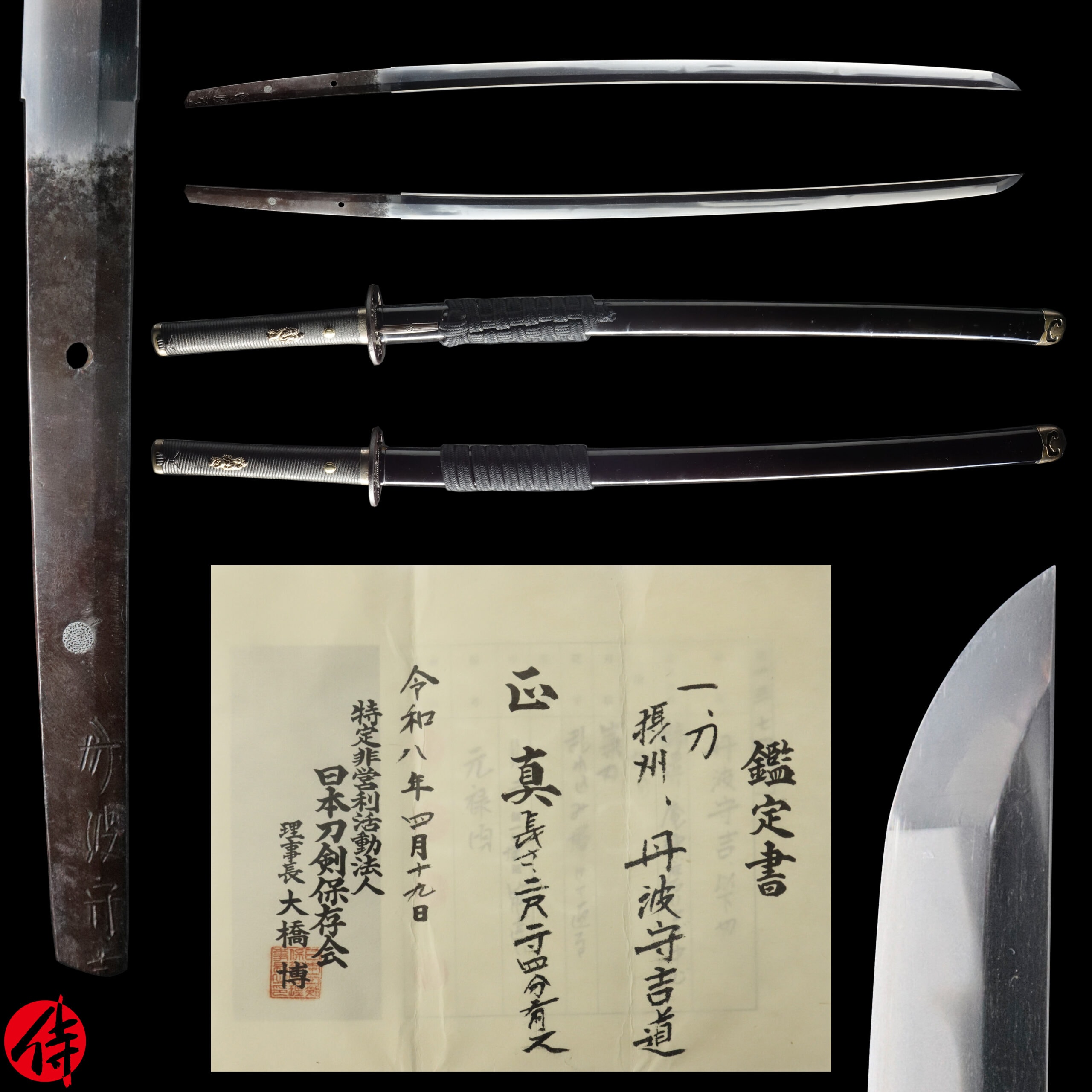
Mid Edo Katana signed by Tanba no Kami Yoshimichi for sale| Samurai Museum Shop E-mail FB Messenger Skip to content Menu Close Samurai Museum Shop Products Antique Japanese Sword Katana signed by Tanba no Kami Yoshimichi NTHK Kanteisho Certificate Updated: 22 Jun 2026 Antique Japanese Sword Katana signed by Tanba no Kami Yoshimichi NTHK Kanteisho Certificate
$7,441
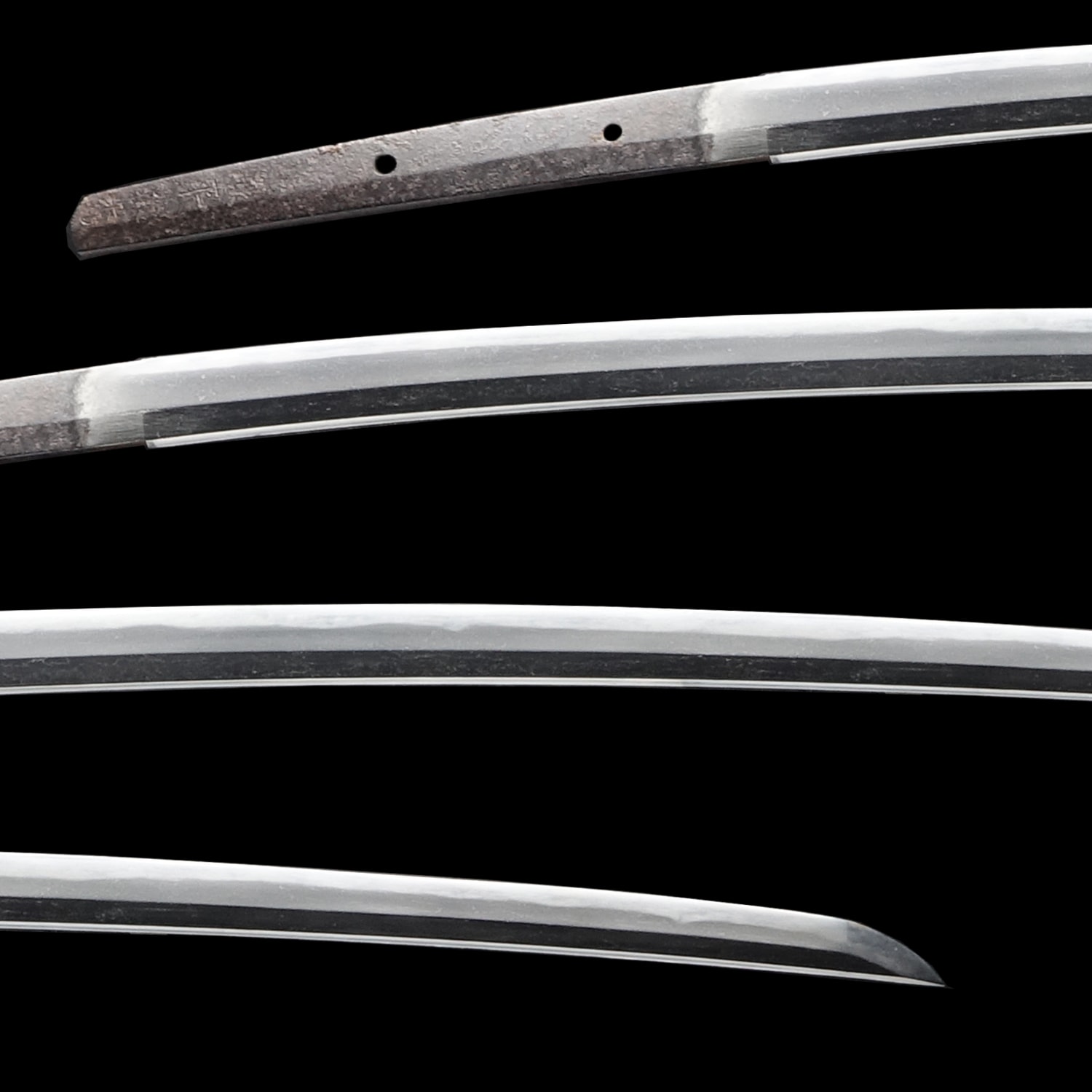
Muromachi Katana signed by Naminohira Yasuhide for sale
$7,751
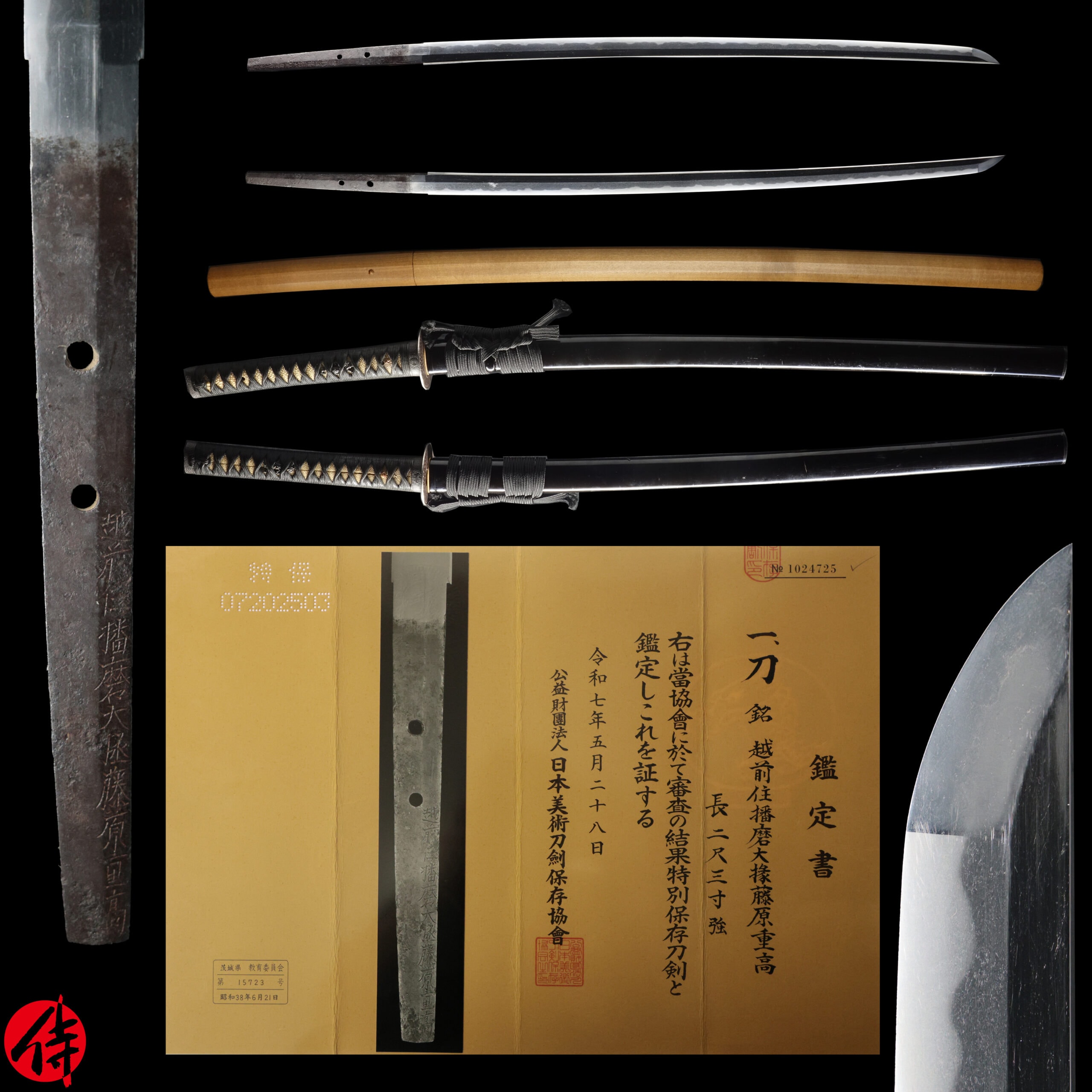
Early Edo Nihonto signed by Shigetaka for sale
$7,131
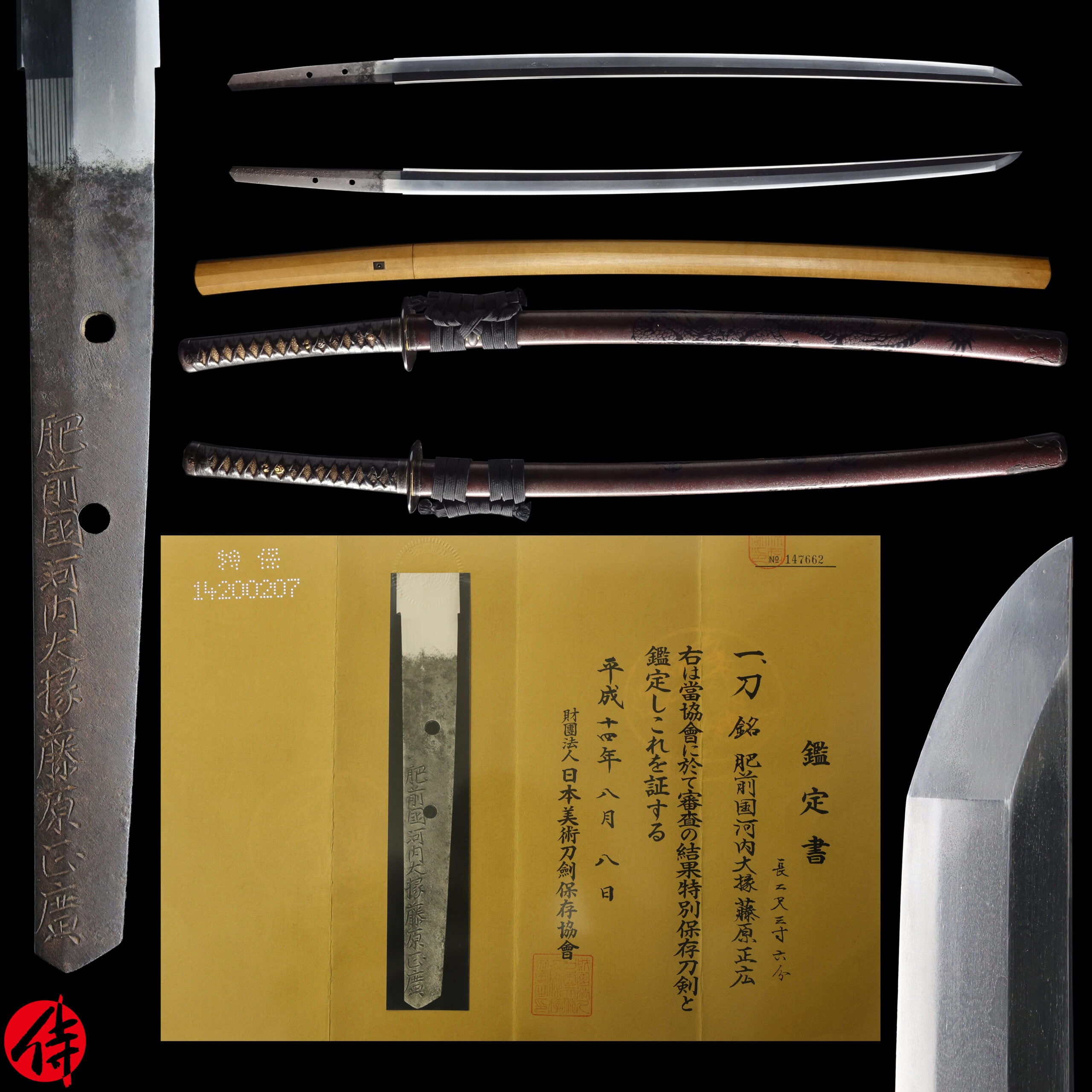
Antique Japanese Sword Katana Signed by Masahiro NBTHK Tokubetsu Hozon Certificate
$7,751
Antique Japanese Sword Katana Signed by Nioh Masakiyo with Tokubetsu Hozon Certificate 【Description】 This blade was signed by Choshu Hagi Jyu Nioh Masakiyo (長州萩二王方清). He was a descendant of Nioh Kiyotsuna, the founder of the Nioh school. He lived in Hagi city, Shimonoseki city and Toyoura city in Yamaguchi prefecture. His son, Nioh Kurou Masakiyo (二王九郎方清) and he forged strong looking blades in their career. His works don’t have hefty curvature and Mihaba (width) is wide and Kasane (thickness) is thick. I would say this blade has characteristic of his creations. His active period is during the early Edo period (Kanbun era: 1661-1673 ). Nioh school flourished from the mid-Kamakura period to the late Muromachi period (500-750 years ago) and lasted until the Edo period(150-400 years ago). The school was founded by Nioh Taro Kiyotsuna(二王太郎清綱) in Suo Province(today’s Yamaguchi prefecture). According to his remaining work, the oldest blade was forged in 1265. It is currently enshrined in Itsukushima Shrine in Hiroshima. It is said that he started to forge swords in around 1205 (early Kamakura period). The Nioh swordsmiths inherited the part of its founder’s name 清(Kiyo) such as 清房(Kiyofusa), 清長(Kiyonaga). There were a lot of lands in Suo Province controlled by the Todaiji temple in the Kamakura-Muromachi period. It is said that Nioh school and Yamato swordsmiths from Nara prefecture had a strong relationship and technological exchange. That is why the blades forged by Nioh swordsmiths had a strong influence from YAMATO-DEN. *Todaiji temple is located in Nara prefecture. Before the Edo period, temples and shrines gained strong political influence. The name Nioh came from the legend that the Tachi blade forged by Kiyotsuna(the founder of Nioh school) was able to save the Nioh statue by cutting the chain connected to it when Nioh temple was on fire. Another theory was that Nioh swordsmiths lived in a village called Nioh no Sho(二保庄) and started to call themselves Nioh swordsmiths. It was appraised as a Tokubetsu Hozon Token (特別保存刀剣) issued by NBTHK(Nihon Bijutsu Touken Hozon Kyokai:日本美術刀剣保存協会) this June. And, we are expecting to receive its authentication paper in a couple of months. This authentication paper was only given to authentic Japanese swords, especially well preserved and high quality with artistic value. 【 Blade】 Cutting Edge Length(Nagasa) : 64.8 cm (25.5 inches) Curvature(Sori) : 1.5 cm (0.59 inches) Hamon : The crystalline structure which forms along the cutting edge of a blade as a result of the hardening process Jimon(Jihada) : visible steel surface pattern created by folding and hammering during forging process Nakago : Nakago is the tang of the Japanese sword. Japanese swordsmiths left the black rust on the tang because it prevents red rust while the tang is in its handle. And the discoloration of the tang was created over time, and it is a great indicator for a Japanese sword specialist to estimate when the sword was forged. Koshirae: Koshirae is the mounting of the Japanese sword. There are several parts that consist of Koshirae such as Saya(Scabbard), Tsuka(Handle), Tsuba(Handguard). Fuchi-Kashira : A pair of matching sword fittings that cover the upper and bottom parts of its sword hilt. The horse is the motif of this Fuchi Kashira. Many horses are drawn all over on each small screen. While making the most of the brown color of copper, it is a colorful and gorgeous piece that is partly colored with gold and silver. The expressions and movements of the horses are also lively. These expressions make this Fuchi Kashira looks bright and cheerful. Horses have been around human life for a long time, not only as our food but also for transportation or carriage of luggage. In Japan, in ancient times, horses were considered vehicles for gods to be dedicated to shrines. It is said it is the origin of Ema (絵馬, picture tablet used as an offering at a shrine) today. Horses had been used as a tool for rituals and festivals. Afte
NihontoWatchBETA売却済
世界81社の刀剣商を横断追跡 · 価格履歴 · 売却アーカイブ
64.8 cm
1.5 cm
Mid Edo Katana signed by Tanba no Kami Yoshimichi for sale| Samurai Museum Shop E-mail FB Messenger Skip to content Menu Close Samurai Museum Shop Products Antique Japanese Sword Katana signed by Tanba no Kami Yoshimichi NTHK Kanteisho Certificate Updated: 22 Jun 2026 Antique Japanese Sword Katana signed by Tanba no Kami Yoshimichi NTHK Kanteisho Certificate
$7,441
Muromachi Katana signed by Naminohira Yasuhide for sale
$7,751
Early Edo Nihonto signed by Shigetaka for sale
$7,131
Antique Japanese Sword Katana Signed by Masahiro NBTHK Tokubetsu Hozon Certificate
$7,751