説明

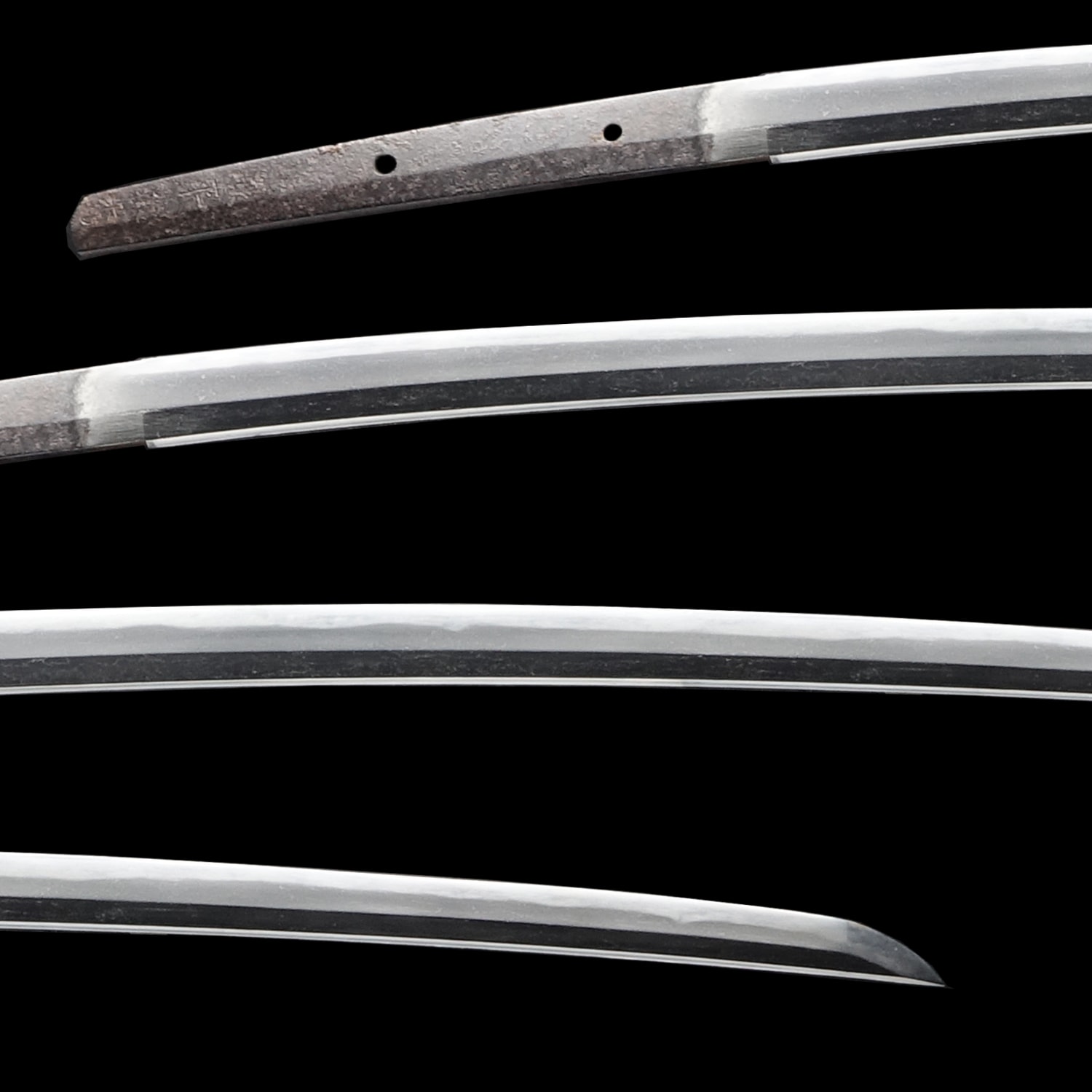
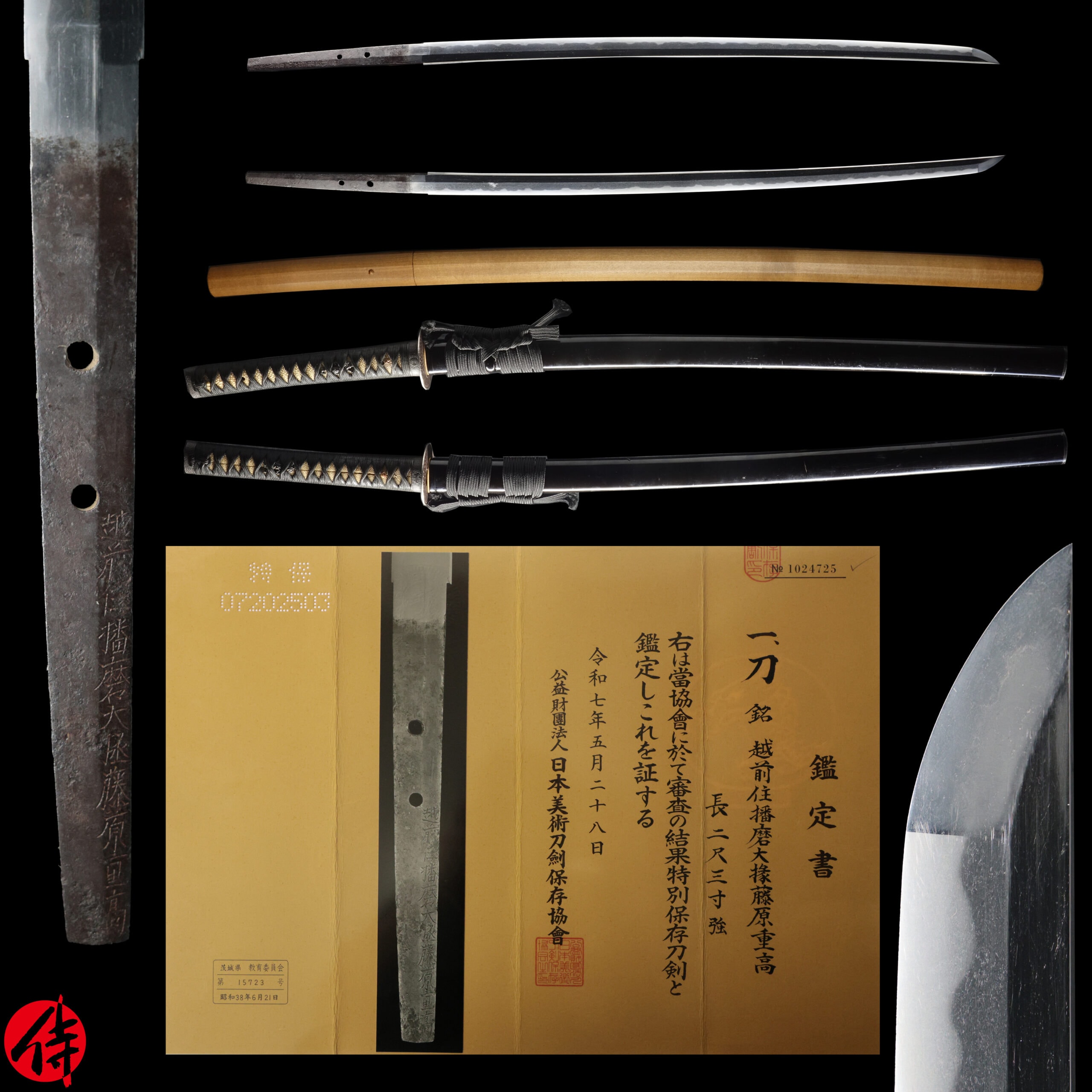
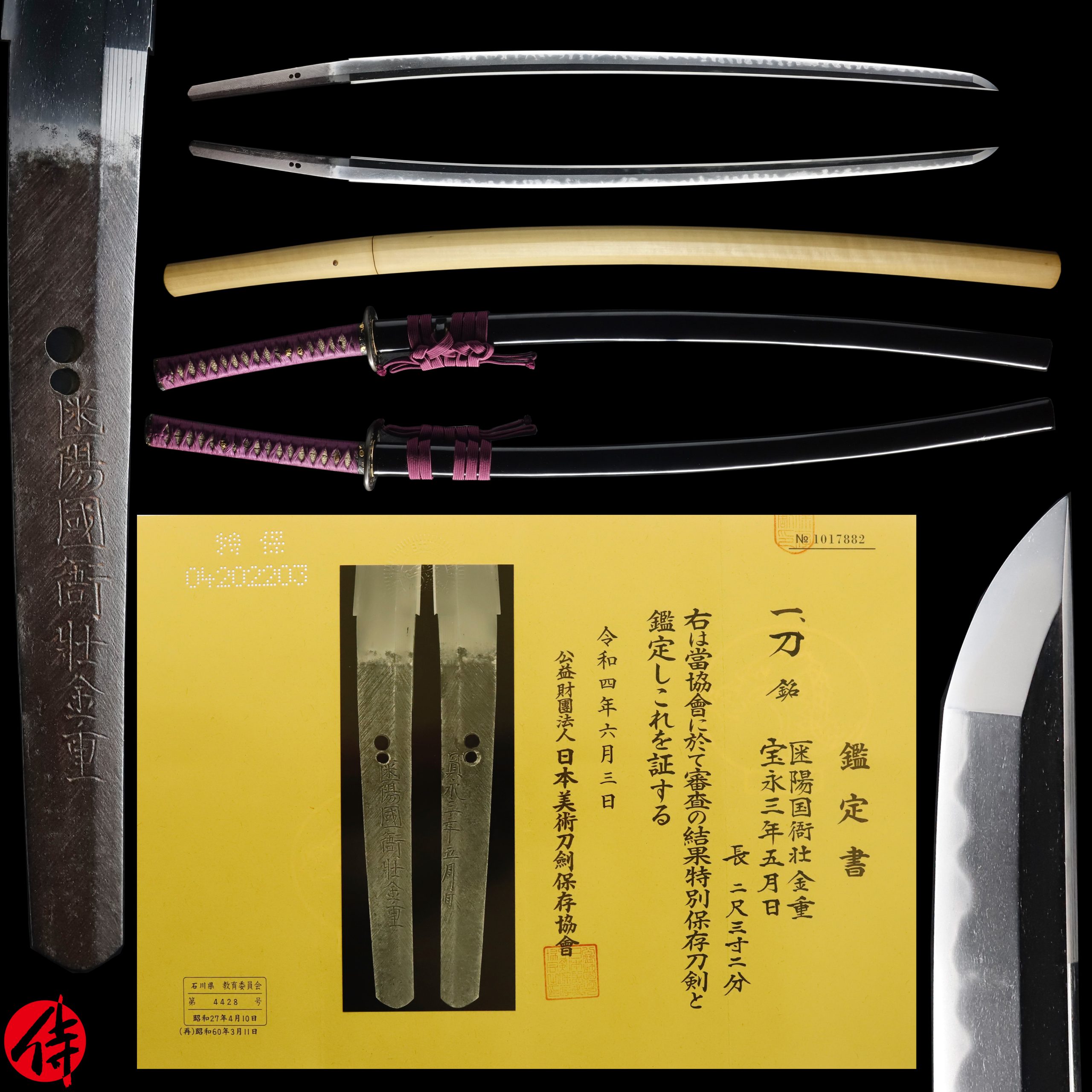
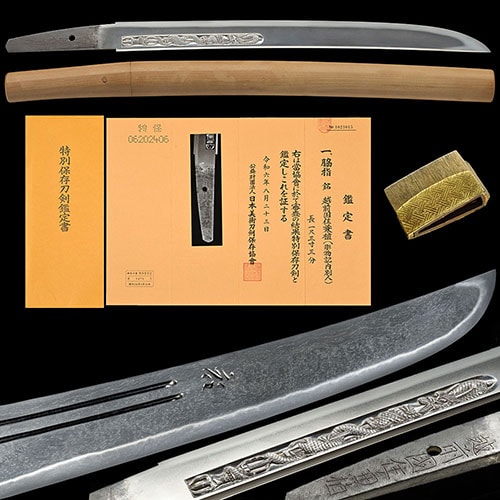
Antique Japanese Sword Katana Signed by the third-gen Kaneshige with Tokubetsu Hozon Certificate 【Description】 This blade was signed by Banyo Koku Eiso Kaneshige (播陽國衛庄金重) in May, the third year of the Ho-Ei era ( 1706 : Mid Edo Period). Banyo Koku is another name for Harima domain located in today’s Hyogo prefecture. The maker’s name Kaneshige lasted a few generations, and based on the year inscribed on the tang, it is believed that it was signed by the third-gen, who was active during the Enpo~Ho-Ei era (1673-1711). He also signed as Kinjumaru (金重丸) and Harima Ju Kaneshige (播磨住金重). There was also a record of him forging blades in Edo city (Today’s Tokyo). It is said that the first-gen Kaneshige was originally from Mino province (Today’s Gifu prefecture) and moved to Harima domain, and became a Hanko, a swordsmith exclusively serving one domain or clan. The head of this domain back then was Honda Tadakuni, a grandson of Tokugawa Yorifusa. The superb craftsmanship the first-gen mastered was passed down to the late generations, including the third-gen. This blade has a very distinctive Hamon (tempering line) called Kawazuko-Choji Midare (蛙子丁子乱れ). Choji Midare is a type of Hamon consisting of Choji (clove) shapes, but the overall line of the Hamon is irregular and has no definable form. Kawazuko means tadpoles. This particular Hamon was named after the fact that it resembles the shape of a tadpole. It is appraised as a Tokubetsu Hozon Token (特別保存刀剣) issued by NBTHK(Nihon Bijutsu Touken Hozon Kyokai:日本美術刀剣保存協会). This authentication paper was only given to authentic Japanese swords, especially well preserved and high quality with artistic value. 【 Blade】 Cutting Edge Length(Nagasa) : 70.3 cm (27.7 inches) Curvature(Sori) : 1.5 cm (0.59 inches) Hamon : The crystalline structure which forms along the cutting edge of a blade as a result of the hardening process Jimon(Jihada) : visible steel surface pattern created by folding and hammering during forging process Nakago : Nakago is the tang of the Japanese sword. Japanese swordsmiths left the black rust on the tang because it prevents red rust while the tang is in its handle. And the discoloration of the tang was created over time, and it is a great indicator for a Japanese sword specialist to estimate when the sword was forged. Koshirae: Koshirae is the mounting of the Japanese sword. There are several parts that consist of Koshirae such as Saya(Scabbard), Tsuka(Handle), Tsuba(Handguard). Fuchi-Kashira : A pair of matching sword fittings that cover the upper and bottom parts of its sword hilt. Its surface is decorated with the Nanako-Ji (魚子地) technique. It makes minor protrusions on the surface by hitting a specific chisel. In this Fuchi Kashira, each protrusion is beautifully arranged and decorates this work. Protrusions are slightly worn out; it could be considered proof that it has been used for a long time. About the design, the Kiku (菊, chrysanthemum) flowers are mainly designed. And the gold paint is applied to these petals and some parts of other motifs. A long time ago, the chrysanthemum was used as a medicine for obtaining a long life on the continent, and it was brought to Japan with this thought in the Nara period (648-781). Chrysanthemum symbolizes fall, and people have greatly appreciated it since ancient times. As its petals form radially, the chrysanthemum has been likened to the sun. That is why this flower pattern is treated as the symbol of perpetual youth and longevity or good health. You could see an engraved inscription on the side of the Fuchi part. The right side line could be read as 正阿弥 (Shoami). The first letter of the left line is probably 藤 (pronounced as Fuji or Tou), but the second character cannot see clearly. The Shoami is the school’s name. This school originated in Kyoto prefecture, and it is said that many artisans were calling themselves this sect in various regions from the Muromachi period to the Edo period. It is not easy to generalize all of th

Mid Edo Antique Katana Signed by the third-gen Kaneshige for sale | Samurai Museum Shop E-mail FB Messenger Skip to content Menu Close Samurai Museum Shop Products Antique Japanese Sword Katana Signed by the third-gen Kaneshige NBTHK Tokubetsu Hozon Certificate
売切れ
Tokuho売切れ

Mid Edo Antique Katana Signed by the third-gen Kaneshige for sale | Samurai Museum Shop E-mail FB Messenger Skip to content Menu Close Samurai Museum Shop Products Antique Japanese Sword Katana Signed by the third-gen Kaneshige NBTHK Tokubetsu Hozon Certificate

売却済

世界81社の刀剣商を横断追跡 · 価格履歴 · 売却アーカイブ

仕様

長さ

70.3 cm

反り

1.5 cm

作者について

Edo Kaneshige兼重

1 重要文化財20 重要刀剣

兼重の名で現存する最も早い年紀の作は、寛永二年紀の和泉守藤原兼重による薙刀である。説明書はこの和泉守を、初代康継・繁慶についであらわれた江戸鍛冶とする。伝に越前の出で、もと矢ノ根鍛冶であったが、のち江戸に出て刀鍛冶に転じたといい、「古今鍛冶備考」にもそうあるが、明らかではない。名はさらに二人目の刀工、上総守とも銘した上総介藤原兼重を擁し、初代の子または弟子で、長曽祢虎徹と同時代とされる。両者は長く同人とされ、旧説はその受領銘の変更を遠慮によって説いた。藤堂和泉守に抱えられ、主に和泉守を譲って自らは上総介に改めたというのである。しかし説明書は今これを退ける。在銘・年齢入りの作から、上総介は寛永三年生まれと知れ、和泉守には既に寛永の年紀があって、両者は別人なのである。この一系を一つに結ぶのは、江戸の試し切りの名手のうちでの地位と、初代が虎徹の師であったという根強い伝えである。 この一系が最もよく見分けられる手は、互の目の連れた数珠刃であり、二代がこれを完成の域に高めた。よくつんでやや肌立ち、地沸が微塵に厚くつき地景の入る小板目に、身幅尋常・反り浅く中鋒の詰まる寛文新刀の姿に、刃文は直刃調を基に互の目が連れて、ついには数珠刃となる。説明書はその手の仕組みをはっきりと取り出す。すなわち互の目を一つ焼くと次は二つ焼くというふうに、一つ二つと繰り返して焼く一定のリズムであり、これをこの工の大きな見どころ、すなわち観る者がまず読み取る特色とする。足太く入り、匂深く沸厚くつき、金筋・砂流しが長くさかんに刃中を走り、匂口は明るい。その出来は虎徹に極めて近く、説明書はある一刀について、「殆んど馬徹に見紛う程の出来」と評する。 その刃を支える地鉄は、江戸の名手のよくつんだ小板目で、処々杢・流れ肌を交えて肌立ちごころとなり、地沸を微塵に厚くつけ地景がよく入る。開いた肌ではなく抑制された都の鉄であって、二代の大ぶりの刀ではわずかな肌立ちが地を破らぬまま生かす。帽子は直ぐに小丸、先は掃きかけ、時にやや深く返り、最も乱れる作では先がやや乱れ込んでから返る。茎は生ぶ、筋違の鑢目には既に装飾的な気味があって、説明書はこれを後世の化粧鑢の原形とみる。長銘は独特の隷書体で切られ、晩年には鏨が細く銘字がやや小振りで自然になる。 説明書は初代の作域を二様に描き、その分け方は作の読み方を律するゆえに留め置く価値がある。一は、のたれを基調とした互の目乱れで、元に焼出しを見せ、浅いのたれに互の目・葉を交え、足よく入り、匂口深く明るく、細かに砂流しかかる。二は、直刃を基とし、広く極めて浅くのたれをおびて、匂深く沸厚く、刃中に沸筋を伏せ、匂口の一段と冴えるものである。この後者を説明書は刃中のよく働く濡れごころの直刃と評し、重ね厚く平肉の豊かな明暦三年の一刀については、直刃ながら焼刃の広い帯に覇気が漲るとして、「直刃といえども迫力を感じさせる」とする。二代はその連れた互の目を完成された数珠刃へと高めた。近年この二つの手を分ける研究が進み、初二代の代替りは慶安期に置かれ、二代は初め和泉守を冠してのち上総守・上総介を交互に用いたとみられ、子と伝える助九郎兼常による代銘も指摘されている。 この一系を分かつものは、他派の特色を述べるよりも、その自らの確かな見どころから語るのがよい。その見どころは、一つ二つと繰り返す数珠刃であり、すなわち「互の目を一つ焼くと次は二つ焼くというふうに、一つ二つと繰り返して焼く」手を、匂深く匂口の明るい静かな直刃調の上に運び、金筋・砂流しを長く走らせる。説明書は虎徹との関係を両端から枠づける。初代を、伝にいう虎徹の師とし、その作風は全く虎徹のようで、地刃ともに匂深く冴える、「全く虎徹のように地刃の出来が匂深く冴えている」とする。二代を数珠刃そのものの源に置き、その万治四年の截断銘脇指に完全な数珠刃が虎徹に先立って現れるとして、その手が後の虎徹の数珠刃の展開に大きな影響を及ぼしたとする。同じ説明書は、同じ江戸の一角に活躍した法城寺一派との類似を説き、兼重はその一派と截断銘の合作刀を残しており、数珠刃は一個の発明というよりは、浅草界隈に働いた刀工たちに共有された一つの潮流として読める。 兼重は藤代の上作に位し、江戸新刀の有力な名の一つで、その名声は多くの作に伴う試し切りと切り離せない。山野加右衛門尉永久の金象嵌截断銘がその作に繰り返し現れ、浅草での三ツ胴・二ツ胴の截断を記し、一刀は兼重の系と法城寺一派を併記して三度の截断を負う。その名で記録に立つのは、重要刀剣の二十口で、そのほとんどが鎬造の刀・脇指、短刀は稀に見るのみであり、加えて重要文化財一口、すなわち日光・二荒山神社に蔵される在銘の大太刀である。これはその指定によって、市場に出るものではなく護られた文化財である。残る重要刀剣の諸刀こそ、私の蔵家が現実に出会い得る領域で、多くは旧家に久しく蔵され、時に市に現れる。山野の名高い截断銘をもつ在銘の兼重は最も求められる一例であり、確かな記録をもつ一刀を、江戸開府期の最も見分けやすい刃文の一つに結ぶものである。
刀剣商

サムライミュージアム

samuraimuseum.jp

売切れ