売切れ
Hozon売切れ
Late Muromachi Antique Katana signed by Yasumichi for sale | Samurai Museum Shop
売却済
世界81社の刀剣商を横断追跡 · 価格履歴 · 売却アーカイブ
仕様
長さ
61.5 cm
反り
2 cm
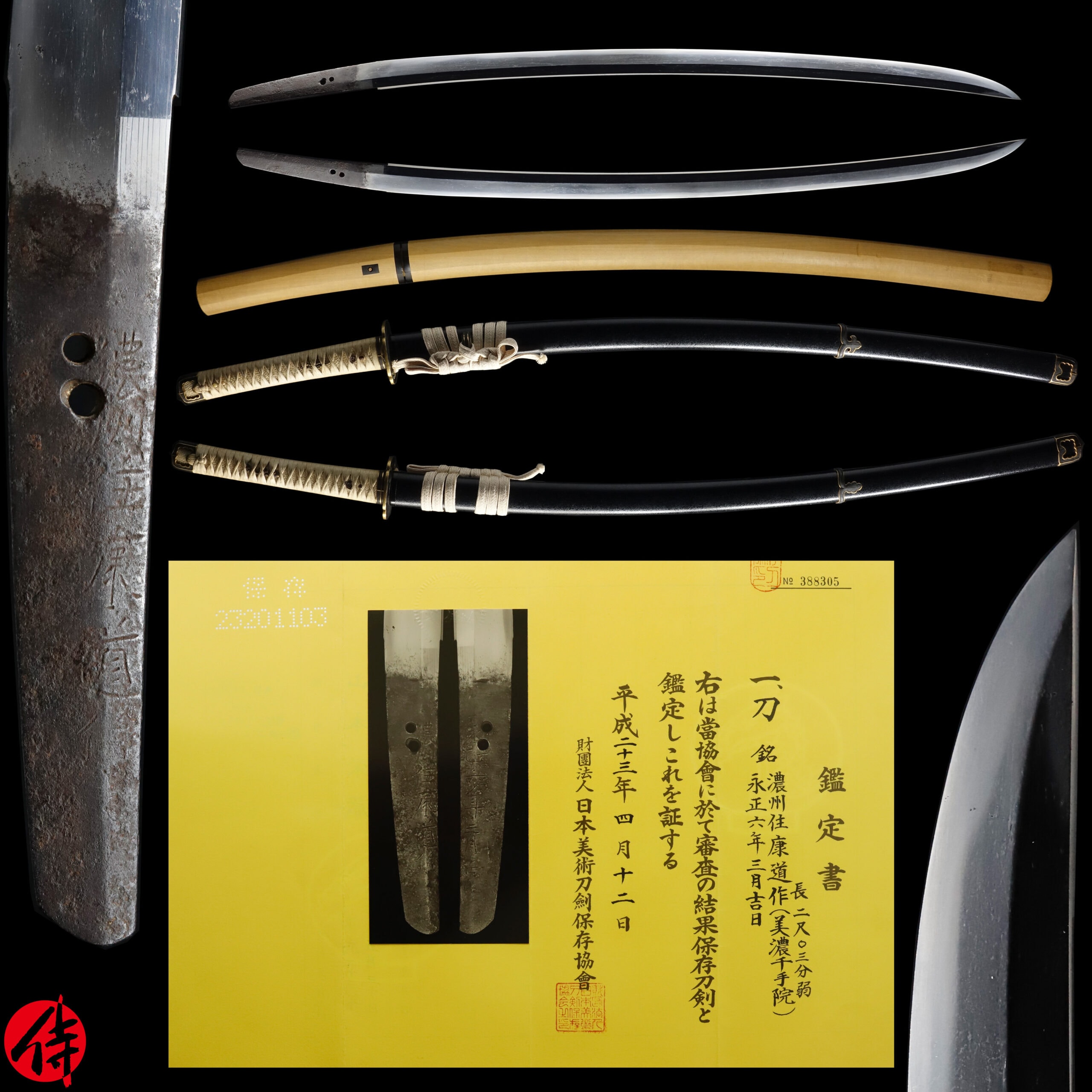
Antique Japanese Sword Katana Signed by Yasumichi with Hozon Certificate 【Description】 Summary This blade was signed by Noshu Jyu Yasumichi (濃州住康道) in March, the 6th year of the Eicho era (1509: Late Muromachi Period). He belonged to Mino Senjuin (美濃千手院), which is one of the most famous schools during the late Nanbokucho-late Muromachi (Mid 14th-Early 16th century) period in Mino province (today’s Gifu prefecture). Noshu is another name for Mino province. According to available records, the maker’s Yasumichi lasted two generations. And this blade was created by the second-gen because he was especially active during Eisho era ( 1504-1521 : Late Muromachi period). When this blade was created, Japan had a warring state period called Sengoku Jidai. The school was located in Akasaka village near Sekigahara, an essential hub for transportation and military bases from ancient times. It is said that the Mino Senjuin school was founded by Sensui (泉水), the son of Yamato Koku Senjuin Shigehiro. Yamato region was one of the most famous sites for sword-forging during the late Heian-Kamakura period. Sensui moved from Yamato (today’s Nara prefecture) to Akasaka village in Mino province during the Nanbokucho period. Senjuin School in Yamato region There was a temple called Senjudo in Nara prefecture where Senju Kannon (Thousand arms) Budha statue was worshiped. And a group of swordsmiths who lived there was known as Senjuin (千手院). They belonged to Todaji temple. Senjuin School was founded by Yukinobu, who was the son of Yoshiyuki. Yukinonobu was originally a servant for Senjuin temple, a branch of Todaiji temple during the late Heian period (1086-1107), and eventually became an Okakae Kaji for the temple. You can see interesting Kissaki (tip of the blade) called Shobu Zukuri (菖蒲造り). There is no Yokote on this blade. Yokote is the borderline between the tip and cutting edge. We are confident you will appreciate the elegant look of this blade. Handachi style sword mounting also enhances its aesthetic beauty. This blade is appraised as a Hozon Token(保存刀剣) issued by NBTHK(Nihon Bijutsu Touken Hozon Kyokai:日本美術刀剣保存協会). This authentication paper was only given to authentic Japanese swords, well preserved with artistic value. *Please keep in mind that there are a few visible Kitae Kizu on this blade. If you like to make sure its condition, please feel free to contact us. 【 Blade】 Cutting Edge Length(Nagasa) : 61.5 cm( 24.2 inches) Curvature(Sori) : 2.0 cm( 0.78 inches) Hamon : The crystalline structure which forms along the cutting edge of a blade as a result of the hardening process Jimon(Jihada) : visible steel surface pattern created by folding and hammering during forging process Nakago : Nakago is the tang of the Japanese sword. Japanese swordsmiths left the black rust on the tang because it prevents red rust while the tang is in its handle. And the discoloration of the tang was created over time, and it is a great indicator for a Japanese sword specialist to estimate when the sword was forged. Koshirae: Koshirae is the mounting of the Japanese sword. There are several parts that consist of Koshirae such as Saya(Scabbard), Tsuka(Handle), Tsuba(Handguard). Fuchi-Kashira : A pair of matching sword fittings that cover the upper and bottom parts of its sword hilt. The surface of this Fuchi Kashira is decorated with the Nanako-Ji (魚子地) technique. By hitting with the Nanako-Ji Tagane (魚子地鏨, a chisel for this technique), delicate fish egg-shaped protrusions are made on surfaces. This Fuchi Kashira is partly gold-colored, and the rest of its surface is entirely covered with this technique. Copper’s black color and gold paint make an elegant color contrast to this work. Tsuka and Menuki : Tsuka is the handle of the Japanese sword and Menuki is its decoration. It is challenging to judge the motif of this Menuki. We could see that gold paint was initially applied to this Menuki; however, this coloring has already faded due to aging. Also, we imagine the
 NihontoWatchBETA
売却済
世界81社の刀剣商を横断追跡 · 価格履歴 · 売却アーカイブ
61.5 cm
2 cm
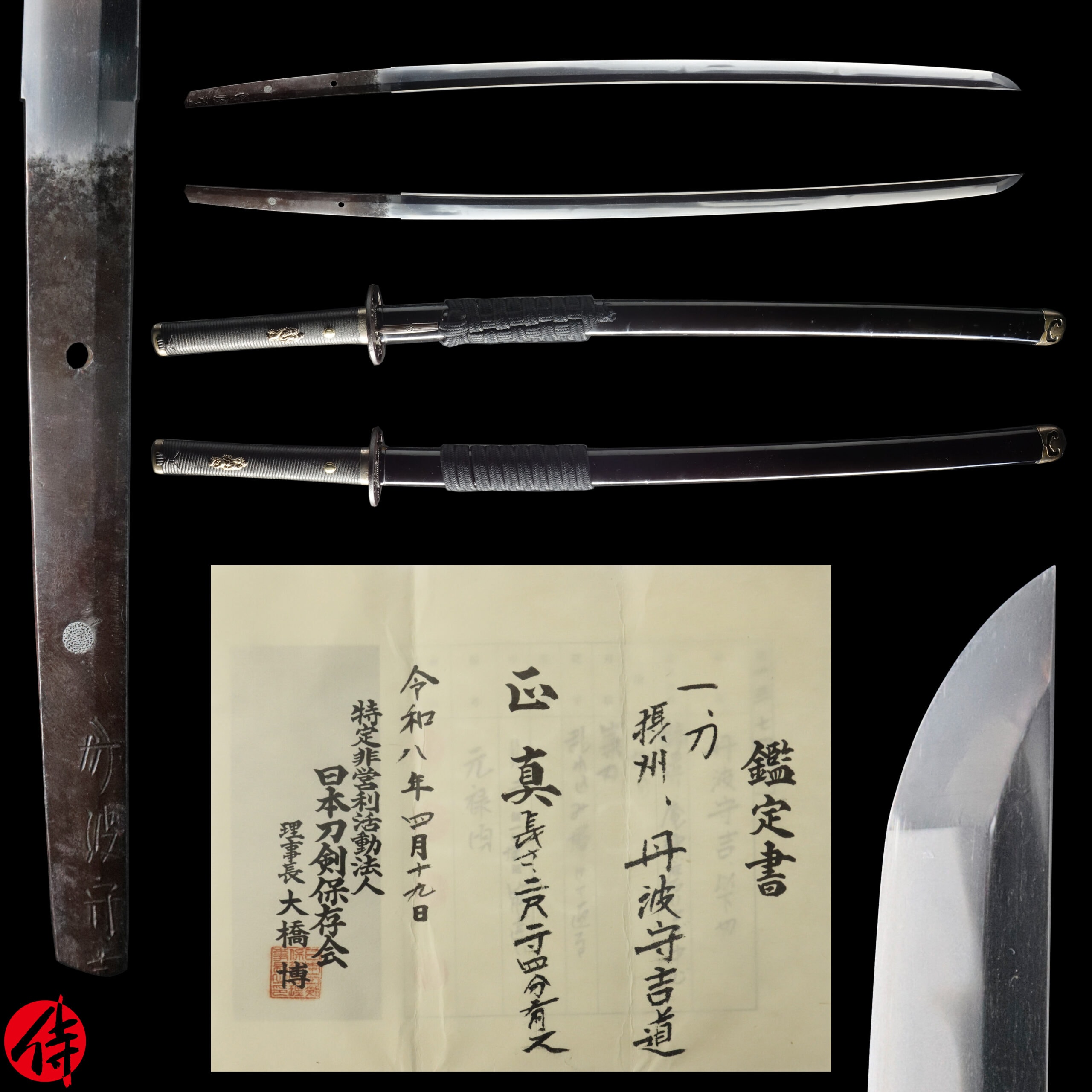
Mid Edo Katana signed by Tanba no Kami Yoshimichi for sale| Samurai Museum Shop E-mail FB Messenger Skip to content Menu Close Samurai Museum Shop Products Antique Japanese Sword Katana signed by Tanba no Kami Yoshimichi NTHK Kanteisho Certificate Updated: 22 Jun 2026 Antique Japanese Sword Katana signed by Tanba no Kami Yoshimichi NTHK Kanteisho Certificate
$7,441
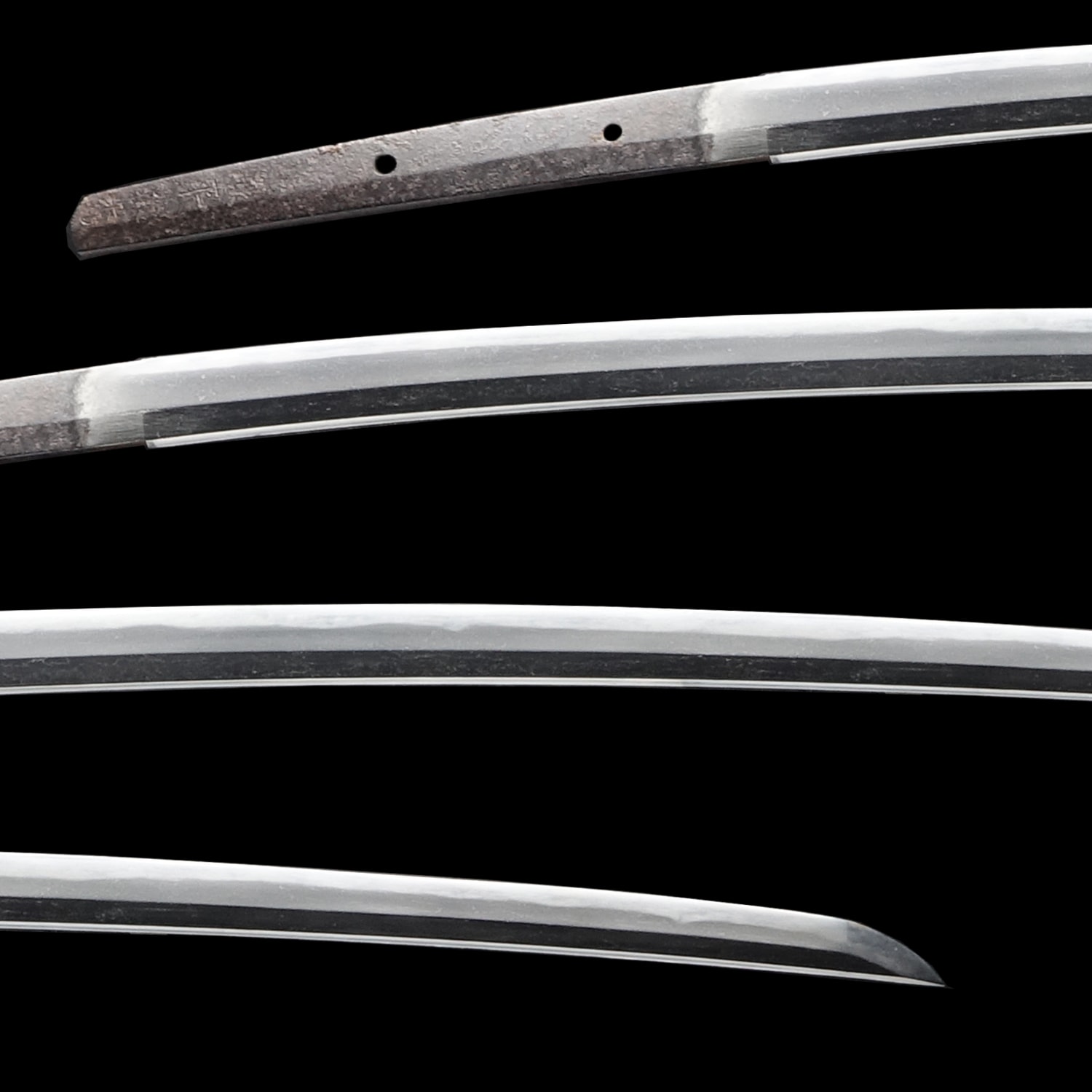
Muromachi Katana signed by Naminohira Yasuhide for sale
$7,751
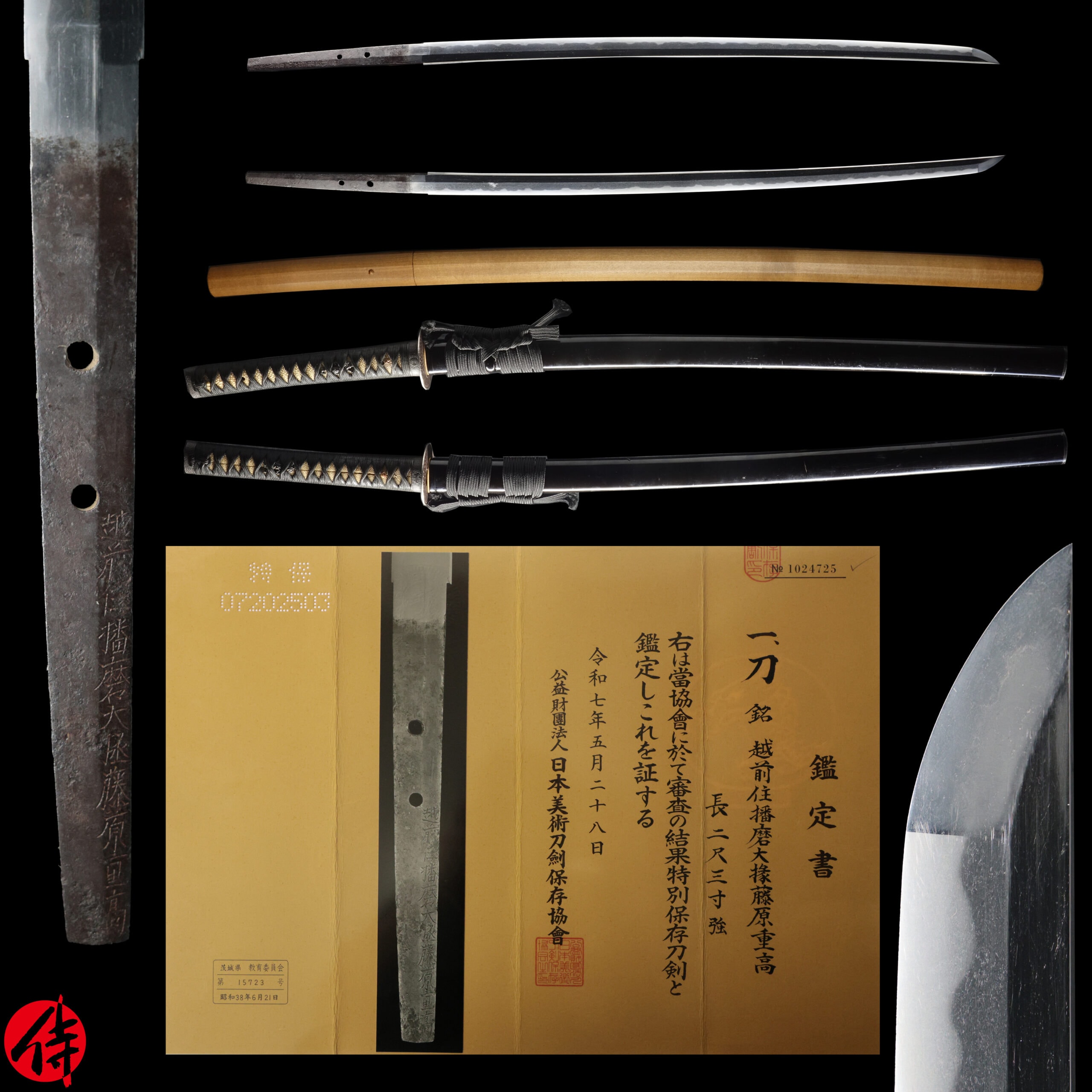
Early Edo Nihonto signed by Shigetaka for sale
$7,131
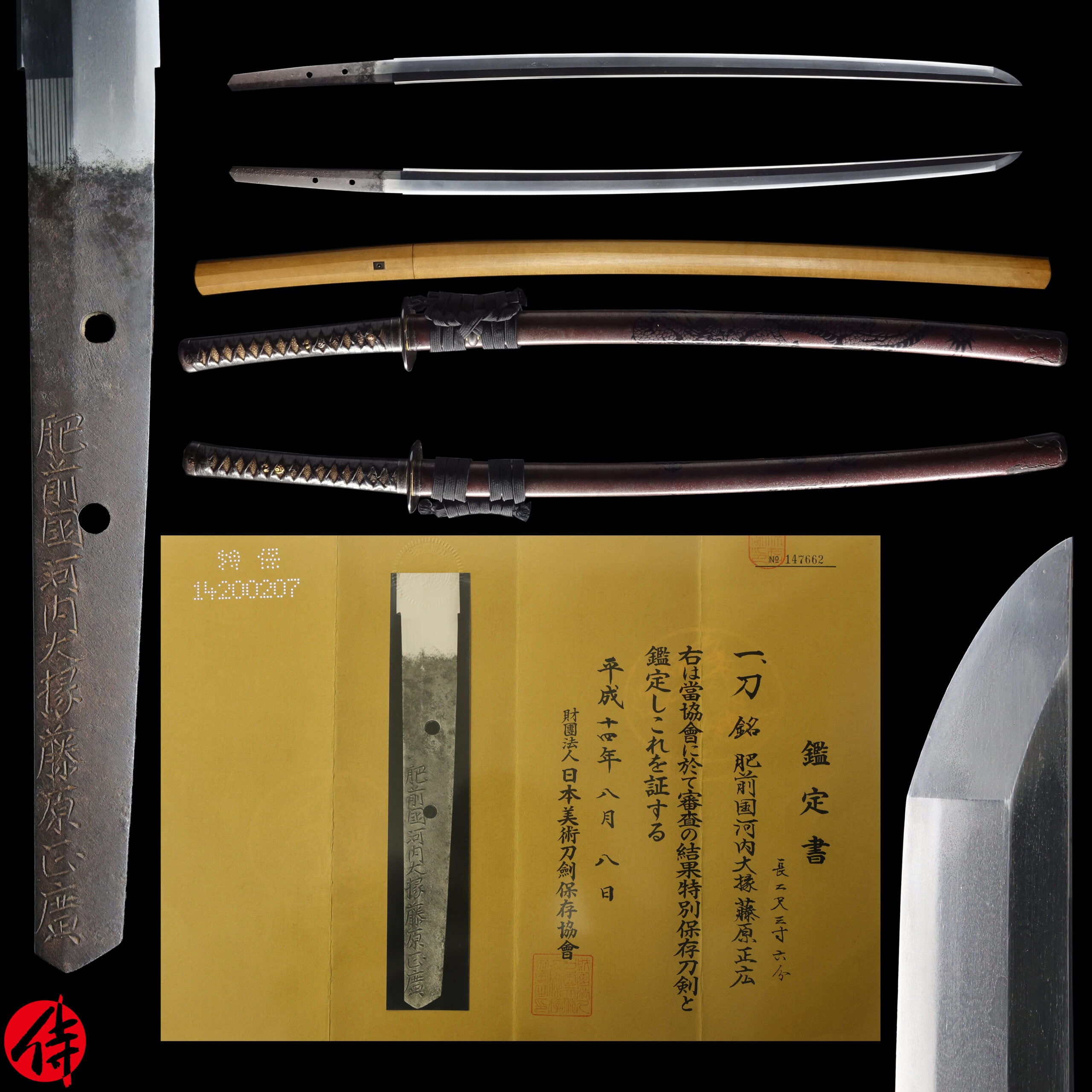
Antique Japanese Sword Katana Signed by Masahiro NBTHK Tokubetsu Hozon Certificate
$7,751
Antique Japanese Sword Katana Signed by Yasumichi with Hozon Certificate 【Description】 Summary This blade was signed by Noshu Jyu Yasumichi (濃州住康道) in March, the 6th year of the Eicho era (1509: Late Muromachi Period). He belonged to Mino Senjuin (美濃千手院), which is one of the most famous schools during the late Nanbokucho-late Muromachi (Mid 14th-Early 16th century) period in Mino province (today’s Gifu prefecture). Noshu is another name for Mino province. According to available records, the maker’s Yasumichi lasted two generations. And this blade was created by the second-gen because he was especially active during Eisho era ( 1504-1521 : Late Muromachi period). When this blade was created, Japan had a warring state period called Sengoku Jidai. The school was located in Akasaka village near Sekigahara, an essential hub for transportation and military bases from ancient times. It is said that the Mino Senjuin school was founded by Sensui (泉水), the son of Yamato Koku Senjuin Shigehiro. Yamato region was one of the most famous sites for sword-forging during the late Heian-Kamakura period. Sensui moved from Yamato (today’s Nara prefecture) to Akasaka village in Mino province during the Nanbokucho period. Senjuin School in Yamato region There was a temple called Senjudo in Nara prefecture where Senju Kannon (Thousand arms) Budha statue was worshiped. And a group of swordsmiths who lived there was known as Senjuin (千手院). They belonged to Todaji temple. Senjuin School was founded by Yukinobu, who was the son of Yoshiyuki. Yukinonobu was originally a servant for Senjuin temple, a branch of Todaiji temple during the late Heian period (1086-1107), and eventually became an Okakae Kaji for the temple. You can see interesting Kissaki (tip of the blade) called Shobu Zukuri (菖蒲造り). There is no Yokote on this blade. Yokote is the borderline between the tip and cutting edge. We are confident you will appreciate the elegant look of this blade. Handachi style sword mounting also enhances its aesthetic beauty. This blade is appraised as a Hozon Token(保存刀剣) issued by NBTHK(Nihon Bijutsu Touken Hozon Kyokai:日本美術刀剣保存協会). This authentication paper was only given to authentic Japanese swords, well preserved with artistic value. *Please keep in mind that there are a few visible Kitae Kizu on this blade. If you like to make sure its condition, please feel free to contact us. 【 Blade】 Cutting Edge Length(Nagasa) : 61.5 cm( 24.2 inches) Curvature(Sori) : 2.0 cm( 0.78 inches) Hamon : The crystalline structure which forms along the cutting edge of a blade as a result of the hardening process Jimon(Jihada) : visible steel surface pattern created by folding and hammering during forging process Nakago : Nakago is the tang of the Japanese sword. Japanese swordsmiths left the black rust on the tang because it prevents red rust while the tang is in its handle. And the discoloration of the tang was created over time, and it is a great indicator for a Japanese sword specialist to estimate when the sword was forged. Koshirae: Koshirae is the mounting of the Japanese sword. There are several parts that consist of Koshirae such as Saya(Scabbard), Tsuka(Handle), Tsuba(Handguard). Fuchi-Kashira : A pair of matching sword fittings that cover the upper and bottom parts of its sword hilt. The surface of this Fuchi Kashira is decorated with the Nanako-Ji (魚子地) technique. By hitting with the Nanako-Ji Tagane (魚子地鏨, a chisel for this technique), delicate fish egg-shaped protrusions are made on surfaces. This Fuchi Kashira is partly gold-colored, and the rest of its surface is entirely covered with this technique. Copper’s black color and gold paint make an elegant color contrast to this work. Tsuka and Menuki : Tsuka is the handle of the Japanese sword and Menuki is its decoration. It is challenging to judge the motif of this Menuki. We could see that gold paint was initially applied to this Menuki; however, this coloring has already faded due to aging. Also, we imagine the
NihontoWatchBETA売却済
世界81社の刀剣商を横断追跡 · 価格履歴 · 売却アーカイブ
61.5 cm
2 cm
Mid Edo Katana signed by Tanba no Kami Yoshimichi for sale| Samurai Museum Shop E-mail FB Messenger Skip to content Menu Close Samurai Museum Shop Products Antique Japanese Sword Katana signed by Tanba no Kami Yoshimichi NTHK Kanteisho Certificate Updated: 22 Jun 2026 Antique Japanese Sword Katana signed by Tanba no Kami Yoshimichi NTHK Kanteisho Certificate
$7,441
Muromachi Katana signed by Naminohira Yasuhide for sale
$7,751
Early Edo Nihonto signed by Shigetaka for sale
$7,131
Antique Japanese Sword Katana Signed by Masahiro NBTHK Tokubetsu Hozon Certificate
$7,751