説明

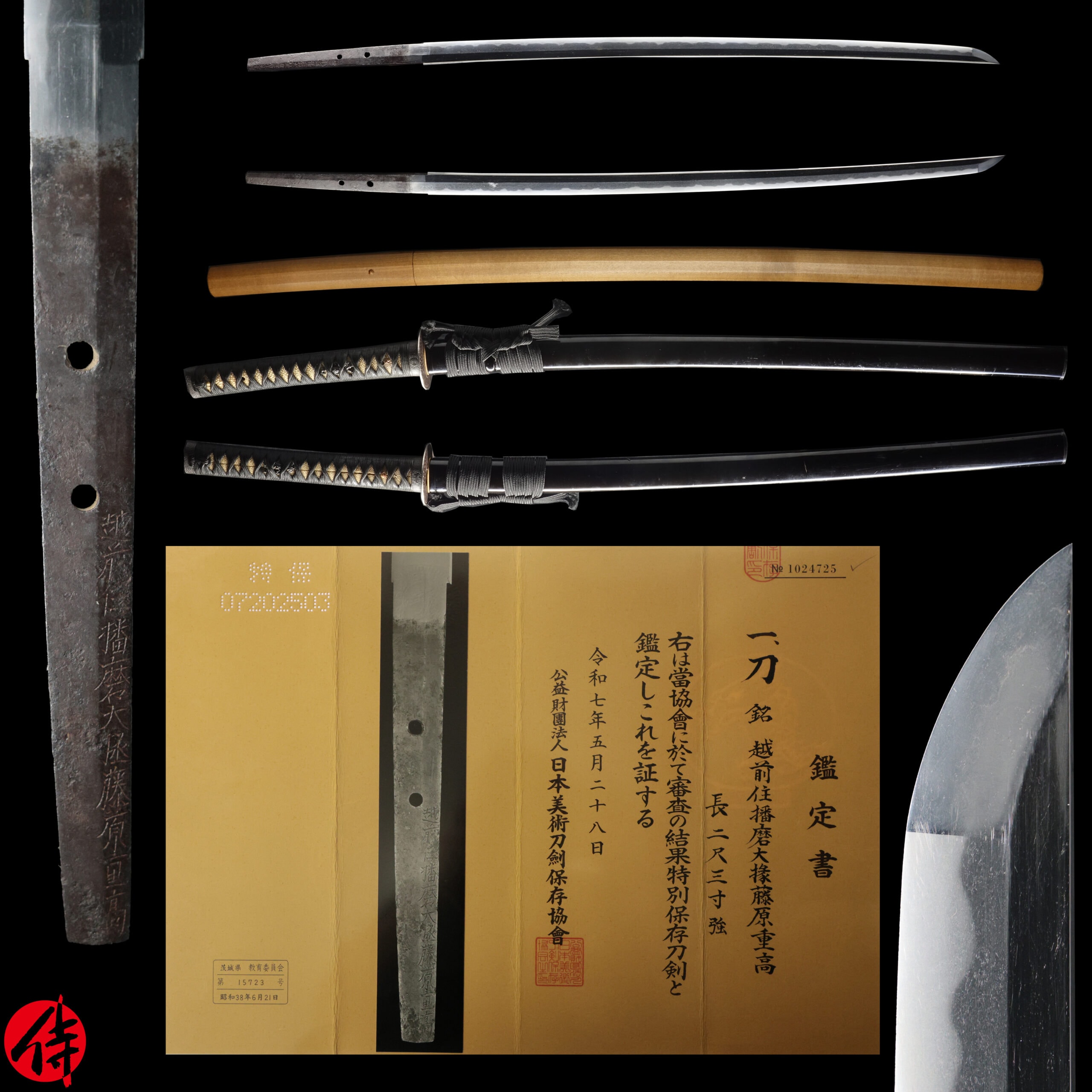
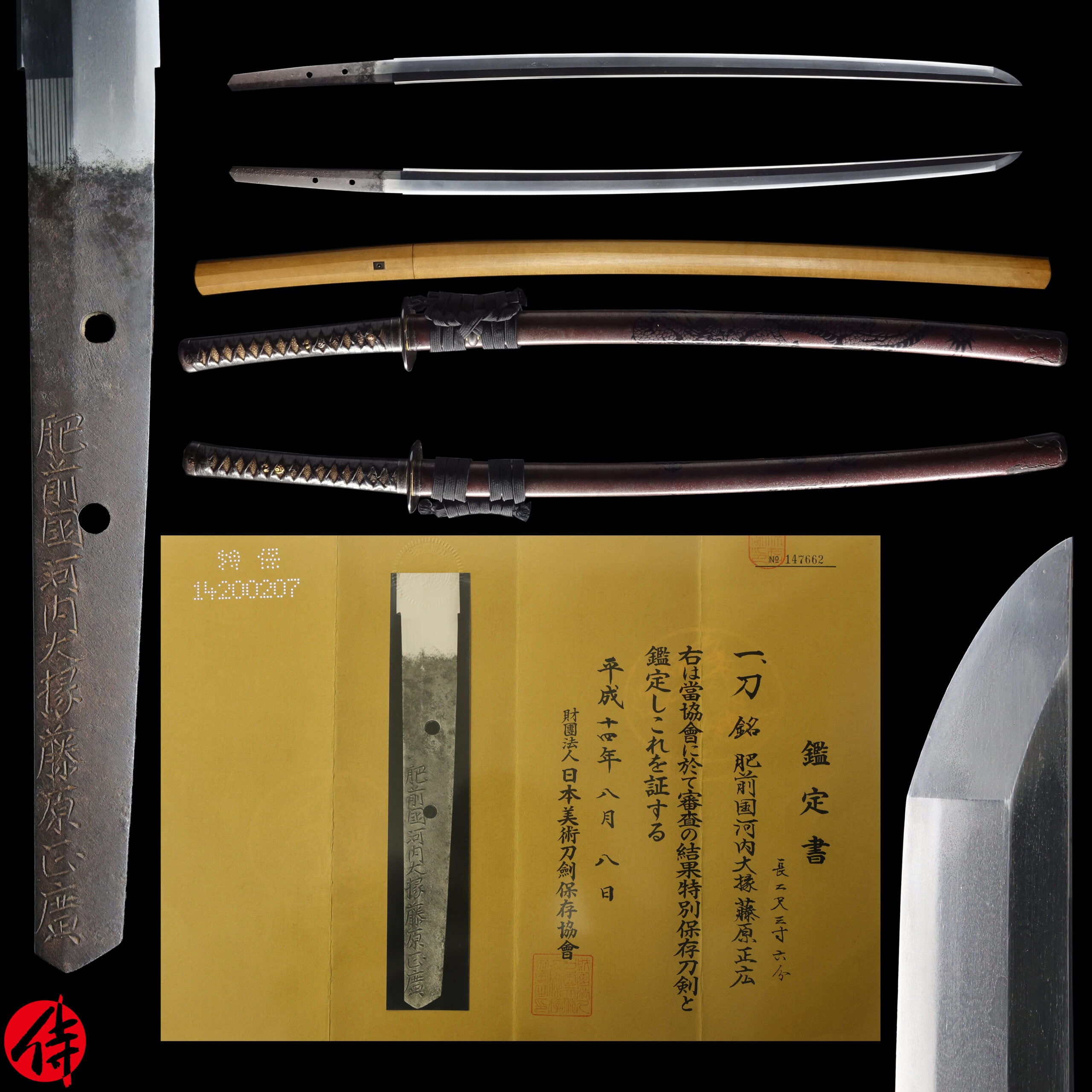
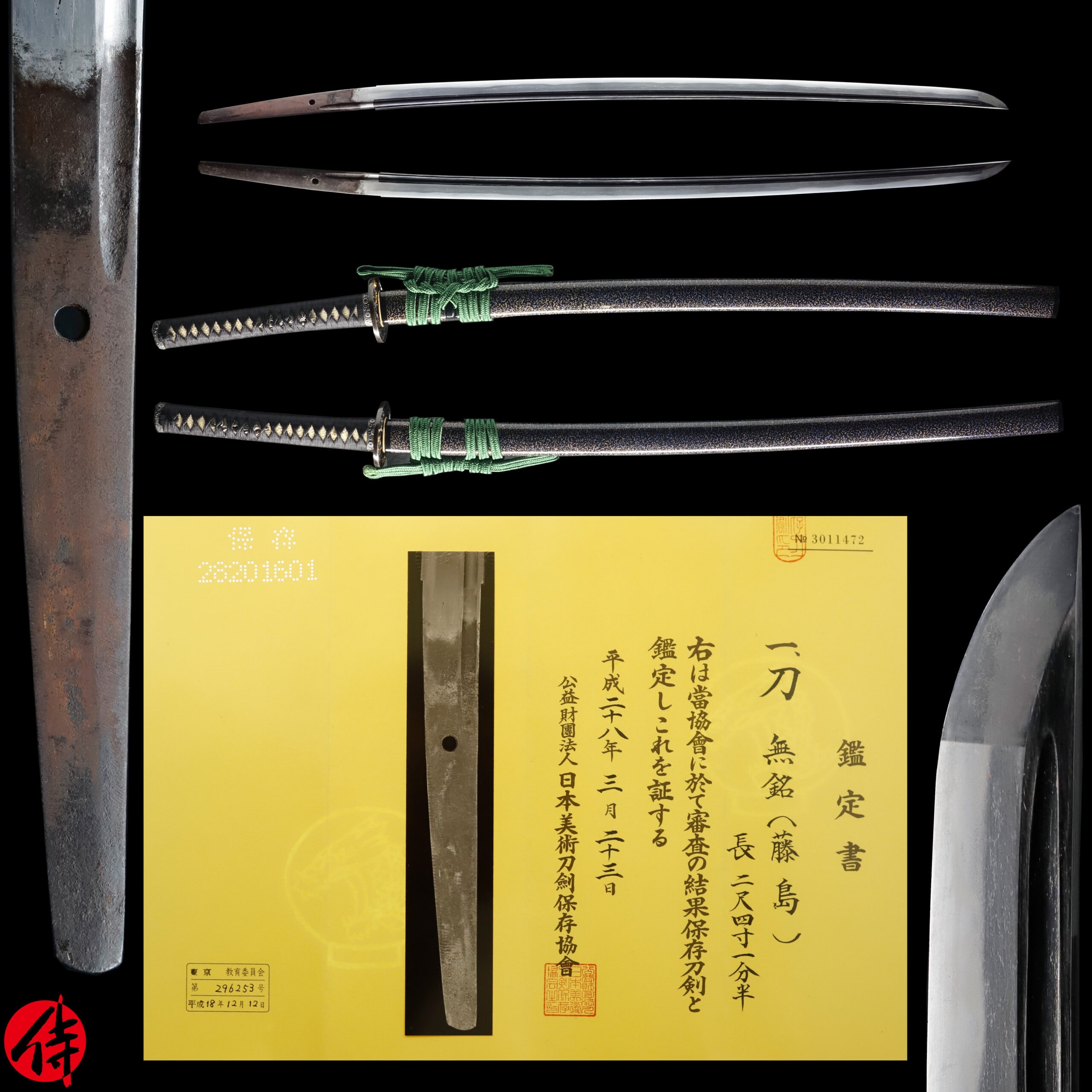
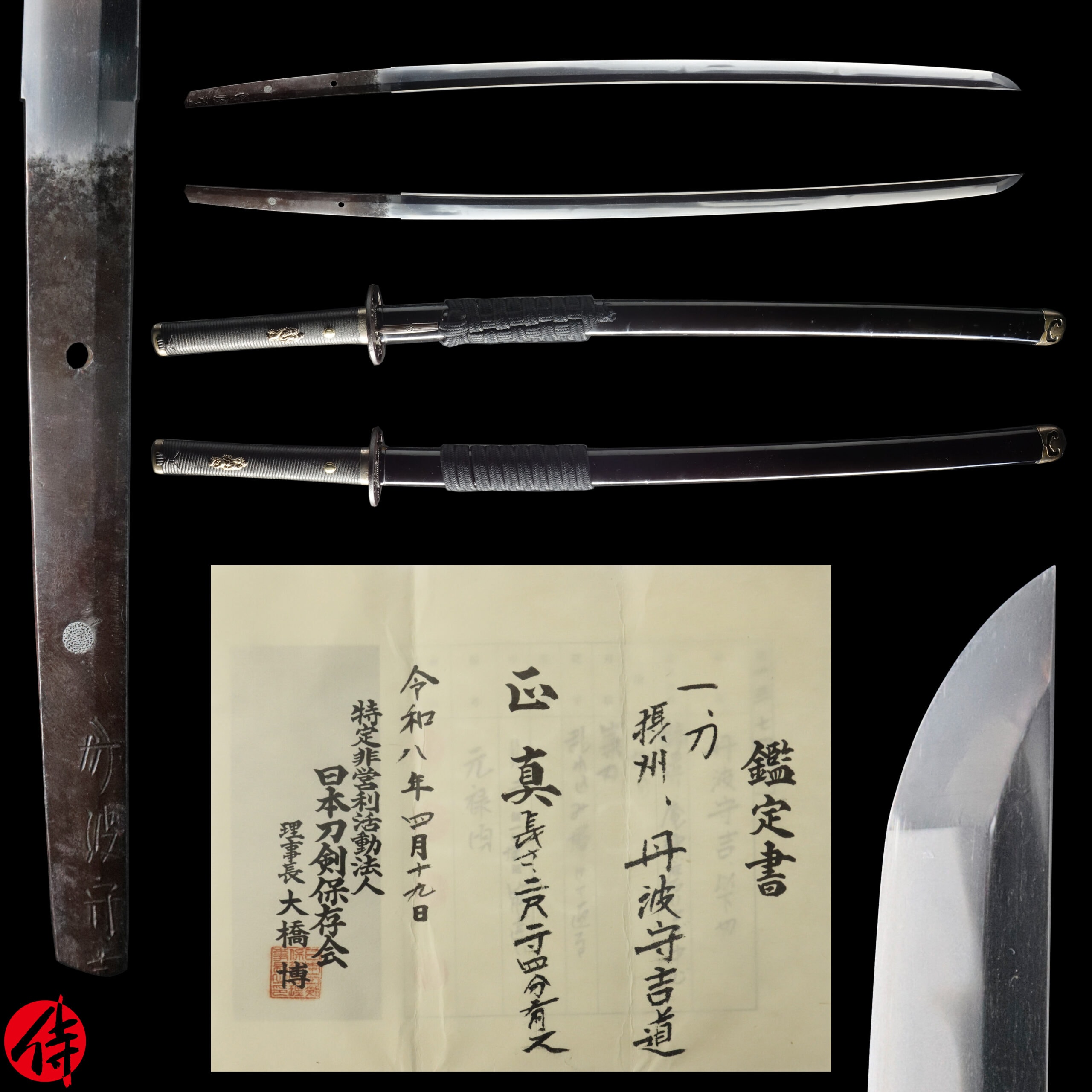
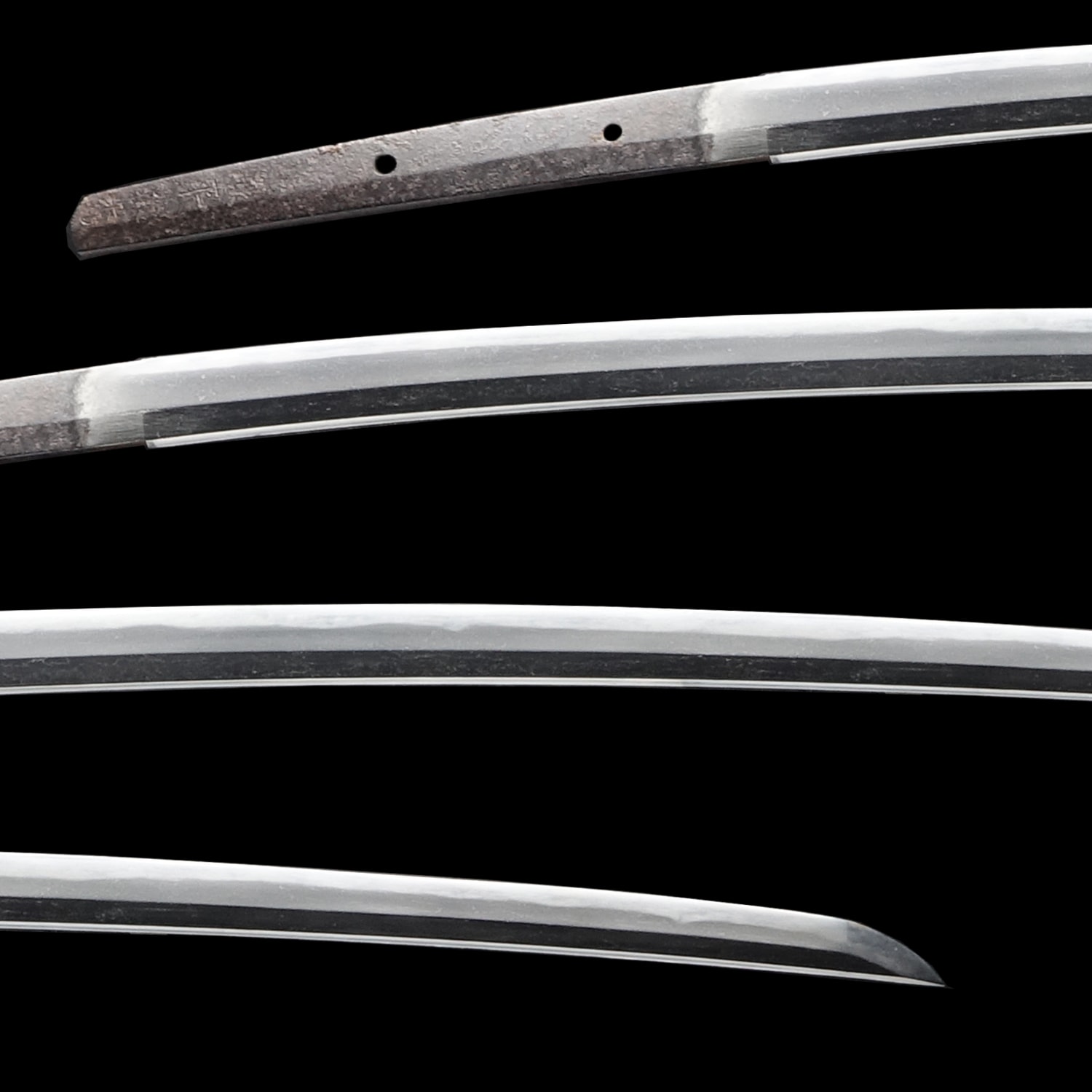
Antique Japanese Sword Katana attributed to Fujishima with NBTHK Hozon Certificate 【Description】 This blade is attributed to Fujishima (藤島), which is a prestigious school, especially flourishing during the Muromachi period (late 14th- late 16th century) in Kaga province (Today’s Ishikawa prefecture). The school was founded by the first-gen Fujishima Tomoshige during the early Nanbokucho period. This maker’s name lasted several generations, from the early Nanboku period to the end of the Edo period (Early 14th-Late 19th century). It is said that the first-gen Tomoshige was an apprentice of Rai Kunitoshi, one of the most famous swordsmiths in Yamashiro province (Today’s Kyoto) during the late Kamakura-early Nanbokucho period. The first-gen Tomoshige originally lived in Fushima village in Echizen province (today’s Fukui prefecture). And later on, he moved to Kaga domain and founded the school. When this blade was forged, there were many rivalries and wars between regional feudal lords to expand their land or gain political control. This time is called Sengoku Jidai. It has Hi (groove). It would be nice to own a Katana that is from this warring state period. The groove called HI (樋) adds a gorgeous appearance to the blade. It comes with a modern Koshirae because the previous owner used this for his Iaido practice. Considering that, this blade must have been also practical when this blade was originally made back in the Muromachi period. This blade is appraised as a Hozon Touken (保存刀剣) issued by NBTHK (Nihon Bijutsu Touken Hozon Kyokai: 日本美術刀剣保存協会). This authentication paper was only given to authentic Japanese swords, well preserved and high quality with artistic value. *Please keep in mind that there are a couple of Kitae Kizu on Hi (groove) of the blade. If you like to see the detailed condition, please feel free to contact us. 【Blade】 Cutting Edge Length (Nagasa) : 73.3 cm ( 28.8 inches) Curvature (Sori) : 1.2 cm (0.47 inches) Hamon : The crystalline structure which forms along the cutting edge of a blade as a result of the hardening process. Jimon (Jihada) : Visible steel surface pattern created by folding and hammering during forging process. Nakago : Nakago is the tang of the Japanese sword. Japanese swordsmiths left the black rust on the tang because it prevents red rust while the tang is in its handle. And the discoloration of the tang was created over time, and it is a great indicator for a Japanese sword specialist to estimate when the sword was forged. Koshirae : Koshirae is the mounting of the Japanese sword. There are several parts that consist of Koshirae such as Saya (Scabbard), Tsuka (Handle), Tsuba (Handguard). Fuchi-Kashira : A pair of matching sword fittings that cover the upper and bottom parts of its sword hilt. This Fuchi Kashira’s design is a combination of the Kiku (菊, chrysanthemum) and Karakusa (唐草, arabesque) patterns. These plants are both auspicious motifs. A long time ago, the chrysanthemum was used as a medicine for obtaining a long life in the continent, and it was brought to Japan with this thought in the Nara period (648-781). The chrysanthemum symbolizes fall, and people have greatly appreciated it since ancient times. The chrysanthemum has been likened to the sun as its petals form radially. That is why this flower pattern is treated as the symbol of perpetual youth and longevity or good health. The Karakusa pattern is a design in which the stems and leaves of vines are twined and make curves. Since ivy has a strong vitality and grows up without interruption, people regarded this design as a symbol of prosperity and longevity. Tsuka and Menuki : Tsuka is the handle of the Japanese sword and Menuki is its decoration. You would find the figure of a dragon through the gaps of the Tsukamaki thread. Initially, the dragon was an imaginary creature found in ancient foreign traditions or myths. Furthermore, it is regarded as a symbolic beast of auspicious signs. Its body is likened to nine animals: ant

Antique Japanese Sword Katana attributed to Fujishima NBTHK Hozon Certificate
売切れ
Hozon売切れ

Antique Japanese Sword Katana attributed to Fujishima NBTHK Hozon Certificate

売却済

世界81社の刀剣商を横断追跡 · 価格履歴 · 売却アーカイブ

仕様

長さ

73.3 cm

反り

1.2 cm

作者について

Fujishima藤島

4 重要刀剣

The Fujishima school was a group of swordsmiths based in Kaga Province. Documentary tradition transmits that they were disciples of Rai Kunitoshi, with Tomoshige regarded as the school's founder. Some sources alternatively place the lineage within the Sanekage line. While the school's activity is said to extend from the end of the Kamakura period well into the early modern era, the earliest firmly dated works bear *nengō* from the Ōei era, and the NBTHK has noted that no extant pieces can be confidently attributed to before the Nanbokuchō period. Fujishima works characteristically display a *jigane* with a dark, somewhat blackish tone, in which *ko-itame* mixed with *nagare-hada* produces a distinctly northern-provinces flavor. In *hamon*, the school shows considerable range: some blades present a fine *suguha* with *hotsure* and *hakikake* in the *bōshi*, evoking a Yamato-like sensibility, while others are tempered in *gunome-midare* incorporating *togariba*, *hako-gakatta* elements, and *yahazu-ba*, with well-formed *nie* and vigorous *sunagashi*. The latter mode, with its tendency toward connected undulations and prominent *ashi*, is recognized as especially representative of contemporaneous "Hokuriku-mono" -- the distinctive manner of the northern provinces. *Shirake-utsuri* may also appear. Designated works encompass *tachi*, *wakizashi*, and *naginata*, demonstrating the school's versatility across blade forms. The *naginata* in particular, with their *ubu-nakago* preserving full original tang proportions, provide important evidence for dating the group's activity. Pieces from the early Muromachi period onward exhibit elements that are at once Bizen-like and Mino-like, and it is this composite character -- drawing upon multiple traditions while maintaining a distinctive regional identity -- that defines the Fujishima group's particular scholarly interest.
刀剣商

サムライミュージアム

samuraimuseum.jp

売切れ