売切れ
Tokuho売切れ
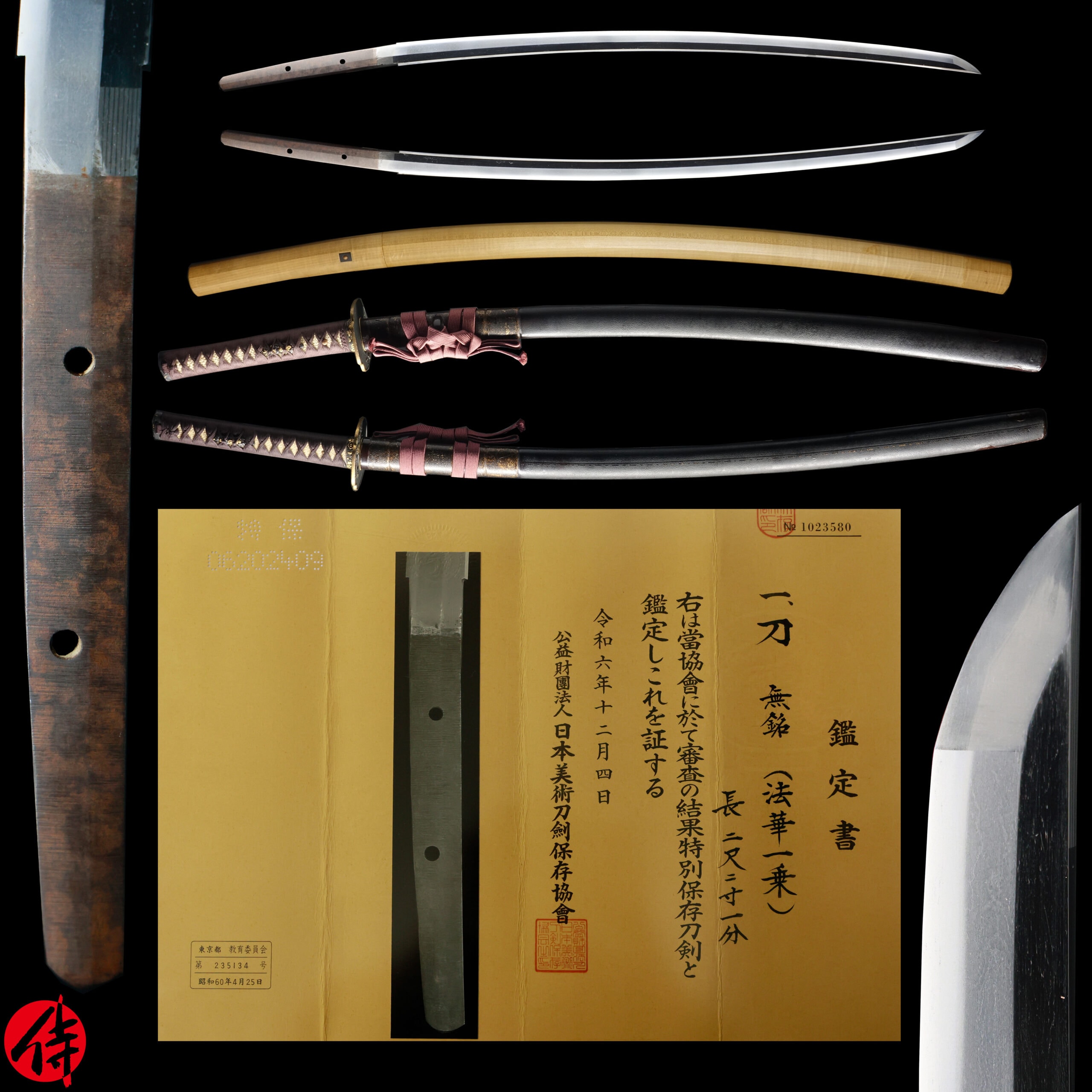
Antique Japanese Sword Katana Attributed to Hokke Ichijo NBTHK Tokubetsu Hozon Certificate
売却済
世界81社の刀剣商を横断追跡 · 価格履歴 · 売却アーカイブ
仕様
長さ
67 cm
反り
2.4 cm
Antique Japanese Sword Katana attributed to Hokke Ichijo with Tokubetsu Hozon Certificate 【Description】 Summary This blade is attributed to Hokke Ichijo(法華一乗) by the NBTHK, one of Japan’s most respected Japanese sword appraising organizations. Ichijo (一乗) is one of the most renowned swordsmiths of the Hokke school, a prestigious tradition that flourished during the late Kamakura to Nanbokucho period (late 13th–14th century). It is said that Ichijo was active during the early Muromachi period (O-Ei era: 1394-1428). The Hokke school was based in the Ashida area of Bingo Province, which corresponds to present-day Hiroshima Prefecture. It is said that those who lived in Ashida area were followers of the Nichiren sect, and Hokke swordsmiths often forged blades for the politically powerful Buddhist priests. They needed many weapons as there were many political rivalries between influential temples. They required strong weapons like swords to protect themselves. Hokke swordsmiths met their requests and made excellent quality blades. It is believed that the school was founded by Kokubunji Sukekuni (国分寺助国) in the late Kamakura period (Approx. 1329). Sukekuni was originally from Bizen province (today’s Okayama prefecture) and belonged to Bizen Ichimonji school, one of the most prestigious schools during the Kamakura period. Sukekuni was the father of Mihara Masaie (三原正家). Masaie was the founder of Mihara school, another prestigious school in the region. It is appraised as a Tokubetsu Hozon Token (特別保存刀剣) issued by NBTHK(Nihon Bijutsu Touken Hozon Kyokai:日本美術刀剣保存協会). This authentication paper was only given to authentic Japanese swords, especially well preserved and high quality with artistic value. *Please keep in mind that there is a couple of Kitae Kizu on this blade. If you like to see the detailed condition, please feel free to contact us. 【 Blade】 Cutting Edge Length(Nagasa) : 67.0 cm (26.3 inches) Curvature(Sori) : 2.4 cm (0.94 inches) Hamon : The crystalline structure which forms along the cutting edge of a blade as a result of the hardening process Jimon(Jihada) : visible steel surface pattern created by folding and hammering during forging process Kissaki : Kissaki is the tip of the Japanese sword. Nakago : Nakago is the tang of the Japanese sword. Japanese swordsmiths left the black rust on the tang because it prevents red rust while the tang is in its handle. And the discoloration of the tang was created over time, and it is a great indicator for a Japanese sword specialist to estimate when the sword was forged. Koshirae : Koshirae is the mounting of the Japanese sword. There are several parts that consist of Koshirae such as Saya (Scabbard), Tsuka (Handle), Tsuba (Handguard). Fuchi-Kashira : A pair of matching sword fittings that cover the upper and bottom parts of its sword hilt. The design of this fuchi kashira features features a horse depicted alongside bellflowers (桔梗, kikyo) and chrysanthemums (菊, kiku), both of which are part of the Aki no Nanakusa—the Seven Flowers of Autumn in Japanese tradition. Aki no Nanakusa (秋の七草), or the Seven Flowers of Autumn , are a group of traditional Japanese wildflowers that have been celebrated in poetry and art since ancient times. Unlike the Seven Herbs of Spring , which are edible and associated with health and nourishment, the autumn flowers are appreciated purely for their beauty and poetic symbolism. Tsuka and Menuki : Tsuka is the handle of the Japanese sword and Menuki is its decoration. The menuki, like the other sword fittings, features a chrysanthemum motif, creating a sense of visual harmony and consistency throughout the overall design. Tsuba and Habaki : Tsuba is the handguard for the Japanese Sword and Habaki is the equipment to make the blade not touch its scabbard inside. It prevents the blade from getting rusty and chipped. The design of this tsuba depicts chrysanthemum (菊, Kiku), a flower deeply revered in Japanese culture. The chrysanthemum is a symbol of longevit
 NihontoWatchBETA
売却済
世界81社の刀剣商を横断追跡 · 価格履歴 · 売却アーカイブ
67 cm
2.4 cm
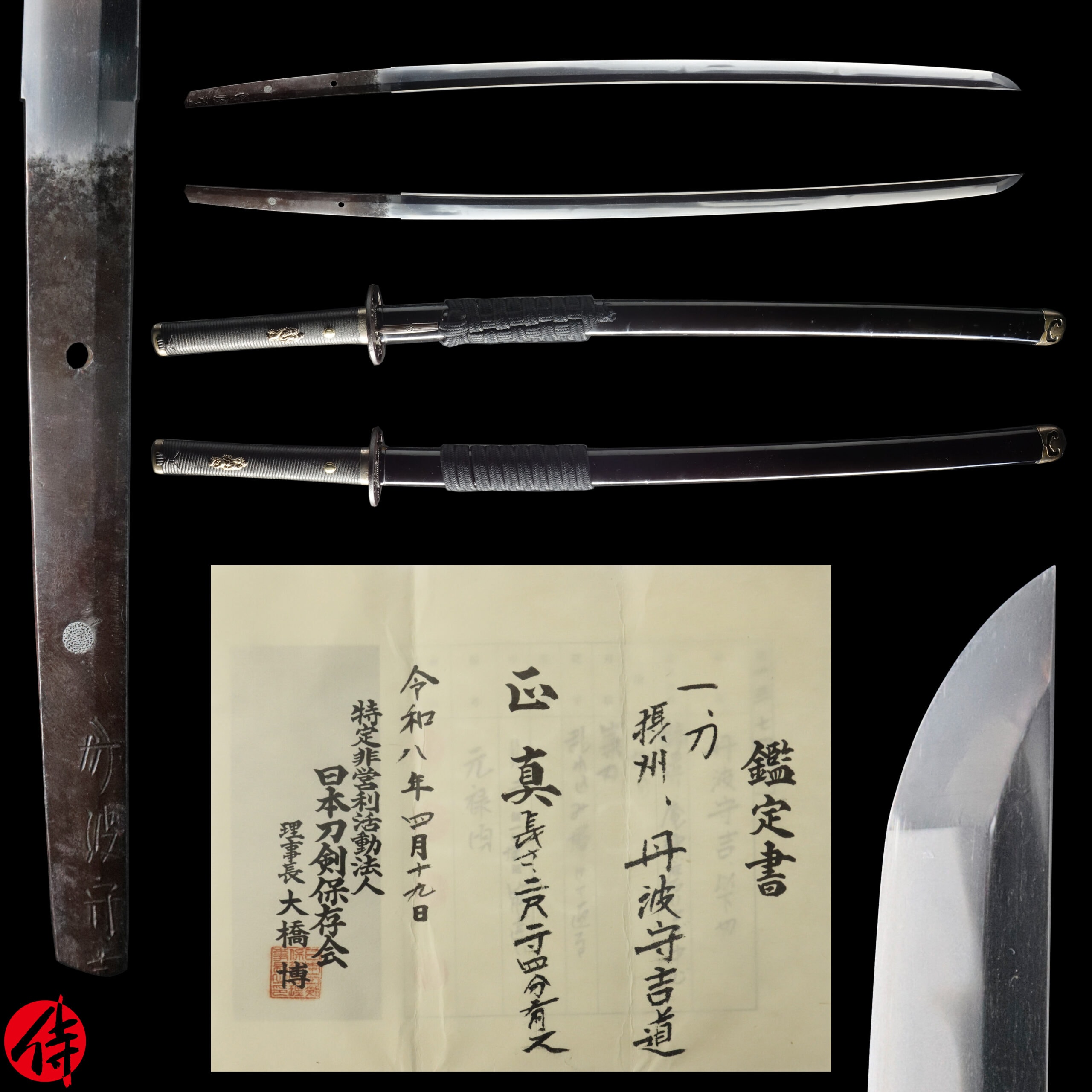
Mid Edo Katana signed by Tanba no Kami Yoshimichi for sale| Samurai Museum Shop E-mail FB Messenger Skip to content Menu Close Samurai Museum Shop Products Antique Japanese Sword Katana signed by Tanba no Kami Yoshimichi NTHK Kanteisho Certificate Updated: 22 Jun 2026 Antique Japanese Sword Katana signed by Tanba no Kami Yoshimichi NTHK Kanteisho Certificate
$7,441
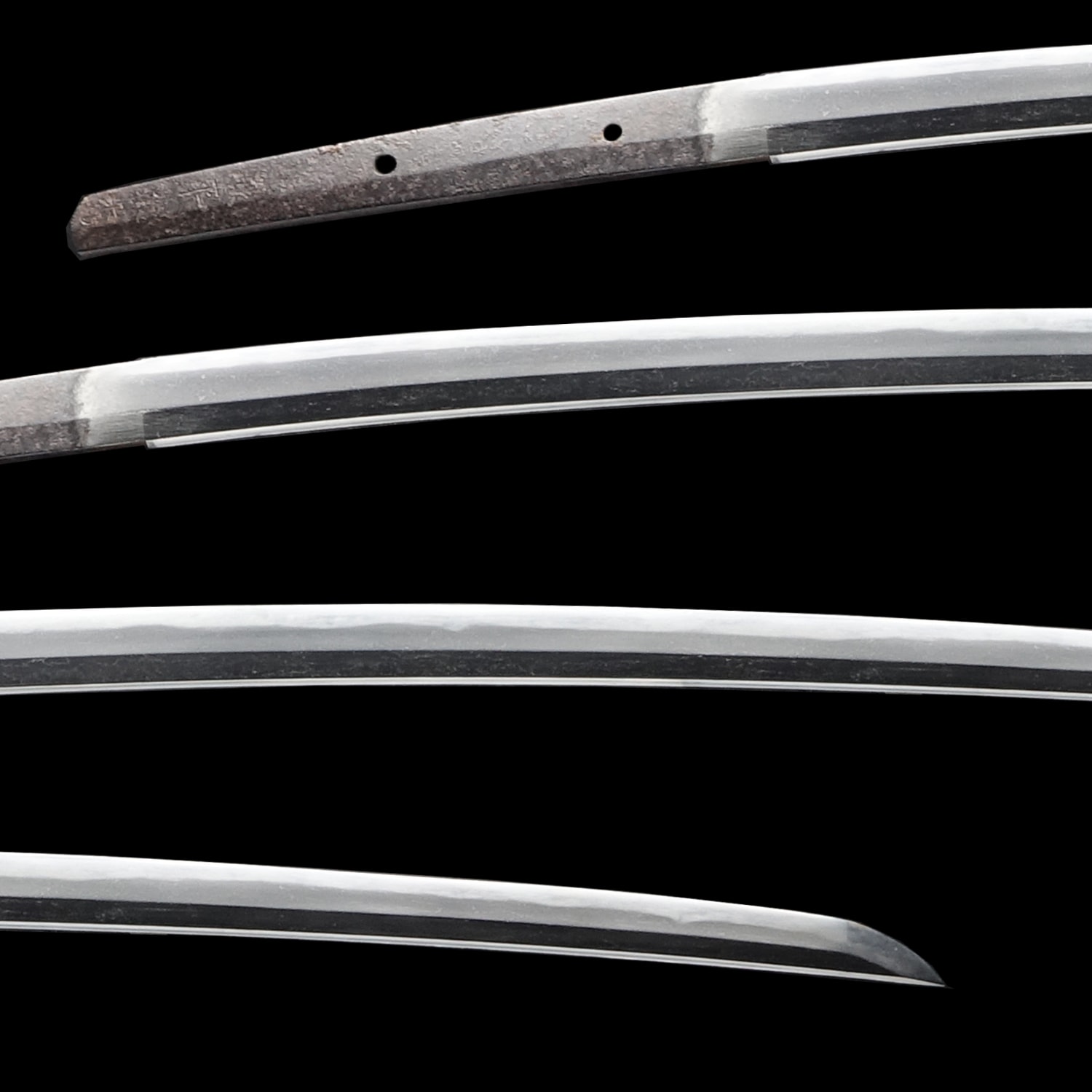
Muromachi Katana signed by Naminohira Yasuhide for sale
$7,751
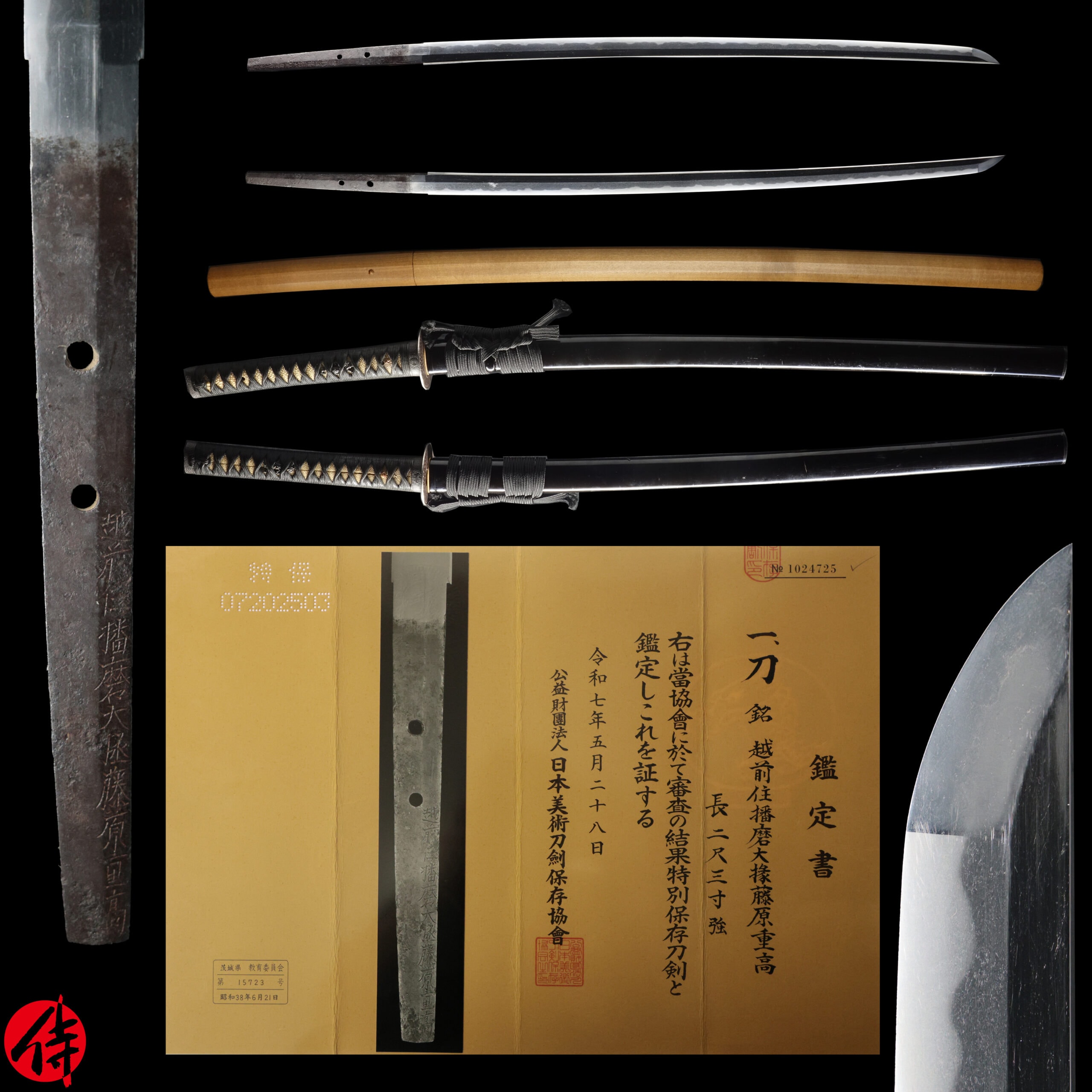
Early Edo Nihonto signed by Shigetaka for sale
$7,131
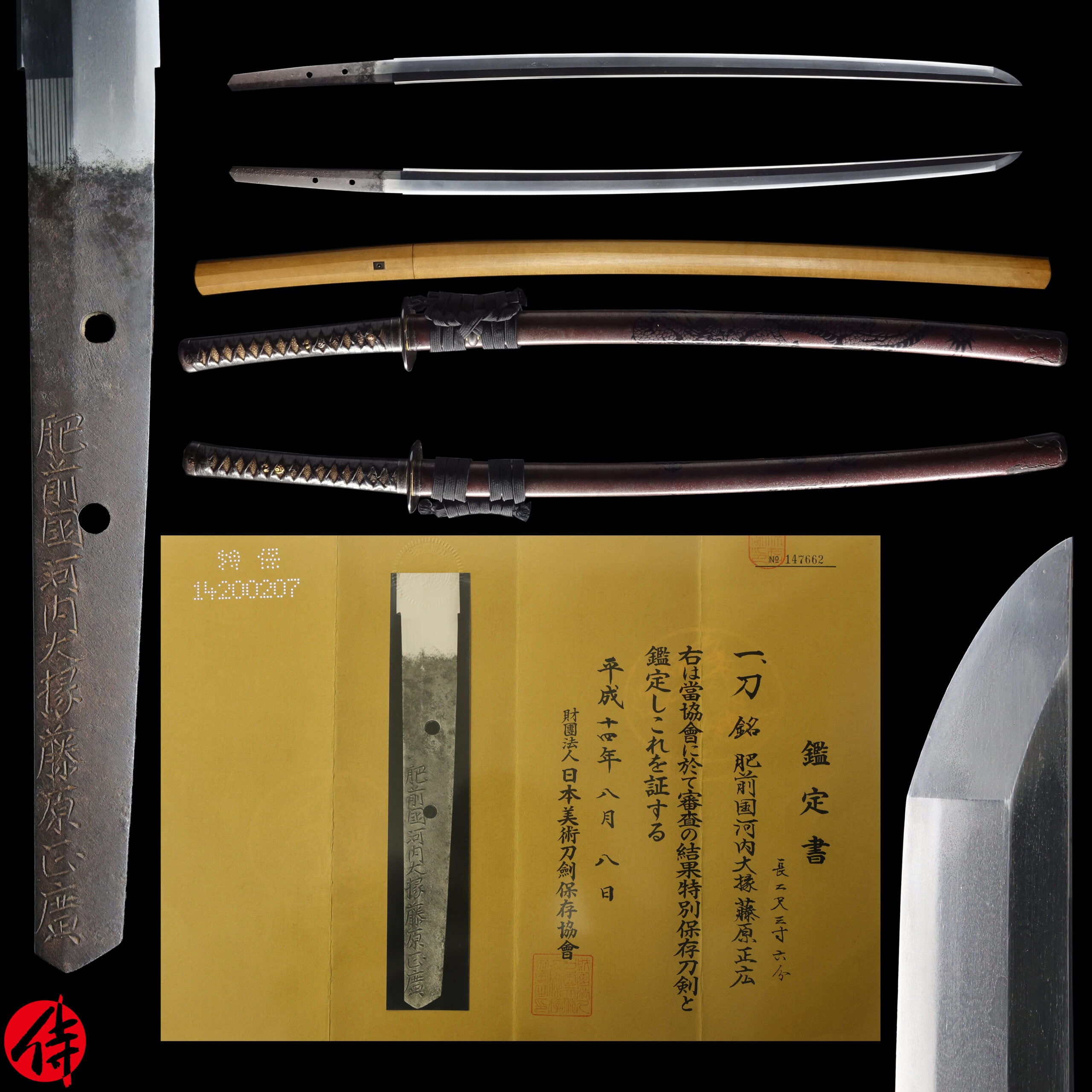
Antique Japanese Sword Katana Signed by Masahiro NBTHK Tokubetsu Hozon Certificate
$7,751
Antique Japanese Sword Katana attributed to Hokke Ichijo with Tokubetsu Hozon Certificate 【Description】 Summary This blade is attributed to Hokke Ichijo(法華一乗) by the NBTHK, one of Japan’s most respected Japanese sword appraising organizations. Ichijo (一乗) is one of the most renowned swordsmiths of the Hokke school, a prestigious tradition that flourished during the late Kamakura to Nanbokucho period (late 13th–14th century). It is said that Ichijo was active during the early Muromachi period (O-Ei era: 1394-1428). The Hokke school was based in the Ashida area of Bingo Province, which corresponds to present-day Hiroshima Prefecture. It is said that those who lived in Ashida area were followers of the Nichiren sect, and Hokke swordsmiths often forged blades for the politically powerful Buddhist priests. They needed many weapons as there were many political rivalries between influential temples. They required strong weapons like swords to protect themselves. Hokke swordsmiths met their requests and made excellent quality blades. It is believed that the school was founded by Kokubunji Sukekuni (国分寺助国) in the late Kamakura period (Approx. 1329). Sukekuni was originally from Bizen province (today’s Okayama prefecture) and belonged to Bizen Ichimonji school, one of the most prestigious schools during the Kamakura period. Sukekuni was the father of Mihara Masaie (三原正家). Masaie was the founder of Mihara school, another prestigious school in the region. It is appraised as a Tokubetsu Hozon Token (特別保存刀剣) issued by NBTHK(Nihon Bijutsu Touken Hozon Kyokai:日本美術刀剣保存協会). This authentication paper was only given to authentic Japanese swords, especially well preserved and high quality with artistic value. *Please keep in mind that there is a couple of Kitae Kizu on this blade. If you like to see the detailed condition, please feel free to contact us. 【 Blade】 Cutting Edge Length(Nagasa) : 67.0 cm (26.3 inches) Curvature(Sori) : 2.4 cm (0.94 inches) Hamon : The crystalline structure which forms along the cutting edge of a blade as a result of the hardening process Jimon(Jihada) : visible steel surface pattern created by folding and hammering during forging process Kissaki : Kissaki is the tip of the Japanese sword. Nakago : Nakago is the tang of the Japanese sword. Japanese swordsmiths left the black rust on the tang because it prevents red rust while the tang is in its handle. And the discoloration of the tang was created over time, and it is a great indicator for a Japanese sword specialist to estimate when the sword was forged. Koshirae : Koshirae is the mounting of the Japanese sword. There are several parts that consist of Koshirae such as Saya (Scabbard), Tsuka (Handle), Tsuba (Handguard). Fuchi-Kashira : A pair of matching sword fittings that cover the upper and bottom parts of its sword hilt. The design of this fuchi kashira features features a horse depicted alongside bellflowers (桔梗, kikyo) and chrysanthemums (菊, kiku), both of which are part of the Aki no Nanakusa—the Seven Flowers of Autumn in Japanese tradition. Aki no Nanakusa (秋の七草), or the Seven Flowers of Autumn , are a group of traditional Japanese wildflowers that have been celebrated in poetry and art since ancient times. Unlike the Seven Herbs of Spring , which are edible and associated with health and nourishment, the autumn flowers are appreciated purely for their beauty and poetic symbolism. Tsuka and Menuki : Tsuka is the handle of the Japanese sword and Menuki is its decoration. The menuki, like the other sword fittings, features a chrysanthemum motif, creating a sense of visual harmony and consistency throughout the overall design. Tsuba and Habaki : Tsuba is the handguard for the Japanese Sword and Habaki is the equipment to make the blade not touch its scabbard inside. It prevents the blade from getting rusty and chipped. The design of this tsuba depicts chrysanthemum (菊, Kiku), a flower deeply revered in Japanese culture. The chrysanthemum is a symbol of longevit
NihontoWatchBETA売却済
世界81社の刀剣商を横断追跡 · 価格履歴 · 売却アーカイブ
67 cm
2.4 cm
Mid Edo Katana signed by Tanba no Kami Yoshimichi for sale| Samurai Museum Shop E-mail FB Messenger Skip to content Menu Close Samurai Museum Shop Products Antique Japanese Sword Katana signed by Tanba no Kami Yoshimichi NTHK Kanteisho Certificate Updated: 22 Jun 2026 Antique Japanese Sword Katana signed by Tanba no Kami Yoshimichi NTHK Kanteisho Certificate
$7,441
Muromachi Katana signed by Naminohira Yasuhide for sale
$7,751
Early Edo Nihonto signed by Shigetaka for sale
$7,131
Antique Japanese Sword Katana Signed by Masahiro NBTHK Tokubetsu Hozon Certificate
$7,751