戦国の世、一派は第二の主家に仕えた。小田原の後北条氏である。その庇護のもと綱広系は打刀の時代の皆焼を鍛え続け、1590年の落城とともに新刀の時代へ散った。
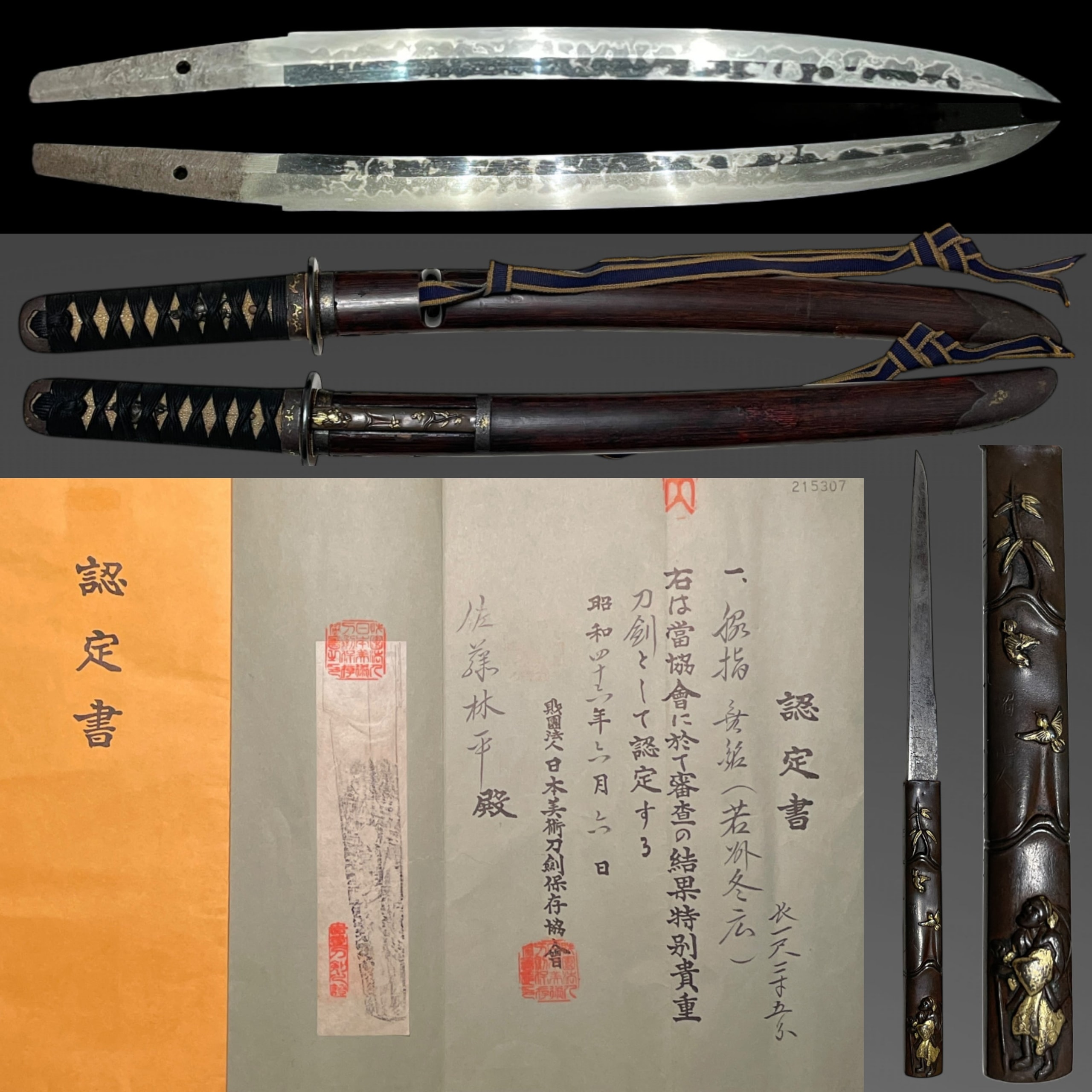
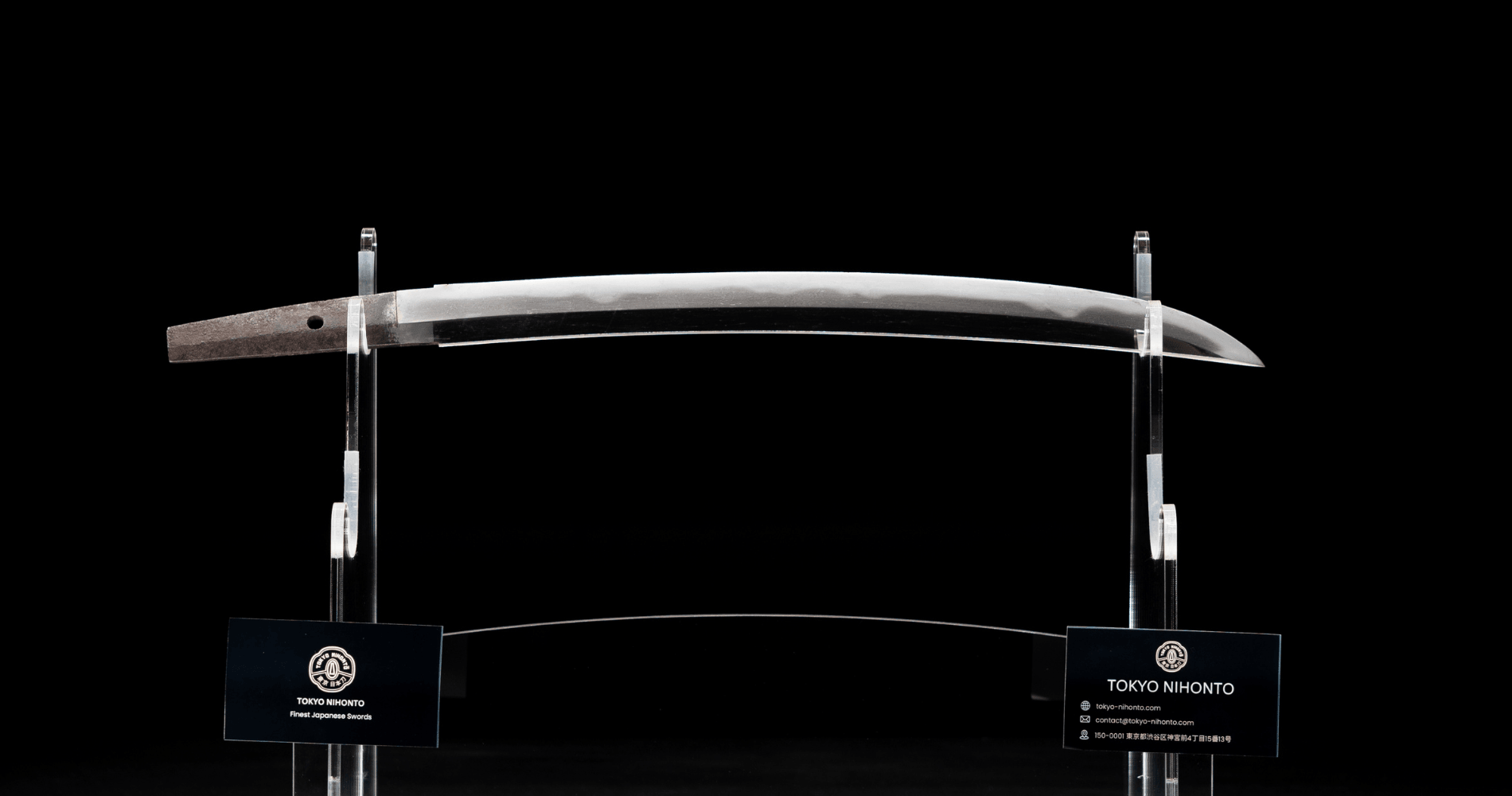
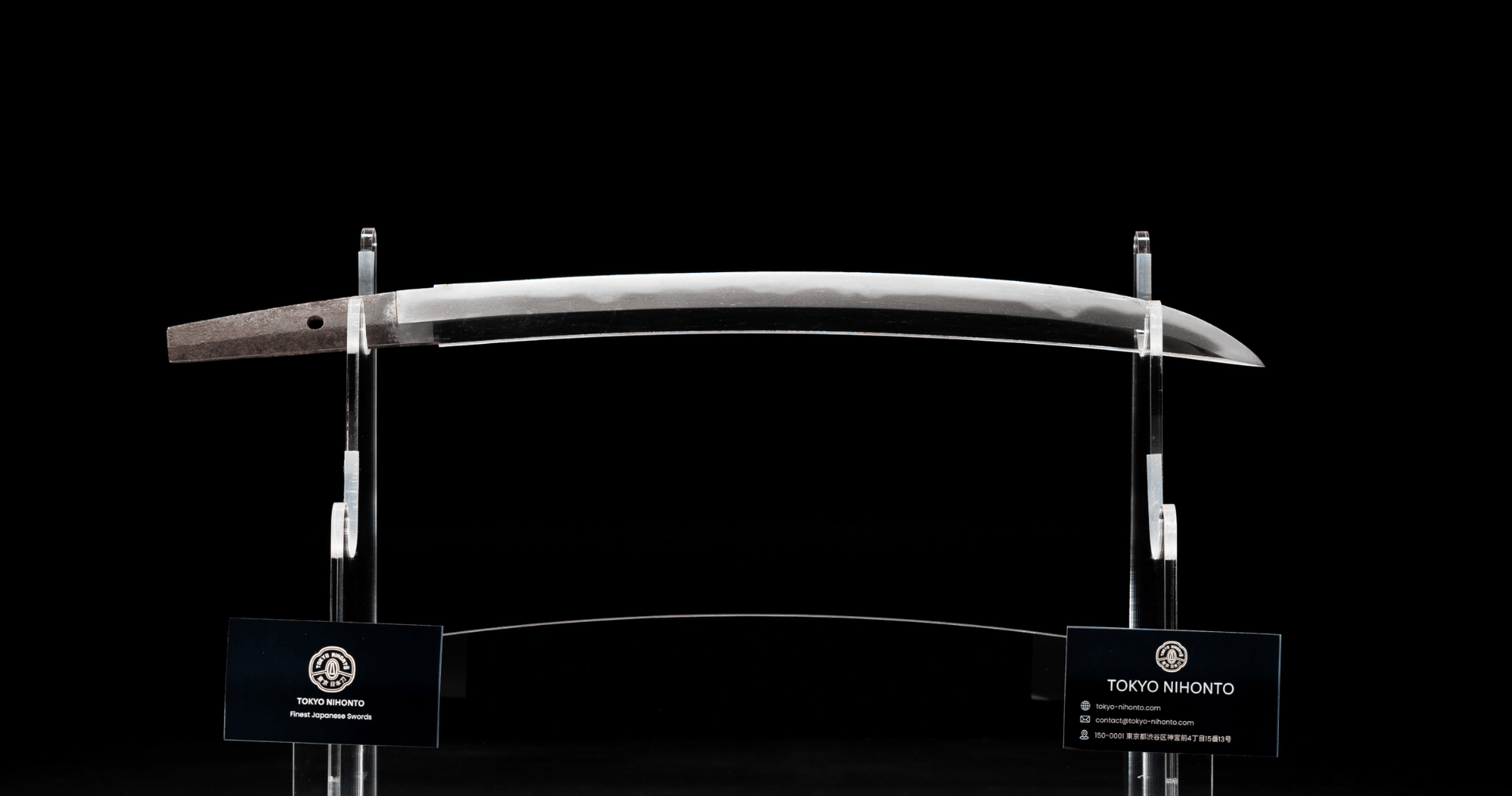
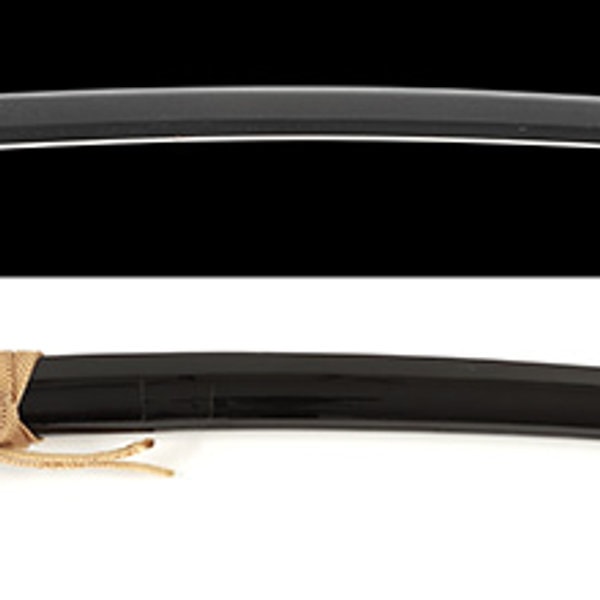
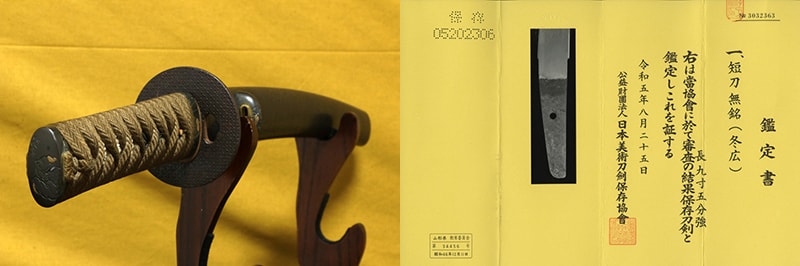
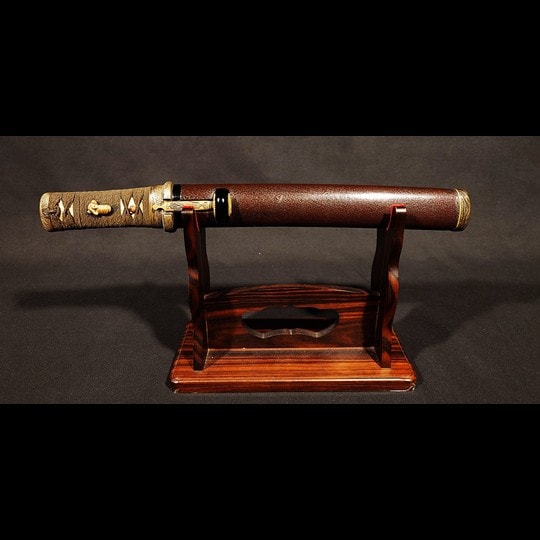
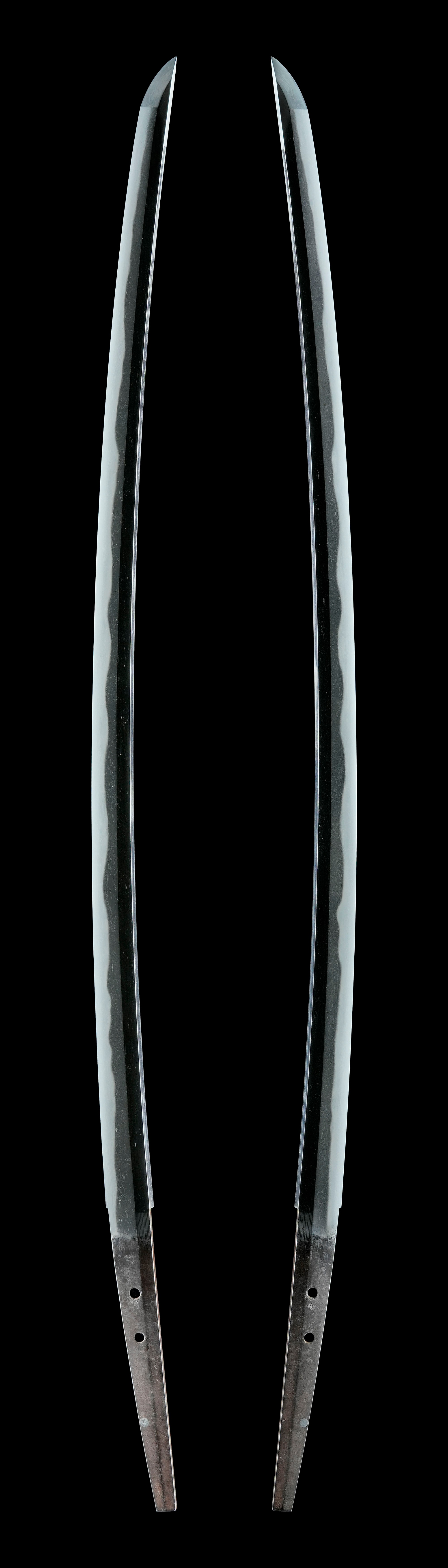
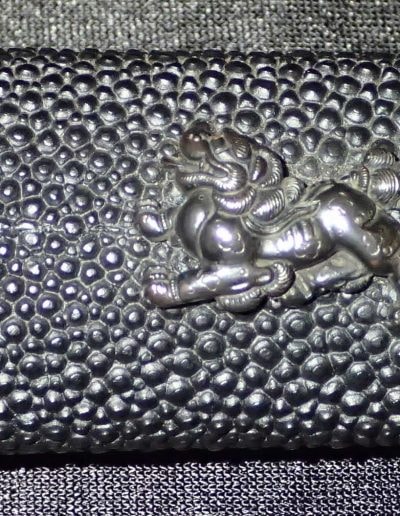
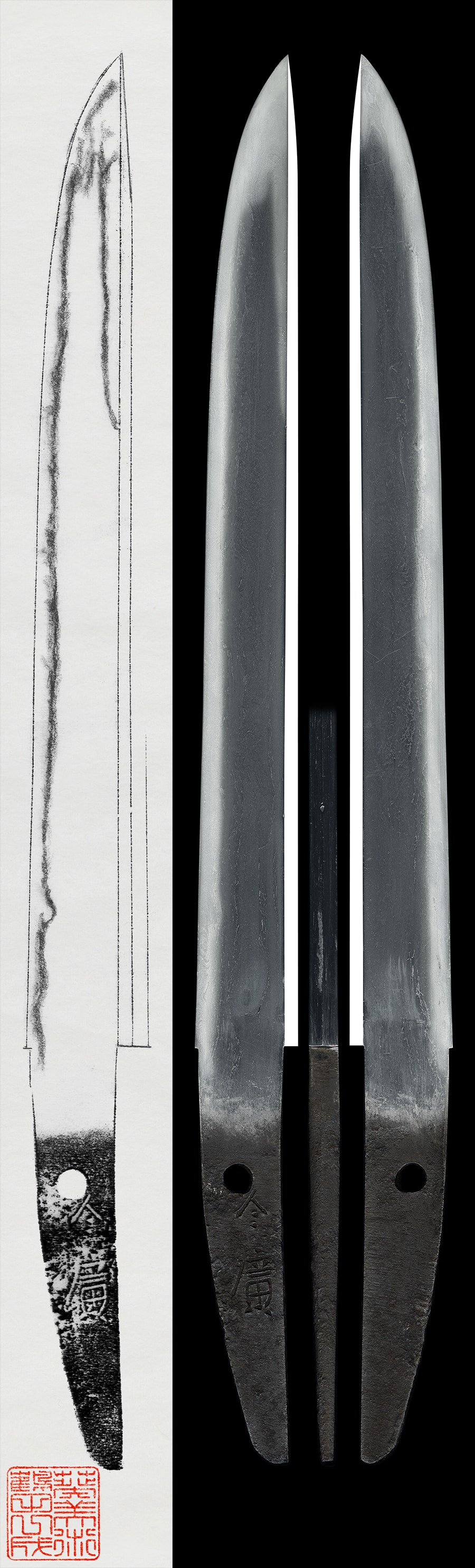
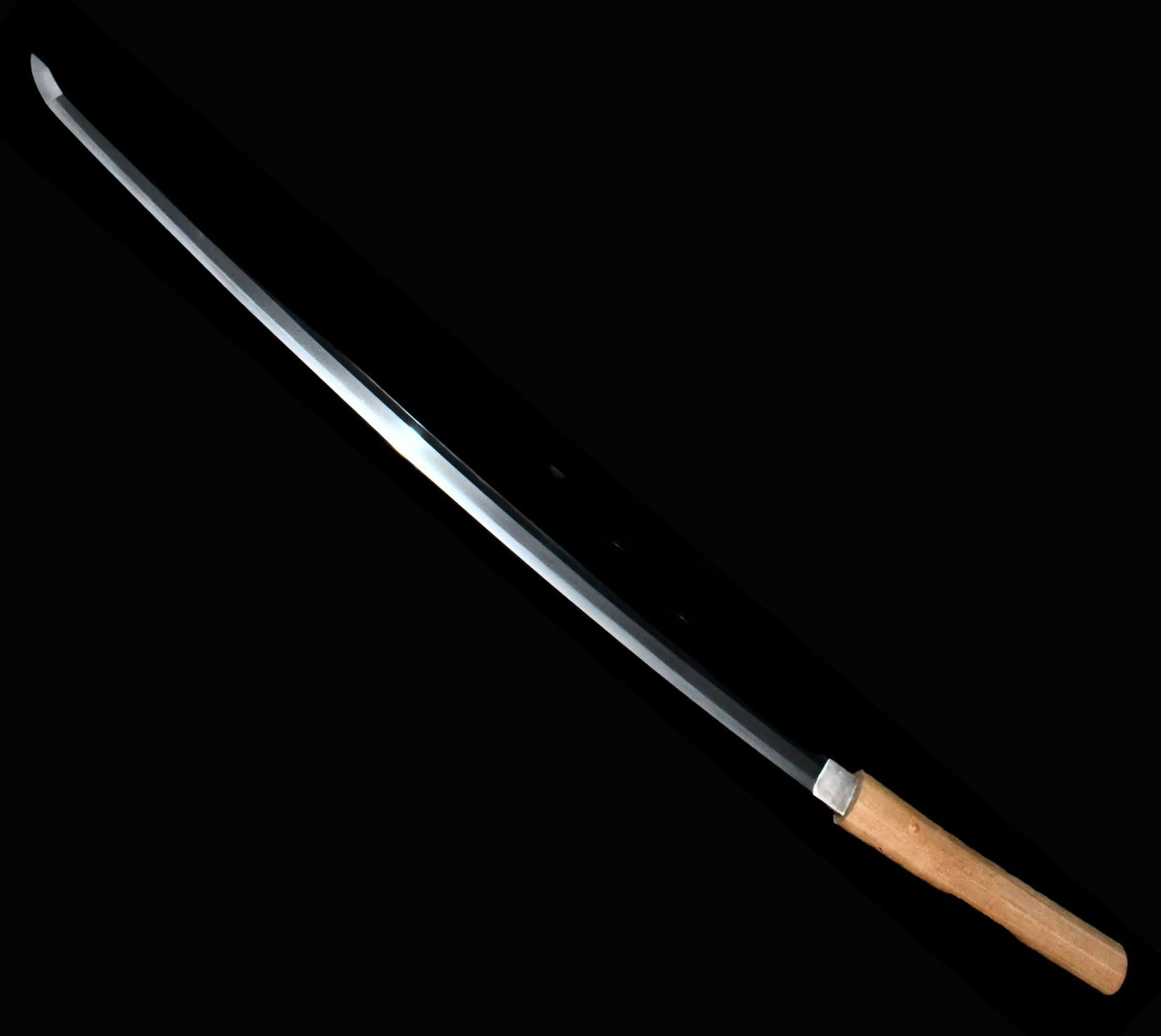
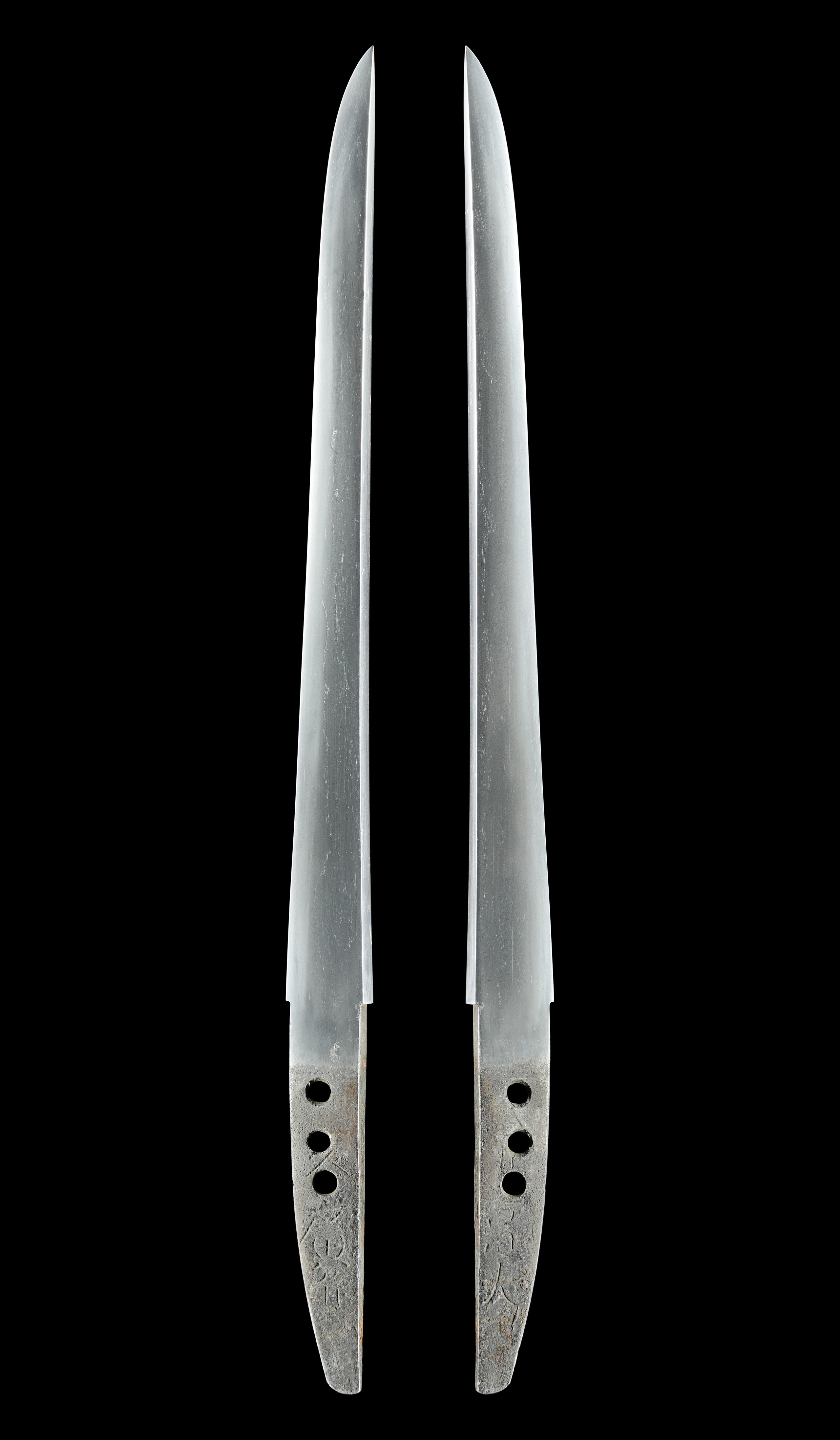
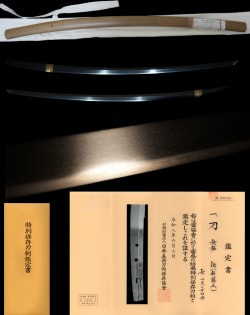
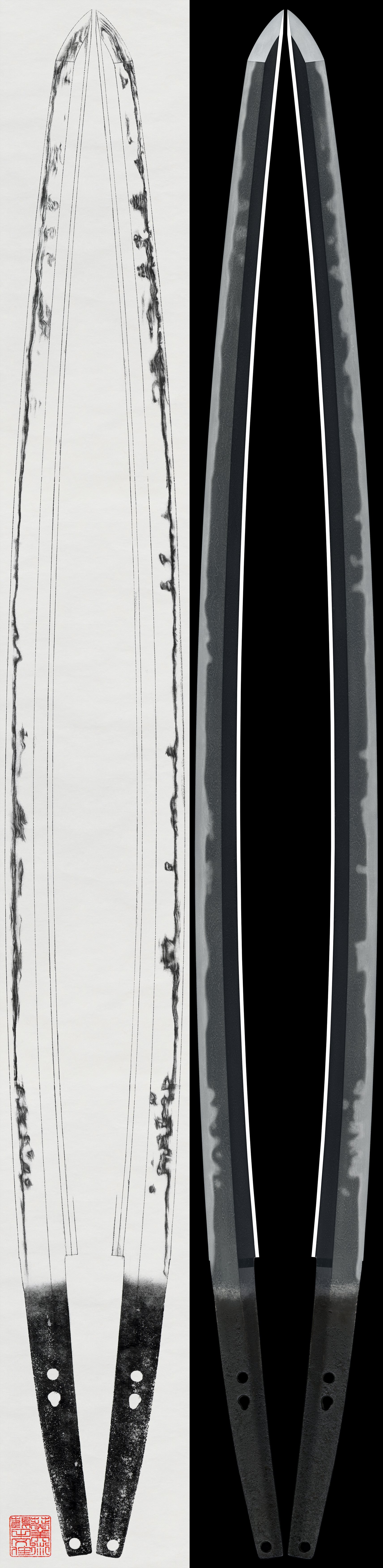
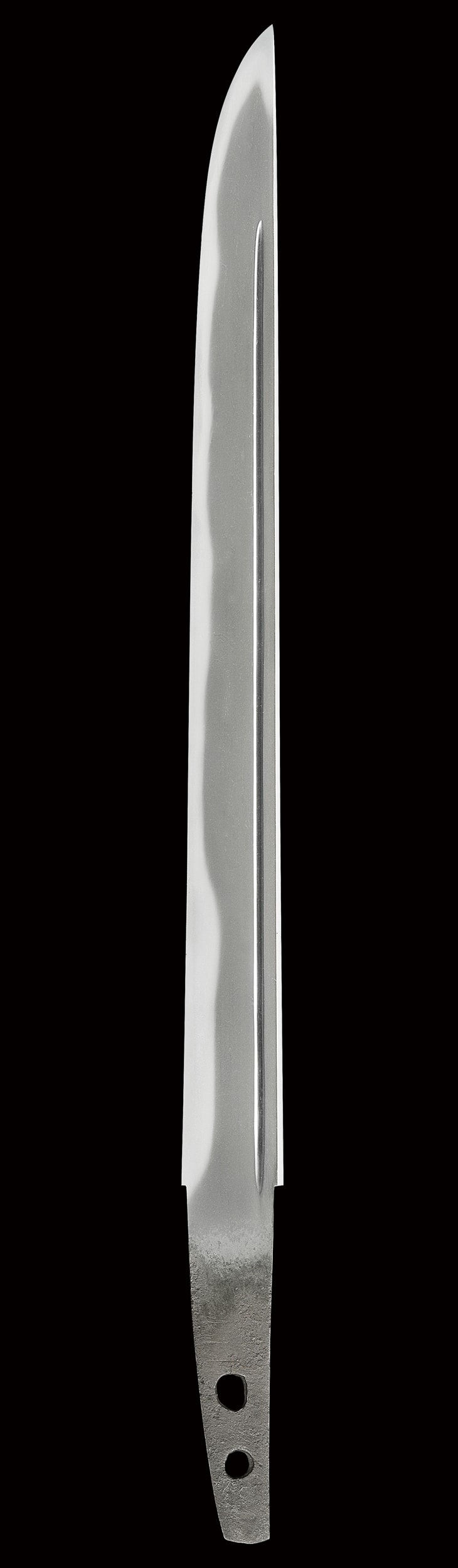
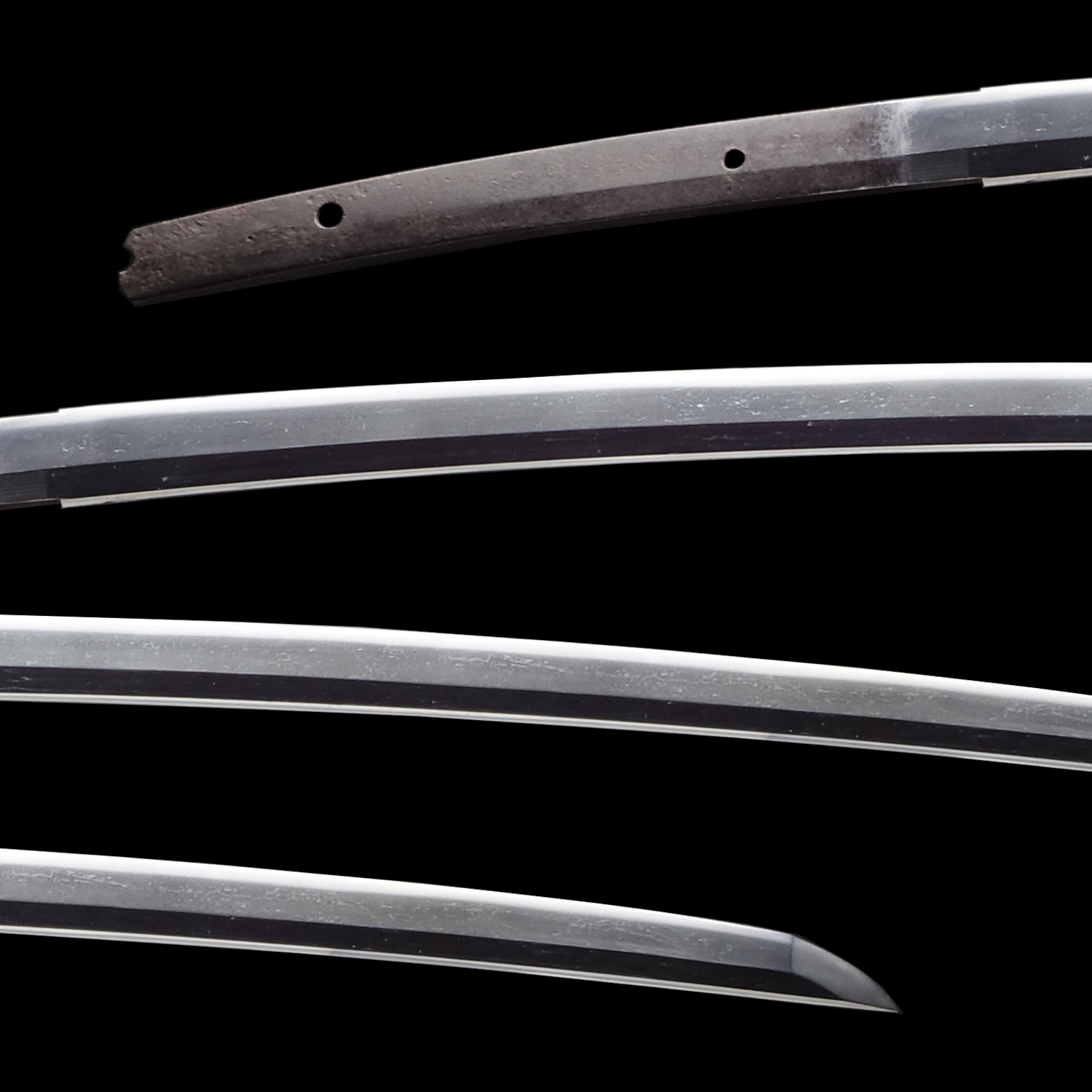
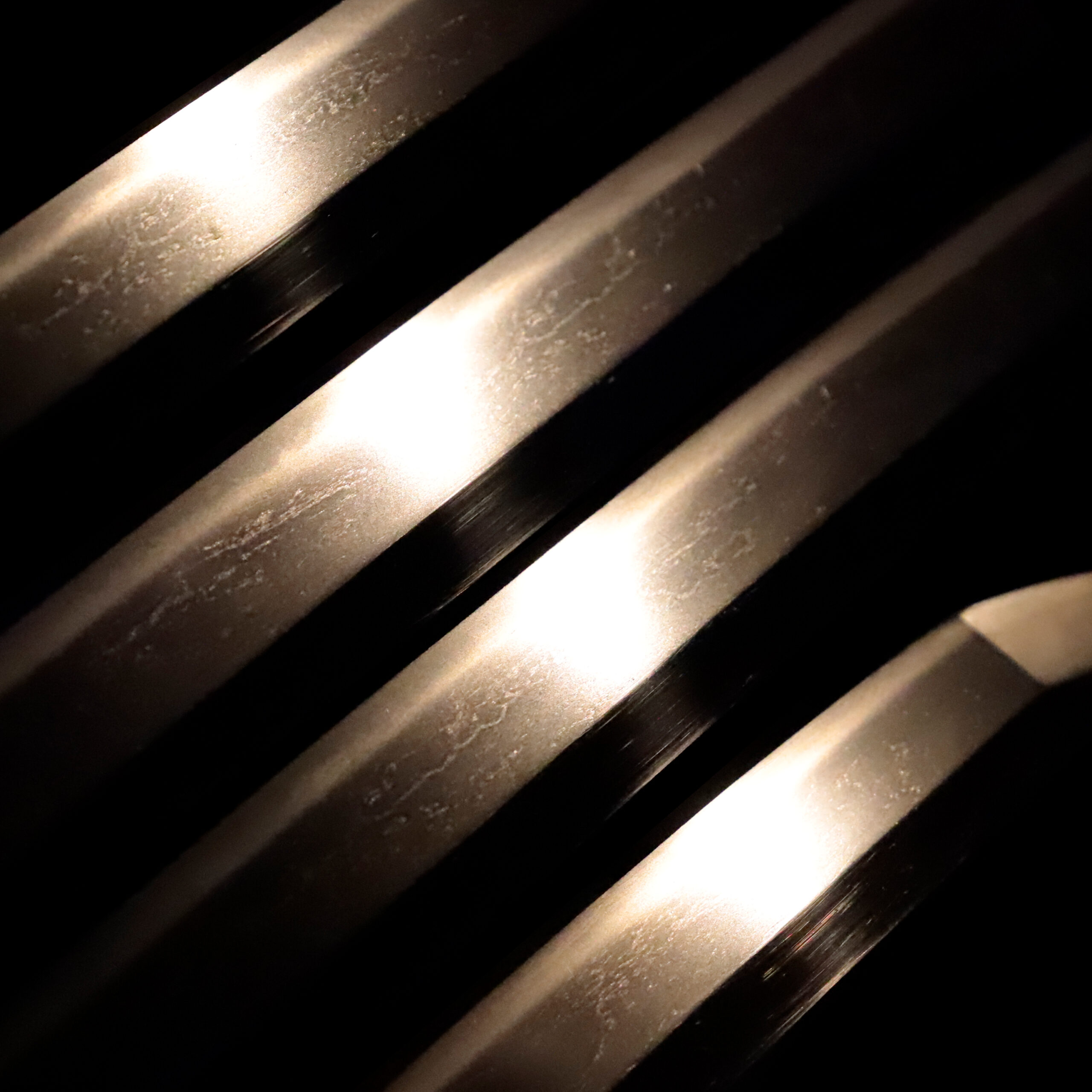
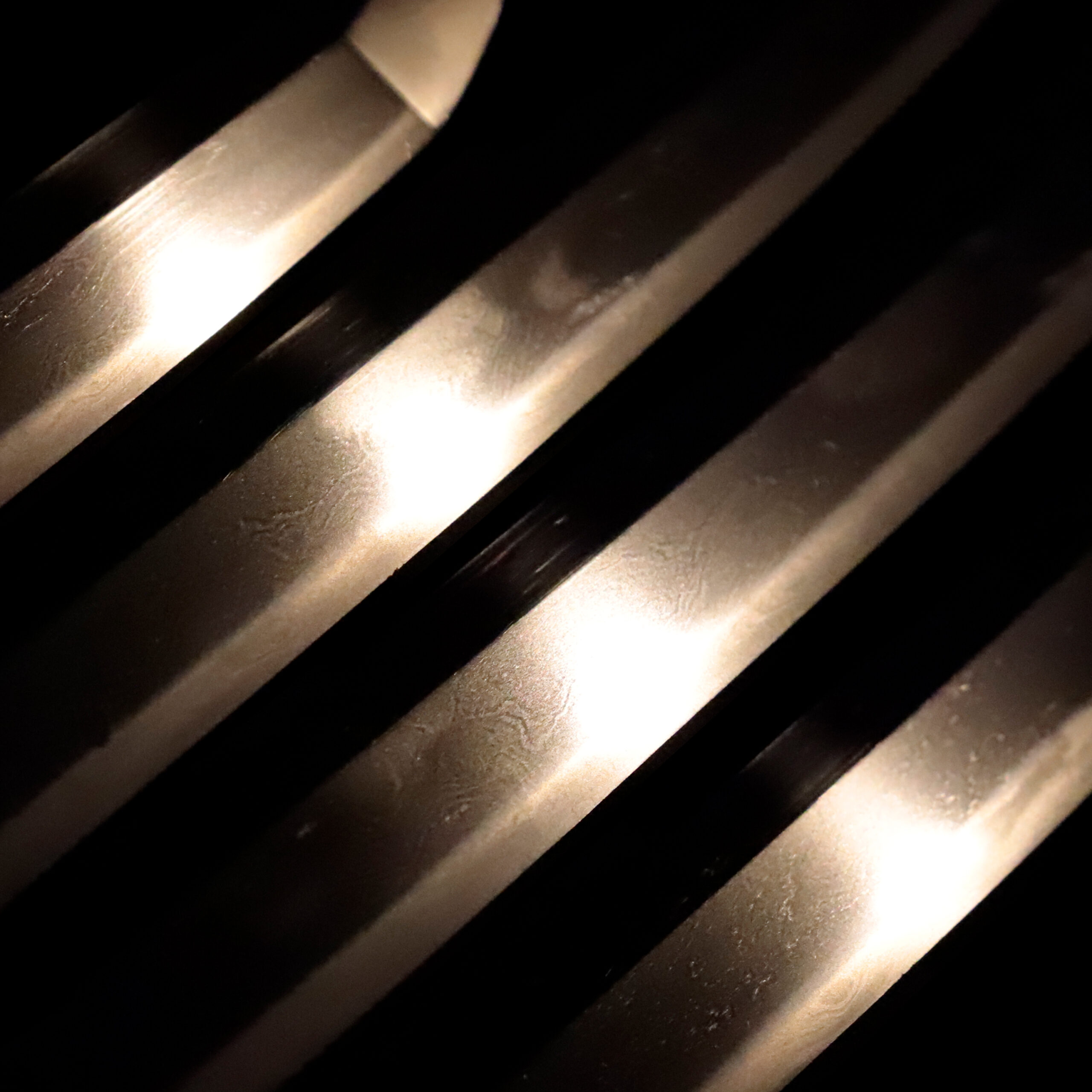
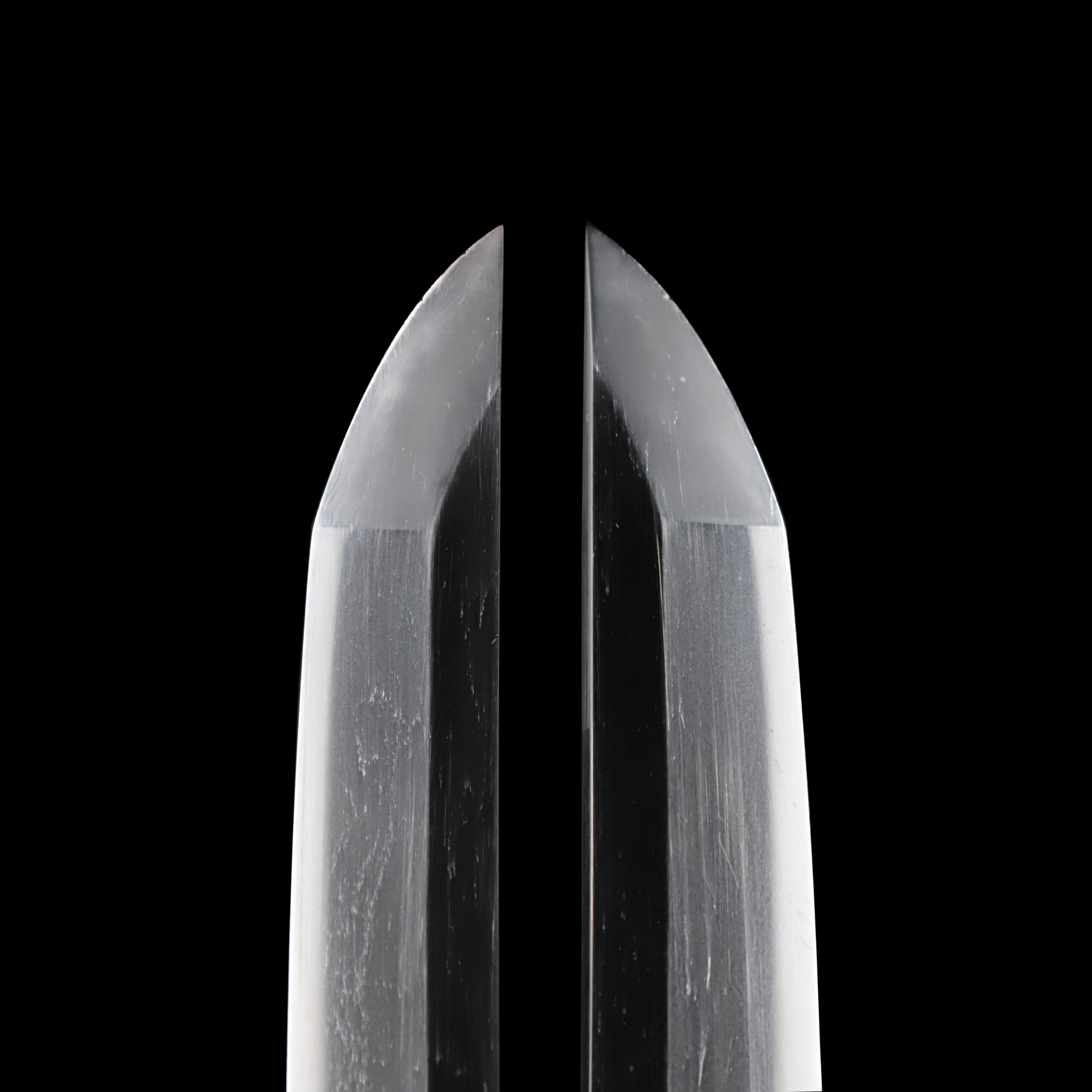
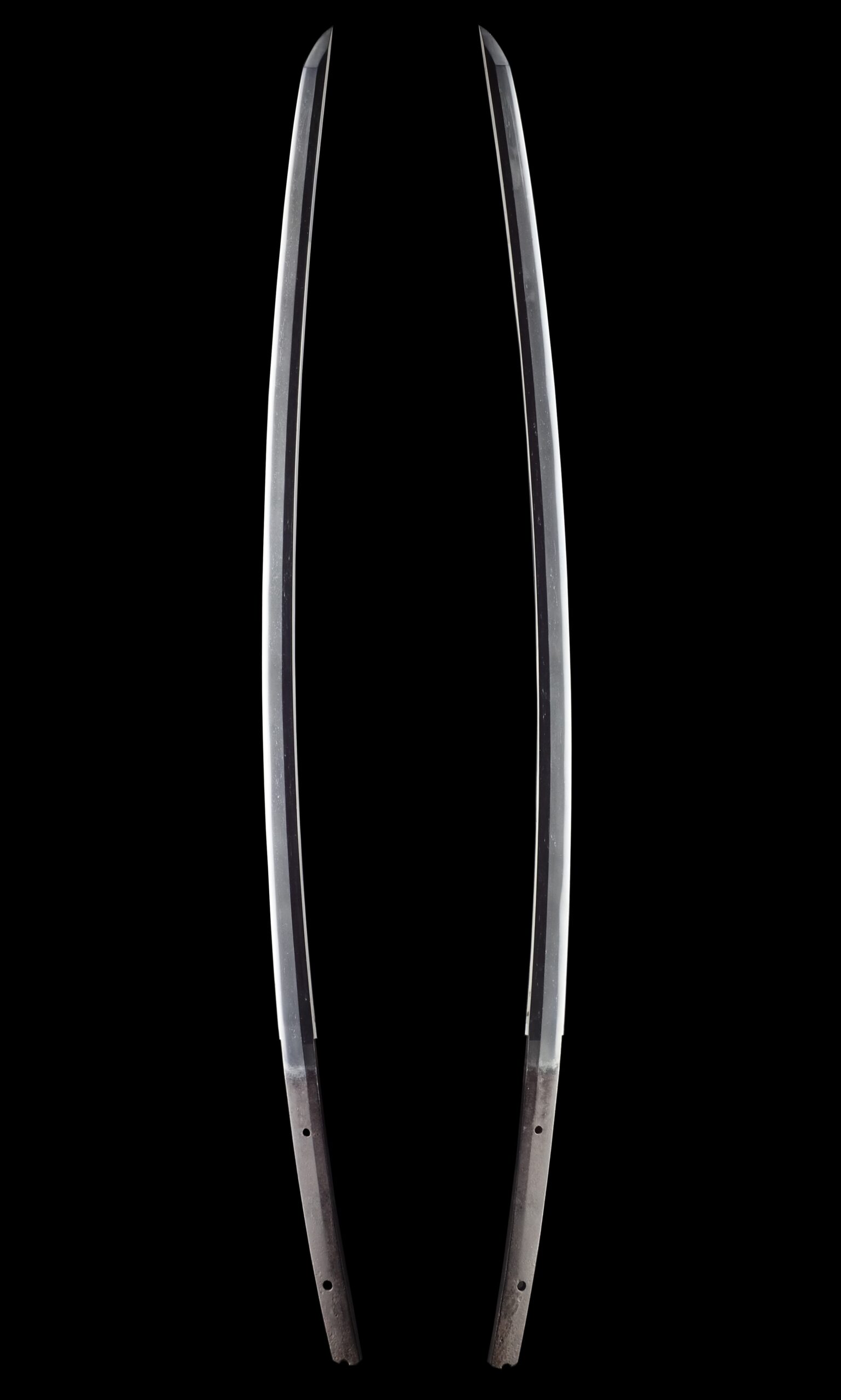
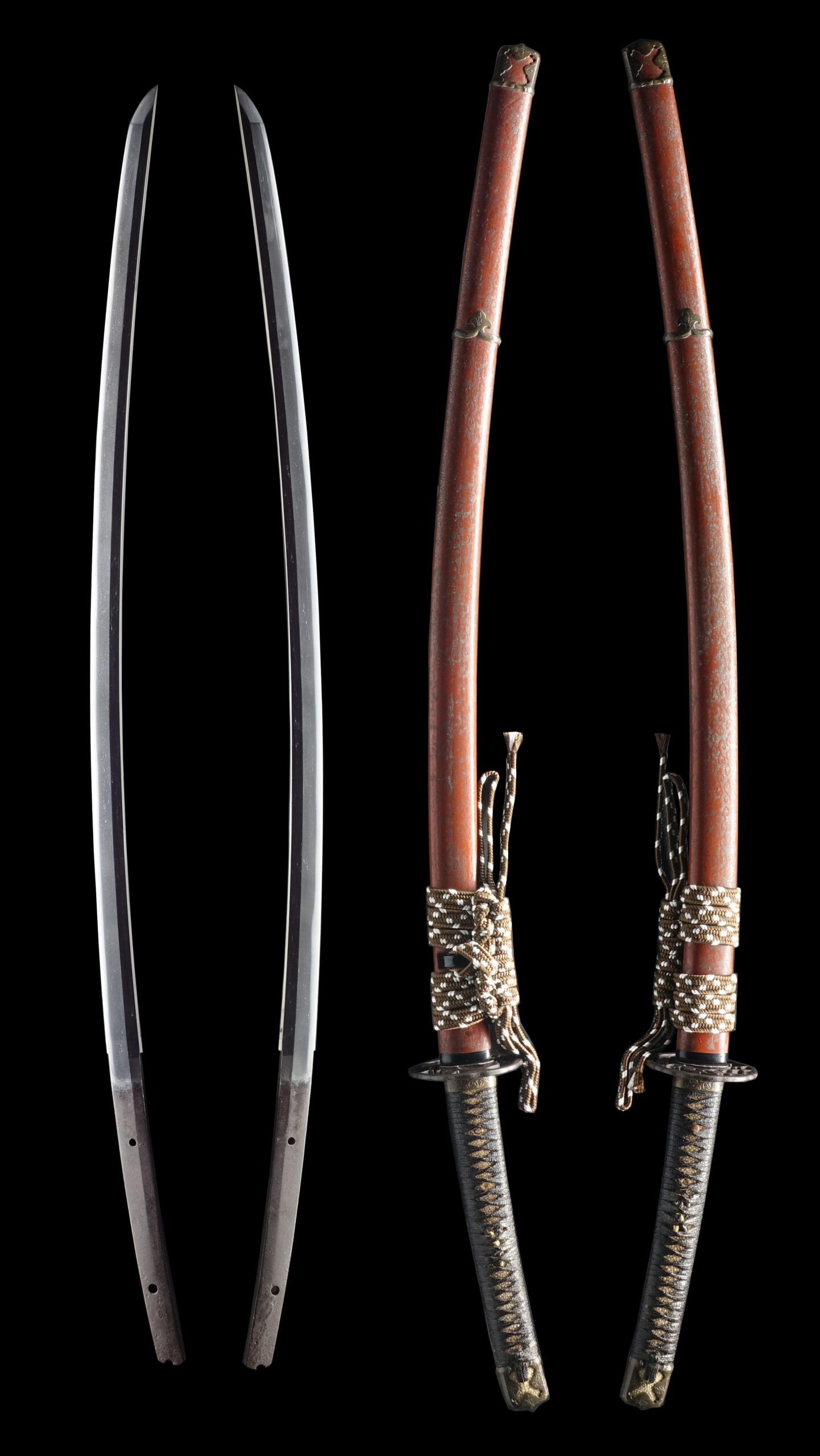
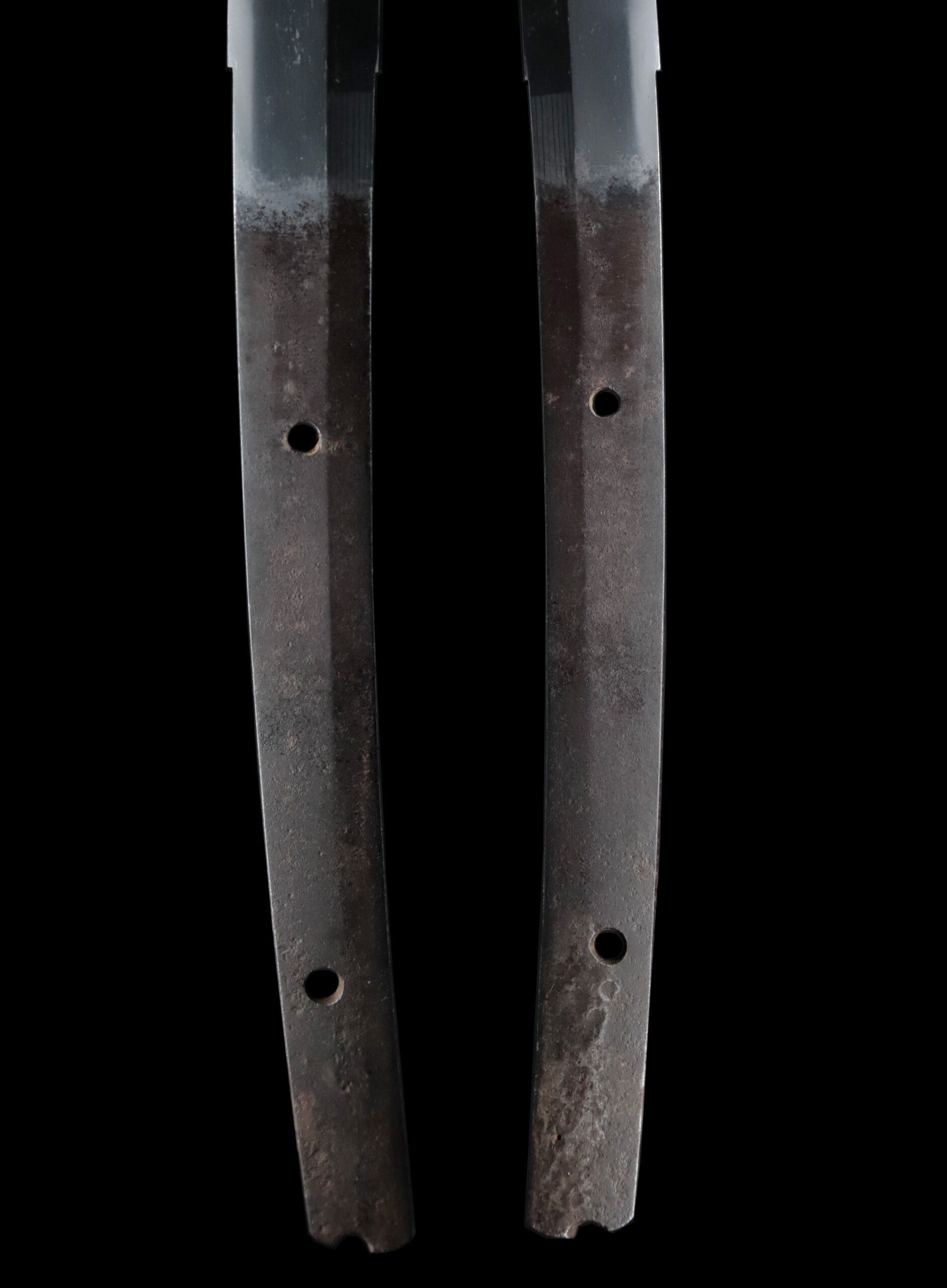
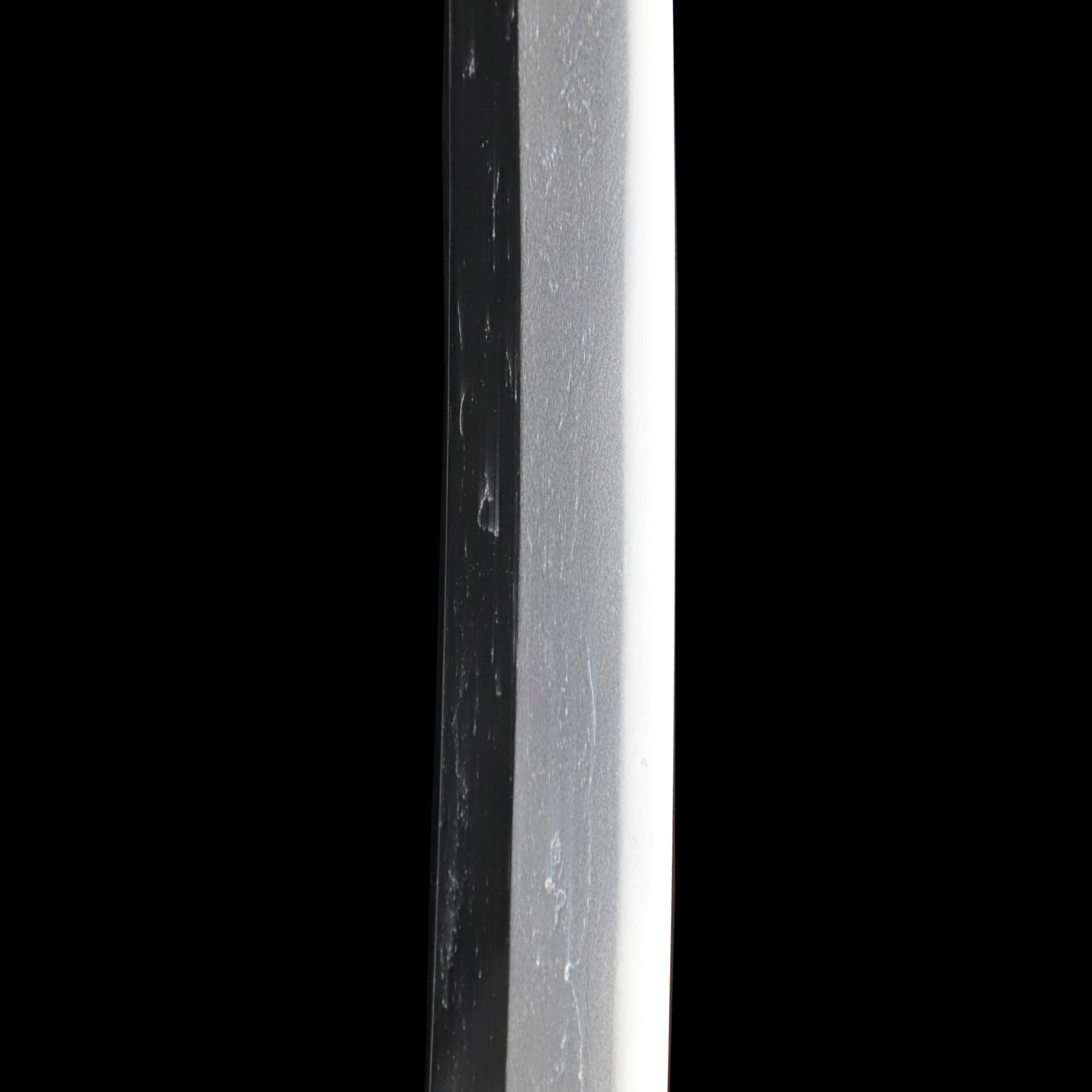
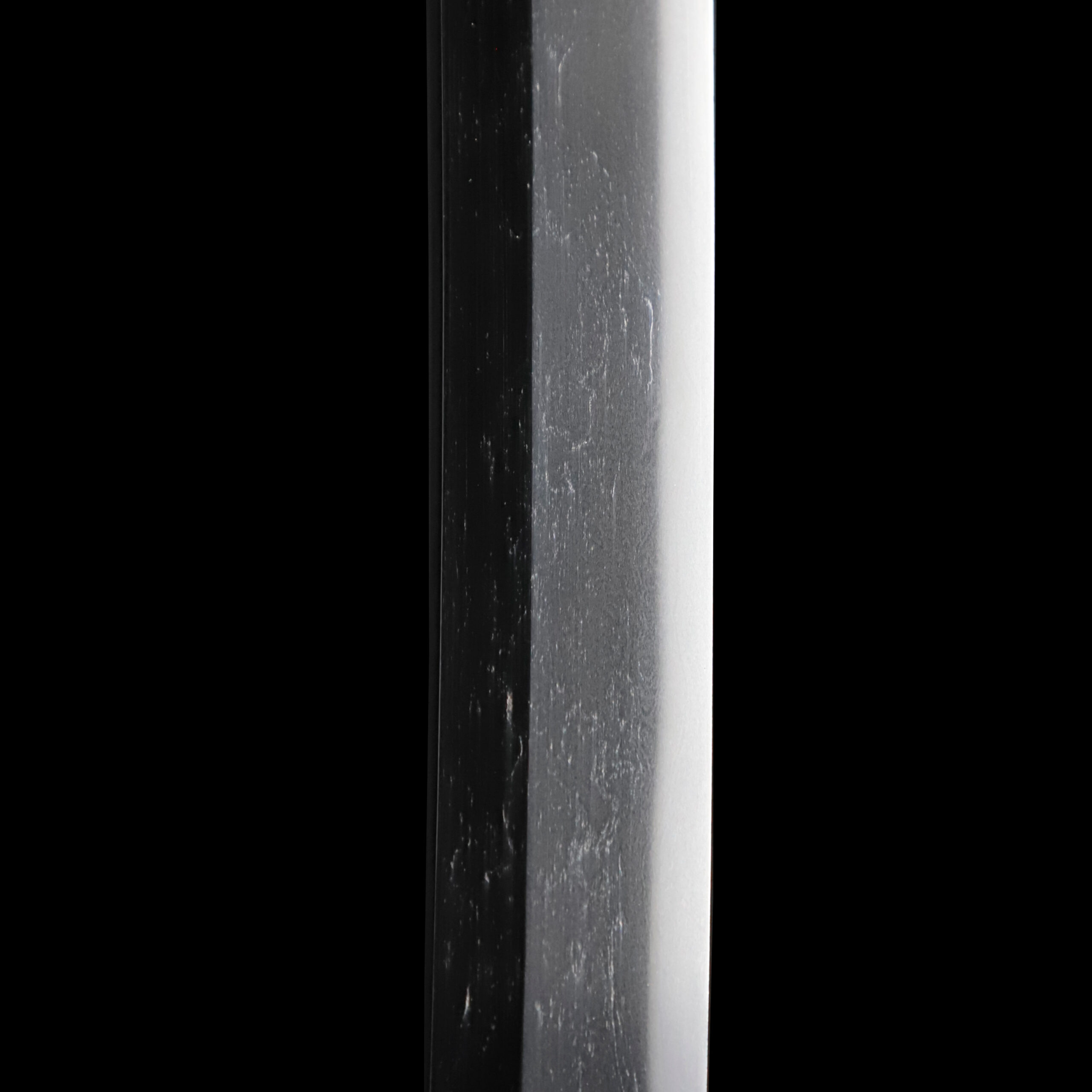
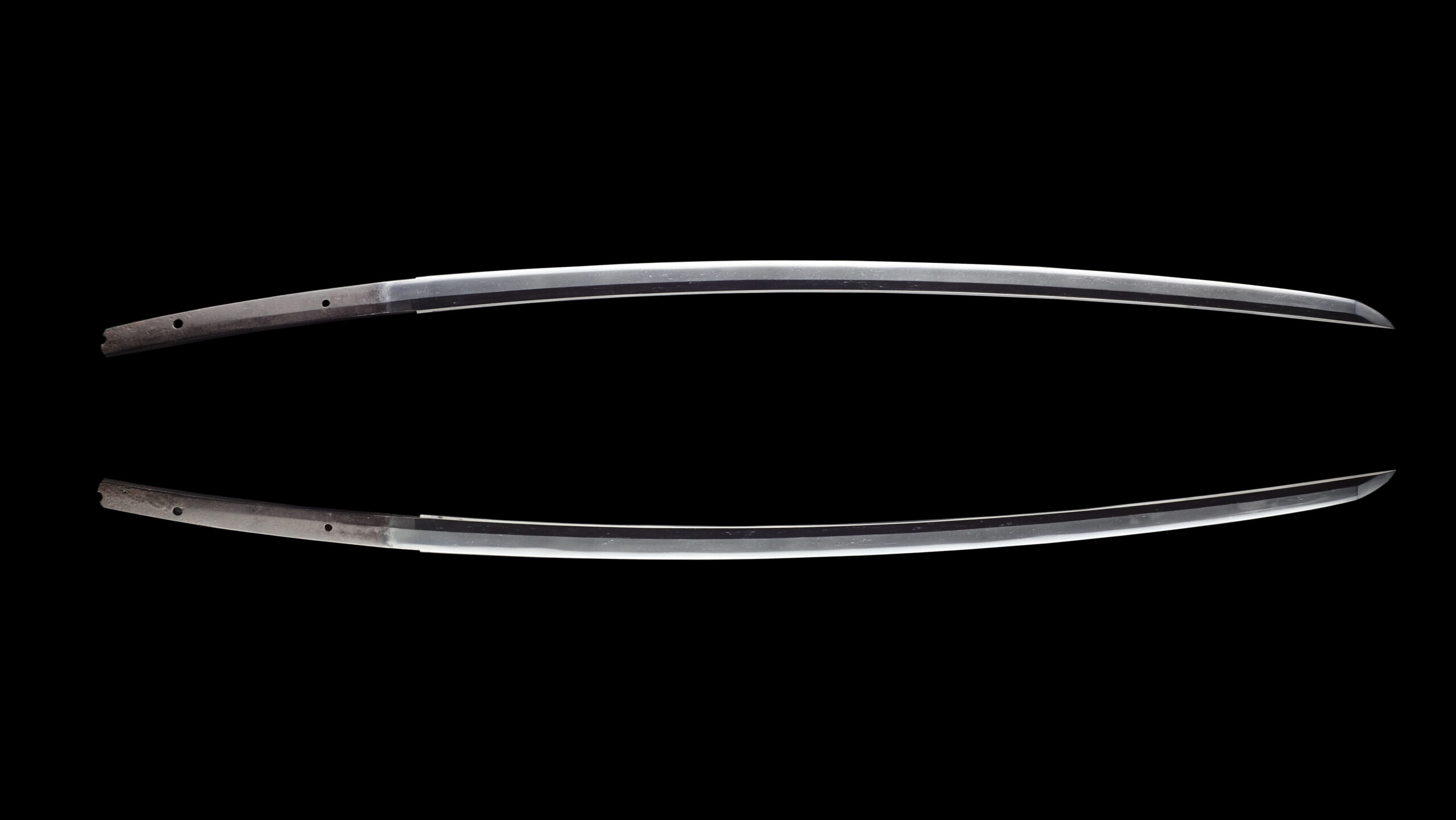
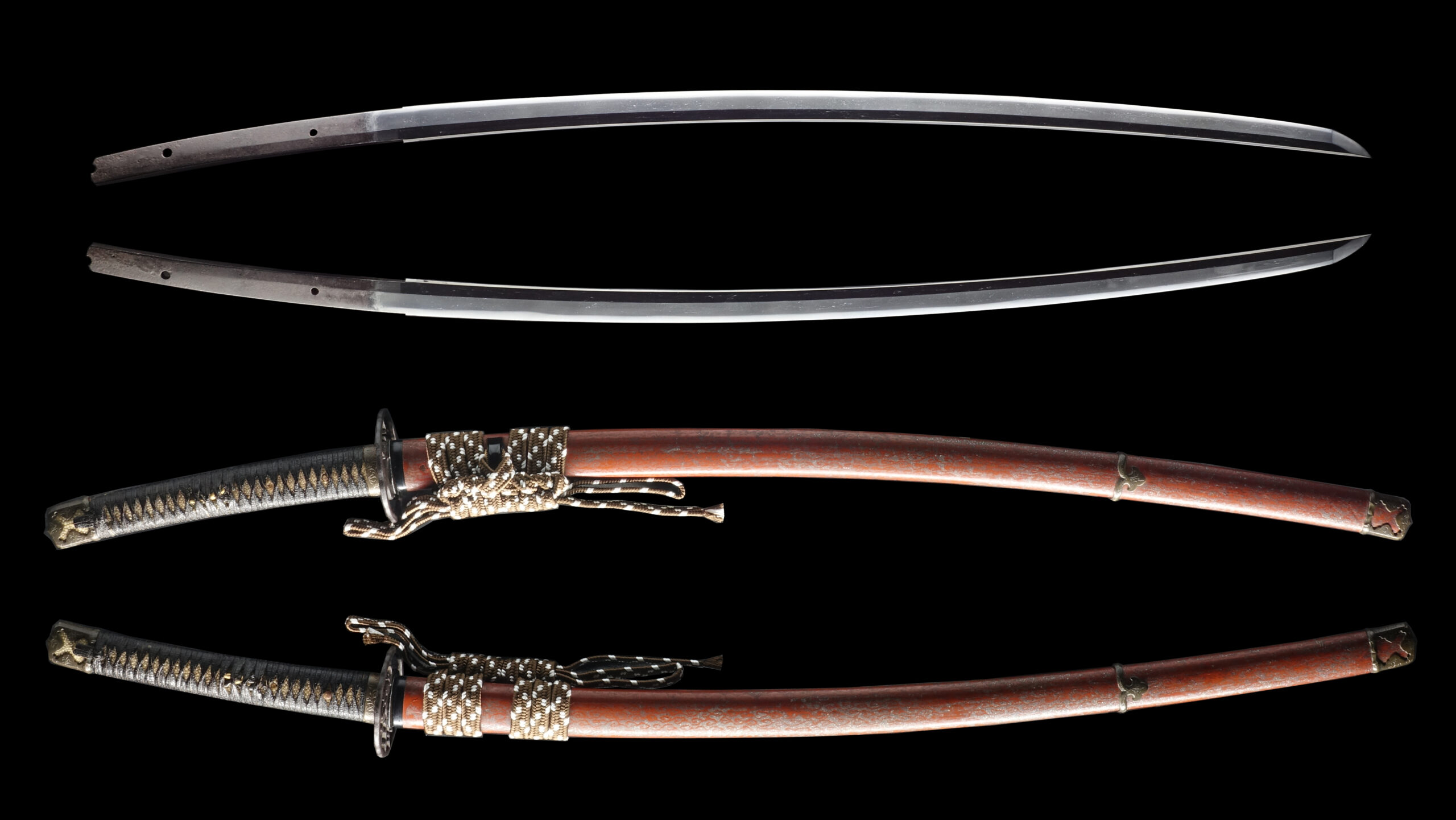
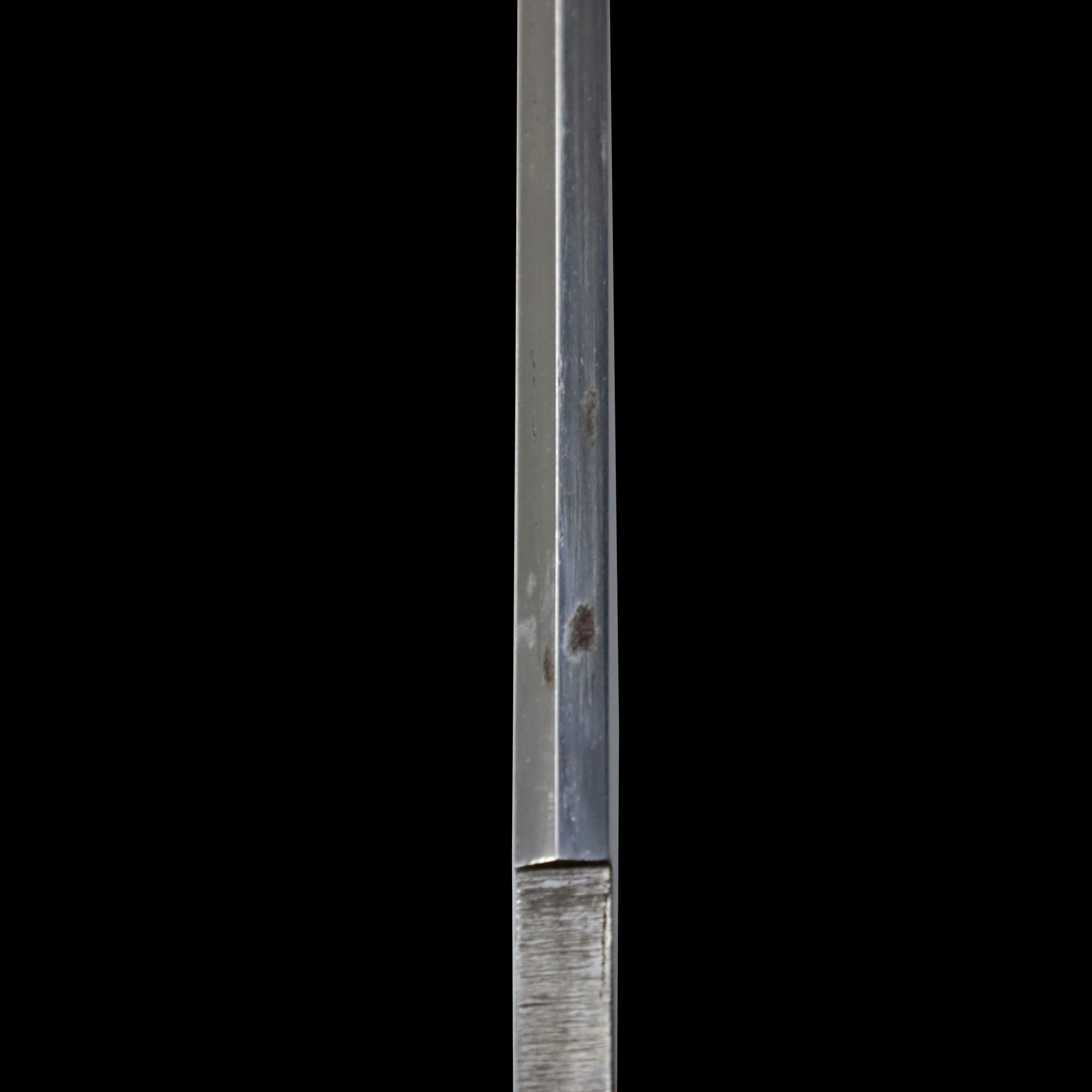
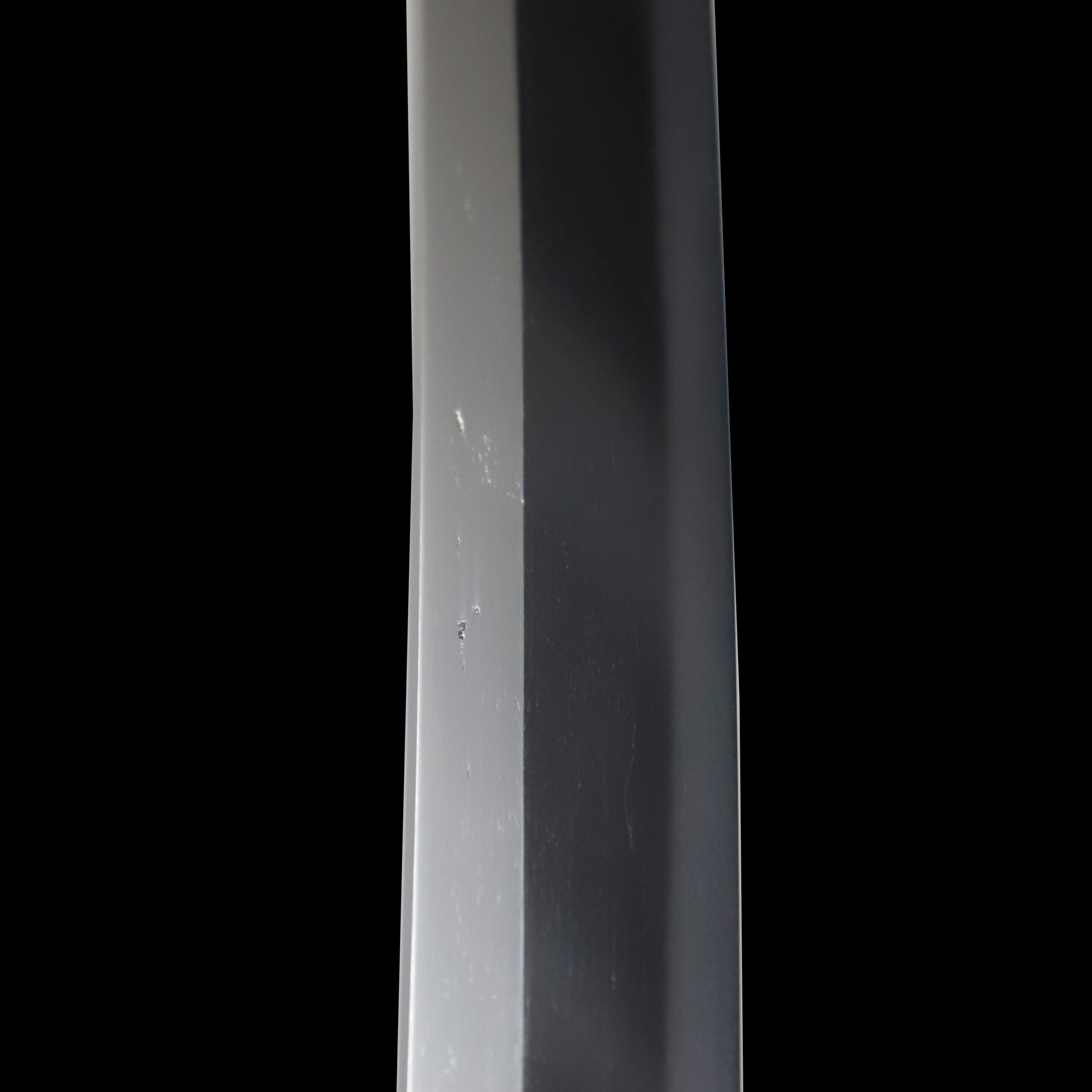
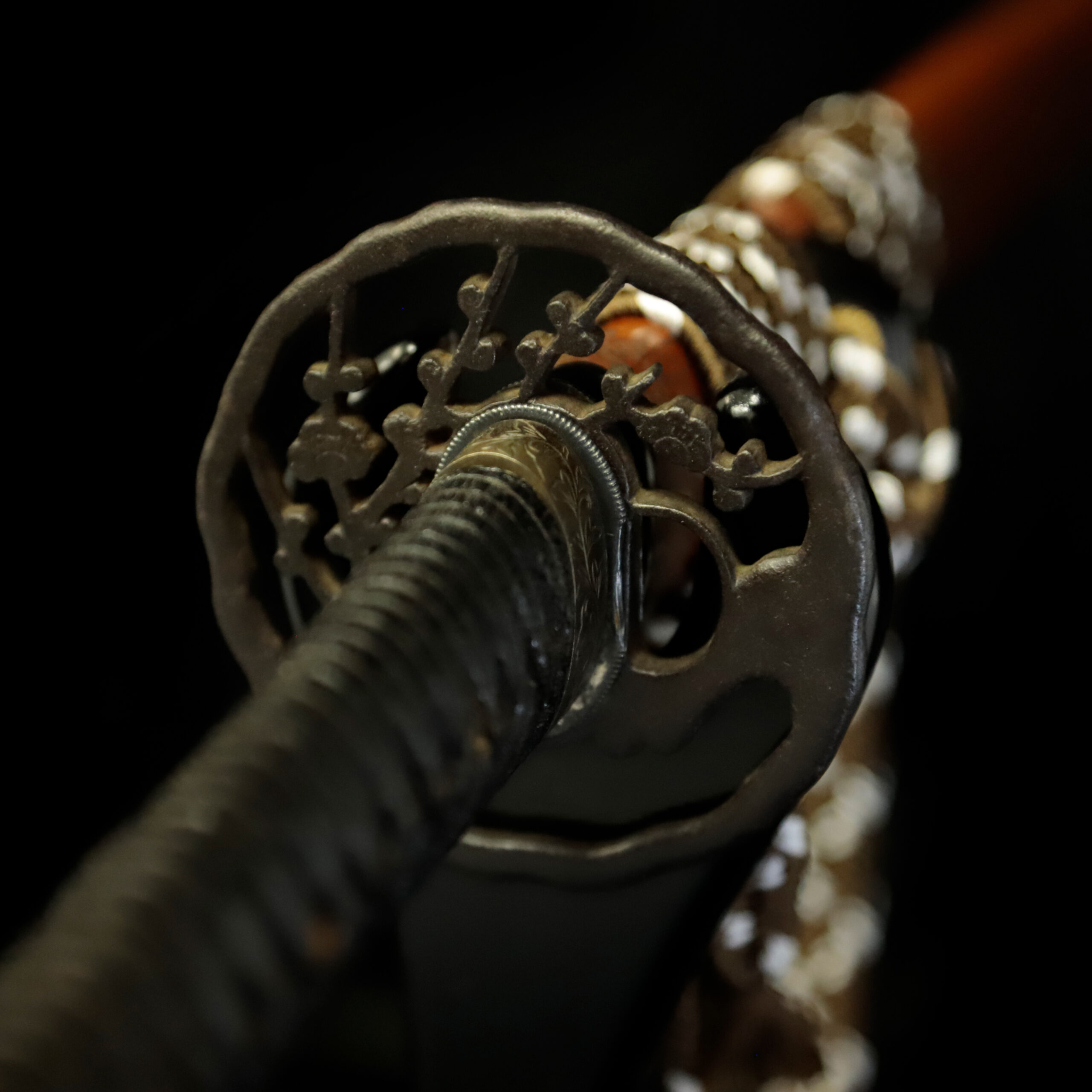
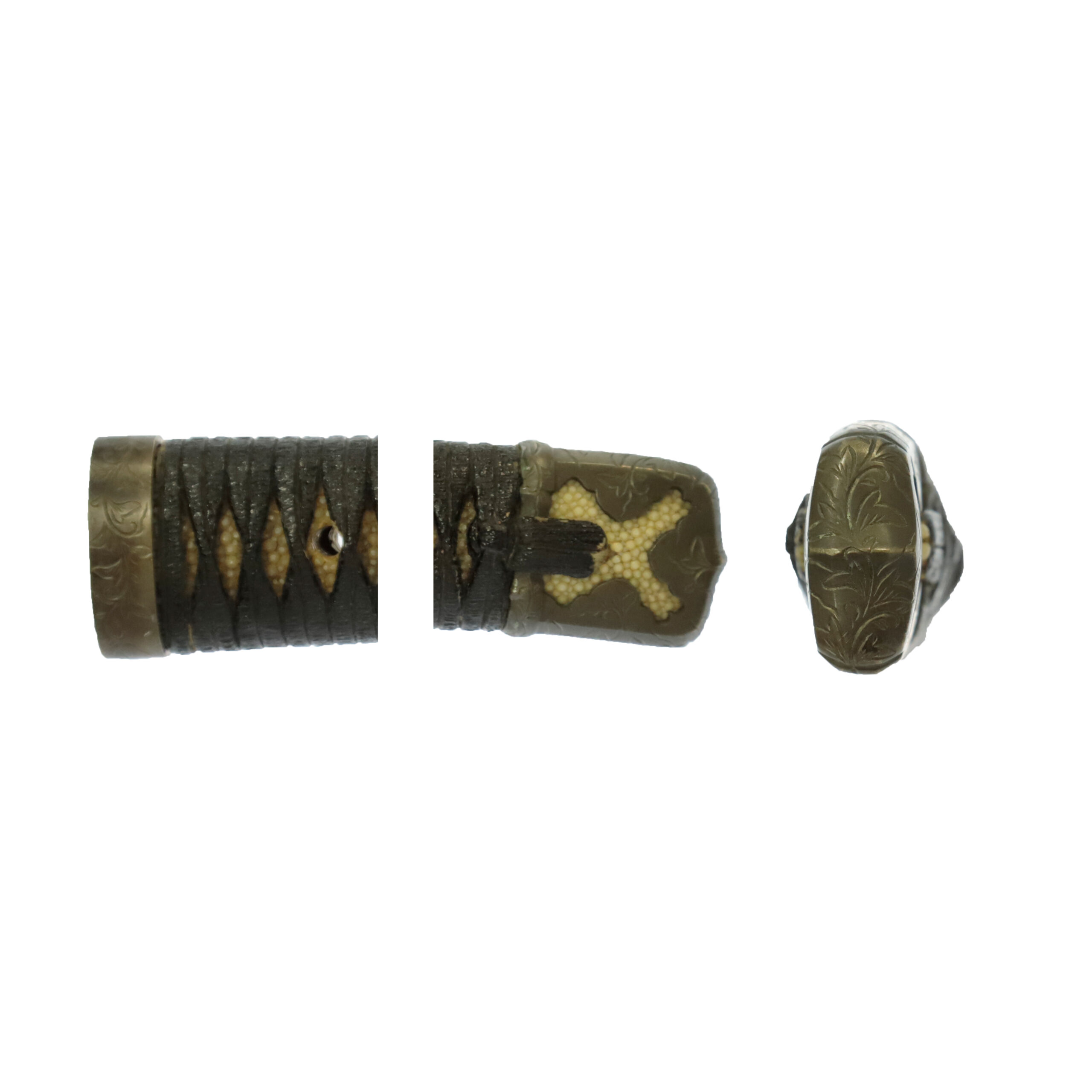
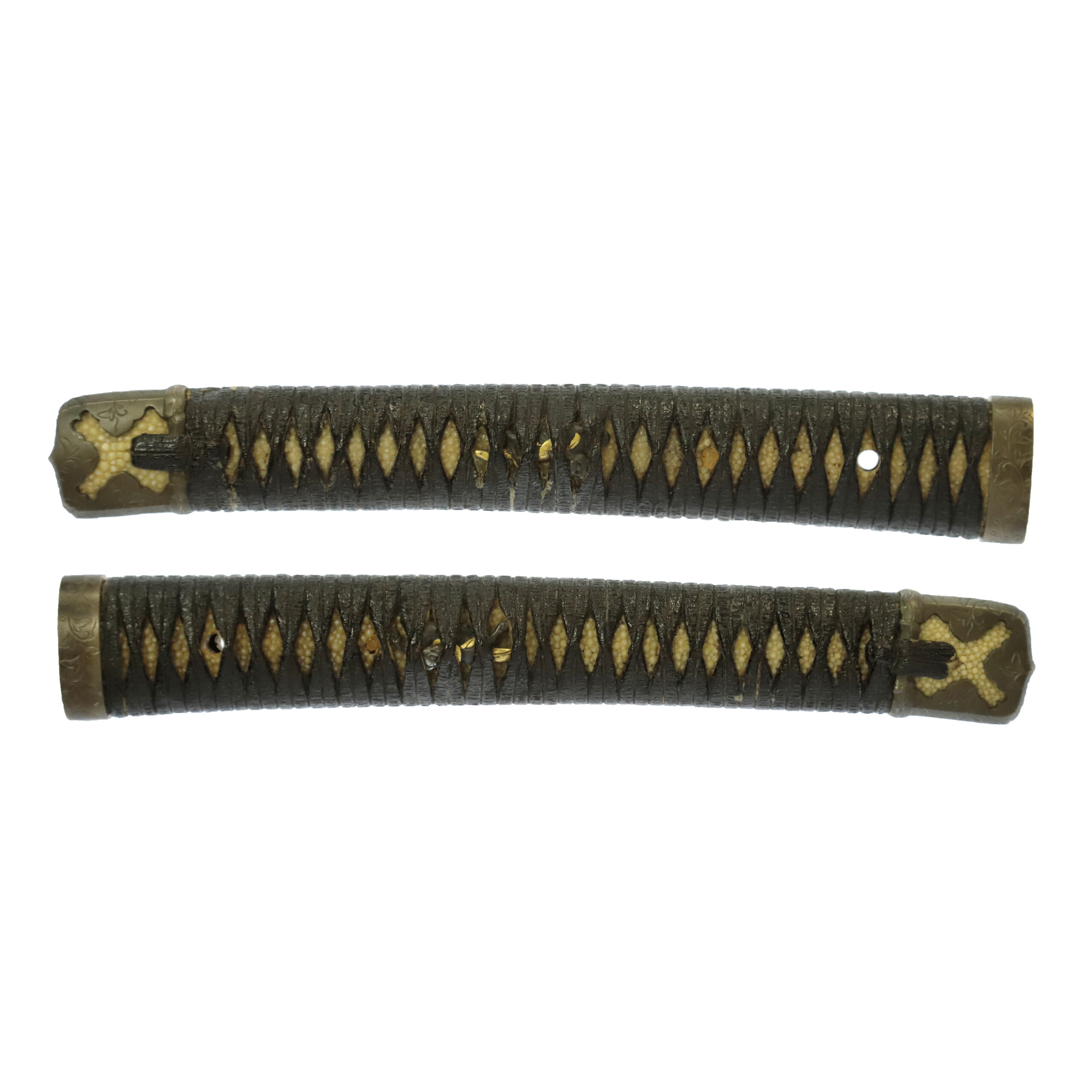
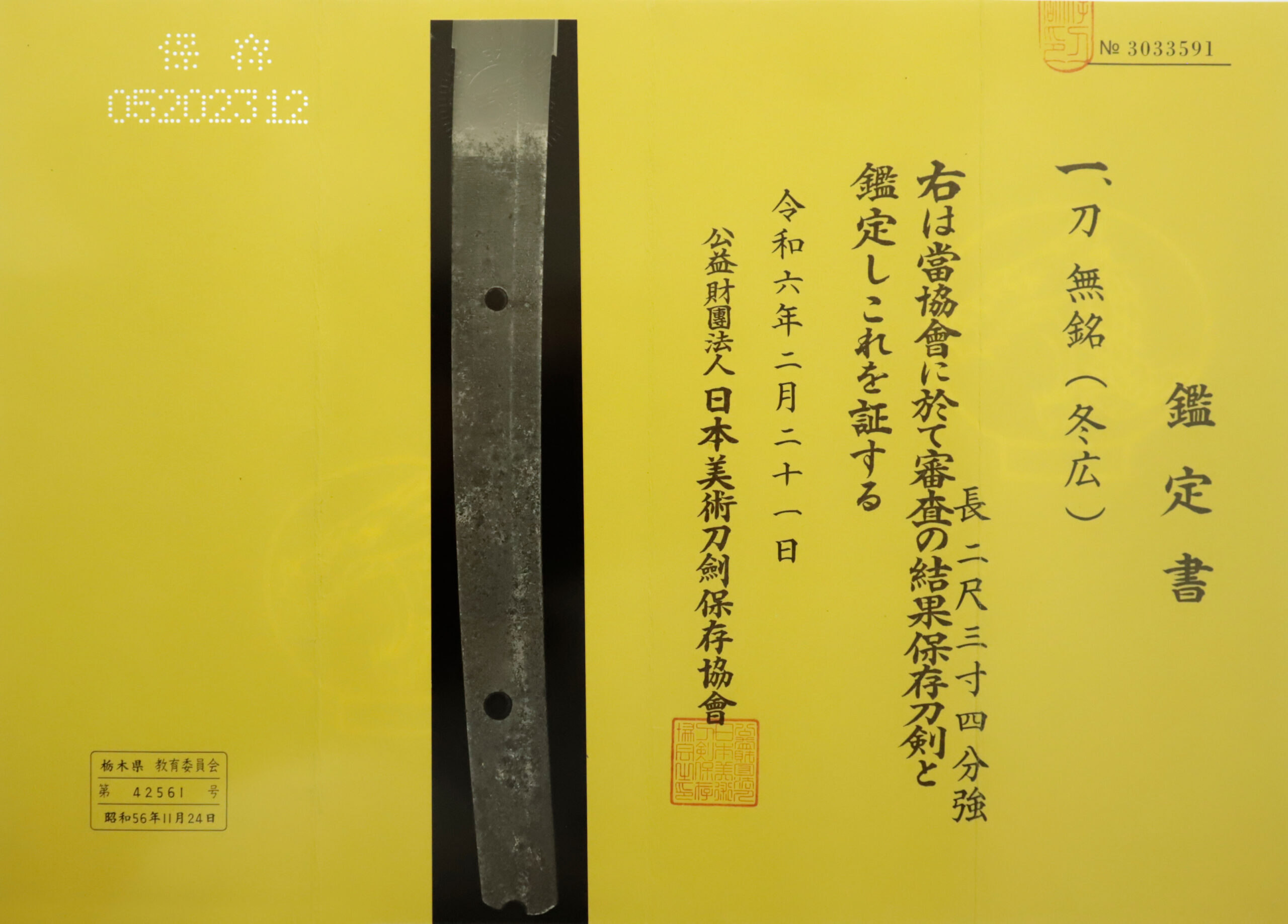
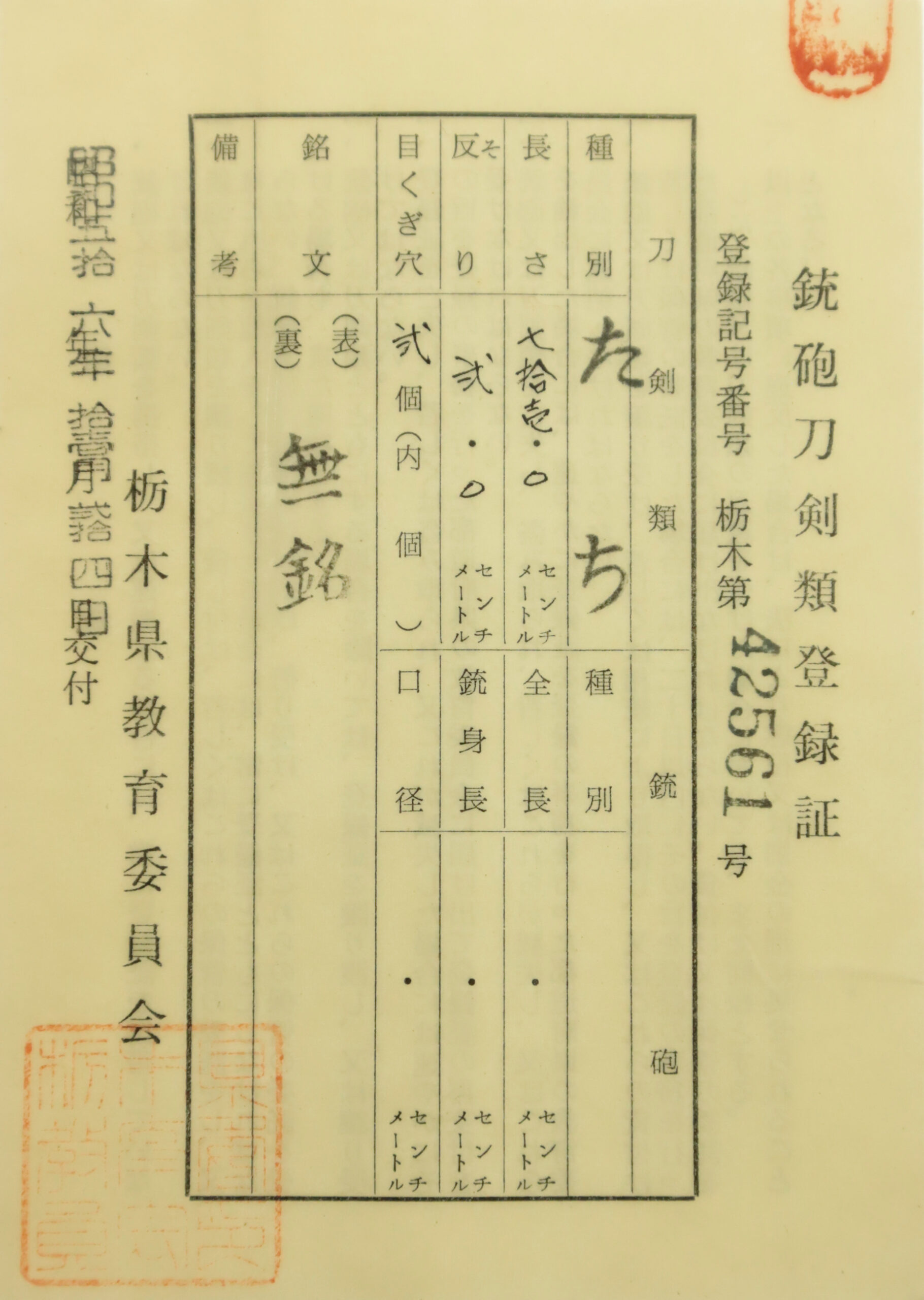
日本刀 刀 無銘 冬廣(日本美術刀剣保存協会 保存刀剣鑑定書付) 【解説】 概要 本作は室町時代後期(15世紀後半〜16世紀初頭)の冬廣(ふゆひろ)と極められた一振りです。初代冬廣は、相州(現在の神奈川県)の名工として名高い二代相州広次の子と伝えられています。初代冬廣は師より作刀技術を学んだ後、寛正年間(1460年頃)に若狭国(現在の福井県)へ移住しました。当初は五ヶ伝の一つである「相州伝」を主としていましたが、次第に「備前伝」の作風を巧みに取り入れた独自のスタイルを確立しました。古書によれば、冬廣の名は室町時代から江戸時代末期まで17代にわたり受け継がれましたが、本作はその初代冬廣への極めと推測されます。 戦国時代、冬廣の一門は武器の需要の高まりとともに、有力な武将や大名のために数多くの刀剣を鍛えました。江戸時代には備前、備後、出雲、伯耆など各地で冬廣の名を冠する刀工が活躍した記録が残されています。 相州伝について 相州伝は、鎌倉時代中期に相模国(現在の神奈川県)で誕生した伝法です。当時、大和伝や山城伝はすでに高い完成度を誇っていましたが、関東の地における作刀技術は未だ発展途上にありました。 1185年に幕府を開いた源頼朝は、当初は政治的安定のための法整備を優先しており、お抱えの刀工を育成する余裕がありませんでした。そのため、幕府は当初、大和や山城といった他国の刀工に武器の発注を行っていました。 しかし、幕府の基盤が固まるにつれ、鎌倉武士たちの間で武器の需要が急増します。これに応えるべく、五代執権・北条時頼は、山城国から粟田口国綱、備前国から備前三郎国宗という二人の名工を招聘しました。さらに七代将軍・惟康親王も備前より福岡一文字助真を招き入れました。 これら名工たちの交流が相州伝の基礎を築いたと言われています。その後、粟田口国綱の養子とされる新藤五国光が登場し、その技は行光へと受け継がれました。そして行光の弟子であり、日本刀史上最も著名な刀工の一人である正宗が、相州伝を完成させ、その名を天下に轟かせました。正宗が確立した作風は、後の刀工たちの模範となり、古刀期から新刀期の井上真改(大坂)や水心子正秀(江戸)といった名工たちにも多大な影響を与えました。 本刀は、日本美術刀剣保存協会(NBTHK)により「保存刀剣」に鑑定されています。この鑑定書は、美術品として価値が高く、保存状態が優れた本物の日本刀であることを証明するものです。 ※棟(むね)に数箇所の黒錆、平地に小さな疵(きず)、および切先に僅かな零れ(こぼれ)が見受けられます。詳細なコンディションについては、お気軽にお問い合わせください。 【刀身】 長さ(Nagasa):
 NihontoWatch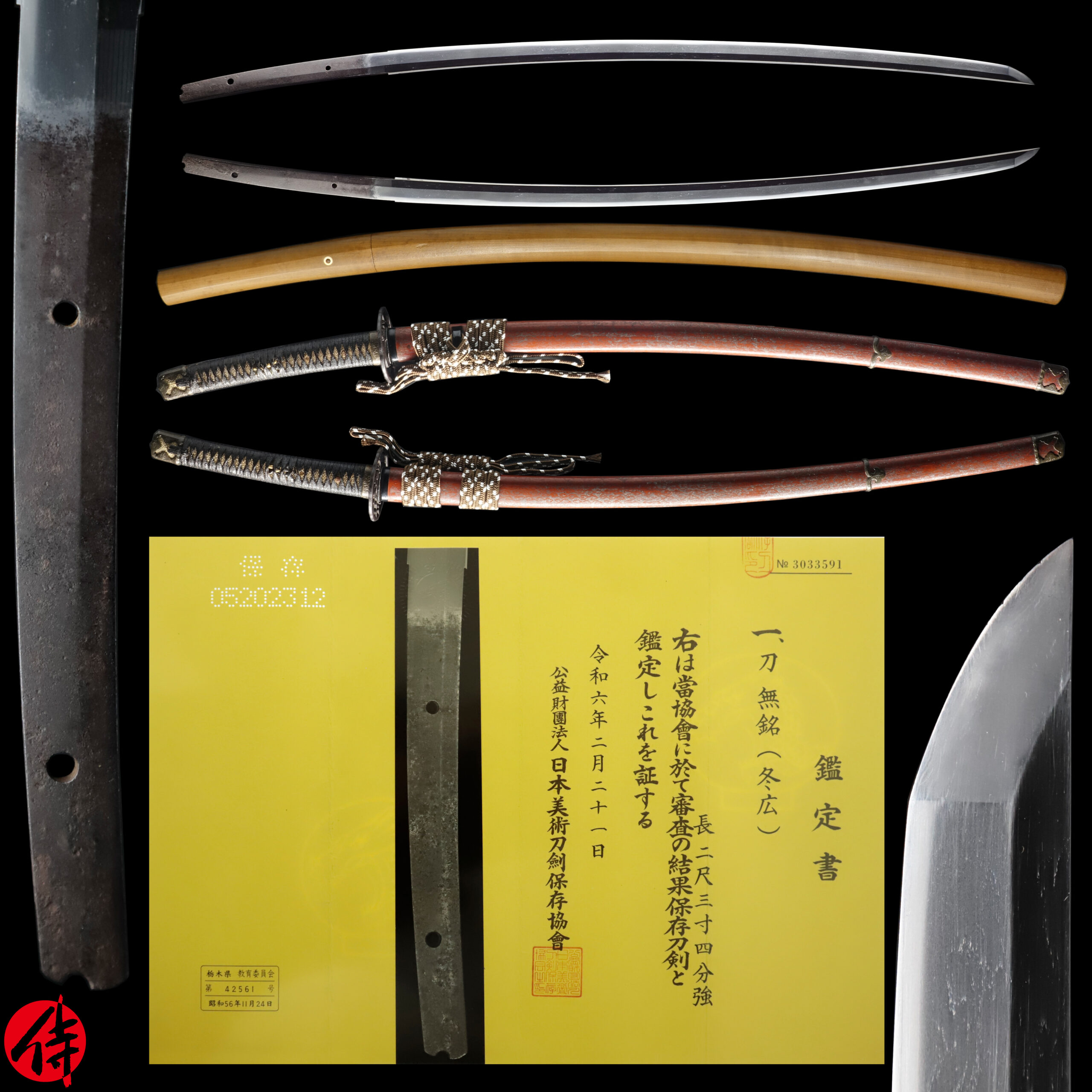
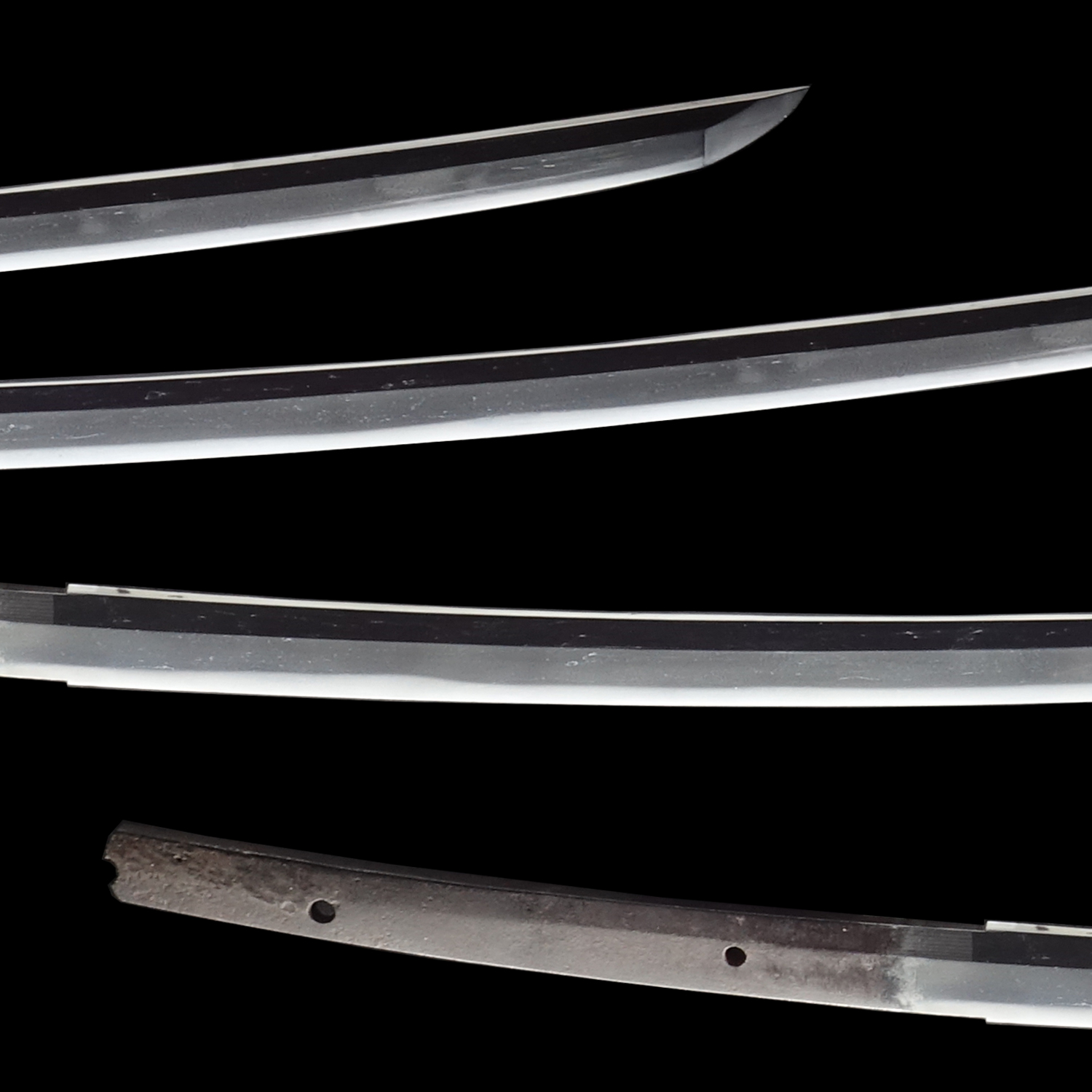
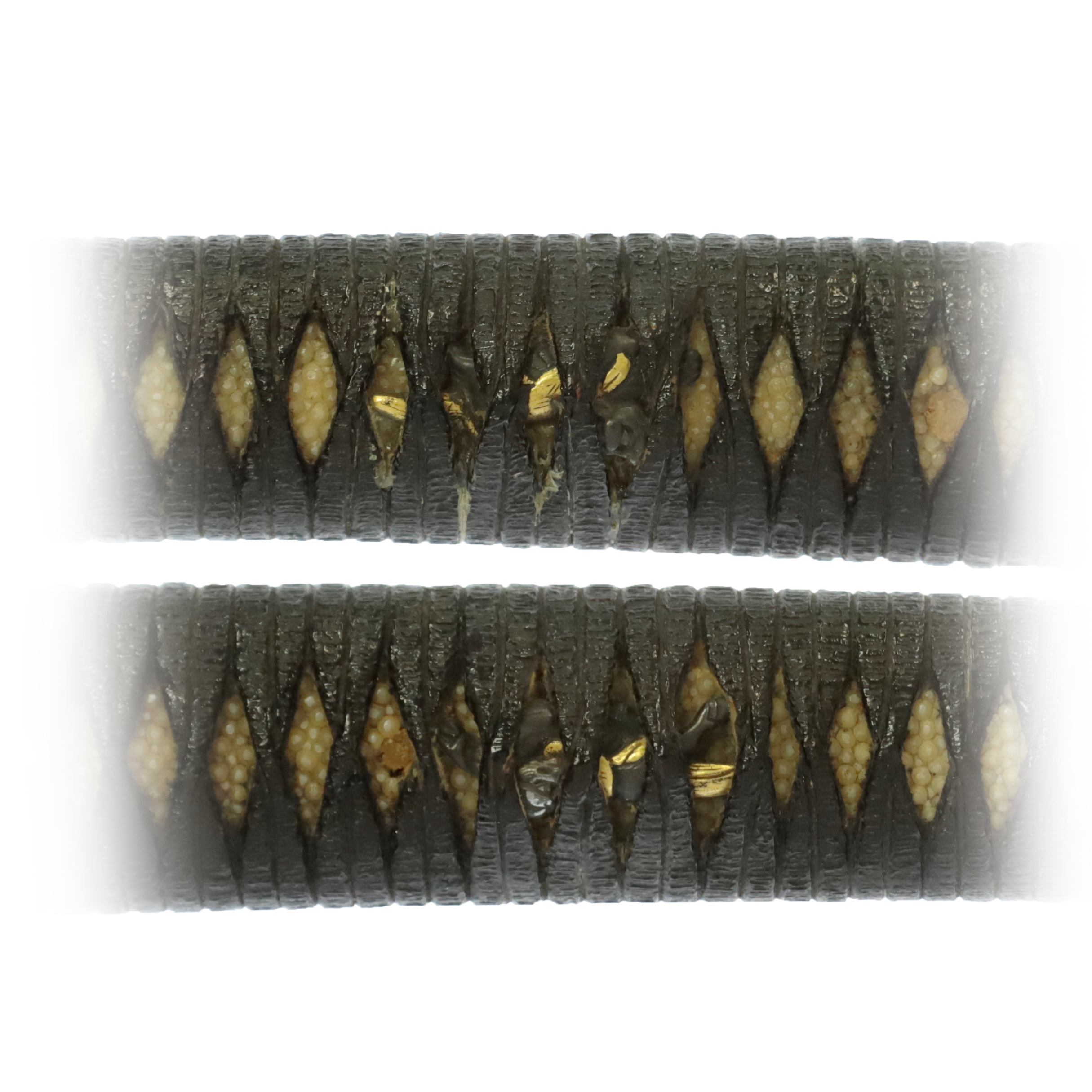
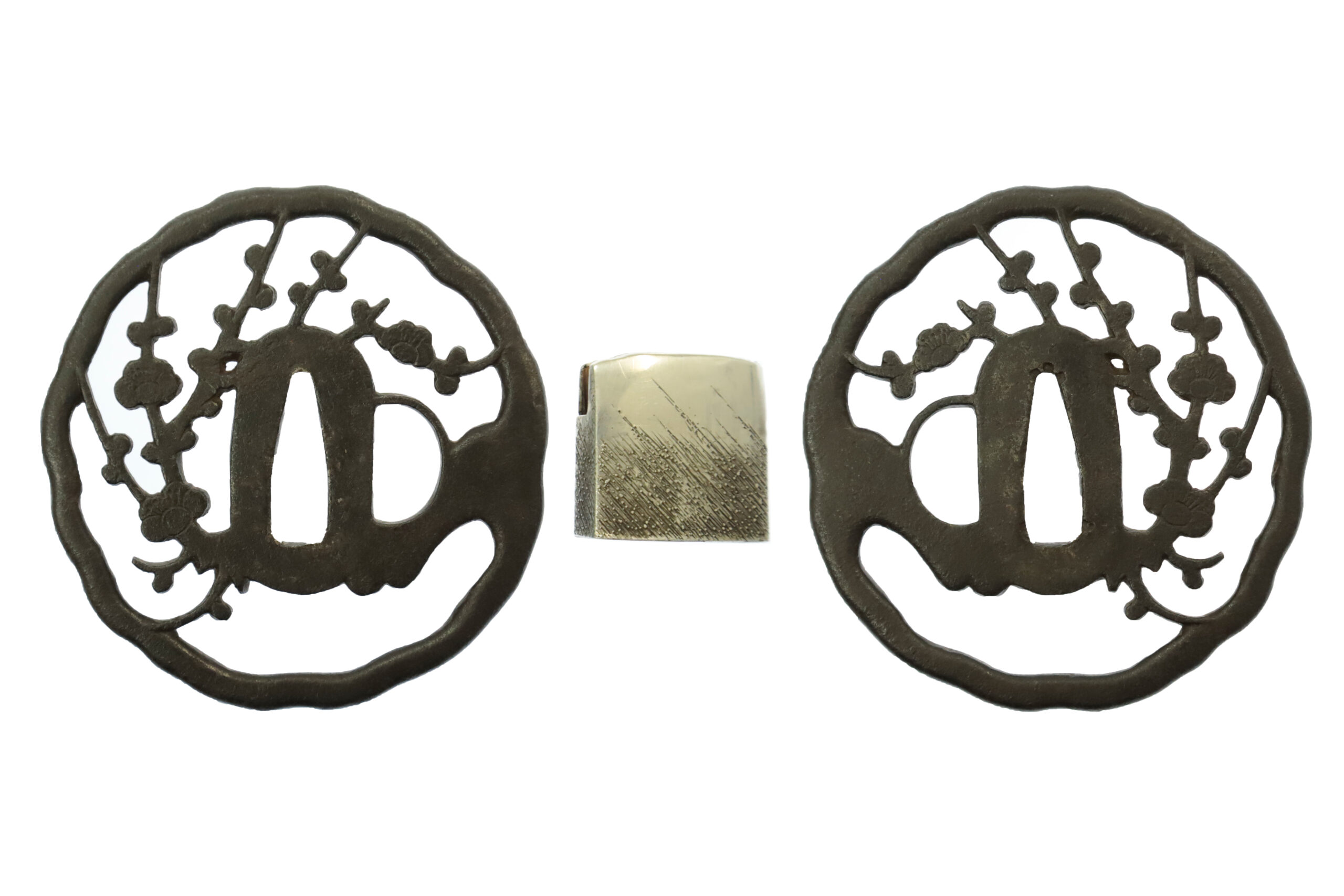
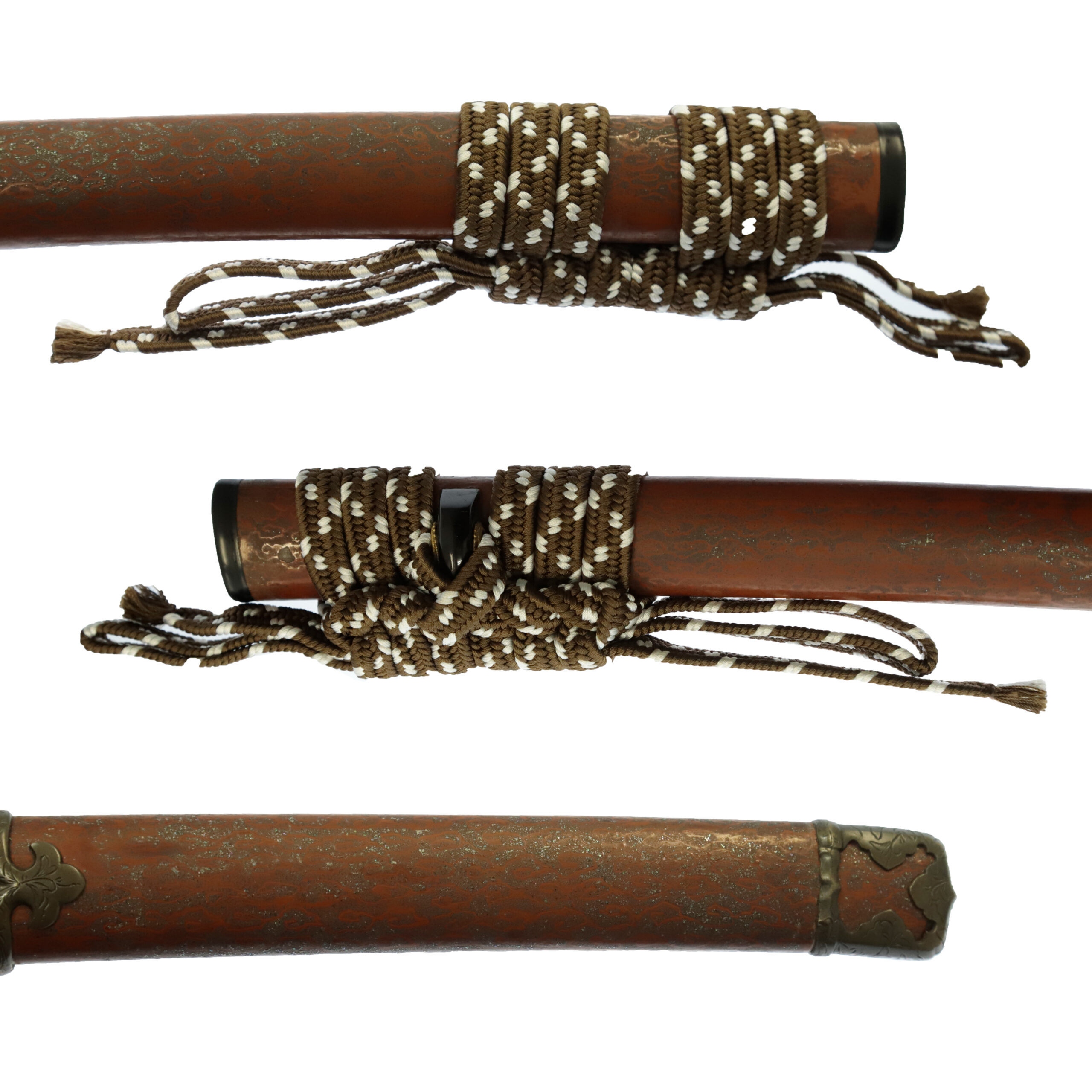
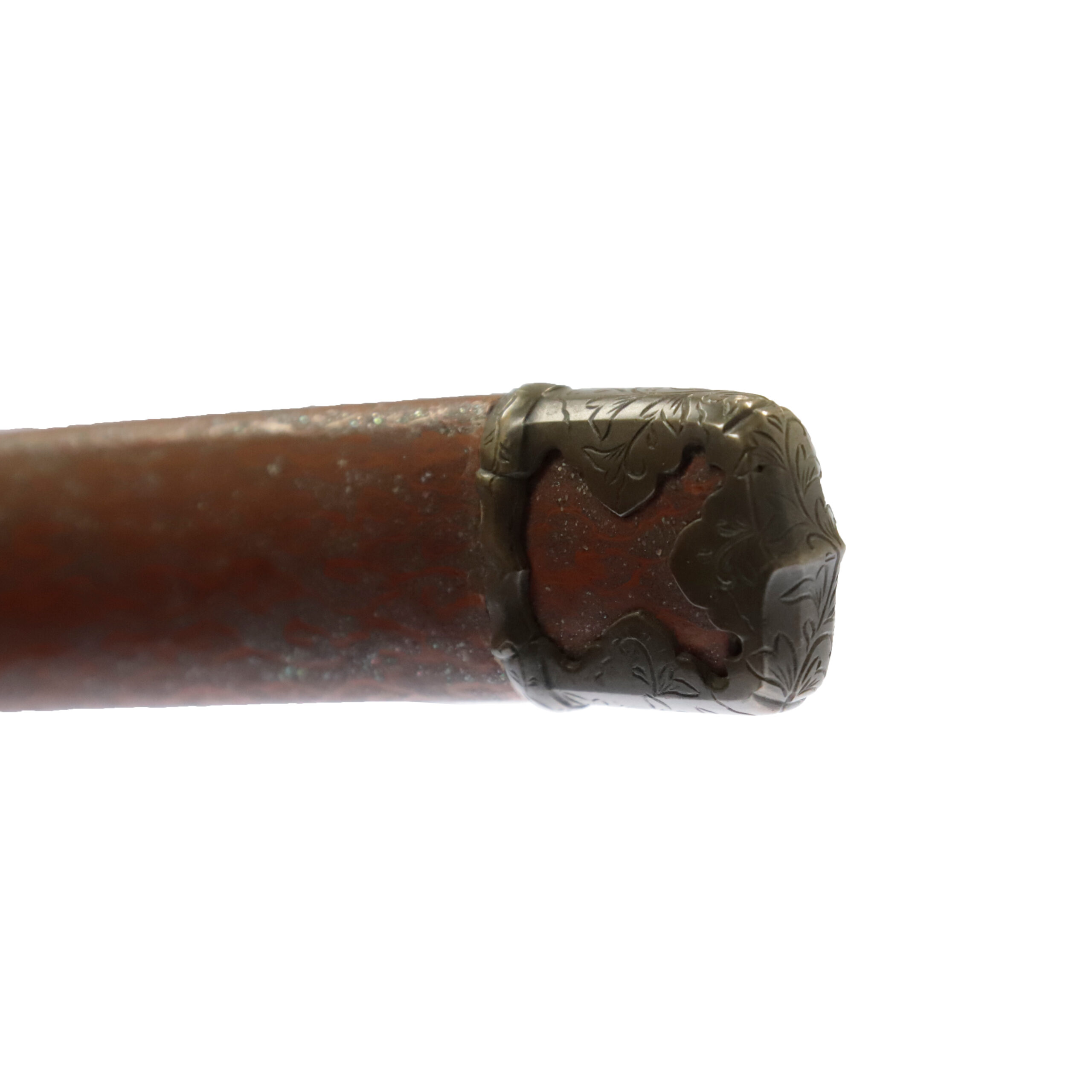
相州伝 · 若狭
現在8点販売中
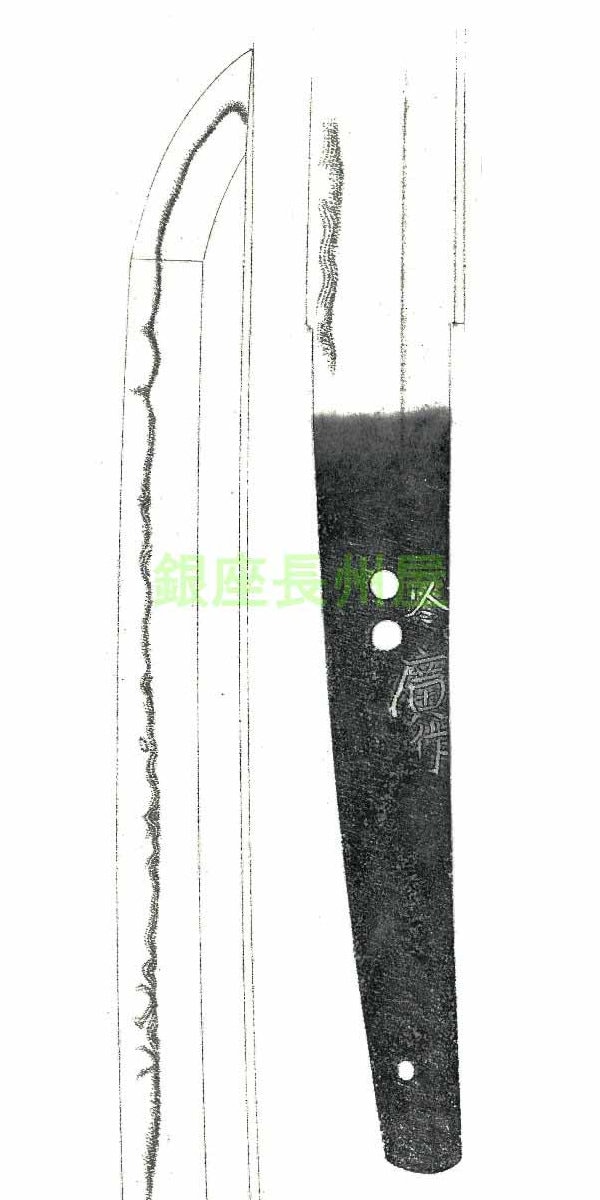
若狭冬広は、相州広次三代目の子と伝え、室町時代の康正頃に若州小浜へ移住したとされる一系である。説示によれば、その名跡は新々刀時代にまで続き、五代を数えたとも言われる。年紀のうえでは永正十二年紀に「冬広伍七三才」と銘した作が知られ、ほかに永正・天文・元亀・天正の年紀があって、室町後期から戦国期を通じての制作が確かめられる。源流は相州にあり、後には相州綱広の門に学んだと伝えるものの、相州住と銘した作は見ないとも記される。同じ頃に若州・伯州・雲州・備前・備中などと住所を切り替えた作があり、これらが同人によるものか否かは検討の余地が残るとして、説示はいずれも断を避けている。 作風として説示が繰り返し挙げるのは末相州風と末備前風の二様であり、同一の系のうちにこの両者が併存する点が判別の鍵となる。地鉄は板目に杢目・流れ肌を交え、肌立ちごころとなって地沸がつき、地景が頻りに入る。刃文は焼幅広く、のたれに小互の目・小丁子や尖り刃を交え、足・葉が盛んに入り、荒めの沸を交えて砂流し・金筋がかかり、匂口の明るいものが多い。中には中直刃を基調に互の目・尖り刃を交え、飛焼が頻りに加わって棟焼も総体にかかり、皆焼となる作がある。一方で太直刃調に小互の目を交える穏やかな直刃出来もみられ、直刃と乱れの両様を焼き分ける。帽子は乱れ込んで尖りごころとなり、あるいは小丸に掃きかけて返る。彫物を得意とし、草の倶利迦羅・梵字・棒樋・添樋などを施した作が伝わる。造込みは庵棟の鎬造を主とし、先反りつき大鋒に延びた豪壮なものから、反り浅い中鋒の尋常な姿まで幅がある。代の判別にあたっては、二字銘を初代の作とみるなど、銘のかたちと地刃の冴えとを併せて見るのが説示の示すところである。 鑑定の要点は、肌立つ板目鍛えに地沸・地景の加わる地鉄と、のたれ・互の目に沸を伴って砂流しのかかる刃取り、さらに皆焼を交える作のあることに置かれる。住所銘や年紀を切った作が多く、作刀地を明記した刀工銘や天正八年紀のごとく、資料としての価値の高い在銘作が伝わる点も本系の特色である。代表作には、若州小浜での所伝を裏づける在銘の刀のほか、備後国西条や備中松山など他国で鍛えた作があり、宮興盛のもとで天正五年に作刀した一口など、他国における活動を示す好資料も含まれる。彫物に長じた一面は、相州風よりむしろ平安城長吉などに近いと評され、両者の関係が問われることもある。末相州の流れを受けつつ末備前風をも併せ、若狭の地にあって戦国期から江戸期へと長く続いた一系として位置づけられる。 詳しく見る →
室町時代の相州
戦国の世、一派は第二の主家に仕えた。小田原の後北条氏である。その庇護のもと綱広系は打刀の時代の皆焼を鍛え続け、1590年の落城とともに新刀の時代へ散った。
銘が正しい、または無銘でも年代・国・系統を確実に指摘できる、保存に値する真正の作と鑑定されたものです。
日本美術刀剣保存協会(NBTHK)は、1948年に設立され、文化庁の監督を受ける公益財団法人で、東京・刀剣博物館に本部を置きます。専門の審査員が出品作を直接審査し、美術的・歴史的価値に応じた鑑定書を発行します。NBTHKの鑑定書は、日本刀および刀装具の真正性を示す最も広く認知された基準です。
NBTHK公式サイトReturns/exchanges limited to defects caused by shipping (except willful misconduct or gross negligence by the company); customers must contact within 72 hours of receiving the product.
日本刀 刀 無銘 冬廣(日本美術刀剣保存協会 保存刀剣鑑定書付) 【解説】 概要 本作は室町時代後期(15世紀後半〜16世紀初頭)の冬廣(ふゆひろ)と極められた一振りです。初代冬廣は、相州(現在の神奈川県)の名工として名高い二代相州広次の子と伝えられています。初代冬廣は師より作刀技術を学んだ後、寛正年間(1460年頃)に若狭国(現在の福井県)へ移住しました。当初は五ヶ伝の一つである「相州伝」を主としていましたが、次第に「備前伝」の作風を巧みに取り入れた独自のスタイルを確立しました。古書によれば、冬廣の名は室町時代から江戸時代末期まで17代にわたり受け継がれましたが、本作はその初代冬廣への極めと推測されます。 戦国時代、冬廣の一門は武器の需要の高まりとともに、有力な武将や大名のために数多くの刀剣を鍛えました。江戸時代には備前、備後、出雲、伯耆など各地で冬廣の名を冠する刀工が活躍した記録が残されています。 相州伝について 相州伝は、鎌倉時代中期に相模国(現在の神奈川県)で誕生した伝法です。当時、大和伝や山城伝はすでに高い完成度を誇っていましたが、関東の地における作刀技術は未だ発展途上にありました。 1185年に幕府を開いた源頼朝は、当初は政治的安定のための法整備を優先しており、お抱えの刀工を育成する余裕がありませんでした。そのため、幕府は当初、大和や山城といった他国の刀工に武器の発注を行っていました。 しかし、幕府の基盤が固まるにつれ、鎌倉武士たちの間で武器の需要が急増します。これに応えるべく、五代執権・北条時頼は、山城国から粟田口国綱、備前国から備前三郎国宗という二人の名工を招聘しました。さらに七代将軍・惟康親王も備前より福岡一文字助真を招き入れました。 これら名工たちの交流が相州伝の基礎を築いたと言われています。その後、粟田口国綱の養子とされる新藤五国光が登場し、その技は行光へと受け継がれました。そして行光の弟子であり、日本刀史上最も著名な刀工の一人である正宗が、相州伝を完成させ、その名を天下に轟かせました。正宗が確立した作風は、後の刀工たちの模範となり、古刀期から新刀期の井上真改(大坂)や水心子正秀(江戸)といった名工たちにも多大な影響を与えました。 本刀は、日本美術刀剣保存協会(NBTHK)により「保存刀剣」に鑑定されています。この鑑定書は、美術品として価値が高く、保存状態が優れた本物の日本刀であることを証明するものです。 ※棟(むね)に数箇所の黒錆、平地に小さな疵(きず)、および切先に僅かな零れ(こぼれ)が見受けられます。詳細なコンディションについては、お気軽にお問い合わせください。 【刀身】 長さ(Nagasa):
NihontoWatch相州伝 · 若狭
現在8点販売中
若狭冬広は、相州広次三代目の子と伝え、室町時代の康正頃に若州小浜へ移住したとされる一系である。説示によれば、その名跡は新々刀時代にまで続き、五代を数えたとも言われる。年紀のうえでは永正十二年紀に「冬広伍七三才」と銘した作が知られ、ほかに永正・天文・元亀・天正の年紀があって、室町後期から戦国期を通じての制作が確かめられる。源流は相州にあり、後には相州綱広の門に学んだと伝えるものの、相州住と銘した作は見ないとも記される。同じ頃に若州・伯州・雲州・備前・備中などと住所を切り替えた作があり、これらが同人によるものか否かは検討の余地が残るとして、説示はいずれも断を避けている。 作風として説示が繰り返し挙げるのは末相州風と末備前風の二様であり、同一の系のうちにこの両者が併存する点が判別の鍵となる。地鉄は板目に杢目・流れ肌を交え、肌立ちごころとなって地沸がつき、地景が頻りに入る。刃文は焼幅広く、のたれに小互の目・小丁子や尖り刃を交え、足・葉が盛んに入り、荒めの沸を交えて砂流し・金筋がかかり、匂口の明るいものが多い。中には中直刃を基調に互の目・尖り刃を交え、飛焼が頻りに加わって棟焼も総体にかかり、皆焼となる作がある。一方で太直刃調に小互の目を交える穏やかな直刃出来もみられ、直刃と乱れの両様を焼き分ける。帽子は乱れ込んで尖りごころとなり、あるいは小丸に掃きかけて返る。彫物を得意とし、草の倶利迦羅・梵字・棒樋・添樋などを施した作が伝わる。造込みは庵棟の鎬造を主とし、先反りつき大鋒に延びた豪壮なものから、反り浅い中鋒の尋常な姿まで幅がある。代の判別にあたっては、二字銘を初代の作とみるなど、銘のかたちと地刃の冴えとを併せて見るのが説示の示すところである。 鑑定の要点は、肌立つ板目鍛えに地沸・地景の加わる地鉄と、のたれ・互の目に沸を伴って砂流しのかかる刃取り、さらに皆焼を交える作のあることに置かれる。住所銘や年紀を切った作が多く、作刀地を明記した刀工銘や天正八年紀のごとく、資料としての価値の高い在銘作が伝わる点も本系の特色である。代表作には、若州小浜での所伝を裏づける在銘の刀のほか、備後国西条や備中松山など他国で鍛えた作があり、宮興盛のもとで天正五年に作刀した一口など、他国における活動を示す好資料も含まれる。彫物に長じた一面は、相州風よりむしろ平安城長吉などに近いと評され、両者の関係が問われることもある。末相州の流れを受けつつ末備前風をも併せ、若狭の地にあって戦国期から江戸期へと長く続いた一系として位置づけられる。 詳しく見る →
室町時代の相州
戦国の世、一派は第二の主家に仕えた。小田原の後北条氏である。その庇護のもと綱広系は打刀の時代の皆焼を鍛え続け、1590年の落城とともに新刀の時代へ散った。
銘が正しい、または無銘でも年代・国・系統を確実に指摘できる、保存に値する真正の作と鑑定されたものです。
日本美術刀剣保存協会(NBTHK)は、1948年に設立され、文化庁の監督を受ける公益財団法人で、東京・刀剣博物館に本部を置きます。専門の審査員が出品作を直接審査し、美術的・歴史的価値に応じた鑑定書を発行します。NBTHKの鑑定書は、日本刀および刀装具の真正性を示す最も広く認知された基準です。
NBTHK公式サイトReturns/exchanges limited to defects caused by shipping (except willful misconduct or gross negligence by the company); customers must contact within 72 hours of receiving the product.