売切れ
Tokuho売切れ
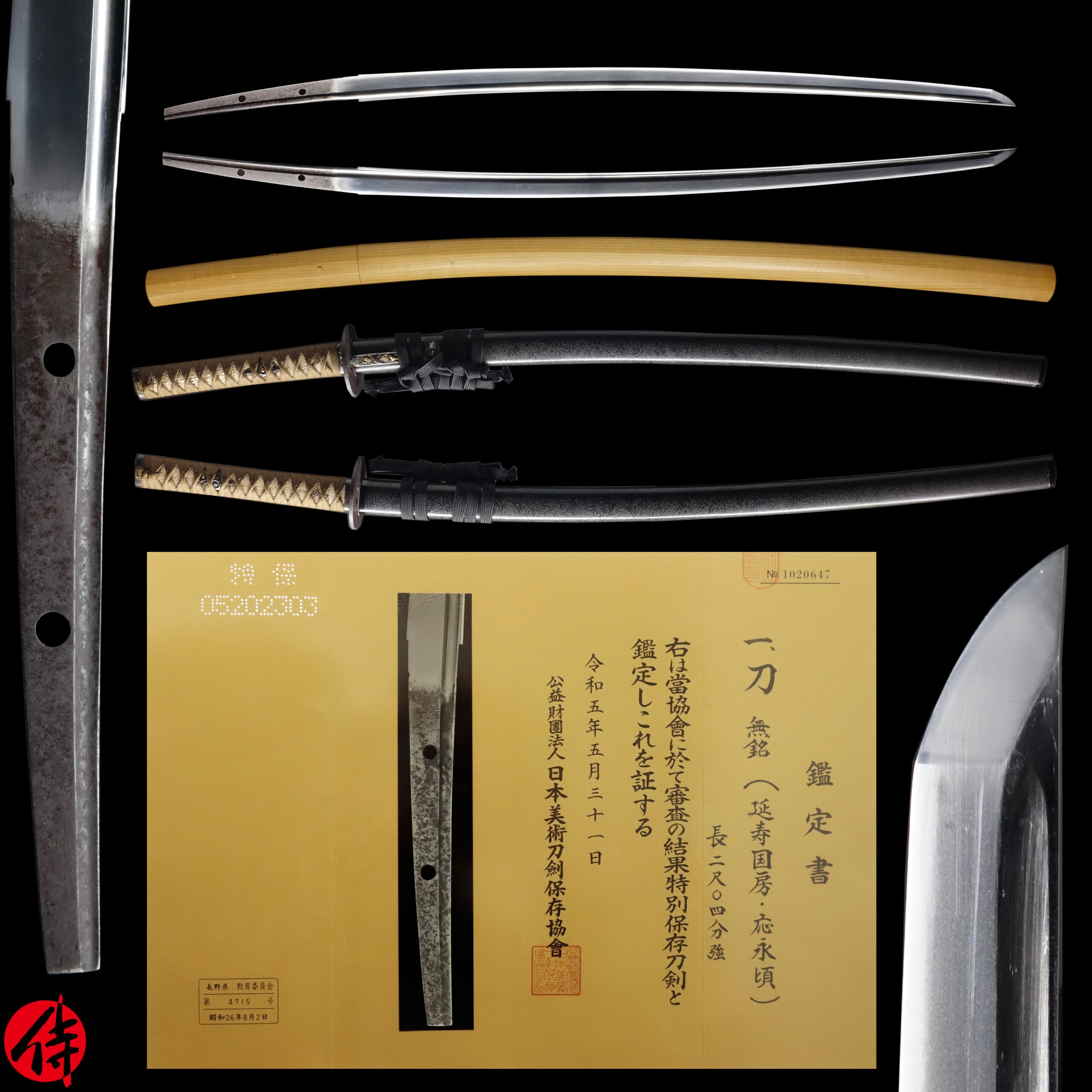
Antique Japanese Sword Katana attributed to Enjyu Kunifusa NBTHK Tokubetsu Hozon Certificate
売却済
世界81社の刀剣商を横断追跡 · 価格履歴 · 売却アーカイブ
仕様
長さ
61.9 cm
反り
1.36 cm
Antique Japanese Sword Katana attributed to Enjyu Kunifusa with Tokubetsu Hozon Certificate 【Description】 This blade is attributed to Enju Kunifusa (延寿国房), who was active during the O-Ei era ( 1394-1428 ). Enjyu(延寿) is the prestigious school’s name that flourished during the late Kamakura period-Nanbokucho period (Late 13th-Early 14th century) in Higo province (Today’s Kumamoto prefecture). Enjyu school was founded by Kunimura(国村), who is said to have been the grandson of Rai Kuniyuki from Yamashiro province(Today’s Kyoto prefecture). Kunimura and his apprentices moved from Yamashiro province to Higo province(Today’s Kumamoto prefecture in Kyushu island) after being invited by the Kikuchi clan, who had an influential power in that region. It is said that the 10th head of the Kikuchi clan, Kikuchi Takefusa(菊池武房), had to find skilled swordsmiths who could forge strong swords to combat the Mongolian army. Back then, Japan was targeted by the Mongolian emperor, and Kyushu island is where the battle was taking place twice(1274 and 1281). To prepare for the second attack from the Mongols, Kikuchi Takefusa brought Kunimura and his apprentices from Kyoto. Since then, Kunimura and his sons served as Okakaekaji for this clan, exclusively forging swords for the Kikuchi clan, which ruled the Higo province back then. All the swordsmiths from Enjyu school used the letter “国” (Kuni) for their maker’s name. The descendant of this school founded the famous sword school named Dotanuki(同田貫). And there are descendants of the Enjyu school’s swordsmiths throughout the Edo period. That means Enjyu school had over 500 years of its history. When Enju school flourished in the Nanbokucho period, Japan was tumultuous because the imperial court was split into two sides(south and north). There were many conflicts, and many Samurai were deployed. And Enju school must have dedicated themselves to forging high-quality blades for those Samurai who fought in battles. Enju swordsmiths who were active during the early Muromachi period are called Matsu Enju and Enjyu Kunifusa is categorized as Matsu Enjyu. Matsu means the end in Japanese. The name “Enjyu” is written as 延寿 in Japanese. If you translate the word literally, it means extending life span, which was construed as good luck among feudal lords. Therefore, the swords were presented among Samurai as good gifts. It is appraised as a Tokubetsu Hozon Token (特別保存刀剣) issued by NBTHK(Nihon Bijutsu Touken Hozon Kyokai:日本美術刀剣保存協会). This authentication paper was only given to authentic Japanese swords, especially well preserved and high quality with artistic value. *Please keep in mind that there are a couple of minor Kitae Kizu on this blade. If you like to know the detailed condition, please feel free to contact us. 【 Blade】 Cutting Edge Length(Nagasa) : 61.9 cm ( 24.4 inches) Curvature(Sori) : 1.36 cm ( 0.53 inches) Hamon : The crystalline structure which forms along the cutting edge of a blade as a result of the hardening process Jimon(Jihada) : visible steel surface pattern created by folding and hammering during forging process Kissaki : Kissaki is the tip of the Japanese sword. Nakago : Nakago is the tang of the Japanese sword. Japanese swordsmiths left the black rust on the tang because it prevents red rust while the tang is in its handle. And the discoloration of the tang was created over time, and it is a great indicator for a Japanese sword specialist to estimate when the sword was forged. Koshirae: Koshirae is the mounting of the Japanese sword. There are several parts that consist of Koshirae such as Saya(Scabbard), Tsuka(Handle), Tsuba(Handguard). Fuchi-Kashira : A pair of matching sword fittings that cover the upper and bottom parts of its sword hilt. You would find a unique design on this Kashira part. We believe it depicts a landscape, and you would find the figure of a Fukurou (梟, owl), standing on probably a stone lantern. This owl is colored with golden paint, and there are traces of silvery paint
 NihontoWatchBETA
売却済
世界81社の刀剣商を横断追跡 · 価格履歴 · 売却アーカイブ
61.9 cm
1.36 cm
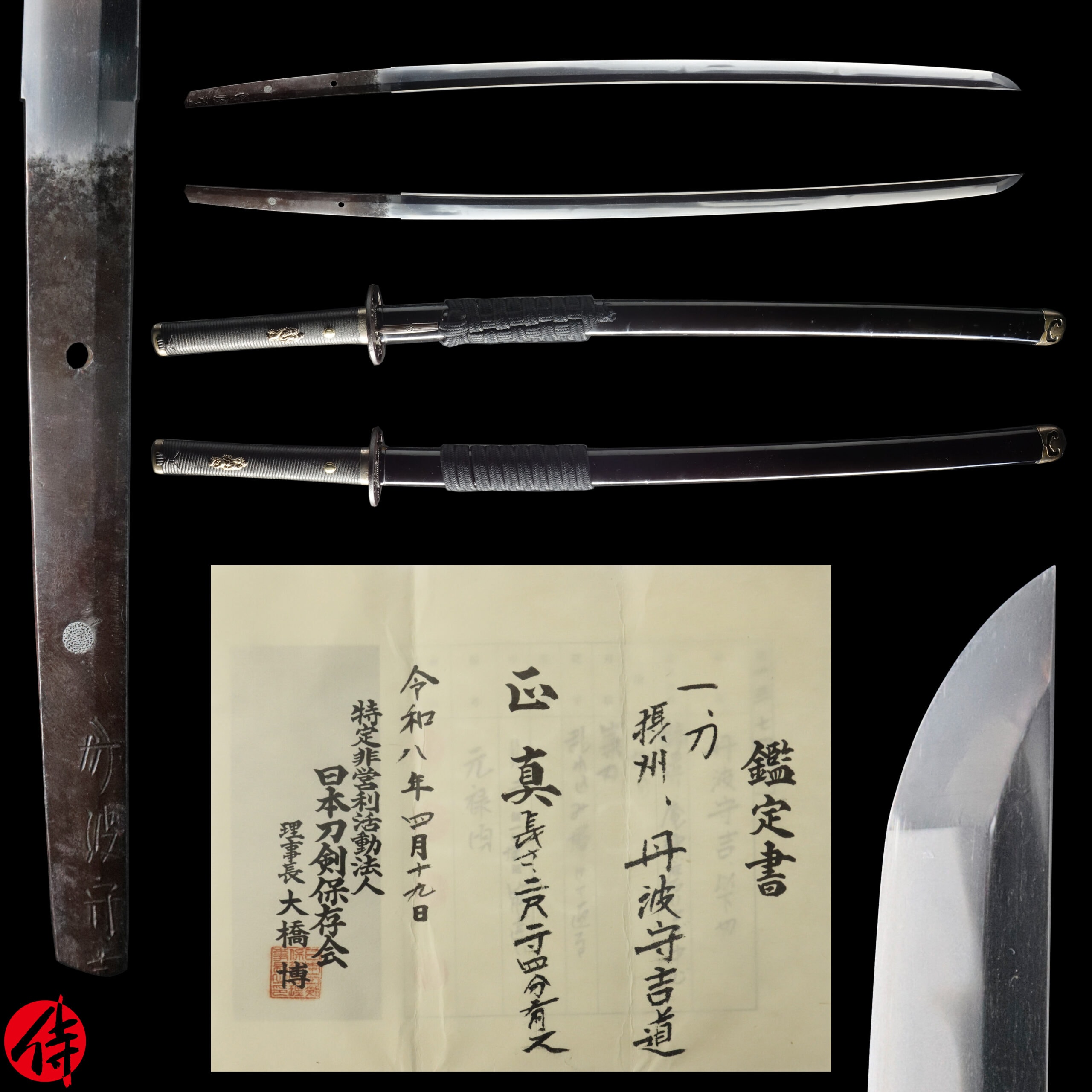
Mid Edo Katana signed by Tanba no Kami Yoshimichi for sale| Samurai Museum Shop E-mail FB Messenger Skip to content Menu Close Samurai Museum Shop Products Antique Japanese Sword Katana signed by Tanba no Kami Yoshimichi NTHK Kanteisho Certificate Updated: 22 Jun 2026 Antique Japanese Sword Katana signed by Tanba no Kami Yoshimichi NTHK Kanteisho Certificate
$7,441
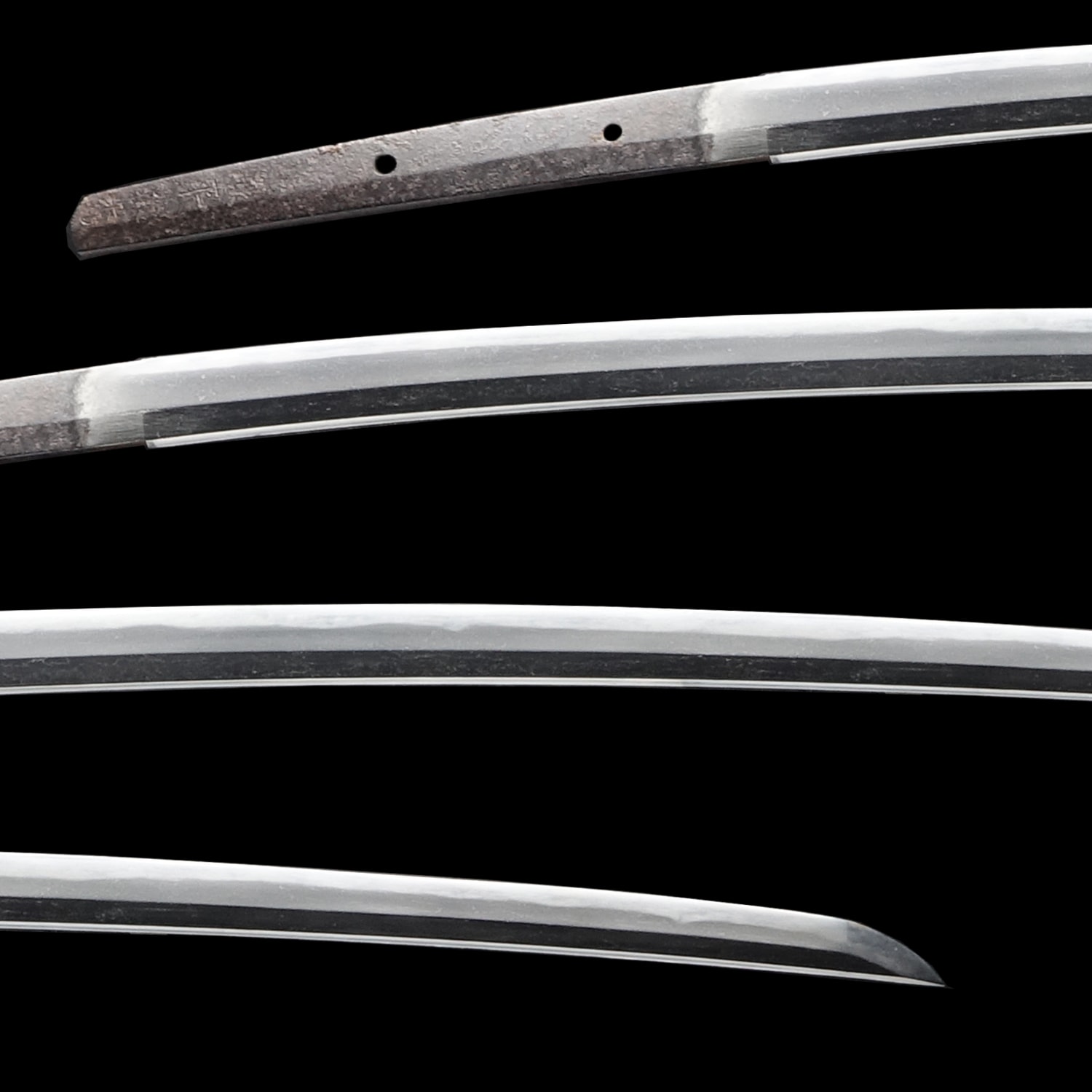
Muromachi Katana signed by Naminohira Yasuhide for sale
$7,751
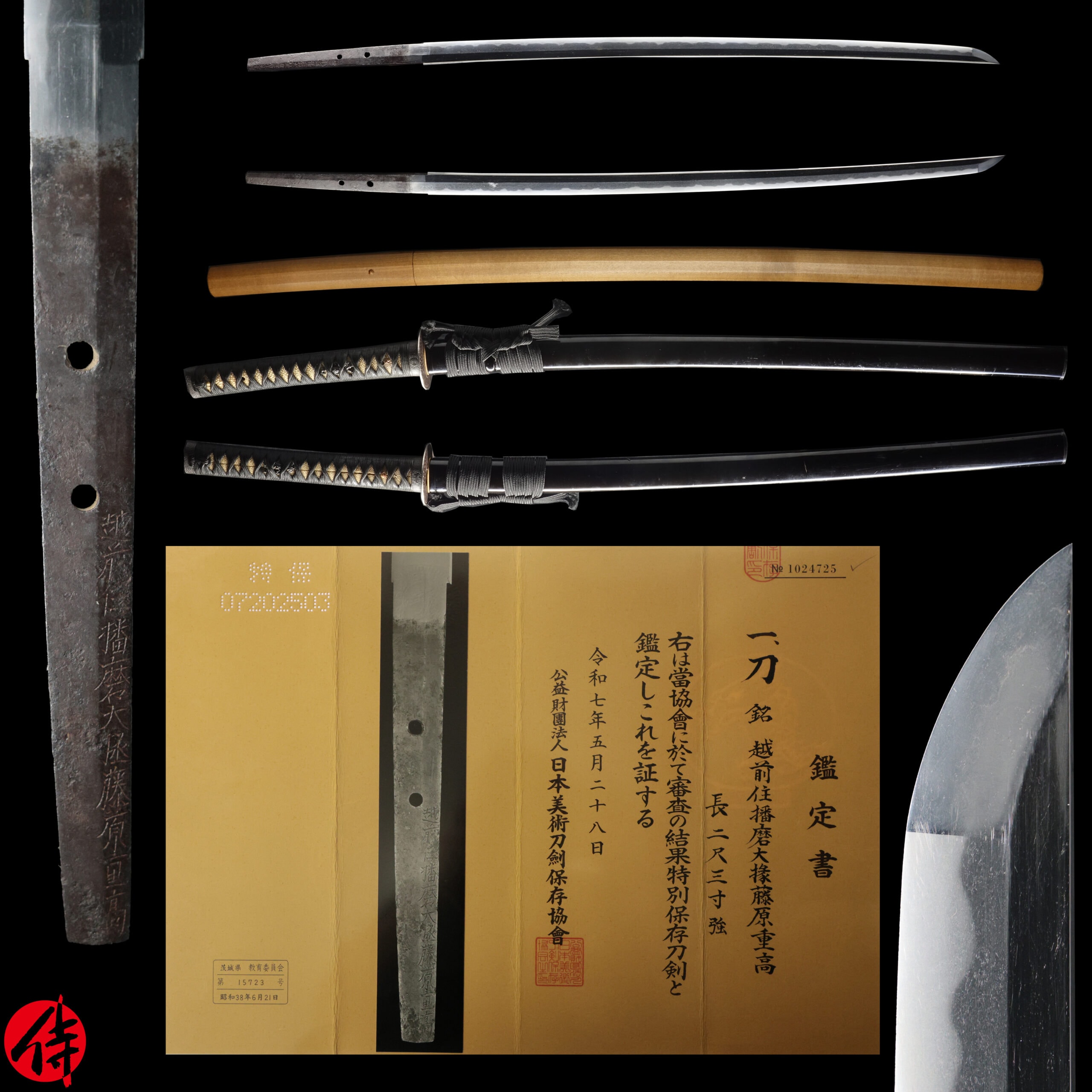
Early Edo Nihonto signed by Shigetaka for sale
$7,131
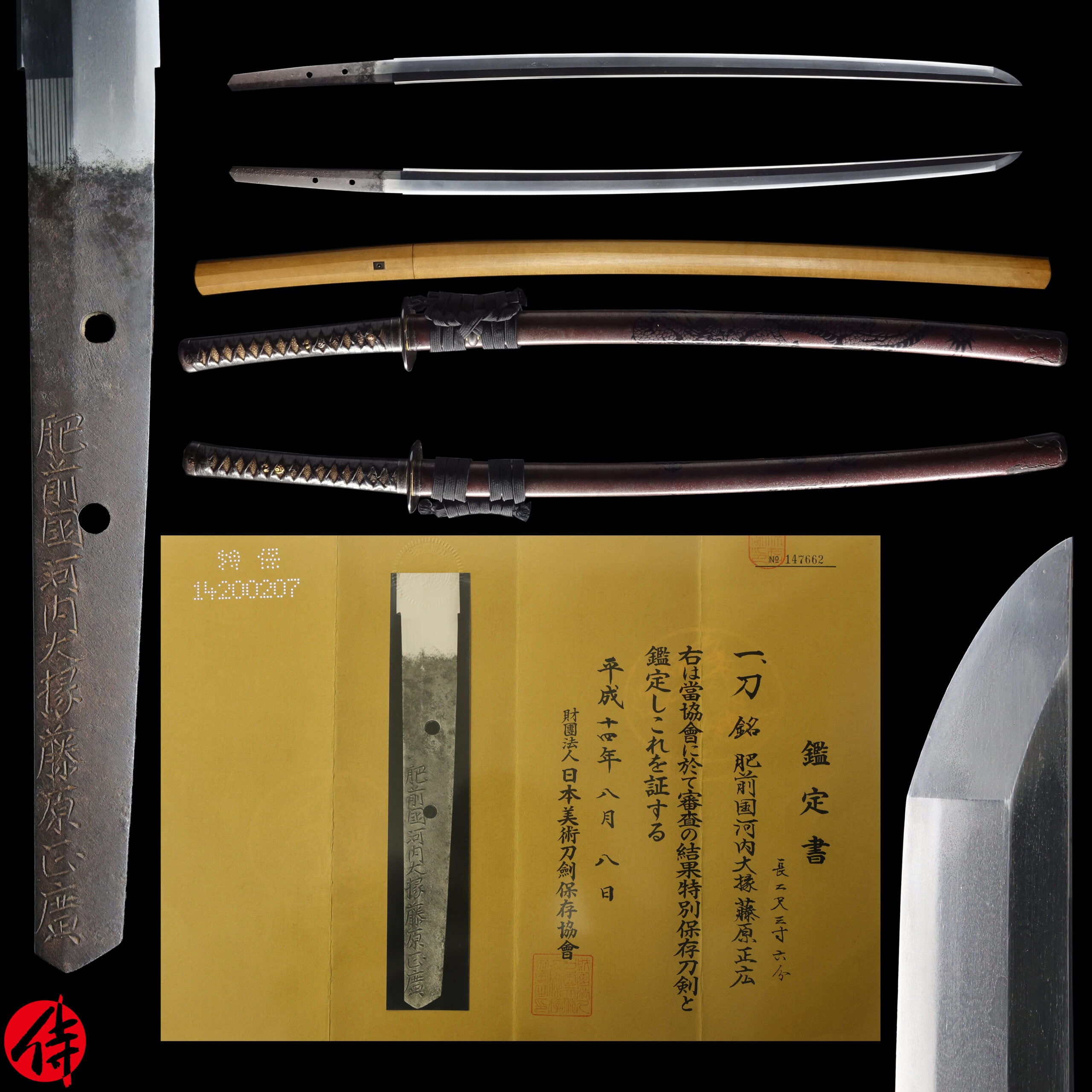
Antique Japanese Sword Katana Signed by Masahiro NBTHK Tokubetsu Hozon Certificate
$7,751
Antique Japanese Sword Katana attributed to Enjyu Kunifusa with Tokubetsu Hozon Certificate 【Description】 This blade is attributed to Enju Kunifusa (延寿国房), who was active during the O-Ei era ( 1394-1428 ). Enjyu(延寿) is the prestigious school’s name that flourished during the late Kamakura period-Nanbokucho period (Late 13th-Early 14th century) in Higo province (Today’s Kumamoto prefecture). Enjyu school was founded by Kunimura(国村), who is said to have been the grandson of Rai Kuniyuki from Yamashiro province(Today’s Kyoto prefecture). Kunimura and his apprentices moved from Yamashiro province to Higo province(Today’s Kumamoto prefecture in Kyushu island) after being invited by the Kikuchi clan, who had an influential power in that region. It is said that the 10th head of the Kikuchi clan, Kikuchi Takefusa(菊池武房), had to find skilled swordsmiths who could forge strong swords to combat the Mongolian army. Back then, Japan was targeted by the Mongolian emperor, and Kyushu island is where the battle was taking place twice(1274 and 1281). To prepare for the second attack from the Mongols, Kikuchi Takefusa brought Kunimura and his apprentices from Kyoto. Since then, Kunimura and his sons served as Okakaekaji for this clan, exclusively forging swords for the Kikuchi clan, which ruled the Higo province back then. All the swordsmiths from Enjyu school used the letter “国” (Kuni) for their maker’s name. The descendant of this school founded the famous sword school named Dotanuki(同田貫). And there are descendants of the Enjyu school’s swordsmiths throughout the Edo period. That means Enjyu school had over 500 years of its history. When Enju school flourished in the Nanbokucho period, Japan was tumultuous because the imperial court was split into two sides(south and north). There were many conflicts, and many Samurai were deployed. And Enju school must have dedicated themselves to forging high-quality blades for those Samurai who fought in battles. Enju swordsmiths who were active during the early Muromachi period are called Matsu Enju and Enjyu Kunifusa is categorized as Matsu Enjyu. Matsu means the end in Japanese. The name “Enjyu” is written as 延寿 in Japanese. If you translate the word literally, it means extending life span, which was construed as good luck among feudal lords. Therefore, the swords were presented among Samurai as good gifts. It is appraised as a Tokubetsu Hozon Token (特別保存刀剣) issued by NBTHK(Nihon Bijutsu Touken Hozon Kyokai:日本美術刀剣保存協会). This authentication paper was only given to authentic Japanese swords, especially well preserved and high quality with artistic value. *Please keep in mind that there are a couple of minor Kitae Kizu on this blade. If you like to know the detailed condition, please feel free to contact us. 【 Blade】 Cutting Edge Length(Nagasa) : 61.9 cm ( 24.4 inches) Curvature(Sori) : 1.36 cm ( 0.53 inches) Hamon : The crystalline structure which forms along the cutting edge of a blade as a result of the hardening process Jimon(Jihada) : visible steel surface pattern created by folding and hammering during forging process Kissaki : Kissaki is the tip of the Japanese sword. Nakago : Nakago is the tang of the Japanese sword. Japanese swordsmiths left the black rust on the tang because it prevents red rust while the tang is in its handle. And the discoloration of the tang was created over time, and it is a great indicator for a Japanese sword specialist to estimate when the sword was forged. Koshirae: Koshirae is the mounting of the Japanese sword. There are several parts that consist of Koshirae such as Saya(Scabbard), Tsuka(Handle), Tsuba(Handguard). Fuchi-Kashira : A pair of matching sword fittings that cover the upper and bottom parts of its sword hilt. You would find a unique design on this Kashira part. We believe it depicts a landscape, and you would find the figure of a Fukurou (梟, owl), standing on probably a stone lantern. This owl is colored with golden paint, and there are traces of silvery paint
NihontoWatchBETA売却済
世界81社の刀剣商を横断追跡 · 価格履歴 · 売却アーカイブ
61.9 cm
1.36 cm
Mid Edo Katana signed by Tanba no Kami Yoshimichi for sale| Samurai Museum Shop E-mail FB Messenger Skip to content Menu Close Samurai Museum Shop Products Antique Japanese Sword Katana signed by Tanba no Kami Yoshimichi NTHK Kanteisho Certificate Updated: 22 Jun 2026 Antique Japanese Sword Katana signed by Tanba no Kami Yoshimichi NTHK Kanteisho Certificate
$7,441
Muromachi Katana signed by Naminohira Yasuhide for sale
$7,751
Early Edo Nihonto signed by Shigetaka for sale
$7,131
Antique Japanese Sword Katana Signed by Masahiro NBTHK Tokubetsu Hozon Certificate
$7,751