売切れ
Hozon売切れ
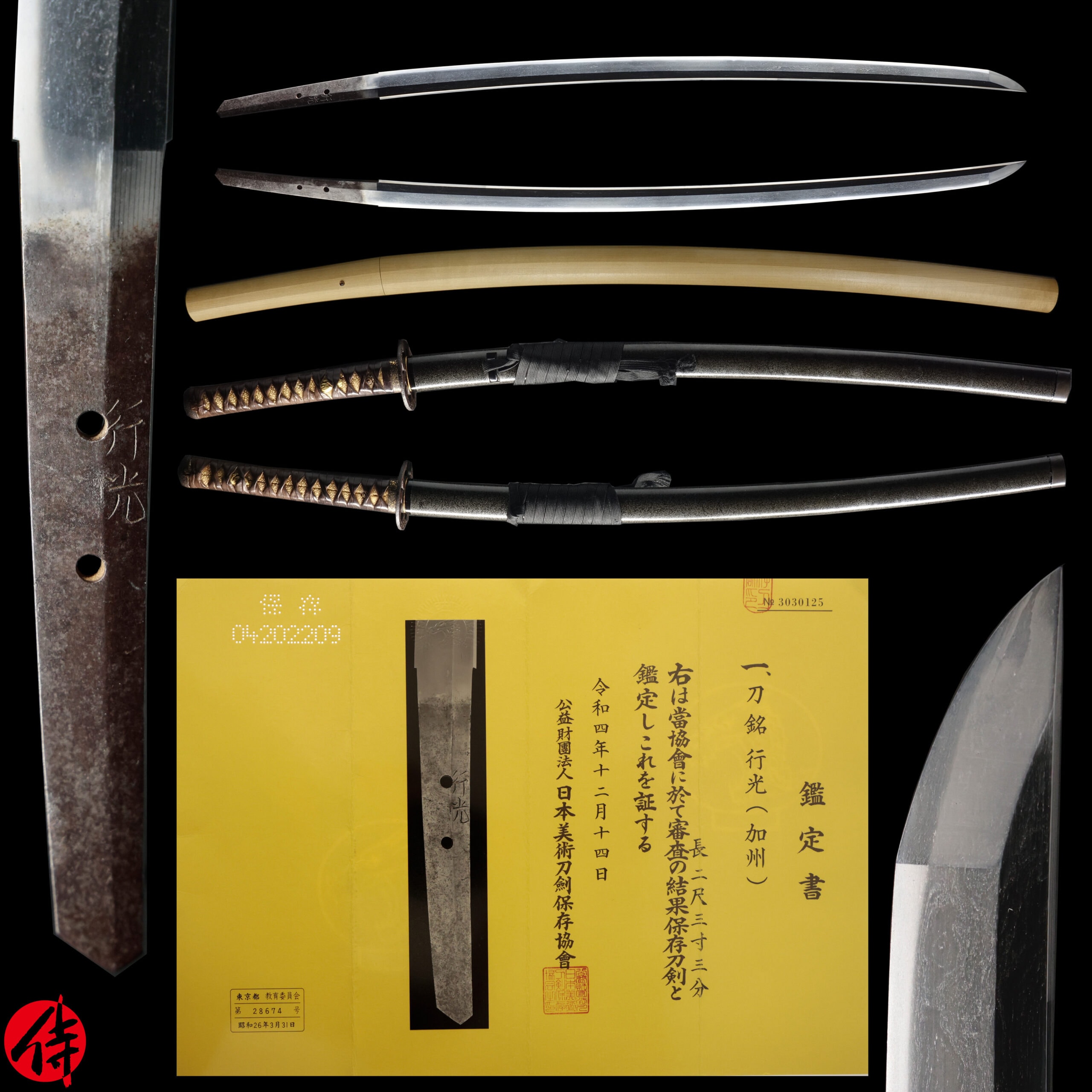
Antique Japanese Sword Katana Signed by Kashu Yukimitsu NBTHK Hozon Certificate
売却済
世界81社の刀剣商を横断追跡 · 価格履歴 · 売却アーカイブ
仕様
長さ
70.5 cm
反り
1.8 cm
Antique Japanese Sword Katana Signed by Kashu Yukimitsu with Hozon Certificate 【Description】 Summary This sword was signed by Kashu Yukimitsu (加州行光) in Kaga province (today’s Ishikawa Prefecture) during the Muromachi period (1445-1568). We assume that the sword is of exceptional quality because Yukimitsu belonged to the Fujishima school (藤島派), a well-known school, and because of the longevity of the name “Yukimitsu”,which lasted many generations during the Muromachi period. The first-gen Yukimitsu is said to have been active during the Kosho era (1455-1457) and was an apprentice of Fujishima Tomoshige. Also, the sword might have been originally owned by a Samurai who fought in many battles alongside high-class Samurais, as there were many battles during this period (Sengoku Jidai). About the Fujishima School The Fujishima school was a prestigious school that flourished in Kaga Province during the Muromachi period (1336-1573). It was founded in the early Nanbokucho Period by the first generation, Fujishima Tomoshige (藤島友重), and its name continued for several generations from the early Nanbokucho Period to the late Edo Period (early 14th century to late 19th century). The first generation Tomoshige is said to have been a pupil of Rai Kunitoshi, one of the most famous swordsmiths in Yamashiro Province (today’s Kyoto) from the late Kamakura Period to the early Nanbokucho Period. Tomoshige originally lived in Echizen Province (today’s Fukui Prefecture), but later moved to Kaga Province and founded the Fujishima school. Maeda Clan In the late Muromachi period, Maeda clan started to control Kaga domain. Maeda clan was originally a retainer of the Oda family, who ruled Owari province (today’s Nagoya area in Aichi prefecture). The Maeda clan was one of the most influential families in Samurai history. The first head of the Maeda clan was Toshie Maeda. He climbed the social ladder of Samurai society and became the feudal lord of Kaga Province (today’s Ishikawa prefecture). He had a vast rice fief that fed 100 million grown-up adults, which is called Hyakuman Goku. Toshie Maeda had a close tie with Oda Nobunaga and Hideyoshi Toyotomi. Since Tomoshige lived in this domain, he likely served the Maeda clan. It is appraised as a Hozon Token (保存刀剣) issued by NBTHK (Nihon Bijutsu Touken Hozon Kyokai:日本美術刀剣保存協会). This authentication paper was only given to authentic Japanese swords, well preserved and high quality with artistic value. *Please keep in mind that this blade has what appears to be an Umegane (trace of restoration. If you like to know the detailed condition, please feel free to contact us. There are also a couple of Kitae Kizu on the Mune (backbone of the blade) 【 Blade】 Cutting Edge Length(Nagasa) : 70.5 cm (27.7 inches) Curvature(Sori) : 1.8 cm (0.70 inches) Hamon : The crystalline structure which forms along the cutting edge of a blade as a result of the hardening process Jimon(Jihada) : visible steel surface pattern created by folding and hammering during forging process Kissaki : Kissaki is the tip of the Japanese sword. Nakago : Nakago is the tang of the Japanese sword. Japanese swordsmiths left the black rust on the tang because it prevents red rust while the tang is in its handle. And the discoloration of the tang was created over time, and it is a great indicator for a Japanese sword specialist to estimate when the sword was forged. Koshirae : Koshirae is the mounting of the Japanese sword. There are several parts that consist of Koshirae such as Saya (Scabbard), Tsuka (Handle), Tsuba (Handguard). Fuchi-Kashira : A pair of matching sword fittings that cover the upper and bottom parts of its sword hilt. The motif of this Fuchi-Kashira is the Kikyou (桔梗, Japanese bellflower). Japanese bellflower is a small star-shaped flower and is one of the Aki-no Nanakusa (秋の七草, seven herbs of autumn). It is said its root has medicinal efficacy. The Kikyou pattern has often been used as a motif of Tanka (短歌, a kind of traditional Japanese
 NihontoWatchBETA
売却済
世界81社の刀剣商を横断追跡 · 価格履歴 · 売却アーカイブ
70.5 cm
1.8 cm
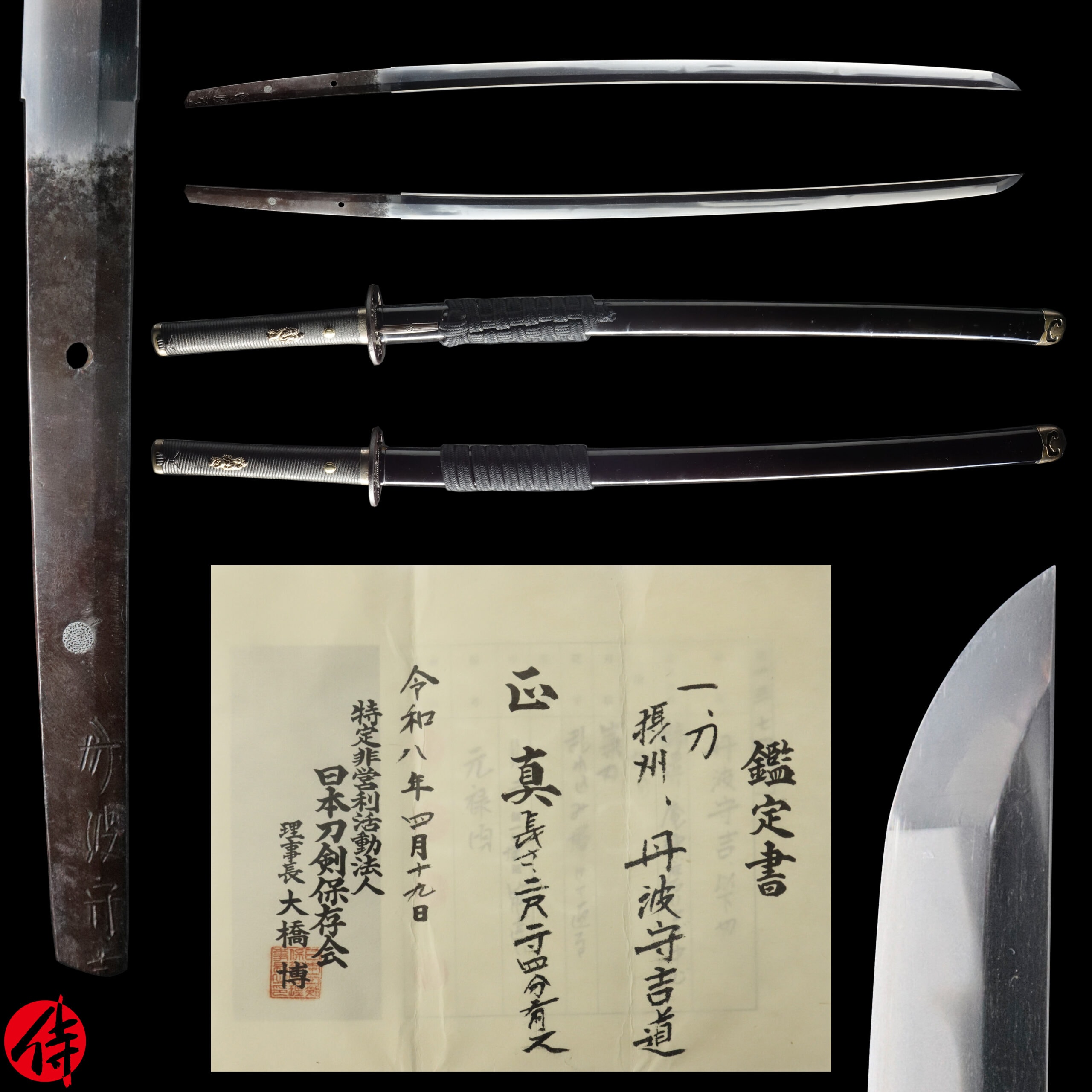
Mid Edo Katana signed by Tanba no Kami Yoshimichi for sale| Samurai Museum Shop E-mail FB Messenger Skip to content Menu Close Samurai Museum Shop Products Antique Japanese Sword Katana signed by Tanba no Kami Yoshimichi NTHK Kanteisho Certificate Updated: 22 Jun 2026 Antique Japanese Sword Katana signed by Tanba no Kami Yoshimichi NTHK Kanteisho Certificate
$7,441
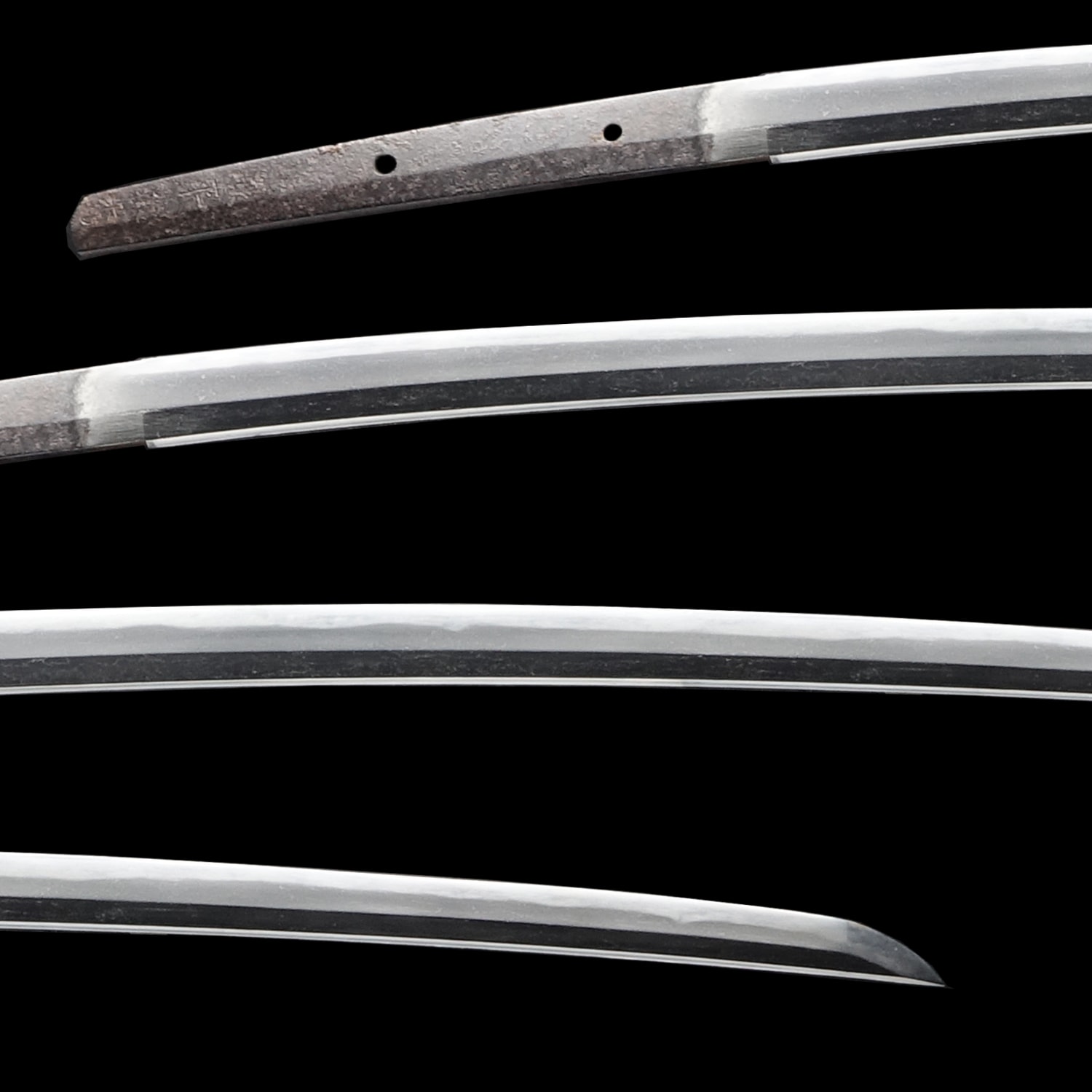
Muromachi Katana signed by Naminohira Yasuhide for sale
$7,751
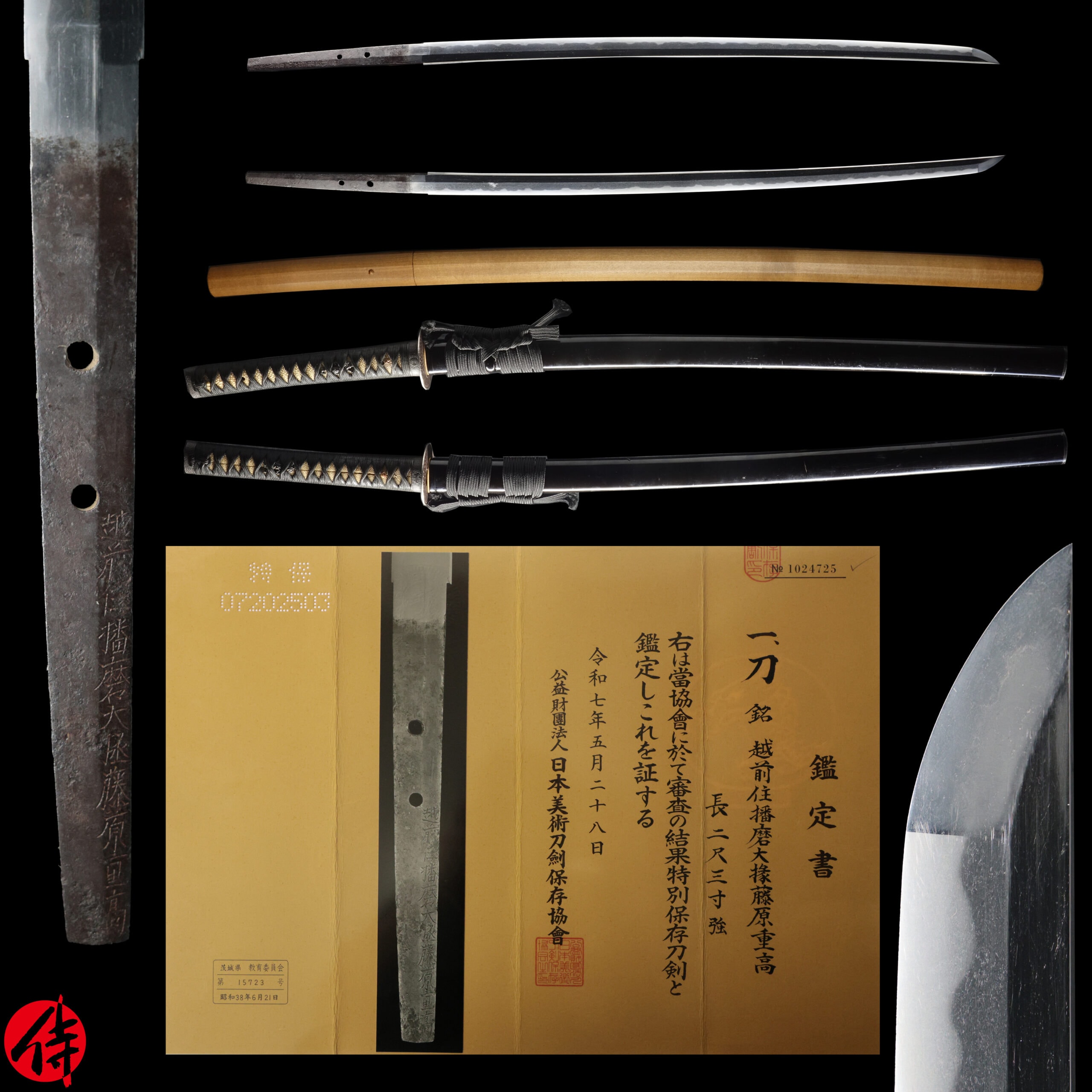
Early Edo Nihonto signed by Shigetaka for sale
$7,131
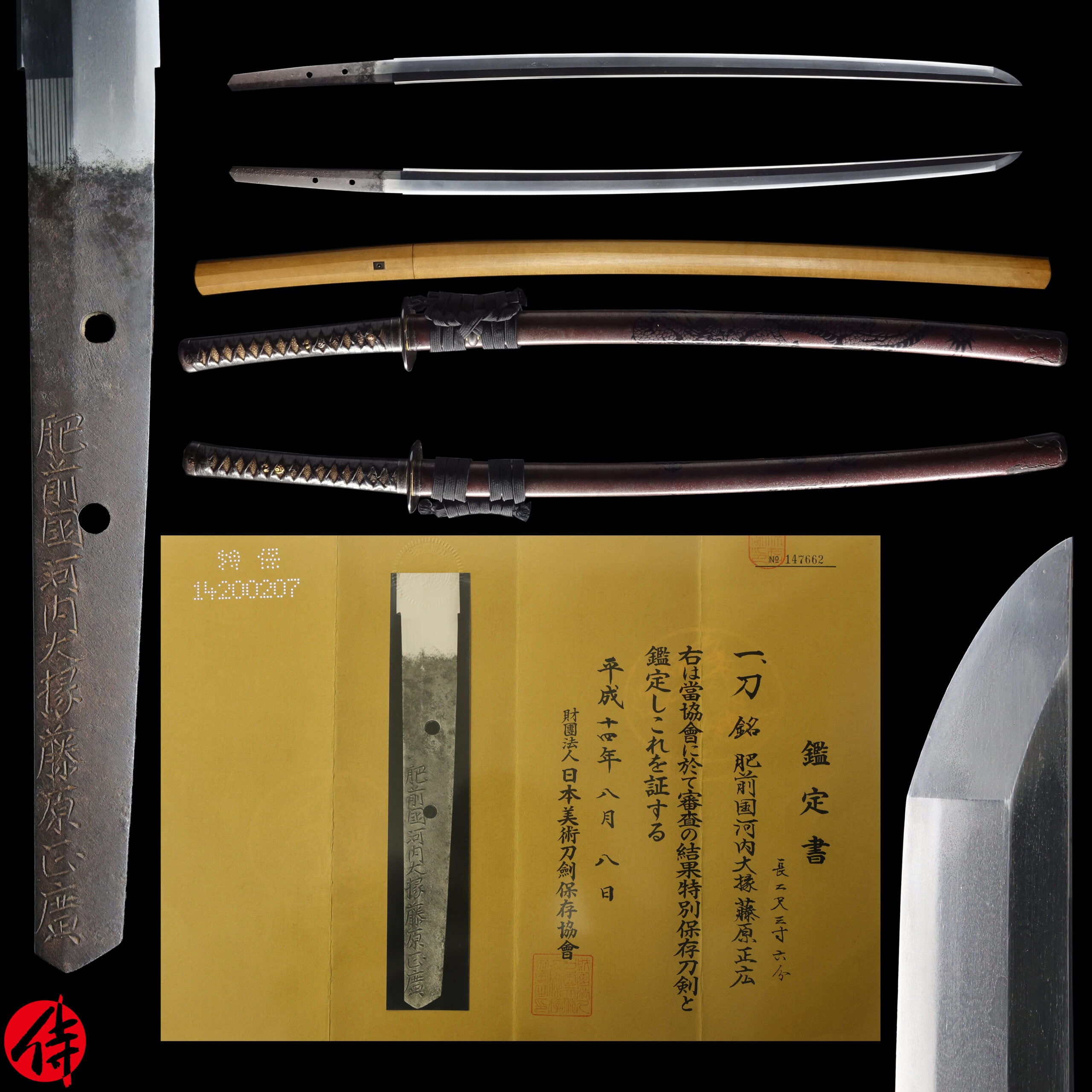
Antique Japanese Sword Katana Signed by Masahiro NBTHK Tokubetsu Hozon Certificate
$7,751
Antique Japanese Sword Katana Signed by Kashu Yukimitsu with Hozon Certificate 【Description】 Summary This sword was signed by Kashu Yukimitsu (加州行光) in Kaga province (today’s Ishikawa Prefecture) during the Muromachi period (1445-1568). We assume that the sword is of exceptional quality because Yukimitsu belonged to the Fujishima school (藤島派), a well-known school, and because of the longevity of the name “Yukimitsu”,which lasted many generations during the Muromachi period. The first-gen Yukimitsu is said to have been active during the Kosho era (1455-1457) and was an apprentice of Fujishima Tomoshige. Also, the sword might have been originally owned by a Samurai who fought in many battles alongside high-class Samurais, as there were many battles during this period (Sengoku Jidai). About the Fujishima School The Fujishima school was a prestigious school that flourished in Kaga Province during the Muromachi period (1336-1573). It was founded in the early Nanbokucho Period by the first generation, Fujishima Tomoshige (藤島友重), and its name continued for several generations from the early Nanbokucho Period to the late Edo Period (early 14th century to late 19th century). The first generation Tomoshige is said to have been a pupil of Rai Kunitoshi, one of the most famous swordsmiths in Yamashiro Province (today’s Kyoto) from the late Kamakura Period to the early Nanbokucho Period. Tomoshige originally lived in Echizen Province (today’s Fukui Prefecture), but later moved to Kaga Province and founded the Fujishima school. Maeda Clan In the late Muromachi period, Maeda clan started to control Kaga domain. Maeda clan was originally a retainer of the Oda family, who ruled Owari province (today’s Nagoya area in Aichi prefecture). The Maeda clan was one of the most influential families in Samurai history. The first head of the Maeda clan was Toshie Maeda. He climbed the social ladder of Samurai society and became the feudal lord of Kaga Province (today’s Ishikawa prefecture). He had a vast rice fief that fed 100 million grown-up adults, which is called Hyakuman Goku. Toshie Maeda had a close tie with Oda Nobunaga and Hideyoshi Toyotomi. Since Tomoshige lived in this domain, he likely served the Maeda clan. It is appraised as a Hozon Token (保存刀剣) issued by NBTHK (Nihon Bijutsu Touken Hozon Kyokai:日本美術刀剣保存協会). This authentication paper was only given to authentic Japanese swords, well preserved and high quality with artistic value. *Please keep in mind that this blade has what appears to be an Umegane (trace of restoration. If you like to know the detailed condition, please feel free to contact us. There are also a couple of Kitae Kizu on the Mune (backbone of the blade) 【 Blade】 Cutting Edge Length(Nagasa) : 70.5 cm (27.7 inches) Curvature(Sori) : 1.8 cm (0.70 inches) Hamon : The crystalline structure which forms along the cutting edge of a blade as a result of the hardening process Jimon(Jihada) : visible steel surface pattern created by folding and hammering during forging process Kissaki : Kissaki is the tip of the Japanese sword. Nakago : Nakago is the tang of the Japanese sword. Japanese swordsmiths left the black rust on the tang because it prevents red rust while the tang is in its handle. And the discoloration of the tang was created over time, and it is a great indicator for a Japanese sword specialist to estimate when the sword was forged. Koshirae : Koshirae is the mounting of the Japanese sword. There are several parts that consist of Koshirae such as Saya (Scabbard), Tsuka (Handle), Tsuba (Handguard). Fuchi-Kashira : A pair of matching sword fittings that cover the upper and bottom parts of its sword hilt. The motif of this Fuchi-Kashira is the Kikyou (桔梗, Japanese bellflower). Japanese bellflower is a small star-shaped flower and is one of the Aki-no Nanakusa (秋の七草, seven herbs of autumn). It is said its root has medicinal efficacy. The Kikyou pattern has often been used as a motif of Tanka (短歌, a kind of traditional Japanese
NihontoWatchBETA売却済
世界81社の刀剣商を横断追跡 · 価格履歴 · 売却アーカイブ
70.5 cm
1.8 cm
Mid Edo Katana signed by Tanba no Kami Yoshimichi for sale| Samurai Museum Shop E-mail FB Messenger Skip to content Menu Close Samurai Museum Shop Products Antique Japanese Sword Katana signed by Tanba no Kami Yoshimichi NTHK Kanteisho Certificate Updated: 22 Jun 2026 Antique Japanese Sword Katana signed by Tanba no Kami Yoshimichi NTHK Kanteisho Certificate
$7,441
Muromachi Katana signed by Naminohira Yasuhide for sale
$7,751
Early Edo Nihonto signed by Shigetaka for sale
$7,131
Antique Japanese Sword Katana Signed by Masahiro NBTHK Tokubetsu Hozon Certificate
$7,751