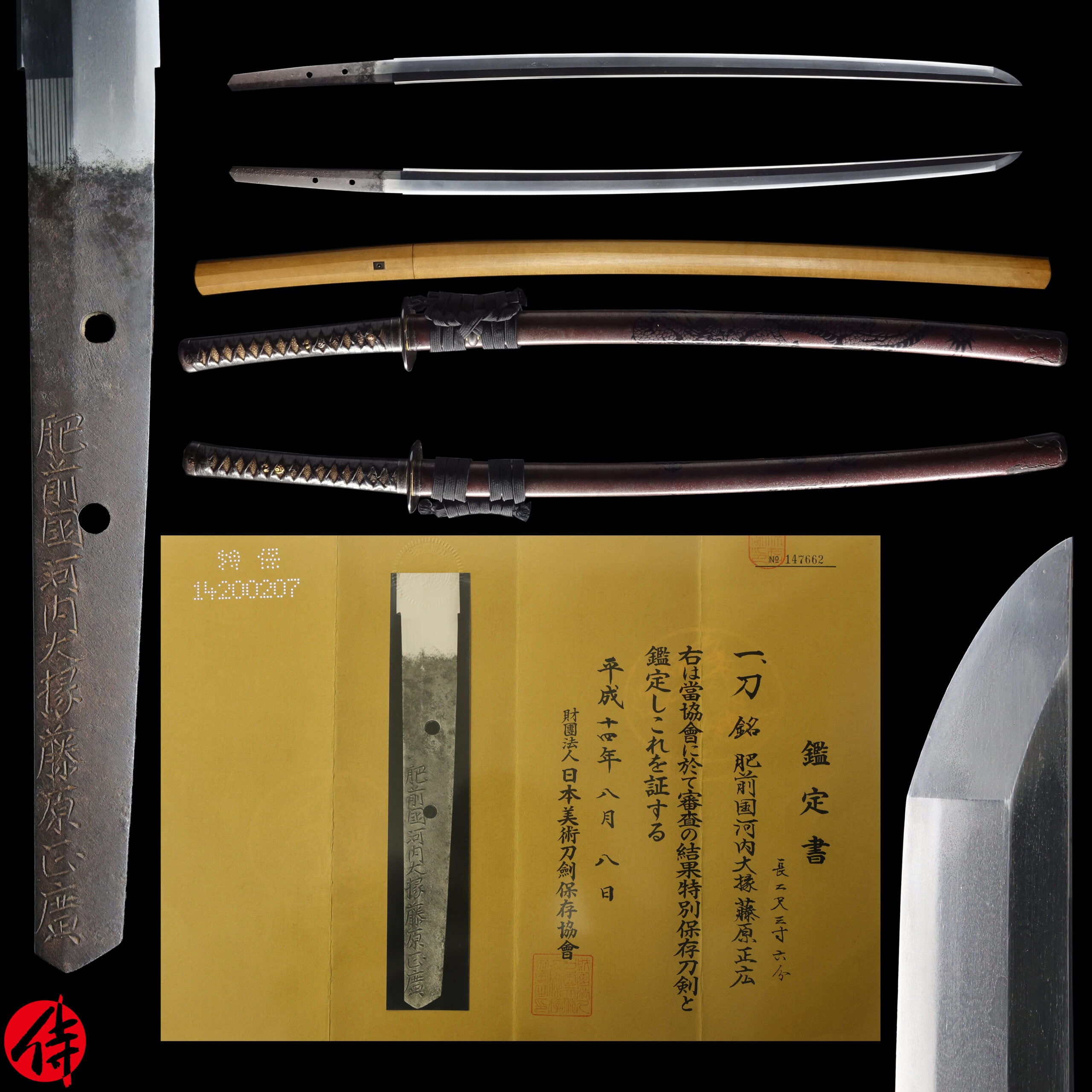
説明

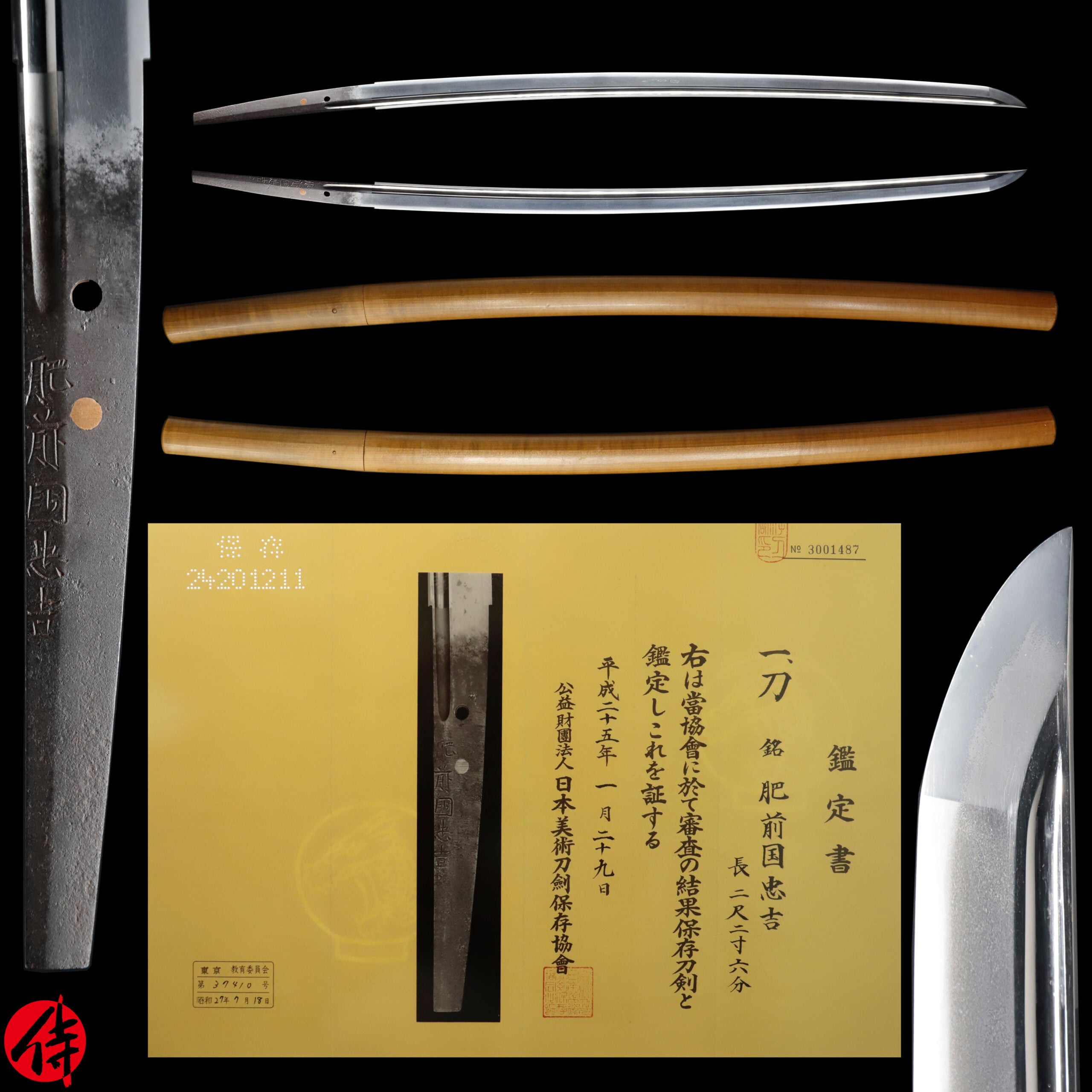
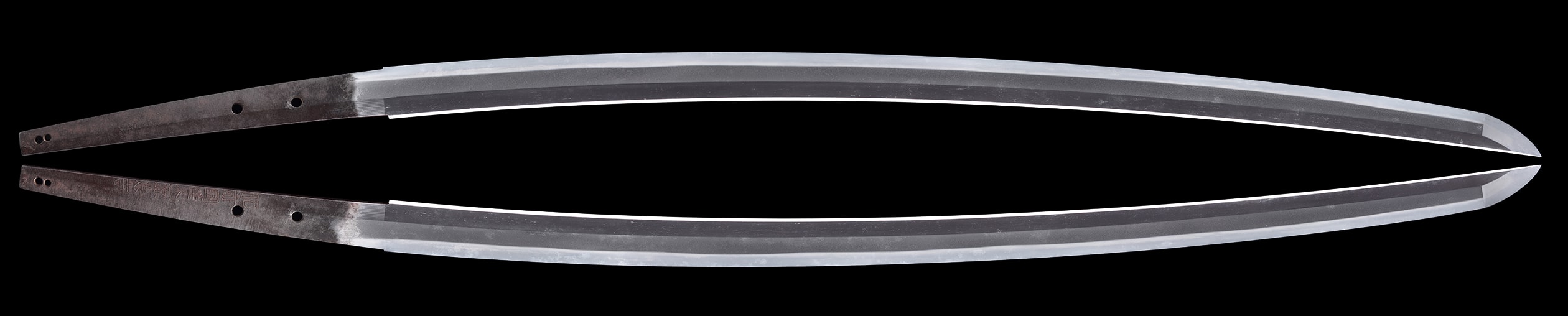
Antique Japanese Sword Katana Signed by Hizen Koku Tadayoshi with NBTHK Hozon Certificate 【Description】 This blade was signed by Hizen Koku Tadayoshi (肥前国忠吉), also known as the first-gen Tadayoshi. The first-gen Hizen Tadayoshi was born in the third year of the Genki era ( 1572 : Late Muromachi period) as the son of Hashimoto Michihiro in Hizen domain (Today’s Saga prefecture). Tadayoshi’s birthname was Hashimoto Shinzaemon. It is said that Hashimoto family had Samurai lineage and served Ryuzoji Daimyo (feudal lord) as a retainer for generations on Kyushu island. However, in 1584 , his grandfather Morihiro and Father Michihiro were killed in a war called Okinawa-te no Tatakai, where Ryuzoji clan fought against Shimazu clan. Therefore, Hashimoto family couldn’t keep serving the clan and status of Samurai because Tadayoshi, the head of the family, was just 13 years old. The whole family turned the new leaf. Tadayoshi was supported by Dotanuki Zenbei, who was related to Tadayoshi and had served Kato Kiyomasa, a legendary warlord during Sengoku Jidai (Warring state period). It is said that he learned sword-forging techniques from Zenbei for about 13 years. In 1596 , under the domain’s order, he went to Kyoto to learn the sword-forging techniques from Umetada Myojyu(埋忠明寿), one of the greatest swordsmiths in the early Edo period. Tadayoshi improved his craftsmanship and returned to the Saga domain three years later (1598). The first head of the Nabeshima clan, Nabeshima Katsushige, appreciated the work of the first-gen Tadayoshi very much. Then, Katsushige appointed him as his Okakaekaji, a swordsmith who exclusively forged swords for a specific domain or clan. And Tadayoshi started to stay near Saga castle, which was the headquarter of the Nabeshima clan. Then, he founded his school, which trained more than 100 swordsmiths during the Edo period. His outstanding skills were passed to the generations of Tadayoshi and among apprentices. According to available records, the earliest work he signed his signature with the year is the 5th year of the Keicho era ( 1600 ), when he was 29 years old. Interestingly, he revisited Kyoto in the 10th year of the Genwa era ( 1624 ) and received an honorable official title of Musashi Daijyo on Feb 18th from the emperor for his excellent craftsmanship. And, he changed his name to Tadayoshi. He used different signatures during his career. They are Hizen Koku Shinzaemonnojo Tadayoshi , Hizen Koku Junin Tadayoshi, Hizen Koku Jyu Fujiwara Tadayoshi, Hizen Koku Tadayoshi and Musashi Daijyo Tadahiro. He was active in sword-forging for about 30 years. And he died in the 9th year of the Kanei era ( 1632) . This blade is appraised as a Hozon Touken (保存刀剣) issued by NBTHK (Nihon Bijutsu Touken Hozon Kyokai: 日本美術刀剣保存協会). This authentication paper was only given to authentic Japanese swords, well preserved and high quality with artistic value. Umegane (埋金) Umegane is a trace of restoration on the blade. If you like to see the detailed condition, please feel free to contact us. 【Blade】 Cutting Edge Length (Nagasa) : 68.5 cm (26.9 inches) Curvature (Sori) : 1.51 cm (0.59 inches) Hamon : The crystalline structure which forms along the cutting edge of a blade as a result of the hardening process. Jimon (Jihada) : Visible steel surface pattern created by folding and hammering during forging process. Kissaki : Kissaki is the tip of the Japanese sword. Nakago : Nakago is the tang of the Japanese sword. Japanese swordsmiths left the black rust on the tang because it prevents red rust while the tang is in its handle. And the discoloration of the tang was created over time, and it is a great indicator for a Japanese sword specialist to estimate when the sword was forged. Habaki : Habaki is the equipment to make the blade not touch its scabbard inside. It prevents the blade from getting rusty and chipped. Authentication Paper : NBTHK Hozon Certificate for the blade (No.3001487) NBTHK , also known as Nihon Bijutsu Touken Ho

Antique Japanese Sword Katana Signed by the first-gen Hizen Koku Tadayoshi NBTHK Hozon Certificate
売切れ
Hozon売切れ

Antique Japanese Sword Katana Signed by the first-gen Hizen Koku Tadayoshi NBTHK Hozon Certificate

売却済

世界81社の刀剣商を横断追跡 · 価格履歴 · 売却アーカイブ

仕様

長さ

68.5 cm

反り

1.51 cm

作者について

Hizen Tadayoshi忠吉

1 重要文化財5 重要美術品3 御物9 特別重要刀剣107 重要刀剣

肥前初代忠吉は、説明によれば橋本新左衛門と称し、肥前鍋島家の抱え工であった。慶長元年(一五九六)藩命により彫工宗長と共に上洛して埋忠明寿の門に入り、忠吉は鍛刀を、宗長は彫技を学んだ。同三年(一五九八)帰国して佐賀城下に住し、藩の庇護のもとに一門大いに栄えた。年紀は慶長五年(一六〇〇)八月のものに始まり、歿年寛永九年(一六三二)八月の作に及び、説明はその間を三十二年の長きにわたるものと記す。元和十年(一六二四)再度上洛して武蔵大掾を受領し、名を忠吉から忠広に改め、同時に氏を源から藤原に改めた。彼は肥前刀の祖であり、鍋島家の庇護のもとに築いた一派は九州刀工の本流となった。 本領は、肥前刀の地鉄に焼いた明るく締まった直刃である。説明はこれを率直に記す。「得意とする直刃の作は小板目のよくつんだいわゆる米糠肌と呼ばれる独得な地鉄に直刃を焼いて来一門の作を狙ったものの様にも思わ」れる、と。刃文は浅くのたれを帯びた中直刃または広直刃で、時に小互の目を交え、小足・葉が入り、匂深く小沸が細かについて締まり明るく冴える。ただし同じ説明は、これが狙った本歌たる来一門とは分かれると説く。匂口がより締まって明るく、地に細かな地景がよく入り、鍛えは「むしろ来一派のものよりも覇気があり」という。刃と地鉄が相俟って鑑定の眼目をなす。 その地鉄こそ眼目である。鍛えはよく約んだ小板目、時に杢目を交え、地沸が微塵に厚くつき、地景が細かに頻りに入り、かね冴える。説明はこれを彼の手に特有の見どころとして名指し、肌が「特有の米糠肌」状を呈すると記す。すなわち他派の出さない、細かく明るい米糠状の肌である。その上に帽子は直ぐに小丸へ静かに返る、肥前刀本来の帽子である。この組合せ、明るく冴えた小糠肌の上に締まった直刃を焼くことこそ、説明が繰り返し祖の本領として立ち返るところであり、その直刃を一派の筆頭に据える所以である。 初期の作は別であり、説明はこれを写し物の一類と読む。その定型句はほぼ同文で諸作に繰り返される。「彼の初期の作風は、様々な写し物があって多岐にわたっている」とし、直江志津・古作大和物・来一門・鎌倉名工を挙げる。直江志津を狙っては小のたれに小互の目を交え、小足が入り砂流しがかかり、匂口やや締まる作で、これは師明寿が最も得意とした小のたれを継承したものであり、「世に直江志津写しと称せられるものである」と説く。古作大和物を狙っては板目が大きく刃寄りに流れ、喰違刃・二重刃を交え、ほつれ・砂流しがかかり、帽子までも掃きかけて、ある作を説明は「忠吉中最も古雅な作風を示して味わいが深い」と評す。掃きかけの帽子は、肥前刀の帽子が直ぐに小丸へ返るという通則の例外である。さらに鎌倉の短刀名工、就中来国光に私淑し、時に備前景光をも写して、鍋島家伝来の景光の片切刃短刀の写しを遺す。 一代を貫く軸は銘そのもので、説明はこれを時期により三様に大別する。「肥前国忠吉」と五字に切る五字忠吉銘、「肥前国住人忠吉作」と八字に切る住人銘、そして元和十年(一六二四)武蔵大掾受領後の「武蔵大掾忠広」銘であり、この改名は同一の手の変遷であって別人ではない。受領を冠さず「肥前国住藤原忠広」とのみ切るものは献上銘で、家に納める作に受領銘を不要とした鍋島家の注文による。忠吉銘時代に少なくなかった切刃造の作は、忠広銘では稀になると説明は記す。銘は指裏に切り、これを忠吉並びにその門流の通例とする。在銘は一二九口中一二五口に及び、銘振りもまた鑑定の一部をなすが、五字銘は後代の土佐守・三代陸奥守忠吉も用いて酷似するため、他の出来口と併せて初めて年代を定める。 彼から肥前一派の全てが発する。子の二代近江大掾忠広が小糠肌と直刃を継いで肥前最多作の工となり、三代陸奥守忠吉・土佐守の系へと続き、説明は殊に三代が祖父初代に作風を立ち返らせ、直刃を得意とし丁子乱れにも巧みであったと記す。藤代の極めで最上作、刀剣鑑定書(刀工大鑑)の評価も新刀工中で高い。その名を負う指定は、重要文化財一口、特別重要刀剣十口と多数の重要刀剣に及び、特別重要刀剣・重要刀剣の級は一一八口を数え、戦前の重要美術品の指定一口があるが、国宝はない。指定を受けた作は一二七口が記録に遺る。作は鍋島家の伝来に遺り、来歴には尾張徳川家・佐竹家・皇室などの名が録され、一口には金象嵌の截断銘、また一口には師弟関係を証する明寿の添銘が遺る。遺るところの大半、すなわち特別重要刀剣・重要刀剣の作は高松歴史資料館をはじめ旧蔵家や公の収蔵に永く蔵され、相当数が記録に遺るとはいえ多くは伝えられて取引されることは少ない。市に現れるのは時折のことであり、祖その人の作として、それは肥前刀の一里塚というべきものである。
刀剣商

サムライミュージアム

samuraimuseum.jp

売切れ