売切れ
Tokuho売切れ
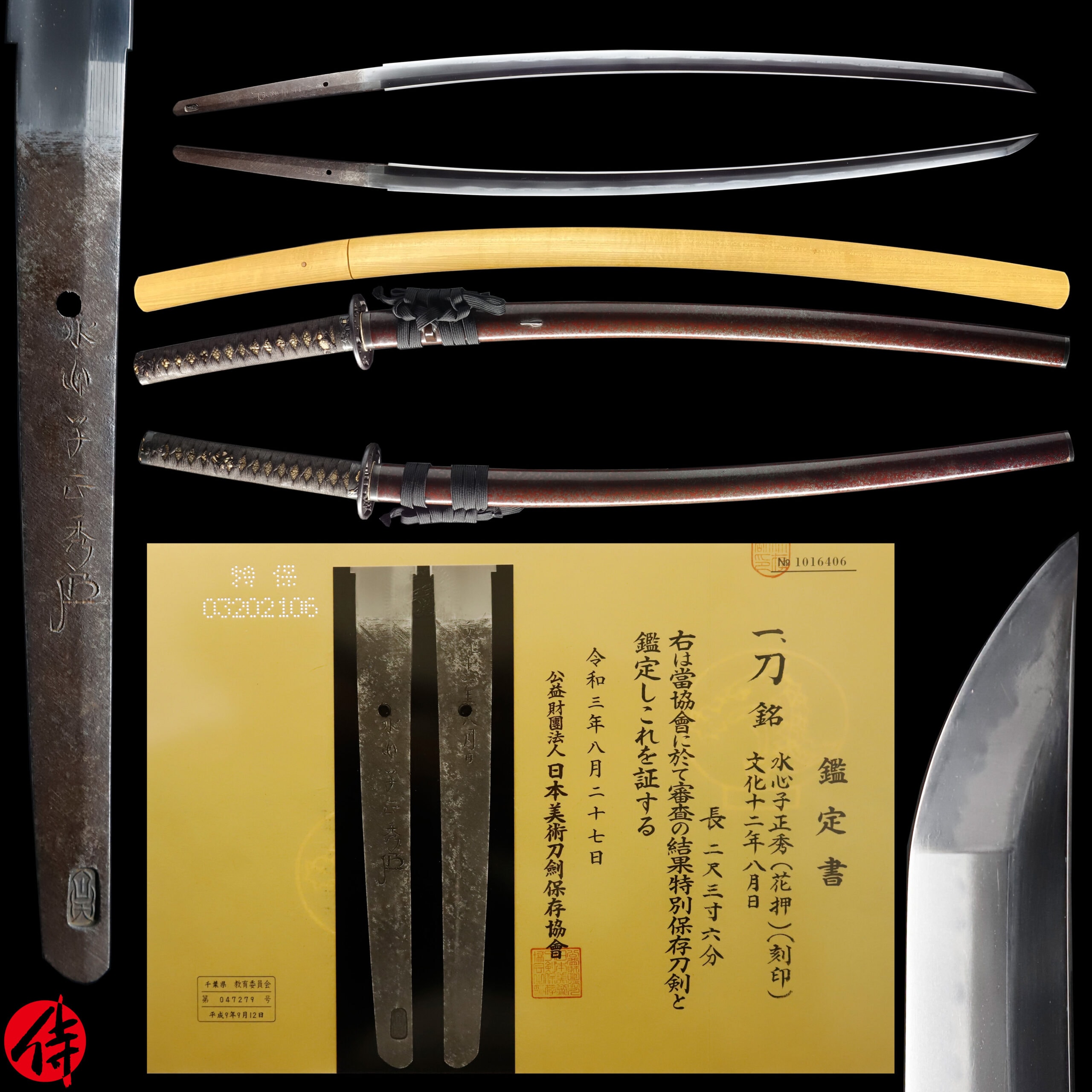
Antique Japanese Sword Katana Signed by Suishinshi Masahide NBTHK Tokubetsu Hozon Certificate
売却済
世界81社の刀剣商を横断追跡 · 価格履歴 · 売却アーカイブ
時代
Tenmei (1781-1789)
仕様
長さ
71.5 cm
反り
2.2 cm
作者について
Suishinshi Masahide Kunikane國包
Antique Japanese Sword Katana Signed by Suishinshi Masahide with Tokubetsu Hozon Certificate 【Description】 This blade was signed by Suishinshi Masahide (水心子正秀) in August, the 12th year of the Bunka era (1815). He was especially active during the late Edo period (1781-1820). The signature has Kao (花押: stylized signature) and Kokuin (刻印: stamped signature). Suishinshi Masahide (水心子正秀) was one of the most famous and innovative swordsmiths at the end of the Edo period. He was born in the third year of the Kan-En era (1750) in the Yonezawa domain in Dewa province (Today’s Yamagata/Akita prefecture). His birth name was Suzuki Sanjiro (鈴木三治郎). When he was about 18 years old, he started learning blacksmithing techniques from a local blacksmith named Yoshizawa Sanjiro, who specialized in producing farming tools in Dewa Koku. Later on, Masahide decided to become a swordsmith. In 1771, when he was 22 years old, he moved to Musashi Koku (Today’s Tokyo) to become an apprentice of Miyagawa Yoshihide, also known as Shitahara Yoshihide. Masahide learned sword-forging techniques under this master, who belonged to Shitahara School, one of the most prestigious schools in this area. After finishing his apprenticeship, he returned to Dewa Koku. His craftsmanship was widely recognized in the province. In 1774, Masahide started to serve Akimoto Tsunetomo, the head of the domain, because of his superb sword-forging techniques. It is said that he began to use Suishinshi as his title during this time and changed his maker’s name to Kawabe Gihachiro Masahide. In 1781, he moved to Edo City, settling in a house owned by the Akimoto clan. He was always curious to know various sword-forging techniques. He started to search how Japanese swords were made during the late Heian-Azuchi Momoyama period (late 12th-late 16th century: KOTO era), especially the ones made with SOSHU DEN and BIZEN DEN traditions. He often visited the offsprings of renowned swordsmiths in the old days to know the secret of old sword-forging techniques. One of the most notable episodes is when he visited Yamamura Tsunahiro, an offspring of Masamune, one of the historical figures in Japanese sword forging. And he improved his craftsmanship there as well. Back in the day, the mainstream Japanese swords were less curved and muscular. However, he started to feel something was missing in those blades made in his days by exploring ancient Japanese swords. Therefore, he announced Token Fukko Ron (刀剣復古論), where swordsmiths need to go back to the old way the blades were forged. This theory resonated with many sword makers back then. Eventually, this theory became mainstream. While he published about ten books on how to forge Japanese swords and other related topics, he was also passionate about training his apprentices. Many apprentices who had learned sword-forging techniques from him later became famous swordsmiths, such as Chounsai Tsunatoshi and Takei Naotane. Considering this fact, he played an essential role in the late Edo period. He is listed as Edo Sansaku (One of the three most prestigious swordsmiths). The other two are Taikei Naotane (大慶直胤)and Minamoto Kiyomaro (源清麿). In his biography, he mentioned that he had forged 369 swords in his career. However, only about 100 of them are identified in Japan. Most of them were Wakizashi swords. It is extremely rare to see a Katana blade signed by him. Fujishiro Yoshio wrote a book called Token Jiten (Japanese Sword Dictionary). He is one of the most reputable Japanese sword experts in modern times. He categorized swordsmiths into five categories (Saijyo Saku, Jyojyo Saku Jyo Saku, Chu Jyo Saku, Chu Saku) regarding the reputation and skill of swordsmiths during the Shinto Shin To era (Late Edo period). Saijyo Saku is in the highest position. This chart often reflects how prominent a Japanese swordsmith is. Masahide is categorized as a Saijo Saku swordsmith. It is appraised as a Tokubetsu Hozon Token (特別保存刀剣) issued by NBTHK (Nihon Bijutsu Touken
 NihontoWatchBETA
売却済
世界81社の刀剣商を横断追跡 · 価格履歴 · 売却アーカイブ
Tenmei (1781-1789)
71.5 cm
2.2 cm
Suishinshi Masahide Kunikane國包
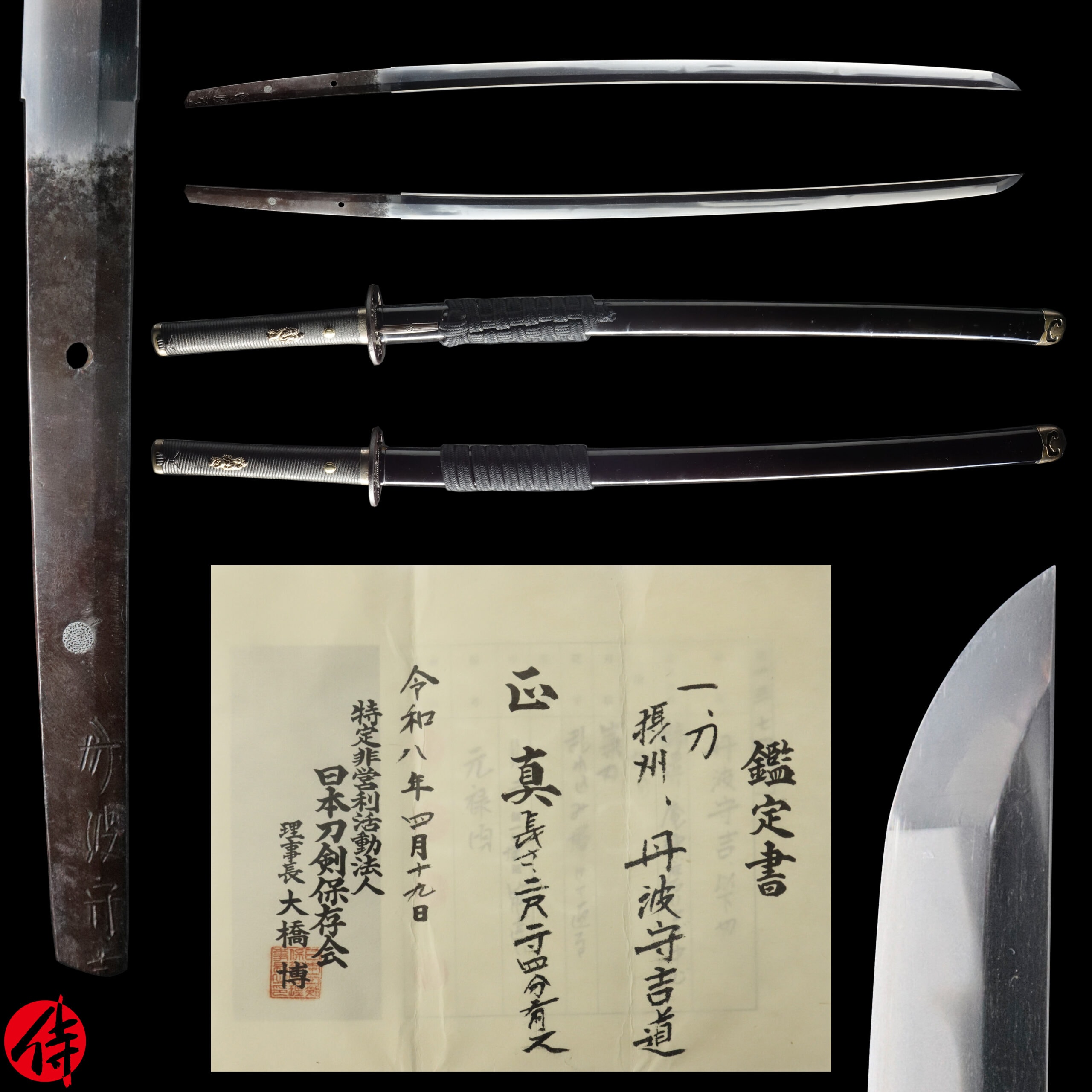
Mid Edo Katana signed by Tanba no Kami Yoshimichi for sale| Samurai Museum Shop E-mail FB Messenger Skip to content Menu Close Samurai Museum Shop Products Antique Japanese Sword Katana signed by Tanba no Kami Yoshimichi NTHK Kanteisho Certificate Updated: 22 Jun 2026 Antique Japanese Sword Katana signed by Tanba no Kami Yoshimichi NTHK Kanteisho Certificate
$7,441
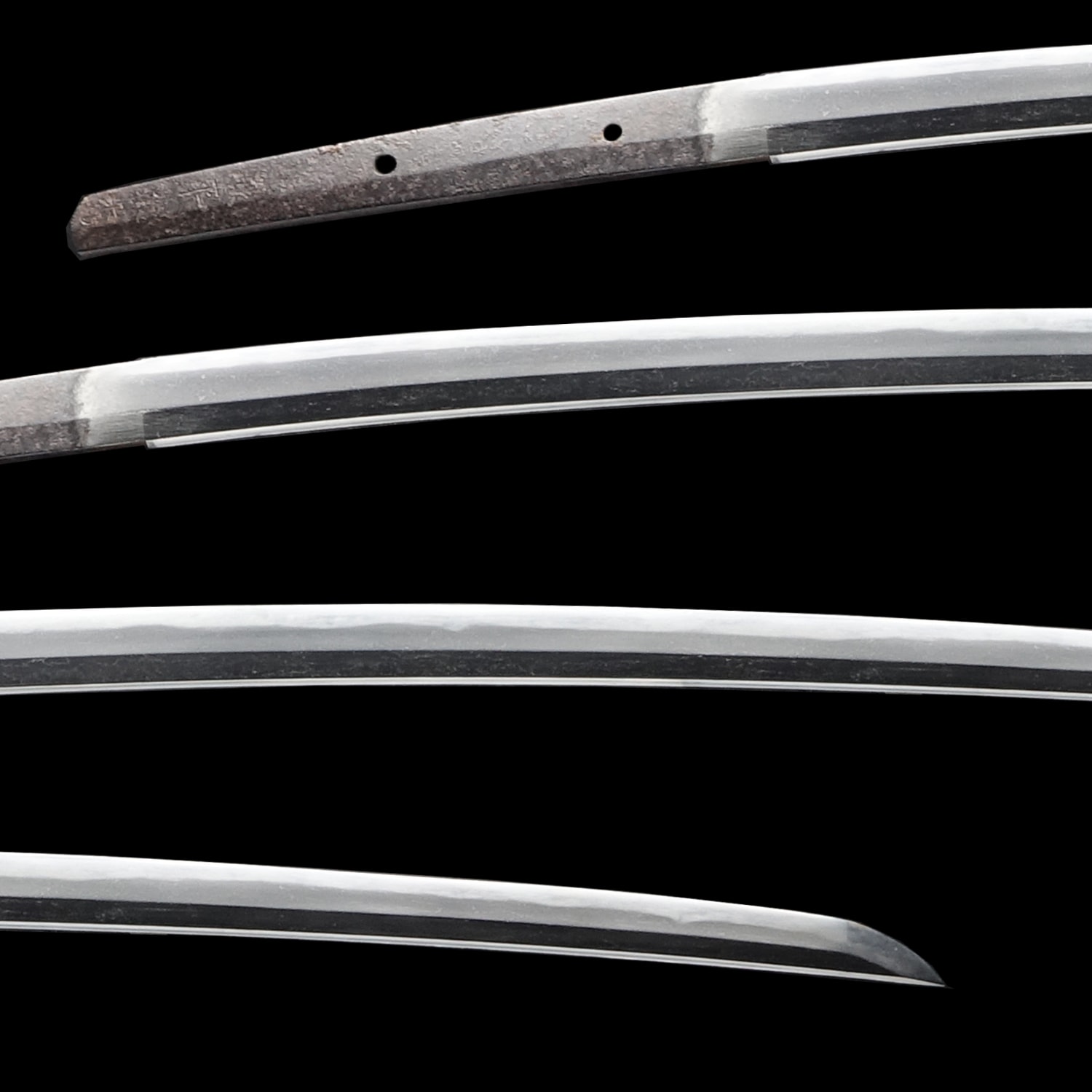
Muromachi Katana signed by Naminohira Yasuhide for sale
$7,751
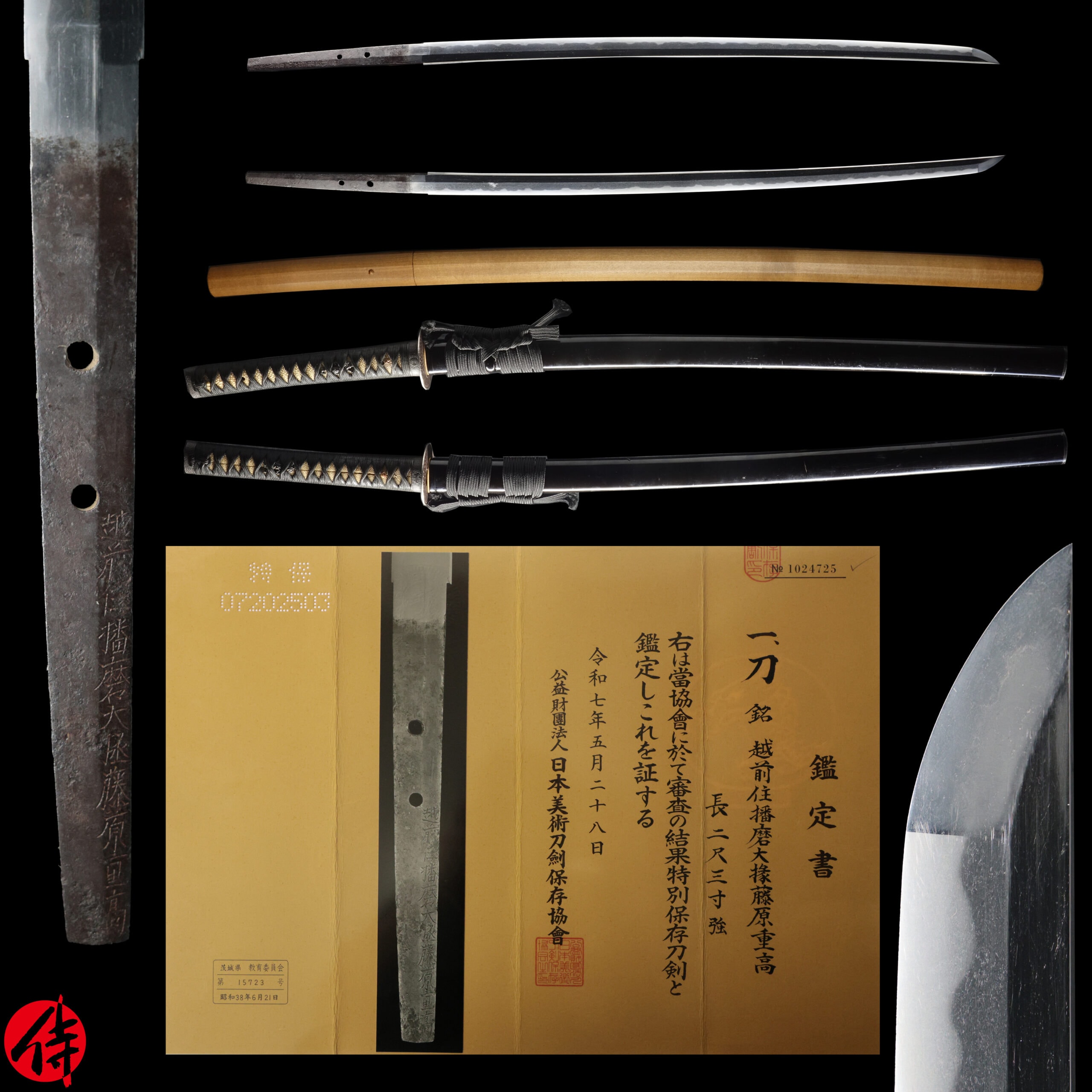
Early Edo Nihonto signed by Shigetaka for sale
$7,131
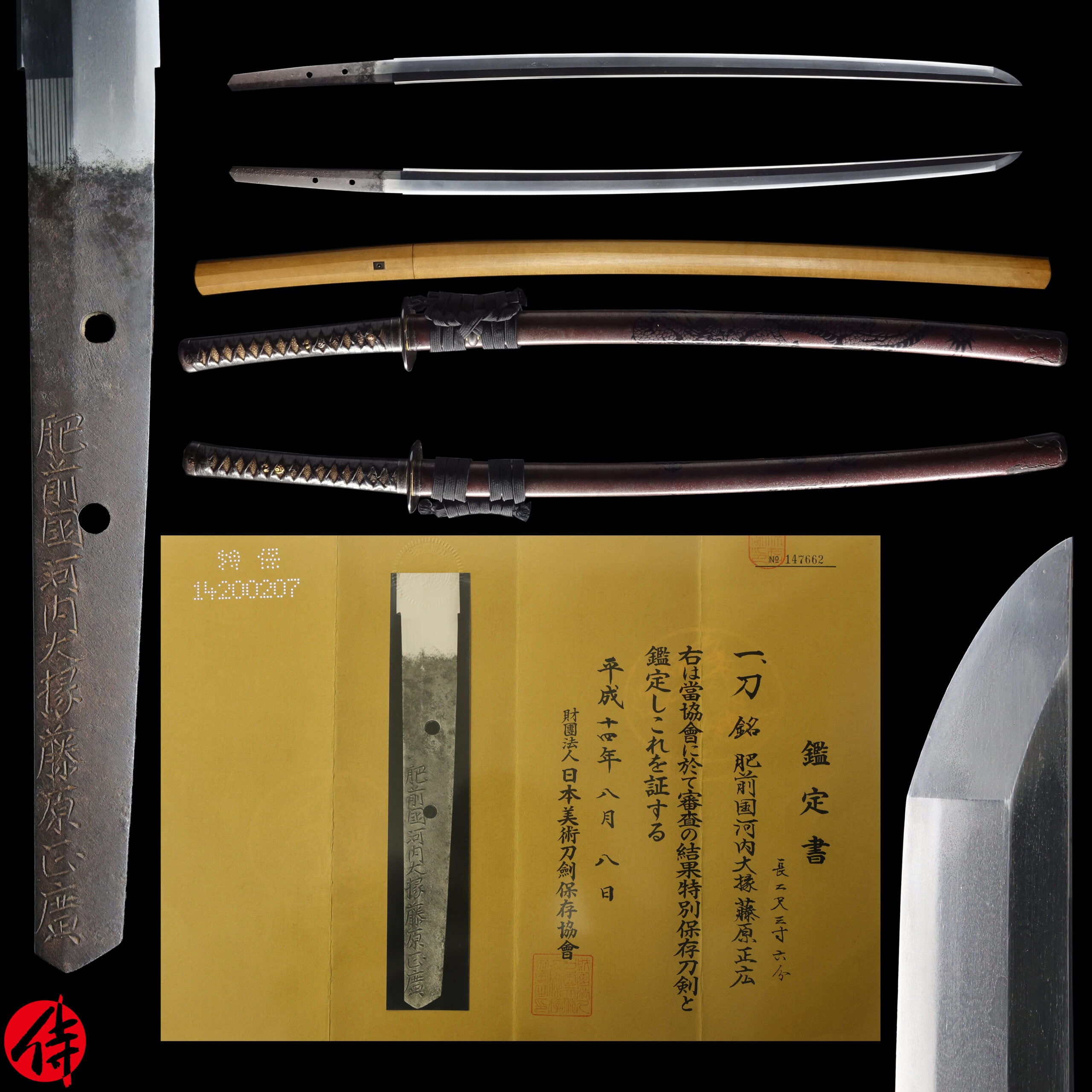
Antique Japanese Sword Katana Signed by Masahiro NBTHK Tokubetsu Hozon Certificate
$7,751
Antique Japanese Sword Katana Signed by Suishinshi Masahide with Tokubetsu Hozon Certificate 【Description】 This blade was signed by Suishinshi Masahide (水心子正秀) in August, the 12th year of the Bunka era (1815). He was especially active during the late Edo period (1781-1820). The signature has Kao (花押: stylized signature) and Kokuin (刻印: stamped signature). Suishinshi Masahide (水心子正秀) was one of the most famous and innovative swordsmiths at the end of the Edo period. He was born in the third year of the Kan-En era (1750) in the Yonezawa domain in Dewa province (Today’s Yamagata/Akita prefecture). His birth name was Suzuki Sanjiro (鈴木三治郎). When he was about 18 years old, he started learning blacksmithing techniques from a local blacksmith named Yoshizawa Sanjiro, who specialized in producing farming tools in Dewa Koku. Later on, Masahide decided to become a swordsmith. In 1771, when he was 22 years old, he moved to Musashi Koku (Today’s Tokyo) to become an apprentice of Miyagawa Yoshihide, also known as Shitahara Yoshihide. Masahide learned sword-forging techniques under this master, who belonged to Shitahara School, one of the most prestigious schools in this area. After finishing his apprenticeship, he returned to Dewa Koku. His craftsmanship was widely recognized in the province. In 1774, Masahide started to serve Akimoto Tsunetomo, the head of the domain, because of his superb sword-forging techniques. It is said that he began to use Suishinshi as his title during this time and changed his maker’s name to Kawabe Gihachiro Masahide. In 1781, he moved to Edo City, settling in a house owned by the Akimoto clan. He was always curious to know various sword-forging techniques. He started to search how Japanese swords were made during the late Heian-Azuchi Momoyama period (late 12th-late 16th century: KOTO era), especially the ones made with SOSHU DEN and BIZEN DEN traditions. He often visited the offsprings of renowned swordsmiths in the old days to know the secret of old sword-forging techniques. One of the most notable episodes is when he visited Yamamura Tsunahiro, an offspring of Masamune, one of the historical figures in Japanese sword forging. And he improved his craftsmanship there as well. Back in the day, the mainstream Japanese swords were less curved and muscular. However, he started to feel something was missing in those blades made in his days by exploring ancient Japanese swords. Therefore, he announced Token Fukko Ron (刀剣復古論), where swordsmiths need to go back to the old way the blades were forged. This theory resonated with many sword makers back then. Eventually, this theory became mainstream. While he published about ten books on how to forge Japanese swords and other related topics, he was also passionate about training his apprentices. Many apprentices who had learned sword-forging techniques from him later became famous swordsmiths, such as Chounsai Tsunatoshi and Takei Naotane. Considering this fact, he played an essential role in the late Edo period. He is listed as Edo Sansaku (One of the three most prestigious swordsmiths). The other two are Taikei Naotane (大慶直胤)and Minamoto Kiyomaro (源清麿). In his biography, he mentioned that he had forged 369 swords in his career. However, only about 100 of them are identified in Japan. Most of them were Wakizashi swords. It is extremely rare to see a Katana blade signed by him. Fujishiro Yoshio wrote a book called Token Jiten (Japanese Sword Dictionary). He is one of the most reputable Japanese sword experts in modern times. He categorized swordsmiths into five categories (Saijyo Saku, Jyojyo Saku Jyo Saku, Chu Jyo Saku, Chu Saku) regarding the reputation and skill of swordsmiths during the Shinto Shin To era (Late Edo period). Saijyo Saku is in the highest position. This chart often reflects how prominent a Japanese swordsmith is. Masahide is categorized as a Saijo Saku swordsmith. It is appraised as a Tokubetsu Hozon Token (特別保存刀剣) issued by NBTHK (Nihon Bijutsu Touken
NihontoWatchBETA売却済
世界81社の刀剣商を横断追跡 · 価格履歴 · 売却アーカイブ
Tenmei (1781-1789)
71.5 cm
2.2 cm
Suishinshi Masahide Kunikane國包
Mid Edo Katana signed by Tanba no Kami Yoshimichi for sale| Samurai Museum Shop E-mail FB Messenger Skip to content Menu Close Samurai Museum Shop Products Antique Japanese Sword Katana signed by Tanba no Kami Yoshimichi NTHK Kanteisho Certificate Updated: 22 Jun 2026 Antique Japanese Sword Katana signed by Tanba no Kami Yoshimichi NTHK Kanteisho Certificate
$7,441
Muromachi Katana signed by Naminohira Yasuhide for sale
$7,751
Early Edo Nihonto signed by Shigetaka for sale
$7,131
Antique Japanese Sword Katana Signed by Masahiro NBTHK Tokubetsu Hozon Certificate
$7,751
![Daisho [Suishinshi Masahide] [N.B.T.H.K] Tokubetsu Hozon Token](/_next/image?url=https%3A%2F%2Fitbhfhyptogxcjbjfzwx.supabase.co%2Fstorage%2Fv1%2Fobject%2Fpublic%2Flisting-images%2Fworld-seiyudo%2FL308328%2F00.jpg&w=2560&q=90)