売切れ
Hozon売切れ
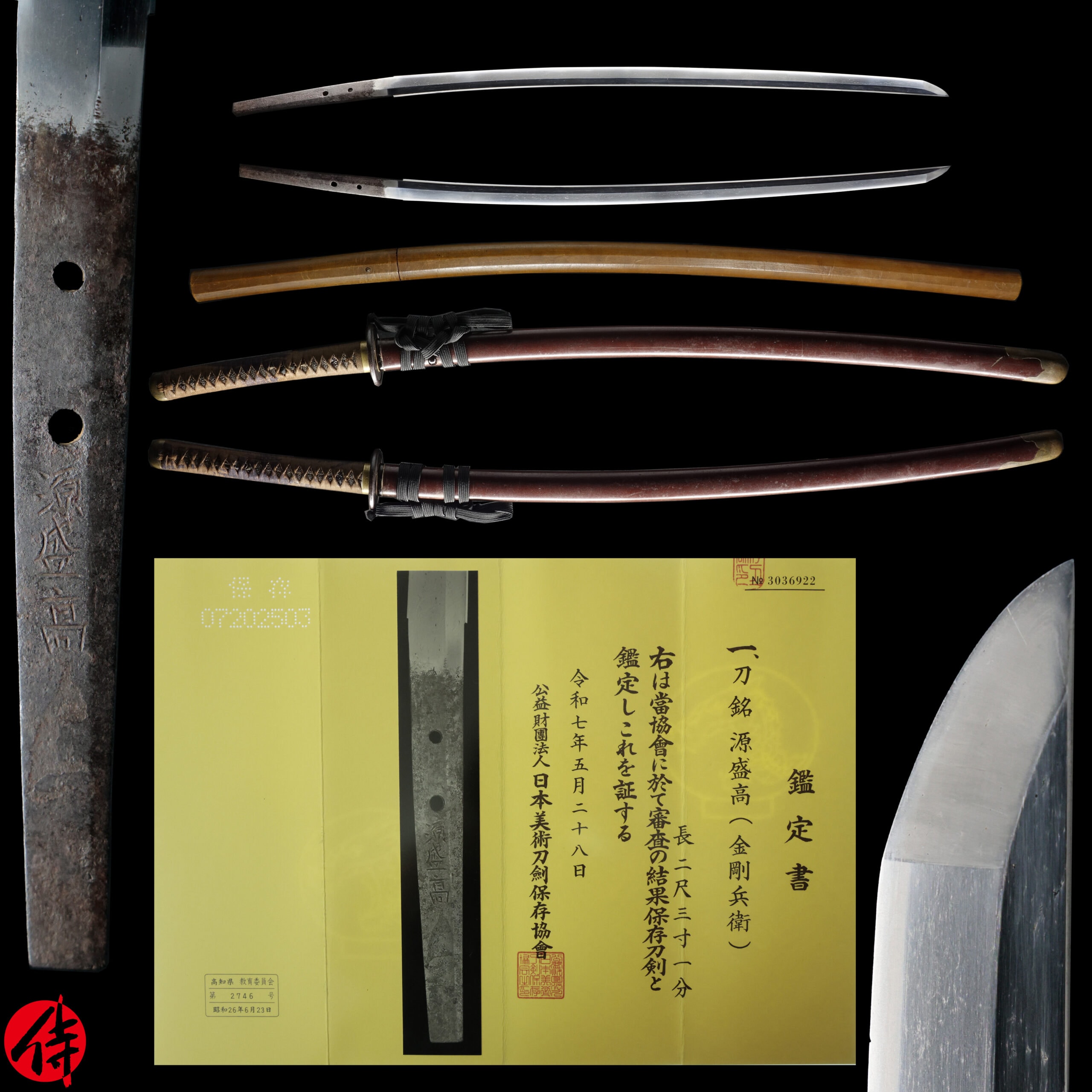
Antique Japanese Sword Katana Signed by Minamoto no Moritaka NBTHK Hozon Certificate
売却済
世界81社の刀剣商を横断追跡 · 価格履歴 · 売却アーカイブ
仕様
長さ
69.9 cm
反り
1.5 cm
Antique Japanese Sword Katana Signed by Minamoto no Moritaka with Hozon Certificate 【Description】 Summary This blade bears the signature of the swordsmith Minamoto no Moritaka (源盛高), who worked in Chikuzen Province (present-day Fukuoka Prefecture) during late Muromachi period (early-mid 16th century). The name “Moritaka” was passed down through several generations of swordsmiths in this lineage, who belonged to the prestigious Kongō Hyōe (金剛兵衛) school founded by Kongō Hyōe Morikuni. The first-gen Moritaka was active during the Shōhei era of the Nanbokuchō period (1346–1370) and we believe this blade was signed by a late-gen Moritaka. Morikuni’s son became the first-generation Moritaka, the most renowned smith of this name, active during the Shōhei era (1346–1370). Moritaka’s swords were highly prized by high-ranking feudal lords, with many preserved as treasured heirlooms. The Kongō Hyōe school also maintained a strong relationship with Buddhism, and at one time, Moritaka forged swords exclusively for Reizan Hōmanzan, a politically and militarily influential Buddhist organization. Remarkably, the 27th-generation Moritaka continues the family tradition in Fukuoka, now producing high-quality Japanese kitchen knives and carrying forward the spirit and craftsmanship of his ancestors. Historical Background The late Muromachi period overlaps with the Sengoku period (戦国時代, “Warring States Period”), a time marked by ongoing military conflict and political fragmentation across Japan. In this turbulent era, the samurai class played a central role as both warriors and political actors. Swords were vital to the samurai not just as weapons but also as symbols of personal honor and status. A well-forged sword was regarded as an extension of the samurai’s soul, used in both battle and ceremonial practices. As warfare intensified, demand for high-quality blades grew rapidly. Feudal lords (大名, daimyō) sought to equip their armies with superior weapons, turning to renowned swordsmiths like Moritaka for craftsmanship that combined functionality with aesthetic value. It is appraised as a Hozon Token (保存刀剣) issued by NBTHK (Nihon Bijutsu Touken Hozon Kyokai: 日本美術刀剣保存協会). This authentication paper was only given to authentic Japanese swords, especially well preserved and high quality with artistic value. *Please keep in mind that there are a few Kitae Kizu on the groove of this blade. If you like to see the detailed condition, please feel free to contact us. 【 Blade】 Cutting Edge Length(Nagasa) : 69.9 cm (27.4 inches) Curvature(Sori) : 1.5 cm (0.43 inches) Hamon : The crystalline structure which forms along the cutting edge of a blade as a result of the hardening process Jimon(Jihada) : visible steel surface pattern created by folding and hammering during forging process Kissaki : Kissaki is the tip of the Japanese sword. Nakago : Nakago is the tang of the Japanese sword. Japanese swordsmiths left the black rust on the tang because it prevents red rust while the tang is in its handle. And the discoloration of the tang was created over time, and it is a great indicator for a Japanese sword specialist to estimate when the sword was forged. Koshirae : Koshirae is the mounting of the Japanese sword. There are several parts that consist of Koshirae such as Saya (Scabbard), Tsuka (Handle), Tsuba (Handguard). Fuchi-Kashira : A pair of matching sword fittings that cover the upper and bottom parts of its sword hilt. Tsuka and Menuki : Tsuka is the handle of the Japanese sword and Menuki is its decoration. We assume that the motif of this menuki represents horse equipment. In particular, it appears to depict a kura (鞍, saddle), which is placed on a horse’s back to allow the rider to sit securely. This item is typically used together with an abumi (鐙, stirrup), a type of riding gear that hangs on the sides of the horse and supports the rider’s feet while riding. Horses have been around human life for a long time, not only as our food but also for transportati
 NihontoWatchBETA
売却済
世界81社の刀剣商を横断追跡 · 価格履歴 · 売却アーカイブ
69.9 cm
1.5 cm
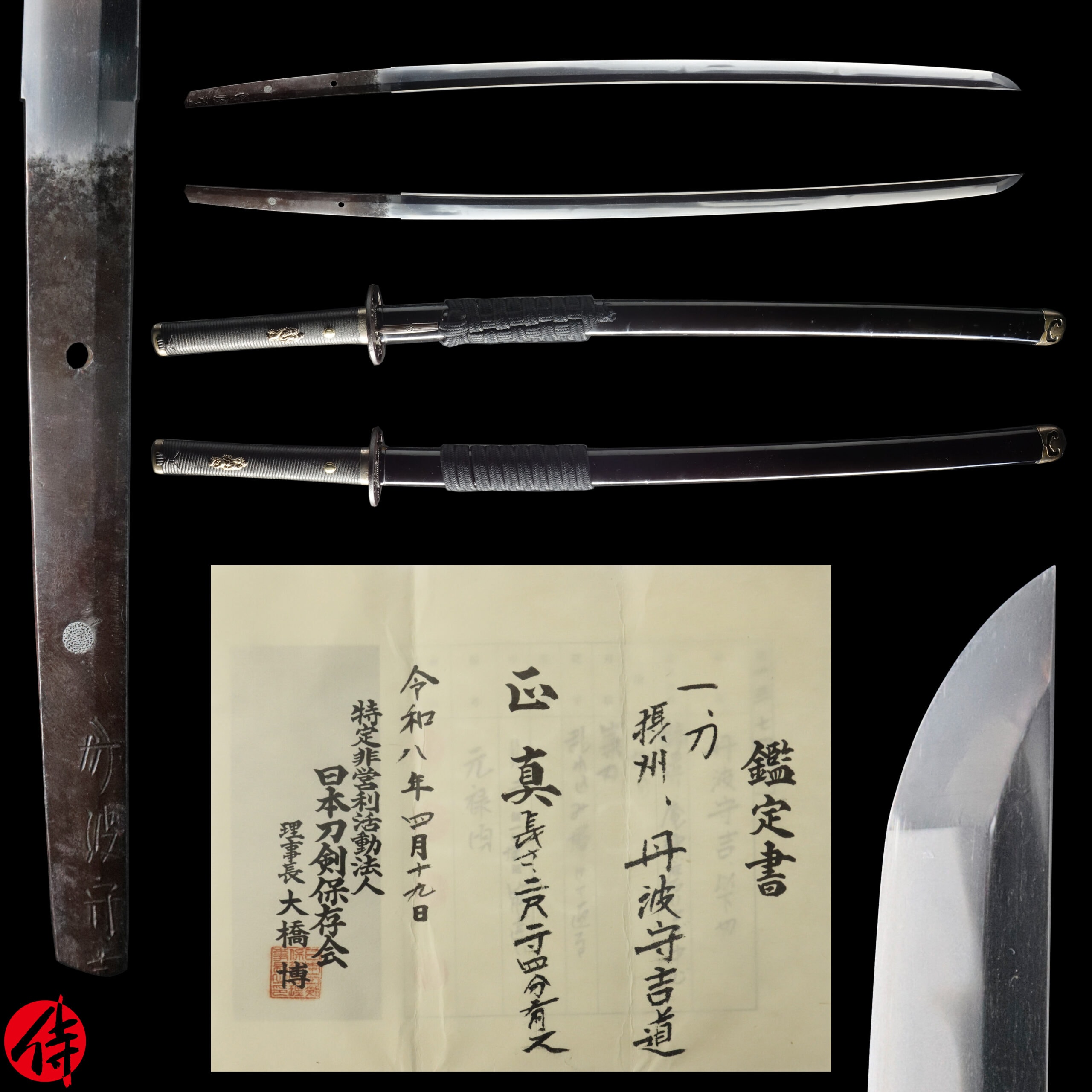
Mid Edo Katana signed by Tanba no Kami Yoshimichi for sale| Samurai Museum Shop E-mail FB Messenger Skip to content Menu Close Samurai Museum Shop Products Antique Japanese Sword Katana signed by Tanba no Kami Yoshimichi NTHK Kanteisho Certificate Updated: 22 Jun 2026 Antique Japanese Sword Katana signed by Tanba no Kami Yoshimichi NTHK Kanteisho Certificate
$7,441
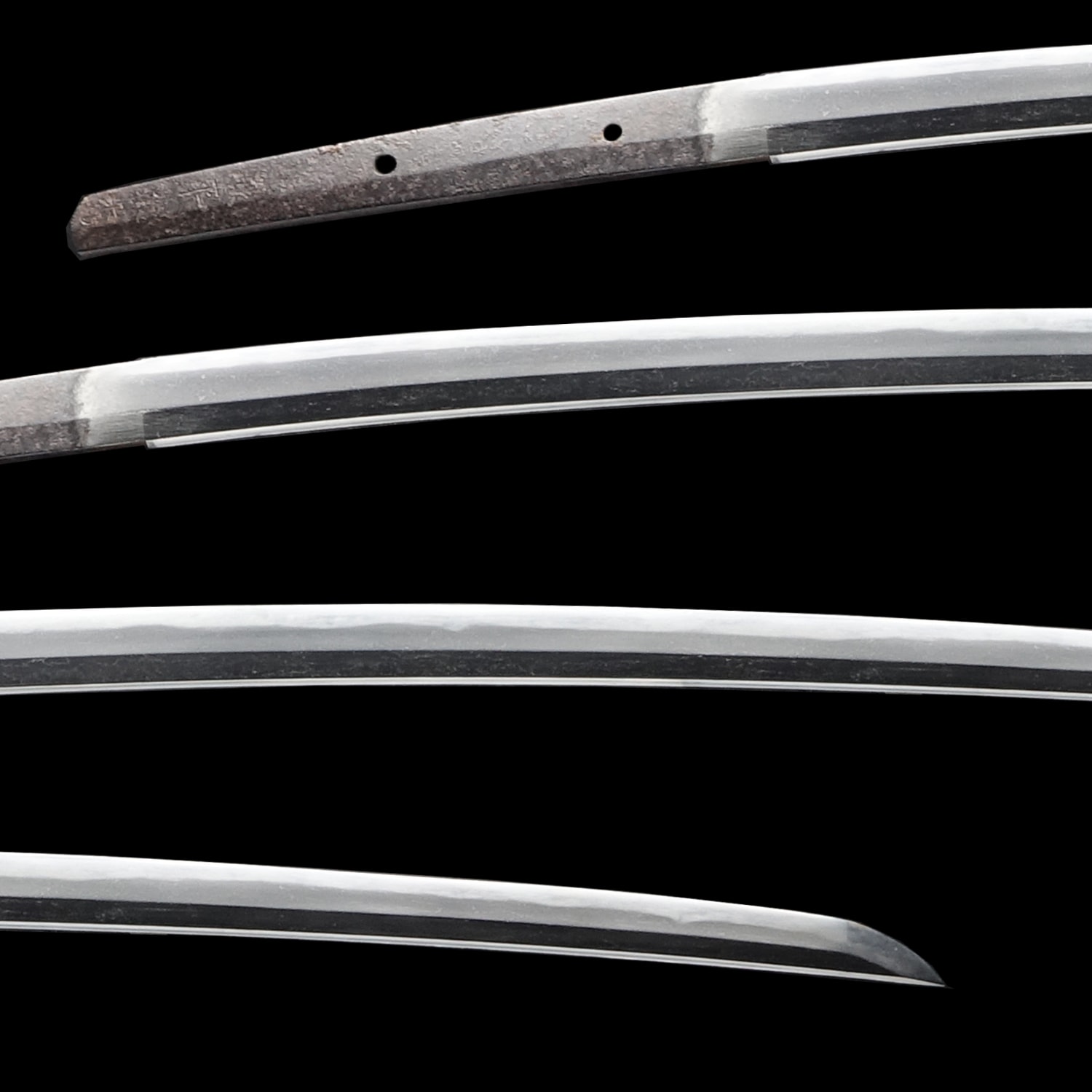
Muromachi Katana signed by Naminohira Yasuhide for sale
$7,751
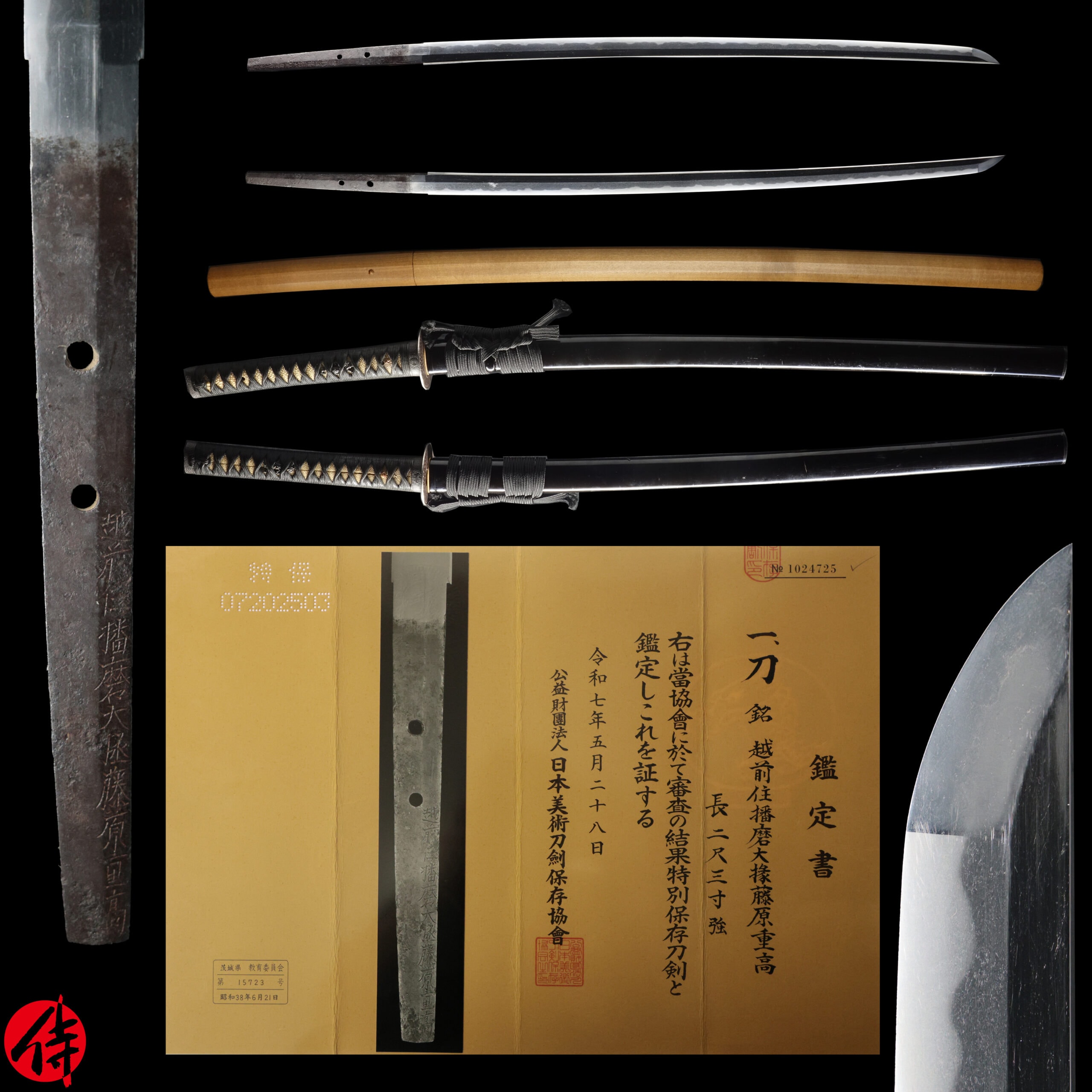
Early Edo Nihonto signed by Shigetaka for sale
$7,131
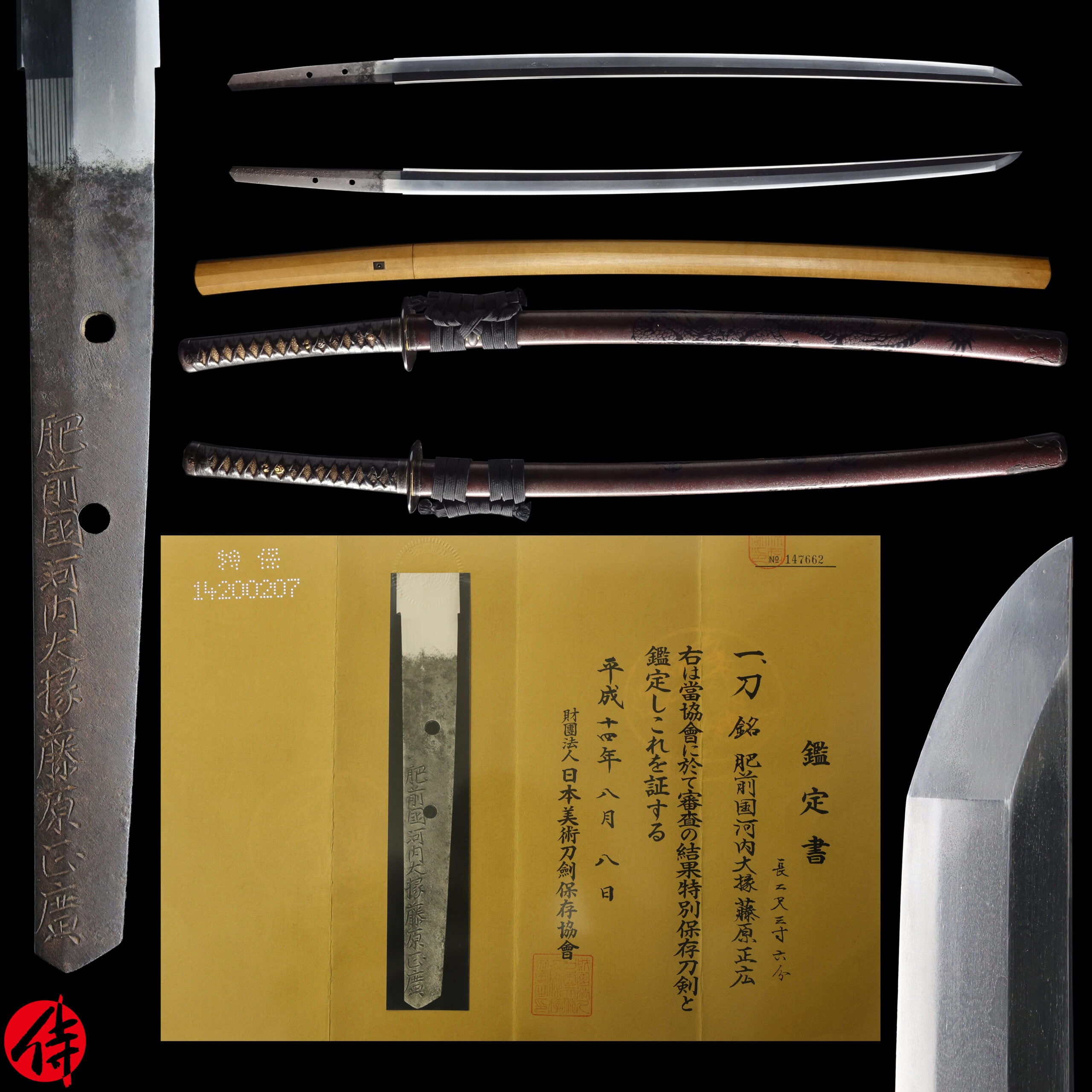
Antique Japanese Sword Katana Signed by Masahiro NBTHK Tokubetsu Hozon Certificate
$7,751
Antique Japanese Sword Katana Signed by Minamoto no Moritaka with Hozon Certificate 【Description】 Summary This blade bears the signature of the swordsmith Minamoto no Moritaka (源盛高), who worked in Chikuzen Province (present-day Fukuoka Prefecture) during late Muromachi period (early-mid 16th century). The name “Moritaka” was passed down through several generations of swordsmiths in this lineage, who belonged to the prestigious Kongō Hyōe (金剛兵衛) school founded by Kongō Hyōe Morikuni. The first-gen Moritaka was active during the Shōhei era of the Nanbokuchō period (1346–1370) and we believe this blade was signed by a late-gen Moritaka. Morikuni’s son became the first-generation Moritaka, the most renowned smith of this name, active during the Shōhei era (1346–1370). Moritaka’s swords were highly prized by high-ranking feudal lords, with many preserved as treasured heirlooms. The Kongō Hyōe school also maintained a strong relationship with Buddhism, and at one time, Moritaka forged swords exclusively for Reizan Hōmanzan, a politically and militarily influential Buddhist organization. Remarkably, the 27th-generation Moritaka continues the family tradition in Fukuoka, now producing high-quality Japanese kitchen knives and carrying forward the spirit and craftsmanship of his ancestors. Historical Background The late Muromachi period overlaps with the Sengoku period (戦国時代, “Warring States Period”), a time marked by ongoing military conflict and political fragmentation across Japan. In this turbulent era, the samurai class played a central role as both warriors and political actors. Swords were vital to the samurai not just as weapons but also as symbols of personal honor and status. A well-forged sword was regarded as an extension of the samurai’s soul, used in both battle and ceremonial practices. As warfare intensified, demand for high-quality blades grew rapidly. Feudal lords (大名, daimyō) sought to equip their armies with superior weapons, turning to renowned swordsmiths like Moritaka for craftsmanship that combined functionality with aesthetic value. It is appraised as a Hozon Token (保存刀剣) issued by NBTHK (Nihon Bijutsu Touken Hozon Kyokai: 日本美術刀剣保存協会). This authentication paper was only given to authentic Japanese swords, especially well preserved and high quality with artistic value. *Please keep in mind that there are a few Kitae Kizu on the groove of this blade. If you like to see the detailed condition, please feel free to contact us. 【 Blade】 Cutting Edge Length(Nagasa) : 69.9 cm (27.4 inches) Curvature(Sori) : 1.5 cm (0.43 inches) Hamon : The crystalline structure which forms along the cutting edge of a blade as a result of the hardening process Jimon(Jihada) : visible steel surface pattern created by folding and hammering during forging process Kissaki : Kissaki is the tip of the Japanese sword. Nakago : Nakago is the tang of the Japanese sword. Japanese swordsmiths left the black rust on the tang because it prevents red rust while the tang is in its handle. And the discoloration of the tang was created over time, and it is a great indicator for a Japanese sword specialist to estimate when the sword was forged. Koshirae : Koshirae is the mounting of the Japanese sword. There are several parts that consist of Koshirae such as Saya (Scabbard), Tsuka (Handle), Tsuba (Handguard). Fuchi-Kashira : A pair of matching sword fittings that cover the upper and bottom parts of its sword hilt. Tsuka and Menuki : Tsuka is the handle of the Japanese sword and Menuki is its decoration. We assume that the motif of this menuki represents horse equipment. In particular, it appears to depict a kura (鞍, saddle), which is placed on a horse’s back to allow the rider to sit securely. This item is typically used together with an abumi (鐙, stirrup), a type of riding gear that hangs on the sides of the horse and supports the rider’s feet while riding. Horses have been around human life for a long time, not only as our food but also for transportati
NihontoWatchBETA売却済
世界81社の刀剣商を横断追跡 · 価格履歴 · 売却アーカイブ
69.9 cm
1.5 cm
Mid Edo Katana signed by Tanba no Kami Yoshimichi for sale| Samurai Museum Shop E-mail FB Messenger Skip to content Menu Close Samurai Museum Shop Products Antique Japanese Sword Katana signed by Tanba no Kami Yoshimichi NTHK Kanteisho Certificate Updated: 22 Jun 2026 Antique Japanese Sword Katana signed by Tanba no Kami Yoshimichi NTHK Kanteisho Certificate
$7,441
Muromachi Katana signed by Naminohira Yasuhide for sale
$7,751
Early Edo Nihonto signed by Shigetaka for sale
$7,131
Antique Japanese Sword Katana Signed by Masahiro NBTHK Tokubetsu Hozon Certificate
$7,751