売切れ
Hozon売切れ
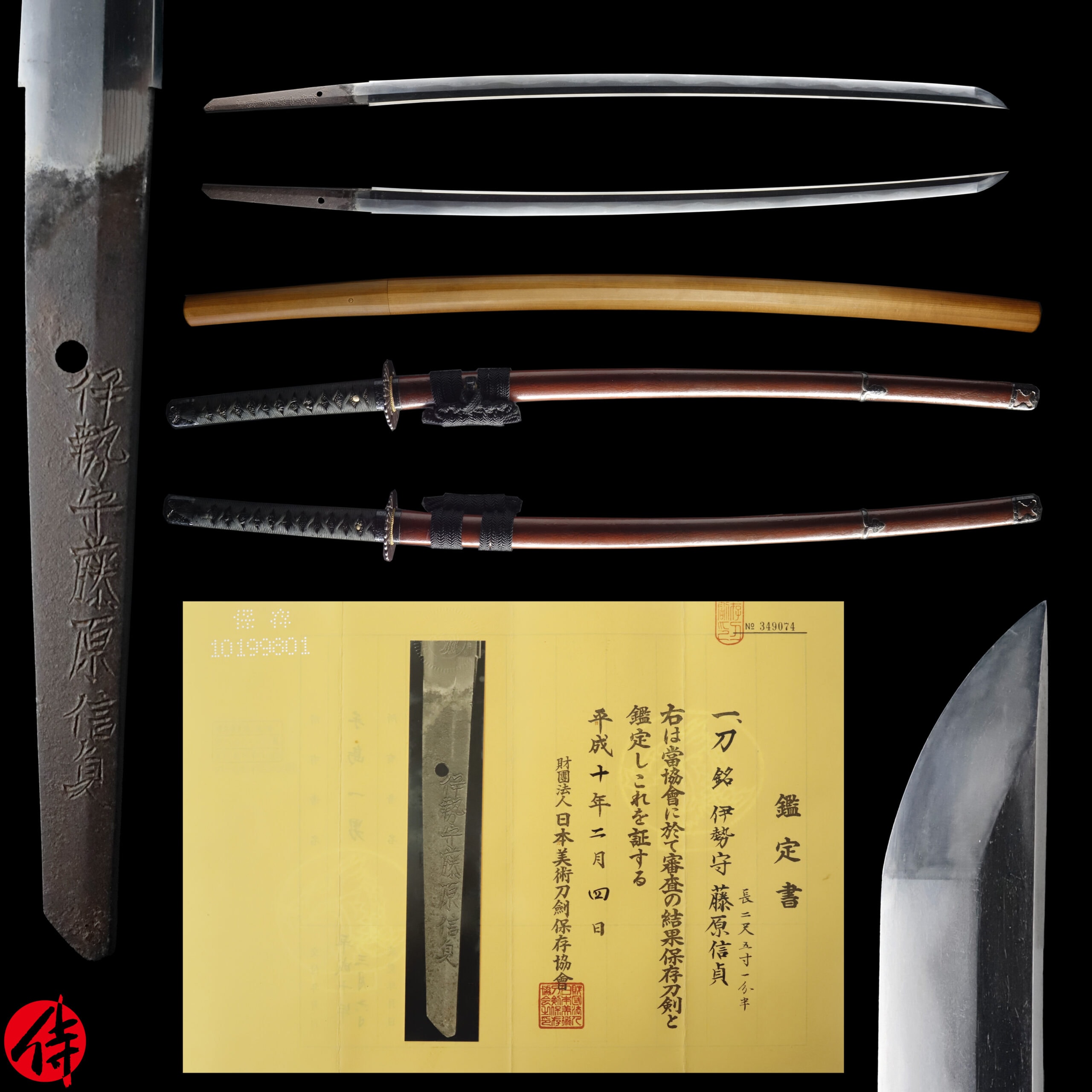
Early Edo period Katana signed by Fujiwara Nobusada for sale| Samurai Museum Shop
売却済
世界81社の刀剣商を横断追跡 · 価格履歴 · 売却アーカイブ
仕様
長さ
76.4 cm
反り
1.3 cm
Antique Japanese Sword Katana Signed by Fujiwara Nobusada with Hozon Certificate 【Description】 This blade was signed by Ise no Kami Fujiwara Nobusada (伊勢守藤原信貞), who was active around the Kanei era (1624–1644, early Edo period) in Mino Province(today’s Gifu Prefecture). Nobusada was a swordsmith of the Jumyō (寿命) tradition, working in Mino at a time when many smiths from the Seki region had already dispersed to other provinces. He was therefore one of the few who continued forging swords in his home province and is recognized as a representative master of the Mino Ganmaku school (美濃岩捲鍛冶). Some of his blades bear the signature “Ise no Kami Ganmaku Nobusada” (伊勢守藤原岩捲信貞). The title Ise no Kami (Governor of Ise) was an honorary court rank granted by the Emperor to distinguished swordsmiths. The term Ganmaku refers to the Ganmaku area where he resided and established his own branch lineage that evolved from the Jumyō school. The Ganmaku smiths were famed for producing exceptionally sharp and durable swords, and some of their blades were even nicknamed “Ishikiri” (石切, Stone-Cutter) for their cutting ability. About Jyumyo School The JYUMYO school has its origins from YAMATO(NARA Pref.) and moved to Mino province in the KAMAKURA period. Their name “JYUMYO” means life span or longevity. As its meaning is so hopeful, their swords were prized as a celebrated gift to feudal lords among the SAMURAI society. The tradition continued for centuries, right up until the end of the EDO period. About Mino province The MINO swordsmiths style, also known as MINO-DEN, basically has the TOGARI(Pointed shapes protruding from the Hamon )in a classic straight line and random temper line with some white Utsuri. MINO-DEN had its origin from YAMATO-DEN in the late KAMAKURA period(1280-1330). It flourished in the MUROMACHI period(1333-1573) and continued until the EDO period(1603-1868). MINO-DEN exceedingly prospered during Sengoku Jidai(Warring State period) due to the high demand for weapons. And the location of Mino province beat others. Akechi Mitsuhide controlled Mino province, and Nobunaga Oda ruled Owari province, and Tokugawa Ieyasu was the lord of Suruga (Neighboring areas). There was high demand from those powerful feudal lords and their retainers. Furthermore, so many wars occurred between the Kanto region and the Kyoto area. Mino is located in the middle, making feudal lords feel convenient to order swords from MINO-DEN. The blades forged in MINO provinces also had the reputation of their practical design and sharpness. Many feudal lords demanded swords forged in the Mino province. The tradition of excellent sword forging skills passed to the Edo period, and Nobusada is a good example. While many swordsmiths in Mino province moved to another place to find jobs, Nobusada stayed there. One of his works is designated as important cultural property, preserved at Nangu shrine in Gifu prefecture. This fact tells us that Nobusada has been a highly-regarded swordsmith in Japanese sword history. It is appraised as a Hozon Token (保存刀剣) issued by NBTHK (Nihon Bijutsu Touken Hozon Kyokai: 日本美術刀剣保存協会). This authentication paper was only given to authentic Japanese swords, well preserved and high quality with artistic value. *Please keep in mind that there are a few Kitae Kizu on the Mune (backbone) of this blade. If you like to see the detailed condition, please feel free to contact us. 【 Blade】 Cutting Edge Length(Nagasa) : 76.4 cm (30.0 inches) Curvature(Sori) : 1.3 cm (0.51 inches) Hamon : The crystalline structure which forms along the cutting edge of a blade as a result of the hardening process Jimon(Jihada) : visible steel surface pattern created by folding and hammering during forging process Kissaki : Kissaki is the tip of the Japanese sword. Nakago : Nakago is the tang of the Japanese sword. Japanese swordsmiths left the black rust on the tang because it prevents red rust while the tang is in its handle. And the discoloration of the tang was created o
 NihontoWatchBETA
売却済
世界81社の刀剣商を横断追跡 · 価格履歴 · 売却アーカイブ
76.4 cm
1.3 cm
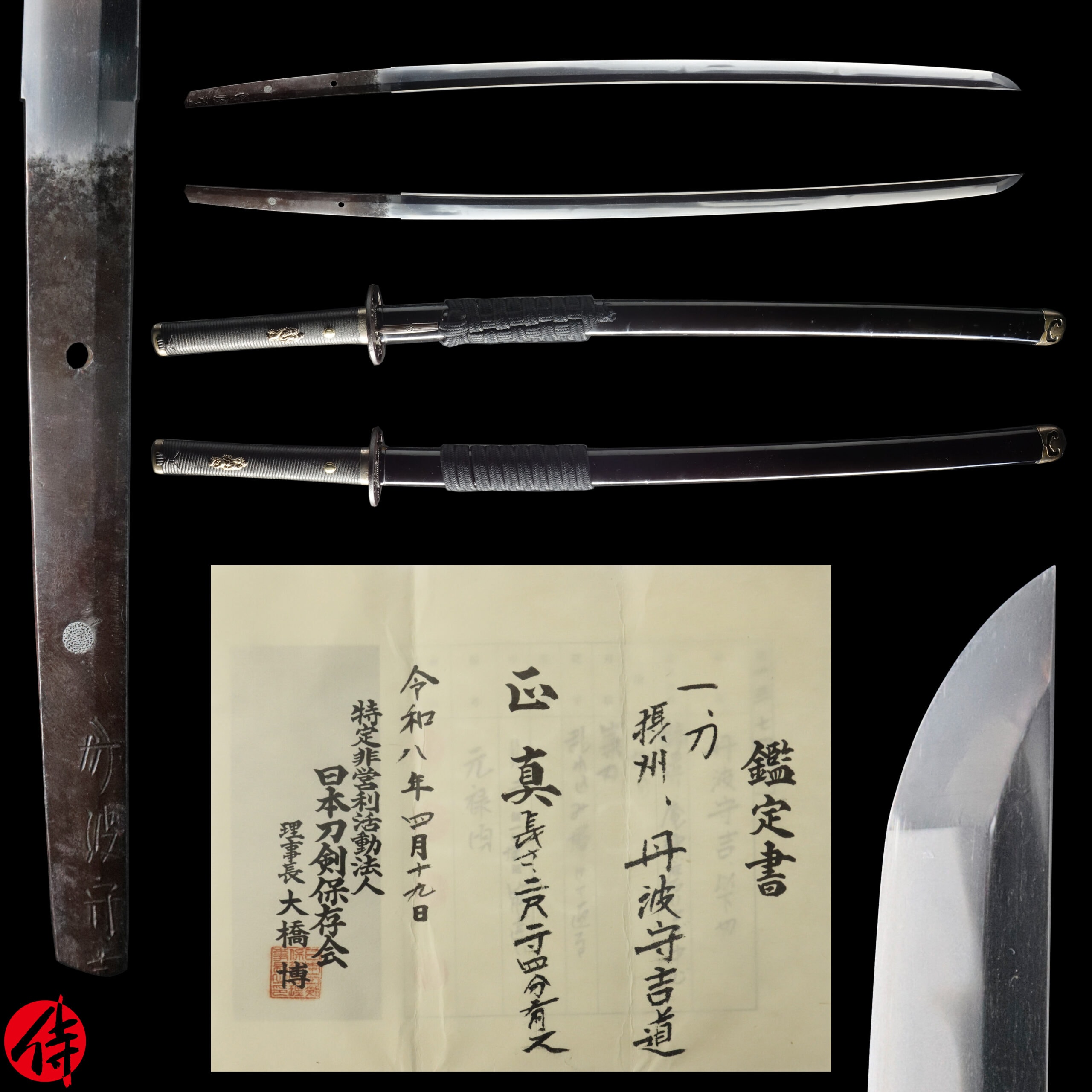
Mid Edo Katana signed by Tanba no Kami Yoshimichi for sale| Samurai Museum Shop E-mail FB Messenger Skip to content Menu Close Samurai Museum Shop Products Antique Japanese Sword Katana signed by Tanba no Kami Yoshimichi NTHK Kanteisho Certificate Updated: 22 Jun 2026 Antique Japanese Sword Katana signed by Tanba no Kami Yoshimichi NTHK Kanteisho Certificate
$7,441
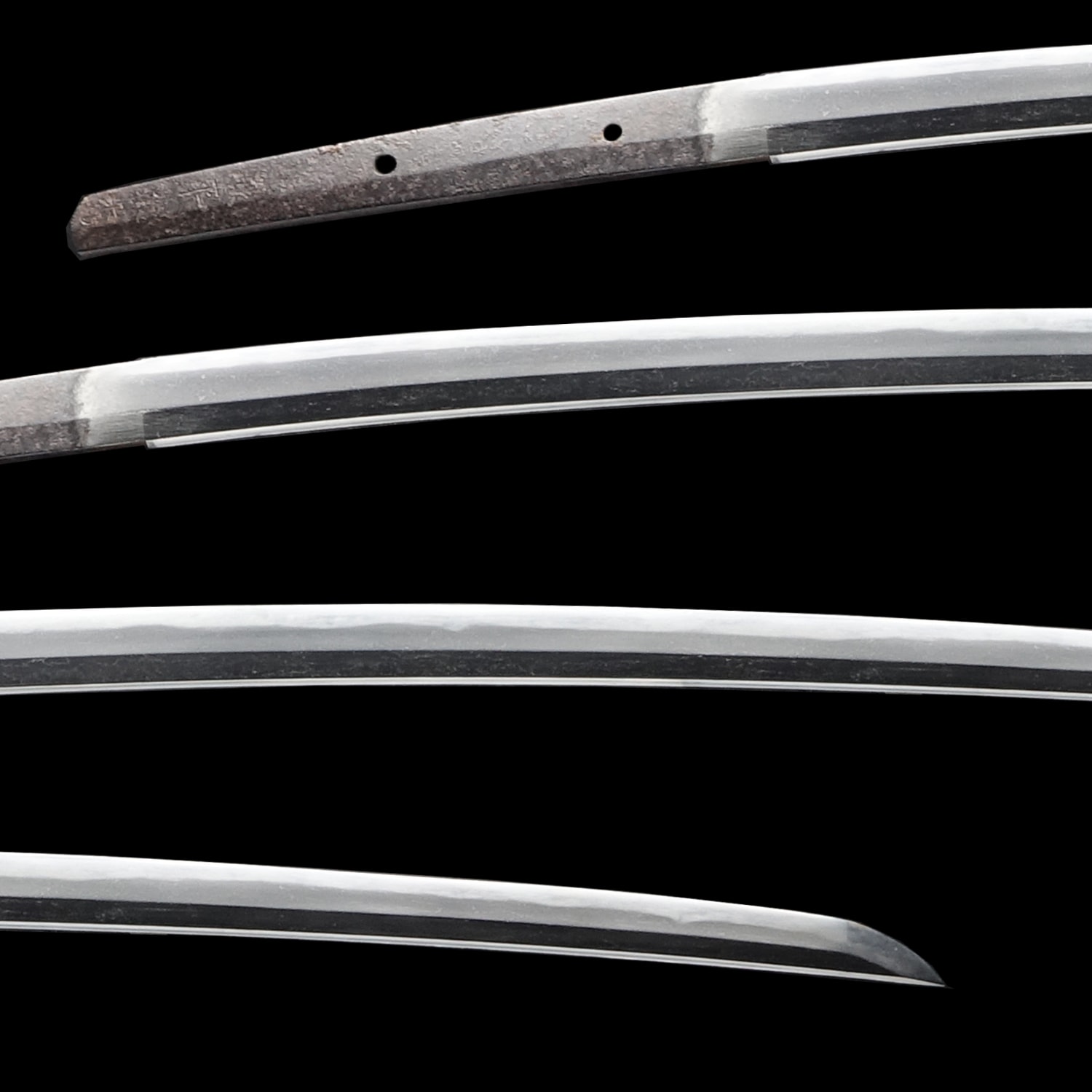
Muromachi Katana signed by Naminohira Yasuhide for sale
$7,751
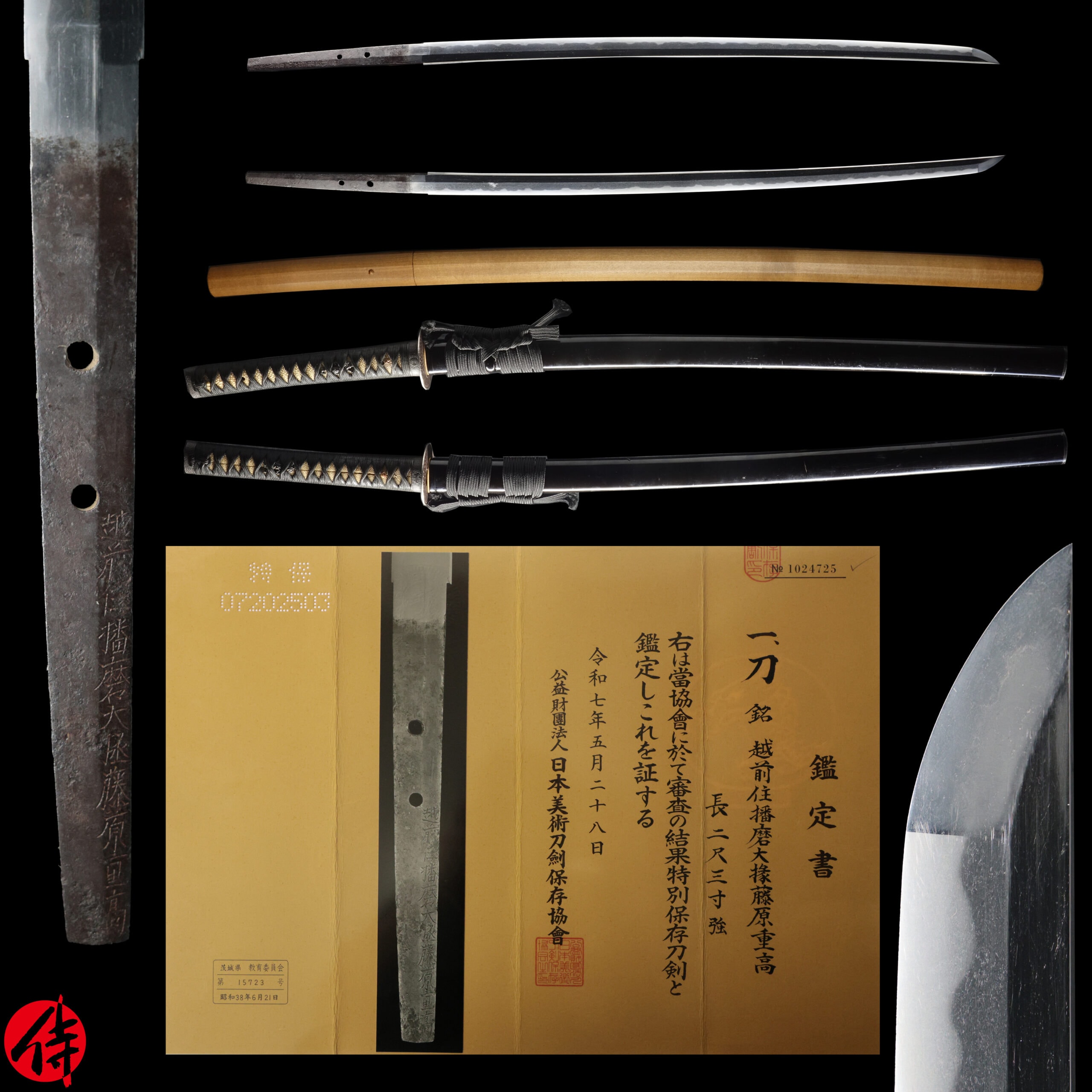
Early Edo Nihonto signed by Shigetaka for sale
$7,131
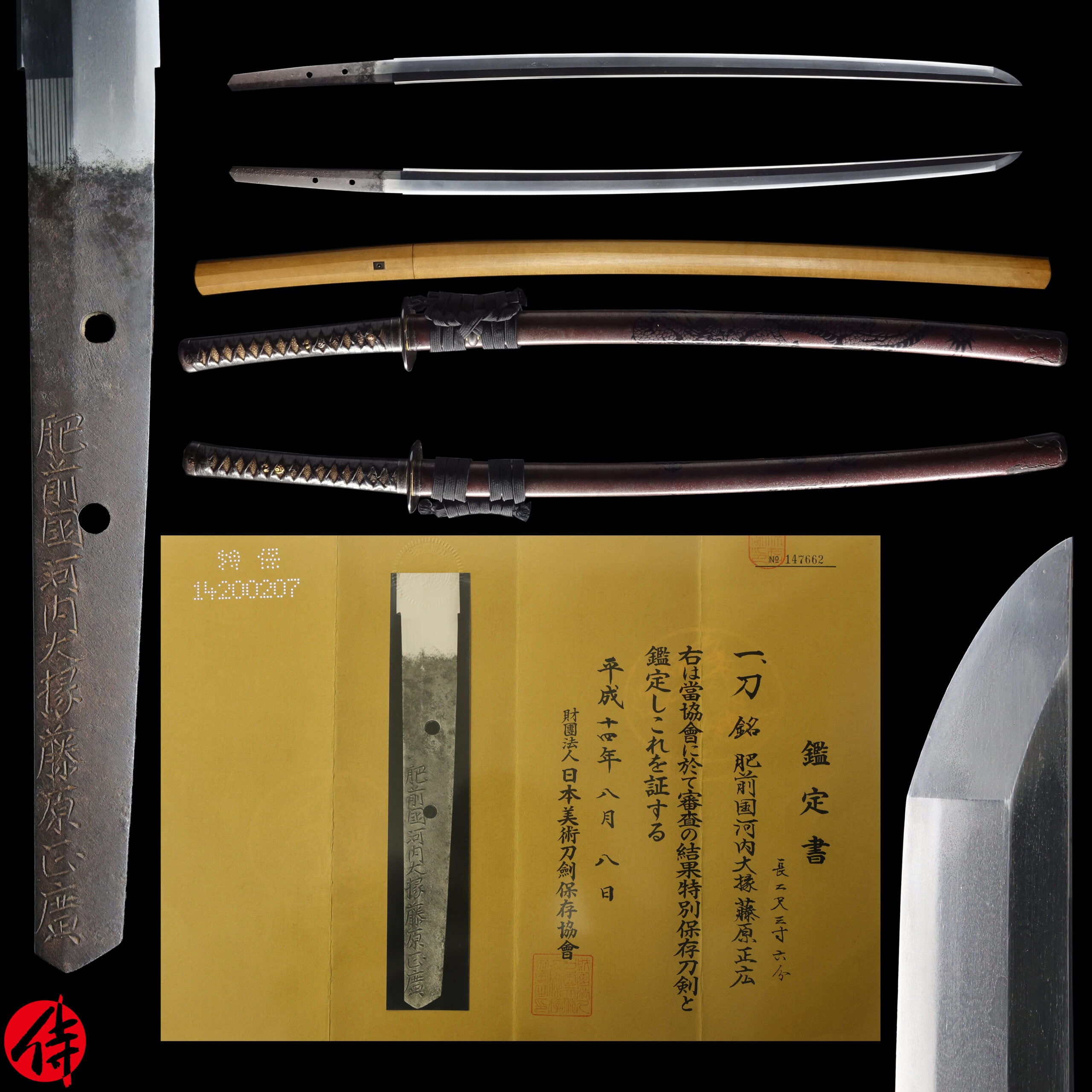
Antique Japanese Sword Katana Signed by Masahiro NBTHK Tokubetsu Hozon Certificate
$7,751
Antique Japanese Sword Katana Signed by Fujiwara Nobusada with Hozon Certificate 【Description】 This blade was signed by Ise no Kami Fujiwara Nobusada (伊勢守藤原信貞), who was active around the Kanei era (1624–1644, early Edo period) in Mino Province(today’s Gifu Prefecture). Nobusada was a swordsmith of the Jumyō (寿命) tradition, working in Mino at a time when many smiths from the Seki region had already dispersed to other provinces. He was therefore one of the few who continued forging swords in his home province and is recognized as a representative master of the Mino Ganmaku school (美濃岩捲鍛冶). Some of his blades bear the signature “Ise no Kami Ganmaku Nobusada” (伊勢守藤原岩捲信貞). The title Ise no Kami (Governor of Ise) was an honorary court rank granted by the Emperor to distinguished swordsmiths. The term Ganmaku refers to the Ganmaku area where he resided and established his own branch lineage that evolved from the Jumyō school. The Ganmaku smiths were famed for producing exceptionally sharp and durable swords, and some of their blades were even nicknamed “Ishikiri” (石切, Stone-Cutter) for their cutting ability. About Jyumyo School The JYUMYO school has its origins from YAMATO(NARA Pref.) and moved to Mino province in the KAMAKURA period. Their name “JYUMYO” means life span or longevity. As its meaning is so hopeful, their swords were prized as a celebrated gift to feudal lords among the SAMURAI society. The tradition continued for centuries, right up until the end of the EDO period. About Mino province The MINO swordsmiths style, also known as MINO-DEN, basically has the TOGARI(Pointed shapes protruding from the Hamon )in a classic straight line and random temper line with some white Utsuri. MINO-DEN had its origin from YAMATO-DEN in the late KAMAKURA period(1280-1330). It flourished in the MUROMACHI period(1333-1573) and continued until the EDO period(1603-1868). MINO-DEN exceedingly prospered during Sengoku Jidai(Warring State period) due to the high demand for weapons. And the location of Mino province beat others. Akechi Mitsuhide controlled Mino province, and Nobunaga Oda ruled Owari province, and Tokugawa Ieyasu was the lord of Suruga (Neighboring areas). There was high demand from those powerful feudal lords and their retainers. Furthermore, so many wars occurred between the Kanto region and the Kyoto area. Mino is located in the middle, making feudal lords feel convenient to order swords from MINO-DEN. The blades forged in MINO provinces also had the reputation of their practical design and sharpness. Many feudal lords demanded swords forged in the Mino province. The tradition of excellent sword forging skills passed to the Edo period, and Nobusada is a good example. While many swordsmiths in Mino province moved to another place to find jobs, Nobusada stayed there. One of his works is designated as important cultural property, preserved at Nangu shrine in Gifu prefecture. This fact tells us that Nobusada has been a highly-regarded swordsmith in Japanese sword history. It is appraised as a Hozon Token (保存刀剣) issued by NBTHK (Nihon Bijutsu Touken Hozon Kyokai: 日本美術刀剣保存協会). This authentication paper was only given to authentic Japanese swords, well preserved and high quality with artistic value. *Please keep in mind that there are a few Kitae Kizu on the Mune (backbone) of this blade. If you like to see the detailed condition, please feel free to contact us. 【 Blade】 Cutting Edge Length(Nagasa) : 76.4 cm (30.0 inches) Curvature(Sori) : 1.3 cm (0.51 inches) Hamon : The crystalline structure which forms along the cutting edge of a blade as a result of the hardening process Jimon(Jihada) : visible steel surface pattern created by folding and hammering during forging process Kissaki : Kissaki is the tip of the Japanese sword. Nakago : Nakago is the tang of the Japanese sword. Japanese swordsmiths left the black rust on the tang because it prevents red rust while the tang is in its handle. And the discoloration of the tang was created o
NihontoWatchBETA売却済
世界81社の刀剣商を横断追跡 · 価格履歴 · 売却アーカイブ
76.4 cm
1.3 cm
Mid Edo Katana signed by Tanba no Kami Yoshimichi for sale| Samurai Museum Shop E-mail FB Messenger Skip to content Menu Close Samurai Museum Shop Products Antique Japanese Sword Katana signed by Tanba no Kami Yoshimichi NTHK Kanteisho Certificate Updated: 22 Jun 2026 Antique Japanese Sword Katana signed by Tanba no Kami Yoshimichi NTHK Kanteisho Certificate
$7,441
Muromachi Katana signed by Naminohira Yasuhide for sale
$7,751
Early Edo Nihonto signed by Shigetaka for sale
$7,131
Antique Japanese Sword Katana Signed by Masahiro NBTHK Tokubetsu Hozon Certificate
$7,751