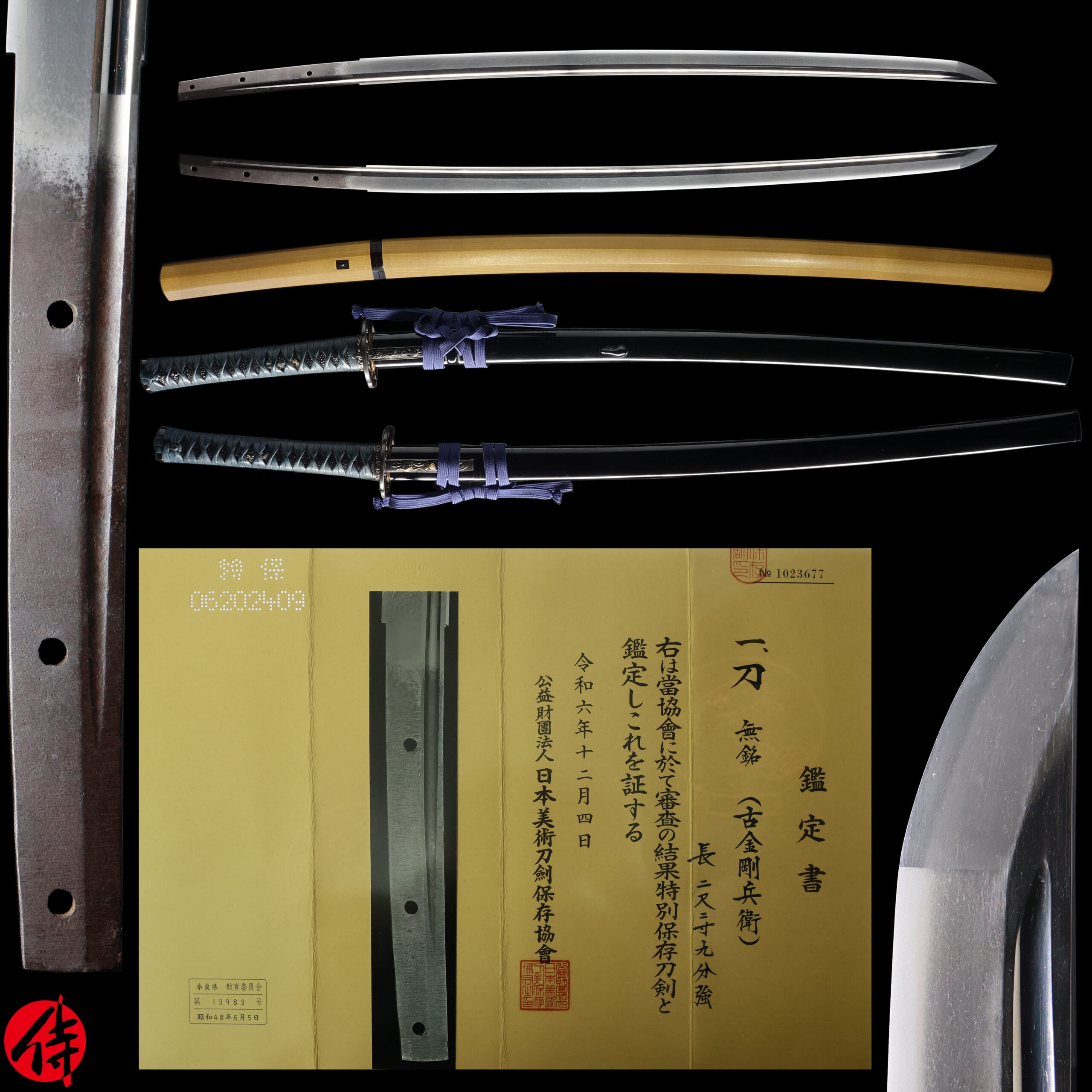
売切れ
Tokuho売切れ
Antique Japanese Sword Katana Attributed to Kongo Hyoue NBTHK Tokubetsu Hozon Certificate
売却済
世界81社の刀剣商を横断追跡 · 価格履歴 · 売却アーカイブ
仕様
長さ
69.7 cm
反り
1.1 cm
作者について
Kongobyoe Kongo Hyoe Moritaka金剛兵衛盛高
Antique Japanese Sword Katana attributed to Ko Kongo Hyoue with Tokubetsu Hozon Certificate 【Description】 Summary This blade is attributed to Ko Kongo Hyoue (古金剛兵衛) , which is the name of the school whose foundation dates back to the late Kamakura period (Early 14th century). Kongo Hyoue (金剛兵衛) was a prestigious school founded by Kongo Hyoue Morikuni during the late Kamakura period (around 1278). It is said that Kongo Hyoue had strong relationship with Sairen school., one of the most well-known schools in the region. There were quite a few renowned swordsmiths who were from this school. They resided in Urayama, where Kamado shrine, also known as Kongo Houman, was located. All the swordsmiths who belonged to Kongo Hyoue school used Mori (盛) as their maker’s name, such as Moritsugu. The Nakago (tang) they created has a distinctive shape called Sotoba (卒塔婆) while this blade doesn’t have this characteristic due to Suriage (shorting the blade). Kongo Hyoue has a strong relationship with Buddhism, as well. Those who belonged to Kongo Hyoue school exclusively forged swords for Reizan Houman Zan, a politically and militarily strong Buddhist organization at one point. It is appraised as a Tokubetsu Hozon Token (特別保存刀剣) issued by NBTHK(Nihon Bijutsu Touken Hozon Kyokai:日本美術刀剣保存協会). This authentication paper was only given to authentic Japanese swords, especially well preserved and high quality with artistic value. *Please keep in mind that there are a couple of Kitae Kizu on the groove of this blade. If you like to see the detailed condition, please feel free to contact us. 【 Blade】 Cutting Edge Length(Nagasa) : 69.7 cm (27.4 inches) Curvature(Sori) : 1.1 cm (0.43 inches) Hamon : The crystalline structure which forms along the cutting edge of a blade as a result of the hardening process Jimon(Jihada) : visible steel surface pattern created by folding and hammering during forging process Kissaki : Kissaki is the tip of the Japanese sword. Nakago : Nakago is the tang of the Japanese sword. Japanese swordsmiths left the black rust on the tang because it prevents red rust while the tang is in its handle. And the discoloration of the tang was created over time, and it is a great indicator for a Japanese sword specialist to estimate when the sword was forged. Koshirae : Koshirae is the mounting of the Japanese sword. There are several parts that consist of Koshirae such as Saya (Scabbard), Tsuka (Handle), Tsuba (Handguard). Fuchi-Kashira : A pair of matching sword fittings that cover the upper and bottom parts of its sword hilt. In addition to the chrysanthemum, the design of the fuchi-kashira also features the kikyo (桔梗, Japanese bellflower). The kikyo is a small, star-shaped flower that has been cherished in Japanese culture for centuries. Its elegant form and subtle beauty have made it a popular motif in traditional art and poetry, especially in tanka (短歌), since the Heian period (794–1185). The flower was originally called kichikō, but over time the pronunciation evolved to kikyō. In ancient times, the kikyo was also associated with fortune-telling. The Japanese term kikkyō wo uranau (吉凶を占う) means “to divine good or bad fortune,” and the word kikkyō (吉凶, good or bad omen) was linked with the flower’s name. The earlier pronunciation kichikō was phonetically similar to kichi kō (吉更), which means “further good fortune.” For this reason, the kikyo came to be seen as a symbol of good luck and auspiciousness. Tsuka and Menuki : Tsuka is the handle of the Japanese sword and Menuki is its decoration. This menuki features a combination of chrysanthemum (菊, kiku) and paulownia (桐, kiri) motifs. Both have long been regarded as noble and prestigious designs in Japan. The sixteen-petal chrysanthemum and the “go-san no kiri” (paulownia with 5–3 flower arrangement) are especially significant, as they are traditionally associated with the Imperial family. These motifs were also favored by prominent samurai families, including Toyotomi Hideyoshi. In fact,
 NihontoWatchBETA
売却済
世界81社の刀剣商を横断追跡 · 価格履歴 · 売却アーカイブ
69.7 cm
1.1 cm
Kongobyoe Kongo Hyoe Moritaka金剛兵衛盛高
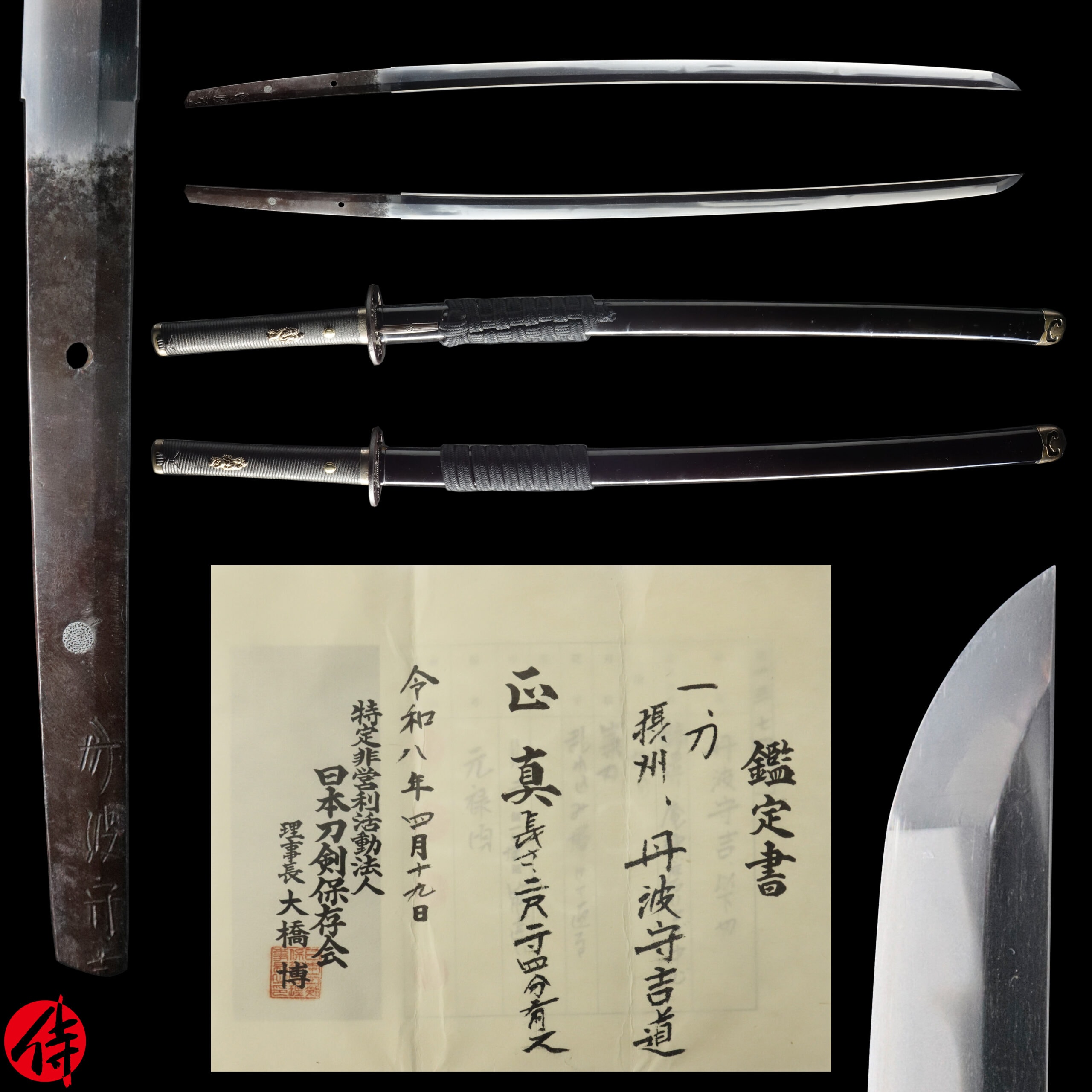
Mid Edo Katana signed by Tanba no Kami Yoshimichi for sale| Samurai Museum Shop E-mail FB Messenger Skip to content Menu Close Samurai Museum Shop Products Antique Japanese Sword Katana signed by Tanba no Kami Yoshimichi NTHK Kanteisho Certificate Updated: 22 Jun 2026 Antique Japanese Sword Katana signed by Tanba no Kami Yoshimichi NTHK Kanteisho Certificate
$7,441
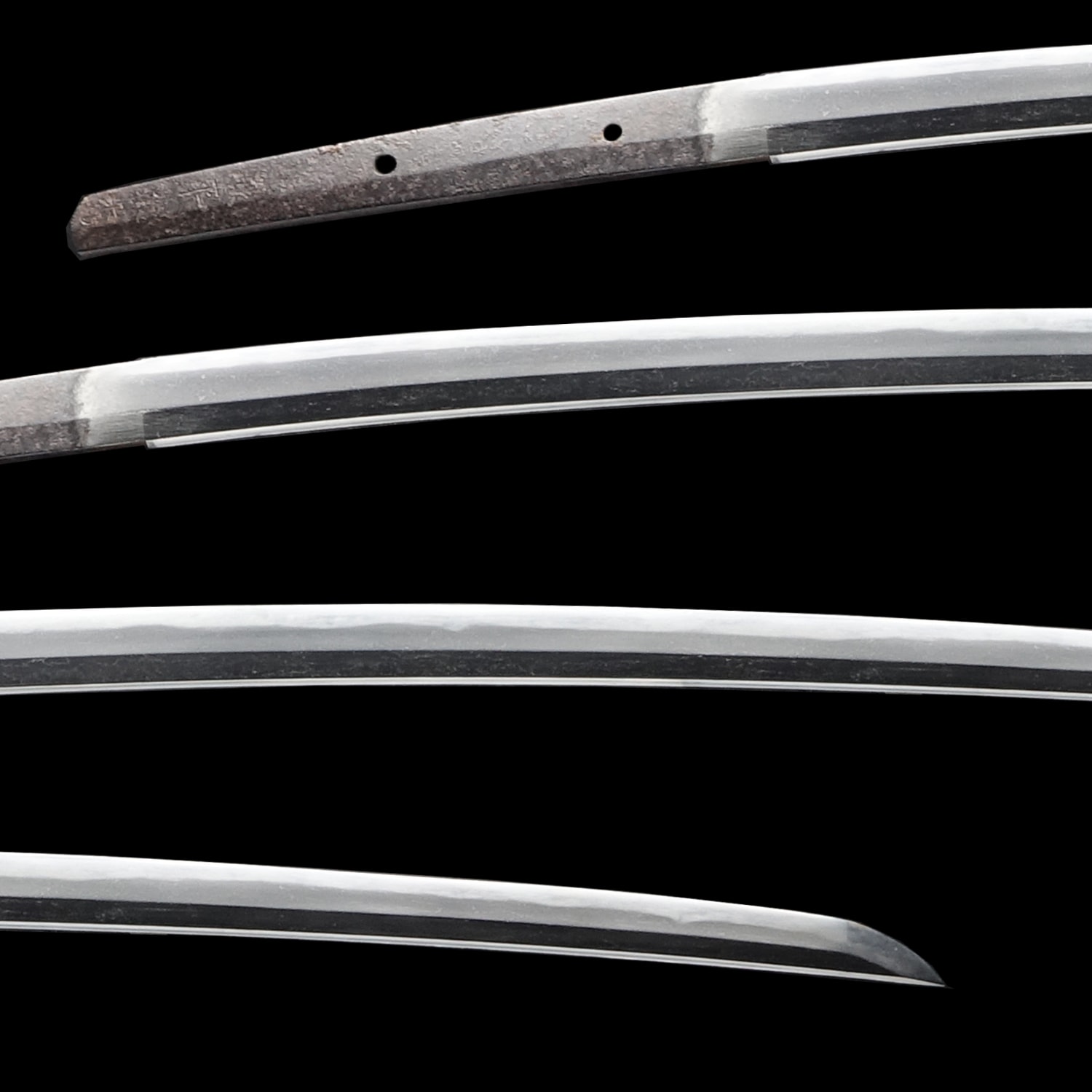
Muromachi Katana signed by Naminohira Yasuhide for sale
$7,751
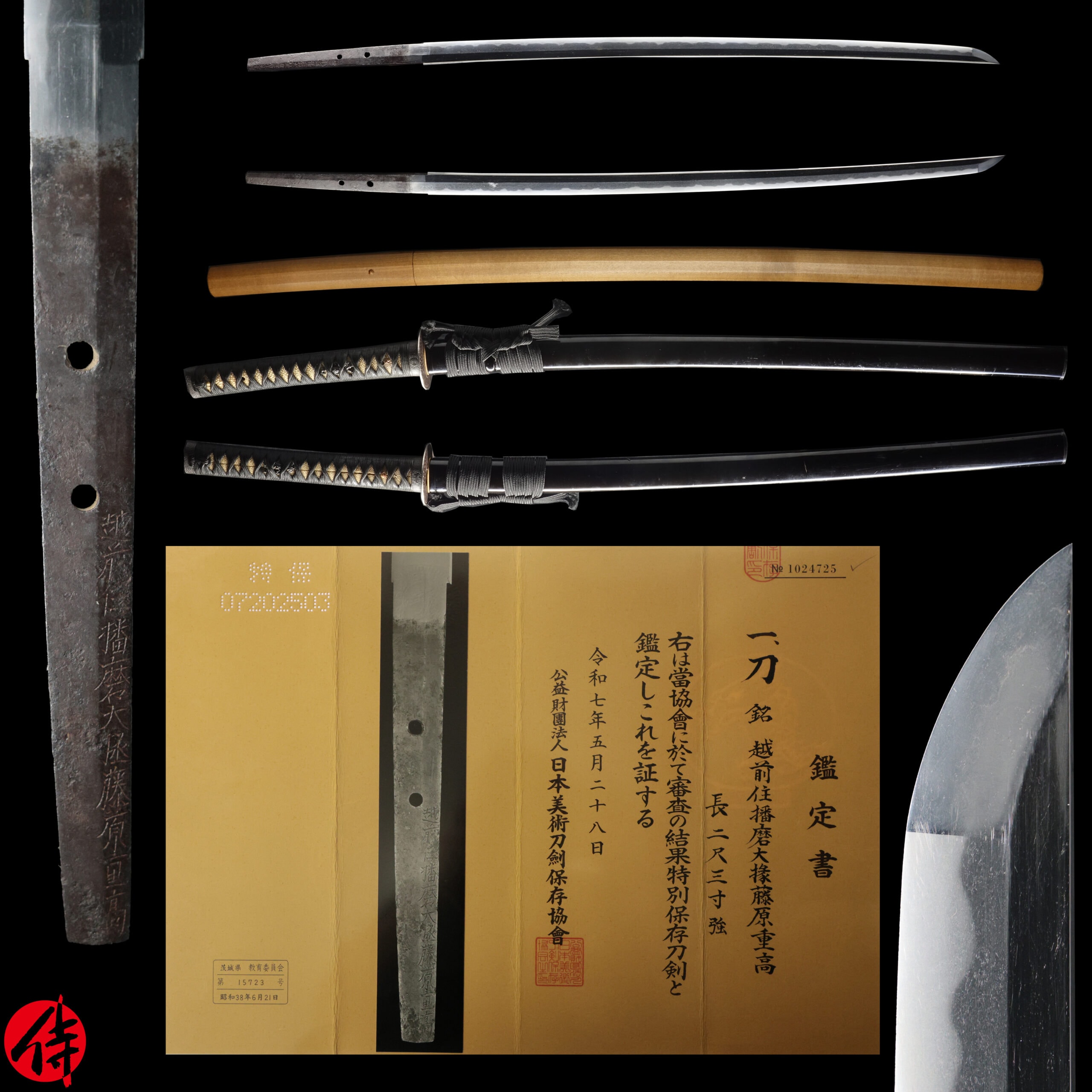
Early Edo Nihonto signed by Shigetaka for sale
$7,131
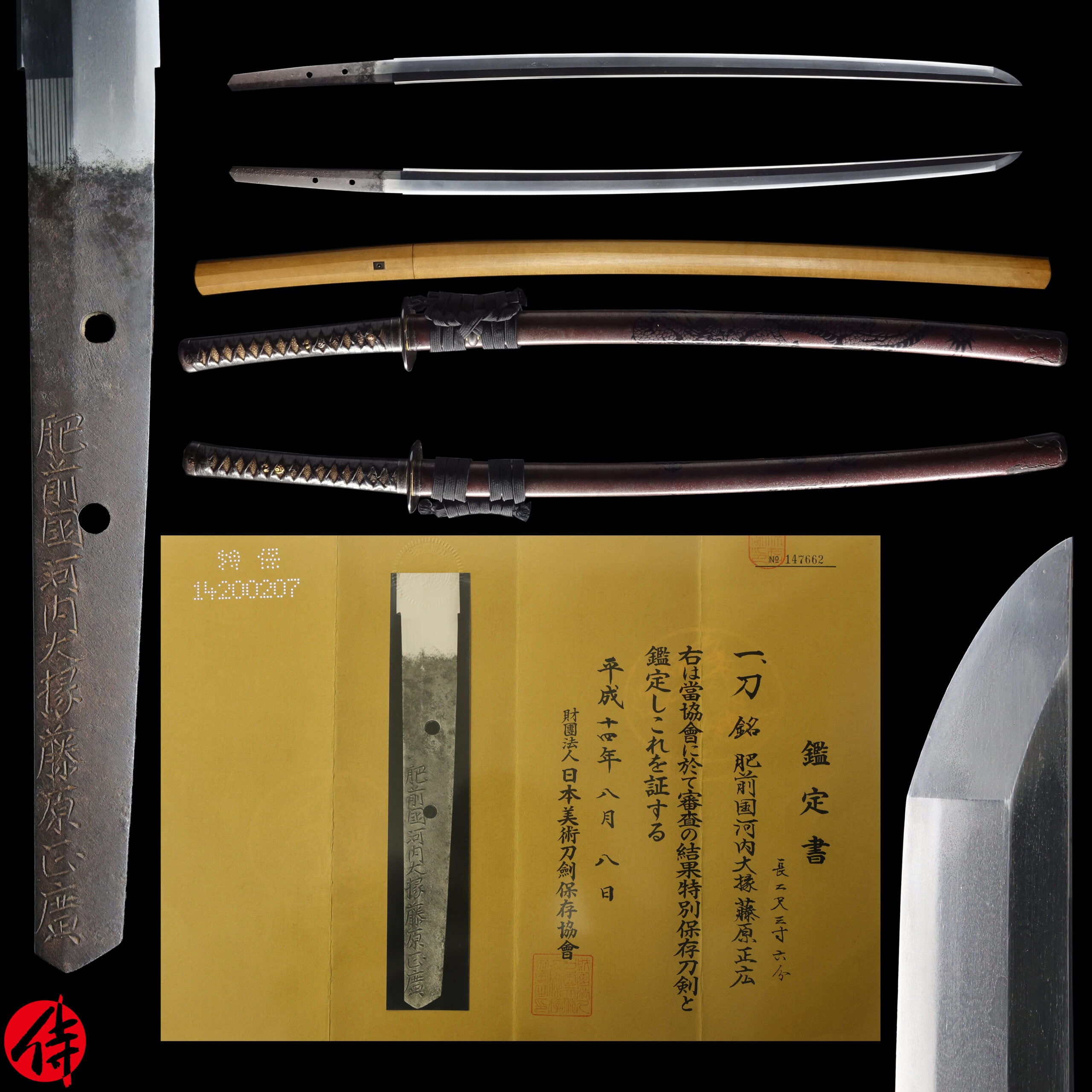
Antique Japanese Sword Katana Signed by Masahiro NBTHK Tokubetsu Hozon Certificate
$7,751
Antique Japanese Sword Katana attributed to Ko Kongo Hyoue with Tokubetsu Hozon Certificate 【Description】 Summary This blade is attributed to Ko Kongo Hyoue (古金剛兵衛) , which is the name of the school whose foundation dates back to the late Kamakura period (Early 14th century). Kongo Hyoue (金剛兵衛) was a prestigious school founded by Kongo Hyoue Morikuni during the late Kamakura period (around 1278). It is said that Kongo Hyoue had strong relationship with Sairen school., one of the most well-known schools in the region. There were quite a few renowned swordsmiths who were from this school. They resided in Urayama, where Kamado shrine, also known as Kongo Houman, was located. All the swordsmiths who belonged to Kongo Hyoue school used Mori (盛) as their maker’s name, such as Moritsugu. The Nakago (tang) they created has a distinctive shape called Sotoba (卒塔婆) while this blade doesn’t have this characteristic due to Suriage (shorting the blade). Kongo Hyoue has a strong relationship with Buddhism, as well. Those who belonged to Kongo Hyoue school exclusively forged swords for Reizan Houman Zan, a politically and militarily strong Buddhist organization at one point. It is appraised as a Tokubetsu Hozon Token (特別保存刀剣) issued by NBTHK(Nihon Bijutsu Touken Hozon Kyokai:日本美術刀剣保存協会). This authentication paper was only given to authentic Japanese swords, especially well preserved and high quality with artistic value. *Please keep in mind that there are a couple of Kitae Kizu on the groove of this blade. If you like to see the detailed condition, please feel free to contact us. 【 Blade】 Cutting Edge Length(Nagasa) : 69.7 cm (27.4 inches) Curvature(Sori) : 1.1 cm (0.43 inches) Hamon : The crystalline structure which forms along the cutting edge of a blade as a result of the hardening process Jimon(Jihada) : visible steel surface pattern created by folding and hammering during forging process Kissaki : Kissaki is the tip of the Japanese sword. Nakago : Nakago is the tang of the Japanese sword. Japanese swordsmiths left the black rust on the tang because it prevents red rust while the tang is in its handle. And the discoloration of the tang was created over time, and it is a great indicator for a Japanese sword specialist to estimate when the sword was forged. Koshirae : Koshirae is the mounting of the Japanese sword. There are several parts that consist of Koshirae such as Saya (Scabbard), Tsuka (Handle), Tsuba (Handguard). Fuchi-Kashira : A pair of matching sword fittings that cover the upper and bottom parts of its sword hilt. In addition to the chrysanthemum, the design of the fuchi-kashira also features the kikyo (桔梗, Japanese bellflower). The kikyo is a small, star-shaped flower that has been cherished in Japanese culture for centuries. Its elegant form and subtle beauty have made it a popular motif in traditional art and poetry, especially in tanka (短歌), since the Heian period (794–1185). The flower was originally called kichikō, but over time the pronunciation evolved to kikyō. In ancient times, the kikyo was also associated with fortune-telling. The Japanese term kikkyō wo uranau (吉凶を占う) means “to divine good or bad fortune,” and the word kikkyō (吉凶, good or bad omen) was linked with the flower’s name. The earlier pronunciation kichikō was phonetically similar to kichi kō (吉更), which means “further good fortune.” For this reason, the kikyo came to be seen as a symbol of good luck and auspiciousness. Tsuka and Menuki : Tsuka is the handle of the Japanese sword and Menuki is its decoration. This menuki features a combination of chrysanthemum (菊, kiku) and paulownia (桐, kiri) motifs. Both have long been regarded as noble and prestigious designs in Japan. The sixteen-petal chrysanthemum and the “go-san no kiri” (paulownia with 5–3 flower arrangement) are especially significant, as they are traditionally associated with the Imperial family. These motifs were also favored by prominent samurai families, including Toyotomi Hideyoshi. In fact,
NihontoWatchBETA売却済
世界81社の刀剣商を横断追跡 · 価格履歴 · 売却アーカイブ
69.7 cm
1.1 cm
Kongobyoe Kongo Hyoe Moritaka金剛兵衛盛高
Mid Edo Katana signed by Tanba no Kami Yoshimichi for sale| Samurai Museum Shop E-mail FB Messenger Skip to content Menu Close Samurai Museum Shop Products Antique Japanese Sword Katana signed by Tanba no Kami Yoshimichi NTHK Kanteisho Certificate Updated: 22 Jun 2026 Antique Japanese Sword Katana signed by Tanba no Kami Yoshimichi NTHK Kanteisho Certificate
$7,441
Muromachi Katana signed by Naminohira Yasuhide for sale
$7,751
Early Edo Nihonto signed by Shigetaka for sale
$7,131
Antique Japanese Sword Katana Signed by Masahiro NBTHK Tokubetsu Hozon Certificate
$7,751
