
Tokuho
Antique Japanese Sword Katana Signed by Kanetsugu NBTHK Tokubetsu Hozon Certificate
$7,131
世界81社の刀剣商を横断追跡 · 価格履歴 · 売却アーカイブ
仕様
長さ
66.8 cm
反り
1.2 cm
Antique Japanese Sword Katana Signed by Kanetsugu with Tokubetsu Hozon Certificate 【Description】 Summary This blade was forged by Kanetsugu (包次), who belonged to the Monju school (文珠一派), a branch of the prestigious Yamato Tegai school (大和手掻派). Kanetsugu’s place of origin was Yamato province (today’s Nara prefecture), and he was also known as Monju Rokubee. He is said to have been a disciple of Mutsu-no-kami Kaneyasu (陸奥守包保), also known as Hidari Mutsu. Kanetsu’s signatures are known in different forms, including “Kanetsugu” and “Sesshu-jū Monju Kanetsugu” (摂州住文珠包次). Kanetsugu was active around the Kanbun era of the Edo period (1661–1673), producing works that reflect the dignified style of the Yamato tradition while also showing the influence of his teacher and lineage. One of the most famous figures that belong to this Monju school is Nanki Shigekuni. The foundation of Tagai school The first-gen Kanenaga is known as the founder of Tegai school. The school was prosperous during the late Kamakura-mid Muromachi period (1288-1460). It is said that Tegai school belonged to Todaiji temple, and it was located in front of the gate called Tengai Gate (輾磑門). The school name Tegai originally came from the sound of Tengai Gate. There were five prestigious schools, including Tegai school, during the Kamakura-Nanbokucho period in Yamato province. They are called Yamato Goha (大和五派); Senjyuin (千手院), Shikkake (尻懸), Taima (当麻), Hosho (保昌) and Tegai (手掻) school. They served politically powerful monks and temples in Nara, such as Todaiji temples. They were initially forging swords for military monks who became powerful due to the government’s policy back then. Monks needed many weapons as there were many political rivalries between influential temples. They required strong weapons like swords to protect themselves. During this time, Tegai school or other Yamato sword schools met the requests from monks. They also forged blades for Samurai during their heyday. It is often the case that those who belonged to Yamato Goha didn’t inscribe their signatures. It is appraised as a Tokubetsu Hozon Token (特別保存刀剣) issued by NBTHK (Nihon Bijutsu Touken Hozon Kyokai:日本美術刀剣保存協会). This authentication paper was only given to authentic Japanese swords, especially well preserved and high quality with artistic value. *Please keep in mind that there are some noticeable black rust on the tip of the blade. If you don’t mind waiting additional time, we can have it polished so that the rust part will become much less noticeable. We won’t charge additional cost. If you like to know the detailed condition, please feel free to contact us. 【Blade】 Cutting Edge Length(Nagasa) : 66.8 cm (26.2 inches) Curvature(Sori) : 1.2 cm (0.47 inches) Hamon : The crystalline structure which forms along the cutting edge of a blade as a result of the hardening process Jimon(Jihada) : visible steel surface pattern created by folding and hammering during forging process Kissaki : Kissaki is the tip of the Japanese sword. *There are visible rust spots on the Kissaki (tip) of this blade. Please refer to the below photo for the detail. Nakago : Nakago is the tang of the Japanese sword. Japanese swordsmiths left the black rust on the tang because it prevents red rust while the tang is in its handle. And the discoloration of the tang was created over time, and it is a great indicator for a Japanese sword specialist to estimate when the sword was forged. Koshirae : Koshirae is the mounting of the Japanese sword. There are several parts that consist of Koshirae such as Saya (Scabbard), Tsuka (Handle), Tsuba (Handguard). Fuchi-Kashira : A pair of matching sword fittings that cover the upper and bottom parts of its sword hilt. The theme of this Fuchi Kashira’s design is the Ebi (海老, shrimp) inlaid with golden metal (probably brass). According to a theory, Japanese people already ate shrimp in the Heian period (794-1185). However, it was expensive for ordinary citizens, so that only the nobility and h
 NihontoWatchBETA
$7,131
世界81社の刀剣商を横断追跡 · 価格履歴 · 売却アーカイブ
66.8 cm
1.2 cm
$7,131
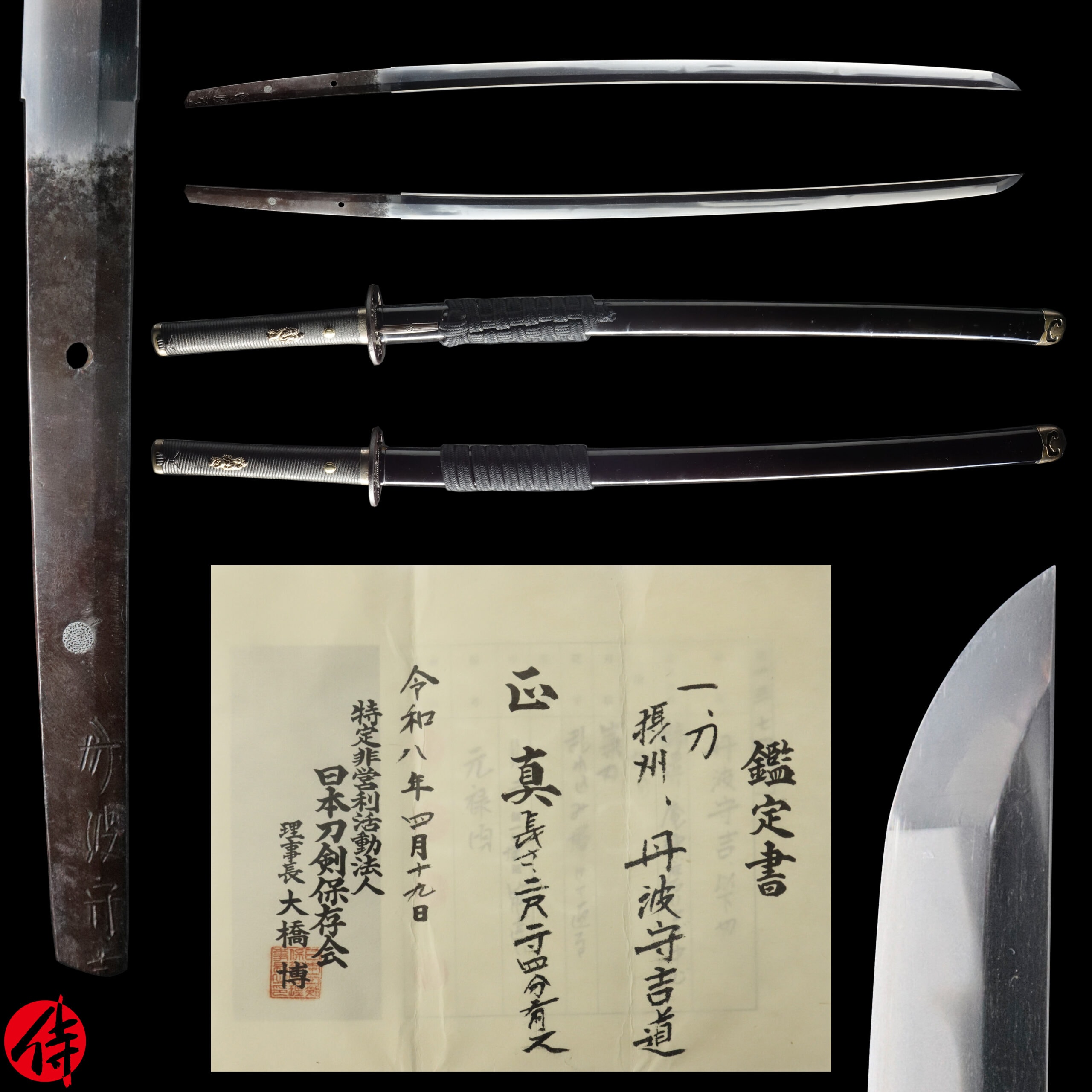
Mid Edo Katana signed by Tanba no Kami Yoshimichi for sale| Samurai Museum Shop E-mail FB Messenger Skip to content Menu Close Samurai Museum Shop Products Antique Japanese Sword Katana signed by Tanba no Kami Yoshimichi NTHK Kanteisho Certificate Updated: 22 Jun 2026 Antique Japanese Sword Katana signed by Tanba no Kami Yoshimichi NTHK Kanteisho Certificate
$7,441
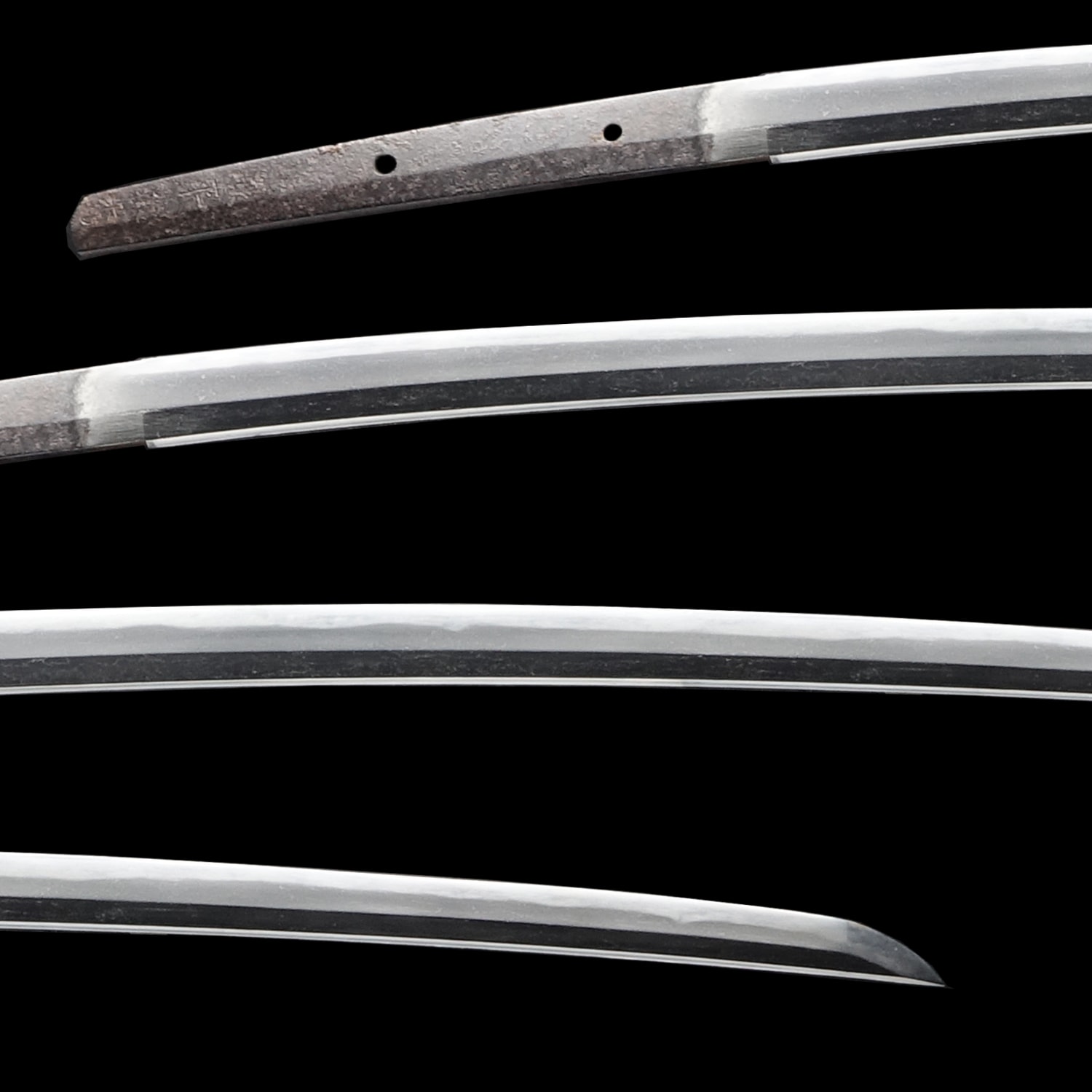
Muromachi Katana signed by Naminohira Yasuhide for sale
$7,751
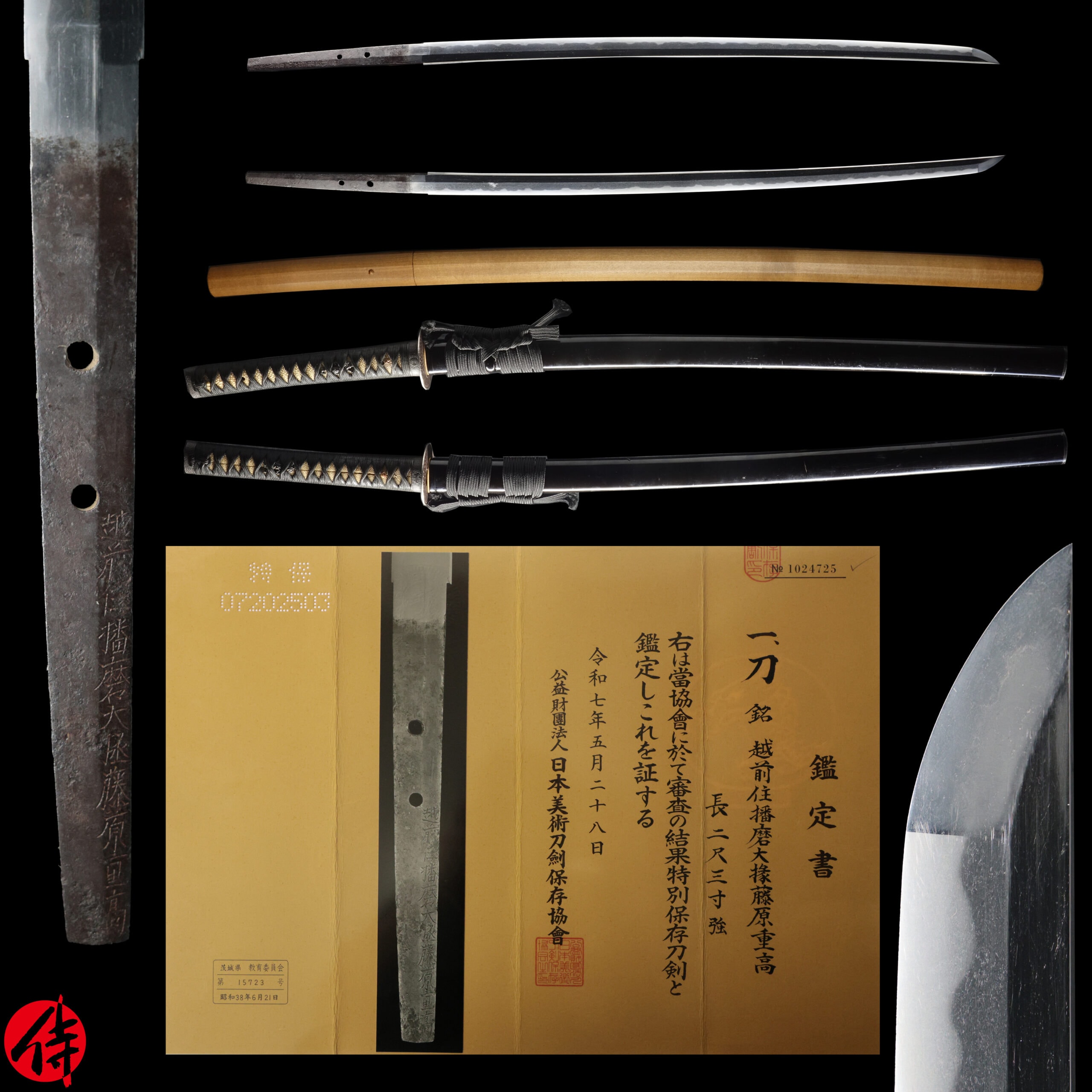
Early Edo Nihonto signed by Shigetaka for sale
$7,131
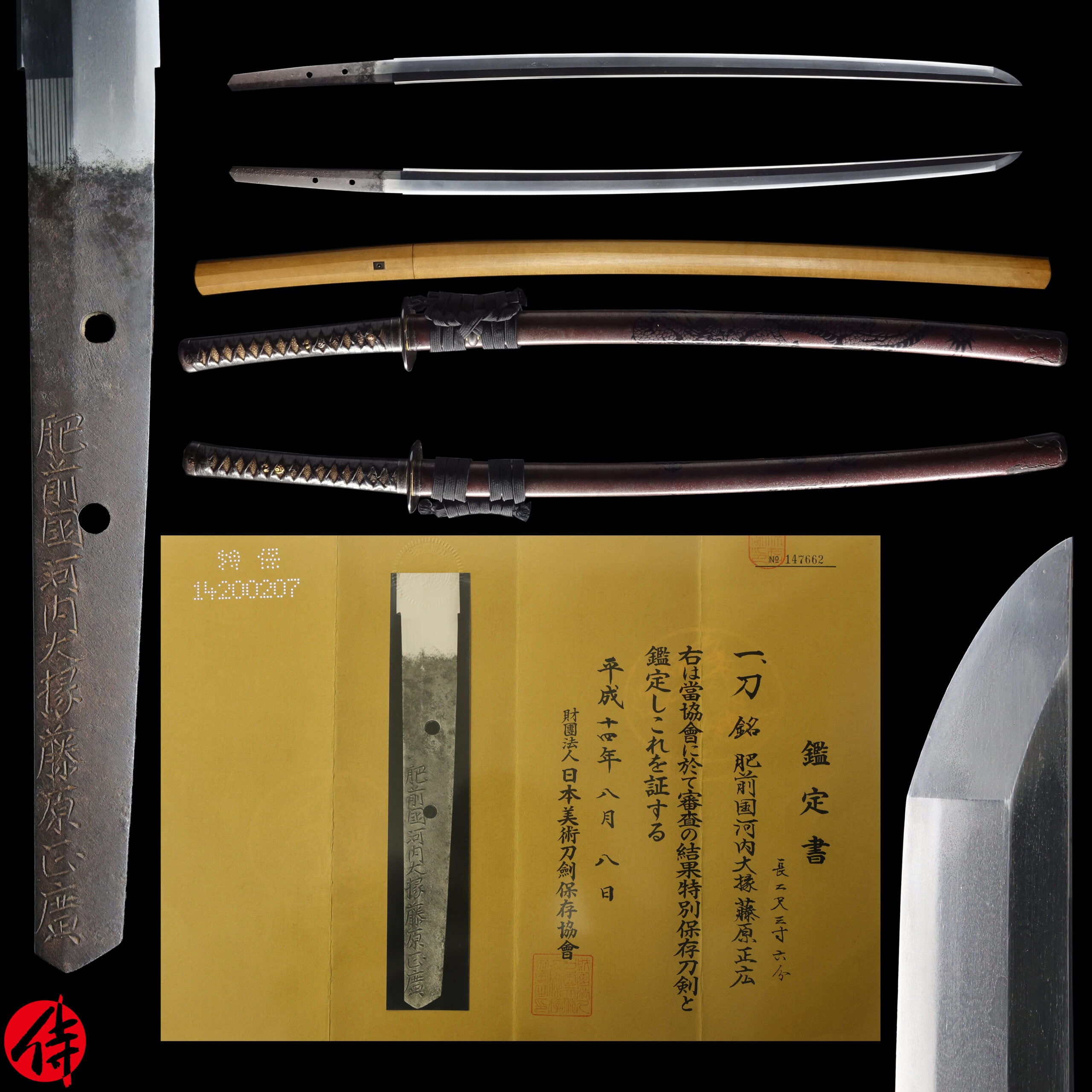
Antique Japanese Sword Katana Signed by Masahiro NBTHK Tokubetsu Hozon Certificate
$7,751
Antique Japanese Sword Katana Signed by Kanetsugu with Tokubetsu Hozon Certificate 【Description】 Summary This blade was forged by Kanetsugu (包次), who belonged to the Monju school (文珠一派), a branch of the prestigious Yamato Tegai school (大和手掻派). Kanetsugu’s place of origin was Yamato province (today’s Nara prefecture), and he was also known as Monju Rokubee. He is said to have been a disciple of Mutsu-no-kami Kaneyasu (陸奥守包保), also known as Hidari Mutsu. Kanetsu’s signatures are known in different forms, including “Kanetsugu” and “Sesshu-jū Monju Kanetsugu” (摂州住文珠包次). Kanetsugu was active around the Kanbun era of the Edo period (1661–1673), producing works that reflect the dignified style of the Yamato tradition while also showing the influence of his teacher and lineage. One of the most famous figures that belong to this Monju school is Nanki Shigekuni. The foundation of Tagai school The first-gen Kanenaga is known as the founder of Tegai school. The school was prosperous during the late Kamakura-mid Muromachi period (1288-1460). It is said that Tegai school belonged to Todaiji temple, and it was located in front of the gate called Tengai Gate (輾磑門). The school name Tegai originally came from the sound of Tengai Gate. There were five prestigious schools, including Tegai school, during the Kamakura-Nanbokucho period in Yamato province. They are called Yamato Goha (大和五派); Senjyuin (千手院), Shikkake (尻懸), Taima (当麻), Hosho (保昌) and Tegai (手掻) school. They served politically powerful monks and temples in Nara, such as Todaiji temples. They were initially forging swords for military monks who became powerful due to the government’s policy back then. Monks needed many weapons as there were many political rivalries between influential temples. They required strong weapons like swords to protect themselves. During this time, Tegai school or other Yamato sword schools met the requests from monks. They also forged blades for Samurai during their heyday. It is often the case that those who belonged to Yamato Goha didn’t inscribe their signatures. It is appraised as a Tokubetsu Hozon Token (特別保存刀剣) issued by NBTHK (Nihon Bijutsu Touken Hozon Kyokai:日本美術刀剣保存協会). This authentication paper was only given to authentic Japanese swords, especially well preserved and high quality with artistic value. *Please keep in mind that there are some noticeable black rust on the tip of the blade. If you don’t mind waiting additional time, we can have it polished so that the rust part will become much less noticeable. We won’t charge additional cost. If you like to know the detailed condition, please feel free to contact us. 【Blade】 Cutting Edge Length(Nagasa) : 66.8 cm (26.2 inches) Curvature(Sori) : 1.2 cm (0.47 inches) Hamon : The crystalline structure which forms along the cutting edge of a blade as a result of the hardening process Jimon(Jihada) : visible steel surface pattern created by folding and hammering during forging process Kissaki : Kissaki is the tip of the Japanese sword. *There are visible rust spots on the Kissaki (tip) of this blade. Please refer to the below photo for the detail. Nakago : Nakago is the tang of the Japanese sword. Japanese swordsmiths left the black rust on the tang because it prevents red rust while the tang is in its handle. And the discoloration of the tang was created over time, and it is a great indicator for a Japanese sword specialist to estimate when the sword was forged. Koshirae : Koshirae is the mounting of the Japanese sword. There are several parts that consist of Koshirae such as Saya (Scabbard), Tsuka (Handle), Tsuba (Handguard). Fuchi-Kashira : A pair of matching sword fittings that cover the upper and bottom parts of its sword hilt. The theme of this Fuchi Kashira’s design is the Ebi (海老, shrimp) inlaid with golden metal (probably brass). According to a theory, Japanese people already ate shrimp in the Heian period (794-1185). However, it was expensive for ordinary citizens, so that only the nobility and h
NihontoWatchBETA$7,131
世界81社の刀剣商を横断追跡 · 価格履歴 · 売却アーカイブ
66.8 cm
1.2 cm
$7,131
Mid Edo Katana signed by Tanba no Kami Yoshimichi for sale| Samurai Museum Shop E-mail FB Messenger Skip to content Menu Close Samurai Museum Shop Products Antique Japanese Sword Katana signed by Tanba no Kami Yoshimichi NTHK Kanteisho Certificate Updated: 22 Jun 2026 Antique Japanese Sword Katana signed by Tanba no Kami Yoshimichi NTHK Kanteisho Certificate
$7,441
Muromachi Katana signed by Naminohira Yasuhide for sale
$7,751
Early Edo Nihonto signed by Shigetaka for sale
$7,131
Antique Japanese Sword Katana Signed by Masahiro NBTHK Tokubetsu Hozon Certificate
$7,751