説明

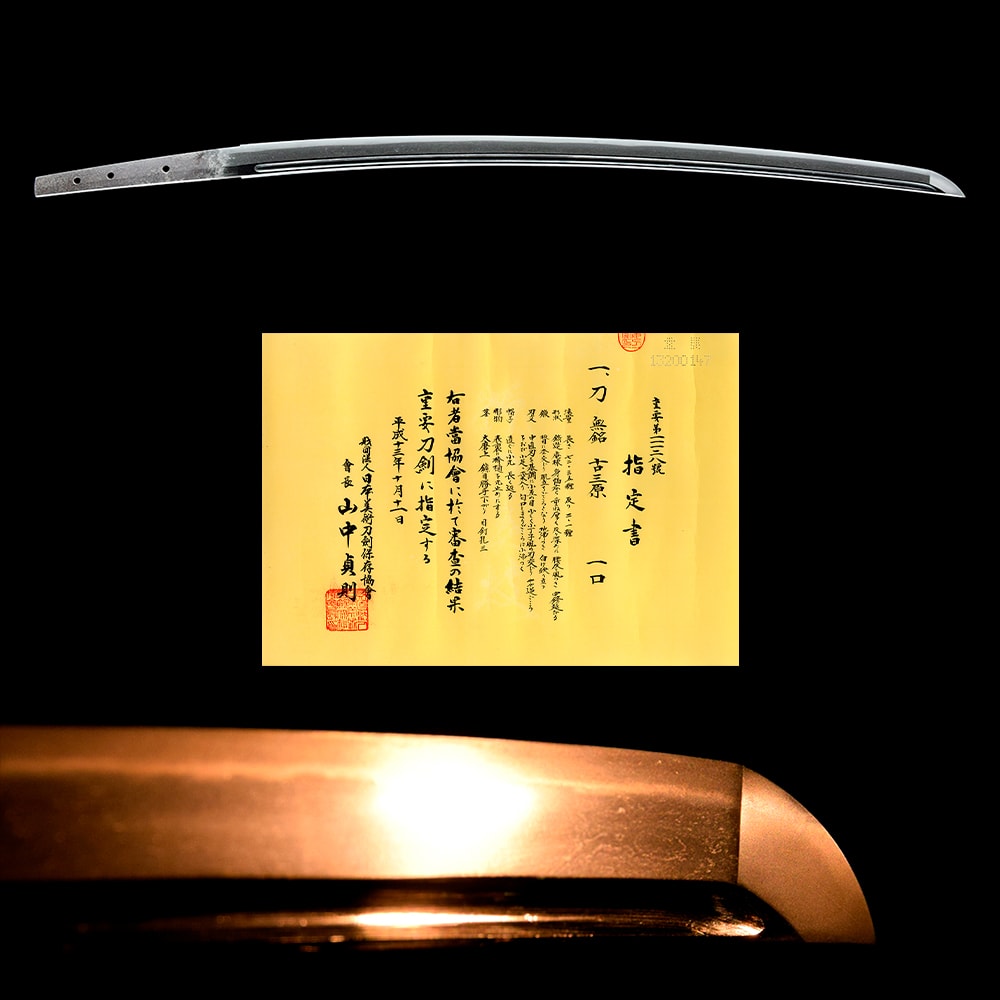
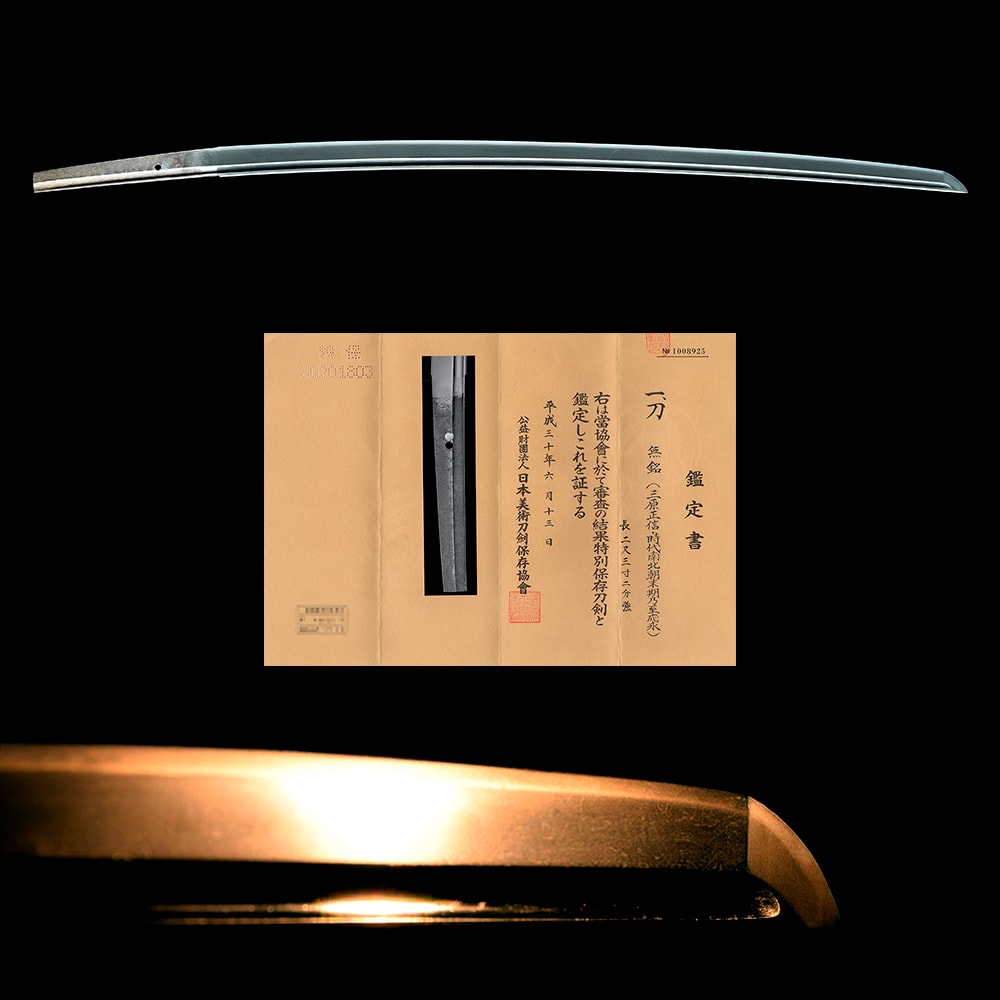
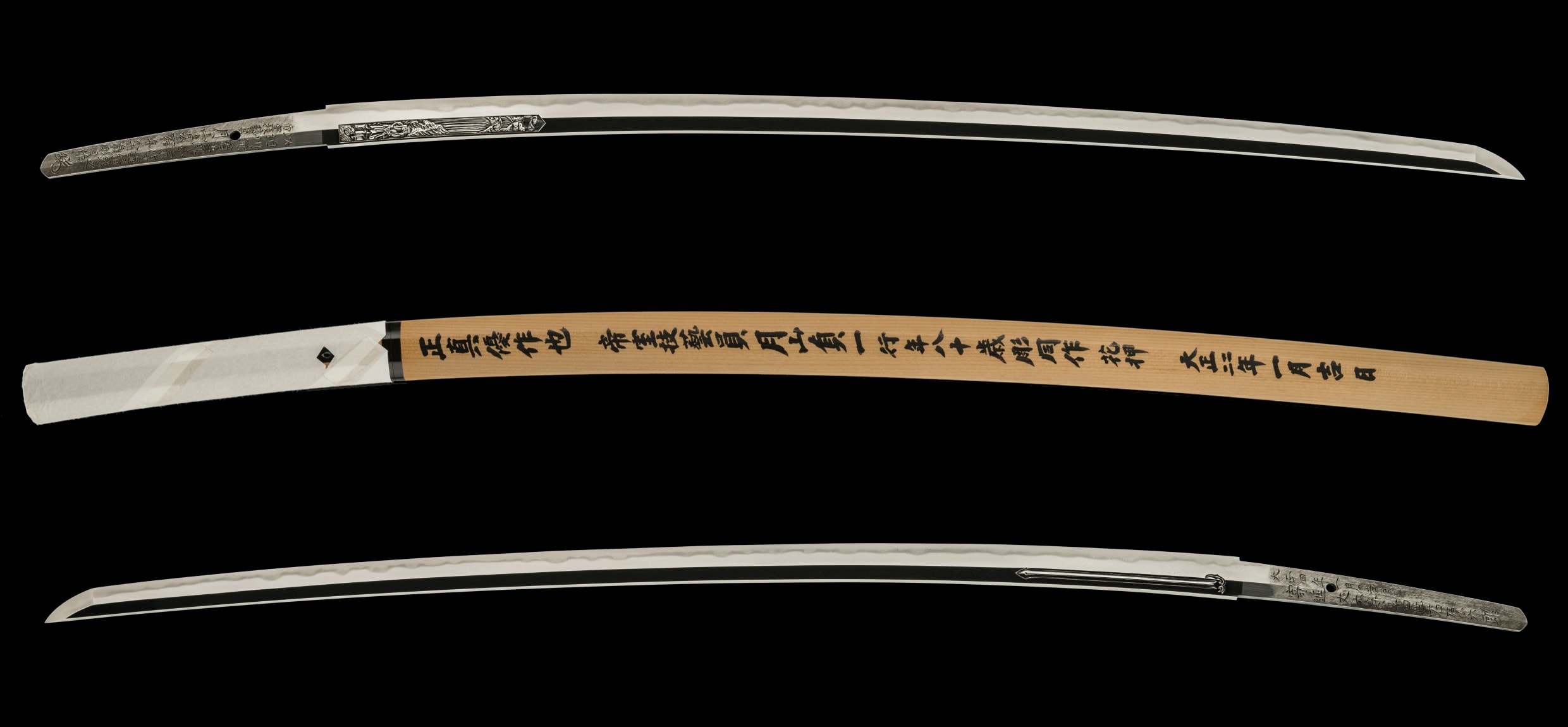
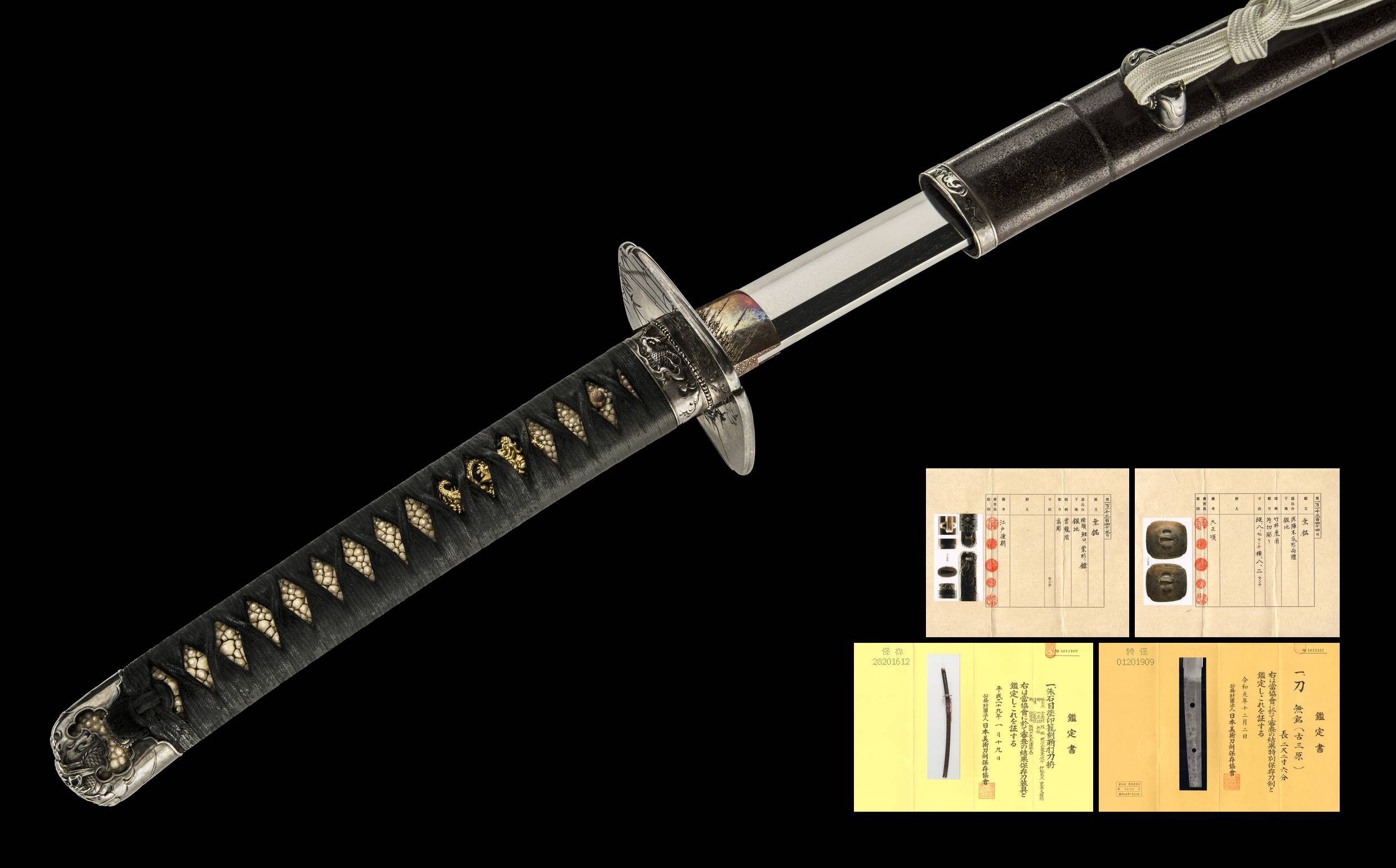
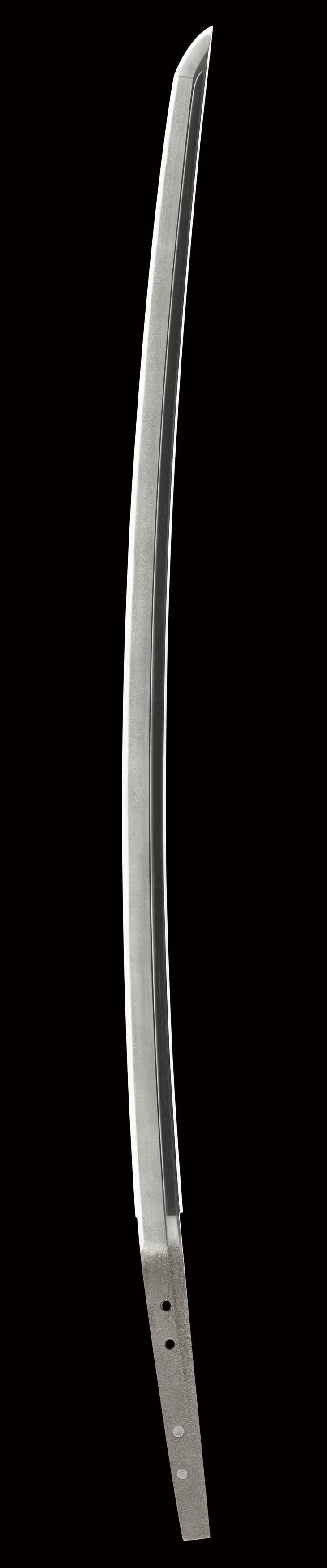
Skip to content ITEM# UJKA392 – Catalogue 37 – Sold A Ko-Mihara Katana (古三原) The Mihara school takes its name from the town of Mihara in Bingo province – today the eastern part of Hiroshima prefecture. Founded by the swordsmith Masaie and active from the end of the Kamakura period through to the close of the Muromachi period, the school carried a strong Yamato tradition in its workmanship. Smiths working through the Nambokuchô period are classified as Ko-Mihara ; those of the early Muromachi as Chû-Mihara ; and late Muromachi work as Sue-Mihara . This blade has been certified Ko-Mihara by the NBTHK at Tokubetsu Hozon level – a meaningful endorsement for a sword of this age and school. The blade was originally forged as a long tachi during the Nambokuchô period – the golden age of the oversized war sword. At some point in the late Muromachi period (circa the 1500s) it was greatly shortened to its current ô-suriage nakago , losing whatever signature it may once have carried. The shortening was executed with care, and the patina of the nakago is even and well-maintained. The robust silhouette, with its fairly broad chû-kissaki , is entirely typical of the Nambokuchô period; in its original state this sword would have been well over 80cm in length. The steel is a pleasure to study. The jihada is a blend of ko-mokume and ô-hada with plentiful streaks of chikei running through the body of the blade – and the photographs show long, impressive lines of kinsuji breaking through the hamon. The hamon itself is a bright chû-suguha (straight temper) with a tight, glowing nioguchi and areas of kuichigai-ba , a sophisticated feature characteristic of the Yamato tradition. The koshirae is a striking late Edo period set lacquered in rusty vermilion with inrô-kizami groove-work, fitted with a complete matching suite of silver dragon-themed fittings ( soroi kanagu ), including a silver tsuba depicting a tiger in a bamboo grove (NTHK-NPO certified), gold crawling-dragon menuki with ori

A KO-MIHARA KATANA (古三原)
売切れ
Tokuho売切れ

A KO-MIHARA KATANA (古三原)

売却済

世界81社の刀剣商を横断追跡 · 価格履歴 · 売却アーカイブ

流派

Ko-Mihara

時代

Kotô – nambokuchô Period (circa 1356-1392)

仕様

長さ

68.5 cm

反り

1.6 cm

元幅

2.88 cm

流派について

Ko-Mihara School古三原派

2 重要美術品120 重要刀剣

古三原は、備後国三原の地に鎌倉時代末期から南北朝期にかけて栄えた刀工群の総称である。三原を含む備後には、東寺や蓮華王院など畿内中央の社寺の荘園が多く営まれ、大和との往来が絶えなかった。一派の作に色濃くあらわれる大和気質は、この交流を介して備後の地に根づいたものと説かれる。同派は鎌倉末期に興って室町時代末期に至るまで続き、そのうち鎌倉末より南北朝期にかけての初期のものを取り分けて古三原と呼ぶ。正家を祖、正広をその子とする所伝があるが、作刀の上からは在銘の多い正広の方がむしろ古調を示すとされ、いずれの名も一代限りの手ではない。隣国備中の国分寺に拠った助国や、葦田郡の法華一乗派に連なる兼安のごとく、三原本流とは系統を分かちつつ大和気質を共有する近隣の工も、この圏内に並んで読まれる。 作風は、備後の地鉄にあらわれた大和の気質という一語に尽きる。鍛えは板目に杢と流れ肌を交えて平らに臥さず立ち、刃寄りでしばしば柾がかって肌立ち、地沸が微塵につき、地景が入る。地の決め手は淡い白け映りで、現存作の半ばを越えて立ち、かな色はやや黒みを帯びる。刃文は匂口の締まりごころな中直刃を基調とし、小互の目・小乱れを僅かに交えて小足・葉がよく入り、刃縁は細かにほつれて喰違刃・二重刃風がかかり、金筋・砂流しが刃中を走る。匂口は冴え立つよりは沈みごころとなるが、上出来の一口では明るく冴える。帽子は焼詰めとならず、直ぐに掃きかけて小丸に穏やかに返るのを常とする。大和本国の作に比べて地刃の沸が弱く、鍛えが杢立ち、白け映りが目立つ点が、本国大和の諸派から一派を分かつ目印である。双璧の二工はこの基調の内で姿により分かれ、正広に中鋒の尋常な作が多く刃中の働きや乱ごころが目立つのに対し、正家には豪壮な大鋒の作例が多い。一派の流れの末を飾る正信や、同派に伝わる正宗の名がこれに続く。古三原に対し、室町期に下る末三原は概して直刃が単調に流れて覇気を減じ、初期の沸づいた静かな上品さを欠く。 鑑定の勘所もまた、この地刃の大和気質に置かれる。鎬の高く鎬幅の広い造込み、地に一際目立って流れる杢、白け映り、刃縁のほつれと喰違刃が、見どころの核をなす。大和本国の奈良諸派とは、地刃の沸の弱さと白け映りの立つ備後の地鉄によって分かたれ、隣国備中の青江物と一見紛れる作も、鎬高の造込みと白け映り、刃中の二重刃によって三原へ引き戻される。古い剣書もこの似通いを早く認め、面ぶりが備中の太刀に似ると記している。在銘の太刀は細鏨で大振りに長銘を切り、初代正広は必ず備州住と切って備後国住とは切らず、稀に正広作の三字銘もある。これらの年紀作は数が乏しいだけに一派の編年の拠り所そのものとなる。一方で同派の作には大磨上無銘のものがすこぶる多く、後世の鑑識によって三原の各工へ極められ、金象嵌で定まるものもある。返りの深い帽子は名物大三原に拠り所をもつ。伝来の知られるものには、近衛家を経て陽明文庫に伝わる太刀や、前田家・井伊家など大名家の旧蔵があり、無銘の極め物を含めて、市にあらわれることは多くない。古三原は、華やかな乱れよりも静かで上品な直刃の手によって判ぜられる、備後における大和の影響を確かに語る一派である。

刀剣商

Unique Japan

uniquejapan.com

売切れ