大和五派は奈良の大寺の影で育った。手掻の名は東大寺転害門に由来する。柾目と静かな直刃の厳格は寺の美学であり、後世はまさにその節度を賞美してきた。
 NihontoWatchNihontoWatch
The Shikkake school, one of the five traditions of Yamato-den, was active from the late Kamakura to the early Nanbokuchô period. Based in the Shikkake area behind Tôdai-ji Temple in Nara, the school was part of a group of temple-affiliated smiths who produced robust swords primarily for temple use rather than commercial distribution. The school’s founder is traditionally said to be Norihiro (則弘), though no signed works by him are known to exist. His son Norinaga (則長) is regarded as the de facto originator of the Shikkake lineage. These smiths are identifiable not by signatures – most of their extant blades are unsigned – but by their distinctive workmanship. This katana is an unsigned, ô-suriage blade that retains a clean, graceful silhouette suggestive of its original long length. The jihada is a glorious example of textbook shikkake-hada, combining primarily mokume-hada in the body of the sword with clear straight-lined masame-hada running through the yakiba – especially prominent in the kissaki. This dual-grain forging pattern is the defining characteristic of the school: masame in the hardened area, mokume closer to the shinogi ridge line. Vivid chikei runs throughout. The hamon is bright ko-gunome interwoven with ashi, sunagashi, kinsuji, and tobiyaki. A wide bôhi runs the length of the blade. This is classic Yamato-den workmanship of the kotô period, where the small details carry big impact. The sword was rightfully awarded a Tokubetsu Hozon certificate from the NBTHK. The accompanying koshirae has been dated to the Meiji period (1876–1912) and centres around a gorgeous saya featuring luxurious mokume-style black and gold lacquerwork – swirling cycles that echo the jihada of the sword and suggest reincarnation, a fitting design for a blade from smiths who worked for temples. The signed tsuba by Nakai Tomonori (中井友則) is in the form of a lotus flower, executed in masterful openwork with the hitsu-ana seamlessly integrated into the leaf design. Originally adorned with extensive gold inlay, only traces remain – a quiet elegance that evokes the impermanence of all things. The fuchi is attributed to the Kusakari school (草刈) of Sendai, known for fine linear hira-zôgan inlay work: the motif combines two interlocking circles – the wachigai-mon – paired with pine needles, a symbol seen as far back as the Heian period representing the interlocking realms of wisdom and reason. The kashira features a dynamic wave design with subtle gold touches that harmonises with the lacquered saya. Powerful gold unryû (cloud dragon) menuki embody both ferocity and protection – qualities revered by samurai warriors throughout history. The tsuka is wrapped in black silk over black-lacquered samekawa, with a waxy patina developed through years of natural use by its former owner – possibly a former iaido practitioner.
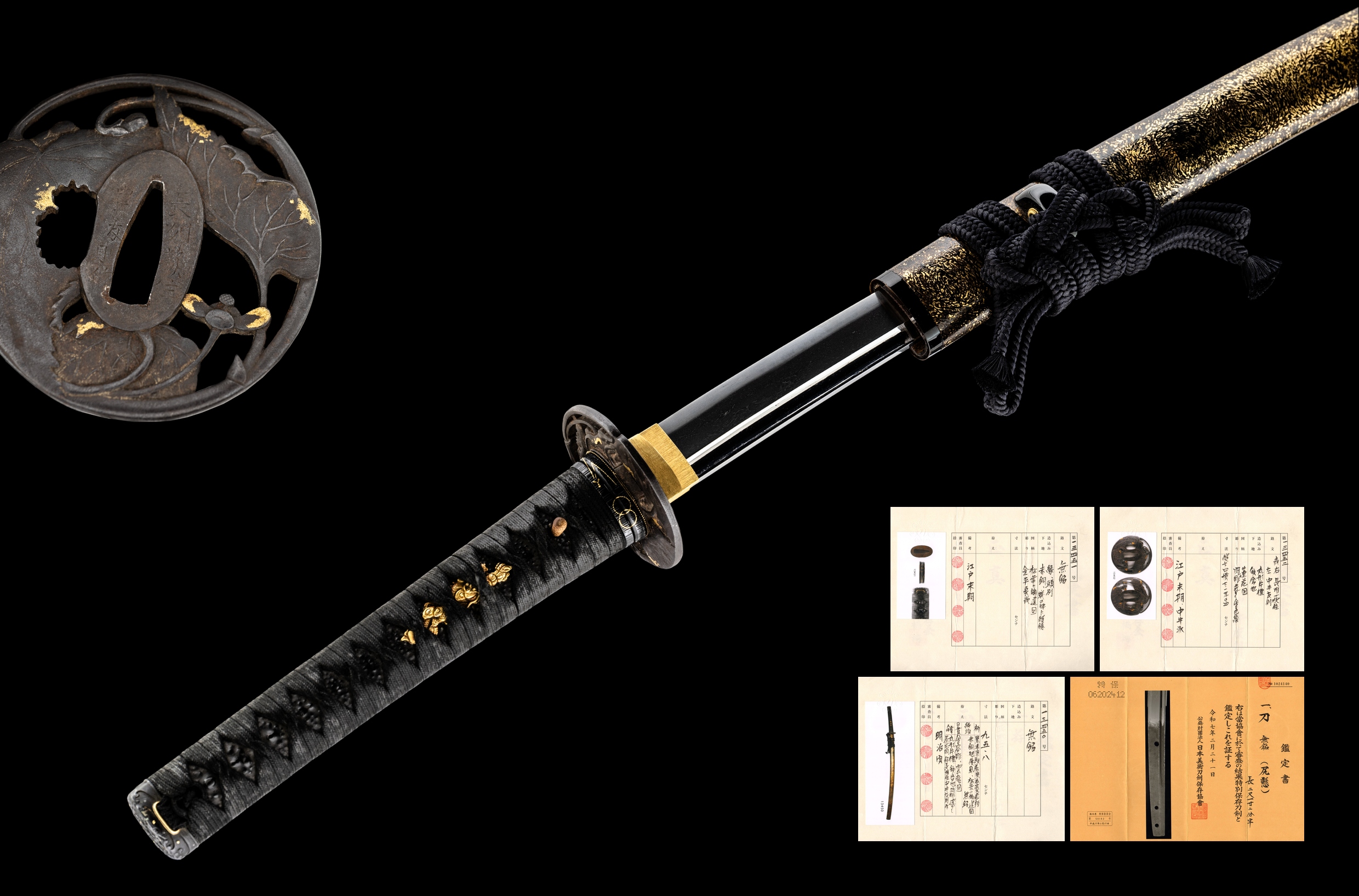
販売店の記載のまま
大和伝 · 大和
現在10点販売中
尻懸派は大和五派の一つであり、則長を事実上の祖として鎌倉時代末期から室町時代にかけて栄えた。則長には文保三年四十八歳、暦応三年六十九歳と行年を切った短刀が現存し、それによって逆算すると文永九年の生まれであることが分かる。同銘の継承は鎌倉末期より室町時代にわたって見られ、『鍛冶銘早見出』は三代を応永、四代を永亨頃としている。同派の祖は則弘と伝えるが、確実な作を見ず、則長が実質的な流派の祖と見做されている。僧兵を抱えた有力寺院が位置する大和鍛冶に薙刀の作が多いのは当然であるが、その中でも尻懸派と鑑せられる薙刀が最も多く、南北朝期の長大な薙刀が生ぶ茎で伝来している例は極めて稀である。 作風は大和物一般に共通する様式を示すが、鎬幅広く鎬筋の高い造込みに、板目が目立って流れる鍛えを見せ、地沸厚くつき、地景頻りに入り、沸映り立つものもある。刃文は直刃基調であるが、直刃調に小互の目が頻りに連れて交じる点に大きな見処と個性がある。刃縁には頻りにほつれ、二重刃・喰違刃・湯走り・打のけ・砂流し・金筋などの働きが見られ、匂口明るく冴える。帽子は乱れ込み、さかんに掃きかけて火炎状となるものや焼詰め風となるものがある。『紛寄論』には「是も多分すぐ焼刃にて当麻とたがひの出来ふできにて紛るる作也、併当麻ほどは地つまらずしてしほ相うすく、位のおとるを以て尻懸と知べし」[[c:1]]とあり、その見方をよく言い尽している。 尻懸派の作は在銘作が少なく、無銘極めとなるものが大半を占めるが、本阿弥家の鑑定によって伝世してきたものが多い。地鉄は板目に杢目・流れ肌を交え、肌立ちごころとなり、総じてよく錬れてつみ、地沸微塵に厚くつき、地景太く頻りに入る。刃文は中直刃調に小互の目が元から先まで連れ、足・葉繁く入り、小沸よくつき、刃縁にほつれ・二重刃・喰違刃・湯走り現われ、金筋・砂流し細かにかかり、光の強い沸が厚くついて明るく冴える。特に小互の目の連れた刃縁に光の強い沸をあしらった喰違刃のかかる状には、徳川本家に伝来し重要美術品の則長在銘作を思わせるものがあり、尻懸派の特色と美点を十二分に現わした作が多く残されている。 詳しく見る →
鎌倉時代の大和
大和五派は奈良の大寺の影で育った。手掻の名は東大寺転害門に由来する。柾目と静かな直刃の厳格は寺の美学であり、後世はまさにその節度を賞美してきた。
保存刀剣のうち、出来が一層優れ、保存状態も良好と認められたものです。再刃や、室町・江戸期の多くの無銘作は対象外となり、保存刀剣より高い基準が課されます。
日本美術刀剣保存協会(NBTHK)は、1948年に設立され、文化庁の監督を受ける公益財団法人で、東京・刀剣博物館に本部を置きます。専門の審査員が出品作を直接審査し、美術的・歴史的価値に応じた鑑定書を発行します。NBTHKの鑑定書は、日本刀および刀装具の真正性を示す最も広く認知された基準です。
NBTHK公式サイトAll swords come with a three-day inspection period beginning from the date of delivery. If not satisfied, the sword may be returned within this period for a full refund of the purchase price. Outside of this period, all sales are final. Swords purchased on a layaway payment plan are not eligible for the three-day inspection period.