二世紀半の泰平のあいだ、刀は武器である以上に武士の身分の標章であった。江戸の実証と大坂の華やぎのように都市ごとの作風が育ち、時代の末には需要も細っていく。
 NihontoWatchNihontoWatch
Born Kawamura Ichirô-zaemon in Hitachi province, Shodai Yoshikado was a prominent shintô swordsmith who originated from Mino and descended from the lineage of Zenjô Kaneyoshi – a proud family traceable some thirteen generations to the Ôei era (1394-1428). He began his apprenticeship around 1636 and was working in Edo by 1654, as demonstrated by a blade signature noting more than nineteen years of training. His career advanced significantly when in 1672 he became an official swordsmith of the Mito domain led by Tokugawa Mitsukuni, receiving a stipend supporting seven people and prompting his relocation to Mito’s Daimachi district. Yoshikado died in the fourth year of the Jôkyô era (1687). This brilliant and highly energetic katana is a prime example from the later years of Yoshikado’s storied career. The blade’s vibrant hamon in nie-deki is an ô-midare with notare elements, with passages of hako-midare that pay tribute to the Kaga-based Kanewaka family, and chôji formations that speak to Yoshikado’s earlier Bizen influences. The yakidashi rises in a mountain-top form reminiscent of Fuji-san. The jihada is a well-forged itame with sparkling ji-nie and impressive channels of chikei, with a beautiful wavy masame-hada visible in the shinogi-ji. The nakago is ubu with takanoha-yasurime and the swordsmith’s full signature – only the shodai signed with Zenryô-ke (善良家), making attribution immediate and unambiguous. This is a swordsman’s sword, not too long and not too short – just the right length to manoeuvre with samurai fluidity. The blade has been further polished to an exceptionally keen edge, as Yoshikado is renowned as a wazamono maker, and his swords require careful handling for their remarkable cutting ability. Presented in shirasaya with a handsome gold-wrapped habakibearing rainfall file marks, and bearing a sayagaki by Nozomi-san dated April 2025.
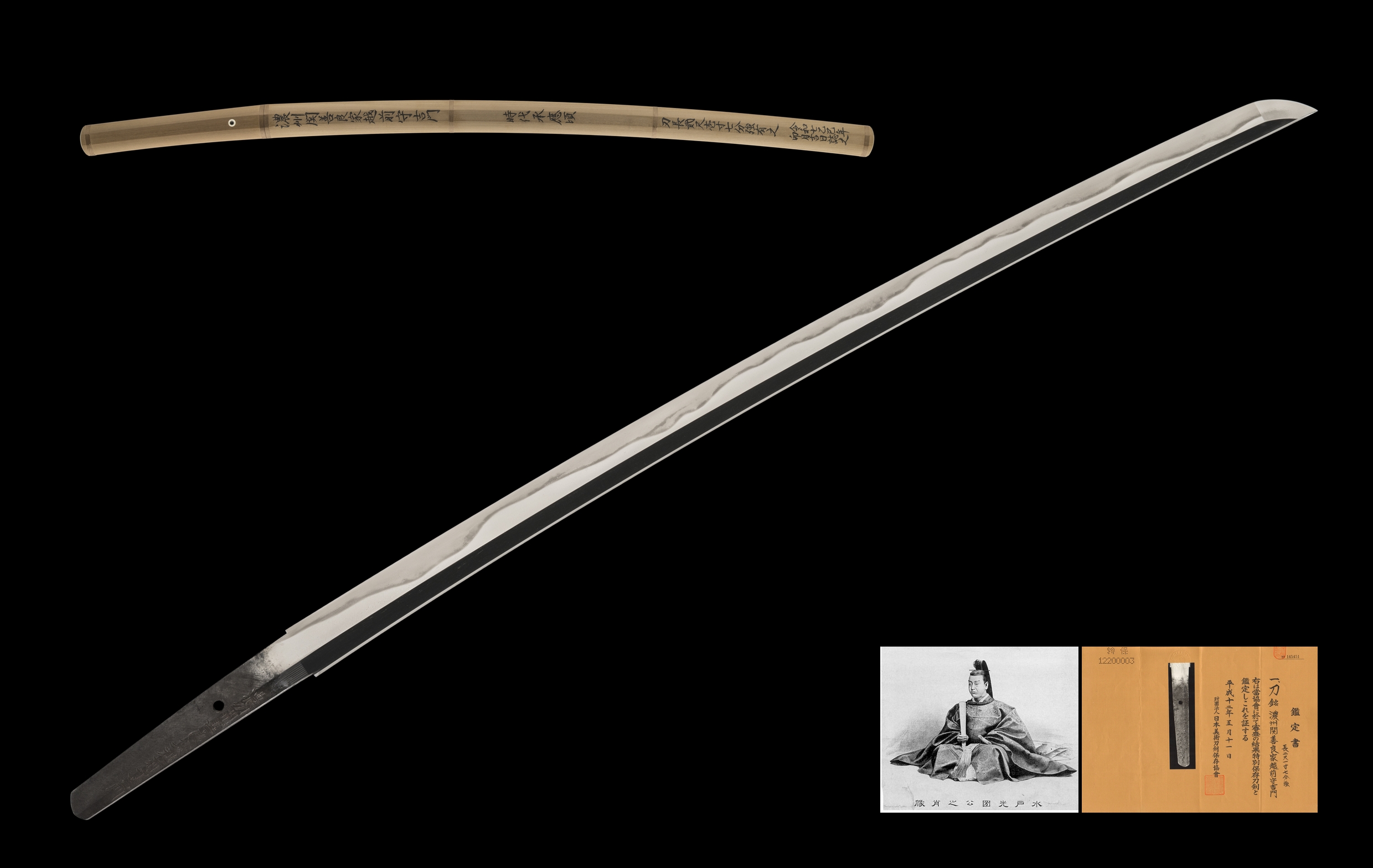
販売店の記載のまま
美濃伝 · 美濃 · 1624-1644頃
刀剣大鑑 上位49%
現在1点販売中
美濃伝 · 美濃
現在4点販売中
江戸時代
二世紀半の泰平のあいだ、刀は武器である以上に武士の身分の標章であった。江戸の実証と大坂の華やぎのように都市ごとの作風が育ち、時代の末には需要も細っていく。
保存刀剣のうち、出来が一層優れ、保存状態も良好と認められたものです。再刃や、室町・江戸期の多くの無銘作は対象外となり、保存刀剣より高い基準が課されます。
日本美術刀剣保存協会(日刀保)は、1948年に設立され、文化庁の監督を受ける公益財団法人で、東京・刀剣博物館に本部を置きます。専門の審査員が出品作を直接審査し、美術的・歴史的価値に応じた鑑定書を発行します。日刀保の鑑定書は、日本刀および刀装具の真正性を示す最も広く認知された基準です。
日刀保公式サイトAll swords come with a three-day inspection period beginning from the date of delivery. If not satisfied, the sword may be returned within this period for a full refund of the purchase price. Outside of this period, all sales are final. Swords purchased on a layaway payment plan are not eligible for the three-day inspection period.