説明

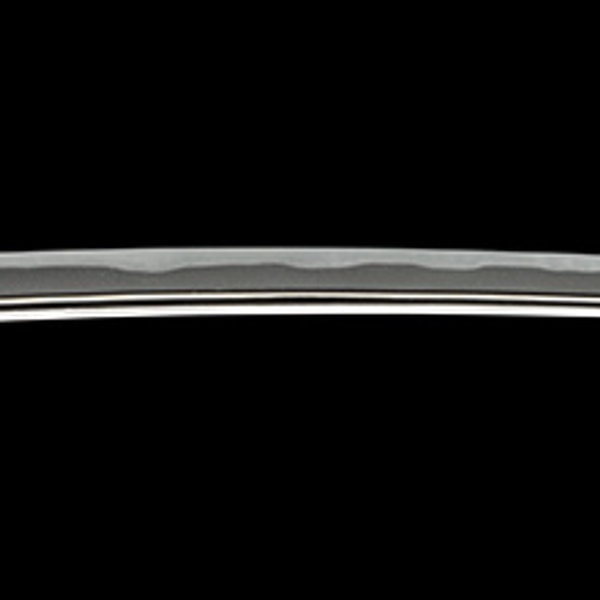
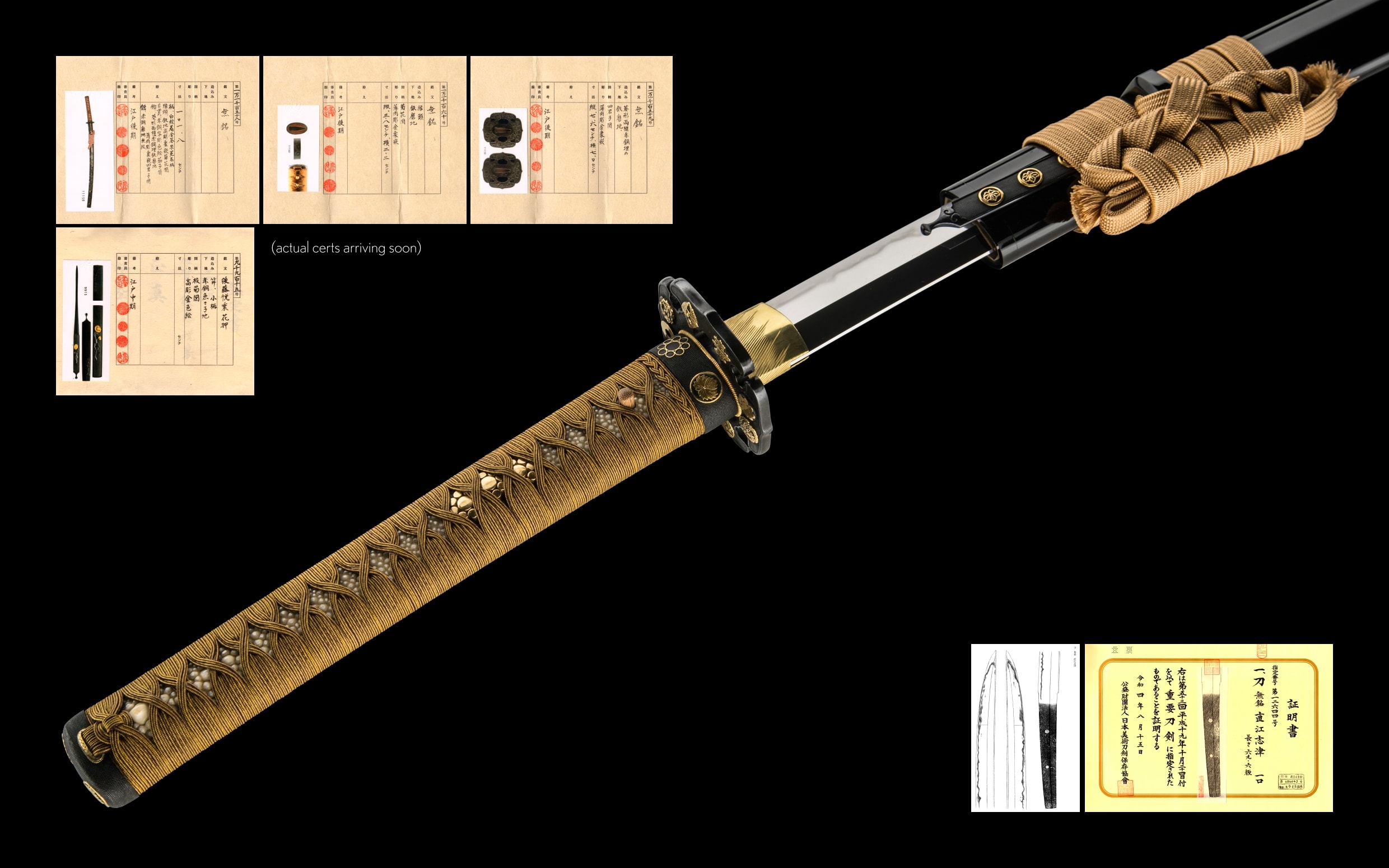
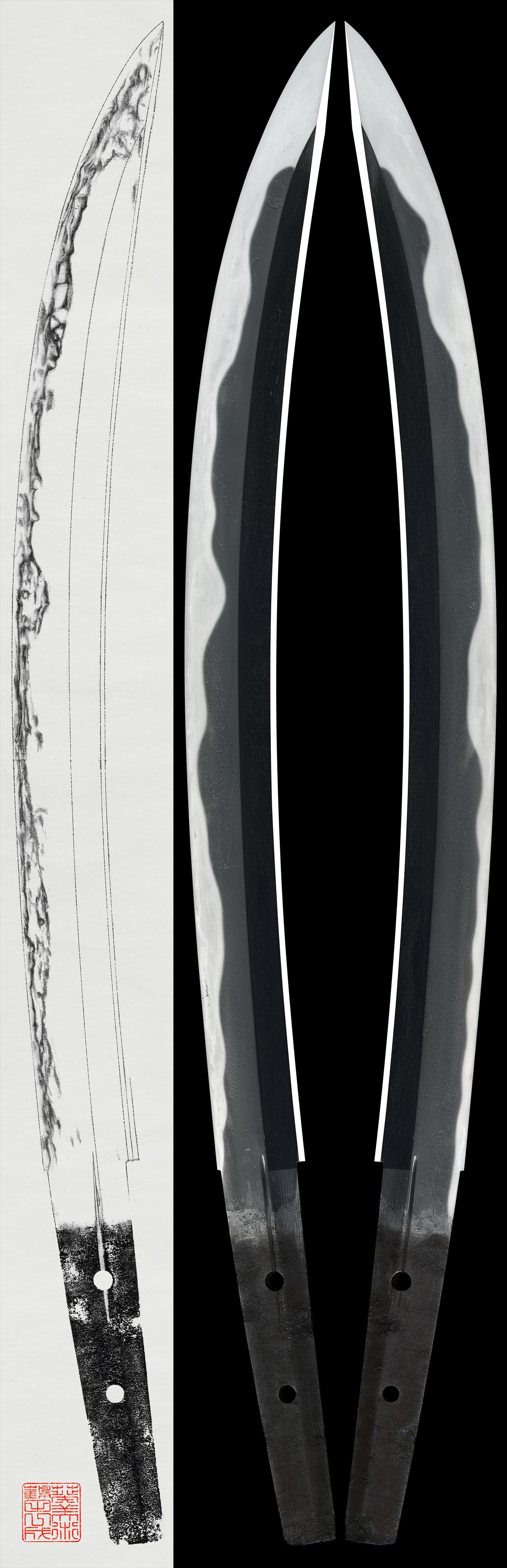
Skip to content ITEM# UJKA413 – Catalogue 39 – Sold A Naoe-Shizu Katana (直江志津) This is an imposing blade – the real thing. What began life as an *ôdachi* of perhaps 80cm or more has survived six and a half centuries in shortened form, and the passage of time has done nothing to diminish its authority. The *ô-kissaki* alone measures over 11.5cm, towering above the blade line in the manner that defines Nambokuchô grandeur. The *sugata* is everything the Naoe-Shizu school is known for: wide *mihaba*, dramatic tip, bold posture. Nagayama Kokan was not exaggerating when he wrote that these qualities lend themselves to a grand appearance. The steel rewards close study. The *jihada* is a vivid mixture of *itame*, *mokume* and *nagare-hada*, animated throughout by deep rivers of *chikei* and generous *ji-nie*. The *hamon* runs in a gently undulating *notare* base that churns with *gunome*, *togari-gunome*, *ko-nie*, *tobiyaki*, *yô*, *sunagashi* and *kinsuji* – classic Naoe-Shizu energy, grounded in the Mino tradition’s hallmark *togari*. The NBTHK Jûyô judging panel noted the blade’s healthy *jiba* as central to its attribution. Designated at the 53rd session in 1997, the certificate was subsequently lost; the NBTHK conducted a fresh in-person examination in 2022 and issued a *shômeisho* confirming authenticity. The koshirae is a statement piece in its own right. The *kuro-ro-nuri* lacquered scabbard is fitted with a spectacular iron *tsuba* bearing gold-inlaid *kamon* from numerous noble families – *kuyô-mon*, *botan*, *hôô*, *kiku*, *ageha-chô* and more – certified to a *tachi* metalsmith of the mid-Edo period. The *fuchi-kashira* continue the family crest theme with *kuyô-mon* and ivy rendered in gold. *Menuki* display the *kuyô-mon* of the Hosokawa daimyô clan. The *tsuba* was signed by the metalsmith Naoyoshi. Completing the ensemble: a gold-wrapped *habaki* with diagonal file marks and a shirasaya in fine *ho* wood. Item Number UJKA413 Sword Type Katana (ô-suriage, s

A NAOE SHIZU KATANA (直江志津)
売切れ
Jūyō売切れ

A NAOE SHIZU KATANA (直江志津)

売却済

世界81社の刀剣商を横断追跡 · 価格履歴 · 売却アーカイブ

仕様

長さ

69.6 cm

反り

1.55 cm

元幅

2.83 cm

流派について

Naoe Shizu School直江志津派

1 重要美術品149 重要刀剣

美濃国直江の地に興った一門で、その名は移住に由来する。元来、志津は美濃の地名であり、ここに大和より正宗の門人たる兼氏が来住して鍛えたことから、地名をとって志津三郎兼氏と呼ばれた。正宗十哲の一に数えられる兼氏は、相州伝を基調としつつ大和手掻の血を負い、尖りごころの互の目に走る乱調をもって美濃伝のいま一つの根をなした工である。その門人たち、兼友・兼信・兼次らは、はじめ志津に作り、後に同国直江に移って鍛えたため、この一門を直江志津と総称する。年代は南北朝の延文・貞治より応安頃に及び、本流は兼氏に発する志津の血を一代を隔てて承けた工の群である。同時代に越中呉服郷の江則重の流れを北陸道より美濃に運んだ為継のごとき手も加わって、相州伝が内陸へ運ばれ美濃の地鉄に根を下ろした姿を、この一門は最もよく伝える。 直江志津を貫くのは、工の差を越えて繰り返される共通の語法である。地鉄は板目に杢を交え、処々流れて柾がかり、肌立ちごころとなって地沸厚くつき、地景がよく入って鉄を縫い、北国の趣濃く黒みをおびる。その地に立つ刃文は、相州伝の影響を負った浅いのたれ・小のたれに、美濃の尖り刃を交えた互の目を連ね、沸は強く深く、砂流しが頻りにかかって長く金筋を伴う。匂口は深く、優品では明るく冴え、激しめの作では迫力を、穏やかな作では穏雅な作位を示す。帽子は乱れ込んで掃きかけ、小丸に返るか焼詰め風となる。同じ型のうちに各工の手が読み分けられ、為継は則重風の湿ったのたれに美濃の鋭い尖りを与えて黒く沸豊かな地に焼き、兼友は頭の丸い互の目を連れて小沸出来に穏やかに焼き、兼次は逆がかった小のたれ調の互の目を匂深く焼く。大和・相州・美濃を融合したこの地刃が一門の背骨であり、師たる兼氏その人と比べれば、より穏やかで実直に、また地肌の冴えにおいて控えめに収まる点が、門流の手を分かつ。 鑑定にあっては、まず黒ずむ板目に地沸厚く沸出来で匂口の沈む地刃をもって直江志津と読み、本流に直刃がないことを否定の見どころとする。次に、より大きく揺れるのたれ乱れと頭の丸い互の目の連れる態をもって、これを志津・金重の手から、また下る末関の同名工から分かつ。主要工の格は説明書の評にそのまま現れ、為継は江則重に直結する黒い沸の手として藤代の上工に列し、兼友は鍛えの質によって上々作に位置づけられて、いずれも国宝・重要文化財を持たぬ南北朝の名である。現存の大半は作風から極められた大磨上無銘の刀であり、在銘・年紀作は極めて稀で、説明書はこれを頗る貴重とし、無銘極めにこそよい出来が多いと率直に評する。為継には応安年紀の作、兼友・兼次には在銘の短刀が伝承の拠り所として立つ。所伝は乏しいながら確かで、熱田神宮に伝わる作や、戦前の蒐集を経て今に伝わる短刀が記録される。極められた無銘の一刀が市に現れるのは折にふれ、忍耐をもってのことであって、在銘・年紀の作はそれとは別格の、名を定める証として遇される。

刀剣商

Unique Japan

uniquejapan.com

売切れ