説明

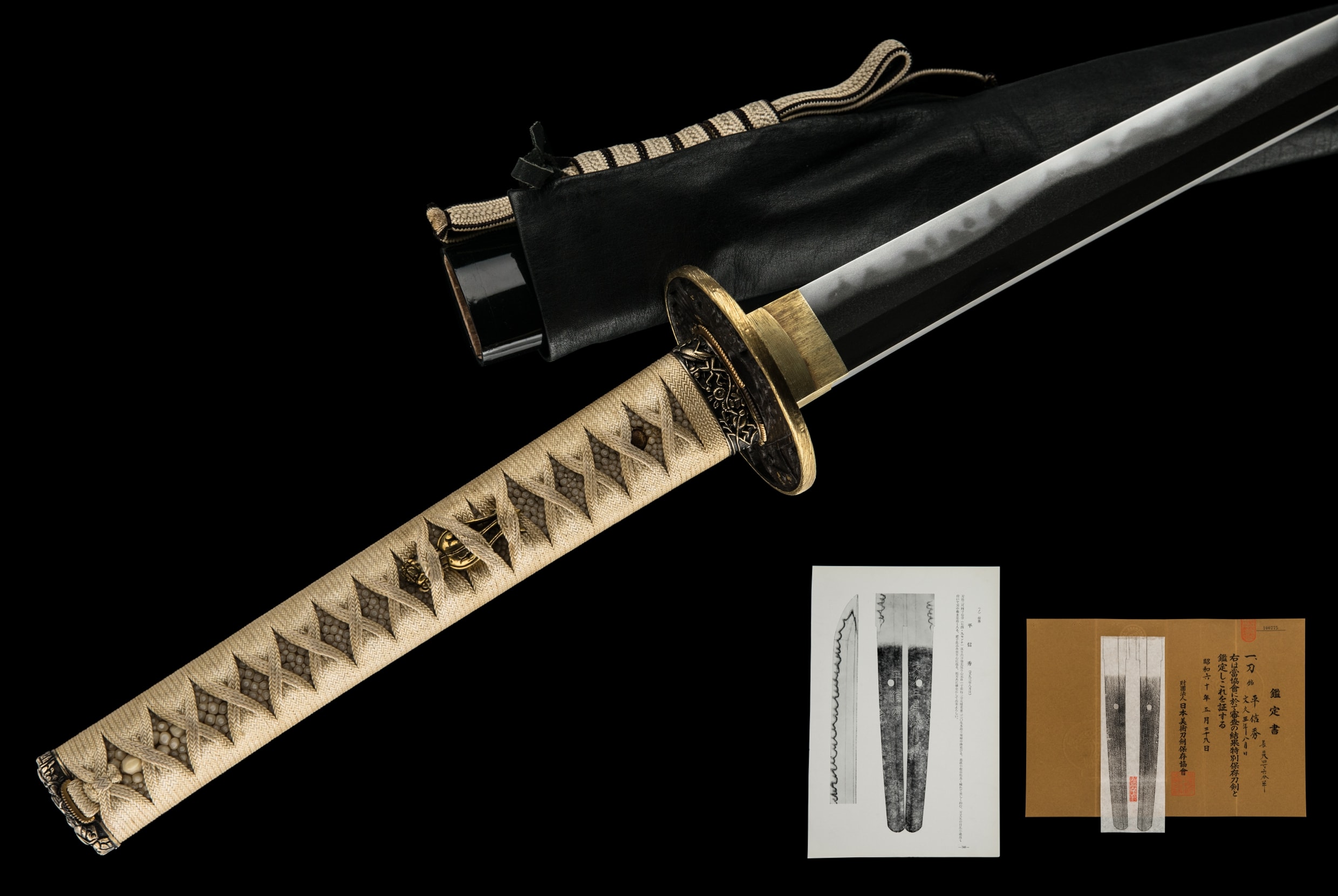
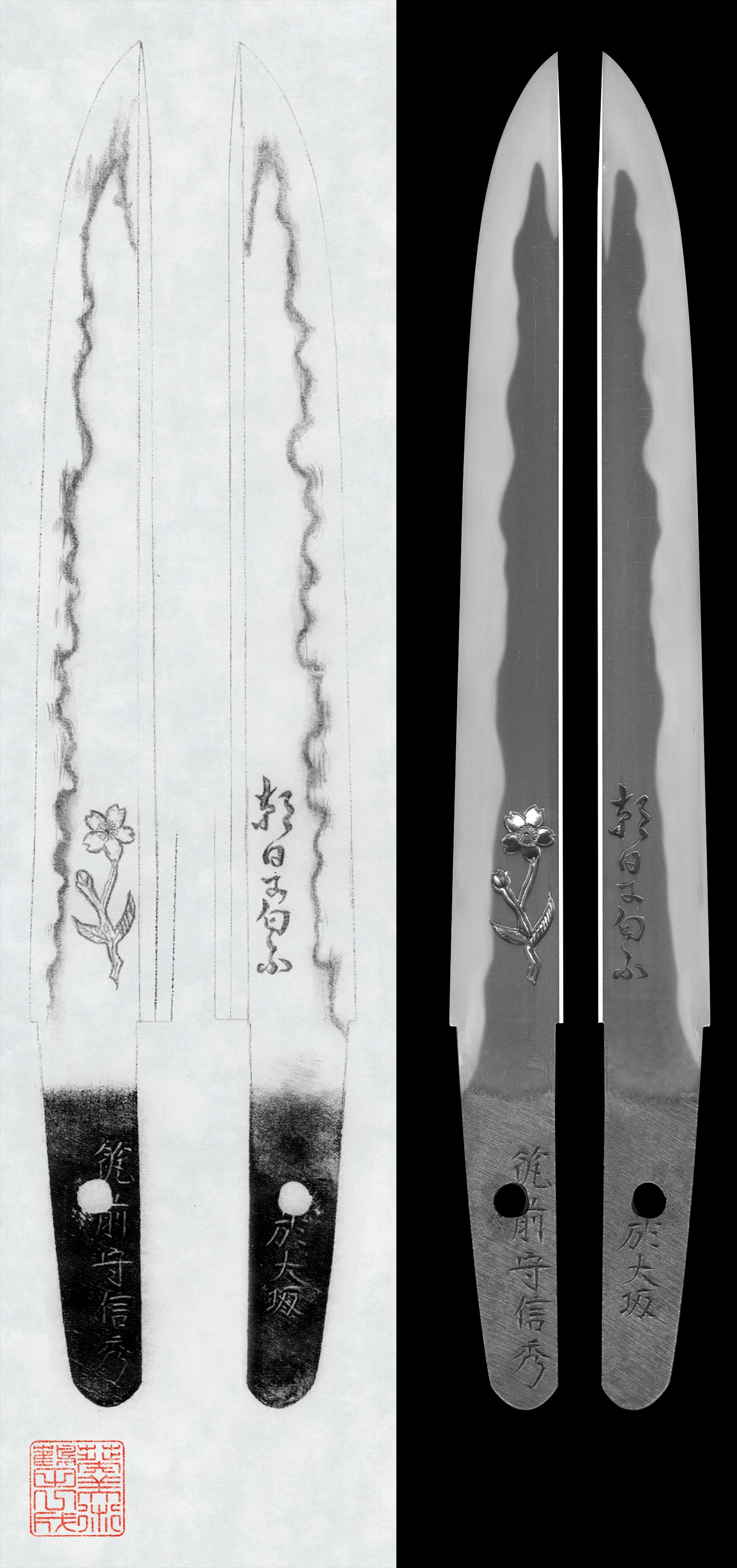
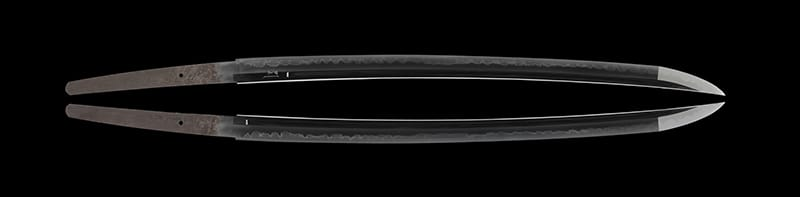
Skip to content ITEM# UJKA157 – Catalogue 21 – Sold A Kurihara Nobuhide Katana (栗原信秀) Kurihara (Taira) Nobuhide stands at the very summit of the Shinshintô period. Born in Echigo province and first apprenticed as a sickle smith, he later moved to Kyoto to practise as a kagami-shi (mirror-maker) before becoming a student of the legendary Kiyomaro in 1850 – at the age of 35. His training under Kiyomaro lasted only two years, a remarkably short tenure that reflects both the proficiency he had already acquired working metal and an innate talent that required little further instruction. He went on to become Kiyomaro’s most celebrated student; his hataraki within the hamon is broadly considered superior even to that of his master. A number of his blades have achieved Juyo Token status. He died in January 1880 at the age of 66, leaving behind a body of work that continues to command the highest respect among serious collectors. This katana – signed with an elegant three-character mei reading Taira Nobuhide, dated to August 1863 – is among the finest examples Nobuhide produced. It is featured in the prestigious Shinshintô Taikan reference book by Iimura Yoshifume, an honour reserved for the most distinguished works of the period. The jigane is a densely packed ko-itame that speaks directly to Nobuhide’s background as a mirror-maker: immaculate, uniform, and possessed of a profound inner vitality. The blade carries the characteristic bluish tinge of the finest-quality steel, and the graceful nakago with its precise file marks is a work of craft in its own right. The hamon is a commanding gunome-midare enriched with sunagashi, kinsuji, and ashi, with a pointed boshi that curls back like a burning candle. The full Edo-period koshirae is a superb complement to the blade, featuring a Hikone Bori Soten School tsuba (circa 1700s, NTHK-NPO Kanteisho certified) and a signed fuchi-kashira by Mino Mitsushige, elaborately carved with the kamakiri (praying mantis) motif – a symbol of th

A KURIHARA NOBUHIDE KATANA (栗原信秀)
売切れ
Tokuho売切れ

A KURIHARA NOBUHIDE KATANA (栗原信秀)

売却済

世界81社の刀剣商を横断追跡 · 価格履歴 · 売却アーカイブ

仕様

長さ

74.9 cm

反り

1.7 cm

元幅

3.1 cm

作者について

Kiyomaro Nobuhide信秀

34 重要刀剣

栗原謙司信秀は越後三条に生まれ、初め鏡師を業とし、嘉永三年頃に至って江戸四谷の山浦清麿の門に入り、刀の道に転じた。師の門人のうち、説明書が最も源に近く置くのが彼である。受領以前の作を評して、説明書は「その技術は一門中、最も師に迫るものであり」と記す。慶応元年五月に筑前守を受領し、大坂に三年住して江戸に戻り、廃刀令の後は故郷の越後に帰って僅かに鍛刀し、明治十三年に歿した。信秀、多くは平信秀、受領後は栗原筑前守平信秀と銘した。清人と並んで、嘉永の四谷正宗の相州復古を幕末・明治初年に伝えた二人の手の一人である。 狙うところは師の作風、その中でも清麿が最も得意とした志津の調子である。説明書は端的に、その作が「師に似て志津伝を得意としている」と述べる。刃文は互の目乱れに尖り刃・角がかった角互の目を交え、丁子ごころが入り時に交じり、足・葉よく入る。働きは沸の深い刃のそれで、小沸よくつき、砂流しかかり、長い金筋が頻りに入り、匂口は明るく冴える。帽子は乱れ込んで尖りごころに返り、しばしば掃きかけ、時に先突き上げて小丸となる。身幅の広い平造の脇指に、この手が全き力で読まれる。説明書はある一口を「覇気あふれる出来で、砂流し、金筋頻りに働いて力強い」とする。 地鉄こそ清麿への近さが最もよくあらわれるところである。流れてやや肌立つ板目に時に柾・杢を交え、地沸厚くつき地景頻りに入り、かね冴える。映りはない。これは志津を経て相州に遡る新々刀の手であって備前の手ではなく、その明るさは地刃の沸に宿り、映りには宿らない。姿は堂々として身幅広く、重ね薄きものあり、反り浅く、切先延びあるいは大鋒となり、先反ごころのものも見る。この強さに対し、説明書は継承の限りについて率直である。その覇気と迫力は師に遠く及ばないと一再ならず記し、しかも作の器用さは異論がないとする。 彼ひとりの見どころ、一派中で彼だけの手は彫物である。鏡師の修業が他工にない金属の手を与え、説明書は山浦一派において「山浦一派では彼の刀以外に彫物がない」と記す。図柄は多彩で取題に独特のものがある。草の倶利迦羅、珠追竜、竜乗り観音、腰元の天鈿女命・山桜花、二筋樋・棒樋の下の梵字・素剣。明治元年以降は金工加納夏雄に学んで彫法著しく変じ、浅い肉合彫風となる。彫物に伴う造込みが片切刃造で、説明書は信秀に片切刃造がまま見受けられるとし、身幅の広い平造の寸延び脇指と併せ見る。彫物こそ彼の作の眼目であって、ある彫物のない刀について、説明書はその不在を讃に転ずる。彫物がないだけに、かえって「却って師清麿に見紛う程の出来」と評するのである。 師と彼とを分かつものは説明書自身が名指すところであり、それは種ではなく程度の差である。同じく流れる板目に地沸厚く地景入り、同じく沸深い互の目乱れに砂流し・金筋、同じく尖る帽子を焼く。されど清麿の手が覇気において圧倒すると読まれるのに対し、信秀の手はそれに最もよく迫った手、一門が達した最も近い手と読まれる。清麿門の中で彼は彫物の手であり、大坂・越後流浪の手であり、銘と受領によって年代と所在の知れる手である。すなわち彼は、短く激しい生涯ゆえに一層神話化された開祖を持つ一派の、開かれた知り得る面である。 収集の観点では、確かな質を備えた手に入れ得る清麿一派の名である。藤代の極めは上々作、刀剣美術の評価も新々刀中で高い。国宝はなく、重要文化財もない。その記録は重要刀剣の級を通り、在銘の刀・脇指・薙刀が三十口余り指定されている。来歴は広汎というより、確かで歴史に響くものである。慶応元年の片切刃の脇指一口は、説明書によれば「将軍慶喜に献上のものである」とし、また一口は故郷越後三条の八幡社に伝わる。指定の作の多くは伝えられて商われることなく、商い得る級はわずかであるから、在銘の信秀が世に出ることは時折に限られる。世に出たそのとき、それは収集家が清麿相州の手を、在銘・年紀を備え、しばしば自らの彫物を伴って手にし得る、最も報いある道の一つである。
刀剣商

Unique Japan

uniquejapan.com

売切れ